How a fertilizer ban became a part of Sri Lanka’s Crisis

Sri Lanka is currently grappling with an economic crisis which had severely affected many sectors. This crisis has been blamed on the Government’s incorrect and arbitrary decisions.

The agriculture sector also faced the same fate, which began from April 27th in 2021, when the Import and Export Control Department banned imports of fertilizer and agro-chemicals.

Farmers were severely affected by the move, which saw their cultivations going to waste. This led them to take it to the streets demanding for fertilizer.

Here is a lookback at the gradual decline of the agricultural sector which followed this decision;

August 5th 2021

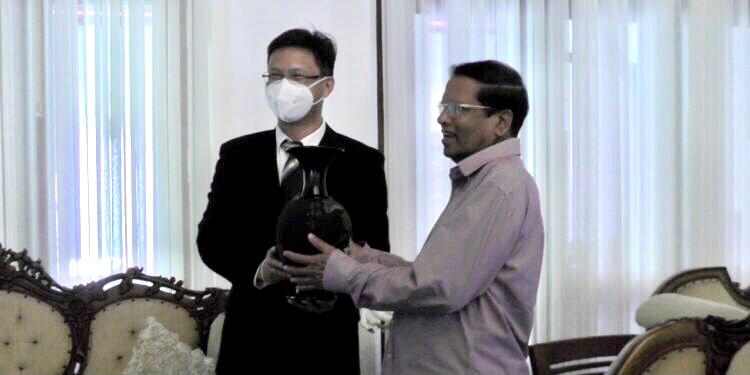
Cabinet grants approval to import 99,000 metric tons of organic fertilizer produced using seaweed, from China’s Qingdao Seawin Biotech Group.

The consignment was valued at 63.6 million US dollars

September 2021

The ship, ‘Hippo Spirit’ carrying 20,000 metric tons of Chinese fertilizer leaves the Qingdao Port.

August 2021

National Plant Quarantine Service detects harmful bacteria in Chinese fertilizer samples, and experts warn that importing fertilizer containing harmful bacteria may affect the agriculture sector.

October 2021

Agriculture minister says samples were not brought in line with safety conditions, and calls for another test

29th October 2021

Second test confirms the presence of harmful bacteria, which leads to the importation of the consignment being suspended.

Thereafter, Sri Lanka’s state-run fertilizer companies went to court, and the Colombo Commercial High Court issued an order preventing People’s Bank from paying for the shipment.

The Ship carrying Chinese fertilizer shipment reached Sri Lankan waters, however continued to travel around the country by changing its name.

Then, the fertilizer shipment remained in Sri Lankan waters for more than 70 days, and the Chinese company said that it will go for arbitration in Singapore.

Amidst all this, Sri Lankan farmers held protests demanding to reject Chinese fertilizer shipment.

26th October 2021

Then the Chinese company sent a letter of demand, warning of legal action against Sri Lanka’s National Plant Quarantine Service

The samples were then re-tested in a lab agreed by both parties, and the results did not indicate presence of harmful bacteria

Then, the Hippo Spirit ship left for Singapore, and both parties reached a settlement, which led to the Court lifting order preventing payments.

January 7th 2022

Sri Lanka paid 6.9 million US dollars for the fertilizer shipment, as the Hippo Spirit ship remained in China

The agriculture minister then assured that fertilizer will be imported under proper standards, by the same Chinese company, after placing a 5 million USD guarantee. He assured that the ship will go back, and new samples will be sent, which will be tested by the National Plant Quarantine Service.

Five months have passed since the agriculture minister made these remarks. However, no fertilizer shipment has reached the country.

What happened to the payment made for the shipment also remains uncertain.

As a result of poor decision making, the government had to pay 6.9 million US dollars, which is equal to about 2.5 billion rupees today.

Liquid Nitrogen

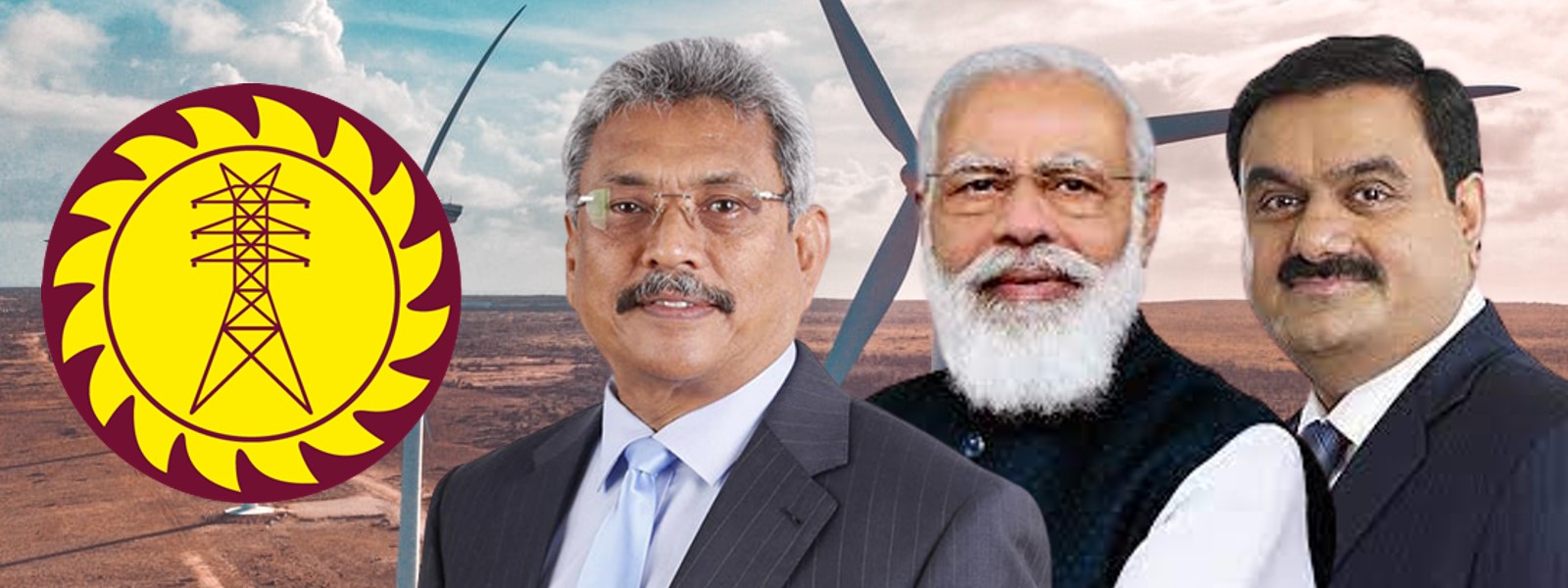
The government then took steps to import liquid nano nitrogen fertilizer from India. These stocks were imported at twice or thrice the cost of the market value of the product.

However, it was revealed in Parliament that 290 million rupees had been deposited to a personal bank account during this transaction, which is how a selected few amassed profits as the agriculture sector fell deeper into crisis

All these actions led to farmers facing massive losses as their harvests declined due to the fertilizer shortage. President Gotabaya Rajapaksa, himself, later admitted that the decision was wrong.

However, no steps have been taken yet to provide any relief to these farmers. Although the Government lifted import restrictions, importers were not able to bring down chemical fertilizer or agrochemicals.

Now farmers are cultivating for the Yala season, while facing the mounting issue of not having the required fertilizer. And despite having an agriculture sector that can flourish, the government is importing rice from overseas, mostly on credit.

Qquestions remain, that if the output declines this season, can Sri Lanka bear the economic impact that would follow? Will this result in a food shortage next year? Or else, will the government make emergency purchases of food?

50 days for GotaGoGama : Police fire tear gas to disperse protesters near WTC

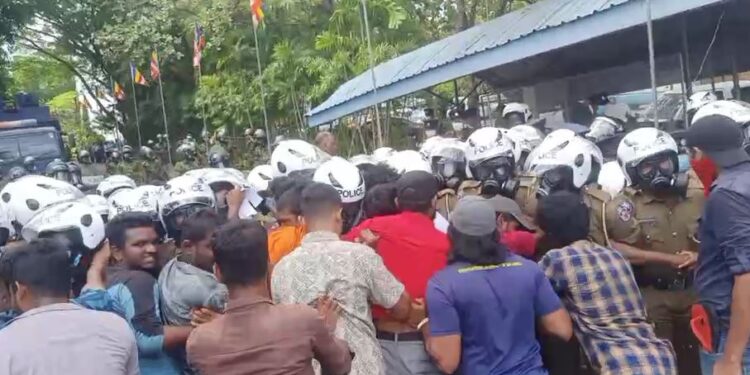
The police have fired tear gas and used water cannons to disperse the anti-government protesters engaged in a demonstration near the World Trade Centre this evening (May 28).

A massive protest march was organized today in view of the 50th consecutive day of the ‘GotaGoGama’ protest site at the Galle Face Green.

Meanwhile, the Colombo Fort Magistrate yesterday issued an order yesterday, barring the protesters from entering several roads in Colombo including York Street and Bank Street.

The court order states that the protesters are prohibited from forcibly entering or damaging public institutions and official residences in the Colombo Fort police division, or obstructing the duties of officers in the area.

India gifts kerosene to fishermen in Northern islets in soft-peg collapse

India has gifted 15,000 liters of kerosene to fishermen in several islets in the North of the island as the currency collapsed after two years of money printing by the central bank creating forex and fuel shortages.

“15000 liters of kerosene gifted to 700 fishermen of Delft, Nainativu, Eluvaitivu & Analitivu,” India’s High Commission in Colombo said in a twitter.com message.

India’s High Commissioner in Colombo Raakesh Natraj and Fisheries Minister Douglas Devananda had initiated the distribution.

A part of the fuel will also go power a ferry service between the island, the Indian High Commission said.

In a separate statement the Indian High Commission said a consignment of kerosene was sent to Colombo on the Indian landing craft (INS) Gharial for the use of fishermen in Sri Lanka.

The kerosene will be distributed to fishermen a several fishery harbors.

Posted in Uncategorized

JVP says a solution to the crisis must be found

The JVP says a plausible solution to the country’s current economic situation must be found.

Speaking to media today, Secretary of the Party Tilvin Silva said making short sighted decisions as a quick remedy to the problem will result in making wrong choices and worsening the country’s situation.

Silva said many JVP supporters have requested him to take up a post in the government and develop the country.

However he explained that major problems cannot be solved through short-term solutions.

Tilvin Silva commented that nobody was going to come and save the people of Sri Lanka from its worst economic crisis in decades.

He called on the people to not fall for false propaganda of politicians and vote for a responsible party.

Sri Lankan envoy discusses need for bridge financing with Indian Finance Minister

Following his meeting in mid-April, Sri Lanka’s High Commissioner to India, Milinda Moragoda has again met with the Finance and Corporate Affairs Minister of India Nirmala Sitharaman Friday (27) to evaluate the status of ongoing economic cooperation and to discuss the way forward.

High Commissioner Moragoda thanked Minister Sitharaman for the continuation of assistance that India is extending to Sri Lanka in the form of credits for essential commodities and fuel, and also for balance of payment support extended, the Sri Lankan High Commission in New Delhi said..

He particularly appreciated Minister Sitharaman taking up the case of Sri Lanka on the sidelines of the IMF Spring Meetings in April in Washington D.C., with the IMF, other multilateral institutions and bilateral development partners.

High Commissioner Moragoda briefed Minister Sitharaman on the present developments in Sri Lanka.

The High Commissioner reiterated that Sri Lanka would require bridging finance until the economic adjustment program with the IMF could be negotiated and finalized. In this context, the Minister and the High Commissioner explored the possibility of increasing and restructuring the assistance provided by India in the form of credits for essential commodities and fuel as well as balance of payment support.

In this regard, it was agreed that the established official-level mechanism for conducting the economic dialogue between the two countries should continue.

Chief Economic Advisor of the Government of India, Prof. Anantha Nageswaran who leads the Indian side at the official-level discussions, and senior officials of the High Commission of Sri Lanka in New Delhi also participated in the meeting.

Posted in Uncategorized

New PM could bring about political stability in SL: U.S. Ambassador

The U.S. Ambassador to Sri Lanka Julie Chung expressed hope that the government, including the new Prime Minister, would be able to bring about political stability and overcome the current economic crisis.

She expressed these views when she called on Speaker Mahinda Yapa Abeywardena yesterday at the Parliament Premises, the Communications Department of Parliament said.

The Ambassador also emphasized the need to carry out the political reforms desired by the people and to safeguard democracy in the country.

Mrs. Julie Chung further said that she hopes to enhance relations between the two countries through the Sri Lanka-USA Parliamentary Friendship Association. She appreciated the role played by the Women Parliamentarians Caucus and discussed the need to increase the representation of women.

The Speaker also expressed his gratitude to the United States of America for its continued support to strengthening democracy in Sri Lanka.

This is the first meeting between Mrs. Chung and the Speaker Mahinda Yapa Abeywardena since her appointment as US Ambassador to Sri Lanka.

Posted in Uncategorized

S&P downgrades two Sri Lanka sovereign bonds to ‘D’

Standard $ Poor’s, a rating agency, said it has downgraded two Sri Lanka sovereign bonds due in 2025 and 2027 to default (D) after interest coupons were missed.

Fitch had earlier downgraded Sri Lanka sovereign bonds to D on cross default clauses after the missed payment.

The full statement is reproduced below:

Overview

The Sri Lanka government remains in default on some foreign currency obligations, including international sovereign bonds (ISBs) on which it has missed interest payments.

We do not expect the government to make ISB interest payments within 30 calendar days after their due dates.

Following missed interest payments due on May 3 and May 11, we have lowered the ratings on the affected bonds to ‘D’.

We are affirming our ‘SD/SD’ foreign currency and ‘CCC-/C’ local currency ratings on Sri Lanka. The outlook on the local currency ratings is negative.

Rating Action

On May 27, 2022, S&P Global Ratings affirmed its long-term and short-term foreign currency sovereign ratings on Sri Lanka at ‘SD/SD.’ At the same time, we affirmed our ‘CCC-‘ long-term and ‘C’ short-term local currency sovereign ratings. The outlook on the local currency ratings remains negative.

In addition, we lowered to ‘D’ from ‘CC’ the issue ratings on the following bonds with missed interest payments in May:

US$1.5 billion, 6.85% bonds due Nov. 3, 2025.

US$1.5 billion, 6.20% bonds due May 11, 2027.

Our transfer and convertibility assessment at ‘CC’ is unchanged.

Outlook

Our foreign currency rating on Sri Lanka is ‘SD’ (selective default). We do not assign outlooks to ‘SD’ ratings because they express a condition and not a forward-looking opinion of default probability.

The negative outlook on the local currency ratings reflects the high risk to commercial debt repayments over the next 12 months in the context of Sri Lanka’s economic, external, and fiscal pressures.

Downside scenario

We could lower the local currency ratings if there are indications of nonpayment or restructuring of Sri Lankan rupee-denominated obligations.

Upside scenario

We could revise the outlook to stable or raise the local currency ratings if we perceive that the likelihood of the government’s local currency debt being excluded from any debt restructuring has increased. This could be the case if, for example, the government receives significant donor funding which gives it some time to implement immediate and transformative reforms.

We would raise our long-term foreign currency sovereign credit rating upon completion of the government’s bond restructuring. The rating would reflect Sri Lanka’s post-restructuring creditworthiness. Our post-restructuring ratings tend to be in the ‘CCC’ or low ‘B’ categories, depending on the sovereign’s new debt structure and capacity to support that debt.

Rationale

Sri Lanka’s external public debt moratorium prevents payment of interest and principal obligations due on the government’s ISBs. As such, interest payments due May 3, and May 11, on its 2025 and 2027 ISBs, respectively, would have been affected. Following the missed payments, and given our expectation that payment will not be made within 30 calendar days of the due date, we have lowered the issue ratings on these bonds to ‘D’ (default).

Overdue coupons now include the following four bonds:

US$1.25 billion, 5.75% bonds due 2023

US$1.25 billion, 6.75% bonds due 2028
US$1.5 billion, 6.85% bonds due 2025
US$1.5 billion, 6.20% bonds due 2027

Posted in Uncategorized

Protest launched to mark 50 days of GotaGoGama

The non-partisan peaceful people’s struggle opposite the Presidential Secretariat at Galle Face Green in Colombo marks the 50th consecutive day today (28).

The protests demanding the resignation of President Gotabaya Rajapaksa commenced on the 9th of April and it has been continuing round the clock despite the adverse weather and attacks by the government supporters on 9th May.

People from all walks of life have since gathered at Galle Face pledging their support to the indefinite protests.

A protest march from Liberty Junction in Kollupitiya to Gota Go Gama in Galle Face will be held at 2.00 pm today to mark the 50th day of protest.

In a press briefing held yesterday, the main opposition Samagi Jana Balawegaya said they will hold a protest march to mark the 50th day of the Gota Go Gama.

Protesters say a number of other events will also take place at Gota Go Gama.

Meanwhile the Police have obtained a court order over protest march scheduled to be held today to mark the 50th day of Gota Go Gama.

According to the Police statement, Court has banned protesters from entering several roads and State institutions in Fort area.

Posted in Uncategorized

The great crisis and 21A: Urgent imperative for constructive engagement and consensus By DR.Dayan Jayatilleka

If there is an acute food shortage, the people will come for Gota because it was his signature fertiliser ban that caused the shortage. Even now, the foreign exchange shortage would not have been so acute if tea export earnings hadn’t collapsed due to the ban.

But he, like Prabhakaran in 2009, rejects a negotiated exit. Dr. Nandalal Weerasinghe confirms that the Sri Lankan economy will undergo its worst contraction in history. It will be a very short list of Presidents and Prime Ministers globally –if any—who survived even far fewer extreme contractions. Certainly, there were none who were re-elected, many had to resign mid-term, and even the dictator Pinochet’s rule started rocking (mass rioting, an assassination attempt) and ended a few years later.

President Gotabaya Rajapaksa must execute an orderly retreat.

Any attempt by Gota to derail, dilute or delay the Constitutional amendment aimed at rolling back the 20th Amendment enhances the risk of being thrown out of office not so much on that issue but by an irresistible tsunami of violent mass protest born of a despair so widespread the military cannot contain it.

The likely popular uprising will have two prongs: the peasantry, due to the continuing absence of subsidised chemical fertiliser, and the urban masses, lacking food supplies owing to the crash of agriculture.

Ranil as Kerensky

I supported Ranil Wickremesinghe in 1993-1997, and opposed him for a quarter-century since, but I sincerely wish him the very best of luck. It is he, not Minister Ali Sabry, who is now the nightwatchman.

If the PM uses his brilliant ex-Trotskyist-turned-Cold Warrior intellectual father’s excellent library, he would understand that he could become a Kerensky, who, unlike the original one, has not taken over after the Tsar’s ouster but is serving under the Tsar and perceived as his prop.

The Kerensky administration didn’t last because it couldn’t meet the basic needs of the people: ‘Land, Peace, Bread’. Similarly, the Wickremesinghe administration cannot fulfil, quickly enough, the basic needs of Fuel, Gas, Medicine, Fertiliser.

During the recent four-day parliamentary debate the only MP who presented a practical policy perspective for economic crisis-management was not Prime Minister Wickremesinghe but ‘outlier’ Patali Champika Ranawake of the 43 Brigade and SJB alliance.

Price of Parliament’s failure

The 21st Amendment to the Constitution produced by the Wijeyadasa Rajapakshe committee is a measured power-shift from the hyper-centralised executive presidency, a de-concentration of power pragmatic enough to secure a parliamentary two-thirds majority with no clauses requiring a Referendum. It is the first, fastest chance to shift the needle towards the separation of powers and checks-and-balances.

The BASL’s statement contains an excellent critique of the Wijeyadasa draft which could be accommodated as amendments moved by the Opposition. The BASL’s text neither raises the demand for the abolition of the executive presidency, nor uses it as a measuring rod for rejecting Wijeyadasa’s draft.

The SJB’s opposition to the Wijeyadasa draft is not completely coincident with the BASL statement. Rather, it counterposes the abolition of the executive presidency to the Wijeyadasa text. It is rejectionist and maximalist.

Reforming the presidency is a moderate-centrist position. Abolition is not. It is an extreme position. The (Buddha-inspired) Middle Path between the autocratic post-20th Amendment presidency and its opposite extreme, the total abolition of the executive presidency, is a structurally-reformed presidency.

Outright rejection of the Wijeyadasa text is not a moderate position. The Middle Path between the Wijeyadasa text and the abolition of the executive presidency is critical yet constructive engagement with the proposal on the table, with consensus the objective.

Abolition would be a protracted process, and worse, a non-starter because the SLPP and SLFP will not vote for it. The Wijeyadasa amendment would bring with it SLPP votes and a quick process because it issues from the Cabinet.

The SJB, TNA and JVP should introduce the BASL’s suggestions as amendments, but should desist from anything that would require a referendum which could abort a speedy reform and buy time for the status-quo.

If the 21st Amendment cannot make it through the gates to the finish-line, there may not be a second chance for civilian democracy, which may either be overrun by an uprising of the people which could turn savagely violent and destructive, or be placed in suspended animation by an unavoidable military intervention intended to restore stability and order of the most basic Hobbesian sort.

The Opposition should push the limits of possible consensus but demonstrate moderation and responsibility to settle for one. The intensifying crisis is not the time for a polarisation, especially one that the Opposition doesn’t have the numbers to win

Opposition’s opportunity and obligation

The Opposition should push the limits of possible consensus but demonstrate moderation and responsibility to settle for one. The intensifying crisis is not the time for a polarisation, especially one that the Opposition doesn’t have the numbers to win.

The Government Parliamentary Group might shoot down the 21st Amendment as taking away too much power from the presidency or may resist attempts to accommodate the BASL’s points. That would be counterfeit because such a victory means nothing outside the House, and counterproductive because it further delegitimises the Government while heightening hatred towards government parliamentarians.

The Opposition could divide, with the larger segment obstructing the amendment on the grounds that it fails to go far enough. A split in the Opposition would strengthen the regime. This would discredit the democratic alternative as a whole and enhance the extra-parliamentary, anti-systemic Opposition, putting paid to prospects for stability or even systemic survival.

If the SJB-TNA-JVP Opposition votes against the incoming 21st Amendment instead of reasonably tweaking it, it would be making a mistake that so tragically doomed iconic democratic revolutions.

Theodore S. Hamerow is the author of ‘Restoration, Revolution, Reaction: Economics and Politics in Germany 1815-1871’ (Princeton 1958). In an essay entitled ‘1848’ on the liberal-democratic German Revolution of that year, a tragic landmark defeat that provided the backdrop for the rise of Nazism in the next century, Hamerow quotes Charles Schurz, a youthful militant of that revolution, who reflectively concluded in his memoirs that:

“The Frankfurt Parliament suffered from…a lack of that political experience and insight which recognize that the better is often the enemy of the good, and that the true statesman will beware of forfeiting the favourable moment by endangering the achievement of the essential through an obstinate insistence on the less essential.” (T. Hamerow, ‘The Responsibility of Power’, Doubleday, New York, 1967 pp. 145-161)

In Sri Lanka today, “the essential” is to outrun the explosion that is imminent. The “essential” is the demonstration to the public of the Parliament’s continued relevance; of the continued functioning of the democratic institutions and process in achieving results; of the ability of democratic institutions to rapidly produce reform and improvement; of the possibility of consensus among democratic parties.

The “essential” is to show that the democratic institutions, processes and personalities can go halfway in meeting the demands and aspirations of the citizens’ revolt led by the youth.

The Opposition must not vote against this 21st Amendment, thereby “forfeiting the favourable moment” and “endangering the achievement of the essential through an obstinate insistence on the less essential.”

If the 21st Amendment cannot make it through the gates to the finish-line, there may not be a second chance for civilian democracy, which may either be overrun by an uprising of the people which could turn savagely violent and destructive, or be placed in suspended animation by an unavoidable military intervention intended to restore stability and order of the most basic Hobbesian sort

SJB parameters

It is downright reckless to fight a battle on this issue and lose, thereby exhibiting weakness, or to win a pyrrhic victory, prolonging the autocratic 20th Amendment and entrenching Gotabaya.

It is also irrational, because all reliable indicators of public opinion show that the highest degree of consensus is that Gota and the Rajapaksas should go and the 20th Amendment should be scrapped. That is far wider than the consensus for scrapping the executive presidency. A referendum on the issue is not merely unviable at the moment, it would be needlessly divisive and diversionary—displacing (yet again) the focus of the struggle away from Go Home Gota.

In 2015, Ranil Wickremesinghe, the UNP and TNA wanted the abolition of the executive presidency. When the Supreme Court aptly tossed back the original draft legislation presented by Wickremesinghe, flagging those provisions that required a two-thirds majority, it was President Sirisena who in a masterful display of consensus-building, got the 19th Amendment through. It proved to have dangerous gaps from a national security point of view which caused the backlash resulting in the 20th Amendment. Amendments moved by Field Marshal Fonseka, the SJB chairman could plug those gaps.

The country’s ‘death dive’ began with Gotabaya Rajapaksa’s hyper-concentration of power through the 20th Amendment. Reason tells us that’s the problem to be fixed, rather than dismantle the system as a whole. Opposition Leader Sajith Premadasa should work closely with SLFP leader and ex-President Maithripala Sirisena to pilot the structural reform through, thereby drawing the SJB and SLFP closer in a broad coalition of moderates; a coalition which can offer a rational, realistic progressive alternative, re-building the democratic centre.

Ranil Wickremesinghe was wrong to accept the Prime Ministership and serve unconditionally under Gotabaya Rajapaksa whom the vast majority of citizens want to see the back of, like, yesterday. The SJB mustn’t commit the opposite error. If it wishes to abolish the executive presidency it must first seek and obtain a parliamentary mandate for it at an election. It certainly doesn’t have the votes for it presently in parliament and therefore should not hold to ransom a reformist constitutional effort to dismantle or seriously dent the 20th Amendment.

The abolition of the 20th Amendment, the post of PM for the Opposition Leader, a timeline for early elections and a dialogue on the transitioning-out of President GR should be sufficient to assume co-responsibility for managing the national crisis. A ‘historic compromise’, to use the celebrated phrase of Enrico Berlinguer (the famous Italian communist leader and Euro-Communist giant); a power-sharing agreement of all major parties, is urgently necessary for crisis-management and conflict-prevention. The 21st Amendment could be a bridge.

If not, Sri Lanka which has a failed economy but is not yet a failed state, will have a failed parliament. Then, only extra-parliamentary, anti-systemic change will remain an option.

Weakening the State

When the facts show that all discriminatory legislation against the Tamils was enacted during the decades Ceylon/Sri Lanka had a Westminster model, why is the TNA so stridently insistent on the abolition of the executive presidency under which there was hardly any such legislation, several discriminatory acts were actually reversed, and provincial level devolution pushed through? An answer suggests itself when one extrapolates the result: the centrifugal weakening of the state and the automatic if surreptitious upscaling of the 13th Amendment to federal proportions.

When the evidence over decades shows a great many more leftwing Presidents (including former guerrillas and political prisoners of dictatorships) than Prime Ministers, why is it that the JVP-NPP and FSP-IUSF insist on the abolition of the executive presidency rather than of the autocratic 20th Amendment?

The outcome of the JVP and FSP demand would be to weaken the state itself; to implant a weak model of state, prone to deadlock, indecision and debility in crisis-management, preventing the implementation of a de-radicalising Rooseveltian New Deal (such as President Premadasa’s programs). Perhaps that’s the plan.

Leftism or Anarchism?

The Aragalaya –including the FSP-IUSF and the JVP-NPP—fell into a trap by opening a second front against a secondary enemy, Mahinda, thereby giving the main enemy time and space. The militant IUSF march deviated to Temple Trees and MynaGoGama appeared two weeks before 9 May. That diversion created the opening for Ranil’s return, the resultant stalling of the Aragalaya and shrinkage of the GGG.

In a reload, a new hashtag calls for everyone to march on Colombo as soon as the O-level exam ends. Surely the correct moment for such a mega-march would not be early June as urged, but August-September when the collapse of agriculture coincides with food shortages, making for a worker-peasant undergirded urban-rural alliance? The drivers of the exercise seem unaware of Friedrich Engels’ sardonic admonition that “impatience must not be mistaken for a theoretical argument”.

It takes both the Police riot squads and the army to handle student demonstrations in the city—demonstrations by single contingents of students (e.g., HND) who have now mastered the tactic of climbing onto water-cannons. What happens when all contingents of university students converge in Colombo? And when unorganised others go spontaneously searching for food supplies and targets of perceived affluence?

Practice in street-fighting tactics is impressive, but the Left’s refusal to denounce barbaric lynch-mob killings have caused the romantic-idealistic mask to drop, and the system – including, most importantly, the hard-drive of the state—to comprehend the character of the challenge, the real stakes involved.

A huge wave of a scarcity-driven social uprising which the Aragalaya Left can surf is capable of drowning the system, but that’s the system of governance and the economy, not necessarily the state. Even if several soldiers break ranks and join the protestors, and/or some of the rifles carried by the Police and infantry are wrenched away during demonstrations, that won’t change the essential equation of hard power.

Hostile towards the Gotabaya autocracy and the Rajapaksa clan, the world community will not support Sri Lanka to the fullest extent possible unless this country presents a new face as its leader and logo. That does not mean that the Big Powers will alter their cold evaluation of the implications of a JVP or FSP takeover of state power on this strategically situated island.

In a crunch, the equation between the Sri Lankan and neighbouring militaries could become manifest.

If Sri Lanka has a failed economy, a failed Parliament, dysfunctional political parties and a morally, ethically and behaviourally unconstrained anti-systemic Left, but is not yet a failed state, it is because the state contains components which have not failed and have been functional and successful. These may kick-in to regenerate the system by re-configuring the model (not tearing-down the system or sinking what remains of the economy), thereby saving Sri Lanka. Again

Contending vanguards

As we can see from behaviour patterns and dynamics already in evidence, an emerging scenario is of a Hobbesian “war of all against all” where life would turn “solitary, poor, nasty, brutish and short”. This is what made Hobbes argue strongly for public order and a State—the Leviathan—to enforce it, as the basis of all else; indeed, of civilised life itself. The problem is that Sri Lanka hasn’t had a ‘smart state’ since 2010. But the state has smart components.

In Sri Lanka today there aren’t just two formations of a vanguard type, formations which can play a vanguard role, the JVP-NPP and the FSP-IUSF. There are three. The third is the Sri Lankan armed forces.

While the JVP and FSP are nihilistic about 74 years of post-Independence history which they want to “put an end to”, and are destructive in their practices, a contrastingly constructive, confident discourse is articulated by the Army Commander, Maj-Gen Shavendra Silva in recent TV interviews. Determined Churchillianism doesn’t come from the PM but from the Army chief. Emanating from an institution with its own coherent narrative and the credibility of a proven record of success in crisis and adversity, this practical, positive, motivational perspective could seize the public imagination.

If Sri Lanka has a failed economy, a failed Parliament, dysfunctional political parties and a morally, ethically and behaviourally unconstrained anti-systemic Left, but is not yet a failed state, it is because the state contains components which have not failed and have been functional and successful. These may kick-in to regenerate the system by re-configuring the model (not tearing-down the system or sinking what remains of the economy), thereby saving Sri Lanka. Again.

IMF says “require adequate assurances” on Sri Lanka’s debt sustainability restoration

The International Monetary Fund (IMF) on Thursday said it requires sufficient assurance from Sri Lanka of restoring debt sustainability during the debt restructuring process in which the island nation has started appointing financial and legal advisors.

“The (INF) team welcomed the appointment of financial and legal advisors to engage in a
collaborative dialogue with their creditors is an important step toward restoring public debt
sustainability,” the IMF said after the end of technical level negotiations between Sri Lankan officials and the IMF team.

“Since Sri Lanka’s public debt is assessed as unsustainable, approval by the Executive Board of an IMF-supported program for Sri Lanka would require adequate assurances that debt sustainability will be restored.”

The global lender’s comments come as Sri Lanka struggles to find a way out of its economic crisis with heavy foreign debts, no dollars to finance imports, significantly lower government revenue, and excess money printing.

“Inflation has accelerated driven by many factors, including the shortages of goods, fuel price increases, and currency depreciation,” the IMF said.

“In this context, we are deeply concerned about the impact of the ongoing crisis on the people, particularly the poor and vulnerable groups.”

“The IMF team held technical discussions on a comprehensive reform package to restore
macroeconomic stability and debt sustainability. The team made good progress in assessing
the economic situation and in identifying policy priorities to be taken going forward.”

“The discussions focused on restoring fiscal sustainability while protecting the vulnerable and poor;
ensuring the credibility of the monetary policy and exchange rate regimes; preserving financial
sector stability, and structural reforms to enhance growth and strengthen governance.”

The IMF comments also came as details of how Sri Lanka’s Monetary Board at the Central Bank and Finance Ministry last year failed to address the debt sustainability issue despite the global lender in April 2020 advising the island nation to go for debt restructuring.