Five-point assistance from China to overcome crisis

Chinese Ambassador Qi Zhenhong highlighted a five–point assistance from China to Sri Lanka in view of the economic crisis, fast-track ongoing projects and more FDI (Foreign Direct Investment) and Trade, bilateral debt settlement, support to Sri Lanka in its talks with the International Monetary Fund (IMF) and regarding International Sovereign Bonds and tourism after Covid, a statement from the Embassy said.

He, along with his spouse Jin Qian started their three-days visit to the Eastern Province of Sri Lanka on May 24 from Trincomalee. They are grateful to receive a warm welcome by Governor Anuradha Yahampath and children from different backgrounds.

Ambassador Qi and Ms. Yahampath co-chaired a business forum with the Chinese Business Chamber representatives. China encourages more investment to Sri Lanka including EP to overcome current difficulties.

After the meeting, Ambassador Qi Zhenhong took a boat visit to the Trincomalee Harbour and China Bay.

The Sri Lankan Ports Authority and the Eastern Province invite Chinese investment to the port-related industries and tourism.

To support low-income families to overcome difficulties, Ambassador Qi handed over food packs (Rs. 5200 each) donated by the people of Yunnan Province of China to Trincomalee, Batticaloa and Ampara Districts.

In total, 10,400 underprivileged families in the Eastern Province of Sri Lanka have received the support from the people of Yunnan.

Ambassador Qi Zhenhong and Madam Jin Qian also donated a batch of sports equipment supporting local youth in Kalmunai.

On May 26, Ambassador Qi visited the Kayakerni archaeological site where the China sherd of the China Song Dynasty (960–1279), the glass from ancient Europe and the stone bridge uncovered show that Sri Lanka’s eastern coast has always been an important global trade hub on the Maritime Silk Road.

During his visit, Ambassador Qi visited the Kuchchaveli Pichchamal Viharaya.

Posted in Uncategorized

Cabinet approves supplementary budget of Rs. 695 Bn

Sri Lanka’s Cabinet of Minister approved the proposal to to submit a supplementary estimate to the Parliament for the provision of Rs. 695 billion under the “Budget Assistance Services and Emergency Responsibilities” project of the National Budget Department.

The proposal was made by the Prime Minister in his capacity as Minister of Finance, Economic Stabilization, and National Policies, said the Department of Government Information.

“The government has introduced a assistance package for Samurdhi Beneficiaries, Estate Communities, Pensioners and Government Servants at the beginning of 2022 to reduce the hardships faced by the public due to the adverse economic conditions,” said the Department in a statement.

The Department of Government Information noted that it was decided to submit a supplementary estimate to Parliament to cover the cost and secure the necessary funds to maintain the essential public services without hindrance.

Sri Lankan YouTuber and anti-government protestor Ratta arrested and granted bail

Social activist and Sri Lankan YouTuber Rathidu Suramya Senaratne, popularly known as “Ratta”, has been granted bail by the Fort Magistrate’s Court.

He was released on bail after being produced before the court, a short while ago.

Popular Sri Lankan YouTuber Rathindu Suramya Senarathna, also known as Ratta, was arrested Monday (30) for allegedly obstructing the duties of police officers during a protest in front of the Fort Magistrate Court on Thursday (25), police said.

The protest had taken place demanding the arrest of suspects allegedly connected to the Black Monday violence by government supporters on peaceful protestors on May 09.

Ratta, who has 1.4 million subscribers on YouTube, was a prominent figure in Sri Lanka’s anti-government protests demanding the resignation of President Gotabaya Rajapaksa and his government over the country’s worsening economic crisis. While his usual content focused on comedy and satire, he has been using his platforms to share information regarding the protests since they began.

According to fellow protestor and civil activist Shehan Malaka, Ratta was summoned to courts a few days ago. “He went to give his statement today, and after he did, the police arrested him.”

‘Govt. has to find another $ five billion immediately for everyday expenses’ By Hiran H.Senewiratne

The government has to find/borrow another US $ five billion immediately for day-to -day expenditure, to provide essential services to citizens this year, even with the complete restructuring of debt by other countries. This amount has to be generated through credit lines, currency swaps, a couple of investments into the country and selling of assets, which also give temporary relief to the country, Prof Sirimal Abeyratne said.

“We are now in the early stage of bankruptcy and I am not surprised at the position in which we are today because of our excessive spending. This resulted in a Balance of Payments problem for the country, Prof. Abeyratne, who is a senior economist attached to the University of Colombo and a former chairman of the Monetary Policy Consultative Committee of the Central Bank of Sri Lanka explained.

Abeyratne made these observations while addressing the Colombo South Rotary Club on the topic, “Sri Lanka’s Current Debt Crisis and Beyond”, last week at the Dutch Burgher Union Hall in Colombo.

Abeyratne added: ‘In 2007 Sri Lanka raised US $ 500 million through International Sovereign Bond issues. During the period 2009 to 2019, Sri Lanka issued US $ 17 billion in sovereign bonds with a 5 to 10 year maturity span. Therefore, we have to pay US$ 6 billion every year for those bonds but unfortunately the country does not have a financial buffer to arrest the situation.

‘Due to the Covid-19 pandemic situation the revenue that came from the tourism sector and inward worker remittances that came to the country from the Middle East, dramatically dropped.

‘This crisis was predicted two years ago but the relevant authorities never heeded the warning. When we were having budget deficits we spent beyond our capacity and in the internal financial area major tax cuts soon after the presidential election, which cost more than Rs 500 billion annually to government coffers, left us with insufficient finaces to pay our debts.

‘Amid these developments, young educated professionals who could contribute to the economy will leave the country and ultimately we will be left with a poor set of people. This happened in Venezuela, where more than five million young educated professionals left for other countries. This set of people could play an important role in economic development.

‘Since our country’s foreign reserves ran dry and due to major tax relief provided, we are facing a major rupee shortage in the country and are unable to pay salaries for government servants and for day- to- day operations.

‘At this moment we have to build trust in the eyes of the international community to attract direct foreign investments into the country. Foreign investors do not trust our politicians. If we could build trust we could attract direct foreign investments. Sri Lanka should take every possible step to drive exports, which is the most important task at this juncture.’

Fitch cuts SriLankan Airlines bond rating amid default fears

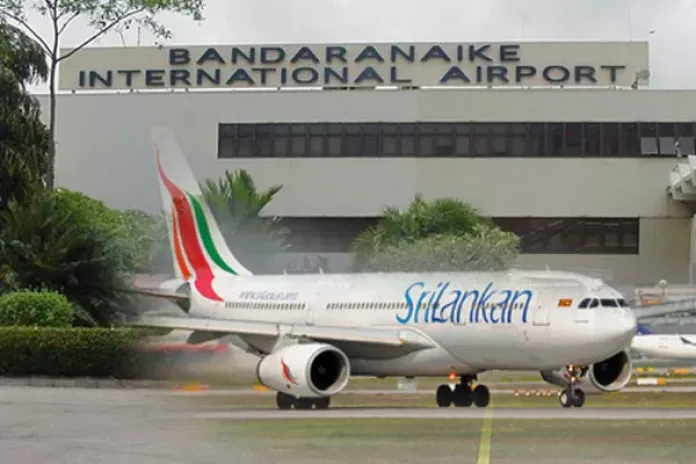
A debt moratorium announced by the Sri Lanka government has resulted in a credit downrating of state-owned SriLankan Airlines (UL, Colombo Int’l) by Fitch Ratings, which believes it has triggered the commencement of a default-like process for the airline.

The US-based rating agency has given SriLankan Airlines’ USD175 million government-guaranteed 7% unsecured bonds due on June 25, 2024, a “C” rating, which means Fitch believes “a default or default-like process has begun, or the issuer is in standstill […] or payment capacity is irrevocably impaired”.

In a statement, Fitch said this followed the May 19, 2022, downgrade of Sri Lanka’s Long-Term Foreign-Currency Issuer Default Rating (IDR) from “C” to “RD”, meaning, in Fitch’s opinion, the country has experienced an uncured payment default or distressed debt exchange on a bond, loan, or other material financial obligation.

Fitch has also downgraded Sri Lanka’s foreign-currency bonds issued in international markets from “C” to its lowest rating of “D”, indicating that, in Fitch’s opinion, the country has entered into de facto bankruptcy.

“SriLankan Airlines’s guaranteed US dollar bonds are part of the debt moratorium announced on April 12, 2022, by the Government of Sri Lanka, on several categories of sovereign- and public sector entities’ external debt. The moratorium has therefore triggered the commencement of a default-like process for SriLankan Airlines, in Fitch’s view,” the agency said in a statement on May 20.

It said SriLankan Airlines’ bonds were rated “C”, factoring in Fitch’s view of average- to below-average recovery prospects following a default, in line with the agency’s Corporates Recovery Ratings and Instrument Ratings criteria and Country-Specific Treatment of Recovery Ratings criteria.

According to the agency, an upgrade of Sri Lanka’s sovereign rating and completion of a commercial debt restructuring that would normalise its relationship with the international financial community could lead to a Fitch ratings upgrade.

Historically a loss-making entity, SriLankan Airlines registered its first profitable fourth quarter since 2006 with a net profit of USD1.7 million for the quarter ended 31 March, 2022. This it attributed it to the scaling down of staff costs and overheads, the renegotiating of supplier contracts, an increase in cargo revenue, and capitalising on pent-up travel demand.

“We anticipate some headwinds in the first half of this financial year with high fuel prices and a short-term dip in demand to Sri Lanka,” SriLankan Airlines’ acting chief executive Richard Nuttall said. “We have factored in these challenges and are working towards minimising the impact with a strong business plan and a sound turnaround strategy to return to full-year profitability.

“Traffic is expected to recover fully by the end of the year as travel restrictions are eased off further. We will continue to support the tourism industry of Sri Lanka and be a catalyst for economic recovery.”

Posted in Uncategorized

Amended 21A draft to be tabled at Cabinet meeting

Minister of Justice Wijeyadasa Rajapakshe says the amended draft of the 21st Amendment to the Constitution will be presented at the Cabinet of Ministers meeting next Monday.

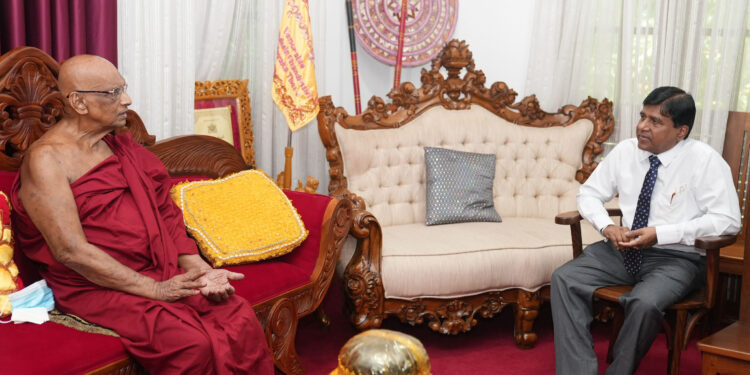
The Minister expressed his views when he called on the Chief Prelate of the Amarapura Sect Most Ven. Dodampahala Chandasiri thera today.

The Justice Minister said steps will be taken to introduce the 21st Amendment as political stability is essential to uplift the economy.

Minister Rajapakshe said empowering independent commissions, and re-establishing the Procurement Commission and the Audit Commission, have been proposed through the 21st Amendment adding that the political instability led to the downfall of the economy.

Minister Rajapakshe said another proposal includes preventing dual citizenship holders from being elected to Parliament.

The Minister noted the Chief Prelates, religious leaders, leaders of political parties, and representatives of civil organizations will be briefed on the draft Amendment.

He added the proposed 21st Amendment to the Constitution has been drafted in such a manner that a referendum will not be sought while the formulation of a new Constitution should be vested with a Parliamentary Oversight Committee.

Posted in Uncategorized

A nation in default: Is the great Sri Lanka fire sale about to begin?

PM Wickremesinghe wasted no time in announcing the government would privatize Sri Lankan Airlines, which prior to the pandemic had flown to 126 destinations in more than 60 countries.

Sri Lanka has a habit of selling off its assets when times are tough. And it doesn’t get much tougher than this. The tiny island nation is in default and in desperate need of $4 billion to pay for food, fuel and fertilizer to stave off a deeper crisis.

The newly appointed prime minister, Ranil Wickremesinghe — his sixth time in the job — wasted no time in announcing the government would privatize Sri Lankan Airlines, which prior to the pandemic had flown to 126 destinations in more than 60 countries. The carrier struggled with a stretched balance sheet even before Covid-19 and may fail to make payments to aircraft lessors, Bloomberg Intelligence analysts wrote last month. It had lost $125 million in the year through March 2021 and will likely struggle to find a buyer willing to take it on.

But when a country has only one day’s stock of gasoline and not enough dollars to pay for the three ships carrying crude and furnace oil anchored off the coast, selling anything that isn’t nailed down starts to look like a worthy strategy. The problem is, Sri Lanka has already essentially given away some of its most strategic points to China, which until recently was working hard to expand its footprint there. Now, Beijing has offered loans of “a few hundred million dollars,” Wickremesinghe told the Financial Times, while his government is also seeking to renegotiate existing debts to China, amounting to around $3.5 billion.

Wickremesinghe is pushing to fast-track talks with the International Monetary Fund, but his negotiators haven’t yet reached a staff-level agreement with the multilateral lender. And until the loans start flowing, Sri Lanka is living day-to-day. Protesters have established a permanent presence in the capital, Colombo, and continue to demand the resignation of President Gotabaya Rajapaksa. “Give us back our stolen money,” one sign reads, as their fury at the government’s role in the economic crisis shows no sign of subsiding.

China is Sri Lanka’s single largest bilateral creditor, and its white elephants — the Chinese-built Hambantota port and little-used airport near the ancestral village of the Rajapaksa family — have contributed to citizens’ rage against the political dynasty that includes both the president, and his brother Mahinda, who on May 9 resigned as prime minister following violence that left nine people dead and dozens wounded. Protesters set fire to the Rajapaksa family home in Hambantota and destroyed monuments to their parents in what was a culmination of months of growing civil unrest over their disastrous fertilizer ban that has led to ongoing food shortages, the failure to handle the foreign-currency crisis, and their inexplicable delays in seeking international aid.

There’s also the Colombo Port City, which was meant to position the capital as the next big Asian financial center. But its status as a special economic zone means the government sees little benefit for the scar that’s been created along the waterfront. It, like the port, is controlled by a Chinese-owned company, with a significant portion of it on a 99-year lease.

Of course, not only Beijing seeks to exert influence in Sri Lanka. India’s slice may be smaller, but it continues to hold significant sway simply via its political and economic sway in the region. New Delhi has provided more than $3.5 billion in assistance this year to help pay for fuel, food and medicine. The arrival of Indian shipments of diesel and petrol these past two weeks have caused chaos in Colombo as citizens flocked to fuel stations to try and fill their vehicles.

In September last year, one of India’s largest companies, the Adani Group, entered into a $700 million deal to develop a deep-water container terminal in Sri Lanka in what the Sydney-based Lowy Institute described as a “strategic game-changer” in the battle for influence between Beijing and New Delhi. It will sit next to the Chinese-run terminal at Colombo Port (China Merchant Ports Group Co. also runs Hambantota Port).

Then in January, the Indian Oil Corp. subsidiary Lanka IOC took a 49% stake in the joint development of the Trincomalee oil tank farm, with Ceylon Petroleum Corp. maintaining a 51% stake in the finalization of a deal that was struck in 1987, during Rajiv Gandhi’s tenure as India’s prime minister. Sri Lanka’s location along one of the world’s busiest shipping routes means it’s crucial for maintaining global supply chains.

So what else can the country privatize? It’s a question that’s worrying political economists like Ahilan Kadirgamar, who is concerned about the social impact of key assets leaving government hands. Kadirgamar, a senior lecturer at the University of Jaffna, said officials were most likely to consider the Ceylon Electricity Board and the Ceylon Petroleum Corp. He predicts there will be significant resistance to such a move.

The electricity board is one of the the nation’s social strengths, he said. “Few developing countries have the kind of electricity connectivity and services as Sri Lanka does. Even day-wage laboring families have access to electricity, which benefits their children’s education.” The IMF will be pressing the government to reduce the agency’s losses, Kadirgamar predicts, and the government may be tempted to fill its coffers via a sale rather than reforming the sector.

For now, the country appears to have no other option but to rely on India and China’s largesse. The World Bank said that until Colombo puts in place an “adequate macroeconomic policy framework” that restores stability and growth, it does not intend to offer new financing. If Sri Lanka can hold off on selling the silver, it may have a fighting chance to put the economy back together again.


World Bank denies Foreign Ministry’s claim of $700 million financing

The World Bank today refuted the Foreign Ministry’s claim that it has promised to disburse approximately USD 700 Million to Sri Lanka within the next few months.

Issuing a statement, the World Bank Country Director for Sri Lanka Faris H. Hadad-Zervos said that recent media reports have inaccurately stated that the World Bank is planning support for Sri Lanka in the form of a bridge loan or new loan commitments, among other incorrect assertions.

“The bank is concerned for the people of Sri Lanka and is working in coordination with the IMF and other development partners in advising on appropriate policies to restore economic stability and broad-based growth. Until an adequate macroeconomic policy framework is in place, the World Bank does not plan to offer new financing to Sri Lanka,” he said.

Faris H. Hadad-Zervos further said, “we are currently repurposing resources from previously approved projects to help the government with some essential medicines, temporary cash transfers for poor and vulnerable households, school meals for children of vulnerable families, and support for farmers and small businesses.”

The Foreign Ministry in Colombo released a statement over the weekend stating that the World Bank Country Manager said her office was working with other organizations such as ADB, Asian Infrastructure Investment Bank (AIIB), and UN office and encourages them for ‘re-purposing’ their already committed projects to help the people of Sri Lanka at this difficult time. The Foreign Ministry said she had also claimed that the World Bank will disburse approximately USD 700 Million to Sri Lanka within the next few months.

SJB directs several proposals to the PM over 21A

General Secretary of the Samagi Jana Balawegaya Parliamentarian Ranjith Madduma Bandara has directed several proposals to Prime Minister Ranil Wickremesinghe pertaining to the draft 21st Amendment to the Constitution presented by Minister of Justice Wijeyadasa Rajapakshe.

The proposals cite that the provisions in the 19th Amendment, that the President cannot hold ministries must be re-enacted.

The SJB said they received legal advice that a referendum is not required for the amendment as the article was in force at the time of the election of the current President.

The party also proposed that provisions be made to appoint other members of the Monetary Board in addition to the Governor of the Central Bank on the recommendation of the Constitutional Council.

The SJB also proposes the establishment of a National Priorities and Evaluation Commission as an independent commission to evaluate and issue recommendations on development projects that should be prioritised while its members must be appointed by the Constitutional Council.

The SJB also proposed that all office bearers in significant positions in the country, including the President, Prime Minister, Ministers, Deputy Ministers, Parliamentarians, Provincial Councillors and Governors must mandatorily submit declarations of assets and liabilities.

It was also proposed to include provisions to formulate a legal framework in the event individuals fail to submit their asset statements or falsify information and for stern action to be taken.

Posted in Uncategorized

Gnanasara Thera visits Saudi Arabia to discuss religious extremism in SL

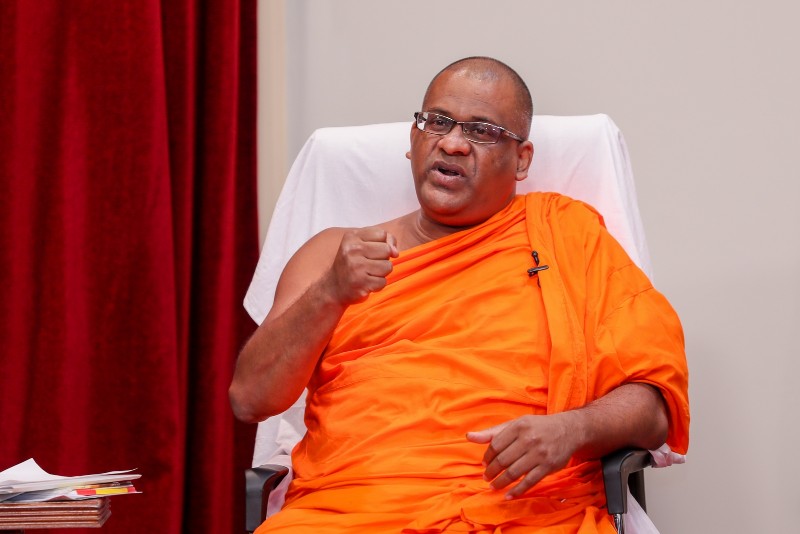
The Kingdom of Saudi Arabia had reportedly extended its support to mitigate religious extremism in Sri Lanka during a special meeting they had with Ven. Galagoda Aththe Gnanasara Thera, who made a recent visit to Saudi on a special invitation, the Daily Mirror learns.

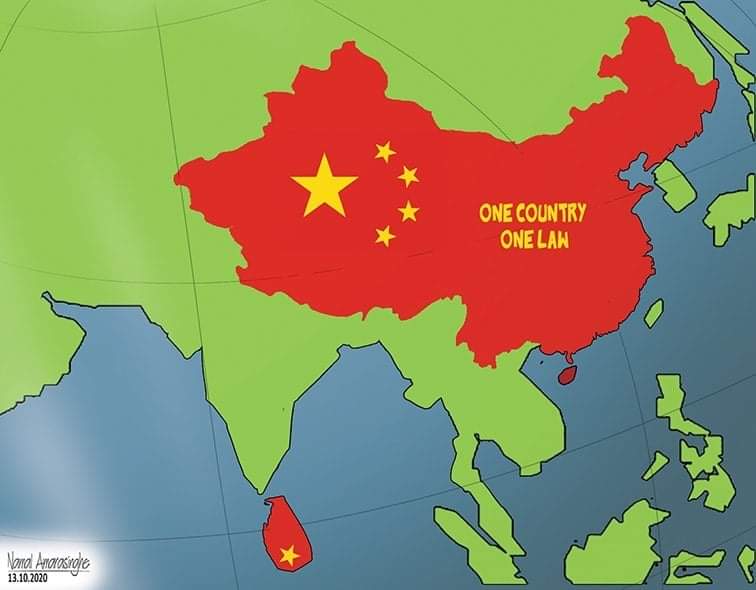
Gnanasara Thera who presently heads the Presidential Task Force for ‘One Country, One Law’ had personally been invited on a two day visit to Saudi Arabia, to attend a top level discussion between the Saudi officials on eradicating religious extremism, about a week ago.

The Thera, who was accompanied by a small party with another prominent Buddhist monk and two laymen including a university lecturer, had reportedly been invited by Crown Saudi Prince Mohammed Bin Salman for a discussion in Riyadh, sources close to the Thera said.

The local party had talks with the Saudi Defence Minister with a ring of top level officials to discuss matters pertaining especially to religious extremism and its influence in Sri Lanka.

The local party had also been taken on a tour in certain state departments in the Saudi Government, including a cyber crime monitoring unit in Riyadh for spreading of religious extremism.

During the discussions it had surfaced that Saudi Government was having a keen interest in Sri Lanka when it comes to religious extremism with its influence and was ready to help mitigate it, the sources further said.

However, when contacted BBS senior representative Dilantha Withanage said that they were neither invited by the Crown Prince of Saudi Arabia nor had any talks with him or the Defence Minister regarding mitigating religious extremism in Sri Lanka and said there were only certain discussions pertaining to the topic which took place.

He however did not rule out his presence in Riyadh with the Ven. Thera for a top level meeting.