CID Denied RW’s Request to Speak with Pilleyan, Public Security Minister Confirms

A request made by former President Ranil Wickremesinghe to speak with former State Minister Sivanesathurai Chandrakanthan, also known as Pilleyan, currently held under a detention order by the Criminal Investigation Department (CID), has been rejected.

Minister of Public Security Ananda Wijepala confirmed that Wickremesinghe’s request, made through one of his security officers via a phone call to CID officials, was turned down on legal grounds. The minister stated that speaking over the phone with a suspect in custody is prohibited.

In contrast, former Parliamentarian Udaya Gammanpila has been granted permission to meet with Chandrakanthan. According to Minister Wijepala, Gammanpila had requested access in his capacity as Chandrakanthan’s legal counsel. The meeting took place at the CID premises under the supervision of CID officers.

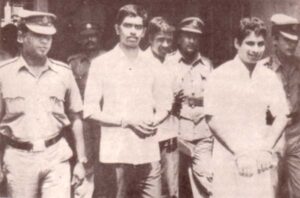
Chandrakanthan was arrested on 8 April in Batticaloa in connection with the 2006 abduction and disappearance of Professor Sivasubramaniam Ravindranath, the former Vice-Chancellor of the Eastern University. The CID has since obtained a 90-day detention order to continue investigations. However, minister Wijepala said in Parliament that Chandrakanthan was arrested pertaining to the investigations into the Easter Sunday terror attacks in 2019.

Polling cards for LG elections to be delivered to Postal Dept. today

Postmaster General Ruwan Sathkumara says that the official polling cards for the upcoming local government elections are scheduled to be delivered to the Department of Post today (April 16).

He stated that April 20 has been designated as a special day for the distribution of official polling cards to households.

“The official polling cards are scheduled to be handed over today, and we expect to receive them at the district level. We have until April 29 to distribute the official polling cards to every household,” he said.

“In the meantime, April 20 has been designated as a special distribution day, considering the importance of these documents. As these are official documents, they must be signed for upon receipt. Therefore, we kindly request that someone be present at home to accept and sign for them.”

He further added, “For any polling cards that cannot be delivered by April 29, recipients will have the opportunity to collect them by visiting the nearest post office, verifying their identity, and receiving the documents.”

Meanwhile, the delivery of reserved packets containing the registered postal ballot papers to post offices was carried out yesterday (April 15).

According to Sathkumara, reserved packets of registered postal ballot papers pertaining to nine local government bodies across six districts have been received by the postal service.

He also noted that over 70 percent of the reserved packets containing the registered postal ballot papers received so far have already been successfully distributed.

Posted in Uncategorized

Sri Lanka exports, especially apparel, face uncertainty as EU GSP+ review looms

Sri Lanka’s apparel industry could be affected further if the European Union’s Generalised Scheme of Preferences Plus (GSP+) is not extended, an economist has said ahead of a review due this month.

“The EU is one of Sri Lanka’s largest export destinations, especially for apparels. If GSP+ is removed for SL then it will be another blow for the apparel sector which is already affected by the new US trade policy,” Economist and director at Arutha Research Rehana Thowfeek told EconomyNext.

“The GSP+ program gives Sri Lankan exports preferential duty-free access to EU markets which make our products very competitive in the EU market,” Thowfeek said.

Sri Lanka’s eligibility for the European Union’s GSP+ preference scheme is due for review this month, Foreign Minister Vijitha Herath told parliament earlier, with a team scheduled to visit the island.

The country’s use of the Prevention of Terrorism Act and the Online Safety Act have been sticking points in extending the scheme, which allows the island nation to export goods to the EU market at preferential tariffs.

In return, Sri Lanka has to implement 27 international conventions on human rights, labour rights, the environment, and good governance.

The Prevention of Terrorism Act has facilitated arbitrary detentions and torture of suspects violating fundermental rights, Sri Lanka Lawyer’s Collective said.

In the most recent incident of its use, a youth who stuck an anti-Israeli sticker at a shopping mall in Colombo was detained without charges.

“The provisions and scheme of the PTA fail to protect fundamental rights such as freedom from arbitrary arrest, freedom from torture and freedom of expression,” Sri Lanka lawyer’s Collective said. “The PTA has a record of being used as a weapon and continues to be used against any citizen with impunity.”

The European Union is the second largest export market for Sri Lanka, generating over 1,523.13 million US dollars annually.

Sri Lanka faced a temporary suspension of the GSP+ scheme in 2010, a year after the end of its 30-year civil war.

Human rights violations and unstable governance were reasons for the suspension. However, GSP+ status was then reinstated in 2017.

Following the US administration’s “Liberation day” increased tariff announcement, Sri Lanka is in danger of losing its largest market for apparel to neighbouring nations which were slapped with lower tariffs.

“Potentially, we could see the bulk of our US business migrate to competitor markets,” Yohan Lawrence, Secretary General of the Joint Apparel Association Forum (JAAF) said.

President Trump has stayed the tariffs for 90 days after US markets collapsed from policy uncertainty.

Postal Voting Delayed in 18 Local Govt Bodies, Including Colombo Municipal Council

The National Election Commission states that postal voting in 18 local government bodies, including the Colombo Municipal Council, will be delayed.

This delay is due to the postponement of printing of postal ballot papers, following an interim injunction that prevented the local government elections scheduled for May 6th, in these local government bodies.

Chairman of the National Election Commission R.M.A.L. Rathnayake stated that they are currently studying the court rulings and taking steps to inform the Government Printer.

However, postal ballot papers for 227 local government bodies have already been distributed.

Postal voting for the upcoming local government elections is scheduled for the 22nd, 23rd, and 24th of this month.

Voters who are unable to cast their votes on those dates can do so on April 28th and 29th.

The Court of Appeal issued an interim injunction on the 7th of April, suspending the election proceedings in 18 local government bodies, including the Colombo Municipal Council.

This was in response to writ petitions filed by several political parties and independent groups against the rejection of their nominations.

However, on the 11th of this month, the Court of Appeal ordered the removal of this interim injunction.

This order was issued after ordering the re-acceptance of the rejected nomination papers submitted for those local government bodies.

The Court of Appeal issued this order after considering a motion filed by the Attorney General.

Posted in Uncategorized

Public Security Minister confirms Gammanpila met Pillayan, no permission for ex-President Ranil

A request made by former President Ranil Wickremesinghe to have a discussion with former State Minister Sivanesathurai Chandrakanthan, alias Pillayan, who is currently in the custody of the Criminal Investigation Department (CID) under a detention order, has been denied.

Minister of Public Security Ananda Wijepala confirmed that the former President had made a request to the CID for an opportunity to speak with former State Minister Chandrakanthan, who is currently in custody.

It is reported that one of former President Wickremesinghe’s security officers contacted CID officials via telephone requesting that the former President be allowed to speak with the detainee.

Public Security Minister Wijepala clarified that the request was denied on the grounds that it is illegal to speak over the phone with a suspect held in custody.

However, former Member of Parliament Udaya Gammanpila has been granted permission to meet and speak with former State Minister Sivanesathurai Chandrakanthan.

It was reported that former MP Gammanpila had made the request to the CID, claiming that he needed to speak with the suspect in his capacity as Chandrakanthan’s legal counsel.

Accordingly, Minister Wijepala further stated that Udaya Gammanpila was recently allowed to visit the CID and hold discussions with Chandrakanthan.

He also noted that the discussion took place in the presence of CID officers.

Sivanesathurai Chandrakanthan was arrested by the CID on April 9 in Batticaloa, in connection with the abduction and disappearance of Professor Sivasubramaniam Ravindranath, a former Vice-Chancellor of the Eastern University.

Following his arrest, the CID obtained a 90-day detention order for further questioning.

Posted in Uncategorized

As the Easter Sunday breakthrough deadline approaches, Ravi and Shani face make-or-break situation

In a dramatic turn of events, detectives from the Criminal Investigation Department (CID) stormed the Batticaloa office of Sivanesathurai Chandrakanthan, better known as Pillayan, on Tuesday. Pillayan, leader of the Tamil Makkal Viduthalai Pulikal (TMVP) and a key figure in Sri Lanka’s political landscape, was engrossed in preparations for the upcoming local council elections when Chief Inspector Madhawa and a team of over ten officers descended upon his party headquarters.

The CID team arrested Pillayan and whisked him away to Colombo for questioning. The arrest is tied to the chilling 2006 abduction of Professor Subramaniam Raveendranath, a 74-year-old Tamil academic and former Vice Chancellor of the Eastern University of Sri Lanka. Raveendranath vanished after attending a conference in Colombo, with his last known movements traced to a mysterious phone call. His family fears the worst, suspecting he was murdered after enduring relentless death threats from a paramilitary group in the east.

On December 16, 2006, the Tamilnet website reported that Raveendranath had been forced to resign as Vice Chancellor following threats from the Karuna Group, a paramilitary faction notorious for its terror campaigns. Their report said, “S. Raveendranath, the Vice Chancellor of the Eastern University of Sri Lanka (EUSL), who was forced to resign his post recently following threats from the Karuna Group that abducted a Dean of the EUSL demanding the resignation of the Vice Chancellor, was reported missing since 1:30 p.m. Friday, Dehiwale Police in Colombo said. The VC was reported missing in a high-security area in Bauddhaloka Mawatha.

“Raveendranath, who was working at the University Grants Commission (UGC) where he had submitted his resignation, was on his way to attend a meeting of the Sri Lanka Association for the Advancement of Science (SLAAS) at Vidya Mawatha near Bauddhaloka Mawatha where he was last seen by his driver at 12:30 p.m. The Vice Chancellor had instructed his driver to come back at 2:00 p.m. when the meeting is over. The driver contacted the family as he could not get in touch with Raveendranath, family members have told media. A complaint was registered at the Police around 9:30 p.m. Friday.

“Raveendranath, (55), and father of two girls, was living in Colombo as his resignation was not accepted by the UGC. Raveendranath began his career in 1978 in Karadiyanarau at the Inst itute of Agriculture, and he was a founder-member of the (Eastern University of Sri Lanka) EUSL, founded in 1980. On 30 September, unidentified gunmen, widely believed to be from the Karuna group, came in a white van, kidnapped the Dean of Arts faculty at the EUSL, Dr. Bala Sugumar while he was at his Uppodai home in Batticaloa. The kidnappers had demanded the immediate resignation of the Vice Chancellor of EUSL, Dr. S. Raveendranath, before releasing Bala Sugumar. A senior lecturer at the Eastern University, Kumaravel Thambaiah, was shot and killed by the paramilitary group on 24 May 2004.”

Dr. Bala Sugumar, the Dean of Arts Faculty, was also abducted earlier that year, reportedly by armed men. He later claimed to have seen Raveendranath while blindfolded in a suspected safe house. Sugumar’s release was shrouded in mystery, with no clear details about his abductors. The TMVP leaders openly displayed their political power. Pillayan’s erstwhile leader, Karuna, created a sensation when he successfully entered the United Kingdom in 2007. A third-person note (TPN) from the government of Sri Lanka recommending a visa for him to travel to the UK was issued to the British High Commission. It transpired that the move was initiated by then Defence Secretary Gotabaya Rajapaksa. The name on the passport was Kokila Gunawardena. This was found out whilst Karuna was in the UK.

As the CID delves deeper into this decades-old mystery, the question remains: will justice finally be served for Professor Raveendranath and his grieving family? The CID team comprised more than ten officers. When news spread about the arrest, groups in Batticaloa town lit crackers. Pillayan is now being questioned. It is yet to be determined how the CID will seek his remand custody after holding him for the legal period of 72 hours. There were moves yesterday to cover his arrest under the Prevention of Terrorism Act (PTA). Police Headquarters said in a statement on Tuesday that the arrest is linked to the alleged abduction of Professor Raveendranath in 2006. Sugumar claimed that when he was blindfolded, abducted and taken to a place which he suspected was a safe house, he saw Raveendranath. His family had told police they feared he had been killed. Whilst serving as Vice Chancellor, his family had told police that he received regular telephone calls threatening to kill him.

With a new deadline set by President Anura Kumara Dissanayake for laying bare the latest “conspiracy” surrounding the 2019 Easter Sunday massacres, the focus on Pillayan goes beyond his arrest for alleged abduction. Earlier, Cardinal Malcolm Ranjith, in an ultimatum to the government, warned that the Catholic Church would stage protests if there was no response by April 21, the sixth anniversary of the terror attacks, in keeping with the government’s pledge to reveal the masterminds of the Easter Sunday massacre. This was to take the form of a march from Colombo to the Katuwapitiya church in Negombo, one of the churches affected by attacks from Islamic terrorists. The result was a strong pledge by President Anura Kumara Dissanayake whilst addressing political rallies for the local council elections on May 6. He declared that the masterminds (maha mulakaru) would be exposed before April 21.

It is known that CID detectives have questioned Pillayan about the Easter Sunday massacres. That included the time when he served a sentence at the Batticaloa prison. He had denied accusations that he trained a group, also serving prison sentences, to carry out attacks on targets. As previously reported, CID detectives visited the Batticaloa prisons to interview officials and long-term inmates to ascertain whether they had any knowledge of the training or other plans. This has assumed significance after the arrest on Tuesday (on the same day Pillayan was taken in) of a police constable attached to the State Intelligence Service (SIS) for allegedly “misleading” investigators. This is in respect of the finding of a suspicious jacket near a culvert. It was after two police constables were found murdered in Vavunativu on November 30, 2018.

This is all over a contentious issue that has remained a finger-pointing battle between the Directorate of Military Intelligence (DMI) and the Criminal Investigation Department (CID). It relates to the killing of two police officers in Vavunativu, near Batticaloa, on November 30, 2018, and the contradictory positions of the Directorate of Military Intelligence (DMI) and the Criminal Investigation Department (CID). A committee that probed “intelligence co-ordination and investigative processes” about Easter Sunday massacres initiated by Ranil Wickremesinghe when president records the details of this episode. It said, “The committee observed that prior to the killings, there had been a conflict between the local Vavunativu police, and a person named Kadirgamar Thambi Rasakumar alias Kannan alias Ajanthan who had organised Maveerar (Great Heroes) celebrations on 27 November, 2018, in the Vavunativu Police area. The OIC of the Vavunativu Police has prohibited these celebrations and he had given permission to have muted celebrations (lighting lamps only), which had subsequently led to an altercation between the parties. Subsequently, the OIC of Vavunativu police had arrested Ajanthan on 3 December 2018 at 4.30 pm. The CID Director, Shani Abeysekera, has taken cognizance of this situation and subsequently sought a Detention Order over Ajanthan.”

The committee noted that “at the instigation of the Vavunativu OIC, the Kilinochchi Police had arrested Rasanayagam Sarvanandan alias Emiyavan, on the basis that he was also connected to Ajanthan. Thereafter, DIG CID Ravi Seneviratne had moved for a Detention Order against him. The CID strongly believed that the murder of the two policemen, for which two persons convicted are now serving a sentence, was carried out by the Liberation Tigers of Tamil Eelam (LTTE). “In this background, for the first time, the DMI had on 12th April 2019 informed the Senior DIG, CID that, in fact, Rilwan and Army Mohideen connected to the National Thawheed Jamath (NTJ) had conducted the killing of the police officers,” noted the committee.

Some of the more relevant findings of the committee over this ding-dong battle between the CID and the DMI are contained in the committee’s findings. Here is a selection:

Although the DMI professed that they did not believe the LTTE was behind the killing, it reflects that the DMI had considered the LTTE as the culprits; they have arrived at the position based on their informants.
Despite being aware of the NTJ’s activities since around 2015, SIS failed to share this critical information with the DMI. This lack of communication contributed to the delayed recognition of NTJ as a potential threat.
The CID had relied on the findings of the DMI and the information from the local police; they had also considered that an attack of such a scale could only be done by members connected to the LTTE.
The CID had failed to investigate the information which was at least shared on 12th April 2019 attributing the killings to the LTTE.
The committee noted that they reproach “the manner of the investigation by the CID where they have not exhibited due diligence in their investigations.” Then comes their recommendation, one that is being highly contested by government officials now dealing with issues. Here is what it said: “SDIG CID Ravi Seneviratne and Director, CID SSP Shani Abeyesekera, should be prosecuted by the relevant authority under the relevant provisions of the Penal Code for their negligence in conducting investigations.”

A top official said “those findings are too sweeping and do not correctly reflect the events that have taken place. There is more transpiring now. They will be revealed.” He, however, declined to elaborate. Be that as it may, the issue only relates to the two different contentious positions taken by the CID and the DMI. What of the larger issue, the Easter Sunday massacres itself. The question is about the ten-day deadline available to the government in terms of the ultimatum by Cardinal Malcolm Ranjith. Pillayan has been arrested for an alleged abduction. What of the others whom the government wants to identify as the masterminds—an issue that the Catholic Church believes is critical for them to call off protests. Will this come in the form of an official government statement or a string of arrests that could include big names?

That points to the question of who the masterminds were. The Sunday Times has seen a copy of the 71-page affidavit filed in a Los Angeles court by the head of the investigation team of the US Federal Bureau of Investigation (FBI) that probed the Easter Sunday massacres. This came because of the US government’s offer of assistance being accepted by Sri Lanka. Sri Lanka provided the FBI investigators with more than 700 electronic devices, such as mobile phones, laptops and cameras collected by the police during investigations.

Merrilee R. Goodwin, a Special Agent, who headed the FBI team has conducted investigations of federal criminal violations, including crimes of terrorism and crimes conducted outside the United States. He has participated in many investigations of criminal conduct committed by designated foreign terrorist organisations, such as the Islamic State of Iraq and al-Sham (“ISIS”). He has been deployed overseas several times on behalf of the FBI to investigate terrorist attacks and crimes against United States nationals abroad. In that role, he has processed crime scenes, collected evidence, and conducted interviews. He has also worked closely with FBI Special Agent Bomb Technicians (“SABTs”) and received training in the construction and use of improvised explosive devices (“IEDs”). The affidavit was made in support of a criminal case against and arrest warrants for Mohamed Naufer, Mohamed Aswer Mohamed Riskan and Ahmed Milhan Hayathu Mohamed before US courts.

Dated November 12, 2020, the affidavit notes that “the attackers and their co-conspirators were members and supporters of ISIS and created a group, “ISIS in Sri Lanka,” more generally, as the “group,” that ISIS formally recognised as an ISIS affiliate operating in Sri Lanka. ISIS claimed responsibility for the attacks via its news agency, declaring that “Islamic State fighters” had “targeted citizens of coalition states and Christians in Sri Lanka.” ISIS also posted a picture and video of the attackers swearing allegiance (“bayat”) to ISIS’s then leader, Abu Bakr al-Baghdadi (“al-Baghdadi”). Before detonating an IED that killed himself and scores of victims, Jahran Mohamed Cassim, also known as (“aka”) Mohamad Cassim Mohamad Zahran, aka Zahran Hashim (“Zahran”), was the mastermind behind the Easter Attacks and the self-proclaimed leader of ISIS in Sri Lanka. Zahran claimed to have communicated directly with ISIS leadership in Syria and obtained approval to operate as an ISIS affiliate. The group member swore bayat and trained and recruited new members using ISIS instruction materials that ISIS provided.”

The affidavit notes: Based on my investigation, my discussions with U.S. and Sri Lankan law enforcement officials, and open-source research, I know the following:

“On April 23, 2019, ISIS claimed responsibility for the Easter Attacks via its news outlet, the Amaq Agency (“Amaq”). ISIS claimed that the attacks were conducted by “Islamic State fighters” who had “targeted citizens of coalition states and Christians in Sri Lanka.” Also on April 23, 2019, Amaq posted a picture and a video of the attackers swearing allegiance to ISIS leader al-Baghdadi. Abu Bakr al-Baghdadi, whose real name was Ibrahim Awad Ibrahim Ali al-Badri, was the founder and leader of the Islamic State (IS), also known as ISIS, who served as its first caliph from 2014 until his death in 2019. Zahran, the attacks’ mastermind, is visible unmasked in the centre of the group standing in front of the ISIS flag. Four of the attackers are brandishing knives.

On April 27, 2019, the day after the shootout in Sainthamaruthu, Amaq released a statement claiming that “17 members of the Sri Lankan Police were killed and wounded in an ambush prepared by Islamic State fighters. “Amaq’s reporting contradicted official reports that no police officers died during that shootout.

“On April 29, 2019, Amaq released a video of al Baghdadi in which he described the April 21, 2019, attacks as retaliation against “the West” for ISIS’s March 2019 defeat in Baghuz, Syria. Specifically, al-Baghdadi praised the “commando operations that unsettled the Crusaders in their Easter celebration to avenge their brothers in Baghuz,” and praised God that “among those killed were some Americans and Europeans.”

“The Attackers Manufacture and Deploy Nitrate-Based improvised explosive devices (IEDs). Based on my discussions with an FBI SABT who deployed to Sri Lanka and reviewed and collected physical evidence from attack sites (also referred to as blast sites) and safe houses, and my review of witness interviews, CCTV recordings, and forensic reports, I know the following:

An IED generally consists of three components: (1) an explosive; (2) a fusing system; and (3) a container. Explosives are reactive substances that can release large amounts of energy at varying speeds. IEDs manufactured with high explosives, meaning the explosives release energy at supersonic speeds, may contain multiple explosive materials within a single device referred to as primary, secondary, and in some cases, tertiary explosives. According to open-source information, the Battle of Baghuz Fawqani, which lasted from February 9, 2019, to March 23, 2019, marked the end of ISIS’s territorial occupation of Syrian lands and ISIS’s self-proclaimed “caliphate.”
Tertiary explosives, which are often added in bulk quantities, require a secondary explosive to initiate the tertiary material. A fusing system is a means or mechanism for initiating the explosive materials. A fusing system can be chemical, mechanical, or electrical in nature. Generally, an electrical fusing system consists of a power source (commonly a battery), a conductor (commonly electrical wires), an initiator (also called a detonator and often containing a primary explosive material), and a switch.
The FBI team probing the Easter Sunday massacres were allowed access to those arrested and remained in custody. One of them revealed how he procured approximately 1,900 detonators and 1300 water gel explosives for Zahran. The latter had told him that it was to be used for fishing. The FBI team also spoke to some of the ISIS in Lanka top rungers who ended up in CID custody. This is what the affidavit had to say about Mohamed Naufar, described as number two of the ISIS in Sri Lanka. “He is an ISIS member and supporter and served as ISIS in Sri Lanka’s “second emir” (means ruler or commander) or “Mujahedeen” is the plural form of “mujahid,” the Arabic term for one engaged in jihad, which literally means “struggle,” but is often used by Islamist terrorists and their supporters to refer to violence perpetrated against non-believers.

“Based on my training and experience, I know that Threema, Telegram, and WhatsApp are end-to-end encrypted messaging applications, meaning that the content of the messages is only accessible via the users’ digital devices and is not stored on the applications’ servers. Security-conscious users prefer these types of messaging applications because of the perceived security and anonymity end-to-end encryption offers users. Zahran tasked NAUFAR with leading the group’s propaganda and media efforts. In addition, NAUFAR recruited on behalf of ISIS and organised and led weapons, explosives, and ideology trainings. “NAUFAR’s Admissions to the FBI: On June 10, 11, and 26, 2019, and March 11, 2020, FBI special agents conducted recorded interviews of NAUFAR at CID headquarters in Colombo. NAUFAR made the following statements, among others:

a. NAUFAR Embraces ISIS Ideology and Aligns Himself with Zahran. In approximately 2009, while NAUFAR was living in Qatar, Zahran started a new organization, the National Thowheeth Jama’ath (“NTJ”). Zahran used the new organization to preach an extremist version of Islam.

b. In late 2015 or early 2016, NAUFAR began researching ISIS. NAUFAR initially disapproved of ISIS’s endorsement of violence against other Muslims and ISIS’s advocacy to destroy Saudi Arabia, where many Islamic holy sites were located.

c. In early 2017, Zahran gave a speech in Kattankudy, a town on Sri Lanka’s east coast, which was recorded and posted online. In that speech, Zahran defended ISIS as a legitimate organization.

d. According to NAUFAR, two events in 2017 solidified Zahran’s support for ISIS. After a public gathering Thowheeth Jama’ath (It means a “monotheistic organization” in Arabic) Zahran organised devolved into a violent conflict between Sufi Muslims and Zahran’s followers, Sri Lankan authorities arrested Zahran’s followers but not (according to NAUFAR) the Sufi Muslims. That same year, NAUFAR claimed that the Sri Lankan government failed to prevent Buddhist extremists from attacking Muslims, causing NAUFAR and others to believe that the Sri Lankan government was biased against Muslims.

e. In and after August 2017, Zahran showed NAUFAR ISIS videos, documents, and other information that led NAUFAR to embrace ISIS. NAUFAR formed an allegiance with Zahran and claimed to have joined ISIS at this time with the intention of committing suicide attacks.

f. ISIS Leaders Approve Zahran’s Group as Part of ISIS and NAUFAR is Named Second-in Command and Leads Firearms and Explosives Trainings In approximately 2014, A.N., a close associate of Zahran – travelled from Sri Lanka to Syria with his family members and lived in ISIS-controlled areas. One of A.N.’s family members, A.D., became an ISIS leader.

g. In late 2017 or early 2018, Zahran recorded a video of himself, NAUFAR, MILHAN, Hasthun (the St. Sebastian’s suicide bomber), Rilwan (Zahran’s brother who died in the April 26, 2019 shootout), and others. The group gathered in a Sri Lankan forest and, while holding firearms, pledged allegiance to ISIS and al-Baghdadi. Zahran, with Lateef’s assistance, sent the video to A.N. and A.D. in Syria. NAUFAR understood that A.N. and A.D. promised Zahran that the video would be delivered to al-Baghdadi. According to Zahran, because of the video, ISIS officially approved Zahran’s group as part of ISIS, with Zahran as the group’s leader or emir. Zahran appointed NAUFAR to be his “second-in-command” and the group’s media and propaganda officer.

h. Following ISIS’s official recognition of the group, now known as ISIS in Sri Lanka, Zahran told NAUFAR and others that ISIS leaders in Syria communicated directly with him using Telegram. Zahran said ISIS provided him ISIS materials, including a detailed training syllabus for the group’s members.

i. At ISIS and Zahran’s direction, NAUFAR organised approximately eight training courses for current and prospective members based on the materials ISIS provided. These multi-day courses were held in rented homes and were attended by between 15 and 25 students. The courses included instruction on ISIS ideology and firearms and explosives training.

j. Participants learned to operate a Type-56 rifle and 9-millimeter pistol and to make black powder explosives. NAUFAR, MILHAN, and Zahran were among the instructors. Hasthun served as an explosive expert, while Ilham (one of the Shangri-La suicide bombers) financed the group’s activities. During the courses, the group discussed targeting American interests overseas and attacking them. At the end of each course, the attendees swore allegiance to ISIS. Attendees were instructed not to bring their phones to the training courses, not to use their real names, and not to disclose personal information to the group.

Another revelation in the affidavit of the FBI lead investigator is how Zahran issued mobile phones to members of the ISIS in Sri Lanka. This is what it said:

Zahran distributed mobile phones to ISIS in Sri Lanka members, and between 2017 and his arrest, NAUFAR used approximately five phones Zahran provided. To further the group’s security, Hasthun swapped out the phones’ SIM cards every three to four months and directed the group to use the encrypted messaging applications Telegram and Threema.

“NAUFAR was told not to make telephone calls using the phones. NAUFAR claims to have broken ties with Zahran a month before the Easter attacks. He admits to being warned the morning of the attacks to flee. In early 2019, NAUFAR believed Zahran was to blame for the Sri Lankan authorities’ raid on the Puttalam estate, because Zahran had disregarded the group’s security protocols and used his mobile phone and the landline at the Puttalam estate to make and receive calls. On March 7, 2019 — a little over a month before the Easter Attacks — NAUFAR and others confronted Zahran, who agreed to resign as leader of the group.

“The following day, however, Zahran rescinded his resignation and claimed that ISIS officials in Syria should be consulted before any leadership change.

A rift developed between Zahran and NAUFAR. NAUFAR claimed that he last had direct contact with Zahran on March 9, 2019. NAUFAR stated that he attempted to reconcile with Zahran, but Zahran rejected NAUFAR’s overtures. In the days leading up to the attack, NAUFAR and his supporters hid at a safe house in Wattala, a large suburb of Colombo. Zahran at the time, travelled to the Wattala safe house to speak with NAUFAR and his supporters.”

Interestingly there is also a reference to the November 28, 2018, killing of two policemen in Vavunativu, one over which the CID and DMI are feuding. “One officer was stabbed 41 times whilst the other was shot in the head and back with a T-56 rifle,” the FBI reveals. Co-conspirator 1, it added is an “ISIS in Sri Lanka member” and participated in the murders. It said that FBI special agents interviewed “co-onspirator 1 at CID headquarters…”

The events recounted here and elsewhere, no doubt, will add further significance to the arrests or a statement the government will make within the next seven days from today (April 13). There is now greater responsibility, particularly on the part of the two main investigators, Ravi Seneviratne, Secretary to the Ministry of Public Security, and Shani Abeysekera, soon to be a DIG. Both are among those who have come in for strong criticism in the aftermath of the Easter Sunday massacres for their official roles. They have an unenviable task—adduce proof both domestically and nationally on who the perpetrators of the Easter Sunday massacres are from the probe they are conducting six years later. If it is anything different from what has been found and already known, new evidence to prove them becomes a sine qua non. It is a make-or-break situation.

Posted in Uncategorized

Sri Lanka faces default risks after abandoning scarce reserve system

Sri Lanka’s private credit is recovering from the latest currency crisis triggered by rate cuts to target output and high cost of living increase of 5 percent, and red flags are going up.

There are several red flags and one green one.

The biggest red flag is the single policy rate and state liquidity forecasts for private banks for which technical assistance has come from the International Monetary Fund.

As Sri Lanka is celebrating its independence, the macroeconomists are giving some limited freedom to buy cars. Gazette issued shows penalty taxes for holding stocks.

Meanwhile there are price controls for rice and heavy import duties. Exchange controls are also in place.

It is a sad plight for a country to be in 76 years after independence. And that is the second red flag.

From Scarce Reserves to Excess (or Ample) Reserve Framework

The single policy rate is the reddest of the red flags.

Under a corridor system, especially a wide corridor, the central bank only prints barely enough money for commercial banks which mis-manage their liquidity to clear transactions.

Without liquidity auctions, banks have to borrow at the top of the corridor at a rate slightly higher than the overnight market rate at times.

However when a mid-corridor rate is targeted, or a single rate is targeted, there is excess liquidity with banks bidding for easy money at low rates.

This was seen in October 2024 in particular.

For example, on September 03 the central bank offered 15 billion rupees through a liquidity auction, for which 36.28 billion rupees of bids came from banks. But since 15 billion was offered 15 billion was given at 8.51 percent, when the ceiling rate was 9.25 percent.

At 9.25 percent only 0.65 billion was borrowed. Though banks bid 36.58 billion rupees, the day’s transactions were cleared at 15.65 billion rupees, which is less than half the volume bid.

Banks will clear transactions by borrowing from clients or reducing credit if they were forced to do through a corridor system.

On September 05, 20 billion rupees was offered, 25.61 billion was bid. Since 15 billion rupees was offered, only 15 billion was given. There were no borrowings from the window.

If there was no liquidity offered, banks would soon learn to operate without central bank money. Foreign banks usually do that.

This is how scarce reserve frameworks work or borrowing small amounts from the ceiling window.

On September 09, 60 billion rupees was offered, 54.05 billion was bid and all bidders were given printed money. The lowest rate was 8.26 percent, which was one basis point about the lower policy corridor. The bidder obviously did not care whether they got any cash or not.

The big changes are because some money is also offered for a week or two through term auctions and some of them mature.

The lesser the variation in the daily rates, the higher the excess liquidity that is required. They have to be injected for days on end and weeks.

Ample or Excess Reserve Framework

Modern central banks in the age of inflation and volatile commodity and food prices give liquidity at the drop of a hat, like this.

If there is a ceiling rate it is reduced.

Up to the last quarter of 2024 the central bank was steadily selling down its Treasury bills portfolio, that is was a deflationary framework where there liquidity was constantly withdrawn and dollars were bought.

Now the central bank has run out of Treasury bills to sell.

When liquidity is injected, reserve money is inflated.

The current madness with excess liquidity had its roots in the end of the Great Moderation where in the US a narrower 25 basis point rate was targeted.

And then the policy rate was brought to almost zero, mis-understanding a productivity driven price index fall as a deflationary collapse (debt deflation).

After firing a Housing Bubble, in the style of John Law’s Mississippi Bubble, through what was then called the ‘mother of all liquidity bubbles’ the problem worsened.

After the collapse of the housing bubble, due to quantity easing large volumes of excess liquidity was generated in a great grandmother of liquidity bubbles.

Banks – which had a lot of bad loans and were also hit by the Frank Dodd Law – were initially not using the liquidity and were re-depositing them in the Fed. The Fed started to pay interest on them as well.

As the presence of excess liquidity got normalized, the Fed then said there was no reserve requirement at all.

And then suddenly it was an ‘ample reserve’ framework. No liquidity was ‘excess’.

READ MORE Implementing Monetary Policy in an “Ample-Reserves” Regime: The Basics (Note 1 of 3)

It is in this context that Sri Lanka is going into a single policy rate, regular liquidity auctions and targeting call money rates very narrowly.

This is deadly for a country which is trying to collect foreign reserves.

Reserve collection requires deflationary policy – gentle deflationary policy will keep the exchange rate stable through a scarce reserves regime.

Mis-pricing Risks, Destroying Market Discipline

The single policy rate and narrowly targeting the call money rate has other implications.

The call money rate is a clean rate which is supposed to be risky. However, it is happening among some prime banks with some limits to each other.

At the moment the un-backed call rate is below the treasury bill backed, repo market.

This is not normal.

(This column is based on one that was originally published in the Echelon Magazine of February 2025, but the trend is basically the same, except that the ‘signalled’ single policy rate turned out to be higher than rates further along the yield curve by late March. This phenomenon however will prevent an external default rather than create one.)

However, we can argue like this. The foreign banks are safer than government securities which are from a defaulted government.

Whatever it is, when the central bank gives liquidity, for days on end and weeks on end, banks that cannot borrow in the market, can escape the market discipline and trade with printed money, for days and weeks on end.

Eventually this money will turn into credit and imports, leading to loss of reserves, especially in the context of debt repayments.

One of the reasons banks in central bank regimes collapse and those is currency boards and dollarized areas do not collapse is due to the lack of these easy money.

Banks then become tightly managed.

When the US collapses due to the policy rate and open market operations, Hong Kong, which is a currency board, does not see banks collapses. Therefore when US rates fall there is a spike in property prices in Hong Kong because banks are healthy.

When the Housing Bubble collapsed, Dubai saw only one or two banks fail or threatened to fail. In Panama which is dollarized, only one bank failed or threatened to fail.

That is also why areas like Hong Kong, Cambodia, or Panama have low debt to GDP ratios. Just like bad money leads to bad budgets, good money leads to good budgets.

The Vehicle Import Debacle

The vehicle import restrictions also show that there is no knowledge about the matter.

In the absence of (inflationary) open market operations there is no problem with the balance of payments.

This column has previously explained why.

Related : Sri Lanka vehicle imports not a threat to rupee but inflationary open market operations will be

Nobody can buy anything without money they do not have. The only way to do that is to get credit – and in the absence of open market operations – one type of credit has to crowd out another.

If cars are imported through a loan, then a hotel project will have to wait until deposit and loan repayments come to banks or finance companies.

The reason countries have foreign exchange rate shortages and currency crises is due to credit being financed by central bank credit through open market operations or other means which allows the car and some other credit like that for a building to be also given at the same time.

There is no need to put restrictions on the import of cars, or on stocks of cars kept by dealers. It is up to the dealers to waste money and keep fleets of unsold imported cars paying the correct market interest rate on working capital.

All vehicles stocks will do is drive up interest rates little and delay the ability of a bank to give another credit unless new deposits come.

If money is injected to target a single policy rate, or domestic market dollar rupee swaps are done, the same thing that happened in 2011, 2015, 2018 and 2020-2022 will happen – which causes forex shortages.

The reason Sri Lanka has had low inflation since September 2022 is due to the central bank’s deflationary policy of selling down Treasury bills and running a scarce reserve framework due to the IMF’s requirement to sell down the bill stock.

It is not because of the Ceylon Electricity Board.

Green Flag

The one green flag is the Central Bank Governor’s statement that he will sell down the central bank’s Treasury bonds stock.

If there is no ceiling on domestic assets in the next IMF program, Sri Lanka will have forex shortages and have currency crises like in the 2012 and 2018 inside the program and foreign reserve targets will be missed.

Related Sri Lanka central bank to sell down its restructured bonds

Then the second default is inevitable.

If central bank securities (its own securities) are sold it is not a very good thing as past experience has shown. The central bank is then tempted not to roll-over the securities as market rates rise, as happens in Argentina.

However if the g-sec portfolio sold down, it is no longer the central bank’s responsibility to ensure their roll-over.

Dollar swaps are worse in a country like Sri Lanka with the liquidity-happy central bank and a single policy rate.

Central bank can convert its step down government bonds into a more simple marketable security, perhaps a floating rate one based on the 3-month bill yield.

The IMF lacks the knowledge to maintain monetary stability. Their technical assistance has the opposite effect. Sri Lanka had serial currency crises, and defaulted due to running an excess reserve (or ample reserves to use the modern term) from mid-corridor targeting.

The mid corridor targeting which led to the excess reserve framework has now been legalized through the new monetary law and a gazette issued for the single policy rate.

The 100 billion rupees printed in October/November is a foretaste of things to come, unless the central bank held bonds are converted to a marketable instrument and used to run a scarce reserve framework.

Sri Lanka’s macroeconomists have battered the people with printed money for decades, injecting money into banks and blaming politicians for deficits when inflation went up and people demanded salary hikes and subsidies.

Now it is open market operations after ‘monetary policy modernization’.

At the time it was central bank re-finance. The Import and Export Control Act was brought in 1969 when the central bank was doing re-finance credit.

Posted in Uncategorized

President calls for unity and goodwill in Sinhala and Tamil New Year message

President Anura Kumara Dissanayake, in his Sinhala and Tamil New Year message, calls upon all Sri Lankans to come together with renewed strength, unity, and goodwill to support the nation’s journey toward transformation.

Emphasizing that this traditional festival marks both physical and spiritual renewal, the President highlighted the New Year as an opportunity to recommit to the shared goal of building “A Thriving Nation – A Beautiful Life”.

Reflecting on the progress made under the National People’s Power government, the President stated:

“It is with profound joy and gratitude that I reflect upon the efforts undertaken by the National People’s Power government over the past months to lift our nation from adversity and steer it towards economic, social and political advancement.”

He praised the resilience and support of the people, stating that the victories achieved belong to the citizens who placed their trust in the government through the recent Presidential and General Elections.

“As a responsible government, we possess the strength and determination to further deepen our commitment to the nation, even amidst formidable challenges,” he said, while reaffirming the government’s intent to continue implementing well-planned strategies to meet national and geopolitical challenges.

In his message, the President also highlighted the symbolic importance of the New Year’s traditions in promoting harmony between communities and coexistence with nature.

“The Sinhala and Tamil New Year traditions beautifully reflect the harmony between humanity and nature, bearing witness to the deep-rooted history of coexistence between our Sinhala and Tamil communities,” he said, noting that the New Year serves as a reminder of unity, compassion, and ethical values in a society often challenged by division.

The President concluded his message with a heartfelt call for collective effort and shared purpose.

“As we welcome this New Year, I call upon all of you to come together with renewed strength, unity and goodwill… ensuring enduring progress and prosperity for our country and all its people.”

President’s Full Message:

“As we celebrate the Sinhala and Tamil New Year this year, a festival that symbolises the hope of both physical and spiritual renewal, our nation finds itself at a defining moment, achieving significant victories while resolutely striving towards the realisation of a better and more prosperous future.

It is with profound joy and gratitude that I reflect upon the efforts undertaken by the National People’s Power government over the past months to lift our nation from adversity and steer it towards economic, social and political advancement. The successes we have thus far achieved rightfully belong to the people of this country, whose steadfast trust, as expressed in the most recent Presidential and General Elections, has been the driving force behind this transformative journey.

As a responsible government, we possess the strength and determination to further deepen our commitment to the nation, even amidst formidable challenges. We are implementing well-considered plans to address the multifaceted challenges confronting our country, both in terms of national development and within the broader geopolitical landscape.

The Sinhala and Tamil New Year traditions beautifully reflect the harmony between humanity and nature, bearing witness to the deep-rooted history of coexistence between our Sinhala and Tamil communities. While contemporary society may be burdened by various divisions, occasions such as the New Year provide a timely reminder of the enduring values of unity, harmony and peaceful coexistence. It is our solemn responsibility, particularly at this time of renewal, to nurture those values within ourselves and to foster a more compassionate and ethical society.

Moreover, the rituals associated with the sun’s transition are underpinned by the universal aspiration to create a renewed individual, one free from outdated thoughts and attitudes. The New Year, therefore, offers us an invaluable opportunity to embrace renewal in our own lives.

As we welcome this New Year, I call upon all of you to come together with renewed strength, unity and goodwill. Let us collectively work towards a common purpose, supporting the government’s vision for economic, social and political transformation and thereby ensuring enduring progress and prosperity for our country and all its people.

May this New Year bring you and your loved ones peace, happiness, renewed hope and abundant prosperity in your journey towards ‘A Thriving Nation – A Beautiful Life”.

Warmest wishes for a Happy Sinhala and Tamil New Year!”

EU team to arrive in Sri Lanka to review GSP+

A team from the European Union is scheduled to arrive in Sri Lanka in the latter part of April to review the Generalised Scheme of Preferences Plus (GSP+) trade concession.

The team will hold discussions with representatives of the government and local officials regarding the GSP+ trade concession and its conditions, said the Leader of the Opposition, Sajith Premadasa.

During a meeting held with representatives of trade unions, Opposition Leader Premadasa said the GSP+ concession plays a vital part in Sri Lanka’s apparel industry as 28% of the exports head to the EU market.

Premadasa noted that the opposition will stand with the apparel industry and support the retention of the GSP+ concession.

He therefore requested the government to work towards complying with the conditions that will ensure Sri Lanka will continue to receive the GSP+ trade concession.

The GSP+ is a special incentive arrangement for Sustainable Development and Good Governance that supports vulnerable developing countries.

GSP+ countries are required to ratify 27 international conventions on human rights, labour rights, environmental protection and climate change, and good governance.

In order to ensure effective implementation of the conventions as well as compliance with reporting obligations, the EU engages in monitoring activities with the GSP+ countries including Sri Lanka. GSP+ beneficiaries can benefit from complete duty suspensions for products across approximately 66% of all EU tariff lines.

Committee appointed to look into repealing PTA

A committee has been appointed to look into the repealing of the Prevention of Terrorism Act (PTA), the Ministry of Justice and National Integration has announced.

The committee will be headed by President’s Counsel Rienzie Arsecularatne and is expected to commence public consultations in May.

The committee has also been tasked with obtaining inputs from civil society organizations, and feedback from international institutions and communities.

A preliminary discussion regarding the repeal of the PTA was held on 11 April under the leadership of the Minister of Justice and National Integration, Attorney-at-law Harsha Nanayakkara, at the Ministry of Justice premises.

During the discussion, the Justice Minister has claimed that the repeal of the Prevention of Terrorism Act is a policy of the incumbent government.

The Justice Minister has emphasized that the new Act should be one that can tackle global terrorism and challenges, while also ensuring it does not infringe upon constitutionally guaranteed human rights and the freedom of expression, as recognized internationally.

The Ministry of Justice further stated that past governments have not acted with due diligence in bringing about these legal reforms, and that the appointed committee has been instructed to concretely identify the relevant matters for repealing the Act within a short timeframe.

Posted in Uncategorized