SL urges India to export nano urea after detecting contamination in Chinese fertilizer

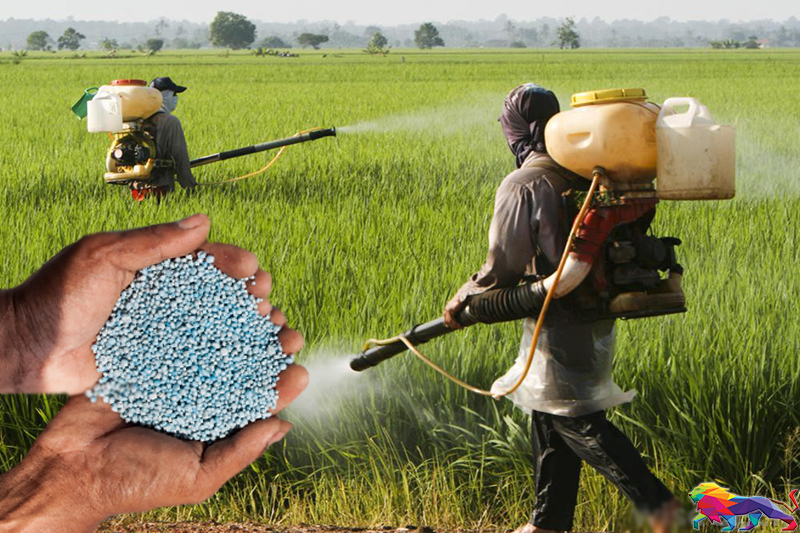
The Department of Agriculture in Colombo detected the highly contaminated organic fertilizer sent by China and cancelled the fertilizer and requested India to export nano nitrogen liquid fertilizer.
According to a news piece published in Colombo Gazette, the organic fertilizer samples were sent by Qingdao Seawin Biotech Group Co., Ltd., China, in August 2021, Upon being termed ‘contaminated’ by Colombo, China hit back calling the decision of the SL Agriculture Department “hasty”.

The samples were reportedly tested twice and were found to be contaminated. Despite this, the Chinese company loaded 12,150MT of the fertilizer on a vessel from Qingdao Port to Singapore Port which came as a surprise to the Ministry of Agriculture, reported Colombo Gazette.

However, there is no clarity on the transit of the ship back to China.

The SL Agriculture Department cancelled the Chinese fertilizer upon the lack of time for the paddy cultivators, the ministry requested India to import the nano nitrogen liquid fertilizer worth Rs 9bn.

India has already exported 45,000 litres filled in 90,000 bottles of nano urea by air, reported Colombo Gazette.

The Director-General of the Department of Agriculture, Dr Ajantha de Silva informed India would export 2.1 million litres of urea.

China challenged the report and forcefully sent the ship to SL leaving the scientists of the country angered who further accused the Chinese Embassy of humiliation over China’s challenge to the testing results.

The news website informed that Qingdao Seawin was selected for the import of the fertilizer through the issue of a tender.

The Director-General of the Agriculture Department was said to have the authority to permit the import of the fertilizers from the Chinese company, however, he denied having issued the permit. He further added that he did not understand how did the fertilizer reach the country despite the cancellation of the order.

He further added that the Minister of Agriculture, Mahindananda Aluthgamage too was in opposition to the fertilizer from China, reported Colombo Gazette. (ANI)

Posted in Uncategorized

EU grants EUR 2 Mn to SL for COVID-19 health response

The European Union (EU) has granted a further EUR 2 million in funding to help Sri Lanka in its efforts to manage the pandemic.

The grant, provided by the EU humanitarian office ECHO, will be channelled through the World Health Organization (WHO) and World Vision in Sri Lanka, the EU said in a statement.

These resources complement ongoing EU support to fight the Covid-19 and its socioeconomic consequences in Srilanka, including EUR 2 million for the health sector as well as close to EUR 4 million to revitalize the tourism industry.

“Healthcare staff and facilities in Sri Lanka are being pushed to the limit by the pandemic,” said Michelle Cicic, who oversees EU humanitarian assistance in Asia-Pacific.

“The EU and Sri Lanka have worked together to battle COVID-19 since the onset of the pandemic. This latest support will ensure that emergency equipment and supplies are quickly channelled to health facilities in dire need of life-saving assistance.”

“This new grant is part of the EU’s global response to the coronavirus pandemic to ‘build back better’ and it complements our ongoing partnership with WHO in Sri Lanka,” said the Ambassador of the EU Delegation in Sri Lanka, Denis Chaibi.

“The additional resources will be instrumental in improving healthcare capacity and hopefully help also preventing future surges of cases, while paying special attention to the needs of the most vulnerable people and underserved areas.”

WHO has conducted an assessment of health facilities and identified the gaps in emergency preparedness and response. In response, WHO will support the management of severe cases in 74 hospitals by providing medical equipment and supplies; enhance surveillance and rapid testing capacities with 100,000 new rapid antigen test kits and provide Personal Protective Equipment (PPE) to healthcare workers to protect them from infections and ensure continuity of essential services.

World Vision will enhance COVID-19 prevention, care and treatment capacity of the health system in four provinces. World Vision will provide equipment such as pulse oximeters, oxygen regulators, multiparameter monitors, ECG machines, nebulizers and hospital beds to 29 health facilities. In addition, it will support vaccination campaigns targeting vulnerable groups.

“WHO appreciates the EU’s partnership supporting Sri Lanka’s COVID-19 effort,” said Dr Alaka Singh, WHO Representative to Sri Lanka. “The flexibility of the funding allows responsiveness to immediate needs. This has been seen with the supply of urgent life-saving equipment to hospitals, testing kits and protective equipment. At the same time, longer-term support continues, making important contributions to health systems’ recovery and resilience.”

“World Vision Lanka commenced its response to Covid-19 in March 2020 reaching over 500,000 people within the year,” said Dr. Dhanan Senathirajah, national director of World Vision Lanka, “Our response continued to evolve along with the needs. We have so far supported over 6,000 hospitals and care centres with essential health equipment, and with this funding, we will be able to broaden our reach and support the most vulnerable during this crucial time.”

Interprovincial travel restrictions to end on Oct. 31

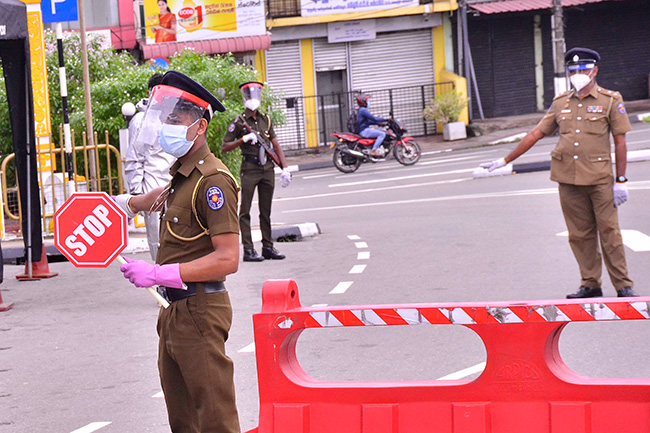
Ongoing interprovincial travel restrictions will be lifted at 4.00 a.m. on October 31, says the President’s Media Division (PMD).

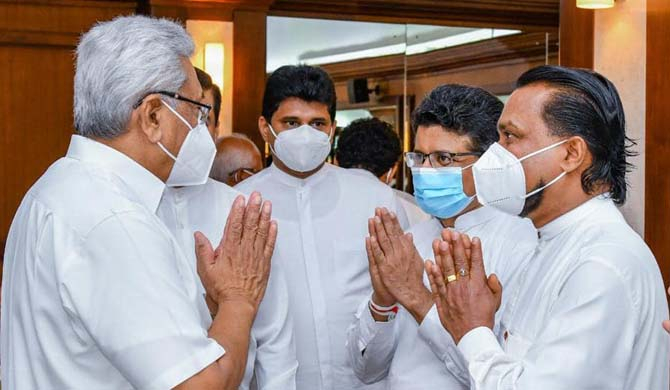
President Gotabaya Rajapaksa, who chaired the virtual meeting of Special Committee on COVID-19 Control today, noted that the decision was taken with the aim of maintaining the people’s daily lives under the new normalization.

During this meeting, it was revealed that due to the COVID-19 pandemic, the education of school children has been severely disrupted and considering this situation already the health recommendations have been issued to start the G.C.E. Ordinary Level and Advanced Level classes in all schools.

The President pointed out that the principals should be made aware of this decision and the process of starting schools should be implemented expeditiously.

The President also directed the health and education authorities to expeditiously look into the possibility of commencing academic activities for the first year students of the universities.

It was also decided to immediately look into the possibility of making the vaccination card compulsory when entering public places including shops and restaurants.

Health officials stated that there are legal provisions under the COVID-19 related law to enforce it against those who decline to get the vaccine, and the health officials further said that they have sought the Attorney General’s advice in this regard.

The President also scrutinized the progress of the vaccination programme implemented for the school children.

The President emphasized the need to further strengthen the vaccination programme to reduce the COVID mortality rate and the number of infected persons.

He also instructed to provided people with the opportunity to be vaccinated by deploying vehicles for mobile vaccination in remote areas. It was also informed to obtain the assistance of Public Health Inspectors, Grama Niladharis and the local political authorities in this regard.

The Provincial Health Directors briefed the President of the false propaganda carried out by various groups to hamper the vaccination process. The President accordingly instructed the Inspector General of Police to immediately look into various organized groups, including social media, which are trying to create an unnecessary fear among the public about the vaccination.

President Rajapaksa pointed out that the Provincial and District Health Directors should take more responsibility in restoring normalcy in the country by bringing the current situation under control, and urged them to coordinate with all sectors and continue with their commitment to make the COVID eradication programme a success.

The tourism industry has been identified as the key sector in reviving the economy which has been affected by COVID-19. Tourism Minister Prasanna Ranatunga pointed out the need to take a number of new decisions in this regard immediately. The President stated that everyone should support with utmost enthusiasm to uplift the tourism industry subject to the advice of health experts.

A lengthy discussion was also held on providing foreign spectators the opportunity to visit Sri Lanka to attend future international sports competitions. The health sector pointed out that there is a potential to facilitate these visitors by limiting them to a bio-bubble.

Minister Namal Rajapaksa pointed out that many requests have been received from local and foreign sports events organizers to allow spectators to visit Sri Lanka to watch a number of matches, including the upcoming LPL tournament, and added that it will be a unique opportunity to promote the tourism industry and boost foreign exchange.

Outrage over post given to controversial monk

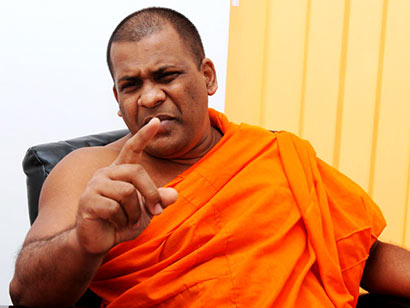
Politicians, civil society, activists, journalists and international organizations were among those who expressed outrage over the post given by President Gotabaya Rajapaksa to controversial monk, the Venerable Galagodaaththe Gnanasara Thero.

President Gotabaya Rajapaksa had appointed a Presidential Task Force led by the Venerable Galagodaaththe Gnanasara Thero to prepare a draft on ‘One Country, One Law’ and submit a final report by February next year.

The appointment drew strong reactions on social media as the Venerable Galagodaaththe Gnanasara Thero had been accused in the past of instigating attacks against Muslims.

The International Commission of Jurists (ICJ) said that it was concerned that the newly appointed Presidential Task Force to study the ‘One Country One Law’ concept may end up targeting minority communities in Sri Lanka.

ICJ said it was also concerned by the lack of representation from the Tamil community and the absence of female members in the Task Force considering the wide mandate provided to it.

The organization said that there was no need for a Task Force as the Justice Ministry is already engaged in the law reform process.

International Crisis Group Senior consultant Alan Keenan said that the appointment of the venerable Gnanasara Thero to head the Task Force is a “bracing dose of reality” to those who had hoped that the government’s recent international promises of accountability and inter-communal reconciliation offered chance of reform.

Tamil National Alliance (TNA) Parliamentarian Shanakiyan Rajaputhiran Rasamanickam said that the Venerable Galagodaaththe Gnanasara Thero has disrespected and violated the Sri Lankan Constitution repeatedly and so is not fit to lead the Task Force.

He said that it is worrying that public officials have been directed to provide information to the Task Force headed by the monk who is known to spread hatred and violence in Sri Lanka.

Samagi Jana Balawegaya (SJB) Parliamentarian Dr. Harsha de Silva tweeted saying that “One country one law” must be about uniting people and not dividing them further.

Posted in Uncategorized

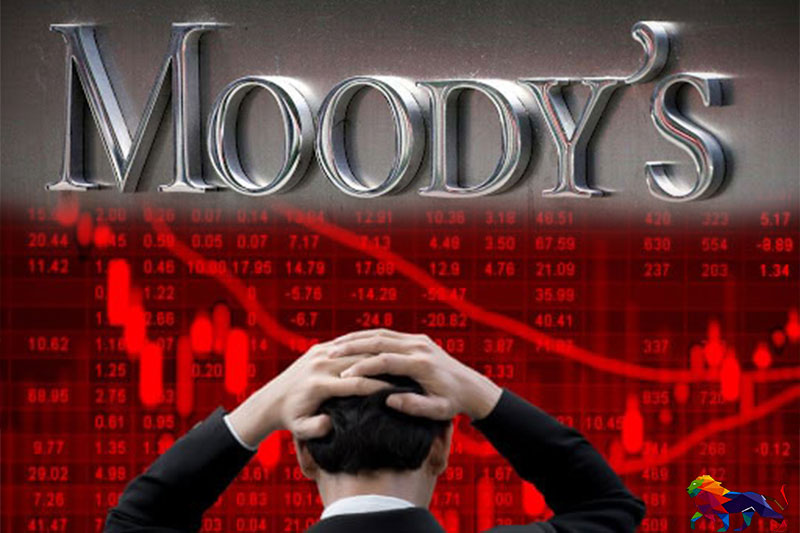
Moody’s further downgrades Sri Lanka to Caa2

Moody’s Investors Service has today downgraded the Government of Sri Lanka’s long-term foreign currency issuer and senior unsecured debt ratings to Caa2 from Caa1 under review for downgrade, concluding a review for downgrade initiated on July 19, 2021. The outlook is stable.

Following is tan edited version of the Moody’s statement.

The decision to downgrade the ratings is driven by Moody’s assessment that the absence of comprehensive financing to meet the government’s forthcoming significant maturities, in the context of very low foreign exchange reserves, raises default risks. In turn, this assessment reflects governance weaknesses in the ability of the country’s institutions to take measures that decisively mitigate significant and urgent risks to the balance of payments.

External liquidity risks remain heightened. A large financing envelope that Moody’s considers to be secure remains elusive and the sovereign continues to rely on piecemeal funding such as swap lines and bilateral loans, although prospects for non-debt generating inflows have improved somewhat since Moody’s placed Sri Lanka’s rating under review for downgrade. Persistently wide fiscal deficits due to the government’s very narrow revenue base compound this challenge by keeping gross borrowing needs high and removing fiscal flexibility.

The stable outlook reflects Moody’s view that the pressures that Sri Lanka’s government faces are consistent with a Caa2 rating level. Downside risks to foreign exchange reserves adequacy remain without comprehensive financing and narrow funding options. Should foreign exchange inflows disappoint, default risk would rise further. However, non-debt generating inflows particularly from tourism and foreign direct investment (FDI) may accelerate beyond Moody’s current expectations, which, coupled with the track record of the authorities to put together continued, albeit partial, financing, may support the government’s commitment and ability to repay its debt for some time.

Sri Lanka’s local and foreign currency country ceilings have been lowered to B2 and Caa2 from B1 and Caa1, respectively. The three-notch gap between the local currency ceiling and the sovereign rating balances relatively predictable institutions and government actions against the very low foreign exchange reserves adequacy that raises macroeconomic risks, as well as the challenging domestic political environment that weighs on policymaking. The three-notch gap between the foreign currency ceiling and local currency ceiling takes into consideration the high level of external indebtedness and the risk of transfer and convertibility restrictions being imposed given low foreign exchange reserves adequacy, with some capital flow management measures already imposed.

Moody’s initiated a review for downgrade on Sri Lanka’s ratings to assess the prospects for significant external financing to materially and durably lower the risk of default stemming from the country’s very low foreign exchange reserves adequacy. Although the potential for non-debt generating inflows has increased somewhat in recent months, the improvement in tourism and FDI prospects is highly tentative. At the same time, a large external financing envelope that Moody’s considers to be secure remains highly unlikely. In turn, external liquidity risks for Sri Lanka’s government will remain heightened over the coming years, raising the risk of default.

Sri Lanka’s foreign exchange reserves adequacy has fallen further since Moody’s initiated the review. Foreign exchange reserves (excluding gold and SDRs) amounted to $2 billion as of the end of September, compared to $3.6 billion as of the end of June and $5.2 billion at the beginning of the year. The reserves are sufficient to cover only around 1.3 months of imports and are significantly below the government’s external repayments of around $4-5 billion annually until at least 2025.

Moody’s baseline scenario continues to assume that the authorities will manage to obtain some foreign exchange resources and financing through a combination of project-related multilateral financing, official sector bilateral assistance including central bank swaps, commercial bank loans, the divestment of state-owned assets, and measures by the Central Bank of Sri Lanka (CBSL) to capture some export receipts and remittances. However, the amounts are generally modest, the arrangements piecemeal, and of relatively short maturity besides multilateral funding for project loans.

Meanwhile, ongoing efforts under the authorities’ six-month roadmap to promote macroeconomic and financial stability will likely boost FDI somewhat, and the reopening of international borders without quarantine requirements for fully vaccinated travellers will support the gradual recovery of tourism-related receipts. However, while Sri Lanka’s potential suggests that sizeable foreign exchange receipts could be generated, this potential has remained only partially realised for many years and realising it now is subject to the confidence and risk appetite of investors and travellers, both of which are highly uncertain.

Therefore, although reserves are likely to rise slightly over the next few months on the back of some of these inflows materialising, Moody’s expects them to remain insufficient to provide a buffer to meet the government’s external repayment needs.

Meanwhile, Moody’s assumes that Sri Lanka will not participate in a financing programme with the International Monetary Fund or other multilateral development partners for the foreseeable future, while international bond markets remain prohibitive as a source of external financing.

Heightened liquidity risks are compounded by Moody’s expectation that the government’s fiscal deficit will remain wide over the next few years, which will keep borrowing needs high and remove fiscal flexibility.

Although government revenue is likely to rebound alongside the economy — Moody’s projects real GDP will grow by an average of around 5% in 2022-23 — it will stay low in the absence of revenue reforms. Moody’s estimates that revenue will remain around 10% of GDP over the next few years. At the same time, interest payments will continue to absorb around 60-70% of revenue, leaving the government with politically challenging tradeoffs in rationalising across social spending and development expenditure. As such, Moody’s sees limited prospects for meaningful expenditure cuts, implying still wide fiscal deficits of 8.0-8.5% of GDP in 2022-23, compared to an average of 5.7% over 2016-19.

The wide deficits correspond to a gross borrowing requirement of around 25-27% of GDP per year over 2022- 23. While Moody’s assumes that the government can continue to access local currency financing given the size of the domestic savings pool and excess domestic liquidity in the banking system, this comes at a cost on the overall interest bill and does not address foreign-currency debt repayments.


Posted in Uncategorized

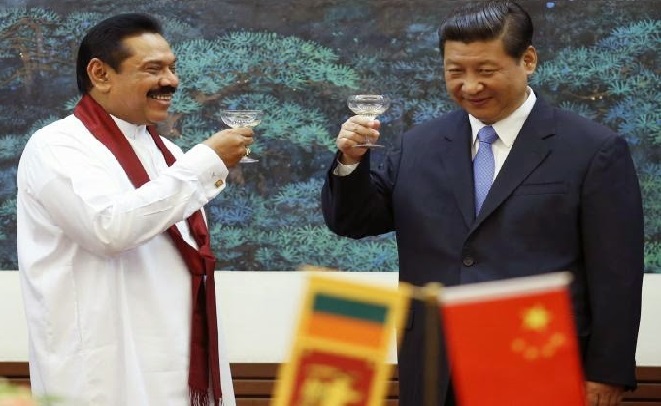
PM appreciates China’s continued support for Sri Lanka’s economic revival

Prime Minister Mahinda Rajapaksa has expressed appreciation for China’s continued support when the Ambassador of China to Sri Lanka Qi Zhenhong called on the Prime Minister at Temple Trees on Wednesday (October 27).

He also thanked the Chinese Government for supporting Sri Lanka in the fight against the pandemic and the vaccine effort.

Meanwhile, Ambassador Zhenhong congratulated Sri Lanka on the success of the vaccine drive in the country and assured continued support. He also recalled the assistance provided by China in the way of medical supplies, vaccines and overall financial support from the beginning of the pandemic.

The Ambassador reiterated that the Bilateral Currency Swap Agreement between the Peoples Bank of China (PBOC) and the Central Bank of Sri Lanka (CBSL), amounting to CNY 10 billion would help reinforce global investor sentiment and enhance confidence in the Sri Lankan economy.

He noted that the year 2022 will be an important year in Sri Lanka—China bilateral relationship since it will mark the 65th anniversary of diplomatic relations between the two countries and the 70th anniversary of the signing of the Rubber-Rice Pact.

Further, Ambassador Zhenhong has conveyed early birthday greetings to Prime Minister Mahinda Rajapaksa from both the Chinese President and the Premier.

Sri Lanka President calls coalition partner meet to head off storm over LNG deal

Sri Lanka President Gotabaya Rajapaksa has called a meeting of coalition partners on Thursday ahead of possible strikes over an unsolicited deal with a US-based firm that critics say will commit the country to buy billions of dollars of unwanted liquefied natural gas.

Ruling Sri Lanka Podujana Peramuna (SLPP) is facing an internal crisis as some coalition party members have said a preliminary agreement was inked with US-based New Fortress Energy by the Finance Ministry without their knowledge and being approved by the cabinet.

Trade unions and legislators including replaced power minister Dallas Alahapperuma has voiced concerns over the decision to sell an LNG plant to US firm New Fortress Energy, which critics say will commit state-run CEB to buy large volumes of LNG or pay compensation.

The nationalist SLPP party has maintained an anti-US stance before the election and promised the country not to sell any assets to foreigners.

The central bank on Tuesday said the first tranche of a $250 million US dollar deal is expected within the next two months.

The Presidential powwow comes as at least 11 coalition partners are due to meet on Friday to decide on a course of action which could involve strikes.

A Ceylon Electricity Board (CEB) trade union has issued an ultimatum to the government to abolish the New Fortress Energy before November 03 or face industrial action.

Convener of the CEB trade grouping Ranjan Jayalal told reporters that the trade union action will be similar to the 72-hour trade union action that was experienced in 1996 protesting the privatization of Lanka Electric Company, which led to blackouts.

It is not possible to cripple the power supply unless the powerful Ceylon Electricity Board Engineers Union joins the strike as engineers and power superintendents are capable of dealing with breakdowns on their own.

The CEBEU, which strikes rarely and is considered to be apolitical and last downed tools over two decades ago, has also voiced their opposition to the associated LNG take-or-pay deal – though not necessarily the sale of the stake in the power plant itself.

Amidst the LNG deal, a new engineers union was suddenly been formed this year with their retirement age being extended, which some observers say is a bid to reduce the clout of the engineers union.

Posted in Uncategorized

Thondaman points out lack of Tamil representation in One Country One Law Task Force

State Minister of Estate Housing and Community Infrastructure Jeevan Thondaman says he is disappointed with the One Country One Law Presidential Task Force as there is a lack of Tamil representation.

“Disappointed with the Presidential Task Force on ‘One country, One law’ concept as there is not one individual chosen for the Committee who would represent the interests of the vast Tamil population in Sri Lanka,” he expressed via a tweet.

The State Minister also said that the Sri Lanka Podujana Peramuna (SLPP) Party Vice President, along with the Prime Minister’s Coordinating Secretary have been requested to raise this concern at the Party Leaders meeting which is scheduled to take place this evening.

“I was invited to attend the Party Leaders’ meeting today, since I’m in Nuwara Eliya, I will not be able to attend. However I’ve asked our party Vice President and PM’s Coordinating sec to attend on my behalf and raise the aforementioned concern,” Thondaman further tweeted.

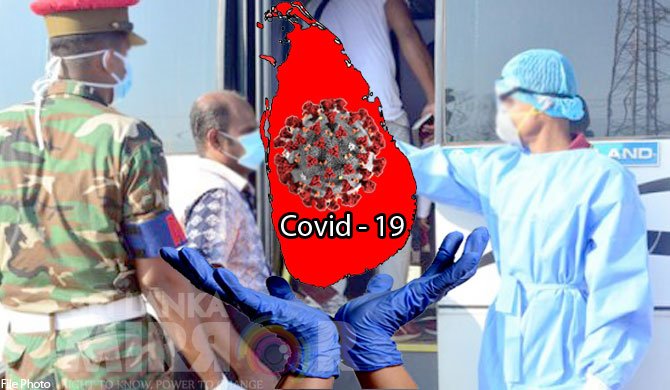
Sri Lanka reports 22 Covid-19 deaths on Thursday, toll rises to 13,696

Sri Lanka Thursday reported 22 deaths due to COVID-19 after the figures were confirmed by the Director General of Health Services on Wednesday, October 27.

Among the deaths reported today, 09 are of males and 13 of females. The majority of deaths – 15 – are of elderly people in the 60 years and above age group. A female below 30 years of age also succumbed to the disease.

According to the data reported by the Government Information Department, the total deaths due to Covid-19 since the pandemic began last year has now risen to 13,696.

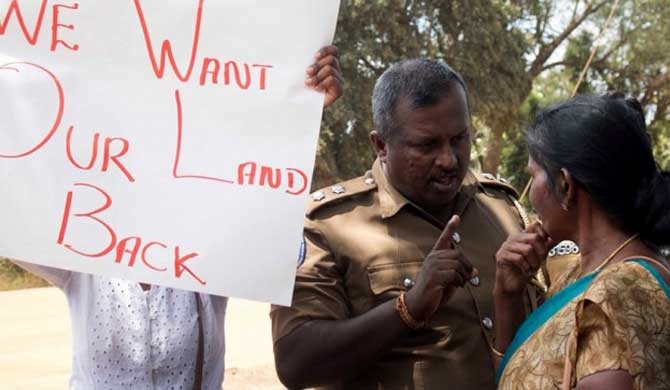
Tamil MPs call for an end to ‘artificial alteration of Northern Province demography’

A collection of Tamil parliamentarians recently wrote a letter addressed to Chamal Rajapaksa, the Sri Lankan Internal Security Minister, asking him to put a stop to the “artificial alteration of the demographic pattern” of the Northern Province.

Referring to a putative attempt by the government to redraw the borders of the Vanni district, the letter stated,

“This attempt to change the provincial borders have ulterior motive(s) to alter the demographic pattern and systematically weaken Tamils political strength.”

The MPs also raised their disappointment that they were not consulted regarding the matter by the relevant officials. “Changing the provincial borders is a strategic decision of the country and must be consulted with relevant stakeholders including elected representatives. However it was not discussed at any point of time.”

The politicians who signed the letter include TELO Leader Selvam Adikalanathan,TNPF Leader Gajendrakumar Ponnambalam, TPA Leader Vikneswaran,PLOTE Leader Sitharthan and M.A. Sumanthiran, a senior leader of the Tamil National Alliance (TNA).

This development draws attention to the creeping state-sponsored colonisation of the Tamil homeland and the growth in Sinhalese settlements in the North-East.