Appropriation Bill for 2022: Defence gets highest allocation; Health reduced

The Appropriation Bill for the 2022 financial year was presented in Parliament yesterday (7) by Finance Minister Basil Rajapaksa, with the budgetary allocations for the defence, education, and finance sectors being increased whilst those for the health sector and the President being decreased when compared to the 2021 financial year.

The Appropriation Bill notes that the total expenditure of the Government allocated for the year 2022, including for both recurrent and capital expenditure, has decreased by Rs. 33 billion compared to the 2021 fiscal year. Thus, the total expenditure for 2022 is estimated at Rs. 2,505.3 billion (2.5 trillion).

The Defence Ministry has been allocated Rs. 373.1 billion for the year 2022, a Rs. 18 billion increase from the fiscal year 2021, making it the highest allocated sector. Following the Defence Ministry, the Public Services, Provincial Councils (PCs), and Local Government (LG) Ministry has been allocated the second highest expenditure of Rs. 286.7 billion. The Highways Ministry has been allocated Rs. 250.1 billion, while the Education Ministry has been allocated Rs. 185.9 billion for the year 2022, which is a Rs. 28 billion increase from the fiscal year 2021, but still below the amount allocated to the Highways Ministry, which was the case last year as well.

Despite the pandemic, the Health Ministry has been allocated Rs. 6 billion less for the year 2022, in comparison to the fiscal year 2021. Thus, the Bill has allocated Rs. 153.5 billion for the Health Ministry for the year 2022.

Meanwhile, the President’s expenditure has been decreased by Rs. 6.6 billion for the year 2022 at Rs. 2.78 billion.
It was also announced in Parliament yesterday that the debate on the 2022 Budget will take place from 12 November 2021 to 10 December 2021.

Posted in Uncategorized

Sri Lanka reports 44 Covid-19 deaths on Thursday, toll rises to 13,229

Sri Lanka Thursday reported 44 deaths due to COVID-19 after the figures were confirmed by the Director General of Health Services on Wednesday, October 06.

Among the deaths reported today, 25 are of males and 19 of females. The majority of deaths – 39- are of elderly people in the 60 years and above age group.

According to the data reported by the Government Information Department, the total deaths due to Covid-19 since the pandemic began last year has now risen to 13,229.

Diana Gamage expelled from SJB

SJB working committee which met today decided to expell Diana Gamage from the party.

SJB General Secretary Ranjith Madduma Bandara told the Daily Mirror that the decision was made by the working committee considering the reformation of the disciplinary committee which was appointed to look into her case.

“We have expelled Ms. Gamage from the party for acting against party decision to vote against the 20th amendment to the constitution” Mr. Madduma Bandara said.

“Action against other MPs who voted in favour of the 20th amendment will be taken by the respective parties they belong to,” he added.

Ms. Gamage when contacted by the Daily Mirror said she would file legal action against the move.

“This is nothing but a joke. Mr. Sajith Premadasa called former Prime Minister Ranil Wickremesinghe a dictator, but he (Sajith) is a bigger dictator. At least Mr. Wickremesinghe has more brains than Mr. Premadasa,” she added.

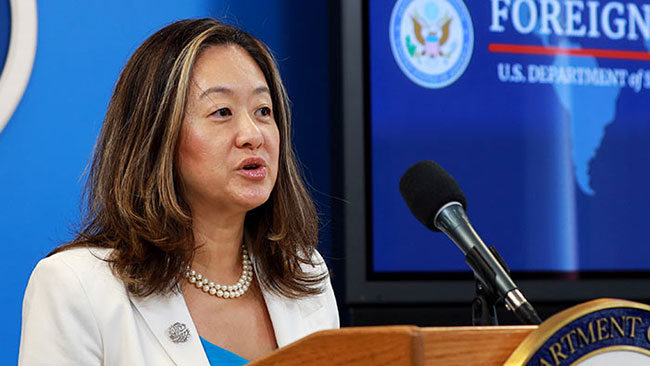
US remains concerned about some aspects of Port City law

The United States says it continues to be concerned about some aspects of the Port City legislation that was passed in Parliament.

The US Ambassador to Sri Lanka, Alaina B. Teplitz says there appears to be openings for corrupt influences and the potential for illicit financing, money laundering, and/or other activities by nefarious actors who want to take advantage of what they perceive to be a permissive environment for illegal activity.

She expressed these views in an interview with the Centre for Strategic Studies.

“US companies are going to be wary of that. US companies considering investing in Sri Lanka want predictability and a clear understanding of the investment environment. They’re going to need to know that if they’re investing, they’re not going to be confronted with risks that could present problems for them, either from regulatory bodies, their own shareholders, or their boards of directors. Under the Foreign Corrupt Practices Act (FCPA), it is unlawful for a US company or individual to offer, pay, or promise to pay money or anything of value to any foreign official for the purpose of obtaining or retaining business,” she said.

The Ambassador noted that a US company considering investing in Sri Lanka must be confident that they’re not going to be exposed to – or collaborating with – entities that could have economic measures levied against them by the U.S. Treasury or Commerce Department.

Teplitz said that the US recognises that the Government in Sri Lanka wants to take advantage of the investment already made in the Port City project.

However, she said the simple caution is that for such a large infrastructure / development project, it is incredibly important to get the legislation and regulations right – and ensure the door is not left open to illegal activity and unfair competition.

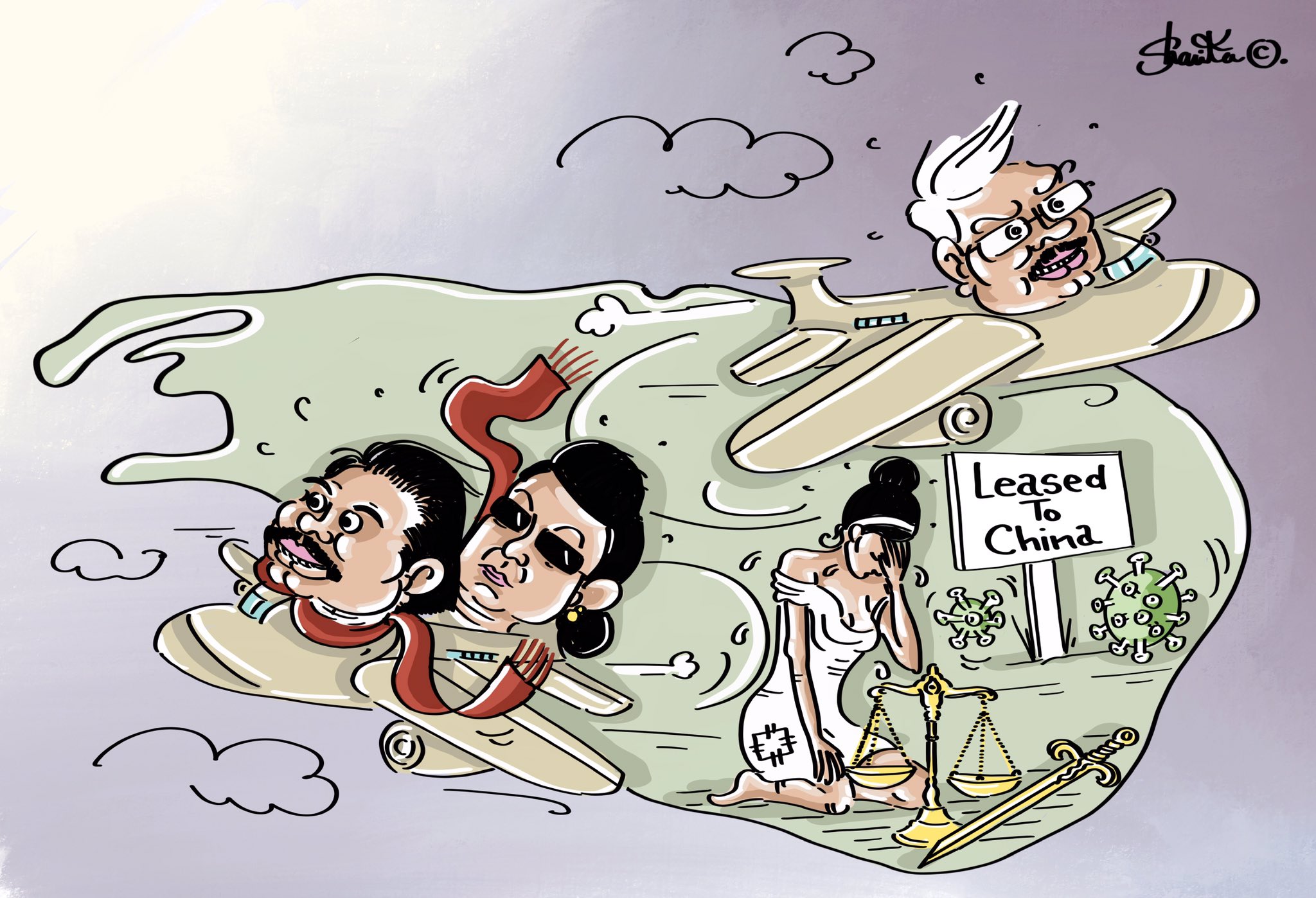
She also noted that the Hambantota port project incurred a tremendous amount of debt for the country, and ultimately Sri Lanka needed to lease out the port for the next century as a result.

“The Colombo Port City could possibly open Sri Lanka to a host of suspect economic practices and corruption,” she added.

The Ambassador said that ensuring the right conditions prevail in order to attract high quality, US private sector investment and to help Sri Lanka stake its claim as an attractive and reliable economic partner in the region should be a priority policy goal for the Government.

Is India’s ‘neighbourhood first policy’ unable to win regional allies? TRTWORLD

In an online webinar hosted by a Danish think tank, experts highlighted how the rise of China across South Asia has left an unpleasant impact on India’s relations with its smaller neighbours.
India’s ‘neighbourhood first policy’ was Prime Minister Narendra Modi’s signature foreign policy initiative that sought to develop better relations with the country’s neighbours.

But experts, who last week spoke at an online conference organised by the Nordic Institute of Stability Studies (NISS), a Copenhagen-based think-tank, believe that the policy has failed to take a meaningful direction as Modi’s aggressive posture and growing Chinese pressure has prevented the country from winning allies in the region.

The conference’s title was “Failure of India’s Neighborhood First Policy under BJP Government: Implications for Regional Cooperation”.

Speaking at the conference, Scott Lucas, a professor emeritus of political science and international studies at the University of Birmingham, said that “Modi’s confrontational rather than collective approach in the region” has hurt India’s political prospects across South Asia.

The Modi government’s “focus on military measures rather than social elements” has also helped increase tensions across the region, increasing anti-India sentiment, according to Lucas.

Many experts in the conference echoed a common view that China appears to have benefited from increasing anti-India sentiment in the region, helping Beijing solidify its connections with other South Asian nations.

In the first few years of Modi’s rule, regional organisations like SAARC (South Asian Association for Regional Cooperation) were given utmost importance, but the ‘neighbourhood first policy’ failed to produce any positive outcome and instead, the country found itself competing with a far more belligerent China.

The Bharatiya Janata Party (BJP) government’s domestic policies, which many criticise for being exclusionary against non-Hindu minorities, and attacks on press freedom have also made matters worse and further alienated India from its neighbouring countries, the experts said.

Muhammad Athar Javed, director-general of the NISS, who moderated the conference, also viewed that due to India’s patronising attitude towards smaller neighbours such as Nepal, Maldives, Bangladesh and Sri Lanka, New Delhi is “now grappling with multilayered diplomatic challenges with SAARC member states.” The SAARC, which was established in 1985, includes states of Bangladesh, Bhutan, India, Maldives, Nepal, Pakistan and Sri Lanka.

Long enmity

Lucas also drew attention to the fact that when it comes to Pakistan, India’s regional policy sees a sudden shift “due to the factors such as Kashmir or Afghanistan”, making New Delhi’s foreign policy confrontational in nature.

The erstwhile princely state of Jammu and Kashmir has been a disputed region between India and Pakistan since 1947. India has always accused Pakistan of supporting an armed guerrilla movement that either seeks independence from both India and Pakistan or wants the complete merger of the disputed territory with Pakistan.

Another conflict that pits India against its neighbour Pakistan is Afghanistan. Islamabad has long been one of the patrons of the Taliban, a group which has recently come to power in Kabul after a long insurgency against the US-backed Afghan government. Pakistan has also raised concerns over growing hate crimes against India’s Muslim minority.

“India-Pakistan Economic relationship will be damaged if they don’t come to understand Afghanistan and they don’t make some good favorable decisions,” said Samuel Ramani, a tutor of politics and international relations at the University of Oxford, during the conference.

Both countries need to work together for projects like the Turkmenistan-Afghanistan-Pakistan-India (TAPI) pipeline, which is also known as Trans-Afghanistan Pipeline, Ramani said. The TAPI project aims to transport natural gas from Turkmenistan through Afghanistan into Pakistan and finally to India.

Projects like TAPI will test Modi’s mood on whether he is ready for such projects, which will empower India’s neighbourhood first policy, or “it’s just in papers”, Ramani said.

India-Nepal tensions

Ramani found similarities between the post-Arab Spring political environment in the Middle East and current South Asia. Relations among neighbouring countries in South Asia have not improved or gotten worse to some extent and it’s parallel could be found in deteriorating ties between the Middle Eastern states following the Arab Spring uprisings, according to Ramani.

While India’s ‘neighbourhood first policy’ is something New Delhi was keen on pursuing in the beginning, it now appears to be going nowhere, Ramani observed.

“India is interfering in the domestic affairs of neighbouring countries especially in Nepal in the violation of their sovereignty. India is also creating hurdles in free transit and free trade within and beyond Nepal and keeps suppressing its people and government,” the academic said.

A lot of things are “going wrong” in India’s foreign policy, Ramani added.

Anil Sigdel, founder of Nepal Matters for America, a Washington DC-based think-tank agreed with Ramani’s conclusions on India’s foreign policy. Sigdel also thinks that India urgently needs to address various demarcations across Nepal-India borders, which has particularly made Nepali citizens suffer.

As the Eminent Persons Group, comprising high level politicians and experts from both sides for a joint comprehensive review of the bilateral ties, sat down and finalised a list of recommendations, “Modi’s leadership was showing some promise,” Sigdel said, during the conference.

“But that goodwill quickly evaporated as there was no response from the Modi government or not even willingness to receive the joint group’s report,” the Nepali activist said.

According to Sigdel, Ajit Doval, India’s National Security Adviser, “opined that Nepal has benefited from the existing arrangements; therefore Modi does not want to move forward with the report recommendations. And that was it”.

There are also various remaining problems between the two countries such as the water management along the border, especially regarding high structures being built on the Indian side to manage flooding that exposes Nepali villages to danger in monsoon season, according to Sigdel.

During the monsoon season in South Asia, heavy rainfall is recorded between June and September every year.

On top of all these issues, Indian authorities wanted to show their disregard toward Nepal by organising a road inauguration ceremony in Kalapani, a disputed region between Nepal and India, according to Sigdel. But that triggered “an unprecedented defiance” by Nepal as the country’s parliament unanimously passed an upgraded map that included Kalapani as a Nepali territory, “giving a massive setback to the Modi government”.

Is Bangladesh a bright spot for India?

Among others, India- Bangladesh relationship is “a sign of promise”, Ramani said, during the conference. But even in that relationship, things are not bright on the ground as many ordinary Bangladeshis find the political leadership of India under Modi as Islamophobic or anti-Islam, Ramani said. They think that the BJP is “pushing Hindus against the Muslims that create violence,” he viewed.

Nazmul Islam, an assistant professor of political science at Ankara Yildirim Beyazit University, also thinks that “India’s domestic policies are creating problems” in Bangladesh, a Muslim-majority country, showing India’s neighbourhood first policy faces serious challenges even in friendly territories like Bangladesh.

Modi’s recent visit to Dhaka sparked deadly protests. The protesters in the capital city Dhaka chanted anti-Modi slogans to draw attention to his controversial policies that many find to be discriminating against Indian minorities, especially the Muslims.

Across India-Bangladesh borders, things are not looking good either with occasional skirmishes continuing to take place as “smuggling is at its peak”, according to Ramani.

In December 2020, India and Bangladesh held a virtual summit, where the countries discussed topics like boosting trade, investment and transportation links, but avoided the thorny issue of sharing the water of the Teesta River, which flows into Bangladesh from the Indian states of Sikkim and West Bengal, Islam said.

“Bangladesh, like most nations, will sign up for something for its economic benefit”, the academic said.

While India has disagreements with Bangladesh on several issues, “it’s wrong to assume that economic deals with China will make Bangladesh move away from India but India doesn’t like Chinese interest and its investment in Bangladesh”, Islam added.

“Bangladesh’s foreign policy sides with China and Pakistan over India in a few cases, and that Dhaka should be careful regarding its foreign policy and strategic choices as Indian interference in the region and in Afghanistan to gain its power will affect its relationship with Bangladesh in the future”.

Sri Lanka-India ties

One of India’s clashing points with China across South Asia happens in Sri Lanka for different reasons.

“India draws closer to the West, particularly through the Quad and other multilateral and mini-lateral initiatives”, said Shakthi De Silva, an assistant lecturer of international relations at University of Colombo, Sri Lanka, during the conference. Quad refers to a strategic dialogue between the US, India, Japan and Australia as a response to China’s assertive presence in the Pacific region.

But Sri Lanka’s connections with the West are not moving in a good direction as the country’s Rajapakse government faces increasing criticism from Western capitals on human rights issues and freedoms, according to Silva. As a result, Sri Lanka has begun moving toward China, increasing the possibility that Indo-Sri Lankan ties might deteriorate at some point, he said.

“Sri Lanka’s tilt towards China was not an inevitable outcome. Rectifying the situation requires India and the West to adopt a more nuanced posture on the issue of human rights and accountability,” Silva viewed.

But Silva still thinks that “Sri Lanka has, and will, continue to maintain warm ties with India, giving deference to Indian security interests and welcoming high level Indian visits,” Silva added. But the country has also increasingly inclined towards China owing to the latter’s FDI inflows, investment volume and Beijing’s ability to grant Sri Lanka much needed loans as the island tries to extricate itself from its economic crisis.

“Although Sri Lanka curtails its own behaviour to appease India’s security interest, it is increasingly relying on China and will continue to interact with China in the future.”

Source: TRT World

Posted in Uncategorized

Sri Lanka reports 43 Covid-19 deaths on Wednesday, toll rises to 13,185

Sri Lanka Wednesday reported 43 deaths due to COVID-19 after the figures were confirmed by the Director General of Health Services on Tuesday, October 05.

Among the deaths reported today, 23 are of males and 20 of females. The majority of deaths – 36- are of elderly people in the 60 years and above age group.

According to the data reported by the Government Information Department, the total deaths due to Covid-19 since the pandemic began last year has now risen to 13,185.

Posted in Uncategorized

Lotus Tower project to be given more land

The Government has decided to give more land to the Lotus Tower project in Colombo.

The decision was taken by the Cabinet based on a proposal put forward by President Gotabaya Rajapaksa.

The Government said that construction activities of the Lotus Tower project is nearing completion.

The Telecommunication Regulatory Commission is now planning the commercialization aspect of the project.

The President had noted the need to construct a modern water park near the Beira Lake in close proximity of the tower in order to attract local and foreign tourists.

It was also noted that food stalls, offices, accommodation and infrastructure facilities for the staff expected to be engaged in the services at the tower need to be constructed, while a further extension of the existing car park close to the tower also needs to be carried out.

Accordingly, a resolution tabled by the President, as the Minister of Technology, to transfer land in the extent of 4 acres, 3 roads and 24.47 perches in the proximity of the tower project which belongs to the Urban Development Authority to the Sri Lanka Telecommunication Regulatory Commission was approved by the Cabinet of Ministers.

Petroleum Resources Bill passed in Parliament with amendments

The Petroleum Resources Bill has been passed in Parliament with amendments today (October 06).

The second reading of the bill was taken up for debate from 11.00 a.m. to 4.30 p.m. during today’s parliamentary sitting.

This bill provides for the establishment of the Petroleum Development Authority of Sri Lanka and the formulation of a National Policy for the upstream petroleum industry covering the exploration, development, production, and management of all petroleum resources in Sri Lanka.

The bill provides the legal framework to regulate all processes of the exploration, development, production and management of all petroleum resources in Sri Lanka including the provision of operational guidelines.

In addition, it will establish an independent, efficient, and transparent regulatory framework in relation to the exploration, development, production and management of petroleum resources in the country.

Another objective of the bill is to design, implement, monitor and revise fiscal regimes that meet evolving economic needs of the country while providing fiscal stability to contractors.

Further, it is expected to repeal the Petroleum Resources Act, No. 26 of 2003.

The Petroleum Development Authority, among other things, will be tasked with preparing a map dividing the onshore and offshore areas into graticular sections to demarcate and designate exploration blocks and development blocks and to define and demarcate areas to be designated for joint studies.

The administration, management and control of the affairs of the Authority shall be vested in a Board of Directors.

EU GSP+ Monitoring Mission concludes visit to Sri Lanka

A team of senior European Union (EU) officials who was in Sri Lanka to review Sri Lanka’s progress in implementing the 27 international conventions applicable under the Generalised System of Preferences Plus (GSP+), concluded the visit today.

These conventions, ratified by Sri Lanka, cover human and labour rights, environment and climate, as well as good governance principles. Over the course of ten days, the officials held wide-ranging meetings with representatives of the government, including President Gotabaya Rajapaksa, Foreign Minister Prof. G.L. Peiris, Justice Minister Ali Sabry, and Finance Minister Basil Rajapaksa. The officials also met with the opposition, civil society including human rights defenders, trade unions and employers. They had exchanges with EU Member States Ambassadors and UN agencies.

The monitoring mission addressed issues impacting human rights and the rule of law, economic, social, and cultural rights, and labour relations. The visiting officials discussed the Prevention of Terrorism Act (PTA), recalling that the amendment of the PTA was a key commitment in readmitting Sri Lanka to the GSP+ scheme in 2017. There was a significant focus on non-discrimination, the respect for the rights of all communities in Sri Lanka, the ongoing use of the PTA, impediments to the exercise of fundamental freedoms, and the development of draft legislation on Non-Governmental Organisations. The meetings also reviewed drugs policy, environment and climate change, as well as corruption. The utilisation and future development of the GSP+ scheme was the topic of a webinar organised by the European Chamber of Commerce in Sri Lanka, with the participation of EU representatives.

EU Ambassador Denis Chaibi said, “The effective implementation of international commitments forms the basis of Sri Lanka’s privileged access to the EU market. We have been working together with the Sri Lankan Government since 2015 to advance the issues of concern and welcome the continued engagement. The monitoring and engagement with the Government of Sri Lanka will be the subject of regular reports to the European Parliament and the Council of Ministers.”

The EU’s GSP+ scheme is a unilateral trade tool that removes import duties from products coming into the EU from lower middle-income countries, supporting sustainable development.

Posted in Uncategorized

Don’t blame only plantation workers – TPA Leader Mano Ganesan

The Tamil Progressive Alliance (TPA) Leader Mano Ganesan said that the Estate Managers’ Association of Sri Lanka has condemned the attack on estate officials and have warned that they would refrain from estate administration. He said that their concern and condemnation are justified and the TPA does not condone such attacks.

He, however, said that the reason for the attack on the estate officials is the frustration of the workers. “Their livelihood avenues have all collapsed like never before in history. But without fixing these and revamping the crumbling plantation sector, the blame should not be placed only on these frustrated workers,” the TPA leader added.

MP Ganesan, however, questioned why the Government’s attention has yet not been focused on the problems of declining incomes of workers and plantation companies, the frustration of workers and the decline of the plantation industry.

“Why has not the Ceylon Workers Congress, the Government’s plantation partners, understood the gravity of the situation? I am astonished by this silence. I don’t understand if this silence is a deceitful ploy to hide the Government’s inability to rectify this situation,” MP Mano Ganesan said.

The MP said that this situation has arisen due to the worst decline in the livelihoods of plantation workers in recent history.

“All the activities we initiated, including the construction of houses on estates, have come to a standstill. They are conducting opening ceremonies to the housing constructions we commenced. The living conditions of the families of the estate workers are at a deplorable condition like never before. The main reason for this is the collapse of the plantation industry,” the MP said.

He said that the promised wages are not paid to the estate workers as the management companies claim they do not have enough income. “Then what is the solution? The wage issue has been entrusted to the judiciary and all are asleep,” he added.

MP Ganesan said that the income of the people living on estates should be increased. He suggested that estate workers should be given the right to engage in alternative employment. “Opportunities should be provided for animal husbandry and vegetable farming. The Government should provide assistance for these,” he said.