Sri Lanka reports 121 Covid-19 deaths on Friday, toll rises to 11,938

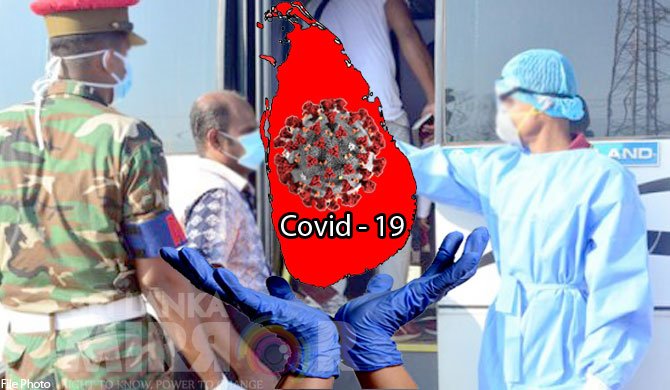
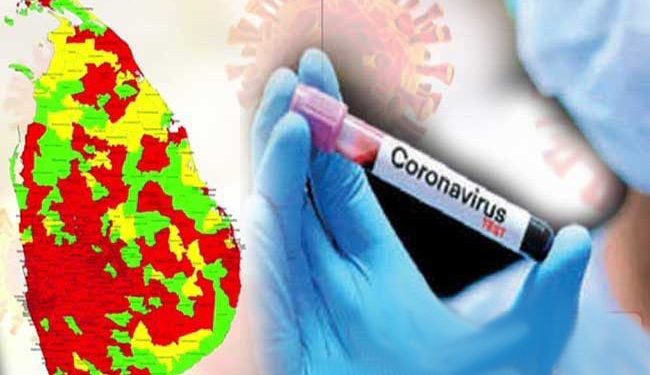
Sri Lanka Friday reported 121 deaths due to COVID-19 after the figures were confirmed by the Director General of Health Services on Thursday, September 16.

Among the deaths reported today, 62 are of males and 59 of females. The majority of deaths – 92- are of elderly people in the 60 years and above age group. One male below 30 years of age also succumbed to the disease.

According to the data reported by the Government Information Department, the total deaths due to Covid-19 since the pandemic began last year has now risen to 11,938.

Posted in Uncategorized

Rishad further remanded; wife and father-in-law granted bail

MP Rishad Bathiudeen has been further remanded until October 01 in connection with the death of a teenage domestic worker who was serving at his residence.

Meanwhile the parliamentarian’s wife and father-in-law have been granted bail by the Colombo Magistrate’s Court, when the case was taken up today (17).

On July 15, the 16-year-old girl, who was serving as domestic help at the Bathiudeen residence, succumbed to severe burn injuries while receiving treatment at the Colombo National Hospital. She had been under medical care for 12 days since her admission to the hospital on July 03.

Jude Kumar Ishalini, who was residing in the Dayagama area, had been 15 years of age when she was brought to the parliamentarian’s residence at Bauddhaloka Mawatha for domestic work last October.

The judicial medical officer who conducted the post-mortem on the girl’s death concluded that she had been sexually exploited.

Thereby, the former minister’s wife, father-in-law, and the middleman in question were taken into custody on July 23 based on the testimonies recorded from nearly 20 individuals, autopsy results, and the evidence gathered by the investigating officers which pointed to the fact that the deceased girl was subjected to abuse.

In addition, the 44-year-old brother-in-law of MP Bathiudeen was also taken into custody and produced before the Judicial Medical Officer for allegedly sexually abusing a young woman who worked as a domestic helper at the lawmaker’s official residence from 2015 to 2019.

Her remains were exhumed on July 30 for a second postmortem by a court-appointed specialist medical team.

On August 23, MP Rishad Bathiudeen, who is currently under remand custody over a different case, was named the fifth suspect of the case.

Bathiudeen’s brother-in-law Mohamed Ismat and Ponnaiya Pandaram, the intermediary who had brought the girl to the Bathiudeen residence, were released on bail last week.

The former minister and his brother were taken into custody on April 24, under the provisions of the Prevention of Terrorism Act (PTA), for allegedly aiding and abetting the suicide bombers who perpetrated the deadly bombings on April 21, 2019.

Quarantine curfew extended until Oct. 01

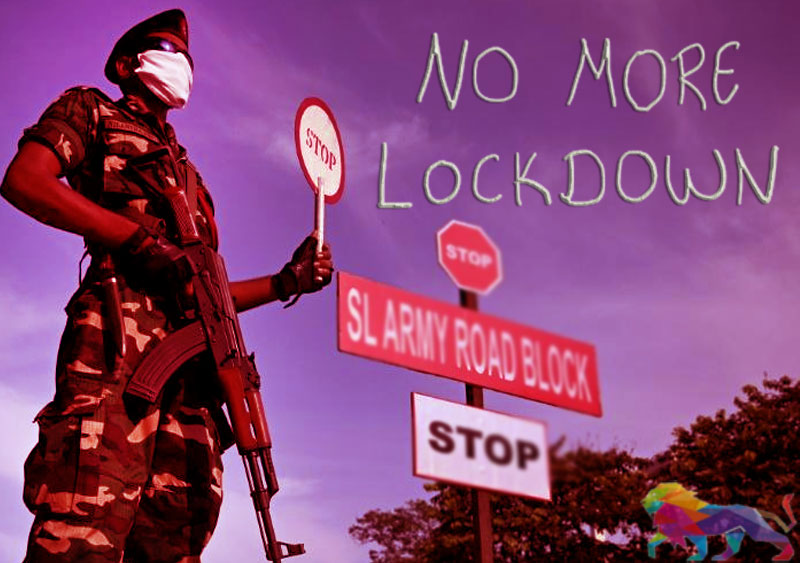
The quarantine curfew currently in effect across the island has been extended until 4.00 a.m. on October 01 (Friday), the President’s Spokesman said.

In a twitter message, he said that the decision was taken during the meeting of the Special Committee on COVID-19 Control chaired by President Gotabaya Rajapaksa this morning (17).

This was also confirmed by Health Minister Keheliya Rambukwella, who tweeted that ‘conditional lockdown’ will continue until October 01.

However, government essential services impacting the economy will be allowed to function, the minister said, adding that conditions are to be notified soon.

The Health Minister also said that as per President Rajapaksa, he will be consulting with Finance Minister Basil Rajapaksa to decide which government institutions will be kept open as essential services that contribute to the economy.

He urged the public to adhere to the health regulations and to use this time to get vaccinated.

A ten-day island-wide quarantine curfew was initially imposed on August 20, however the restrictions were further extended on several occasions in a bid to mitigate the spread of the virus and to ramp up the vaccination process.

Parliament to convene only two days next week

The Secretary General of Parliament Dhammika Dasanayake stated that the Consumer Affairs Authority (Amendment) Bill Second Reading will be taken up for debate on the 22nd as decided at the Committee on Parliamentary Business chaired by the Speaker Mahinda Yapa Abeywardena.

It was also decided to conduct Parliamentary sittings for the next week only on the 21st and 22nd of September taking into account the current COVID-19 pandemic Secretary General of Parliament further stated.

Parliament Sittings will be held on Tuesday the 21st at 10.00 a.m. and time has been allotted in taking up Questions for oral Answers from 10.00 a.m. to 11.00 a.m.

Accordingly, from 11.00 a.m. to 4.30 p.m. a Notification under Excise Ordinance, Five Orders under the Ports & Airports Development Levy Act, Six Orders under the Special Commodity Levy Act, Three Regulations under the Foreign Exchange Act, Order under the Foreign Exchange Act, Regulation under the Imports & Exports (Control) Act, No. 1 of 1969 have also been scheduled to be taken up for debate.

Time has also been allotted from 4.30 p.m. to 4.50 p.m. for Questions at the Adjournment Time and the Motion at the Adjournment Time by the Government will be from 4.50 p.m. to 5.30 p.m.

On the 22nd of September the Consumer Affairs Authority (Amendment) Bill and Regulations under the Fauna & Flora Protection Ordinance are scheduled to be approved post being taken up for debate.

Accordingly, time has been allotted from 4.30 p.m. to 4.50 p.m. for Questions at the Adjournment Time and the Motion at the Adjournment Time by the Opposition will be from 4.50 p.m. to 5.30 p.m.

Though previously it was decided to separate Monday, the 27th for Questions for Oral Answers, it was decided to set aside Monday, October 04th as a special sitting day for Questions for Oral Answers given the prevailing COVID-19 pandemic the Secretary General of Parliament added.

Posted in Uncategorized

Beauty Queen denies involvement in prison fiasco

Mrs. Sri Lanka World Pushpika De Silva has categorically denied any involvement over an incident where a statement had visited the Anuradhapura Prison and acted in an unruly manner.

De Silva said she is at the moment involved in preparations to participate in the Mrs. World title in Las Vegas next year and hopes to bring back the crown to Sri Lanka, after Rosy Senanayake.

She also said that it would be important to consult with the relevant parties or herself before spreading false information, as she has devoted her time to social welfare as well as to the needs of her child as a single mother, strictly following the health guidelines, given the present situation.

Posted in Uncategorized

HRCSL launches investigation into incidents in Prisons

The Human Rights Commission of Sri Lanka has commenced a Suo Motu investigation related to the incidents that have taken place in Prisons.

Issuing a statement the Commission said three Regional Coordinating Officers of the Human Rights Commission of Sri Lanka visited the Anuradhapura Prison yesterday to investigate the incidents that reportedly took place on the 12th of September involving State Minister Lohan Ratwatte.

The Human Rights Commission will summon all responsible parties connected to these incidents as early as possible.

EU delegation to visit Sri Lanka to discuss GSP plus

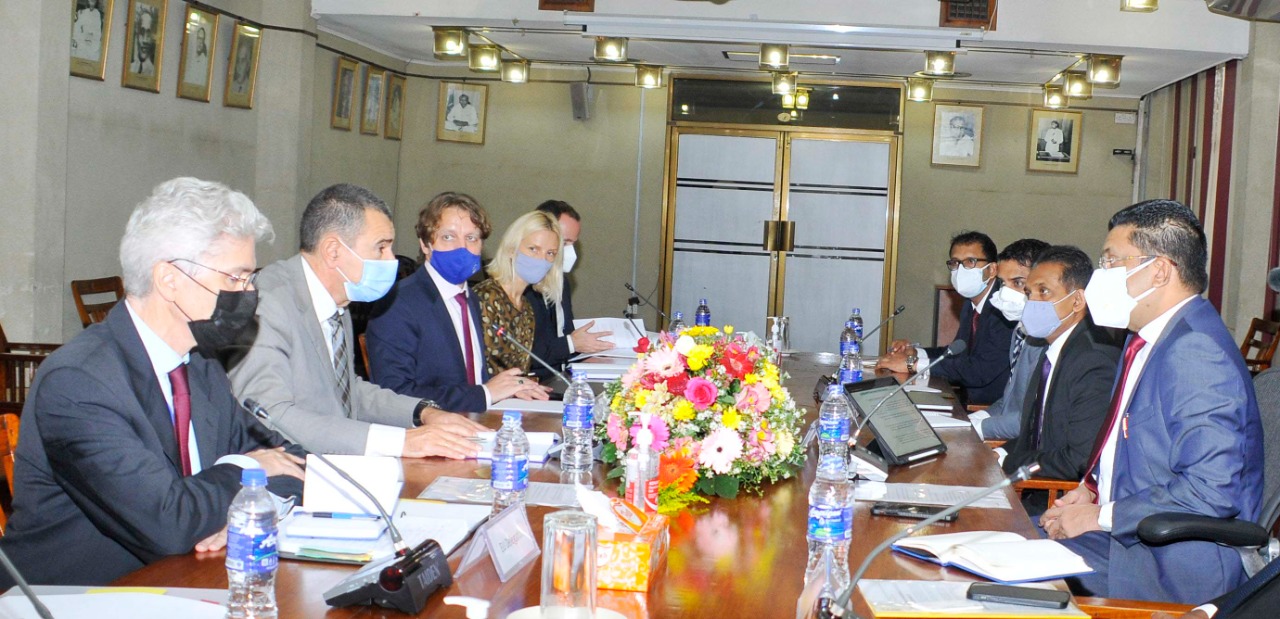
A delegation from the European Union (EU) is to visit Sri Lanka this month to discuss the GSP plus trade concession.

The Foreign Ministry said that the delegation will be in Sri Lanka on 27th September.

The EU office in Colombo confirmed that the delegation will be visiting Sri Lanka.

Last month the EU and Sri Lanka had talks on cooperation under the GSP Plus monitoring process.

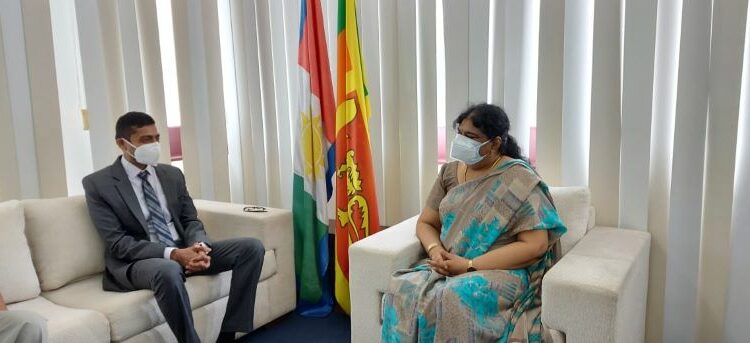
The issue was discussed during a meeting between Foreign Minister Professor G.L. Peiris and the Ambassador of the European Union Delegation to Sri Lanka Denis Chaibi at the Foreign Ministry.

Foreign Minister Peiris reiterated the significance of EU-Sri Lanka trade relations which continues to be mutually beneficial with potential for further expansion. Matters related to cooperation in the fishery sector were also discussed.

Sri Lanka’s regular engagement within the EU-Sri Lanka Joint Commission framework, as well as constructive cooperation existing under the EU GSP Plus monitoring process, including action underway by the Government on issues of relevance, were also discussed. Reference was made in this regard to upcoming EU missions to Sri Lanka, and to the convening of relevant working groups under the Joint Commission umbrella.

Posted in Uncategorized

Sri Lanka’s foreign exchange reserves are still low despite IMF SDR: Moody’s

Sri Lanka’s foreign reserves are still low despite an 800 million US dollar special drawing rights allocation from the International Monetary Fund in August, Moody’s, a rating agency said.

“Some modest amount of inflows materialised in August, while Sri Lanka also received an International Monetary Fund Special Drawing Rights allocation of around $800 million,” Moody’s said in a credit update.

“However, such inflows are piecemeal and boost FX reserves only temporarily and marginally given the government’s external repayment schedule. ”

By end August, Sri Lanka’s forex reserves were around 3.0 billion US dollars (Moody’s does not count SDRs or gold as reserves) which were 43 percent down from a year earlier and 600 million dollars down from June.

Sri Lanka’s forex reserves were a credit negative Moody’s which placed the country’s Caa1 rating on review for downgrade said.

Analysts had who had warned against continued liquidity injections by the central bank had said while rating agencies did not understand the liabilities side of central banking and its domestic assets (note issue and loans to the domestic economy) they understood foreign reserves.

When a central bank – which is note-issue banks – lends to the domestic economy creating new bank-notes, they come up for redemption through the credit system and depletes foreign reserves when convertibility is provided.

In order to re-build reserve a central bank must curtail its note issue by selling down domestic assets and curb credit in the domestic banking system.

Borrowing reserves from abroad or the domestic economy through swaps, creates a foreign exchange liability for the bank.

If liquidity is continue to be injected to keep rates low, and convertibility provided either for trade or for loan repayments, they will also become a net liability, analysts have warned.

Moody’s said Sri Lanka had 4-5 billion US dollars of foreign debt repayments each year for the next few years.

The full statement is reproduced bewlo.

Sri Lanka’s foreign exchange reserves are still low, a credit negative

Sri Lanka (Caa1 review for downgrade) published details of its foreign currency (FX) reserves position1, which was nearly $3 billion as of the end of August 2021, 43% lower than at the beginning of the year and around $600 million lower compared to the end of June.

On 10 September, Sri Lanka (Caa1 review for downgrade) published details of its foreign currency (FX) reserves position1, which was nearly $3 billion as of the end of August 2021, 43% lower than at the beginning of the year and around $600 million lower compared to the end of June.

Foreign exchange reserves covered less than two months of imports at the end of August, a credit negative.

The reserves are also well below the government’s annual external debt repayments of around $4-$5 billion through at least 2025.

Coupled with its limited external financing options and the ongoing pandemic-related lockdown weighing on the recovery of non-debt generating inflows, the FX reserves data points to a rising risk of debt default (see exhibit).

Without sizeable external financing that is relatively secure and long term, we expect foreign exchange reserves to continue declining over the next two to three years.

FX reserves adequacy declined sharply over the past year

To shore up FX reserves and gain financing support, the government and the Central Bank of Sri Lanka (CBSL) have tapped projectrelated multilateral loans, official sector bilateral assistance in the form of central bank swaps, commercial bank loans, divestment of some state-owned assets and most recently, calls for a new foreign currency term financing facility.

Some modest amount of inflows materialised in August, while Sri Lanka also received an International Monetary Fund Special Drawing Rights allocation of around $800 million.

However, such inflows are piecemeal and boost FX reserves only temporarily and marginally given the government’s external repayment schedule.

CBSL measures, such as the required sale of a share of all inbound remittances and export proceeds to the central bank, generate additional reserves, while measures restricting imports and outbound remittances and investment help retain some foreign exchange resources in the country.

Although these measures may be effective in the short term, they could weigh on economic activity and deter investment inflows.

Prospects for a swift increase in non-debt generating inflows through international tourism and foreign direct investment (FDI), including the government divesting assets to nonresidents, are further constrained by Sri Lanka’s ongoing lockdown and the slow recovery in international travel.

While the development of the Colombo Port City, new commercial agreements with the government, and the privatisation or divestment of government assets would yield foreign exchange inflows, pandemic-related delays in these projects are likely to weigh on the pace of these FDI inflows. The government recently reached an agreement with New Fortress Energy to invest in a liquefied natural gas terminal, which it expects will be operational by the second half of 2022.

We expect net FDI inflows to average $1 billion in 2021-22, compared to a peak of around $2.2 billion pre-pandemic in 2018.

Recovery in the tourism sector – another key source of non-debt generating inflows – also depends on how quickly the appetite for travel overcomes cautious behaviour.

Sri Lanka has already reopened its borders to fully vaccinated travellers from India (Baa3 negative) without any quarantine requirement.

However, Sri Lanka’s still high new coronavirus cases at around 2,000-3,000 daily and the extension of island-wide lockdown measures, through 21 September currently, may deter tourists.

Current restrictions on public gatherings include a 10 PM-4 AM curfew and limits on operating hours or capacity for businesses such as restaurants and hotels. At its peak, the tourism sector generated $3-$4 billion of net foreign currency receipts in 2018.

Nearly 50% of Sri Lanka’s total population was vaccinated as of 12 September, and authorities aim to inoculate 70% of the population by the end of this year. If effective, the government’s vaccination strategy will support the reopening of the economy and borders in 2022, and has the potential to boost the tourism sector and non-debt generating inflows.

Geneva and the GR revolution – By Dr.Dayan Jayatilleka

In resolute defence of fair play for Sri Lanka, I had successfully resisted two UN High Commissioners for Human Rights, Louise Arbour and Navi Pillay as PR in Geneva. I would have been even more combative towards their successor Zaid al-Hussain.

I must confess though that I could not have, in clear conscience, taken on High Commissioner Michelle Bachelet’s oral report of 13 September—or her previous presentations and reports on Sri Lanka—because there was no substantive falsehood that I could detect, nor lurid disproportionality in either her criticism or recommendations.

GLP vs. Michelle B

Apart from his welcome assertion that elections to Provincial Councils will be held at the earliest, Prof. G.L. Peiris’ presentation in response to High Commissioner Bachelet’s report had been pre-empted by the report itself.

Every criticism in the 17 paragraphs of Bachelet’s oral report pertain to wholly avoidable acts of commission or omission of the incumbent regime; actions or inactions by executive choice.

High Commissioner Bachelet kicked-off her presentation flagging militarisation. “The current social, economic and governance challenges faced by Sri Lanka indicate the corrosive impact that militarisation and the lack of accountability continue to have …The emergency regulations are very broad and may further expand the role of the military in civilian functions. The Office will be closely monitoring their application.”

She further disclosed that “…my Office’s work to implement the accountability-related aspects of Resolution 46/1 has begun. We have developed an information and evidence repository with nearly 120,000 individual items already held by the UN, and we will initiate as much information-gathering as possible this year.”

Thus, the abnormally high profile of the military and former military brass, in the new governance model, is profoundly damaging to the interests of the military itself.

Prof. Peiris declared: “We reject the proposal for any external initiatives purportedly established by Resolution 46/1 while domestic processes are vigorously addressing the relevant matters. This will polarise our society, as we experienced with Resolution 30/1.”

Why “purportedly”? However lamentably, Resolution 46/1 of March 2021, passed by a vote which Sri Lanka lost spectacularly, did mandate the High Commissioner’s Office to establish such a mechanism, undertake a specific agenda and report on it. Going into denial won’t help. Adopting policies that would help Sri Lanka gain the support in the UNHRC to eventually scrap or renegotiate the resolution, and abandoning policies that would prevent such support and continue to garner only a dismal level of support for Sri Lanka, is the logical way to go. Furthermore, if Prof. Peiris is so averse to “polarisation”, he should speak up in Cabinet for the reversal of the policies that are causing social polarisation and worker-peasant-student radicalisation.

Prof. Peiris’ strident objection to “any external initiatives…while domestic processes are vigorously addressing the relevant matters” is sadly undermined by the non-existence (or invisibility) of any domestic accountability process/mechanism and the fact “that even the limited progress made on accountability on key emblematic cases has regressed” (as the Core Group’s statement notes).

Prof. Peiris’ invocation of the National Human Rights Commission lacked credibility due to its leadership by a former Minister. High Commissioner Bachelet revealed that the “Global Alliance of National Human Rights Institutions last month decided to initiate a special review of the national Human Rights Commission to determine its compliance with the Paris Principles, indicating its concerns about the appointment process of the Commission and its effectiveness in discharging its human rights mandate.”

High Commissioner Bachelet criticised the treatment of the young lawyer Hejaaz Hizbullah, and reinforced the call of Cardinal Malcolm Ranjith and the island’s Catholics: “Despite various inquiries, the victims of the Easter Sunday bombings in 2019 and religious leaders continue to call urgently for truth and justice, and a full account of the circumstances that permitted those attacks.”

The spotlight and scrutiny Bachelet brings to bear on our situation are, on balance, more helpful than unhelpful to this country and its citizens.

GR: Great Revolutionary?

Be it on the open-economy, agrarian policy, separation of powers or devolution of power, President Gotabaya Rajapaksa is Sri Lanka’s greatest counter-reformist or counter-revolutionary, but he may well wind up being the exact opposite.

He has done almost everything that the books recommend should be done if one wishes to make a social and political revolution, and tossed out everything that the books say should be done and should not be done, if a revolution is to be avoided.

Every intelligent reformer the world over, for a century or more, knew that the peasantry should be kept happy and prosperous if a sociopolitical revolution is to be avoided and an economic-industrial revolution is to be promoted. Every leader of Sri Lanka knew this and acted accordingly.

Every intelligent counterrevolutionary everywhere knew that the educated middle classes were the crucial intermediate strata that shaped public opinion, triggered and often led drastic political and social change, and that therefore they should be kept contented and upwardly mobile.

Now, thanks to President Rajapaksa’s deliberate choices of strategic economic policy, acute rural disaffection ranges from the poor peasantry, through the rich peasantry, up to the mill-owners and back.

Meanwhile the return to the import bans and the policy package of the Sirimavo Bandaranaike era has caused acerbic middle-class frustration as well as a flood of the educated middle-class youth seeking to flee constricting prospects and a crumbling economy.

Singapore’s success was both symbolised and sustained by the fact that no Singaporean, unlike Sri Lankans, Filipinos and most others, wish to migrate. The success of the Asian Tigers and the larger Asian economic miracle including those of India and China, were enabled by the ability to retain as well as attract, educated, comfortably-off Indians and Chinese, by the ability to enjoy everything material that they could overseas, in their own country.

This factor is being drastically reversed, triggering a flood of the educated young middle-class (e.g., my university students, nieces, former interns) seeking to get the hell out and probably stay out.

None of this was inevitable. All of it was avoidable. True, COVID-19 is a common affliction and economies contracted, but many are recovering or never tanked as badly as Sri Lanka’s. With the supply-chains affected, every country made adjustments to the model of the open-economy and rebalanced national economies, but no one really reverted to import bans, rejection of the open economy and embrace of the import substitution model. Vietnam and China have doctrinally reiterated their commitment to an open economy and globalisation while fighting for a more equitable distribution of power within the globalised economy.

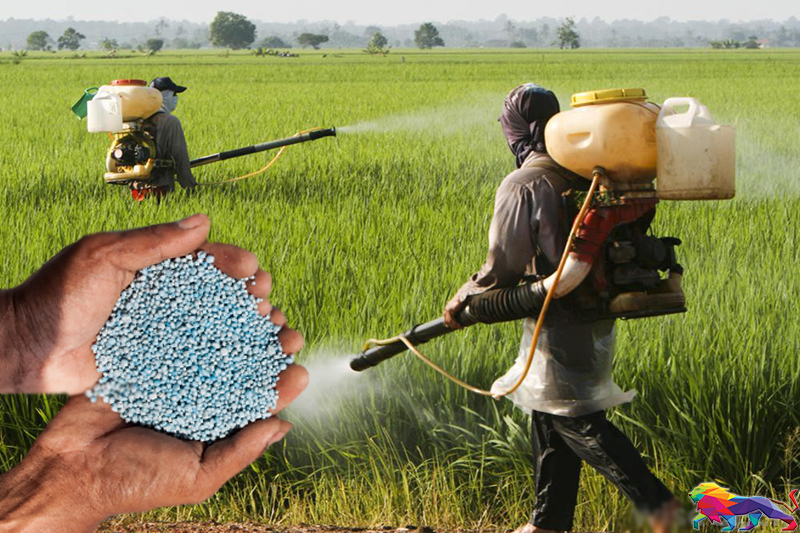
Sri Lanka is an exception. Just as no other country’s anti-COVID campaign is spearheaded by its Army Commander, no other country slapped a ban on the import of fertiliser, weedicide and pesticide, countrywide and with instant shock effect.

Models of a ‘national economy’ i.e., national economic self-reliance, flawed and obsolete as they are, are predicated on agrarian self-sufficiency, i.e., on growing sufficient quantities of your own food, to the point that one has a surplus and indeed the capacity for export (which was the case during the Mahinda Rajapaksa Presidency). One simply cannot do that by slapping a ban on fertiliser-weedicide and pesticide, which causes the bottom to fall out of your agrarian productivity. Thus, even the stated economic model of import substitution and national self-sufficiency is effectively sabotaged by President GR’s policy of a nationwide ‘shock shift’ to organic cultivation.

Shekhar Shaken

Shekhar Gupta is one of India’s best-known and most respected journalists. I came to know him better than I might usually have, because at the moment of its founding, the magazine India Today, edited by the soon-to-be-iconic Dilip Bobb, tapped my father Mervyn de Silva as its Colombo correspondent.

Shekhar Gupta was its crack reporter. In 1984 he scooped the world press with the story of the training camps for Tamil militants run by Indian agencies on India soil. The story had photos and satellite images. Prime Minister Premadasa brandished the India Today and quoted extensively from the story to make a fiery speech in Parliament.

During the worst violence in Sri Lanka, Shekhar covered it, right through to the LTTE’s Jaffna battle with the IPKF. He was often accompanied by the finest cameraman in the South Asian press at the time, Raghu Rai. Shekhar naturally moved up the editorial ladder in mainstream newspaper journalism, diversified into TV (interviewing political leaders) and enjoys emeritus status. He was President of the Editors’ Guild and was awarded the Padma Bhushan, a prestigious Indian national award.

He is a Sri Lanka “hand” and has never been unfriendly to this country. Shekhar Gupta is shocked and saddened though, about Sri Lanka, He recently dealt with ‘Sri Lanka’s Man-made Economic Emergency’ on his show, a master class by a virtuoso. (Economic emergency in Sri Lanka as COVID rises and Rajapaksa’s Mao Zedong act leads to ruin – https://www.youtube.com/watch?v=nVHUwvC7Og0)

Sri Lanka used to be ahead of India and the rest of the subcontinent, Shekhar keeps emphasising, but isn’t so now.

Firstly, Sri Lanka opened up its economy over a decade before India did, had a faster growth-rate, freer flow of foreign currency and ubiquity of consumer goods, including consumer durables. Shekhar Gupta is aghast that President Gotabaya Rajapaksa has reversed all that and returned to the import-bans, bureaucratic limitations on currency access/flow, the closed economy and heavy state intervention which suffocated the Sri Lankan and Indian economies before their opening-up.

Secondly, the militarisation of a long-standing civilian democracy, the oldest in Asia. He points out with a mixture of dismay and disbelief, that on a per capita basis, Sri Lanka has a larger military than does India and is appalled by the fusion of a highly centralised presidency with an increasing role for the military.

Thirdly—and this he says is the most crucial—is the incredible policy on agriculture, namely the abrupt, nationwide ban on chemical fertilisers, weedicides and pesticides, which he likens to the disastrous policies of Mao Zedong such as the elimination of sparrows, leading to having to import them from the USSR when the harvest failed causing mass hunger.

Shekhar attributes the policy blunders to the lack of effective counterviews and critical feedback in the decision-making process of Sri Lanka’s new dispensation. This senior South Asian editor and journalist uses the words ‘dictator’ and ‘dictatorship’.

GR’s ‘extremist policy’

On the agricultural issue, which he deems the most consequential, take the word of one of South Asia’s credentialed scholars on the subject. President Gotabaya presented his agrarian policy as a global first. Now, Sri Lanka is being presented precisely as a model of what should not be done.

Prof. R. Ramakumar, NABARD Chair Professor, School of Development Studies, Tata Institute of Social Sciences, Mumbai, is the author of a stunning critique. The article originally appeared on the Foundation for Agrarian Studies website (‘Rajapaksa’s eco-extremism spells doom for Sri Lankan agriculture and rural livelihoods’) and is now republished in the mainstream e-media, The Print retitled ‘Rajapaksa’s experiment with organic farming in Sri Lanka a warning to developing countries’. The ‘strap’ is: “The Sri Lankan Government would do well to listen to the country’s agricultural scientists and not to quacks masquerading as experts.” (https://theprint.in/opinion/rajapaksas-experiment-with-organic-farming-in-sri-lanka-a-warning-to-developing-countries/731553/)

Prof. Ramakumar writes that: “…President Rajapaksa’s ill-conceived and extremist policy, announced in April this year, of banning the import of all chemical fertilisers and pesticides as a way of promoting organic farming, is threatening to plunge the country’s agriculture into a deep production slump. As a consequence, the export of tea, Sri Lanka’s primary agricultural export, and of other commodities are projected to decline. The economy appears set for a fall in foreign exchange earnings in the midst of the COVID-19 pandemic.”

Prof. Ramakumar cites the detailed letter to President Gotabaya Rajapaksa, dated 25 May 2021, authored by the Sri Lanka Agricultural Economics Association (SAEA). President GR ignored the missive and continues to do so.

Prof. Ramakumar surgically lays bare the character of the decision-making process even on matters of the utmost national economic importance:

“…Added to this was the pressure from President Rajapaksa’s group of advisors that included a medical doctor, who reportedly convinced him that the use of chemicals in agriculture was leading to the spread of chronic kidney disease. Sri Lankan scientists have in fact argued that there are no links between the use of chemicals as farm inputs and kidney disease. They attributed the rise in kidney diseases to ‘hard water in conjunction with fluoride present in many wells’ … But these voices of reason were disregarded…”

“On 10 May 2021, the ‘Presidential Task Force on Creating a Green Sri Lanka with Sustainable Solutions to Climate Change’ was formed under President Rajapaksa’s Chairpersonship…Many senior agricultural scientists were excluded from its membership, and it appears that it was filled with people with questionable scientific credentials. One member of this task force, for example, had once claimed to have identified a self-generating rice variety of yore that had fed the 10 giant warriors of the Sinhala King Dutugemunu of the Anuradhapura Kingdom between 205 BC and 161 BC. Agricultural scientists tested the claim and found that the claimed variety was of sorghum and not of rice at all! Yet another member had claimed that glyphosate even dissolved reservoir bunds! Such was the state of scientific rigour within the Task Force.”

The Indian scholar warns about the effects on tea, coconut and rubber cultivation in Sri Lanka. Take for instance, rubber:

“… The muddled and unscientific policy has caused damage in other sectors as well. For instance, 20,000 out of 107,000 hectares of rubber in Sri Lanka are affected by Pestalotiopsis, a fungal leaf disease that is controlled by Carbendazim and Hexaconazole application through spraying. Further, chemical fertilisers need to be applied to promote better leaf growth. Neither are available in the market…”

The conclusion of this analysis, first published in a scholarly journal and now in the mainstream, is little short of a devastating indictment:

“…The havoc caused by the Sri Lankan experiment with organic farming is a warning to developing countries across the world against falling into a similar trap. The irrational reduction in chemical inputs to agriculture even at low levels of productivity can spell disaster…

“…A comprehensive and integrated approach requires a firm adherence to science and the scientific method, and an equally firm rejection of anti-science models dressed up as ‘organic,’ ‘eco-friendly,’ ‘pro-nature’ and so on. President Rajapaksa’s policy falls squarely into the latter category…Only the total withdrawal of this policy can save Sri Lankan agriculture. The Sri Lankan Government would do well to listen to the country’s agricultural scientists and not to quacks masquerading as experts.”

So much then for saving foreign exchange in the midst of a crisis of foreign exchange. The agrarian policy is yet another example of the regime’s irrationality. It is exacerbating problems created by the COVID-19 crisis by creating new ones, and thereby enlarging the macroeconomic crisis itself.

Sri Lanka Catholic church wants controversial monk’s claims investigated

Sri Lanka’s Catholic church has called for an investigation into a claim attributed to a controversial Buddhist monk of an impending terrorist attack, while also denying a claim by the same monk that he had warned the head of the church in 2017 of an imminent attack.

The Archdiocese of Colombo in a statement released on Thursday (16) said the claims, made by Galgoda Aththe Gnanasara Thero on a television interview, were serious enough to warrant an inquiry.

According to the statement, the monk had claimed he had information on a terror plot similar to the 2019 Easter Sunday bombings that killed 269 and injured over 500. The monk had also said he knew who is behind the planned attack and where they’re located, and that he had already written to President Gotabaya Rajapaksa about his findings.

However, the Archdiocese said, it is unclear whether any action has been taken by the authorities based on this information. The statement said the inspector general of police (IGP) is obligated to arrest anyone linked to the alleged plot.

“We request the IGP to to take note of Ven Gnanasara Thero’s revelation about an impending terrorist attack and to take immediate action to prevent it,” the statement said.

The Archdiocese then denied a claim by Gnanasara Thero that he had warned Archbishop Malcolm Cardinal Ranjith of an impending attack on the Catholic community as far back as 2017.

The monk had only spoken to the cardinal about “Islamic expansionism”, it said.

“We state categorically that, until after the Easter attack, the defence authorities, intelligence, the police, Ven Gnansara Thro or anyone else had warned His Eminence Malcolm Cardinal Ranjith of an impending attack against the Catholic community.”

In the TV interview in question, the monk said he had requested from the cardinal an audience with coastal parish priests to brief them on information gathered by the Bodu Bala Sena (BBS), the controversial group of which he is the general secretary, and had then warned him of an imminent attack.

The cardinal was receptive to the idea of a meeting with the priests, but nothing came of it, he said.

The firebrand monk has been controversial. His hardline Sinhala Buddhist organisation has been accused of Islamophobic rhetoric which critics claim led to incidents of mob violence directed toward Muslims.

The monk was convicted of contempt of court for berating a Magistrate in a courthouse and threatening Sandhya Eknaligoda, wife of missing journalist Prageeth Eknaligoda.

He was sentenced to six years in prison, but was pardoned by President Maithripala Sirisena in May 2019.

Related: Head of Sri Lanka Catholic church alleges attempt to pin Easter attack on ISIS