Fully vaccinated tourists free to travel anywhere during restrictions for locals

The Director General of Health Services has given clearance for fully vaccinated tourists and those who have completed their quarantine period to move out of the bubble and visit other areas of the country.

Health Services Director General Dr Asela Gunawardena on Friday conveyed the decision to all provincial Directors of Health Services, Regional Directors of Health Services and Medical Officers of Health.

Accordingly, tourists who have completed the mandatory quarantine period or obtained the vaccines can enjoy the facilities of the hotels with restaurants, bars, coffee shops and common facilities open for them under health guidelines and maximum capacity.

Tourist establishments with liquor licences will be permitted to serve liquor in house to guests with the approval of the Excise Commissioner General.

The Health Services Chief explained in his circular that as an important economic sector, tourism would continue operations during travel restrictions.

Meanwhile, with the Liquor shops closed during the current and previous lockdown periods, the Excise Department has suffered a revenue loss of Rs 30 billion, according to officials.

The revenue loss of Rs 15 billion was recorded during the May-June lockdown, while a similar loss has been recorded in the current lockdown.

48th UNHRC Session: Government briefs Core Group ahead of sessions By Yoshitha Perera

The Ministry of Foreign Affairs last week presented a briefing note to foreign missions in Sri Lanka on the progress made by the Government on human rights-related issues in connection with the 48th Session of the United Nations Human Rights Council (UNHRC) scheduled to commence next week, The Sunday Morning learnt.

UN High Commissioner for Human Rights Michelle Bachelet is to make an oral presentation on the human rights front on Sri Lanka on the opening day of the sessions.

During the last session at the UNHRC in March 2021, Resolution 46/1 was adopted to enhance the capacity of the Office of the High Commissioner for Human Rights (OHCHR) when monitoring and reporting the human rights situation in Sri Lanka, including the progress on reconciliation and accountability.

The 14-page briefing note by the Foreign Ministry, dated 31 August 2021 and seen by The Sunday Morning, is to be distributed among the missions of members of the Core Group on Sri Lanka.

The Core Group on Sri Lanka consists of the UK, Canada, Germany, Malawi, Montenegro, and North Macedonia.

The note included details on the work carried out thus far by the Office on Missing Persons (OMP), the Office of Reparations (OR), and the Office for National Unity and Reconciliation (ONUR), progress on the Sustainable Development Goals (SDGs), work by the Human Rights Commission (HRC), the Presidential Commission of Inquiry (PCoI) to investigate and inquire into the findings and recommendations of preceding commissions and committees appointed to inquire into serious human rights violations in the country, and revisiting the Prevention of Terrorism Act (PTA).

In the run-up to the UNHCR session, the Government sought to reassure foreign diplomats on Sri Lanka’s keenness to co-operate with the international community to address issues in a positive manner.

This message was also communicated to foreign missions during recent meetings between envoys and Foreign Minister Prof. G.L. Peiris in Colombo, The Sunday Morning learnt.

The Foreign Ministry also apprised the diplomatic community on the pardoning of ex-Liberation Tigers of Tamil Eelam (LTTE) cadres, resettlement of internally displaced persons (IDPs), release of lands, engagement with civil society as well as international human rights and other treaty obligations, and engagement with UN Special Procedures Mandate Holders.

Addressing a media briefing last Thursday (2), held at the Department of Government Information, the Foreign Minister stated that Sri Lanka is navigating through a difficult phase.

“The Government of Sri Lanka today is performing under difficult and challenging circumstances with the rapid spread of the Covid-19 pandemic. In this situation, Sri Lanka has a very convincing story to tell the international bodies that will be meeting within the next few weeks. The UNHRC met last in March 2021 and since then, we made tremendous progress on different sectors,” Prof. Peiris stated.

He explained that President Gotabaya Rajapaksa had appointed a Commission of Inquiry (CoI), presided over by a sitting judge of the Supreme Court, to inquire about human rights violations in the country.

Commenting on the operation of the CoI, the Foreign Minister stated: “It (the CoI) has submitted to the President an interim report on 21 July, and that will encapsulate measurable progress that has been made in many of the matters that are dealt in the resolutions pertaining to Sri Lanka.”

Prof. Peiris also stressed that the independent institutions, such as the OMP, the OR, and others, have made progress.

“We have left behind the war. It was a painful period of three decades for all of us and now we have found our way out of the woods,” the Foreign Minister opined.

He further said that the President has taken a decision under Section 13 of the PTA to appoint an Advisory Board, presided over by previous Chief Justice Asoka de Silva to identify others who can be released into the community after adequate rehabilitation without any detriment to vital interest relating to national security.

“These are some of the accomplishments which we will present to international bodies that will be meeting within the next few weeks. I would also like to highlight that all these things are being achieved in a vibrant democratic quality. I would like to invite anyone to come and look at the parliament sessions; the Opposition is certainly very active in the Parliament and questions are being asked during both oral question sessions and at adjournment debates. Thus, it is a very vibrant democratic culture,” he opined.

Prof. Peiris denied the allegation of the shrinking of democratic space in Sri Lanka, stating that the Government is not taking any measures to impose restrictions on the freedom of the media. “Criticism is healthy, and we accept it,” he said.

“The courts have not hesitated to intervene to tell the Police that they have no right to stop the freedom of expression and that people have a right to do this. The action by the Police has been struck down with inhibition by the courts of the country. It is a practice of democracy,” the Foreign Minister added, emphasising that the Government does not interfere with the independence of the Judiciary.

However, Tamil National Alliance (TNA) MP M.A. Sumanthiran PC told The Sunday Morning that the Government had not made any progress at all, pertaining to resolving the matters mentioned in the resolution.

“In the resolution, it calls for action on a number of issues, and the Government can only say that they are continuing the Office of Missing Persons, Reparations Office, etc. During the International Day (of the Victims) of (Enforced) Disappearances, the OMP merely had a meeting and talked about giving compensation and not finding the guilt of anybody (sic), which is clearly opposite to what that office had to do.”

Sumanthiran criticised delays in organising a meeting between the communities of the North and East and the President aimed at discussing the grievances of the Tamil people. He pointed out that the invitation was made by the President in July but was rescheduled several times.

Posted in Uncategorized

Sri Lanka does not need the IMF at the moment, no default: Minister Cabraal

Sri Lanka does not need the International Monetary Fund at the moment and there will be no default State Minister for Money and Capital Markets, Nivard Cabraal said.

“We also seen several news reports, which referred to Sri Lanka’s need to go to the IMF and seek support, as well as get to be supported by the IMF,” he told reporters.

“We don’t have a need to do that. We do have a respect for the IMF and worked with them in the past as well. However, at this moment of time, we have identified the needs as well as the requirements of our economy.”

Sri Lanka has lost foreign reserves of the central bank (dollar deposits of the bank invested abroad) as new money (deposit slips or IOUs called banknotes) were created by the central bank against Treasury bills and issued to the government to pay state workers and other expenses.

However as the new deposit slips (rupee banknotes) come up for redemption in the foreign exchange market at a given convertible parity (exchange rate) foreign reserves have been lost.

Convertibility is now suspended for most trade transactions, leading to a weakening in the parity (depreciation) of the central bank IOUs (rupee paper) and others such as dollars.

Convertibility is still given to the government for rupees including those created after failed Treasury bond auctions, for debt repayments. As a result foreign reserves have declined steadily.

Minister Cabraal said several strategies were put in place to raise more funds to repay loans.

“And we are confident that with our plan that we have put in place, as well as the new initiatives that we are taking, we will be able to ensure that Sri Lanka will not have to default at any time in the near future, or even in the foreseeable future, or for that matter in the future at all,” Cabraal said.

“And we have the necessary resources as well as the commitment, as well as the plans that will give us the opportunity as well as the ability to make that happen.”

“So I want to reassure all those who may have been concerned, as a result of these reports that Sri Lanka would not be able to meet its debt, that we are very much having the ability to do so. And we have the commitment to do so as well.”

Sri Lanka’s central bank has raised money through swaps with the Bank of Bangladesh, the Treasury has borrowed from China and land sales are planned to foreign investors.

“We have the ability to continue with our impeccable record, and to ensure that all creditors are being settled in due time, we have seen some news reports even in the past, saying that Sri Lanka will default in 2020, 2019.

Total COVID deaths climb over 9,900 with 145 new victims

The total number people who fell victim to COVID-19 infection in Sri Lanka soared yet again as 145 more fatalities were confirmed by the Director-General of Health Services on Friday (Sep. 03).

The new development has pushed the official death toll from the virus outbreak in Sri Lanka to 9,951.

According to the data released by the Department of Government Information, the latest victims include 77 males and 68 females.

As many as 117 deaths were reported among the elderly people who are aged above 60 years.

In addition, 24 individuals aged between 30-59 years and four others below 30 years have also succumbed to the virus infection.

Posted in Uncategorized

Government grabs fiscal lifeline from lenders while internal pressures mount

The inflows to Sri Lanka’s foreign reserves last week were a most welcome relief for the Government led by President Gotabaya Rajapaksa and Prime Minister Mahinda Rajapaksa. Nevertheless, the temporary respite is still not enough to ride the Government through the ongoing crises.

The Government, which is on a desperate lookout for solutions to the present economic crisis, has also adopted the blame game. It was State Minister Shehan Semasinghe who, last week, claimed that the country’s ongoing economic crisis is due to the Central Bank Bond Scam and other corrupt practices of the former Yahapalana Government, and was further compounded by the Covid-19 pandemic.

However, State Minister of Money, Capital Markets, and State Enterprise Reforms Ajith Nivard Cabraal last week pointed to the positive developments in the country’s economy following the foreign currency inflows from the International Monetary Fund (IMF) and the impending loan from China Development Bank (CDB), which would improve liquidity and stabilise the foreign exchange market.

“IMF’s $800m SDR & CDB’s $350m #loan will improve liquidity & stabilize #Forex market. #Exporters & #importers who expected LKR to depreciate would now do well to convert Forex receipts early & phase out imports, respectively (sic),” Cabraal tweeted.

However, the anticipated funds from CDB have been delayed, with no date fixed yet on when the instalment will be received.

Meanwhile, Bangladesh had last week released a further $ 100 million of the $ 200 million to Sri Lanka under the swap arrangement, increasing the total it transferred to Sri Lanka to $ 150 million.

The release of the latest tranche was first reported in Bangladesh’s newspaper The Financial Express, while the Central Bank of Sri Lanka (CBSL) took several days to announce the inflow.

Funds from Bangladesh were provided under the currency swap agreement signed by the Bangladesh Bank (BB) and CBSL early last month.

On 18 August, the BB transferred $ 50 million to the CBSL in the first instalment under the currency swap deal that was initiated this year.

“We’re hopeful that the CBSL would send a request within the stipulated time frame seeking a third instalment of the agreement,” a BB senior official had told The Financial Express.

“We’re providing the funds under a currency swap agreement aiming to help a friendly SAARC (South Asian Association for Regional Co-operation) member country which is in trouble,” another BB official had told The Financial Express.

He also said it is Bangladesh’s first currency swap outside the Asian Clearing Union (ACU) mechanism.

However, despite the receipt of funds from the IMF and BB, the Sri Lankan rupee hit a record low last Tuesday (31 August), selling at Rs. 204.89 against the US dollar.

Also, the CBSL had released some much-needed dollars to the banking sector, specifically to Bank of Ceylon (BOC) and People’s Bank. The banks were reportedly allocated over $ 200 million to settle urgent customer requirements. This release was requested by the Ministry of Finance on several occasions, citing the predicament of local students studying overseas, as they were unable to pay their tuition or afford food and lodging.

The CBSL, however, was resolute in its stance that it could not accommodate any request, since the priority was to safeguard the existing foreign reserves.

However, the Government last Tuesday announced that no final decision had been made on seeking further financial support from the IMF.

“It has not been decided yet whether to seek a facility from the IMF or not. The Government will consider such an option only after analysing future local and global economic conditions,” Cabinet Co-Spokesman Minister Dr. Ramesh Pathirana said at the weekly cabinet news briefing, in response to a question posed by a journalist.

However, it is learnt that the country’s foreign reserves may see further improvement around next month when the Ceylon Petroleum Corporation (CPC) finalises a credit line. The Ministry of Energy at present is considering India, China, and the UAE to secure the credit line.

Money in hand

It is, however, interesting to note that the dollar shortage in the country is the key factor that has prevented the CPC from even partly settling its loans.

The CPC’s outstanding loans stand at around $ 3.3 billion, while the CPC has a sum close to Rs. 250 billion in cash in hand. The CPC is unable to pay the loans in dollars due to the shortage of foreign exchange in the country, it is learnt.

The CPC, at present, requires between $ 330 million and $ 350 million per month to ensure a smooth supply of oil (fuel in all forms) to the country. This has placed much strain on the country’s dwindling foreign reserves.

Therefore, the current pressure on foreign reserves is likely to ease gradually once the CPC finalises its credit line.

Stumbling block

Meanwhile, the 10 billion yuan ($ 1.54 billion) currency swap agreed on between Sri Lanka and China has stumbled upon an obstacle over a technicality.

This was revealed last Tuesday when Minister of Finance Basil Rajapaksa requested the Speaker of China to assist in the $ 1.5 billion fund transfer between the CBSL and CDB.

According to Rajapaksa, the process is at a halt due to certain technical issues in the agreement.

This was the first diplomatic meeting between the high-profile delegation of the Chinese Parliament and the Parliament of Sri Lanka.

National People’s Congress (NPC) Standing Committee (Speaker of the Parliament of the People’s Republic of China) Chairman Li Zhanshu had led the Chinese delegation, while Speaker of Parliament Mahinda Yapa Abeywardena led the Sri Lankan delegation.

Speaking during the meeting, the Finance Minister had said that Sri Lanka had received a number of projects – including the Bandaranaike Memorial International Conference Hall (BMICH), the Supreme Court Complex, expressways, the Hambantota Port, Mattala Rajapaksa International Airport (MRIA), and the Colombo Port City – due to the intervention of the Chinese Government.

He had further requested to facilitate the expansion of industries such as garments, tea, and gems into the Chinese market under the Sri Lanka-China Free Trade Agreement (FTA).

Rajapaksa had added that the Government was ready to facilitate the establishment of a regional headquarters of CDB in the Colombo Port City.

A number of high-profile officials of China, including NPC Standing Committee Vice Chairman (Deputy Speaker) Wu Weihua and People’s Republic of China Finance Minister Liu Kun, had participated in the online meeting.

The real picture

Meanwhile, Finance Minister Rajapaksa had told the Cabinet of Ministers last week that although the swap with CDB was not in US dollars and instead in Chinese yuan, it was beneficial for the country.

The Minister had explained that the yuan in the present context was more important than the US dollar, since most of Sri Lanka’s transactions were with China. From making loan payments to settling import bills, Sri Lanka had to deal mostly with China, and yuan received through the swap could be used for this purpose.

Once again, the Finance Minister cautioned the Cabinet on the need to be mindful of state expenditure and to prioritise their work.

Rajapaksa had also noted the need to review some of the projects that had commenced prior to the pandemic and to take steps to halt unnecessary construction and renovation projects.

The Minister had also directed to cut down unnecessary allowances such as fuel offered to public sector employees during the lockdown period and to suspend all recruitment in the public sector.

The Government had also unanimously decided to focus all its attention on the ongoing Covid-19 vaccination programme.

When discussing the financial difficulties faced by the Government, Minister of Public Security Sarath Weerasekera had questioned the success of implementing the recommendations of the Cabinet Subcommittee to resolve the ongoing strike action by principals’ and teachers’ trade unions.

Weerasekera had questioned whether the trade unions would accept the recommendations of the subcommittee, since they were unaware of it.

“At a time when the Government is faced with a financial crisis, how feasible is it for the Cabinet to approve recommendations granting certain amounts as salary increments? What if the trade unions do not agree to it and proceed with the trade union action? The education sector strike will continue while the Government will be further burdened with expenditure,” the Minister had further noted.

However, responding to Weerasekera’s concerns, Minister of Industries Wimal Weerawansa had said that the trade unions that are currently engaged in the strike action would never agree to any of the recommendations unless their demands are met in whole.

“In such a scenario, we can propose a compromise and promote it to build a public perception,” Weerawansa had explained.

Finance Minister Rajapaksa had also weighed in, saying that trade union action by education sector unions have always been political.

He had cited the trade union action launched by university lecturers during the previous Mahinda Rajapaksa presidency demanding a 6% budgetary allocation for the education sector.

“It was a massive campaign, and it also played a role in eventually defeating the then Government at the elections. However, the demanded 6% was never allocated by any government, but the trade unions had remained silent and not raised the issue afterwards. The present situation is pretty much the same,” Rajapaksa had noted.

Several other ministers had also opined that while the salary anomalies in the education sector must be resolved, it was unfair for trade unions to demand a solution for an issue that has persisted for over two decades at this juncture, when the entire world, including Sri Lanka, is battling the Covid-19 pandemic.

However, the Cabinet agreed to the recommendations of the subcommittee. Thereafter, the education sector trade unions, as predicted by Minister Weerasekera, rejected the compromise solution and are continuing with their trade union action until their original demands are met.

Emergency under fire

President Rajapaksa last Monday (30 August) declared emergency regulations on the provision of essential foods with effect from midnight that day.

The decision was taken to prevent essential commodities such as rice, paddy, and sugar being sold at exorbitant prices and to prevent the hoarding of stocks.

The President declared these regulations under the powers vested with him in terms of Article 2 of the Public Security Ordinance.

Maj. Gen. N.D.S.P. Niwunhella was appointed as the Commissioner General of Essential Services to co-ordinate the distribution of consumer goods such as paddy, rice, and sugar.

Following the announcement, Tamil National Alliance (TNA) MP M.A. Sumanthiran claimed that it was an unwarranted act and could lead to a state of repression in the country.

In a statement to the media, he had observed: “It will be the President’s rule, by himself, making regulations under the Public Security Ordinance, and that will surpass considerations pertaining to health or even food supplies to the community.” He had added that in any case, there is no danger of essential food supplies being disrupted at present.

“This is the reason why we have been saying that there must be a separate law for a public health emergency. Although Parliament has been in existence for over a year, this has not been done by the Government. Even when a Private Members’ Bill was presented to Parliament, the Government has chosen to go the Public Security Ordinance route,” he had added.

Samagi Jana Balawegaya (SJB) General Secretary Ranjith Madduma Bandara, meanwhile, had noted that the emergency promulgated via the Public Security Ordinance does not have any relevance to the current situation.

“The distribution of essential commodities has run into trouble because of inefficiency and due to bad management. The distribution of essential goods has not come to a standstill because of any security reasons. Therefore, imposing an emergency is not relevant at this moment,” Madduma Bandara had said.

“We urge the Government to reverse the decision to impose (a state of) emergency and make use of the Disaster Management Bill of 2005, which is more appropriate for today, especially when there is a pandemic situation.”

SLFP revives alliances

Amidst the chaos in the political arena, the governing party’s main coalition partner, the Sri Lanka Freedom Party (SLFP), had taken steps to revive two political alliances led by it – namely, the People’s Alliance (PA) and the United People’s Freedom Alliance (UPFA).

SLFP Senior Deputy Chairman Prof. Rohana Lakshman Piyadasa told the media early last week that the SLFP Central Committee had recently decided to reactivate the PA and the UPFA.

Accordingly, meetings will be convened with all coalition parties of the PA and the UPFA while also looking at further expanding the respective alliances.

According to Prof. Piyadasa, the existing alliance will be expanded with more focus on leftist, patriotic, and nationalist political parties as well as on progressive parties not represented in Parliament.

“This does not mean there will be a split from the ruling coalition party. That coalition has not met since 2019 despite signing an agreement,” he said.

As soon as news of the revival of the PA and the UPFA were revealed, political circles were buzzing with talk of the possibility of the SLFP breaking away from the governing Sri Lanka Podujana Peramuna (SLPP) and forming a separate alliance.

SLFP General Secretary State Minister Dayasiri Jayasekara last week announced that the SLFP had no intention of leaving the governing alliance, but would revive the party’s political alliances.

It is in this backdrop that former SLFP Leader and former President Chandrika Bandaranaike Kumaratunga slammed the leaders of the SLFP.

Kumaratunga’s comments coincided with SLFP’s 70th anniversary that fell on Thursday (2).

She claimed that the present leaders of the SLFP needed to move out and make way for the younger generation to revive the party. “The present leaders should all resign now. Instead, young, honest, and educated people who have their own income should take over the party.”

She also attributed the SLFP’s decline to SLFP Leader and former President Maithripala Sirisena.

“I would say very clearly, incumbent SLFP Chairman Maithripala Sirisena is directly responsible for that. He got into some secret deal with the SLPP to hand over the SLFP votes to the SLPP. The SLFP had sunk to its lowest level under Sirisena’s leadership when he was the President. We had never lost an election so badly like the local government elections in 2018. I, now, fearlessly say that the defeat of that election was engineered by Sirisena and some other so-called party leaders. They had a secret pact with the SLPP to defeat the SLFP. Soon after that, Sirisena came to the Central Committee of the SLFP and got one of his acolytes to propose that the SLFP should join the SLPP, thereby supporting the SLPP’s candidate,” Kumaratunga said in an interview with The Morning.

She had further stated: “At that time, I spoke out against it, saying we need not join up with anybody and that we should contest on our own. There, I was supported by the majority of the Central Committee. However, after about three weeks, Sirisena sacked me together with the majority of the Central Committee – 16 or 17 of us who came up with the view that the SLFP should stand alone. Sirisena did not even have the courage to sack me from the Central Committee when I was in the country, and he waited till I left the country on my usual trip to see my children.”

According to Kumaratunga the SLFP Leader does not want to move forward and is keeping the party stuck in one place in order to help another party.

Gearing for UNHRC

The Foreign Ministry, last week, presented a briefing note to foreign missions in Sri Lanka on the progress made by the Government on issues related to human rights in connection with the 48th Session of the United Nations Human Rights Council (UNHRC) scheduled to commence next week, The Black Box learnt.

The 14-page briefing document, seen by The Black Box, was to be distributed among the missions of members of the Core Group on Sri Lanka.

Included in the note were details on the work carried out thus far by the Office on Missing Persons (OMP), Office of Reparations (OR), Office for National Unity and Reconciliation (ONUR), on the Sustainable Development Goals (SDGs), by the Human Rights Commission (HRC), Presidential Commission of Inquiry (PCoI) to investigate and inquire into the findings and recommendations of preceding commissions and committees appointed to inquire into serious human rights violations in the country, and revisiting the Prevention of Terrorism Act (PTA).

The Ministry had also apprised the diplomatic community on the pardoning of ex-Liberation Tigers of Tamil Eelam (LTTE) cadres, resettlement of internally displaced persons (IDPs), release of lands, engagement with civil society, as well as international human rights and other treaty obligations and engagement with the UN Special Procedures Mandate Holders.

Meanwhile, the Foreign Ministry had briefed its respective Ambassadors in Geneva, Switzerland, and New York, US on the preparations for the UNHRC Session starting next Monday (13) and the UN General Assembly (GA) session, also scheduled to be held this month.

“We have already explained our stances to the Permanent Representative of Sri Lanka to the UN (President’s Counsel Mohan Peiris) in New York and to the Ambassador (C.A. Chandraprema) in Geneva. I have also met with foreign representatives in Colombo to pass on all the relevant information. The most important thing we have to consider is the current situation in the world, especially in the South Asian region,” Minister of Foreign Affairs Prof. G.L. Peiris had told a news conference last week.

He had pointed out that Sri Lanka is a peaceful country when compared with the recent spate of killings, bombings, instability, and the flood of refugees in the South Asian region.

“What is the reason behind this targeting of Sri Lanka every year on the world stage? Is it fair, especially considering the many other important topics that need to be discussed? Is it really about human rights in Sri Lanka or something completely different?” Prof. Peiris had questioned.

Prof. Peiris, meanwhile, briefed the UN last week on progress made through domestic mechanisms on human rights.

The Minister had given this briefing during a meeting with UN Resident Co-ordinator in Sri Lanka Hanaa Singer-Hamdy.

The UNHRC passed Resolution A/HRC/46/L.1 earlier this year, which recognises the importance of preserving evidence related to alleged violations of human rights in Sri Lanka in order to advance accountability.

The resolution was adopted on 23 March with 22 votes in favour and 11 votes against, while 14 states abstained from voting.

However, the UN High Commissioner for Human Rights is to give an oral update on the human rights situation in Sri Lanka on the opening day of sessions on the 13th.

Marking disappearances

Two organisations – the Families of the Disappeared and the Association of the Relatives of the Disappeared in the Northern and Eastern Provinces – last week marked the International Day of the Victims of Enforced Disappearances through online webinars.

Addressing the webinar organised by the Families of the Disappeared, European Commission Representative Thorsten Bargfrede had underscored the social and economic costs that loved ones of the disappeared endure in their quest for justice.

“There are two types of victims here – both, those who are forcibly disappeared, and the families and friends they leave behind, who spend a lifetime in the dark. We are all aware of Sri Lanka’s dark history of enforced disappearances. The mental agony and the social and economic costs faced by families of victims of enforced disappearances must be addressed,” Bargfrede had been quoted as saying.

The UN, meanwhile, stated that they would stand in solidarity with the victims of enforced disappearances, their families, and communities, in Sri Lanka and across the world.

Issuing a statement, UN Resident Co-ordinator in Sri Lanka Singer-Hamdy stated that enforced disappearances deprived families and communities of the right to know the truth about their loved ones and of accountability, justice, and reparation.

“They experience mental anguish, alternating between hope and despair, wondering and waiting, sometimes for years, for news of the whereabouts of their loved ones. The families and friends of the victims also live with the insecurity that the search for the truth may expose them to danger. It is women who are most often at the forefront of the struggle to resolve the disappearance of family members. In this capacity, they may suffer intimidation, persecution, and reprisals,” she said in the statement.

She further noted that the feeling of insecurity generated by unresolved enforced disappearances was not limited to the close relatives of the disappeared, but also affects their communities and all of society.

“The establishment of the Office on Missing Persons (OMP) in 2016 was an important step by the Government of Sri Lanka. Building and maintaining the trust of victims and their relatives is essential for the success of the OMP. A fully independent and effective institution with the resources, skills, and political support needed for its crucial work can help provide victims and families some answers,” the statement noted.

“Today, we recognise the courage, commitment, and determination of families and victims from all communities, who, despite many challenges, have continued to voice their demands for justice and answers about the fate of their missing loved ones, and we stand by them,” the statement added.

Letter to Bachelet

Meanwhile, the Association of the Relatives of the Disappeared – Northern and Eastern Provinces, in a letter to UN High Commissioner for Human Rights Michelle Bachelet, had stated that they lacked faith in the current OMP. The Association had requested Bachelet to intervene to ensure that an appropriate judicial mechanism is formulated to investigate the plight of missing persons in the country.

“Only a woman can understand the plight of another woman. Help us to find a solution within your tenure at least, as more than a hundred of those who were with us in this struggle have passed away already,” the letter to Bachelet had stated.

“Hence, the international community and the UN should accept the fact that the OMP is incapable, and should therefore advise the Sri Lankan Government to abolish the OMP immediately. The UN should accept that a judicial mechanism with an international inquiry is the only appropriate solution for our issue.”

The Association had further noted that a branch office of the OMP was secretly opened in Kilinochchi recently. According to the Association, it was a move merely to appease the UNHRC.

However, Minister of Justice Ali Sabry PC had noted that the Government has a zero-tolerance policy on enforced disappearances and had expressed commitment to finding the proper balance between national security and the people’s civil liberties and freedoms.

“We are working to identify the circumstances under which enforced disappearances occurred, and once they are established, we will provide compensation to the families of the victims. However, it must be noted that the provision of compensation does not constitute an admission of guilt, but simply the fulfilment of our duty to our fellow members of the community,” he had stated during a webinar held to mark the International Day of the Victims of Enforced Disappearances.

Meanwhile, OMP Chairman retired Supreme Court Judge Upali Abeyratne, addressing the same webinar, had said: “The office (OMP) is in possession of 14,988 complaints. We have formulated a new plan to handle the existing complaints and have divided our pathway into three phases. Our priority is to handle the most recent complaints from the years 2000 to 2021. The second phase is to look into complaints from 1981 to 1999, and the third phase is to consider those before 1980.”

Easter attacks brief

The Government also took steps last week to address the growing pressure by the Catholic Church to ensure justice to the victims of the Easter Sunday attacks.

In order to engage with the Catholic Church, Foreign Affairs Minister Prof. Peiris last week met with Apostolic Nuncio His Eminence Archbishop Brian Udaigwe, following a request made by the Minister for a meeting with Archbishop of Colombo His Eminence Cardinal Malcolm Ranjith.

Prof. Peiris sought a meeting with Cardinal Ranjith to brief him on the steps taken by the Government in connection with the investigations into the Easter Sunday terror attacks of 21 April 2019.

However, Cardinal Ranjith had informed Prof. Peiris that he would meet with the Minister on the condition that the Government takes action, prior to the meeting, to implement the recommendations of the Presidential Commission of Inquiry (PCoI) that probed the bombings.

National Catholic Social Communication Centre Director and St. Anne’s Church, Kurana (Negombo) Parish Priest Rev. Fr. Cyril Gamini Fernando, speaking on behalf of Cardinal Ranjith, in a media statement last Wednesday (1), stated that although the Archbishop is open for a discussion, it would only take place on the fulfilment of certain conditions beforehand.

“It is important to build the public’s trust, especially the Catholic community, about the investigations. The public must see that there is at least a start to implementing the recommendations made by the PCoI. The Government is responsible for building this trust,” Fernando had stated.

Speaking to the media last Monday, Prof. Peiris said that a discussion was requested to inform Cardinal Ranjith of the steps taken by the Government to prosecute those responsible for the said bombings.

He had stated that the Catholic Church had taken several actions in the aftermath of the terror attacks, with a pure intent to demand the prosecution of those responsible for the attacks.

However, Prof. Peiris had claimed that various groups with vested interests were attempting to misuse such actions for other purposes.

Claiming that the Catholic Church’s clear intention was to serve justice to the victims of the Easter Sunday terror attacks, Prof. Peiris had alleged that some groups were trying to use the actions taken by the Catholic Church in that regard for completely different purposes.

Meanwhile, the Inspector General of Police (IGP) had said recently that 311 suspects were arrested as per impartial investigations conducted into the attacks.

However, several senior police officers, including Senior Deputy Inspector General of Police (SDIG) Deshabandu Tennakoon, met with Siam Sect Asgiri Chapter Mahanayaka (Chief Prelate) Ven. Warakagoda Dhammasiddhi Gnanarathana Thera, where the police officers had pointed out that injustice had been caused to certain police officers through the investigations into the terror attacks, particularly through the final report of the PCoI. SDIG Tennakoon had told The Morning recently that it is not fair for police officials to be blamed for not having been able to prevent the attacks.

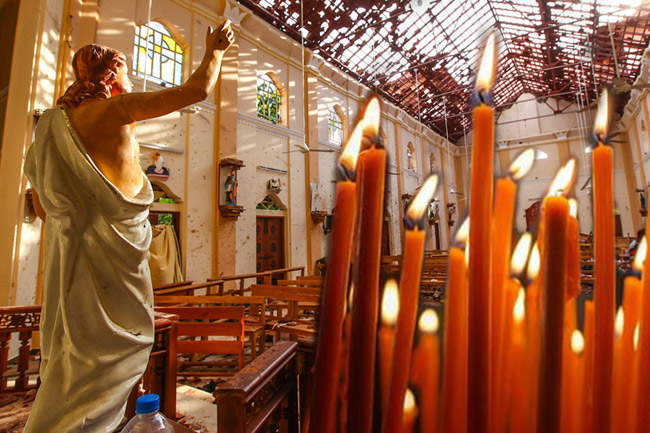
Meanwhile, Chief Justice Jayantha Jayasuriya PC, last Wednesday (1), appointed a Special Trial-At-Bar at the request of the Attorney General (AG) to hear a 23,270-count indictment against 25 accused parties, including Mohamed Ibrahim Mohamed Naufer, alias Naufer Moulavi, in connection with the Easter Sunday terror attacks of 21 April 2019.

The Trial-At-Bar will be chaired by High Court (HC) Judge Damith Thotawatte and include High Court Justices Amal Ranaraja and Navaratne Marasinghe.

Moulavi had been identified by the Government as the supposed “mastermind” of the terror attacks, and the Government claimed that the US Federal Bureau of Investigation (FBI) had also identified Moulavi as the mastermind of the attacks.

The AG had filed indictments in the High Court against 25 suspects, including Moulavi, Sajid Moulavi, Hayathu Mohammadu Ahammadu Milhan, Mohamed Ibrahim Sadiq Abdul Haq, Adam Lebbe (alias Ghafoor), Mohammad Samsudeen, and Mohammad Rizwan.

The suspects had been charged with conspiracy, preparation, aiding and abetting, collection of explosives and weapons, and murder and attempted murder under the Prevention of Terrorism (Temporary Provisions) Act No. 48 of 1979, in connection with eight suicide attacks on several churches and hotels that took place on 21 April 2019.

Posted in Uncategorized

CID questions close associates of man who attacked Kiwi shoppers

The Criminal Investigations Department (CID) has questioned close associates of Ahamed Adhil Mohamed Samsudeen, the man who carried out the attack at a shopping mall in New Zealand.

The Police media unit said that investigations revealed that the attacker had left Sri Lanka as a student in 2011.

The Police said that his close associates are now being questioned in order to gather more information about him.

Ahamed Adhil Mohamed Samsudeen is a resident of Kattankudy, a town in Batticaloa in the East.

The lone attacker grabbed a knife at the mall in Auckland and attacked shoppers yesterday (Friday) injuring seven, including three critically.

New Zealand Police, who were undercover at the mall, shot and killed the man after he stabbed seven people.

Prime Minister Jacinda Ardern had said the Sri Lankan national was under Police surveillance and was a supporter of the Islamic State (IS) terrorist group.

Posted in Uncategorized

India sends 150 tonnes of oxygen to Sri Lanka

India has sent about 150 tonnes more oxygen to Sri Lanka to help the island nation combat the third wave of the COVID-19 pandemic.

Sri Lanka on September 3 extended its nationwide lockdown till September 13 amidst a surge in the number of COVID-19 deaths and mounting pressure on the healthcare system.

“Lifeline from India to Sri Lanka close to 150 tonnes of oxygen from Vizag and Chennai reached the shores of Colombo,” the Indian High Commission in Colombo tweeted on September 4.

India since mid last month has been sending urgent supplies of oxygen to Sri Lanka following a personal request for assistance by the Sri Lankan President Rajapaksa, it said.

Indian naval ship Shakti in August delivered 100 tonnes of liquid medical oxygen to Sri Lanka to help the island nation.

India’s assistance to Sri Lanka during the pandemic has been varied and need-based.

Close to 26 tonnes of essential medical supplies were gifted in April-May 2020. A currency swap of $400 million was provided in July 2020.

The first consignment of vaccines, which was donated by India in January 2021, enabled Sri Lanka to roll out its vaccination programme ahead of the schedule, the Indian High Commission said.

Sri Lanka is currently experiencing a rapid rise in infections.

As of Thursday, over 9,600 people have died due to the coronavirus and the total number of infections stood at 447,757.

Sri Lanka, which has witnessed a series of lockdowns and curfews to contain the spread of COVID-19 in the country, has been impacted in terms of its economy.

The tourism sector, which generates a huge quantum of revenue for the island nation, has seen a drastic fall.

Posted in Uncategorized

Basil Says Government Will Facilitate Establishment Of China Development Bank Regional Office At Colombo Port City

Finance Minister Basil Rajapaksa said the government was ready to facilitate the establishment of the Regional Headquarters of the China Development Bank in the Port City of Colombo.

He also sought China’s support for investment opportunities in Sri Lanka.

He was speaking at a meeting with the Chairman of the Standing Committee of the People’s Congress of China (Speaker of the Chinese Parliament) Li Zhanshu on Zoom Technology this morning (1).

China will facilitate other investments, including the Colombo port city project, said Li Zhanshu, in response to Rajapaksa’s remarks.

The Chinese Speaker also assured that he would extend his fullest support to the Sri Lankan economy as a close friend and was committed to taking this discussion further.

He added that the delegation of the two countries would be able to enhance mutual cooperation after the end of the pandemic.

BBS challenges 22 organizations to make public statement rejecting Wahhabism, Salafism

While condemning the recent terrorist attack on innocent civilians in New Zealand, Bodu Bala Sena (BBS) General Secretary Ven. Galagodaaththe Gnanasara Thera today threw a challenge to the 22 organizations to make a joint public statement that they reject Wahhabism and Salafism’.

Ven. Gnanasara said the attack was carried out by a Muslim man who left Sri Lanka about 10 years ago and has been living in New Zealand ever since.

The prelate pointed out that a similar attack was launched in Sri Lanka on April 21, 2019 in the name of religion. (Chaturanga Samarawickrama)

The BBS organisation has released a statement describing the situation as follows:

September 04, 2021

Terrorist attack by the Islamic State(IS) Sri Lankan in New Zealand.

We strongly condemn yesterday’s(2) terrorist attack on innocent civilians which was conducted in the name of Islam by a Muslim who left Sri Lanka about 10 years ago and was living in New Zealand.

A similar attack was launched in Sri Lanka on April 21, 2019 in the name of religion, making the dangers pointed out for several years by the Bodu Bala Sena a reality. The question before us today is whether a lesson has been learned from the said attack as a nation. The politicization and oscillation of the Easter attack carried out by Saharan and his gang in the name of religion is further endangering our country.

Can those trying to take advantage of the Can “hunting the mastermind of the Easter attack” scenario adopted in Sri Lanka be used to find the mastermind of the Auckland attacker? Absolutely not. This is not because of any other reason but because there is no need to direct terrorism by someone else since Its based on religious principles.

A believer who is confused by a religious teaching has the opportunity to become a terrorist at any time and carry out isolated attacks. Hundreds of such “Wahhabi attacks” have taken place around the world.

Ahmed Adil Mohamed Samsudeen, now known as Ahmed Adil Mohamed Samsudeen, has been under New Zealand intelligence watch list well before the attack. But the country’s security forces have had to wait until he launches the attack. If such a situation arises in Sri Lanka, opportunistic politicians will point the finger at the self-sacrificing security forces. Ahmed Adil Mohamed Samsudeen was arrested in 2017 by New Zealand police. Cases have been filed in Auckland High Court on few counts for promoting Islamic terrorism through two Facebook accounts. But human rights activists and others have advocated for the freedom of speech of Ahmed Adil Mohammed Samsudeen. For that reason, the New Zealand security forces were limited only to follow the terrorist and wait until the terrorist attack to take action.

This is a situation that our country needs to pay close attention to. Following the arrest of the promoters of Islamic extremism, local and foreign human rights groups have been exerting intense pressure on the Sri Lankan government. In particular, lawyer Hijaz Hezbollah and Hanaf Jassim, also known as a poet, were pressured to be released. We urge the government to be vigilant in deciding on the arrests and future arrests of extremist terrorist threats and to act solely on the progress of investigations by the security forces without being influenced by any outside forces.

The challenge of identifying religious terrorism before the attack has now become a global problem. Reason is, the religious terrorist has been active in various forms since before he became active. This is clear from the joint press release issued by active Muslim organizations in Sri Lanka yesterday (2) condemning the New Zealand attack. Had Saharan been alive, he too would have issued a statement condemning the attack.

The statement was co-authored by 21 other Wahabi and Salafi ideological organizations, which introduced the concept of the “Khilafah” to make Sri Lanka a Muslim state in the 1950s, and even sent magazines justifying the suicide attacks that sent its members to the war in Afghanistan in the 1990s. By doing so, the white supremacy that had hitherto covered the nude of extremism has escaped and the nude of the extremists of Sri Lanka has been exposed to the whole world. Hajjul Akbar, who sowed the seeds of extremism in the country for 25 years as the leader of Jamaate Islam, is currently in custody for his extremist activities. It is noteworthy that the All Ceylon Jamayathul Ulama, as always, has led the way in immersing the innocent Muslims in this country in Wahabism. It is also a good example that the Sufi Star Council, which had hitherto worked with the All Ceylon Jamayathul Ulama, has escaped from that entity. We wish the Sufi Star Council the ability to save the Muslim community from the monster of Wahhabism and Salafism.

Bodu Bala Sena Challenge

Wahabism and Salafism are said to be the strongest ideologies that have led the world to call Islam a barbaric religion. Bodu Bala Sena challenge the said 22 organizations who made the joint statement to make a public statement as to that they “reject Wahhabism and Salafism”.

To put an end to Islamic extremism,

In order to stop the attacks in the name of Islam,
1. Wahhabism
2. Salafism
3. Ihwan ideology
4. Jamaate Islam ideology

Organizations with these ideologies including NGOs /welfare institutions / educational institutions should be banned and the implementation of such new organizations should also be banned.

Also, the importation / production / printed publications / audio-visual publications with these ideologies should be banned.

Action should be taken to ban the use of sermons and books related to these ideologies on the Internet.

Isolated attacks such as the New Zealand Auckland attack and planned attacks by extrimists such as the Easter attack in Sri Lanka will not be possible to end until the above measures are taken to put an end to Islamic extremism.

Bless the Triple Gem.

Rajakiya Panditha Ven. Galagodaaththe Gnanasara Thero.

Sri Lanka targets hoarders, bad traders to tackle food shortages -Reuters

Sri Lanka said on Friday it would bring in new laws to deter hoarding and increase penalties on traders to tackle food shortages caused largely by the country’s deteriorating forex reserves.

Shortages of essential foods including rice, sugar and milk powder in recent months pushed the government on Thursday to declare a food emergency, empowering authorities to seize stocks of staples and sell them at guaranteed prices.

Sri Lanka imports a large part of its food supplies and the shortages have in part been triggered by an imports ban due to the country’s dwindling foreign exchange reserves and a sharp depreciation in the rupee.

Production shortages and logistical bottlenecks due to a fresh wave of the COVID infections have also been factors.

“The price controls are essential at this time. But we hope they will not be long term. We do not see a food shortage in the country,” State Minister for Consumer Protection Lasantha Alagiyawanna told the media.

The government will present a new law in parliament on Tuesday aimed at strengthening consumer protection and increasing penalties on errant traders, he added.

Alagiyawanna said Cabinet approval had already been given for importers to continue imports and expressed confidence that new stocks of essential items will reduce prices.

IMPORTERS WARY OF MEASURES

With the rupee having already lost 7.5% against the dollar so far this year, importers are worried price controls will further discourage imports.

“Commodity prices are increasing in global markets, so long- term domestic price controls are unfeasible. Currently banks are giving dollars for essential food items but unless the government steps in to manage the rupee it will be difficult to keep prices stable,” Essential Commodities Importers’ Association Chairman G. Rajendran said.

Rajendran estimated that Sri Lanka needs about $100 million for essential food imports each month for items such as lentils, sugar, onions, potatoes, spices and cooking oil.

Shop owners too are worried more stringent measures will impact them unfairly.

“We sell at the prices the wholesalers give us. Small shop owners also have to make a living and our margins are being squeezed so much we have almost nothing,” a grocery shop owner W.A. Jayasekera said.

Sri Lanka’s main opposition, the Samagi Jana Balawegaya (SJB), has said the government declared a food emergency in “bad faith” and “with an ulterior motive of further wrongfully restricting the fundamental rights of the citizenry”.

Alagiyawanna at the briefing rejected the claims made by the opposition and said the government was only working in the interests of the people.

Posted in Uncategorized