Phone recovered from Bathiudeen’s cell

A mobile phone has been recovered from MP Rishad Bathiudeen’s cell at the Magazine Prison in Colombo, Prisons Spokesman Chandana Ekanayake stated today (02).

Court proceedings yesterday (01) resulted in the Fort Magistrate ordering for MP Rishad Bathiudeen to be further remanded till 07 September.

He was arrested in April for allegedly aiding and abetting the suicide bombers who perpetrated the deadly terror attacks on April 21, 2019.

Posted in Uncategorized

Sri Lanka reports 204 Covid-19 deaths on Thursday, toll rises to 9,604

Sri Lanka Thursday reported that 204 deaths due to COVID-19 confirmed for Wednesday, September 01, 2021.

The Director General of Health Services has confirmed 204 deaths due to the COVID-19 for Wednesday, September 01.

Among the Wednesday’s deaths, 109 are of males and 95 of females. The majority of the deaths numbering 149 are of elderly people in the 60 years and above age group. Three males and two females below 30 years of age also succumbed to the disease.

According to the data reported by the Government Information Department, the total deaths due to Covid-19 since the pandemic began has now risen to 9,604 including Thursday’s reported deaths.

Jeevan Thondaman meets Tamil Nadu CM

State Minister of Estate Housing and Community Infrastructure Facilities Jeevan Thondaman has held discussions with the Chief Minister of Tamil Nadu M.K. Stalin.

Issuing a statement, Thondaman said he had met the Chief Minister yesterday (01) during an official visit to India.

The General Secretary of the Ceylon Workers’ Congress (CWC) said the discussion focused on the ties between India and the Sri Lankans of Indian-origin living in the estate sector of Sri Lanka.

Discussions were also held on the development work being conducted for the estate community, and the new university proposed to be constructed using Indian funds for the estate sector.

Attention was also directed to further strengthening and extending the ties between the Indian Government and the new university to be constructed, Thondaman said.

Jeevan Thondaman also extended his gratitude to Chief Minister M.K. Stalin for his various proposals, including education, infrastructure, and employment facilities, announced recently for the benefit of Sri Lankan immigrants living in Tamil Nadu, India.

SL ranks 94 in Corruption Perception Index, so there is room to improve – US Envoy Alaina B.Teplitz

US Ambassador Alaina B.Teplitz, in an interview with the Daily Mirror, talks about the development of business environment in Sri Lanka for the attraction of investments. She also responds to questions about the situation in Afghanistan and Quad.
The Excerpts:

Q When you met with the journalists in your latest interaction you mentioned something about this Port City law. You said there are some openings for money laundering in it. Actually what are the specific areas of this particular [law] you look at?

It was a bigger discussion, as you know, that we had with journalists around Port City.We were talking about obviously a potential that Port City also offers. I recognize that the government of Sri Lanka of course wants to make the most of the Port City investment that they’ve got there, and I expressed concern that the government should create the best possible business environment to attract investment to Port City and be careful of how the legislation or implementing regulation could leave doors open to poor practices or even illicit finance like money laundering, corruption, other things that could happen if the regulations don’t meet the highest international standards.

Businesses are going to want assurances that they’re not going to be exposed to those kinds of practices, and certainly for American firms who are by law forbidden from engaging in corrupt practices, they’re going to be very careful if the environment isn’t as clean as possible. So I think these are things that the government should be watchful for, they should be looking to make sure that they aren’t problematic and businesses won’t be exposed to this kind of potentially bad environment.
On the front end, preparation is really important. Making sure that the laws and the regulations meet those high standards.

Q Sri Lanka says it is trying to position itself as the hub of the region and as the gateway to South Asia. How interested is the US participating in this exercise?

The first thing I would say is Sri Lanka is a place with enormous commercial and economic potential and it has a lot of experience having operated ports and engaging in logistics operations. So I think the key, again, to unlocking more of this potential, generating even greater success or sustainable success is going to be having a transparent economic environment that is attractive to investment.

An economically strong Sri Lanka is in the best interest of both the countries. We, for the United States, have long committed to fostering sustainable economic growth in Sri Lanka and have encouraged the government to enact policies that would allow it to manage financial institutions and its public finances in ways that are consistent with international best practices. That’s how they’re going to be in the best position to attract investment around this idea of Sri Lanka as a sort of gateway hub if you will.

Q Also at the very same press interaction you said that US businesses don’t take place around corrupt practices. And you mentioned that in response to a question about this proposed investment by new fortress energy. In your view, Ambassador, how serious is the problem in Sri Lanka?

The 2020 Corruption Perceptions Index done by Transparency International lists Sri Lanka at 94 out of 179 rankings. So clearly, there’s room to improve. India’s at 86. Rwanda’s at 49. Singapore’s at 3. There are a lot of opportunities for Sri Lanka to catch up with some of these competitors and neighbors. I think when government looks at an environment it gauges the risk of obviously corruption and the potential for corruption is part of that risk calculation. And everything that is needed to do to strengthen the economy can also cut down on corruption. So that would be like entering that legislation is meeting high international standards and that it is implemented fully, making sure that contracts are enforced and that procedures are as smooth and streamlined as possible so that there’s no opportunity for solicitation of bribes or [rent seeking] or kickbacks or whatever along the way.

I think consistently applied commercial law can help create an environment for small and medium enterprises to grow in Sri Lanka. As well, they can then be reaching out for international partnership or just growing on their domestic economy. This isn’t just about foreign investment, it’s also about enterprises I think in Sri Lanka having the best opportunity possible. Some of that can be achieved by defeating corruption.

Q What are the other specific areas with Sri Lanka can improve to attract investments and businesses from the United States?

The Sri Lankan government has admirably committed to addressing the ease of doing business. This is the World Bank Annual Index called The Ease of Doing Business Index. Right now Sri Lanka sits at 99 out of 190 countries, so we know there’s room to improve, right? There are lots of opportunities for this to get better. I’m very hopeful there can be success in this way.

I think chiefly investors need predictability. They’re looking for policy consistency, they’re looking for pro-investment policies, and for these policies to last beyond a single government. So I would certainly advocate that politicians, other government leaders, industry leaders, they need to come together around some sort of shared vision of Sri Lanka’s economic and political future and implement a consistent strategy to realize that. Doing so certainly would ensure a healthy economic foundation on which investors could build.

And I would say that, again, in reference to our earlier discussion on Port City and on corruption, investors don’t want to be exposed to risks. Not only is that potentially a problem for their bottom line, but they are beholden to regulatory bodies of their shareholders. Their boards of directors are not going to want to assume certain risks. They’re going to want to know that companies aren’t exposed to or collaborating with entities that might have economic measures levied against them. They’re going to want to know that when they pursue an investment it can be done in a timely and prompt way. And some of the specifics around this would be contract enforcement. That if you sign a contract it can be enforced and managed. That permits license and administrative approvals can come promptly and maybe even from a single, you know, one stop shop kind of source. They’re going to want to have some ease in obtaining land or facilities in order to set up manufacturing or whatever business operation they’ve got. They’re going to want to know that there are no capital controls if they need to pay bills or repatriate profits. These are the kinds of things that can definitely attract more foreign investment from the United States but also from elsewhere.

Q In your view what are the potential business and investment areas in Sri Lanka for US businesses?

The US private sector isn’t directed by the US government. They do make their decisions based on business opportunity and business needs. But that said, I would like to see more investment here and the US Embassy has been working really hard to encourage US businesses to look at Sri Lanka and to advocate for our businesses’ commercial interests. This is part of our job. It’s part of the job of every foreign mission including Sri Lankan missions that are abroad.

Some of the sectors that I think have the most potential, and these are ones that align in areas that President Rajapaksa himself has highlighted as priorities for the government, would certainly be the tech sector, energy sector, and within the energy sector looking at renewables. These are areas of strength for US businesses and offer some potential.

You mentioned New Fortress Energy in a previous question, and I’m encouraged by the recent framework agreement between New Fortress Energy and the government. Having a renowned US company investing in Sri Lanka’s energy sector is going to send strong positive signals to the global investor community and Sri Lanka really need to attract more investment like that to show that it’s a good place to do business.

Q Ambassador, one question about the Quad. Sri Lanka is also strategically positioned, what does the US expect from Sri Lanka in terms of the Quad?

I think it may be helpful to take a step back and look at what the Quad means. Quad is just short for Quadrilateral. India, Japan, the US and Australia are the Four countries. And the Quad initially got together, just literally had a meeting in response to the 2004 tsunami. It became a diplomatic dialogue in 2007. And then it was sort of reborn as a broader conversation in 2017. So it was a convening born out of crisis but has since become a convening of four countries that have a shared vision for the Indo-Pacific. Of course that vision is that it’s a free, open, resilient and inclusive space. We want to make sure that this vast region of the world is accessible, it’s dynamic, governed by international law, and that key principles such as freedom of navigation and peaceful resolution of disputes are the rules that govern this space. And of course we want to make sure that countries are able to make their own policy choices that are free from coercion.

So understanding that is the context, the United States certainly hopes for all countries in the region that we can build on shared values around democracy, human rights, fundamental freedom including freedom like freedom of navigation, including looking at how to have good and well governed economies that can be inclusive and prosperous. This is I think no different than what we worked towards in our bilateral relationship. The United States is just part of a four-way conversation, also hoping to promote these goals.
These are goals in general that Sri Lanka should share. It’s a democracy, it’s a maritime trading nation, and so we hope we’re able to work together to promote those goals.

Q The Sri Lankan government has repeatedly said that its foreign policy is non-aligned and neutral. So how acceptable is this position to the United States?

Well, Sri Lanka is a sovereign nation and the Sri Lankan people really need to decide how to manage their relationships with other countries. We’ve always expressed the view that we hope that Sri Lanka and for any other country, that their relationships can be open, transparent and mutually beneficial. We believe that’s the kind of relationship the United States has with Sri Lanka. And more than that, that we do have a partnership, and a partnership should be a two-way street. One that allows for a frank exchange of views, collaboration around your values and interests, and I would even suggest mutual assistance. Our relationship spans more than 70 years. For 60 of those years we have been providing development assistance to Sri Lanka, supporting just about every sector from agriculture to education to health to housing, water sanitation, the environment, micro enterprise support, you name it and I think we’ve been there providing support, trying to put Sri Lankans in the driver’s seat, endeavoring to lift lives, build communities and establish self-sufficiency. So we’re very committed to a relationship that is more than a transaction. One that is really a partnership. So that’s how we view our bilateral ties.

Q When we talk about Sri Lanka-US relations it is multifaceted and there are various
aspects. When you look at the overarching quality of the relationship, how interrelated are
these aspects?

I think governance, economic growth, inclusive economic growth and security cooperation, things like protecting sea lanes and inclusive economic zones or enabling disaster response. All of these are intertwined interests, and the United States does have a broad set of interests in the Indo-Pacific. Again, you noted I mentioned some of those earlier in terms of the principles and values like freedom of navigation. All that relates to our security cooperation and also [inaudible] where it [calls] for democratic governance.

So I think that these are interrelated aspects and that as democracies the United States and Sri Lanka really should be sharing common goals. And we can work together to promote good governance, the rule of law and economic growth and of course we’ll continue to engage with President Rajapaksa and the government to ensure that the rights of all citizens are protected, to ensure and encourage Sri Lanka’s prosperity, and to protect its sovereignty.

The government of Sri Lanka has committed to the UN sustainable development goals and I would note that they also cover this broad range of issues and I’m sure a key part of that is that you can’t just work on one, you have to work on all of them because they are, exactly as you said, interrelated.

Q Some people raise concerns that Sri Lanka is heavily dependent on China for financial assistance and cooperation. In the present context of Sri Lanka facing financial crisis how can the United States help this country?

Assistance from the United States doesn’t have to be repaid. We don’t give loans, really. We’re here to help Sri Lankans help themselves and to build capacity and resilience across an array of sectors and where Sri Lanka needs it most. And we’ve had a long term commitment to Sri Lanka’s economic potential over the last 70 years, with real results. The stock exchange, the [Spike] Council. These are things that came from development assistance efforts sponsored by the United States. A lot of job training. Right now we’re focused on developing Sri Lanka’s small and medium enterprises. We have also been there responding to emergencies that could have damaged Sri Lanka’s economy even further. You mentioned the tsunami earlier, 2004. Flooding in 2017. And of course right now the pandemic.

So we recently supplied 1.5 million Moderna vaccines to Sri Lanka at no cost. It came through the COVAX facility, but they came from the United States’ vaccine reserves and they’re part of our
ongoing commitment.

In addition to that we have provided over US$8 million to address COVID either directly or trying to help cushion the blow to the economy going forward. We’ve also had some additional in-kind donations – 200 portable ventilators, and over 500,000 rapid diagnostic tests.
So our approach is one of helping Sri Lankans at the core, to build capacity to both grow the economy but also manage and respond to the crises that come including the most recent one we’re facing which is the pandemic.

Q Recently you engaged in a discussion with Basil Rajapaksa, the Finance Minister. What kind of tangible progress has been made since then based on what was discussed?

We had a very good meeting with the Finance Minister. It was very cordial. And we had an opportunity to talk about investment, a topic of our conversation here for the most part. We talked about some of the challenges facing investors, the limitations and the need for that open, transparent environment and of course limiting investors’ exposure to risk and hopefulness that as Sri Lanka works on its business environment that it can adhere to best practices and high international norms.

I’d like to see Sri Lanka attract high quality investors and of course expressed that view to the Finance Minister. I also shared with him what I have said publicly also around concerns about the Sri Lankan economy. It’s not in the best of health at the moment. It’s very difficult times globally because of the pandemic and of course I believe that part of the solution is for Sri Lanka to utilize the resources presented by the International Monetary Fund, or the IMF.

Sri Lanka is a member state of the IMF. Sri Lanka and 188 other countries make up that membership and the IMF was established to fight poverty but also ensure global financial stability and help address global employment needs. So this is exactly the kind of tool that Sri Lanka needs I think at this moment. So we had a conversation about that and I continue to urge the government to leverage the resources of the IMF as a member state and take advantage of the tools that can come to assess Sri Lanka’s economic performance and look, of course, at how to engage in changes that would build a much firmer economic foundation going forward.

Q Finally I would like to ask about the situation unfolding in Afghanistan. The USA is pulling out from Afghanistan after two decades. What will be the next role of the USA as far as regional peace is concerned?

I would say, like many I have also been watching events unfold. Many of the images coming from Afghanistan are deeply disturbing. I understand the situation is stabilized at the airport now and evacuations are ongoing and we are coordinating with Afghanistan’s neighbors and other countries in the region along with the broader
international community.

We want to make sure there’s an aligned approach to the evolving situation and I think we’re seeing results of this effort with a statement that went out a day or two ago. I think now 106 countries have joined, calling on parties to respect and facilitate the safe and orderly departure of foreign nationals and Afghans who want to leave.
The UN Security Council has also put out a statement calling for a cessation to all hostilities and establishing through inclusive negotiations a new government. I think these are the immediate next steps and we’ve got to work through what’s obviously a tremendously difficult situation at the moment, but we should do this collaboratively within the region and the broader international community.

Q Have you engaged /contacted the Sri Lankan Government in this regard?

Yes, we’ve had conversations to share our views and concerns with the Sri Lankan government and they’ll just be part of that ongoing
global dialogue.

India initiates talks with Taliban Government

India initiated talks with the Taliban militants, the Indian foreign ministry said, which marks the first formal diplomatic engagement since the hardline Islamist group took over Afghanistan.

Indian envoy Deepak Mittal met Sher Mohammad Abbas Stanekzai, the head of the Taliban’s Political Office in Doha, at the request of the Taliban, the foreign ministry said.

The foreign ministry added that the two sides discussed the safety of Indians left behind in Afghanistan and the Indian envoy also conveyed India’s fears that anti-India militants could use Afghanistan’s soil to mount attacks.

“The Taliban representative assured the ambassador that these issues would be positively addressed,” the foreign ministry said.

Posted in Uncategorized

Trial-at-bar appointed to hear case over Easter Sunday attacks

A trial-at-bar has been appointed to hear the case over the Easter Sunday attacks.

The Attorney General had requested the Chief Justice to appoint a special three-member high court bench to hear the case.

Accordingly, the Chief Justice has appointed the three-member bench led by High Court Judge Damith Thotawatte.

Judges Amal Ranaraja and Navaratne Marasinghe will serve as the remaining judges in the trial-at-bar.

A local group that allegedly pledged allegiance to the ISIL (ISIS) group were blamed for the six near-simultaneous suicide bomb attacks which hit three churches and three hotels on April 21, 2019.

Another suicide bomber who had entered a fourth hotel left without setting off his bomb but later died by suicide after detonating his explosives at a different location.

The Attorney General has filed 23,270 charges against 25 people in connection with the attacks killed 269 people.

Posted in Uncategorized

Cardinal refuses to meet Foreign Minister until conditions are met

The Archbishop of Colombo, His Eminence Malcolm Cardinal Ranjith has refused to meet Foreign Minister, Professor G.L Peiris, until certain conditions are met.

Reverend Father Cyril Gamini Fernando, the Parish Priest of St. Anne’s church, Kurana (Negombo) said that Peiris had written to the Cardinal requesting for a meeting.

The Cardinal has responded saying he is willing to meet provided certain conditions are met.

Reverend Father Cyril Gamini Fernando said that the Cardinal has asserted he will not meet the Foreign Minister until the conditions are met.

Malcolm Cardinal Ranjith has informed the Foreign Minister in writing that the investigations into the Easter Sunday attack must be conducted in a manner that wins the confidence of the public.

The Cardinal has said that in order to win the confidence of the Catholic community and the general public, the Government must implement the recommendations in the final report of the Presidential Commission on the Easter Sunday attacks.

Reverend Father Cyril Gamini Fernando said that recent statements made in the media, including by the Police, with regards to the Easter Sunday attacks, does not build confidence in the investigations into the attacks.

As a result, the Cardinal has said he will meet the Foreign Minister only after confidence is built with regards to the investigations into the Easter Sunday attacks.

Special meeting to decide on next week’s Parliamentary proceedings

Despite the next special sitting of Parliament taking place on Monday (06), the Government and the Leader of the House Dinesh Gunawardena have proposed to include an additional special Parliamentary day.

This decision was made as the Government has to answer questions of current importance.

The motion was moved by Gunawardena to the Committee on Parliamentary Affairs held on 5th August, and was approved by the members of the Government as well as the Opposition in the Committee. Accordingly, it was decided to declare September 06 and 27 as Special Parliamentary Days.

Gunawardena iterated that only certain unanswered questions will be allowed to be raised during the sittings.

Daily COVID case count climbs to 3,828 as deaths spike by 215

The Epidemiology Unit of the Health Ministry reports that another 944 persons have tested positive for COVID-19 in Sri Lanka, moving the daily total of new cases to 3.828.

This brings the total number of confirmed cases of coronavirus reported in the country to 444,130.

As many as 376,216 recoveries have been confirmed in Sri Lanka since the outbreak of the pandemic.

The Epidemiology Unit’s data showed that 58,729 active cases are currently under medical care.

Meanwhile, Sri Lanka has registered 215 more COVID-19 related fatalities on Tuesday (August 31).

The new development has pushed the official death toll from the virus outbreak in Sri Lanka to 9,400.

According to the data released by the Department of Government Information, the latest victims confirmed today include 115 males and 100 females.

Reportedly, among the victims two are aged below 30 years, 46 victims are aged between 30-59 years and 167 others aged 60 and above.

Posted in Uncategorized

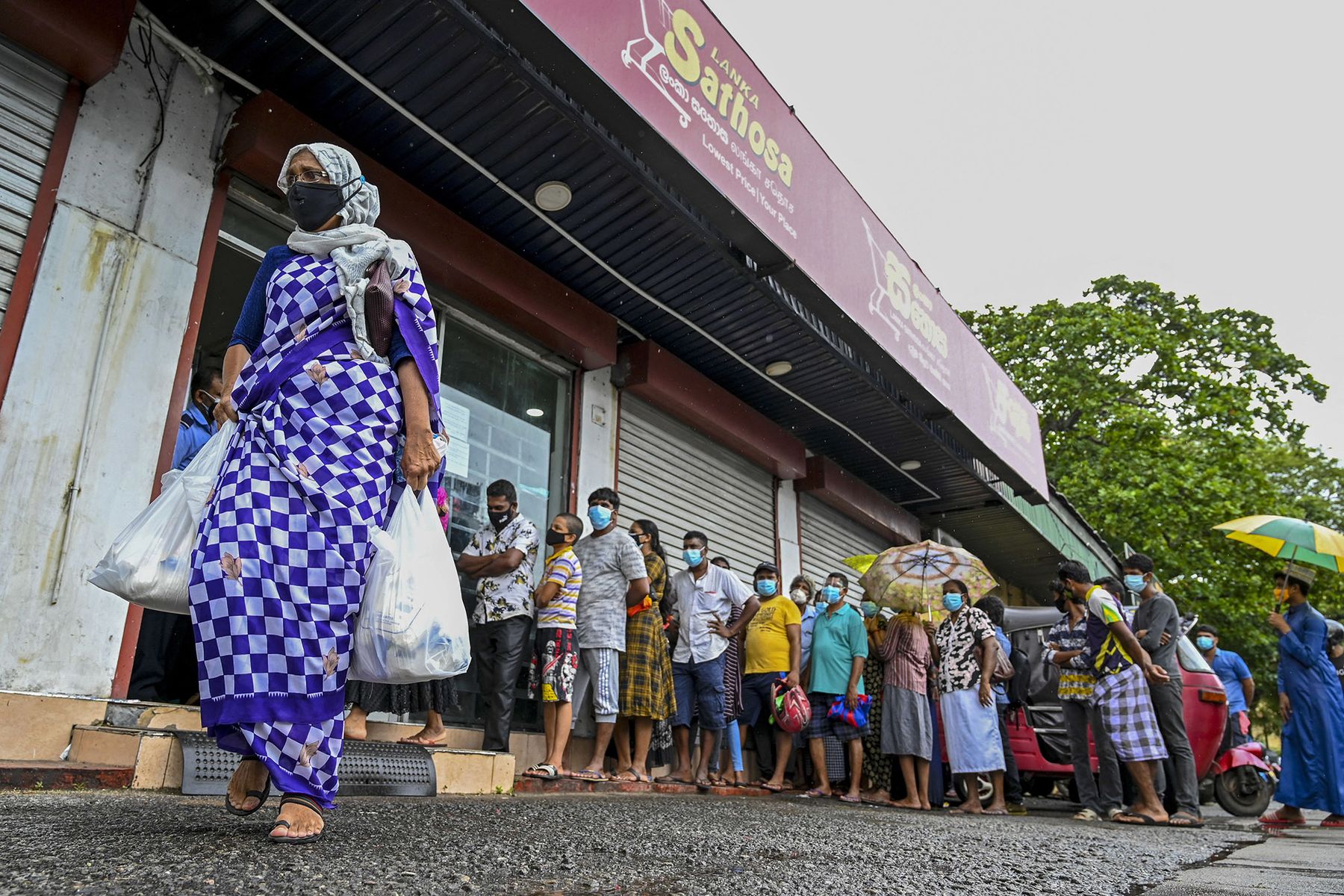
Opposition slams govt. for imposing emergency

Opposition political parties today came out against the imposing of emergency and urged the government to reverse the decision.

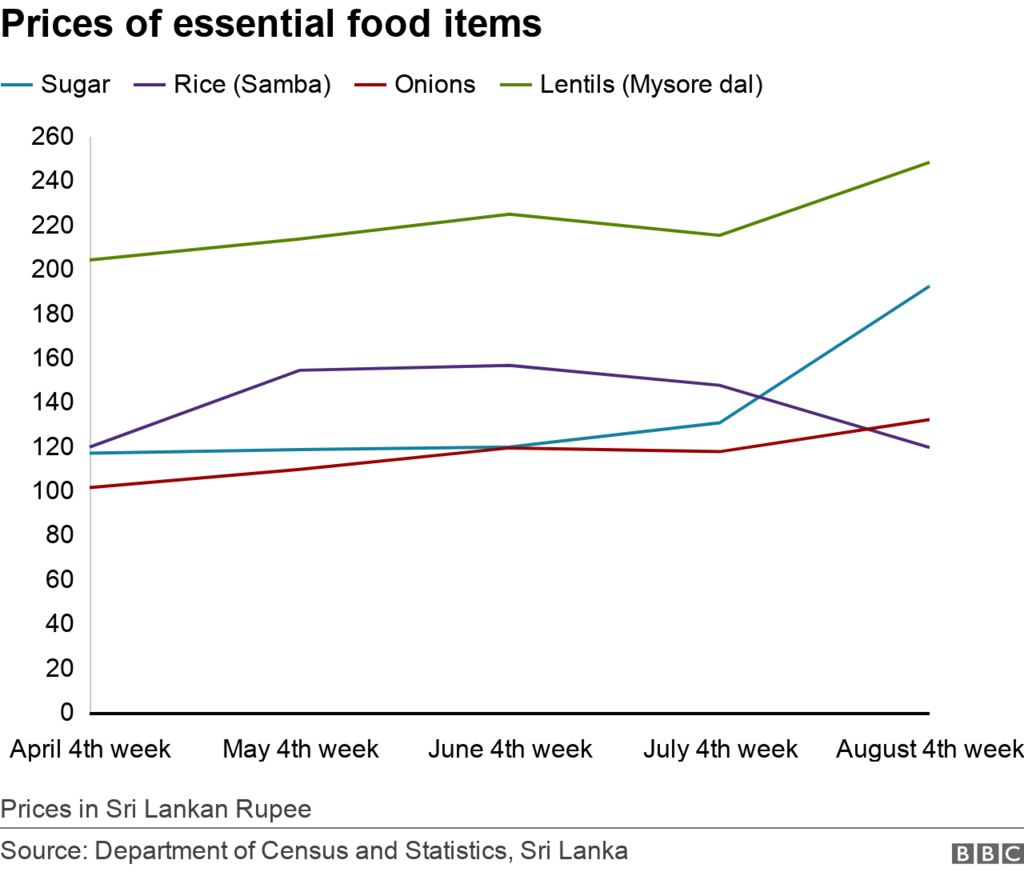
Samagi Jana Balawegaya (SJB) General Secretary Ranjith Madduma Bandara said the emergency imposed under the National Security Ordinance does not have any relevance to the current situation. “The distribution of essential commodities have run into trouble because of inefficacy and due to bad management. Distribution of essential goods have not come to standstill because of any security reasons. Therefore imposing an emergency is not relevant at this moment,” he said.

“Therefore we urge the government to reverse the decision to impose emergency and make use of Disaster Management Bill of 2005 which is more appropriate for today especial when there is a pandemic situation,” he added.

TNA MP M. A. Sumanthiran also expressed similar sentiments where he said emergency laws would give more power to the President and the government.

“Government should have got a health emergency Bill approved by Parliament,” he said.

UNP General Secretary Palitha Range Bandara who had a different view said one has to be practical rather than imposing regulations under various laws. “One has to take practical steps to ensure smooth distribution of essential items. Laws seem to be not followed in this country and the government is losing its control,” he said.

“Government should hand over the state machinery to capable persons,” he added.