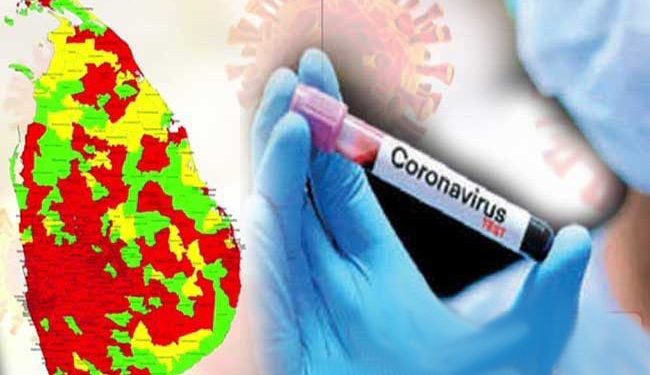
COVID-19 deaths surge in Sri Lanka with record 118 confirmed dead Tuesday; no lockdown

In yet another record daily death toll in Sri Lanka, the government information department confirmed 118 COVID-19 deaths Tuesday (10) evening, hours after a top minister said there will be no lockdown measures imposed.

Total COVID-19 deaths in the island now stand at 5,340.

At the time of writing, 1,992 people were confirmed to have been infected on Tuesday, bringing total cases in Sri Lanka to 326,308.

Update: 2,904 cases confirmed in total on Tuesday.

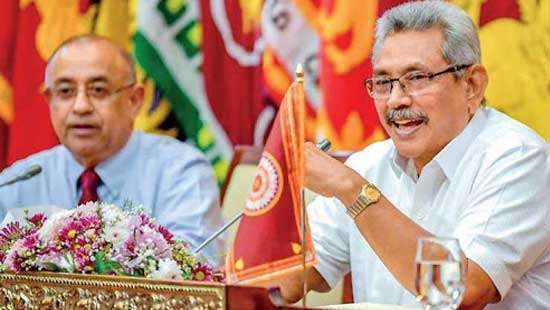
Despite the devastation, and repeated calls from the health sector to impose tighter restrictions, co-cabinet spokesman Minister Keheliya Rambukwella said Tuesday morning that the government has intention to impose a lockdown at the moment.

“There is no intention (for a shutdown). Curfew will be imposed only and only if it is extremely necessary,” Rambukwella told reporters at the weekly cabinet briefing.

“But we can’t it rule out given the world trend. It will be our last option,” he said.

Army commander and head of the national COVID-19 task force Gen Shavendra Silva said Tuesday afternoon that ongoing inter-provincial travel restrictions will be strictly monitored.

Weddings that were restricted to 150 guests, already seen as excessive by some experts, have been further restricted to 50 from midnight Tuesday irrespective of the venue’s seating capacity.

Only people who travel for work or essential services may travel between provinces.

Various health experts have called for a lockdown to contain the fast-spreading delta variant of SARS-CoV-2, the virus that causes COVID-19.

“The next two weeks has already been decided,” Public Health Inspectors (PHI) Union Chairman Upul Rohana said.

“Results of whatever decisions taken at this moment will be seen in another four weeks,” he said.

Government officials have said the lockdowns have hit economic activities and livelihood of hundreds of thousands of daily wage earners amid closure of many small-scale companies.

The government is compelled to strike a balance between controlling the pandemic through lockdown and allowing people to engage in their economic activities to meet the ends meet.

Images and videos circulating in social media showed hospital wards overflowing with patients, many of whom were see lining hospital corridors, half asleep on the floor. As of Tuesday, 5,340 people have died, a vast majority of whom perished in the third wave which officially began in mid-April, after the traditional Sinhala & Tami New Year holidays that saw much unrestricted travel around the country.

Energy Minister denies submitting a cabinet paper to lease Trincomalee oil tanks to U.S.

Minister of Energy Udaya Gammanpila has stated that the allegation that a Cabinet paper was submitted to lease the Trincomalee Port, Oil Tank Complex and 33,000 acres surrounding it to the United States is completely untrue.

The Minister was commenting on a statement allegedly made by JVP Politburo member Wasantha Samarasinghe as the Convener of the Voice Against Corruption at a media briefing.

In a statement posted on his Facebook page, Minister Udaya Gammanpila said JVP Politburo member Wasantha Samarasinghe, posing as the convener of the Voice Against Corruption, has made a series of lies about him at a press conference on Sunday.

“He has stated that I have submitted a Cabinet paper to lease the Trincomalee Port, the oil tank complex and the 33,000 acres associated with it to the United States. His statement is a blatant lie. I did not submit such a cabinet paper. I challenge him to show me a copy of the cabinet paper,” the Minister said in a statement.

The Minister pointed out that since the JVP ally, United National Party (UNP) in 2003 leased the oil tank complex to India for 35 years and the fact that Mr. Wasantha Samarasinghe failed to understand that those oil tanks cannot be leased to another country until 2038 shows that he is unable to understand it is still 2021.

He further said it is ridiculous that a former Member of Parliament Wasantha Samarasinghe did not know that if the Trincomalee Port is to be leased to the United States, a Cabinet Memorandum should be submitted by the Minister of Ports and not the Minister of Energy.

“I would also like to inform Mr. Samarasinghe for his general knowledge that the Ministry of Energy does not have 33,000 acres in Trincomalee to lease to the United States, not even to be used for a domestic purpose and 33,000 acres is a vast tract of land spread over many villages.”

What Mr. Samarasinghe has actually done is to add three more lies to the JVP’s series of lies, Gammanpila said.

Posted in Uncategorized

Ravaged by Delta outbreak, Southeast Asia shifts away from China’s vaccines

Southeast Asian countries that had widely rolled out Chinese-made coronavirus vaccines are turning away from the shots in favour of Western alternatives as they scramble to contain deadly outbreaks caused by the Delta variant.

The shift in a region where China vies with the US for influence underscores the limits of Beijing’s vaccine diplomacy. Countries such as Indonesia and Thailand once bet heavily on China’s Sinovac, despite warnings from medical experts, but their health systems have come under intense strain as the Delta variant tears through towns and cities. Indonesia has recorded more than 100,000 deaths overall.

“The current reality does present a stark contrast to the fanfare with which Beijing rolled out their vaccines and then insisted on their high efficacy, even when data was less available,” said Chong Ja Ian, an associate professor of political science at the National University of Singapore who studies US-China competition in Asia. The change, he added, shows “how risky it is to try to make the current pandemic, and the very real dangers to human life, into a sort of propaganda tool”.

Sinovac and Sinopharm were among the earliest to begin clinical trials, but they did not release full data. Millions of people have taken the shots, which governments rushed to procure amid supply constraints before the US pledged to share doses. With wealthier nations snapping up Pfizer and Moderna, some developing countries had little choice but to look to China.

Doubts over Sinovac’s efficacy grew in June, when fully vaccinated Indonesian doctors began dying of Covid-19. The Indonesian Medical Association has recorded at least 20 deaths of doctors who were doubly dosed with Sinovac. Earlier that month, the World Health Organisation approved the vaccine for emergency use.

Representatives for Sinovac and Sinopharm did not respond to requests for comment. Sinovac told China’s state-run Global Times newspaper in June that its vaccines cannot give 100% protection but can reduce severity and deaths. Sinovac CEO Yin Weidong, speaking last week at a forum hosted by China’s foreign minister, said the company will submit its clinical research and emergency use applications for the Delta variant to Chinese regulators in coming days, and said the company has “sufficient production capacity” to develop and produce the vaccine in response to the new strains.

Among the casualties in Indonesia was Novilia Sjafri Bachtiar, the lead scientist in the country’s Sinovac trials, according to local media. The nation of 270 million began administering the US-made Moderna vaccine in late July to healthcare workers, after Washington donated eight million doses.

Scenes of these donations – in boxes emblazoned with American flags – contrasted with those in January, when Indonesian President Joko Widodo received his Sinovac shot on live television. Health officials held up the vaccine box, adorned with Sinovac’s name, to boost trust in the doses. Chinese state media hailed Widodo’s move while touting the vaccine as “safe and effective”.

Thailand has also moved to mix shots, changing its policy in mid-July to immunising people with a first shot of Sinovac and a second shot of AstraZeneca. Healthcare workers who are already fully vaccinated with Sinovac will receive a third booster shot, either of AstraZeneca or an mRNA vaccine such as Pfizer or Moderna.

Before the policy change, Thai media reported the existence of a memo, supposedly leaked from an official meeting about vaccine use, that warned against giving a different booster shot to those already fully vaccinated with Sinovac because doing so would be an admission that the Chinese-made shot “can’t give protection”. The leak prompted an outcry, and the hashtag #GivePfizerToMedicalWorkers began trending on social media.

Even Beijing’s closest allies are making the switch. Cambodia said last week that it would start offering AstraZeneca booster shots to those who had received two doses of the Chinese-made vaccines, which have already been rolled out to about half of the population.

Responding to a question in May on whether Cambodia is too dependent on China, Prime Minister Hun Sen dismissed the suggestion as “unjust”.

“If I don’t rely on China, who will I rely on? If I don’t ask China, who am I to ask?” he said. “Without assistance from China, maybe we will not have vaccines for our people.”

China has held up its vaccine donations as a public good, especially for developing nations, while criticising vaccine nationalism. President Xi Jinping said last week that the country would provide two billion doses to the world this year.

Yet even before the Delta variant surge, people showed a preference for Western-made vaccines, particularly the mRNA shots developed by the US. A survey early this year in the Philippines showed more than 63% of adults preferred the US as a source of coronavirus vaccines. In May, residents flocked to the one site offering Pfizer doses, with lines forming from 2 a.m.

“We saw this huge divide even in the medical community among those willing and outright not willing to receive Sinovac,” said Vincen Gregory Yu, a physician and public health researcher. He said he encountered vaccine hesitancy among his peers and family, who signed up for Moderna through the private sector.

“In most cases, it’s not really, ‘We don’t want this vaccine because it’s not effective,’ ” he said. Instead, he said, it’s more that “‘we don’t want to accept this because something better will arrive’”.

Philippine President Rodrigo Duterte, who declared early in his term that he would say “goodbye” to Washington, a long-standing ally, maintains warm relations with China. He accepted another million doses of Sinovac days ago as his country endures a new lockdown amid a surge in infections.

But he admitted that his decision to preserve a defense pact between the US and the Philippines was influenced by a recent donation of Moderna vaccines from Washington.

“It’s give and take. Let’s thank them, and I gave them a concession,” Duterte said.

Chong said the vaccine experience has made some Southeast Asian countries realize “that reliance on the People’s Republic of China is not enough, whether on vaccines or other matters”.

(This appeared in The Washington Post on 10 August. Regine Cabato in Manila and Pei Lin Wu in Taipei contributed to this report)

Restrictions on inter-provincial travel and weddings imposed again in Sri Lanka

As a measure to control the rapidly spreading Covid-19 epidemic, the government has re-imposed inter-provincial travel restrictions from midnight Monday (10).

The government lifted the travel restrictions between the provinces which had been in operation for nearly two months from the 2nd of this month.

But in view of the rapid spread of the Covid-19 virus, the health sector had requested the President to re-impose travel restrictions.

Accordingly, the government took steps to re-impose travel restrictions between provinces.

Meanwhile, the government has decided to limit the maximum number of people who can attend weddings to 50 from midnight today.

The health department had earlier allowed 150 people to attend the wedding for venues with more than 500 seats and 100 people at venues with less than 500 seats.

Meanwhile, the government has decided to temporarily ban religious festivals. The gazette notification containing the new health guidelines is to be issued by the Director General of Health Services tonight.

The decision was taken following a discussion between President Gotabaya Rajapaksa, Health Secretary Dr. Sanjeewa Munasinghe and Director General of Health Services Dr. Asela Gunawardena at the Presidential Secretariat today.

Posted in Uncategorized

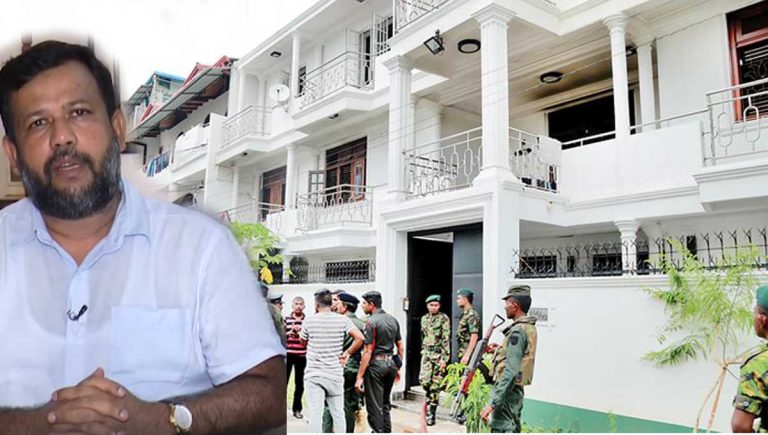
Rishad Bathiudeen remanded

The court has ordered to remand MP Rishad Bathiudeen until the conclusion of the case file against him.

He was produced before the Fort Magistrate earlier today (August 10).

The parliamentarian and his brother were arrested on April 24 for allegedly aiding and abetting the suicide bombers who perpetrated the deadly terror attacks on April 21, 2019.

The former minister was taken into custody at his residence in Bauddhaloka Mawatha in Colombo while his brother Riyaj Bathiudeen was apprehended in Wellawatte area.

They were initially interrogated under a 72-hour detention order obtained by the CID under the provisions of Article 6(1) of the Prevention of Terrorism Act (PTA).

However, a subsequent 90-day detention order was obtained pursuant to Article 9(1) of the PTA as the two arrestees need to be interrogated further.

Posted in Uncategorized

CI to be Charged with Destroying Evidence

DSG Dileepa Peiris yesterday informed Colombo Additional Magistrate Rajindra Jayasuriya thata Chief Inspector (CI) of Police would soon be produced in Court and named as a suspect on charges destroying and concealing evidence and conspiracy to do so in connection with the suspicious death of the 16-year-old maid Jude Ishalini who was employed at the house of MP Rishad Bathiudeen.

DSG Peiris stated that the Chief Inspector in question had reportedly visited the MP’s house the day after the deceased had been admitted to hospital with severe burn injuries and had then gone to meet the sibling of the victim. Hence, the prosecution told the Courta probe will be initiated against the Chief Inspector as serious suspicions had arisen regarding his conduct, in connection with the incident and having allegedly tampered with the crime site.

Magistrate Jayasuriya also ordered IGP C.D. Wickremaratne to ensure that the Police Department does not issue statements to the Media pertaining to the case through predetermination as the investigations into the case are still at a decisive stage. Besides DSG Peiris, who appeared on behalf of the Attorney General, the CCD and PCWB represented the prosecution.

Meanwhile, the Court dismissed the bail applications submitted by the four suspects, including MP Bathiudeen’s wife and further remanded them till 23 August. On 15 July, a 16-year-old girl, who was serving as domestic aide at the Bathiudeen’s residence, succumbed to severe burn injuries while receiving treatment at the Colombo National Hospital.

She had been under medical care for 12 days since her admission to the hospital on 3 July. The girl, who was residing in the Dayagama area, had been 15 years of age when she was brought to the Parliamentarian’s residence at Bauddhaloka Mawatha for domestic work last October. The JMO who conducted the post-mortem on the girl’s death concluded that she had been sexually exploited.

Thereby, the former Minister’s wife, father-inlaw, and the middleman, in question, were taken into custody on 23 July, based on the testimonies recorded from nearly 20 individuals, autopsy results, and the evidence gathered by the investigating officers, which pointed to the fact that the deceased girl was subjected to abuse.

In addition, the 44-year-old brother-in-law of MP Bathiudeen was also taken into custody and produced before the JMO for allegedly sexually abusing a young woman who worked as a domestic helper at the lawmaker’s official residence from 2015 to 2019. The victim’s remains were exhumed on 30 July for a second post-mortem by a Court-appointed specialist medical team.

Posted in Uncategorized

Sri Lanka to be discussed on first day of UN session

Sri Lanka is to be discussed on the opening day of the UN Human Rights Council (UNHRC) Session in September.

The draft program of work shows Sri Lanka on the agenda on 13th September, the opening day of the 48th Session of the UNHRC in Geneva.

UN High Commissioner for Human Rights Michelle Bachelet is to present an oral update on Sri Lanka during the session.

Bachelet is listed to present her update as the session opens on 13th September.

Member and observer nations at the UNHRC will later make comments on the update while Sri Lanka will also present a right to reply.

Bachelet had told the Council in February that by repeatedly failing to advance accountability for past human rights violations committed, and by withdrawing its support for the Council’s resolution 30/1 and related measures, the Government of Sri Lanka has largely closed the door on the possibility of genuine progress to end impunity through a national process.

Posted in Uncategorized

Court rejects bail application of Rishad’s wife

Colombo Magistrate’s Court has rejected the bail applications filed by four suspects including the wife of MP Rishad Bathiudeen.

The order was issued when the case regarding the death of a teenage domestic worker serving the Bathiudeen household was taken up today (August 09).

The Magistrate had further remanded the suspects until August 23.

On July 15, a 16-year-old girl, who was serving as domestic help at the Bathiudeen residence, succumbed to severe burn injuries while receiving treatment at the Colombo National Hospital. She had been under medical care for 12 days since her admission to the hospital on July 03.

The girl, who was residing in the Dayagama area, had been 15 years of age when she was brought to the parliamentarian’s residence at Bauddhaloka Mawatha for domestic work last October.

The judicial medical officer who conducted the post-mortem on the girl’s death concluded that she had been sexually exploited.

Thereby, the former minister’s wife, father-in-law, and the middleman in question were taken into custody on July 23 based on the testimonies recorded from nearly 20 individuals, autopsy results, and the evidence gathered by the investigating officers which pointed to the fact that the deceased girl was subjected to abuse.

In addition, the 44-year-old brother-in-law of MP Bathiudeen was also taken into custody and produced before the Judicial Medical Officer for allegedly sexually abusing a young woman who worked as a domestic helper at the lawmaker’s official residence from 2015 to 2019.

Her remains were exhumed on July 30 for a second postmortem by a court-appointed specialist medical team.

Sri Lanka private borrowings surge to Rs83bn in June, CB credit Rs124bn

Sri Lanka’s private credit surged by 83 billion rupees in June 2021, while credit to government surged 170 billion rupees, of which 124 billion rupees were printed, official data showed.

Sri Lanka private credit in the first six months of the year was 414 billion rupees, up from 372 billion rupees a year earlier.

Authorities are expecting private credit of around 800 billion rupees in 2021.

Analysts had warned that rising private credit would expand imports and the trade deficit, as money is channeled into areas which are not controlled by bureaucratic ‘omniscience’ (and may be second best for the individual users and the economy as a whole) overriding the first preference of economic agents.

When loans are re-financed by central bank credit (printed money) there are forex reserves losses when they are redeemed for dollars either in the trade or financial account (debt repayments).

If money was not printed, state debt repayments would be made by ‘crowding out’ private credit at a higher rate of interest, reducing or eliminating forex reserve losses by reducing imports.

Data showed that that in June central bank credit was 124 billion rupees, helping push government borrowings from the banking system of 170 billion rupees.

In June there was outright monetization through Treasury bill purchases by the central bank as well as window borrowings. It is not clear how gross foreign reserves were reported to be the same as in May amid a fall in net reserves.

Credit to state enterprises also grew 19.4 billion rupees.

The June private credit of 83 billion rupees is the highest since the 87 billion rupees in September 2020, when the economy had recovered from lockdowns and the second wave started.

The 83 billion came despite the lockdown. However in June parallel exchange rates surged, and it is not clear whether the credit is due to early import covering and late exporter sales which usually accompany a confidence shock to the soft-peg.

Sri Lanka is operating a non-credible peg at around 203 without monetary policy to back it (floating short term rates) and suffers frequent currency crisis. The exporter and import panic is due to a so-called ‘flexible exchange rate’ where there is very little credibility.

The International Monetary Fund backed ‘flexible exchange rate’ driven by dual anchor conflicts triggered two currency crises in 2015 and 2018 and led to the flight of all capital from rupee debt markets.

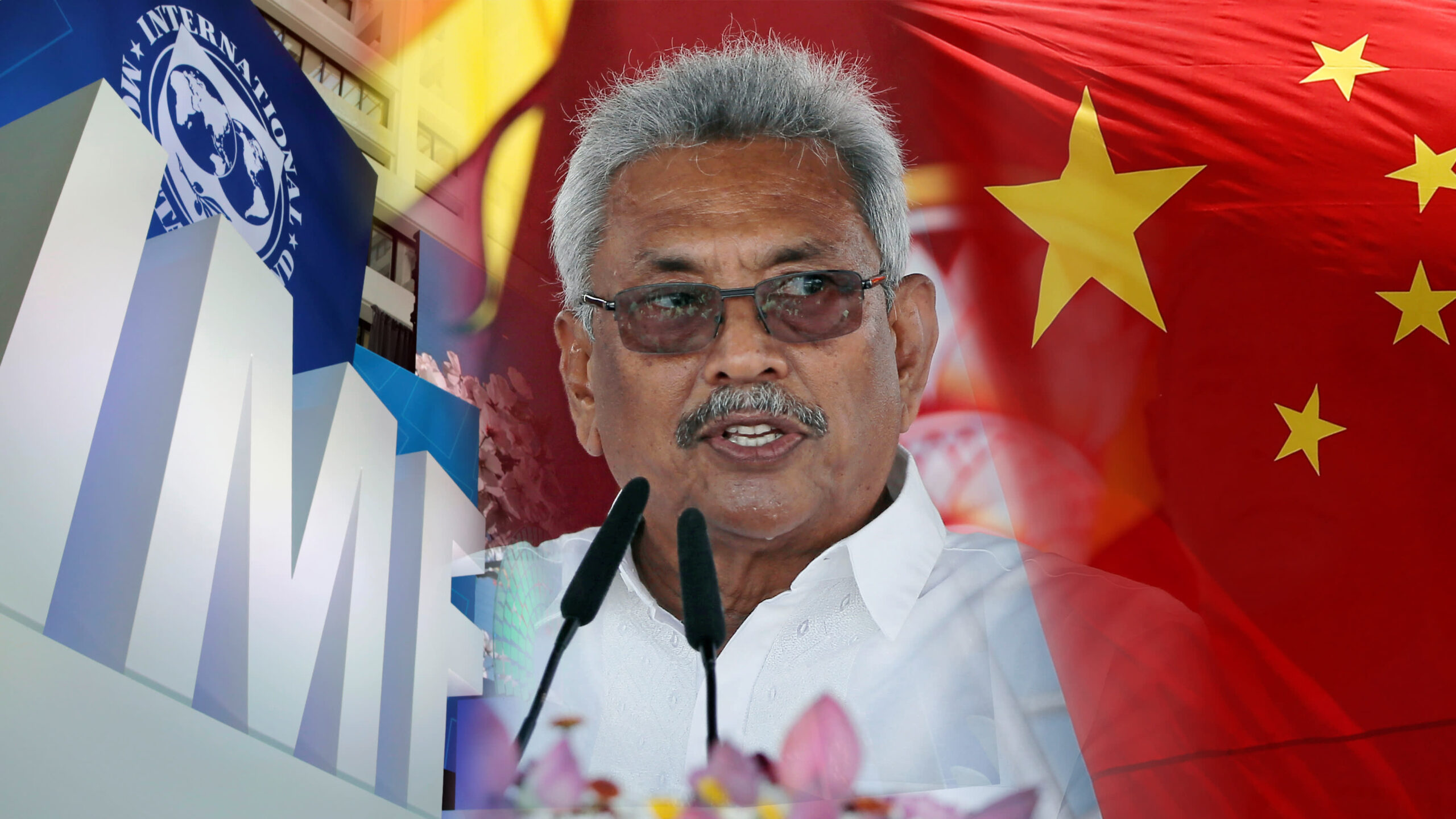
Debt default danger: Alarmist or imminent? By Charindra Chandrasena

Will the Government of Sri Lanka default on its obligations to service its mountain of debt over the next couple of years, including two bond repayments of a total of $ 1.5 billion due in 2022? According to Ceylon Chamber of Commerce Chairman and Sunshine Holdings Group Managing Director Vish Govindasamy, this is the billion dollar question that is consuming the business community.

“Today you go to any business gathering, one thing that is discussed is how the Government is going to repay its debt. Two years ago, prior to the Covid-19 pandemic, we did not worry about debt repayment, default scenarios, or whether or not we should go to the IMF (International Monetary Fund). We had our own scenarios. Now the business community is consumed with advising the Government on how to repay its debt, which is not our job. We should be running our businesses to the best of our ability,” he said, addressing a CEOs’ forum on Sri Lanka’s debt situation.

The forum, organised by the Institute of Chartered Accountants of Sri Lanka (CA Sri Lanka), was titled “Debt situation of Sri Lanka: What is ahead of us?” and was held at Shangri-La Colombo on 2 August, in the presence of high-level corporate personalities. CA Sri Lanka President Manil Jayesinghe, delivering the welcome speech, said that the aim of the forum was not to delve on the past but to ensure the business community receives the required clarity from the Government in terms of policy.

This issue of clarity was a recurring theme throughout the discussion, with Govindasamy and Verité Research Ltd. Executive Director Dr. Nishan de Mel, in particular, highlighting the need for the Government to clearly publicise and communicate its plans and targets with specificity.

Govindasamy said that the Government could provide confidence to the business community through such clear communication.

“The Government needs to tell people how it is planning to service its debt. It also needs to tell the business community: ‘This is what we can do so you go ahead and do this’. This needs to be communicated strongly to the business community to give us confidence so we can do what we do best.”

He also advocated for Sri Lanka pitching to become part of global supply chains and capitalising on the opportunities created by the declining status of China as the “world’s factory” due to the Covid-19 pandemic and the US-China trade war. According to QIMA, a provider of supply chain compliance solutions, 96% of US-based companies and 100% of Europe-based companies had listed China as one of their top three sourcing countries in 2019, but those proportions dropped to 77% and 80%, respectively, in the first quarter of 2021.

“A lot of countries have been hit by being dependent on large supply chain bases like China and India and most are looking to diversify. We need to jump in and try to bring those supply chains here so we can be a supplier for the world’s largest companies. I think we have the talent and infrastructure but we need to give that ‘C word’; confidence. Only then can we get those big companies to agree to come here. That can only be done by the Government because businesses can’t inspire confidence. This can be achieved by improving Sri Lanka’s ranking in indexes such as the World Bank Doing Business Index. For this we need to ensure policy consistency and demonstrate stability. Businesses are not risk averse, but the risks that businesses can’t take are knee-jerk reactions from the Government on policy,” he said.

Speaking of the correlation between policy consistency and economic confidence, Dr. de Mel criticised the Central Bank having changed foreign exchange-related policy 18 times in 2020 and six times in 2021 so far, compared to only four times in 2019 and five times in 2018.

In terms of the confidence-building process, especially in terms of the international investor community, he also explained the difference between what he calls a workable plan and a gamble.

“The difference between a plan and a gamble is a written analysis of where the expected inflows would come from and how the outflows would be moving out. You can proceed without a plan and you may have gambler’s luck and succeed, but if you have a plan you are much more likely to succeed. This kind of a workable plan can build confidence and in turn make the plan even more workable. It is when people don’t believe that the Government has a workable plan that they keep their money out of the country,” he said.

He claimed that Sri Lanka’s present foreign reserves problem too began with a crisis of confidence, as confidence is at least 50%, if not 75%, of economic success.

“In December 2019, when rating agencies downgrade Sri Lanka one notch, that effectively closes out international financial markets to Sri Lanka because you can’t borrow at single digits anymore. Therefore, the decision not to borrow from international financial markets is not a choice that the Government is making. That is the crisis of confidence,” he said.

The late 2019 rating downgrade referred to by him was Fitch Ratings revising the outlook on Sri Lanka’s long-term foreign-currency Issuer Default Rating (IDR) to Negative from Stable while affirming the IDR at “B”, and Moody’s Rating Services terming the sweeping tax cuts President Gotabaya Rajapaksa announced soon after taking office a “credit negative”.

Speaking specifically about these tax cuts, Dr. de Mel claimed that they were implemented without a proper analysis.

“There is no calculation that shows us this reduction will help growth or revenue. I’m not saying it won’t, but there is no published analysis. For one of the most comprehensive and far-reaching tax reforms in the history of Sri Lanka to be undertaken without analysis is enough to see why rating agencies and others evaluating Sri Lanka are concerned. Sri Lanka must answer as to why it is making economic policy without analysis, which then makes it a gambler’s luck approach to economic policy. It may work, it may not work. What’s more, there is no way for us to determine if it is working or not when the targets or milestones for monitoring and evaluating the success are not laid down.”

Fitch Ratings subsequently downgraded Sri Lanka to “CCC” in November 2020 and affirmed the rating in June 2021. With the focus turning to rating agencies at the forum, Fitch Ratings Managing Director Maninda Wickramasinghe clarified that a rating downgrade is not a sudden or impulsive decision by an agency but one that results from long-term analysis.

“In December 2005 is when Sri Lanka first received a rating from Fitch, it was a ‘BB-’ with a Stable outlook. Fitch revisited this in December 2015 and the rating was ‘BB-’ with a Stable outlook. In June 2021, we affirmed the rating at ‘CCC’. It is not like a rating agency gets up one morning and decides to downgrade a sovereign. The signals and writings are constantly on the wall.”

In order to improve its ratings, he requested the Central Bank of Sri Lanka to maintain a dialogue with rating agencies as such communication had proven fruitful for Sri Lanka in the past, especially with the post-war rating upgrade from “B+” to “BB-” in July 2011.

“In 2008 and 2011 Sri Lanka had rating upgrades from Fitch. One thing I could attribute that to is CBSL (Central Bank of Sri Lanka) taking the initiative, through former Central Bank Deputy Governor the late C.P.J. Siriwardana, to form a committee which maintained a dialogue with the rating agencies. CBSL also engaged rating advisors. I think it’s time to get that system going again and also include the Ministry of Finance from the fiscal side. It is probably the perfect time to have this dialogue and come up with a strategic plan.”

Responding to these calls for clearly communicated plans with metrics and milestones, CBSL Governor Prof. W.D. Lakshman, speaking at the forum, revealed that the Government has a plan, which has approximately six months left, to produce results.

“There is a policy plan that the Government is pursuing which the CBSL is supporting. This policy plan has to show that it is working in the next six months or so. In this plan there is a heavy focus on exports, domestic production and the domestic entrepreneurs, and small and medium-scale enterprises (SMEs). These are some of the activities that were rather neglected in the past due to the policy focus on trade dependent activities, which made the country consume more than it earns.”

While conceding that there is a shortage of confidence in the economy at present, he said that measures have been taken to address this problem following the appointment of Basil Rajapaksa as Finance Minister.

“Several meetings have been held with the private sector and government institutions and state-owned enterprises (SOEs) by the new Finance Minister. We are in the process of adding this missing confidence element. We have a plan with robust analysis aimed at increasing foreign exchange earning activities, such as exports, remittances, and tourism.”

However, he said that until these foreign exchange sources normalise, the Government is pursuing several short-term measures to replenish foreign reserves to match or surpass the levels they were at the beginning of this year, by the end of this year. According to him, these will be from the short-term swap facilities, the expected IMF special drawing rights (SDRs) allocation in September this year of $ 780 million, and the inflow of China Development Bank (CDB) syndicated loan proceeds of $ 300 million. Through these mechanisms the CBSL expects to replenish reserves by more than $ 1 billion.

Official reserve assets stood at over $ 5.6 billion in early January 2021, but dipped to approximately $ 3 billion following the repayment of a $ 1 billion bond at the end of July. Samagi Jana Balawegaya (SJB) MP and economist Dr. Harsha de Silva, addressing the media on 8 July, claimed that as of 31 July, Sri Lanka’s official foreign reserves level has fallen to around $ 2.8 billion.

“The Government has not publicised it locally but the Central Bank has disclosed this figure internationally. If you subtract our $ 380 million gold reserves from that, the foreign reserves we have in hand amount to just $ 2.35 billion. This is the lowest that our foreign reserves have fallen to in recent years. We measure foreign reserves based on import cover, and as of now, our foreign reserves cover imports only for the next 1.6 months.”

Meanwhile, delivering the guest speech at the CA Sri Lanka forum and speaking at the parliamentary debate on the 2020 Annual Report of the Central Bank on 3 August, State Minister of Money and Capital Market and State Enterprise Reforms Ajith Nivard Cabraal placed great emphasis on the resumption of tourism for the strengthening of foreign reserves.

“We are working on the tourism trade and on measures we need to take to open the country safely. There is an urgency in procuring and administering vaccines to the public because we want to open up the country. By end-2021 we plan to reopen tourism thanks to this vaccination drive and this will bring in foreign exchange and revenue.”

Prof. Lakshman earlier said that Sri Lanka has opted for commercial loans over concessional loans over the years, pointing out that in 2000, the concessional percentage of Sri Lanka’s total debt was as high as 99% but that it has gone down to 48%. The State Minister too said that plans are afoot to reduce the international sovereign bonds (ISB) share of Sri Lanka’s debt to 15% in 2021, 13% in 2022, and 11% in 2023 and focus on government-to-government (G2G) inflows.

“Sri Lanka can’t afford to have ISBs dominating its debt structure. We need to reduce our debt-to-GDP ratio by not just reducing the debt but also increasing gross domestic product (GDP). We must keep interest rates low which will help us manage the debt easier as there will be greater serviceability. We are focusing on government-to-government type of long-term non-debt inflows and G2G debt inflows that are on concessionary terms. Stabilising the rupee is also vital. Last year, we didn’t achieve as much as we wanted to but going forward, we would like to see that also being at the top of our priorities.”

The State Minister projected a GDP growth of approximately 5% in 2021 and even higher growth next year after seeing GDP contract 3.6% in 2020, saying that nobody should be worried about a debt or economic crisis in this country.

Cabraal also made a request from the private sector to work in partnership with the Government to ensure that both sectors can thrive. He said that the Government, for its part, must maintain policy consistency, which is why it has not increased taxes and interest rates despite so many voices requesting such increases, and stated that there is an attempt to keep the rupee stable.

In turn, he urged exporters to convert their export revenue without holding on to them and to avail themselves of the attached benefits of conversion. He requested importers to import only what is necessary without importing next year’s inventory fearing that the rupee would depreciate in the months ahead. CEOs were requested by the State Minister to develop new ideas and make their investments including in equities and he called on investors to invest in Sri Lanka with a long-term view, as Covid-19 will be a thing of the past at some stage.

Prof. Lakshman too echoed these sentiments, calling on the private sector to work together with the Government, saying the state sector can do little but the private sector can do a lot in terms of building foreign reserves.

Govindasamy, in response, said that the private sector understands its responsibilities and asked for policy consistency to support the private sector and to attract foreign investment.

“Like the Government, the private sector also plans three to five years ahead. Shocks like the pandemic or natural disasters we have to handle, but shocks coming from policy changes are challenging. Policy changes are important, but there has to be a cooling off period granted so that we can change course. I was happy to hear the State Minister talk about policy consistency. That message needs to be clearly communicated to the world. Tell them to ‘come and invest in Sri Lanka so Sri Lanka can increase its foreign exchange sources, and in return this is what Sri Lanka could do for you’.”

Noting that foreign reserves had been around the $ 2 billion mark when Sri Lanka had sought IMF assistance in 2009 and 2016, Dr. Harsha de Silva on 8 August urged the Government not to impoverish the population by maintaining its unwavering stance of not relying on the IMF.

However, Cabraal has regularly reiterated the Government’s stance that it does not need to turn to the IMF, including in Parliament on 3 August.

“People offer advice all the time but most of the time the only advice they have is ‘go to the IMF’. That is not the only alternative. There are other alternatives and we are implementing these alternatives daily now and this will boost economic growth.”

However, addressing the CA Sri Lanka Forum, Dr. de Mel said that the right question is not about whether Sri Lanka should seek IMF assistance or not.

“To IMF or not to IMF is not the question, even though people have been fixated on this lately. The right question is does Sri Lanka have a workable plan to steer the repayment of debt in a way where the inflows match the outflows? The path to avoiding default has to begin with a plan that has robust, sensible, and durable analysis behind it, upon which you rebuild confidence to regain access to international financial markets. That can be done with IMF assistance or even without the IMF if you can do the analysis and build confidence on your own.”

He added that if there is a decision to turn to the IMF, it is important that the IMF is approached by Sri Lanka with a plan that the country has analysed and has confidence in as otherwise, the IMF could make a plan for Sri Lanka which may not be suitable to the country’s situation.

Dr. de Mel also reiterated his belief that any plan that the Government has to repay its debt and manage the economy must be publicised.

“It was encouraging to see the Governor telling us that there is a plan and there is analysis. I would say one way to build confidence is to publish that plan and analysis and to show that things are going according to plan, because scrutiny and transparency are important.”

Posted in Uncategorized