India pushes strategic interests in Indian Ocean island nations to counter China

Earlier this week, a Qatar-based media outlet published an article claiming India is building a 3km-long airstrip and two large jetties designed for military purposes at the Mauritian island of Agalega. South Block, which houses the ministry of defence in New Delhi, is silent on the issue. However, some officials are maintaining that the construction project is only for the benefit of the islanders and that it is for non-military purpose. Mauritius Prime Minister Pravind Jugnauth has also categorically denied that the construction is for military purposes.

In 2015, during Prime Minister Narendra Modi’s visit to Mauritius, India signed an agreement for setting up and upgradation of infrastructure in the Agalega archipelago. The plan was to create an airstrip for landing bigger aircraft like Boeing 737-900 and Airbus 320. Setting up of communication systems, closer to the existing jetty was to identify any ship as friend or foe, was also planned. Aggressive presence of China’s People’s Liberation Army Navy (PLAN) and other Chinese commercial vessels in the Indian Ocean Region (IOR)–considered the backyard of the Indian Navy–poses a challenge for India’s strategic interests. At a given time, PLAN has over a dozen of its warships in the IOR. And the Chinese research and fishing vessels are equally a threat to India’s maritime interest in the region.

So, to counter Chinese influence growing in the region with a military base in Djibouti, Indian strategists, too, have kept close watch on island nations like Mauritius, Maldives, Sri Lanka and Seychelles. And deep defence ties will anyway benefit India at the time of crisis, as it is in New Delhi’s strategic interests.

Mauritius is one of India’s key maritime neighbours in the Indian Ocean Region and occupies a special place in Modi’s vision of ‘SAGAR’ (Security and Growth for All in the Region). The island nation is also part of India’s security grid including Coastal Surveillance Radar (CSR) station of Indian Navy’s National Command Control Communication Intelligence network (NC3I Network). Information Management and Analysis Centre (IMAC), at Gurgaon is the nodal centre for NC3I Network, which was set up to provide coastal security and to avert tragic incidents like the 26/11 terror attack on Mumbai and to improve coastal surveillance. The NC3I network links 51 Naval and Coast Guard stations, located along the coast and on island territories. The network provides these stations coastal surveillance information obtained from various sensors such as the coastal radar chain of the Indian Coast Guard and automatic tracking systems as well as electro-optical cameras. The network rides on dedicated terrestrial data circuits, as well as, satellite communication, which help the stations in remote locations to be networked. “We do not want to be offensive but we must be strong enough to deter our enemies from casting an evil eye upon us”, former defence minister Manohar Parrikar had once said.

Early this year, India extended a $100-million Line of Credit to Mauritius to facilitate the procurement of Indian defence equipment. A defence official claimed that Agalega island is in close proximity with Seychelles and Maldives and the Diego Garcia military base of US to its east. An agreement to provide a HAL-manufactured Dornier aircraft and an Advanced Light Helicopter Dhruv on lease to Mauritius on gratis basis for two years will boost their capabilities to patrol and monitor the extensive maritime domain more effectively. Interestingly, the Head of Mauritius Navy and the Mauritian National Security Advisor are Indian officers.

Similar to Mauritius, India went ahead with a deal to develop Assumption Island in Seychelles for military use, as both nations share close defence ties. Seychelles is of strategic importance to India as it lies close to global lanes of shipping and commerce and is an important base in the fight against seaborne terrorism and piracy in the Indian Ocean Region. In June 1986, under Operation Flowers are Blooming, the Indian Navy deployed its INS Vindhyagiri at the Seychelles Port of Victoria to abort an attempted coup against President Rene by Defence Minister Berlouis.

Besides monetary support to Seychelles, India also provided Dornier 228s and Chetak helicopters for their defence needs. India also deployed its military officers in Seychelles to train their armed forces.

Maldives is also another island, in which India has very strong interest. New Delhi extended a $50-million line of credit to the Maldives for defence projects along with an agreement to develop and maintain a key naval facility for the armed forces of the Indian Ocean archipelago. India shares strong maritime cooperation with Maldives, and in the past, New Delhi has provided patrol vessels and maritime surveillance aircraft to bolster Maldives National Defence Force’s (MNDF) capabilities. India is also making efforts to elbow China’s growing presence in Maldives as erstwhile government of Abdullah Yameen had leased out an island to China.

India’s strategic ties with Sri Lanka is deep, and India’s role in the civil war in Sri Lanka proves it. And, China’s role in the development of the Hambantota port in Sri Lanka and now coming out with a port city in Colomobo, close to Indian waters have irked the New Delhi. Moreover, the growing transfer of arms and cooperation between Beijing and Colombo is a matter of concern for India, especially after Sri Lanka allowed two Chinese submarines and a warship to dock at its port in Colombo in 2014. Since, then India has been making efforts to enhance defence cooperation with the island nation. India and Sri Lanka have deep defence cooperation, as India has named Sri Lanka as “Priority One” partner in the defence sphere. India is active in a number of areas of development activities in Sri Lanka. About one-sixth of the total development credit granted by India is made available to Sri Lanka.

“Its high time to invest more in these tiny islands, as they are strategically important for India. Our presence in these island nations not only gives us long legs, but also a way to keep a close eye on movement of aggressive Chinese military in the IOR,” said a senior defence official.

Source:The week

Posted in Uncategorized

Women’s organizations submit proposals for electoral reforms

Five women’s organizations have submitted their proposals before the Parliamentary Select Committee to identify appropriate reforms of the election laws and the electoral system and to recommend necessary amendments.

The proposals were handed over at a meeting of the Parliamentary Select Committee chaired by Leader of the House Minister Dinesh Gunawardena, at the Parliament complex last afternoon.

The Women Parliamentarians Caucus, Women’s Political Academy, Will Club Women’s Organization, Yeheliya Foundation and Gangodawila United Social Service Women’s Association submitted their proposals before the Committee.

The Select Committee is scheduled to convene again on the 11th of August at the Parliament complex.

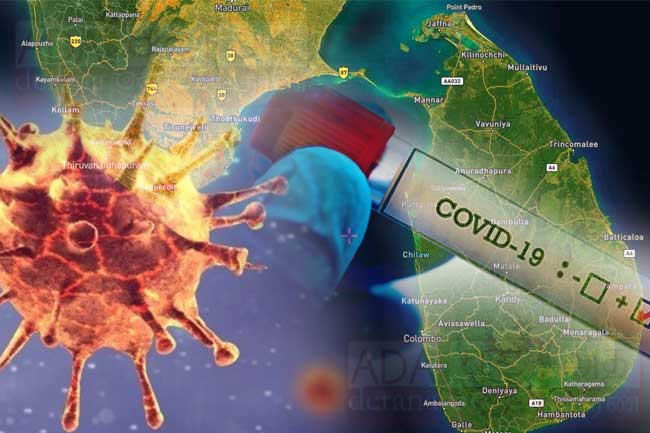
COVID-19 in Sri Lanka reaches tipping point as hospitals fill up and deaths surge

COVID-19 in Sri Lanka is taking a turn for the worse, with two hospitals declaring an internal emergency on Thursday (05) as wards overflowed with patients carrying the disease, amid rising daily deaths around the island.

Images circulating online of patients lining hospital corridors have raised alarm among the public and medical community alike, with some experts calling for renewed movement restrictions though the government has yet to officially respond to such requests, despite a death rate of three per hour according to one estimate.

“A COVID wave is unpredictable. But by following global health practices, we can prevent it,” Health Minister Pavithra Wanniarachchi told parliament on Thursday.

The Ratnapura hospital and the Karapitiya Teaching Hospital have both declared emergency situations in their premises due to a surge in COVID-19 admissions, Deputy Director of Health Services Dr Hemantha Herath told reporters Thursday morning.

Hospitals resort to emergency protocol when there is a sudden increase in admissions, Herath said.

“It can be COVID, it can be due to floods or food poisoning, whenever there is a spike in admissions, a hospital can declare emergency. Hospital staff is trained for such situations,” he said.

On July 20, the Sri Lanka Medical Association (SLMA) warned of a possible fourth wave of the epidemic triggered by the highly transmissible delta variant of SARS-CoV-2, the virus that causes COVID-19.

SLMA President Dr Padma Gunaratne told reporters that given the increasing number of patients in the national hospital and other COVID-19 treatment centres, Sri Lanka appears to be losing any gains made during a month-long lockdown in May-June.

Health Promotion Bureau (HPB) Director Dr Ranjith Bathuwanthuduwa said at the time that Sri Lanka was not looking at a new wave.

Related: Doctors and health officials disagree on imminent fourth wave of COVID-19 in Sri Lanka

Nearly two weeks later, hospitals are battling to treat the increasing number of patients, even as experts warn that the delta variant is fast becoming the dominant strain of the virus in Sri Lanka.

Deputy Director General of Medical Services Dr Lal Panapaitiya said hospitals do not have the capacity to withstand the surging caseload.

Panapitiya said nine regular wards at the Colombo National Hospital have been cleared to treat COVID-19 patients, while the Ragama Teaching Hospital has 13 of its wards dedicated for the deadly disease.

In an inspection tour at the Ragama hospital on Wednesday, Minister Wanniarachchi said more wards will be used to meet the growing requirements.

Out of a total 80,000 hospital beds in Sri Lanka, 30,000 are dedicated to COVID-19 treatment, according to health officials.

“If we take up more space for COVID treatment, we’ll have to take from the space allotted for other patients,” Dr Panapitiya said.

The Association of Medical Specialists on Tuesday (03) said there has been an exponential increase in the demand for oxygen.

Related: Revisit restrictions, Sri Lanka medical specialists urge govt as delta, oxygen demand surge

On Thursday, an official at the Jaffna Teaching Hospital told reporters that, due to a lack of oxygen, hospital workers are now making three trips a day to the Anuradhapura hospital to refill their supply for COVID-19 patients in Jaffna.

State Minister Prof Channa Jayasumana said Sri Lanka is using 100% of the oxygen produced in the country for COVID-19 treatment. Plans are under way to import more from India and Singapore in the next two weeks, he said.

Meanwhile, Sri Lanka’s opposition parties have accused the government of mishandling the crisis.

Opposition Leader Sajith Premadasa told parliament on Thursday claimed that the government was attempting to “suppress the truth” with regard to the pandemic situation.

United National Party (UNP) MP Ranil Wickremesinghe reiterated his oft-repeated call to for the cabinet of ministers to take charge of Sri Lanka’s COVID-19 response.

“We still don’t know about the spread of delta and we have failed to contain it. Until these task forces are there, we parliamentarians can only be observers. People are dying. I request you to appoint a cabinet committee and bring it to parliament. We can manage it,” he said.

Janatha Vimukthi Peramuna (JVP)-led National People’s Power (NPP) MP Vijitha Herath too blamed the ongoing spike in cases on the government’s failure to lockdown the country in April and on not purchasing vaccines on time.

Sri Lanka has made considerable progress on the vaccine front. According to official data, 86% of the country’s population over the age of 30 years has received at least one dose of a vaccine, while 18% are fully vaccinated. However, allegations remain that delays in vaccination led to thousands of deaths that would otherwise have been prevented.

SLMA Vice President Dr Manilka Sumanatilleke said though the vaccine rollout has been accelerated, the virus is ahead in terms of spread and is currently winning.

Meanwhile, calls for a lockdown persist.

For SLMA President Dr Gunaratne, it’s a “told-you-so” moment, though, no doubt one she does not relish.

“We said two weeks ago, that we’ll see an increase in cases. Now we say it will continue for the next two weeks. The delta variant is spreading rapidly in Colombo, Gampaha and Kalutara districts. We have to go for travel restrictions; otherwise we won’t be able to control it,” she said.

SLMA Vice President Dr Manilka Sumanatilleke said the number of patients in the community can be five to ten times higher than the daily identified patients.

“Earlier when we were doing 20,000 plus PCR tests a day, we identified around 2,000 cases. But now we are doing only about 10,000 tests daily and we still find 2,000 plus patients,” Sumanatilleke told reporters. Wednesday saw 2,561 people test positive for COVID-19, the sixth consecutive day for the daily count to surpass 2,000.

“This cannot be an accurate number, because the number of patients out there should be much higher,” he said.

Painting a grim picture, Sumanatilleke said some of the 600 COVID-19 patients being treated at the National Hospital in Colombo are “warded” in the hospital’s hallways.

Dr Herath said the government is periodically assessing the situation.

“If things go out of control, we will go for a lockdown,” he said.

COVID-19 deaths in Sri Lanka have also seen a surge. On Wednesday, 82 deaths were reported, the highest single-day death toll yet.

Dr Sumanatilleke said Sri Lanka now records three COVID-19 deaths per hour.

“The deaths per hour will increase in parallel to the increase in number of patients. That is why we need to decrease the number of patients,” Doctor Hemantha Herath told reporters.

World’s second highest number of enforced disappearances in Sri Lanka

Sri Lanka has the world’s second highest number of enforced disappearances, Amnesty International said today.

Amnesty International said that tens of thousands of people forcibly disappeared over many decades in Sri Lanka.

The Sri Lankan Attorney General’s (AG) Department had decided not to proceed with charges against Wasantha Karannagoda, a former Navy commander, over his alleged role in the abduction of 11 Tamil youth in 2008 and 2009.

The Sri Lankan Navy is alleged to have been behind the forcible disappearance of the “Navy 11”.

Responding to the decision Yamini Mishra, Amnesty International’s Asia-Pacific Director, said that Sri Lanka has the world’s second highest number of enforced disappearances, with tens of thousands of people forcibly disappeared over many decades.

“This case was an opportunity for the Sri Lankan authorities to deliver justice for crimes under international law, by ensuring that those reasonably suspected of criminal responsibility, including those implicated for aiding and abetting and under command responsibility, are brought to trial,” Yamini Mishra said.

Mishra said the case has already been beset by obstacles in the Sri Lankan courts, and the AG’s decision pushes justice further out of reach for the families of victims.

“The AG’s department must explain the reasons for its decision, and Sri Lankan authorities must deliver truth, justice and reparations for all victims of enforced disappearance,” Mishra said.

The “Navy 11” case refers to the enforced disappearance of 11 Tamil youth in 2008-2009, allegedly in an abduction racket spearheaded by members of the Sri Lankan Navy. Senior military commanders are implicated.

In August 2018 the Criminal Investigation Department (CID) of the police arrested Lt. Commander Chandana Prasad Hettiarachchi, alias “Navy Sampath”, as the main suspect. The CID accused then Chief of Defence Staff Admiral Ravindra Wijeguneratne of shielding one of the main suspects, and the court also ordered his arrest. In February 2019, former Commander of the Sri Lanka Navy, Admiral Wasantha Karannagoda, was named as the 14th suspect in the case. He was accused of having known about the enforced disappearance by naval personnel he had command responsibility over, and choosing to take no action. On 4 August 2021, media reported that the Attorney General’s department had decided not to proceed with charges against Karannagoda.

The case has faced many obstacles in the Sri Lankan courts. In January 2020, President Gotabaya Rajapaksa appointed a Presidential Commission of Inquiry into “political victimization” under the previous Government. Many state officials facing trial over human rights violations have complained of being “politically targeted” by the previous Government, and have sought the Commission’s support in absolving them from ongoing court cases. As a result, the Commission has intervened in cases that are pending before courts, especially where military members are implicated.

AG’s dept. must explain reason for not proceeding with charges against Karannagoda: Amnesty Int’l

After the Attorney General’s Department yesterday (04) decided not to proceed with charges against Wasantha Karannagoda, a former Navy commander, over his alleged role in the abduction of 11 Tamil youth in 2008 and 2009, Yamini Mishra, Amnesty International’s Asia-Pacific Director has responded with a statement, urging the Attorney General’s Department to explain the reasons for its decision.

“Sri Lanka has the world’s second highest number of enforced disappearances, with tens of thousands of people forcibly disappeared over many decades. This case was an opportunity for the Sri Lankan authorities to deliver justice for crimes under international law, by ensuring that those reasonably suspected of criminal responsibility, including those implicated for aiding and abetting and under command responsibility, are brought to trial,” Mishra stated.

She also noted that this case has already been beset by obstacles in the Sri Lankan Courts, and yesterday’s decision pushes justice further out of reach for the families of victims.

“Sri Lankan authorities must deliver truth, justice and reparations for all victims of enforced disappearance.” she said.

Amnesty International also noted that in January 2020, President Gotabaya Rajapaksa appointed a Presidential Commission of Inquiry into “political victimization” under the previous government.

“Many state officials facing trial over human rights violations have complained of being “politically targeted” by the previous government, and have sought the Commission’s support in absolving them from ongoing court cases. As a result, the Commission has intervened in cases that are pending before courts, especially where military members are implicated,” the statement further reads.

Yesterday (04), the Attorney General’s Department informed the Colombo High Court Trial-at-Bar that charges against former Navy Commander Admiral of the Fleet Wasantha Karannagoda over the alleged abduction of 11 youths will not be moved forward.

In the case filed against a group of naval intelligence officers pertaining to the alleged forced disappearance of 11 youths in Colombo in 2008 and 2009, Karannagoda is named the 14th defendant.

The case was taken up before trial-at-bar consisting of Champa Janaki Rajaratne, Amal Ranaraja and Nawaratne Marasinghe this morning.

Senior Lawyer Janaka Bandara, who represented the Attorney General, told the court that Karannagoda has filed a writ petition before the Appeals Court against naming him as a defendant of this case and that the Appeals Court has accordingly issued an interim order against hearing the charges levelled against him.

Posted in Uncategorized

Decision to ban chemical fertilizers remains unchanged: Govt

The government’s policy to ban the use of chemical fertilizers remains unchanged, Lalith Weeratunga, Principal Advisor to the President stressed.
He said some decisions had been made based on scientific facts.
Weeratunga made these remarks at a media briefing held at the Presidential Media Centre (PMC) on the topic “Has the ban on chemical fertilizers been lifted?” this morning (05).
Responding to questions raised by the journalists, Weeratunga said that transforming a country that had been accustomed to using chemical fertilizers for decades to use organic fertilizers is a challenging endeavour and therefore, the different opinions directed at the move were reasonable.
The Secretary to the Ministry of Agriculture, Senior Professor Udith K. Jayasinghe, stated that only natural minerals and chelated matter produced using plant nutrients will be imported and those are essential for the biological enrichment of the soil.
The Secretary pointed out that as the use of organic fertilizer is a brand new experience for many farmers, a mechanism has been implemented to monitor these activities on a weekly basis and plans are all set to apply new technologies and techniques for this purpose.
He further added that the experts from state universities, faculties of agriculture and the field would be consulted in this regard and noted that they would be obliged to have the support of media outlets as well.
Despite import restrictions, certain decisions have to be taken in terms of national interest, but these decisions will not be taken outside of policy, Finance Ministry Secretary S.R. Attygalle stressed.
Commenting on the decision taken to import only natural chelated minerals and micro matter nutrients, the Finance Ministry Secretary said that such measures are being implemented under the strict supervision and recommendation of the Ministry of Agriculture and other relevant institutions.
Plans have been made to provide the required amount of organic fertilizer in each area based on a code given to the farmers following a soil test. Dr. Ajantha de Silva, Director General of Department of Agriculture, stated that the soil tests will commence next week.
Responding to the question raised by journalists as to how the government will respond if the harvest reduces due to the use of organic fertilizer, President’s Spokesman Kingsly Rathnayake quoted a statement made by the President and said, “Issues and complications may occur at the launch of the programme. However, the implementation of a sustainable green socio-economic pattern should not be delayed. We need to identify the perfect solutions to the problems that emerge. The farmers may assume that giving up on chemical fertilizers will reduce the yield. If it does, the President guaranteed that the amount of over Rs. 50 billion that is spent annually on chemical fertilizers will be used to compensate them”.

Posted in Uncategorized

Sri Lanka reports 94 Covid-19 deaths Thursday, toll rises to 4,821

Sri Lanka Thursday reported that 94 deaths due to COVID-19 occurred on Wednesday, August 04, 2021.

The Director General of Health Services has confirmed that 94 deaths occurred on Wednesday, August 04 due to the COVID-19.

Among the Wednesday’s deaths, 49 are of males and 45 of females. The majority of the deaths numbering 73 are of elderly people in the 60 years and above age group.

According to the data reported by the Government Information Department, the total deaths due to Covid-19 since the pandemic began has now risen to 4,821 including the deaths confirmed Wednesday.

Sri Lanka: 15 years of indifference, French NGO on Muttur massacre

On August 4, 2006, the Sri Lankan security forces lined up and summarily executed 17 Action Contre la Faim (A.C.F.) workers in Muttur, Trincomalee. The A.C.F. team were in Sri Lanka following the catastrophic tsunami in 2004 to assist survivors.

In a statement titled ‘MUTTUR: 15 YEARS OF INDIFFERENCE’, French N.G.O. says, “ON AUGUST 4, 2006, SEVENTEEN OF OUR COLLEAGUES, M. NARMATHAN, I. MURALITHARAN, R. ARULRAJAH, T. PRATHEEBAN, A. JASEELAN, G. KAVITHA, K. KOVARTHANI, V. KOKILAVATHANI, S. ROMILA, M. KETHESWARAN, M. RISHIKESAN, S.P. ANANTHARAJAH, G. SRITHARAN, S. KONESWARAN, S. GANESH, Y. KODEESWARAN AND A.L.M. JAWFFAR WERE EXECUTED IN MUTTUR, SRI LANKA.”

“These men and women, identified as humanitarian workers, were murdered in their offices while working to help the victims of the tsunami. Since then, justice has still not been served. Action Against Hunger continues to call for justice and the prosecution of those responsible for this massacre.

Rarely humanitarian workers have been targeted so violently. This attack on our colleagues constitutes a war crime. Indeed, according to Geneva Conventions, the protection of civilians and members of humanitarian organizations, remains an inviolable rule during war.

Surprised in their offices, the seventeen employees of Action contre la Faim were assassinated while trying to help the population. After having supported more than 100 000 people in Sri Lanka since 2005, we finally decided to leave the country two years after the massacre. In addition to the victims, their relatives and colleagues, a whole population was left behind.

For 15 years, none of the successive Sri Lankan governments has acted in favor of the victims and their families even if the gravity of this crime has been recognized by the highest international authorities. The involvement of the Sri Lankan authorities, their efforts to block any real investigation, and the passing years make the pursuit of justice for our colleagues even more difficult and complex.

Despite this impunity, we succeeded in obtaining in 2014 the opening of an international investigation, which resulted in a report on the crimes conducted during the Sri Lankan civil war. The United Nations Human Rights Council corroborated our findings that the Sri Lankan security forces were involved in the attack and that the families and witnesses were under threat.

Subsequently, the creation of a Special Tribunal with an international dimension, requested by the Council, was validated by the United Nations and the Sri Lankan government. However, it has been constantly postponed. The Sri Lankan government is opposed to the presence of international judges in the country.

Action Against Hunger is not giving up on getting justice for the 17 victims of the Muttur massacre and we continue to call on all relevant authorities to use their influence to ensure that justice will be served for the victims and their families.

The Muttur massacre is unfortunately not an isolated event and since the beginning of the year nearly 200 aid workers around the world have been killed, injured or kidnapped while helping the most vulnerable. Attacks on aid workers are attacks on aid and all those who need it. These tragedies remind us that the international community must mobilize to ensure that indifference and disregard for international law do not prevail. The safety of humanitarian workers, as well as that of the populations they assist, is non-negotiable!”

KNDU Bill will NOT be presented on Friday (06); Chamal announces in Parliament

Sri Lanka’s State Minister of Defence Chamal Rajapaksa on Wednesday (04) said the General Sir John Kotelawala National Defence University (KNDU) Bill will not presented to Parliament on Friday (06).

He said the decision was made to provide an opportunity to other MPs to express their views on the matter.

The General Sir John Kotelawala National Defence University (KNDU) Bill had drawn criticism from a number of sectors across the country, especially from teachers and principals.

One of the key demands of protesting teachers and principals is the immediate withdrawal of the General Sir John Kotelawala National Defence University (KNDU) Bill .

A plethora of organizations representing various fields including the Students’ Movement for Free Education, Federation of University Teachers’ Associations, Unemployed Graduates Union, Centre for Labour Struggle, United Health Workers Union and Janabala Pawura have staged protests against this bill.

President Gotabaya Rajapaksa has promised to present the amendments to the proposed Kotalawela National Defence University Bill, Minister Dr. Ramesh Pathirana said on Tuesday (Aug. 03).

Dr. Ramesh Pathirana said as a government that respects democracy and the people, attention will be paid to all factions of society.

The committee appointed by the Sri Lanka Freedom Party to study the proposed Sir John Kotelawala Defence University Bill has expressed its stance in a letter forwarded to to President Gotabaya Rajapaksa.

The proposed amendments are:

Kotelawala National Defense University will be regulated and controlled by the University Grants Commission
The KDU Act should clearly state a fair and transparent system based on Z-score with regard to the admission of undergraduates who are not officers in the security sector
Facilitating the grant of a loan on the basis of repayment from income earned while employed
A civilian majority in the Governing Council

Posted in Uncategorized

‘SL will face critical situation if patients exceed hospital capacity’

Deputy Director General of Health Services Dr. Hemantha Herath says Sri Lanka will face a critical situation if COVID-19 patients exceed hospital capacities.

Speaking at a media briefing today, Dr. Herath said all citizens must act responsibly amidst the prevailing threat.

He added the limit of coronavirus cases could rise at some point, adding that this point however cannot be determined.

Dr. Herath said under such circumstances health services and staff cannot be increased overnight.

He noted that if a situation similar to India arises in Sri Lanka, it will lead to absolute helplessness.

Therefore, he urged the public to at all times, adhere to coronavirus health guidelines diligently.