Japan and Sri Lanka discuss recent regional security issues

Japan and Sri Lanka today discussed recent regional security issues, including the East China Sea and the South China Sea issue.

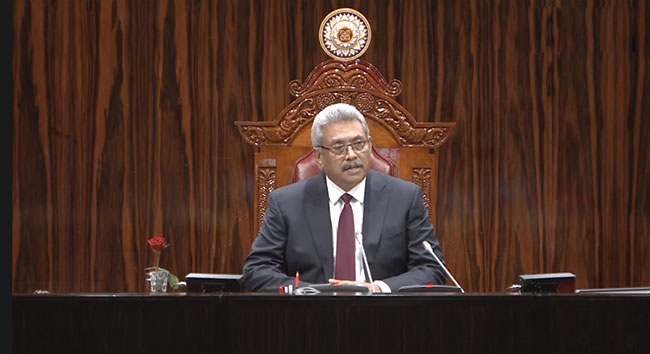
Japanese Defence Minister Nobuo Kishii held a video teleconference with President Gotabaya Rajapaksa.

During the discussion, both sides exchanged views on bilateral defense cooperation and exchanges and welcomed the steady progress being made in a broad range of areas, including naval cooperation and aerial cooperation, the Japanese Defence Ministry said.

In this context, both sides welcomed the bilateral exercise “JA-LAN EX” which was successfully conducted in September 2020, Maritime Self-Defense Force vessel’s first participation in Cooperation Afloat Readiness and Training (CARAT) exercise hosted by Sri Lanka and the U.S., which took place last week, as well as the successful delivery of the online Air Rescue seminar in May 2021.

Both sides confirmed that they will share knowledge and lessons learned from infectious disease control measures taken by the defense authorities.

Furthermore, both sides concurred that Japan and Sri Lanka will further promote bilateral defense cooperation and exchanges based on the Memorandum on Defense Cooperation and Exchanges signed in 2019.

Both sides also exchanged views on the recent regional security issues, including the East China Sea and the South China Sea.

In this context, Minister Kishi expressed strong opposition to any unilateral attempts to change the status quo by coercion in the East and South China Seas.

Both sides affirmed that they will send a clear message about the importance of free, open, and rules-based maritime order, the Japanese Defence Ministry said.

Both sides also concurred in maintaining close communication between respective defense authorities and proactively promoting defense cooperation and exchanges to uphold and reinforce a free and open Indo-Pacific.

Posted in Uncategorized

Tamil Progressive Alliance briefs Indian envoy on suspected threats to India from China

A five-member delegation of the Tamil Progressive Alliance (TPA) led by MP and former cabinet minister Mano Ganeshan, met the Indian High Commissioner Gopal Baglay, Deputy High Commissioner Vinod Jacob and Political Counsellor Bhanu Prakash, on Tuesday and apprised him of the views of the Indian Origin Tamils on current political and welfare issues facing the community.

The TPA delegation, which included Deputy leader V.Radhakrishnan, General Secretary Chandra Schaffter and MPs Udayakumar and Velukumar, told the envoy that in their view the growth of China’s influence in Sri Lanka could be detrimental to India’s security, that they doubt if the Chinese believe in a multi-lingual and multi-ethnic Sri Lanka and if they consider the Tamils to be Sri Lankans.

The delegation pointed out that India has midwifed the 13 th. and 16 th.Amendments of the Sri Lankan constitution in 1987 and 1988 which had created elected Provincial Councils and made Tamil an official language apart from Sinhala.

The 16 th. Amendment passed in 1988 enabled Members of Provincial Councils to use either of the two National Languages (Sinhala or Tamil) to discharge their duties. Sinhalese and Tamil were both made the language of administration and as languages of legislation. Both Sinhala and Tamil were made languages of courts also.

But the Sri Lankan government has disregarded the 13A and has indefinitely postponed Provincial Council elections. It has illegally taken over hospitals and schools from the purview of the Provincial Councils. The scheme that Mano Ganeshan had launched when he was Minister of Official Languages to train bilingual government staff has been abandoned by the current government. The TPA pointed out that India has every right to take up these issues with the Sri Lankan government.

When Indian Prime Minister Narendra Modi visited Sri Lanka he had announced the construction of 10,000 houses for the Indian Origin Tamils in the plantations but the Sri Lankan government has not even started this project.

The TPA delegation said that it would like to go to New Delhi and Chennai to meet Prime Minister Modi and Tamil Nadu Chief Minister M.K. Stalin after the pandemic and requested the Indian High Commission to facilitate it.

Coin issued to commemorate Sino-Sri Lanka relations and the centenary of the Communist Party of China

The 1,000 rupee commemorative coin issued to mark the 65th Anniversary of diplomatic relations between the Government of Sri Lanka and the People’s Republic of China, and the 100th Anniversary of the Communist Party of China was presented to President Gotabaya Rajapaksa by Central Bank Governor Professor W. D. Lakshman at the Presidential Secretariat this afternoon (06).

This commemorative coin was issued as a special tribute to the long standing friendship and strong ties between the two countries.

On the center of one side of the coin is the front view of the Nelum Pokuna Mahinda Rajapaksa Theatre with the national flags of Sri Lanka and China. The ‘2022’ is shown in large numbers below the Theatre. The coin reads “65 years for Sri Lanka – China” in English, Sinhala and Tamil.

The other side of the coin says ‘1,000 rupees’ and “Chinese Communist Party” in three languages.

The Central Bank has issued 500 gold and 2,000 silver commemorative coins.

Asia’s Highest Default Risk Spotlights Sri Lanka Debt Worry – Bloomberg

Sri Lanka’s risk premium for a default jumped, reflecting concern that the pandemic is damaging the nation’s ability to fill its foreign-exchange coffers ahead of at least $2.5 billion in dollar debt due in the next 12 months.

The nation’s five-year credit default swaps rose to 1,553 basis points on Monday, the highest since March 1. A separate gauge of one-year default probability was at 27.9%, the steepest in Asia, up from around 13% over six months ago, according to a Bloomberg model where a reading above 1.5% signifies high risk of failure to pay.

Too Risky
Sri Lanka’s 1-year default probability is the highest in the Asia-Pacific

Source: Bloomberg

Note: Bloomberg’s debt default probability scale lists any score above 1.5% as an indication of high risk of failure to pay

The first test comes July 27, when the South Asian nation must repay a $1 billion bond to investors. President Gotabaya Rajapaksa’s administration tightened capital controls last week, limiting how much foreign currency can leave the country, and speculation is growing that it may need to turn to the International Monetary Fund for additional finances after securing assistance from countries including China.

“These resources should enable Sri Lanka to meet its remaining debt maturities through the rest of 2021,” said Sagarika Chandra, primary sovereign analyst for Sri Lanka at Fitch Ratings. “Nevertheless, Sri Lanka’s debt repayment challenges will continue into the medium-term. Authorities have not yet specified plans for meeting the country’s foreign-currency debt-servicing needs for 2022 and beyond.”

Arrangements are already in place to settle the bonds due later this month, the central bank said in a statement late Monday. Two more payments become due next year — a $500 million bond on Jan. 18, followed by $1 billion of debt maturing July 25.

“The other bonds also we will pay,” said Ajith Nivard Cabraal, Sri Lanka’s state minister for money and capital markets and a former central bank governor, citing steps such as foreign- exchange controls and swap agreements with China and Bangladesh.

Still, the uncertainty has prompted calls from some opposition party members for Sri Lanka to seek help from the IMF, which prematurely ended a $1.5 billion fund facility last year amid change in financing needs due to the pandemic. While the government and the central bank have said there’s no need to go back to the Washington-based organization, it isn’t uncommon for nations to renegotiate terms with the global lender of last resort.

Sri Lanka’s government is instead aiming to pursue its own policy mix, including promoting import substitution and garnering support from bilateral creditors including India and China. It secured a $1.5 billion currency swap line from Beijing in March, and is expecting inflows including a $250 million swap facility from Bangladesh’s monetary authority, besides a $400 million facility from the Reserve Bank of India to bolster reserves.

Foreign-exchange reserves stand at around $4 billion, excluding the China swap agreement, according to the central bank. That’s enough to cover three months of imports.

Concerns about repayment are pushing the cost of Sri Lanka’s dollar debt higher, with the yield on the 5.75% 2023 bond surging 96 basis points at Monday’s close to 28.7%, according to data compiled by Bloomberg. The yield on the 7.55% 2030 bond is near a three-month high of 16.5%.

The sell-off may be overdone in short tenor debt, especially notes maturing 2023 and 2024, according to Ek Pon Tay, senior portfolio manager for emerging-market debt in Singapore at BNP Paribas Asset Management.

“The sovereign’s near-term liquidity is not a concern,” said Tay, who expects an IMF package to materialize in coming months and predicts Sri Lankan banks, which hold a third of the July 2021 bond, to plow that cash into other upcoming maturities. “In the medium term, however, a renewed risk is a widening trade deficit given rising oil prices.”

Investors are also expressing concern about Sri Lanka’s capital controls, which are seen as a way for the economy to shun reliance on foreign borrowing, and more importantly ward off interference from the IMF, whose aid comes with strict conditions.

HERE’S A SNAPSHOT OF THE CAPITAL CONTROL MEASURES:

  • Sri Lanka suspends some investment limits for six months from July 2
  • Companies were earlier allowed to invest up to $2 million a year abroad without special permission, while individuals could invest as much as $200,000 a year
  • Investments abroad would still be allowed if they are made from foreign borrowings
  • Central bank may approve investments on a case by case basis
  • Firms will be allowed to remit up to $15,000 to existing branches and if funds are needed to meet regulatory requirements abroad
  • Government reduces the first allowance of those migrating abroad to $30,000 from $200,000
  • Outward remittances from personal or business foreign currency accounts limited to $20,000
  • The capital controls “risk the emergence of parallel exchange rates, disrupt access to imports and ultimately may well stall the economy,” said Tim Ash, a strategist at BlueBay Asset Management in London. “They might all just make the end game more painful, rather than actually resolving anything.”

— With assistance by Asantha Sirimanne

President Rajapaksa included in RSF’s 2021 “press freedom predators” gallery

President Gotabaya Rajapaksa has been included in the Reporters Without Borders (RSF) 2021 “press freedom predators” gallery.

RSF published a gallery of grim portraits, those of 37 heads of state or Government who crack down massively on press freedom.

Some of these “predators of press freedom” have been operating for more than two decades while others have just joined the blacklist, which for the first time includes two women and a European predator.

Nearly half (17) of the predators are making their first appearance on the 2021 list, which RSF is publishing five years after the last one, from 2016.

All are heads of state or Government who trample on press freedom by creating a censorship apparatus, jailing journalists arbitrarily or inciting violence against them, when they don’t have blood on their hands because they have directly or indirectly pushed for journalists to be murdered.

Nineteen of these predators rule countries that are coloured red on the RSF’s press freedom map, meaning their situation is classified as “bad” for journalism, and 16 rule countries coloured black, meaning the situation is “very bad.” The average age of the predators is 66. More than a third (13) of these tyrants come from the Asia-Pacific region.

RSF said that Gotabaya Rajapaksa’s election as President in November 2019 returned Sri Lanka to the darkest hours of its recent history. A retired army lieutenant-colonel, “Gota” was defence minister while his brother, Mahinda Rajapaksa, was president from 2005 to 2015, the so-called “dark decade” during which the military finally crushed the Tamil armed separatists by dint of a great deal of bloodshed, ending the decades-old civil war in 2009.

It was during his time as defence minister that Gotabaya Rajapaksa acquired another surname – “Terminator.” He owes this distinction to his role as overseer of a death squad known as the “white van commando” because of the vehicles it used to kidnap and torture journalists, and in some cases execute them, on his orders, RSF said.

RSF said that his accession to the presidency re-awakened old demons, especially as he reappointed himself as Defence Minister and appointed his brother, the former president, as Prime Minister.

According to RSF, much of the Sri Lankan press is now censoring itself, either because of what he did in the past or what he is doing now as President.

Posted in Uncategorized

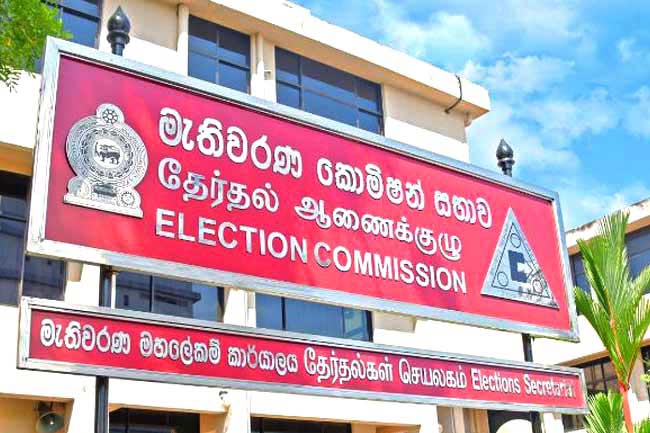
Basil Rajapaksa’s name submitted to Election Commission

Sri Lanka Podujana Peramuna (SLPP) has proposed the name of Basil Rajapaksa to the Election Commission to fill the parliamentary seat vacated by MP Jayantha Ketagoda.

Speaking to the media, SLPP General Secretary MP Sagara Kariyawasam said Basil Rajapaksa is expected to take oaths as a Member of Parliament on the 8th of July.

Ketagoda stepped down from his position as a National List MP to make way for Basil Rajapaksa.

The parliamentary media unit confirmed that he had handed in his resignation to the Secretary-General of the Parliament this morning (July 06).

Basil Rajapaksa’s much-anticipated entry to parliament had been making headlines over the past few weeks. Reports speculated that he would also be sworn in as a Cabinet Minister.

Meanwhile, a group of ruling party backbenchers who met at the residence of MP Pramitha Bandara Tennakoon recently, collectively adopted a proposal to call the SLPP’s architect to enter the parliament.

Posted in Uncategorized

PM tells SLPP dissenters govt. has salon door

Prime Minister Mahinda Rajapaksa yesterday said the govenrent kept the door open for anyone to leave, if he or she did not agree with its policies.

Commenting on recent statements by some ministers critical of the government, PM Rajapaksa tod The Island: “We are not keeping anyone forcibly. It is usual within an alliance for parties with various ideologies to have different opinions on political issues. We also maintain democracy within our alliance unlike many others in today’s politics. Anyone in the goverment can leave. We have the people’s trust. We are implementing the development work as we promised to the people in our manifesto. That is why the people have given us a huge mandate.”

The PM said some politicians made controversial statements to attract media attention, and they should not be taken seriously.

But if anyone is not actually happy with the way we conduct the affairs of this government, our doors are always wide open for them to leave. Similarly, our doors are also open for anyone who wish to join forces with us if they approve the way we govern this country,” the Premier said.

Parliament to convene from 06 to 09 July

The Committee on Parliamentary Business chaired by the Speaker Mahinda Yapa Abeywardena which was held today (05), decided that the Parliament will convene for four days from tomorrow (06) until Friday (09), the Secretary General of Parliament Dhammika Dasanayake said.

Meanwhile, the no-confidence motion against the Minister of Energy Udaya Gammanpila will be taken up for debate on the 19th and 20th of July.

Accordingly, Parliament will convene tomorrow (06) at 10.00 a.m. and from 11.00 a.m. to 4.30 p.m. Accordingly, the Code of Criminal Procedure (Amendment) Bill, Convention against Torture and Other Cruel, Inhuman or Degrading Treatment or Punishment (Amendment) Bill, an Order under the Code of Criminal Procedure (Special Provisions) Act and the revision of salaries and allowances accorded to the Office of the Missing Persons is scheduled to be taken up for debate the Secretary General of Parliament Dhammika Dasanayake said.

The Motion at the Adjournment Time by the Government will be taken up for debate from 4.50 p.m. to 5.30 p.m.

The following day, 07th July, two Orders under the Export Development Act are to be taken up for debate and approved. Thereafter, Motion at the Adjournment Time by the Opposition will be taken up for debate from 4.50 p.m. to 5.30 p.m.

The Registration of Electors (Amendment) Bill, General Sir John Kotelawala National Defense University Bill, Regulations under the Immigrants and Emigrants Act will be taken up for debate on July 08th from 11.00 a.m. to 4.30 p.m. Thereafter, Motion at the Adjournment Time by the Opposition will be taken up for debate from 4.50 p.m. to 5.30 p.m.

Meanwhile, it has been decided to hold the Adjournment Debate on the Annual Report of the Central Bank of Sri Lanka for the year 2020 on Friday 09th July from 11.00 am to 5.30 p.m.

During the four days of Parliament, time has been allotted for Questions for Oral answers of the Members of Parliament from 10.00 a.m. to 11.00 a.m. and time has also been allotted for Questions at the Adjournment Time on all three days except on Friday (09) from 4.30 p.m. to 4.50 p.m. for both the Opposition and the ruling party.

Leader of the House Dinesh Gunawardena,Leader of the Opposition Sajith Premadasa, Minister of Highways and Chief Government Whip Johnston Fernando, Chief Opposition Whip Lakshman Kiriella, Cabinet Ministers Chamal Rajapaksa, Nimal Siripala de Silva and Prof. GL Peiris, Douglas Devananda Dullas Alahapperuma, Wimal Weerawansa, Mahinda Amaraweera, Vasudeva Nanayakkara, M.U. M. Ali Sabry, Prasanna Ranatunga and Hon. Parliamentarians Anura Kumara Dissanayaka, Ranjith Madduma Bandara, Gayantha Karunatilleka, Rishad Bathiudeen, Field marshal Sarath Fonseka were present at the meeting.

Continuous recusals of judges from Rishad’s case are unexpected: AAL Rushdie Habeeb

Today’s (05) recusal of another Supreme Court Judge from the case of Parliamentarian and Leader of the All Ceylon Makkal Congress (ACMC) Rishad Bathiudeen, who is currently being detained by the Criminal Investigation Department (CID) under the Prevention of Terrorism Act (PTA) has brought the total number recusals to four.

Rushdie Habeeb, Attorney-at-Law representing Bathiudeen told The Morning that this many recusals of Judges from hearing a case in a Supreme case setup is very unexpected

“Justice Janak De Silva was the first to recuse, stating that he had given recommendations to the Presidential Commission of Inquiry (PCoI) tasked with looking into the Easter Attacks. Justice Yasantha Kodagoda cited Bathiudeen being his neighbour as the reason for his recusal. Justice A.H.M.D Nawaz meanwhile did not give any reasons for recusal. Today, Justice Mahinda Samayawardhana cited personal reasons along with the fact that he had heard another case relating to Bathiudeen’s brother as the reason for his recusal,” Habeeb stated.

Habeeb also said that the case has been re-fixed for 08 July to support for leave to proceed. Additionally, he noted that the petitioners have sought interim reliefs such as granting of bail or looking into the possibility of placing Bathiudeen under house arrest until the detention order is resolved.

Further, Habeeb mentioned that in court today, the Attorney General’s (AG) Department informed the court that the submission of one more document has to take place, which may be favourable to Rishad.

“As mentioned earlier, we do not know whether the AG was consulted before his arrest. This has not been confirmed yet. The Speaker of Parliament was also not informed,” he stated.

Additionally, Habeeb told The Morning that while Bathiudeen is attending Parliament, he has limited access to lawyers, especially during the past two weeks when Bathiudeen was not granted access to any lawyers. Habeeb also notes that Bathiudeen is having a “difficult” time in detention, and is subjected to lack of proper facilities and overcrowding.

“He is a diabetic patient. At times his sugar levels spike along with his blood pressure levels. The cells are infested with rats which has resulted in an inability to get proper sleep. Psychologically, he is not in a good position,” Habeeb said.

He also reiterated that the arrest and detention of Bathiudeen has nothing to do with the judicial custody of a citizen.

“My client is currently in administrative custody, we are trying to bring this to the attention of the court. The due process of law is that after a person is arrested, a judge has to look into the matter before a decision is made. This is why the law provides for police officers to keep suspects in custody only for 24 hours, before producing them before a court of law,” he stated.

Habeeb also notes that the multiple recusals of Supreme Court judges has delayed the primary review of Bathiudeen’s detention.

When queried if the European Union (EU) Resolution and the pressure exerted on the Government to withdraw or repeal the PTA will affect Bathiudeen’s case, he stated that such interventions are welcome.

“The PTA is a draconian law which has no place in a democracy. It is used to inflict political victimisation and personal revenge. Bathiudeen is a political prisoner. This is why we welcome the EU’s intervention. However, we are not supporting the withdrawal of the GSP+ trade concession as it will make things worse for Sri Lankan citizens,” he stated.

Habeeb went on to highlight that it has been reiterated to the EU that the arrest and detention of Bathiudeen is an “illegal misuse of the PTA”, and that he believes that the EU will take steps towards the release of Bathiudeen.

Posted in Uncategorized

Debate on no-confidence motion against Gammanpila on July 19 & 20

The Committee on Parliamentary Business chaired by Speaker Mahinda Yapa Abeywardena has decided to convene Parliament for 4 days starting from 06th to the 09th of July.

Meanwhile it has been decided that the motion of no confidence against Minister Udaya Gammanpila will be taken up for debate in parliament on July 19 and 20.

The Code of Criminal Procedure (Amendment) Bill, Convention against Torture and Other Cruel, Inhuman or Degrading Treatment or Punishment (Amendment) Bill, an Order under the Code of Criminal Procedure (Special Provisions) Act, the revision of salaries and allowances accorded to the Office of the Missing Persons is scheduled to be taken up for debate tomorrow (06).

The Motion at the Adjournment Time by the Government will be taken up for debate from 4.50 p.m. to 5.30 p.m.

2 Orders under the Export Development Act are to be taken up for debate and approved on the 07th. Thereafter, Motion at the Adjournment Time by the Opposition will be taken up for debate from 4.50 p.m. to 5.30 p.m.

The Registration of Electors (Amendment) Bill, General Sir John Kotelawala National Defense University Bill, Regulations under the Immigrants and Emigrants Act will be taken up for debate on July 08th.

The Adjournment Debate on the Annual Report of the Central Bank of Sri Lanka for the year 2020 will be held on Friday (09) from 11.00 am to 5.30 p.m.

On June 16, several Members of Parliament representing the Samagi Jana Balawegaya (SJB) signed a 10-point motion of no confidence against Energy Minister Udaya Gammanpila, citing the recent ‘arbitrary’ increase in fuel prices.

It alleged that the energy minister had proceeded to increase the fuel prices without the approval of the Cabinet of Ministers and thereby violated a pledge under the Constitution.

The motion also cites the recent statement issued by the General Secretary of the ruling party, Sri Lanka Podujana Peramuna (SLPP) regarding the fuel price hike.

The no-confidence motion was officially handed over to the Speaker on June 22.