Basil Rajapaksa to be sworn in as a MP in parliament – report

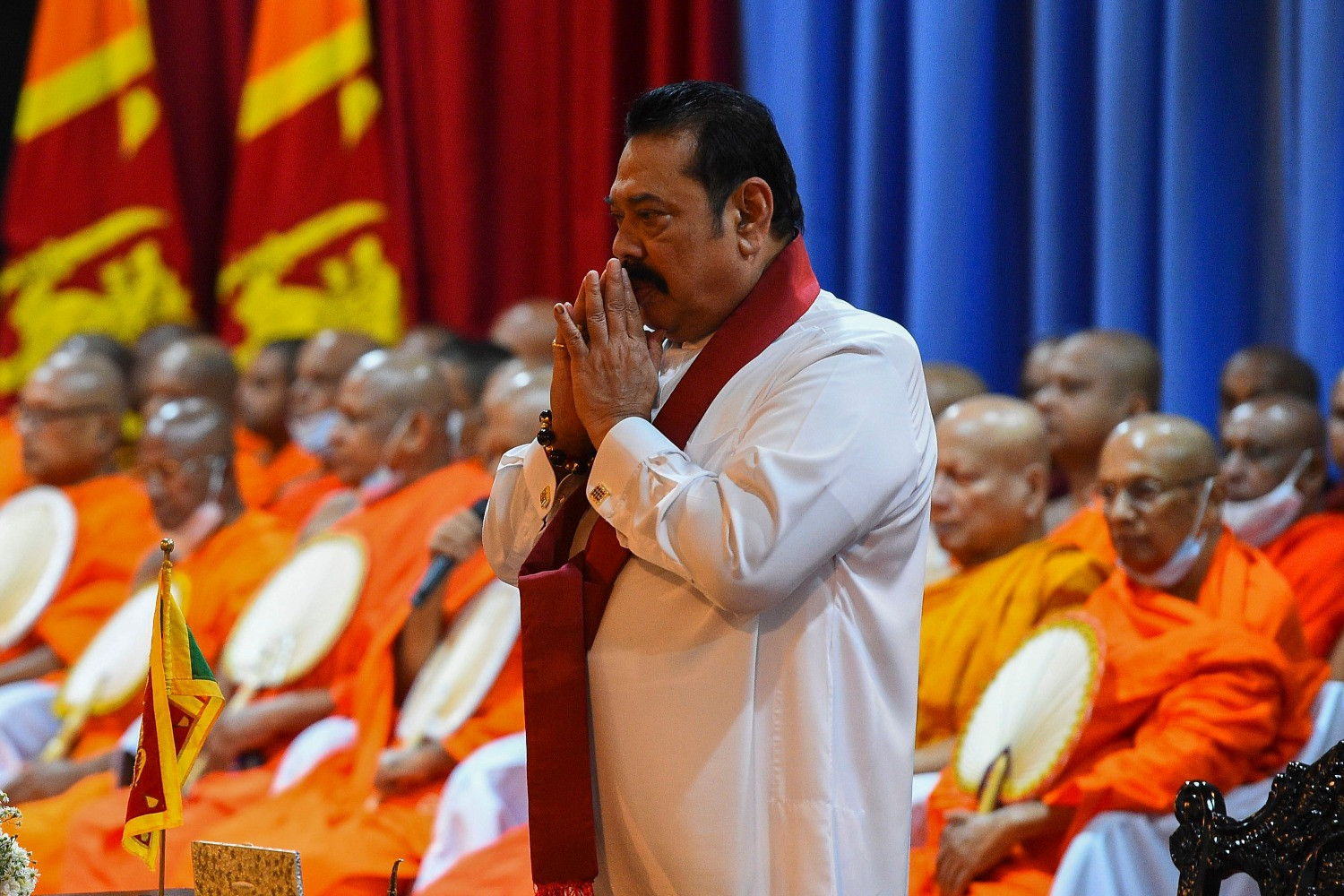
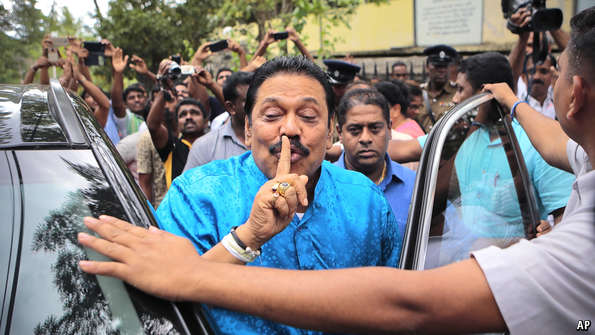
Basil Rajapaksa, the founder of the Sri Lanka Podujana Peramuna (SLPP), who returned to the island from the United States Thursday, will be sworn in as a Member of Parliament on July 6th, Lankadeepa reported according to political sources.

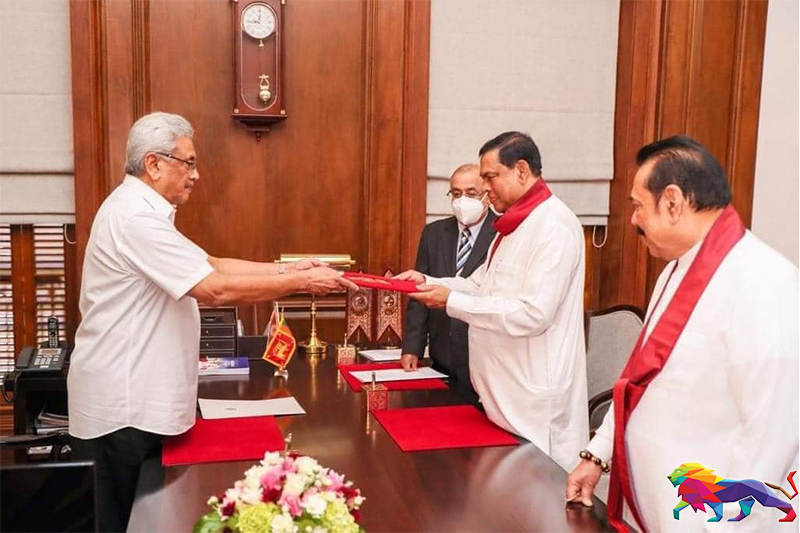
After being appointed as a Member of Parliament, Basil Rajapaksa will be sworn in as the Cabinet Minister of Finance and Economic Development before President Gotabhaya Rajapaksa on the same afternoon, government sources said.

Basil Rajapaksa is scheduled to enter Parliament as a Member of Parliament for the National List of the People’s Front.

Prof. Ranjith Bandara, the Member of Parliament appointed by the SLPP from National List is expected to resign to give the opportunity to Basil Rajapaksa to enter the parliament.

Basil Rajapaksa returned to the island yesterday morning after spending more than a month in the United States. It is expected that Basil Rajapaksa will reduce the increased petrol price by between 5 and 7 rupees and the diesel by between 3 and 5 rupees after he is sworn in as the Finance Minister.

Basil Rajapaksa also served as the Cabinet Minister of Economic Development in the Rajapaksa Government from 2010-2015.

Duminda’s pardon undermines SL’s rule of law- US Ambassador

US Ambassador to Sri Lanka Alaina B Teplitz today said that Presidential pardon of Duminda Silva was undermining Sri Lanka’s rule of law.

“The Pardon of Duminda Silva, whose conviction the Supreme Court upheld in 2018, undermines rule of law,” Teplitz tweeted.

However, she welcomed the early release of prisoners held under the Prevention of Terrorism Act.
“We welcome the early release of PTA prisoners, but the pardon of Duminda Silva, whose conviction the Supreme Court upheld in 2018, undermines rule of law. Accountability and equal access to justice are fundamental to the UN SDGs to which the GoSL has committed,” she tweeted.

Gallery

Posted in Uncategorized

Sri Lanka joins exercises under Indo-Pacific maritime defence structure

The bilateral maritime training exercise, Cooperation Afloat Readiness and Training (CARAT), held between the U.S Navy and Sri Lankan armed forces kicks off today (24 June) in the strategic deep-water port of Trincomalee and off the Island’s eastern seaboard.

The U.S. – Lankan exercise comes as the nuclear powered USS Ronald Reagan (CVN-76) led US Navy (USN) Carrier Strike Group wraps up a two-day training exercise with the Indian Navy and Air Force aimed at improving interoperability between the countries in the Indian Ocean.

The 6-day CARAT-21 exercise, held for the fourth time will see two Sri Lankan Navy (SLN) vessels and several Sri Lanka Air Force (SLAF) aircraft engage with the US Navy’s warship – USS Charleston (LCS-18), its embarked helicopter (a MH-60S from the Sea Combat Squadron HSC21) and a P-8A Poseidon Maritime Patrol Aircraft. The sea phase of the exercise will be held from 26th to 30th June off Trincomalee bay.

Sri Lankan Offshore Patrol Vessels; SLNS Sayurala (P623) and SLNS Gajabahu (P626) will participate in the exercise along with a Beechcraft King Air B-200 aircraft from No.03 Maritime Squadron and Bell 212 helicopters of No.07 Squadron and Bell-412 No.04 Squadron of the Sri Lanka Air Force. Incidentally, SLNS Gajabahu is the Ex. USCG Cutter Sherman, transferred to Sri Lanka in 2018.

The USS Charleston, a USN littoral combat vessel on rotation to the U.S. Pacific Fleet and the P-8A from the “Red Lancers” of Patrol Squadron (VP10) arrived in Sri Lanka yesterday (23 June). The P-8A will likely be based at Mattala Rajapaksa International Airport (MRIA) in Hambantota, in the South of the Island, Defence Asia learns. This may be due to the airfield at China Bay, Trincomalee being inadequate to service a P-8A aircraft.

This year, the exercise is planned with minimal physical interaction between participants and will follow local COVID-19 health regulations, the SLN said. In a first for Sri Lanka, a destroyer from the Japanese Maritime Self-Defence Force (JMSDF), JDS Yugiri (DD 153) and her embarked MH-60R helicopter will join Sri Lankan and US forces at the end of the exercise for fleet manoeuvres. This, days after the Japanese training vessel JDS Kashima and destroyer JDS Setoyuki called at Colombo Port and joined the SLN conducting a passage exercise in the west of the Island. In another first, CARAT-21 will be supported by the United Nations Office of Drugs and Crime (UNODC) and the EU Critical Maritime Route Wider Indian Ocean (CRIMARIO), the U.S Pacific fleet said.

“The naval exercise will feature a variety of joint training opportunities, to include Humanitarian Assistance and Disaster Relief (HADR), Maritime Domain Awareness (MDA), Maritime Aviation, Replenishment at Sea (RAS), Surface TRACKEX, Visit Board Search and Seizure (VBSS), Search and Rescue (SAREX) and a wide range of naval exercises which are expected to be conducted adhering to COVID-19 protocols” the SLN said in a statement.

The SLN stated that the objective of the exercise were “enhancing maritime engagement and interoperability, fostering greater coordination in shared maritime challenges, gaining a better understanding of the operational environment, enhancing mutual capability in maritime security cooperation, operating in line with international law, norms and standards, facilitating the linkages between maritime components and law enforcement authorities as well as deepening partnership among the Sri Lanka Navy, US Navy and Japanese Maritime Self Defence Force are chief”

Speaking at the Ex. CARAT-21 opening ceremony, Sri Lanka Navy Deputy Chief of Staff and Commander Eastern Naval Area, Rear Admiral YN Jayarathne said that “through engagement of this nature of exercises, it would further maritime security cooperation with rest of the mission partners and he also underlined the aspiration of the Ministry of Defence and Government of Sri Lanka for Navy to hone professionalism in partnership with regional and extra regional players to securing the ocean.”

Commenting on the exercise, Capt. Tom Ogden, commander, USN Destroyer Squadron (DESRON) 7 said that “CARAT Sri Lanka perfectly reflects the excellent cooperation between our two navies, and emphasizes our partnership and respect for Sri Lankan sovereignty” adding that the training value of CARAT-21 will be “invaluable building on previous iterations between our nations.”

Sri Lanka and the US held their first CARAT exercise in 2017, with the 2019 iteration of it jointly suspended following the Easter Sunday Bombings (April 2019).

The United States has increased its military diplomacy and training engagements with South and South East Asian nations following the superpower’s strategic shift towards the ”Indo-Pacific” theatre. In 2016, US Marines held joint training with their newly formed Sri Lankan counterparts. US Air Force units from the Pacific Command have also held several training exercises with the SLAF over the last decade. The U.S. has also supplied Sri Lanka with two Ex USCG cutters which are now in SLN service.

In March this year, Commander of the U.S. Indo-Pacific Command, Admiral Philip S. Davidson told the U.S. Senate that “The United States must continue its defence cooperation with Sri Lanka and assist in professionalizing its military and further building its maritime security capacity. There is potential to increase collaboration with maritime and air forces on various issues, including counterterrorism, counternarcotics, human trafficking, Humanitarian Assistance/Disaster Response, and maritime domain awareness”.

Adm. Davidson acknowledged that allegations of Human Rights violations by some in the Sri Lankan military will pose a challenge to the defence relationship between both countries. However, he told the U.S. Senate that military-to-military engagement with Sri Lanka will remain a focus for his command, pointing out that “Sri Lanka shows a continued willingness to seek security cooperation with the United States”

Sri Lanka is in a dialogue with the US, India, Japan and other countries to improve its maritime security and response capabilities. Both India and the US have expressed interest in providing Sri Lanka Maritime Patrol Aircraft to police the vast Exclusive Economic Zone around the Island.

An Iraqi Air Force King Air 350ERs special mission aircraft. Defence Asia reliably learned that Sri Lanka has shown interest in a similar platform for the MPA role. Pic by Staff Sgt Shawn Weismiller,US Air Force.

Both India and the US have also expressed concerns about Chinese activity in the Indian Ocean and in particular about its growing influence in Sri Lanka. Successive Sri Lankan Governments have maintained that the close links with China are economic and that no foreign power will be allowed a military foothold on the Island.

However, regional and international concern regarding Chinese involvement and investment in Sri Lankan strategic infrastructure remain high. Key amongst them is the Hambanthota deep water port in the South of the Island, which is controlled by a Chinese company on a 99-year lease, and the USD 1.4 Bn Chinese funded Colombo Port City project. Responding to growing concerns in New Delhi, Sri Lankan Foreign Secretary and former Navy Commander Admiral (Retd) Jayanath Colombage stated in an interview that “Sri Lanka will not do anything harmful to India’s strategic security interests”

In June 2020, the SLN expanded their presence at Hambanthota Port by commissioning the naval shore establishment SLNS Kawanthissa, a fully-fledged naval base built adjacent to the strategically located Port. SLNS Kawanthissa falls under the preview of the SLN’s Southern Naval Command (SNC) and will be responsible for coastal surveillance and security of the Port. “SLNS Kawanthissa will coordinate with the Hambantota International Port and perform International Ship and Port Facility Security (ISPS) duties at the port of Hambantota while providing security and surveillance long coast” the Navy said in a press release.

Last week, India warned Sri Lanka that they expected “Sri Lanka will remain mindful of our excellent bilateral cooperation, including for mutual security in our shared environment, which includes the maritime domain”. Commenting on the growing Chinese interest in the Island.

Indian Ministry of External Affairs spokesperson, Arindam Bagchi, told the press that “Regarding the Colombo Port City project, we have been closely following recent developments from our security perspective. We have also noted the concerns that have been raised in Sri Lanka regarding several aspects of the framework for the Colombo Port City”.

The comments from the regional power come three months after Sri Lanka pulled out of a 2017 agreement with Japan and India to develop the East Terminal of the Colombo Port. External Affairs Minister S. Jaishankar tweeted on Monday (21 June) that the two countries will “continue to remain in close touch”, following a telephone call with his Sri Lankan counterpart.

Last month, the Sri Lankan parliament passed the controversial Colombo Port City Economic Commission Bill with amendments recommended by the Supreme Court. Critics have argued that the legislation erodes the Sovereignty of Sri Lanka over the reclaimed “Port City” area, leaving loopholes that will create conditions for money laundering to thrive and allow China to further their footprint in the Island, a charge that the Government rejects.

However, Indian continues to foster a robust security relationship with Sri Lanka. Earlier this week (22 June) the 5th annual high-level meeting between the Indian Coast Guard (ICG) and Sri Lanka Coast Guard (SLCG) was held virtually. In March this year, the Trilateral Secretariat on Maritime Security Cooperation, an Indian initiative to better coordinate maritime security-related matter with the Maldives and Sri Lanka, was established at Sri Lanka Navy Headquarters in Colombo.

Last year, India, Australia, Japan and the U.S. strengthened their defence cooperation and interoperability through a joint exercise – Malabar Ex 2020 off Visakhapatnam in the Bay of Bengal. The last time the four nations held a similar exercise was in 2007. The four countries together make up a partnership that is known as “the Quad” based on principles of “democracy, a rules-based order, and a free, open and inclusive Indo-Pacific”.

China has expressed concern regarding the Quadrilateral Security Dialogue (Quad) of the four nations and views the partnership as an informal strategic alliance against the rise of the Asian giant.

FTZMA urges govt. to take a proactive approach in resolving GSP Plus issue

The Free Trade Zone Manufacturers Association (FTZMA) yesterday in a statement stressed the need for an urgent and short-term strategy to protect Sri Lanka’s market share in the EU, in a proactive manner.

Acknowledging that the withdrawal of GSP Plus would have serious and negative consequences on the country’s export industry, the FTZMA said it is imperative for the government to take a proactive approach in resolving the hurdle without “speculating upon reactive measures on what next comes from the EU”.

“The economy of our country is majorly driven by the SMEs but due to the pandemic, those enterprises are already being hit badly.

The GSP withdrawal will throw them out of the frying pan into the fire, as not only textile but about 7500 tariff lines, which cover almost all the industrial exports from Sri Lanka to Europe, will suffer in case if Plus is withdrawn and therefore unlike previously, with the cascading effects of the pandemic, it will cause a catastrophic impact to our economy,” the FTZMA statement noted.

To help the government secure the concession, the FTZMA said it would contribute to the efforts by: monitoring the extent to which the member associations fulfil treaty obligations, advocating for improvement and acting as a partner to communicate the views of the Sri Lankan public.

The FTZMA said that by assisting the government to achieve the scheme’s conditions, it would continue to uphold labour and human rights and safeguard the workforce of the members from the negative impacts of the pandemic.
Furthermore, the association reiterated that the impact of losing the EU GSP Plus this time around is expected to be immense since the COVID-19 pandemic has had a debilitating impact on the economy, resulting in weakening Sri Lanka’s balance of payment (BoP) and increasing the unemployment rate.

It shared that unlike standard bilateral trade deals, GSP Plus has a nonreciprocal nature towards the beneficiary exporting country.

The FTZMA added that the concession enabled the Sri Lankan exporters to have a competitive advantage over the none GSP Plus nations, thus has led to the creation of thousands of additional job opportunities for locals, thereby elevating their incomes and lifestyles.

Posted in Uncategorized

Two state-owned banks at risk as fuel crisis looms

The Government has decided to obtain a loan of USD 1 billion from international private lending agencies to set off interest payments for loans obtained from two state banks to purchase fuel, the Sunday Times reported.

Accordingly, the funds would be used to pay part of the interest owed by the Ceylon Petroleum Corporation (CPC) to the People’s Bank and the Bank of Ceylon.

“The Energy Ministry had initially held talks with the State Bank of Japan and the State Bank of China to obtain this USD 1 billion loan at an interest rate lower than 3 per cent but the talks were unsuccessful largely because of the economic crisis Sri Lanka was facing,” the Sunday Times reported.

Rs. 652 billion owed to state banks

In addition to spending foreign exchange, the Ceylon Petroleum Corporation has been a loss-making institution, relying on loans obtained from the Bank of Ceylon and the People’s Bank annually while the amount to be paid to the two banks as loans is Rs. 652 billion, the President’s Media Division (PMD) said.

The PMD made this observation in a special press release issued on 13 June justifying the Government’s decision to increase fuel prices.

Posted in Uncategorized

India, Sri Lanka hold 5th high-level meeting of coast guards

India and Sri Lanka will seek to expand training opportunities between the coast guards of both countries, Daily FT learns.

The decision was taken at the 5th annual high-level meeting between the Indian Coast Guard (ICG) and Sri Lanka Coast Guard (SLCG), held virtually on Tuesday (22), under the provisions of the bilateral MoU signed between both agencies.

The meeting was co-chaired by the Director General ICG Krishnaswamy Natarajan and Director General SLCG Rear Admiral Anura Ekanayake. Each delegation had representatives from their respective ministries of foreign affairs.

The 5th iteration of the meeting was to be held last year but was postponed due to the COVID-19 outbreak.

“Both coast guards assured strengthening of the operational level interaction for search and rescue, preservation and protection of the marine environment, information sharing to deter narcotics trafficking by sea, continuous professional engagement for experience sharing, and revalidated the established operational and communication procedures between the two coast guards,” the SLCG said in a statement.

The call for assistance from the ICG to battle the blaze onboard the now wrecked MV X-Press Pearl container vessel was made under the provisions of the MoU between both coast guards. The MoU was entered into in 2018.

The arrival of ICGs purpose-built pollution control vessels during the MV New Diamond tanker fire and the Singaporean flagged MV X-Press Pearl incident provided respondents a significant boost in firefighting and oil spill containment capability on-site.

The SLCG has limited oil spill response capability in the form of two Fast Patrol Vessels (FPV) – SLCGS Samudra Raksha (CG 501) and SLCGS Samaraksha (CG 502) – which were commissioned in 2018. The vessels were built in Japan through a grant extended by the Japan International Cooperation Agency (JICA). They are equipped with flotation booms and a skimmer system that can contain and skim small oil spills at sea. The FPVs can also spray chemical oil dispersants which break the oil up into small droplets, increasing the likelihood of it biodegrading.

The high volume of commercial shipping that travels around Sri Lanka, which includes a large number of tankers carrying petroleum and chemical products through the country’s Exclusive Economic Zone (EEZ) and several sea pollution incidents since 2000, had prompted the SLCG to highlight the need for capacity building. SLCG had requested the Government provide the agency with two purpose-built pollution control vessels (PCVs) with better firefighting capability last year, a senior defence official told the Daily FT on the condition of anonymity.

“However, they were told there is a lack of funding for such vessels and the SLCG resubmitted the request seeking only one vessel this year,” the defence official added, pointing out that Sri Lanka sits at a midway point between the maritime hubs of the Middle East and Singapore.

“Regional support is vital; Sri Lanka, India and Maldives work closely on these matters. However, we (Sri Lanka) need to build capacity and capabilities to respond to maritime emergencies and pollution in the seas around us. When it comes to pollution control, Sri Lanka doesn’t have the luxury of waiting for assistance to arrive to contain the spread. We need better monitoring and coordinating and response capability, both naval and aviation.”

Posted in Uncategorized

Presidential pardon granted to 93 prisoners including 16 ex-LTTE cadres in Sri Lanka

Sri Lanka released 93 prisoners including 16 ex-Liberation Tigers of Tamil Elam (LTTE) combatants on a presidential pardon issued marking the Poson full moon poya day on June 24.

The 16 ex-combatants who were detained under provisions in the Prevention of Terrorism Act (PTA and 77 others who had been imprisoned for minor offences were thus released, Media Spokesman for the Department Chandana Ekanayake said in a statement.

Speaking in parliament on June 22, Sports Minister Namal Rajapaksa had requested Justice Minister Ali Sabry to do justice by the ex Tigers languishing in jail for many years either by rehabilitating them or by presenting their cases to the Attorney General.

Rajapaksa said there are about 38 cases involving ex LTTE cadres whose cases are still being heard for over 20 years while still being held in remand custody.

The MP said 13 ex LTTE cadres are detained without any charges while 35 who are facing imprisonment upon final court verdict have also been in remand custody for many years before their final verdict.

Meanwhle, former MP Duminda Silva who was sentenced to death over the murder of former MP Bharatha Lakshman Premachandra is not among those released today, Ekanayake added.

Silva’s release from prison has been long speculated, though no such move has yet been initiated since the change of government in 2019.

Posted in Uncategorized

Former MP Duminda Silva serving a death sentence released under a special presidential pardon

Duminda Silva, who is currently imprisoned under a death sentence, has been granted a Special Presidential Pardon, Prisons Media Spokesman informs.

President Gotabaya Rajapaksa today (June 24) granted presidential pardon to 93 prison inmates to mark the Poson Full Moon Poya day.

Media Spokesperson of Department of Prison Chandana Ekanayake said that former MP Duminda Silva was also among them.

Former parliamentarian Duminda Silva was jailed in September 2016 after the Colombo High Court found him and several others guilty in the murder of former MP Bharatha Lakshman Premachandra.

Coronavirus death toll up by 65 fatalities toll exceed 2769

The Director General of Health Services has confirmed 65 more COVID-19 related fatalities that have occurred yesterday (June 21).

The new development has pushed the official death toll due to the virus in Sri Lanka to 2769.

According to the data released by the Department of Government Information, the new victims confirmed today include 25 females and 40 males.

Two of them is aged below 30 years, ten victims are between 30-59 years and the remaining 53 are aged 60 and above.

11 GN Divisions in Trincomalee and Batticaloa districts isolated with immediate effect

General Shavendra Silva, Commander of the Army, Head of the National Operations Center for Prevention of Covid 19 Outbreak, announced that following 11 Grama Niladhari (GN) Divisions in Trincomalee and Batticaloa Districts have been designated as isolated areas effective from 6:00 am today (June 23).

Trincomalee District

Trincomalee Police Division
• Nagaraja Walawwa Place

Batticaloa District

Valaichchenai Police Division
• 1st Cross Road, Brainthuraichenai206 C
• 2nd Cross Road, Bryanturaichenai 206 C
Kattankudy Police Division
• Kattankudy Division 4 164
• Kattankudy Division 5 South 164 A
• Kattankudy Section 5 South 164 B
• New Kattankudy Division east 161 B
• New Kattankudy Division 6 west 162 B
• New Kattankudy Division North 167 A
• New Kattankudy Division south 167 C
• Area of Karabala Road, ALS Mawatha, Nooraniya Cemetery Road and Beach Road 167 B

Posted in Uncategorized