Sri Lanka records 28 new COVID-19 deaths

Sri Lanka has registered 28 more victims of COVID-19, Director-General of Health Services confirmed on Tuesday (May 25).

The latest fatalities have moved the country’s death toll to 1,269, according to official data.

Five of the deaths took place on May 25 and the remaining victims have succumbed to the virus infection between the period of May 18 – May 24, the Department of Government Information stated.

Reportedly, 11 of them have been recorded as domestic deaths.

The deceased were identified as residents of Galle, Kalutara, Bulathsinhala, Unawatuna, Horana, Govinna, Galpatha, Hunnasgiriya, Maththaka, Wanchawala, Meepe, Matara, Ahangama, Veveldeniya, Ruwanwella, Meegahathenna, Agalawatta and Dehiattakandiya areas.

COVID pneumonia was recorded as the cause of death of majority of the victims. Some of them also suffered from diabetes, heart diseases, hypertension, sepsis and other complications.

Posted in Uncategorized

Sri Lankan plaque scripted in Chinese evokes fury, concern over omission of Tamil language

Concerns over the elevation of Chinese languages over official languages of Sri Lanka have emerged after a plaque made to declare the opening of a Chinese-gifted Smart Library of Attorney General’s (AG) Department was scripted in Sinhalese, English and China’s Mandarin language, evoking widespread criticism over the omission of the Tamil language.

Daily Mirror reported that the incident came under much criticism on social media platforms, leading to the plaque being removed later. The AG’s department did not comment regarding the issue.

In a tweet, Tamil Progressive Alliance Leader and Opposition parliamentarian Mano Ganesan stated that the Chinese are violating the language law and that the non-inclusion of Tamil was a violation of Sri Lanka’s Official Language Act. “It appears Chinese learn to ignore Tamil from our government since GoSL’s usage of Official Language Tamil is no better,” he said.

He further suggested that the Chinese Ambassador in Colombo should keep in mind that Classical Tamil came to China in the 5th century, taught the arts and was loved by the Chinese people.

State Minister of National Heritage, Performing Arts and Rural Arts Promotion, Vidura Wickramanayka said that omitting Tamil in the plaque violated the official language policy in Sri Lanka.

“As a country, we should not allow these type of things to happen. We talk about co-existence. An inquiry in this regard has to be carried out. This language policy should apply alike throughout the country. But there are instances in the North and the East where Official language policy is ignored omitting Sinhala in some areas. We need to rectify this when talking about language policy in relation to co-existence. We sometimes find plaques written only in Tamil,” he said.

Human Rights activist Ruki Fernando said that the incident was ‘unacceptable’ and indicated a certain mindset where it comes naturally to some government officials and to the private sector to forget that Tamil is an official language, Daily Mirror reported.

Highlighting that English and Chinese languages were elevated above Tamil and Sinhalese, Fernando said the situation required a degree of sensitivity as the omission of Tamil is a serious matter.

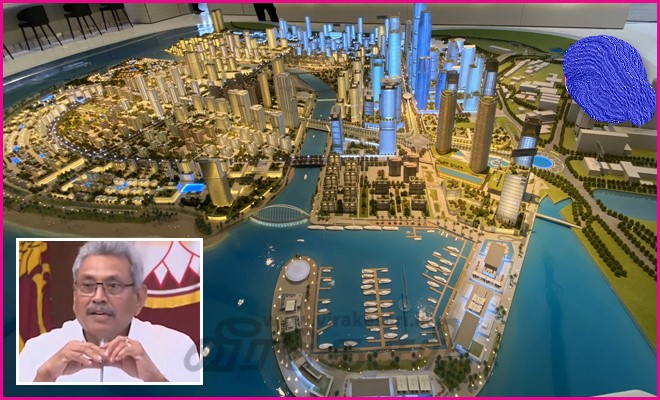
Last week, Batticaloa Parliamentarian from Tamil National Alliance (TNA) Shanakiyan Rasamanickam shared on Twitter an image of a signboard of the ‘Central Park’ coming up at the China-backed Colombo Port City, with text in Sinhala, English and Mandarin, according to Daily Mirror.

“Tamil text is missing, that’s alright! Soon Sinhala will be missing too. Hope Sri Lankans wake up at least then,” he said.

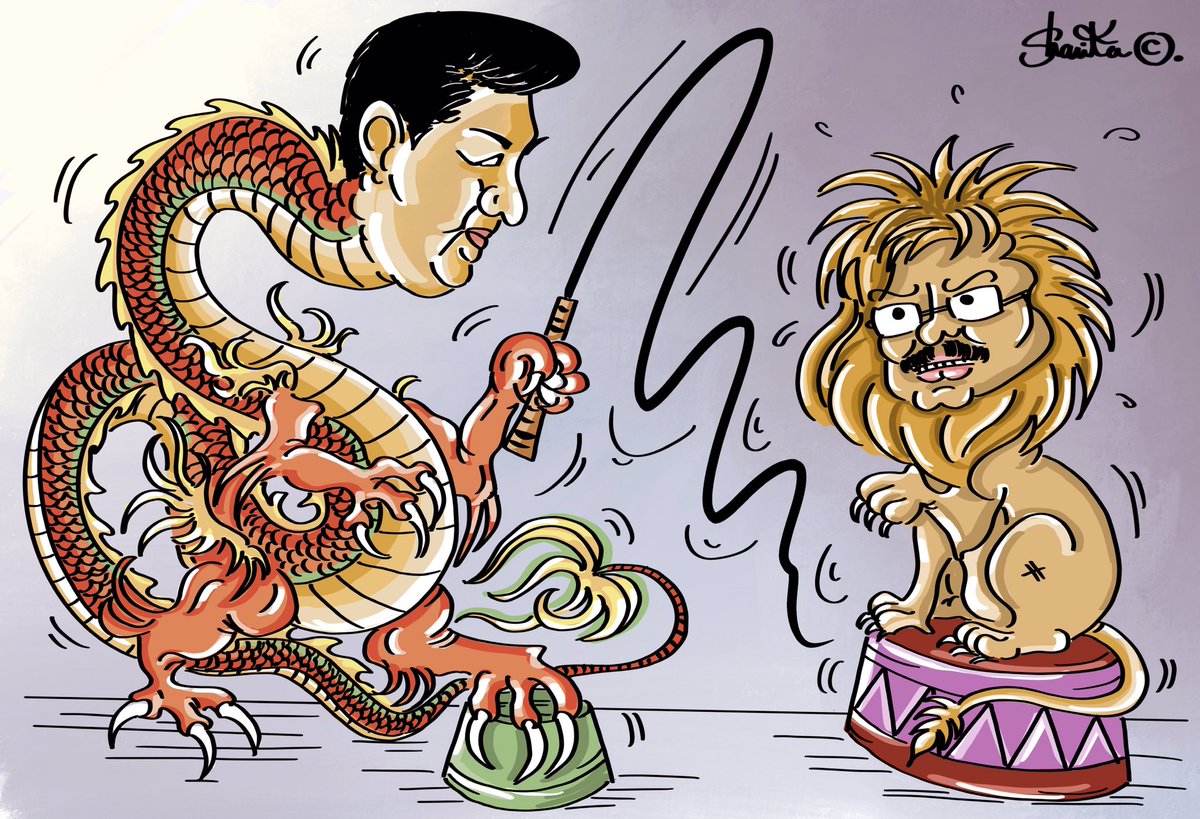
Rasamanickam also opposed the recently passed law the China-backed Port City Economic Commission law, saying the country has become ‘Chi-Lanka’.

The USD 1.4-billion Colombo Port City project is slated to be the single largest private sector development in Sri Lanka amid concerns about Beijing seeking to increase its footprint in the country through contentious infrastructure projects.

Sri Lanka has already leased Hambantota port to the Chinese state-run company for a period of 99 years, a move that has caused concern in neighbouring India.
(ANI)

Sri Lanka Port City still at risk of incompetent regulators: Samarajiva

Sri Lanka’s China-backed Colombo Port City, which has attempted to cut through a regulatory morass that is holding back the rest of the country via a fast-track ‘single window’ law is still at risk of delays from incompetent regulators, a top policy specialist has warned.

Rohan Samarajiva, the founder of LIRNEasia, a regional policy research body and former regulator of Sri Lanka’s telecom sector who carried out an extensive de-regulation, says the state ends up regulatory activities of citizens in multiple ways.

“We talk about regulators as some special breed but quite a lot of what the government does is regulations,” Samarajiva said at a seminar organized by Advocata Institute, a Colombo based think tank.

“The difference is that there are entities that do formal explicit regulations, rule-bound; and there are those that can say yes or no therefore regulate but don’t necessarily do in that in a formalized manner.”

Limiting Discretion

Regulations become unclear to investors and the general public and also lead to corruption where there is room or discretion for officials to vary decisions. Delaying decisions also make it difficult to get anything done at all.

“I believe it important to make regulations more efficient and the whole essence of regulations is something called discretion – that is the ability to say yes or no,” Samarajiva said.

“To bound that and to limit that. Of course, you have to say yes or no but to bind it.”

The Port City bill was passed to cut regulatory barriers through a ‘single window’ for investment approvals as the government was called upon to start a state regulator for beauty pageants by people who believe the coercive state with a broken public sector is better at it.

“Why is this concept important? To do any one thing you can ask how many steps you must go through and places you have to go through and any of those places can slow you down due to incompetence,” explained Samarajiva.

“When you talk about the basic concept of greater Colombo Economic Commission law from 1978, the BOI and all the work that was done in the last few years on improvising Sri Lanka’s position in the ease of doing business index; all these hinge on a central concept that is the ‘single window’.

“The whole point of all these activities – I’m not saying it is unique to the Port City bill – but the whole point of all these is the single window concept of simplifying things for the investor.”

Dollarized

The Greater Colombo Economic Commission set up in 1978 (now known as the Board of Investment) came in the wake of a highly regulated ‘closed economy’.

The closed economy triggered by ‘forex shortages from central bank money printing or policy errors, compounded by the collapse of the Bretton Woods system, followed by price controls led to a widespread shortage of goods, rationing and regulation of weddings and menus of restaurants.

Police roadblocks were placed to search vehicles including private cars that transported a few pounds of rice without a license amid draconian import restrictions.

The Port City law was passed as the country was mired in the worst import controls since the 1970s.

The Port City has been spared the central bank policy errors that lead to currency depreciation through dollarization.

Dollarization involves the use of currencies produced by better central banks that are bound by more credible or less discretionary rules such as a low inflation target or a single exchange rate target.

Incompetent Regulation

Samarajiva says the rest of the country is also suffering from incompetent regulation.

“It’s not that I think we shouldn’t simplify things for the citizens, but we are a long-suffering lot and we are here because we want to be here.

But I like this ease of doing concept and improving the ranks because even though it is intended to serve the foreign investors it also has the effect of helping the local business, and entrepreneurs, etc.

The original draft of the bill required that the existing regulators like the central bank were required to give ‘concurrence’ to any decision taken by the Colombo Port City Commission.

This was interpreted as being forced to rubber-stamp decisions.

The commission members were also appointed by the President, which critics fear would lead to the same problem of arbitrary action and incompetence that has dogged the once-independent public service and raised questions over the judiciary since a 1978 constitution started the practice.

Given the past practice of interpreting Sri Lanka’s laws and the constitution, the executive activists feared the worst when ‘concurrence’ was used.

However, Samarajiva says concurrence does not mean automatic approvals in regulatory usage where the minister’s concurrence was needed for many actions. In corrupt countries, Minister’s concurrence requires a payment.

In less corrupt countries, Minister’s concurrence is not required or deemed to be automatically given after a period, such as two weeks.

“What is the meaning of the word concurrence? Samarajiva said. “Now I believed that when it is said ‘I have to get the minister’s concurrence’ that means the minister could give me or not give me. He had the binary option. So if he didn’t give it I couldn’t go any further and I’m done as a regulator.”

In the original Port City bill decisions regarding the banking sector for example required the concurrence of the central bank.

“That means that central bank or some external regulator can say yes or no,” Samarajiva said. “Now the Supreme Court has looked at it and said ‘Why don’t we take the whole word out altogether and say the external regulator will communicate its decision’.

“What this highlights is that the central bank can say yes or no and there is no pre-judging of what that yes or no will be and they can communicate.”

The amendment may delay approvals if the regulators do not respond quickly or do not make clear decisions, Samarajiva said.

When Samarajiva was a telecom regulator, analysts who are familiar with the era say he looked at what innovation was possible for telecom firms to do under the law rather than look at how new things can be blocked, in the way bureaucrats usually act in Sri Lanka and some stagnant European nations.

Balloon Decisions

Samarajiva said when he was last heading Sri Lanka’s ICT Agency he had to write to the telecom regulator regarding government requirement.

“I had to write to my former organization… about an inter-connection matter that affected the government network. And it took them in my opinion too long to respond. And this was an internal government matter.

“I was not very happy about their speed of response and when they responded it was what former Solicitor General KC Kamalasabayson calls “a balloon decision”, which looks like a decision printed on paper. But when you look at it there is nothing there, just words.

“Now this is the kind of situation which we could end up with when everyone says ‘Let’s empower the regulators’ and you have incompetent regulators;

“If regulators have the incentive to kick things down the road, not give decisions, give balloon decisions, delay or obfuscate; I think we got a problem.

Thulci Aluwihare Head of Strategy & Business Development at ‎CHEC Port City Colombo, which reclaimed the land and wants to bring in investors to recover its money, said a Supreme Court decision to requiring eligibility criteria for tax breaks to pre-set will also reduce discretion and bring clarity to investors.

“The broad regulations forming the criteria to be eligible (for tax incentives) are to be placed before the parliament and get it approved,” he said.

“And we are in favour of that because as a foreign investor before they come to the country they would really like to remotely review some of these incentives depending on what their investment is.

“They shouldn’t have to come here and be at discretion, so the discretionary power has been taken away and brought to regulations.”

There had been concerns by critics that an earlier highly discretionary Strategic Development Act has led to auctioning tax incentives under the counter as investors had to negotiate tax breaks individually.

He said the amended law is progressive, though it may be seen as less clear cut than the original draft.

“In my opinion, it can cause issues when you are operationalizing it,” Aluwihare said. “So if you ask me, purely for commercial purposes one apex body would have been ideal.

“I understand we are in a democracy and if it is not in line with the constitution we have to make those amendments.

“The thinking here is that the Commission can still play the single window facilitator role and deal expeditiously with the existing regulators and liaise with the potential business investors who want to set up in the port city.

“But overall, the bill as it is with the amendments is still good enough.”

Chinese company awarded another project in Sri Lanka

A Chinese company has been awarded another project in Sri Lanka.

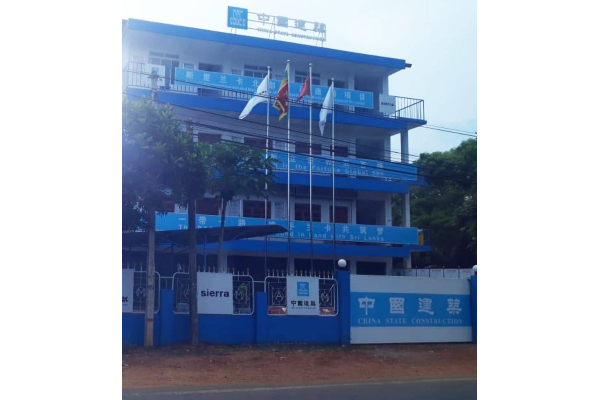
The Government said that China Harbour Engineering Company (CHEC) Limited has been awarded the rights to construct an expressway connecting the Athurugiriya interchange and the New Kelani Bridge.

Approval had been granted by the Cabinet in April 2020 to construct the expressway connecting the Athurugiriya interchange and the New Kelani Bridge on a build, operate and transfer basis.

The Government said that technical and financial proposals were called for from the relevant investors for the proposed project.

Cabinet now has granted approval to a proposal tabled by the Minister of Highways to award the implementation of the project to China Harbour Engineering Company Limited, as recommended by the negotiating committee appointed by the Cabinet.

China Harbour Engineering Company (CHEC) is part of China Communications Construction Company Limited (CCCC).

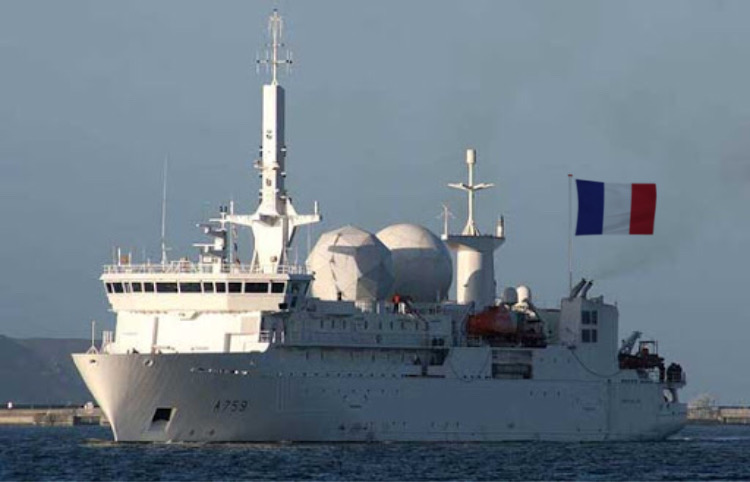
CCCC has been actively involved with the development of Sri Lanka since 1998, executing massive construction projects, such as the Colombo Port City, Southern Highway, Outer Circular Highway, Hambantota Port, Mattala International Airport, Colombo South Container Terminal and many other major infrastructure projects.

India deploys coast guard to assist Sri Lanka fight fire on ship

India has deployed the coast guard to assist Sri Lanka fight a major fire on a ship off the Colombo harbour.

The Indian High Commission in Colombo said that ICG Vaibhav, ICG Dornier and Tug Water Lilly have been deployed to assist Sri Lanka fight the fire on MV X-Press Pearl off Colombo.

“Assistance of Government of India for firefighting as well as pollution control was sought by Sri Lanka Navy at 1200 hrs on 25 May 2021. This came in the wake of an onboard explosion on 25 May 2021 on the Singapore-flagged MV X Press Pearl. Immediately upon receiving the request, relevant authorities in India were alerted and assets were deployed expeditiously. While the Dornier aircraft reached Colombo at around 1600 hrs on 25 May 2021,the first Vessel would reach around 1900 hrs,” the Indian High Commission in Colombo said.

The vessel had first appealed for help on Friday (21) after a fire had broken out due to an explosion as a result of a chemical reaction.

The Sri Lanka Navy together with the Ports Authority had launched an operation to contain the fire and tug the vessel further away from Sri Lanka.

The fire on the ship was contained but flames were seen again today (Tuesday).

The Sri Lanka Navy said an explosion had occurred on MV X-Press Pearl today intensifying the fire that had been contained.

Twenty-five crew members were rescued from the vessel after the fire reignited today, while two Indian nationals among them were hospitalised after sustaining serious injuries.

Meanwhile, the Marine Environment Protection Authority (MEPA) said the container vessel which is in the seas off the Colombo Port is currently unstable.

Cabinet approval to purchase Sinopharm and AstraZeneca vaccines immediately

The Cabinet of Ministers has granted approval to purchase 14 million doses of Sinopharm vaccine and one million doses of AstraZeneca vaccine immediately.

A statement on cabinet decisions taken at the cabinet meeting yesterday chaired by the Prime Minister Mahinda Rajapaksa said it is needed to be supplied the vaccines as soon as possible under the situation that there is no solution other than the inoculation to control the Covid 19 pandemic.

The government plans to vaccinate 60 % – 70% of the population by the end of this year.

Accordingly, the Cabinet of Ministers granted the approval for the proposal tabled by the Minister of Health to take necessary steps to purchase 14 million doses of Sinopharm vaccine from the Chinese manufacturer and 1 million doses of AstraZeneca vaccine immediately.

Important things to know when travel restrictions are relaxed

Sri Lanka has decided to extend the travel restrictions to 07th June, said Minister Johnston Fernando on Monday (24).

However, travel restrictions will be relaxed on the following day for people to make purchases of essential items from the nearest store.

25th May 2021 (Travel Restrictions will be relaxed from 04 AM to 11 PM)

31st May 2021 (Travel Restrictions will be relaxed from 04 AM to 11 PM)

04th June 2021 (Travel Restrictions will be relaxed from 04 AM to 11 PM)

07th June 2021 (Travel Restrictions will be relaxed from 04 AM to 11 PM)

– Only retail shops, pharmacies, fish & meat stalls, vegetable stalls, and bakeries are allowed to operate when travel restrictions are relaxed.

– Only one person from every household will be allowed to visit the nearest store within walking distance to make purchases.

– Liquor stores will NOT be allowed to open until the 07th of June.

– Further, essential food items can be delivered to residences, and individuals engaged in such services are encouraged to continue this service.

– People will not be permitted to travel using vehicles to make purchases when travel restrictions are relaxed.

– Export industries can continue to operate while strictly adhering to health guidelines, while the Sri Lanka Ports Authority will continue to support exports.

– The Peliyagoda Fish Market will remain closed from the 26th of May to 28th May.

– Sri Lanka Air Force will continue to deploy drones to monitor those violating the quarantine rules and regulations.

– Vehicles displaying the sticker of a Doctor will be inspected as there have reports of people impersonating doctors to violate the quarantine rules and regulations.

– People living in areas that are currently in isolation will not be permitted to leave their residences, due to COVID-19 cases detected from their respective areas.

– Only people involved in essential services will be allowed to travel until the 07th of June.

– Banks (If they are to open) should only operate with minimum staff, as many enterprises are to deposit salaries this week.

No passenger buses, trains tomorrow

Although the islandwide travel restrictions imposed by the Government to control the rapid spread of the Covid-19 virus are to be relaxed tomorrow (25), no passenger trains or buses will be running, according to The Railway Department.

This is despite an announcement by the Railway Department on 23 May that 20 slow trains would be operated on four railway lines to facilitate essential services with the easing of traffic restrictions today.

When contacted by The Morning, General Secretary of the Sri Lanka Station Masters’ Union Kasun Chamara said that the cancellation of the plans for the slow trains was taken on the instructions of the National Operations Centre for the Prevention of the Covid-19 Outbreak (NOCPCO) Task Force.

The Department of Railways on 23 May announced that it had taken steps to run only 20 trains covering the four railway lines, the main line, coastal line, Puttalam line and the Kelani Valley line, to facilitate essential services as the travel restrictions are to be eased today.

Meanwhile, the Chairman of the Sri Lanka Transport Board (SLTB) Kingsley Ranawaka said that although the travel restrictions are to be eased today, SLTB buses will not run. He also said that this decision was taken on the advice given by the health authorities. However, he added that the provision of transport facilities for those engaged in essential services will continue.

Also, the President of the Lanka Private Bus Owners’ Association Gemunu Wijeratne told The Morning that private buses would also not run today as per the advice of the health authorities.

Posted in Uncategorized

Bangladesh Bank okays $200m currency swap with Sri Lanka; reports

The Bangladesh Bank (BB) board on Sunday (23) approved in principle a draft $200-million currency swap deal with Sri Lanka, which is struggling to maintain a moderate foreign exchange reserve.

The currency swap agreement would be finalized after getting a legal vetting approved by the government, reports suggested.

Under the draft currency swap proposal, the BB would provide up to $200 million in foreign currency to meet Sri Lanka’s foreign currency expenditures.

Against the fund, Sri Lankan would keep the same amount of its local currency, Rupee, with the Bangladesh Bank along with a government guarantee.

The BB would get around 1-2 percent plus LIBOR from Sri Lanka as interest.

The currency swap agreement also contains a rollover condition, allowing Sri Lanka to extend the period of repayment of the loan.

The currency swap initiative was taken after Sri Lankan prime minister Mahinda Rajapaksa’s visit to Bangladesh to join the celebrations of the golden jubilee of Bangladesh’s independence.

Posted in Uncategorized

Sri Lanka Covid death toll surpasses 1200 with 32 reported deaths Sunday

Sri Lanka’s death toll from COVID-19 since the pandemic began last year surpassed 1200, with the confirmation of 32 more deaths on Sunday, May 23, 2021.

The Director General of Health Services Sunday confirmed 32 deaths that included five deaths on Sunday and 27 deaths occurred from April 23 to May 22nd due to Covid-19 virus infection.

The total number of deaths due to Covid-19 infection in Sri Lanka is 1,210 by now.

Posted in Uncategorized