Is Sri Lanka falling to Chinese debt trap? -Wion

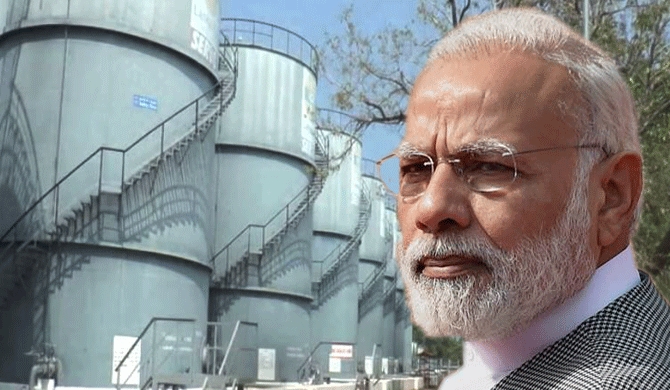
Sri Lanka has decided to re-acquire 99 oil tanks, which were leased out to Indian Oil for 30 years in 2003. The Indian High Commission in Sri Lanka says the reports are incorrect but there’s a pattern.

Recently, Sri Lanka halted a port project involving India and Japan. US withdrew its aid offer because Colombo wasn’t using the funds. While Chinese investments are being steadily approved.

Reports say India was supposed to upgrade and commission the world war era tanks. But talks remained stalled for more than a decade. Then in 2015, discussions revived when Prime Minister Modi visited Sri Lanka. By 2017, the two sides had a roadmap but the project never really took off.

The Indian High Commission issued a statement on Thursday, claiming that there is no truth in these reports. Indian diplomats say both sides will explore ways to jointly develop and operate the facility.

Last month, Colombo had scrapped a trilateral agreement with India and Japan. This was for the development of the eastern container terminal at the Colombo Port.

Apparently, the project had received strong opposition from trade unions across Sri Lanka. This is despite the fact that Colombo was supposed to hold the majority stake.

It’s not just Indian projects that Sri Lanka is scrapping. Even the United States suffered a setback this year. It withdrew $480 million in infrastructure aid to Colombo because Sri Lanka said it wasn’t keen on using it.

The only country that seems to be getting a red-carpet welcome in Colombo is China. Within weeks of rejecting US aid, the Sri Lankan cabinet cleared a Chinese energy project. It is quite close to Indian borders.

A Chinese company has won the contract to set up hybrid wind and solar energy projects off the northern Jaffna peninsula on three islands, which are barely 50 kilometers away from the Tamil Nadu coast.

Reports say India had lodged a strong protest with Sri Lanka. It happened days before the Colombo Port deal was cancelled.

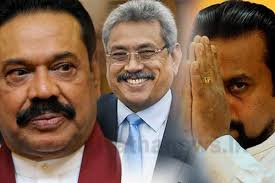
The Chinese seems to be deepening their influence in Sri Lanka under the Rajapaksa Government.

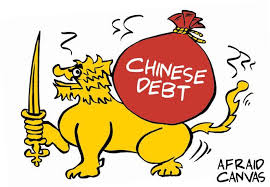
Before the energy deal, they secured several major projects. It includes a $13 billion city on Sri Lanka’s sea front, a new Chinese factory in Hambantota, a $300 million tire plan for the Shandong Haohua tire, a $one billion road from Colombo to Kandy and $300 million coal-based power plant in Norochcholai. Colombo has given green-light to all these projects and pushed itself further under Chinese debt.

India hasn’t given up though. Reports say India has offered a grant of $12 million to displace the Chinese company for the energy project off the Jaffna peninsula. A group of Tamil parties have also voiced their opposition to Chinese involvement.

Posted in Uncategorized

Sri Lanka’s northern Tamils sceptical ahead of ‘another Geneva session’ – The Hindu

In the nearly 12 years since her husband surrendered to the Sri Lankan Army, E. Sumathra has seen many sessions of the UN Human Rights Council in Geneva come and go. Half a dozen resolutions on Sri Lanka have been adopted since, but she is no closer to finding out where he is.

Ahead of the 46th session of the Council beginning next week, the Sri Lankan government, Tamil polity, civil society, and diaspora groups are frantically lobbying member countries, hoping for different outcomes. But Ms. Sumathra is not waiting with bated breath. “We are used like trophies every time, and nothing that comes out of these sessions alters our reality,” she says.

She was seated at a concrete shelter by the sea, shining in a lavish blue-green shade under the afternoon sun, last weekend. Along with her are groups of women, from both the Tamil and Muslim community residing in the district, all gathered for a campaign on caring better for the environment.

“Families of forcibly disappeared persons have been agitating since the war ended [in 2009], but some of our politicians and diaspora organisations have split our struggle. Today, we are all in different groups with no prospect for truth or justice,” says the 36-year-old.

So far, none of the past UN resolutions or governmental mechanisms has delivered a convincing outcome for many like her. Although the UN human rights chief, in her latest Sri Lanka report, called for an International Criminal Court probe into alleged war crimes committed by different warring actors, as well as sanctions, Ms. Sumathra is unable to feel hopeful. The new, likely contested, resolution in the coming session is “just another” one, in her view.

Sri Lanka’s long civil war played out across the Tamil-majority north and east, but Mullaitivu bore the brunt of its gruesome end. According to UN estimates, some 40,000 civilians were trapped and killed in the final battle between the armed forces and the separatist LTTE, at the Nandikadal lagoon here in May 2009.

The Rajapaksa administration in power then and now — except from 2015 to 2019 — has repeatedly denied the number of civilian casualties, deeming it an “exaggeration”. The numbers may be contested, but survivors’ suffering is hard to miss, following death and destruction all around. Districts in the former war zone are among the poorest in the country. Neither appropriate development, nor adequate jobs have come their way. Mullaitivu district remains militarised, with even traffic checkpoints run by armed military men.

Domestic mechanism

Months after Gotabaya Rajapaksa was elected President in late 2019, Sri Lanka said it would withdraw from the existing UN resolution on post-war accountability and reconciliation. It has instead proposed a domestic mechanism that Tamils have even less faith in, compared to international ones.

“If you look at the Tamil people here, we did not get a solution through the armed struggle that lasted 30 years. We have not got a solution in the decade after that, either. Meanwhile, our people are struggling in poverty, as livelihoods are destroyed and the youth are jobless,” says Ganeswaran Selvamani, a counsellor who has worked with war-affected families. In addition to coping with the trauma of the past, they face “enormous hardships” today, she says, referring to numerous conflicts over land — some of it still held by the military — destruction of old Hindu temples based on “archaeological” claims, growing concerns of narcotics penetrating villages, and a rise in teen marriages and pregnancies.

“The worst of all the problems are in Mullaitivu, maybe that is why even the coronavirus fears us, we have that level of immunity,” Ms. Selvamani says, barely hiding her sarcasm. Women, at the forefront of protests to reclaim land, demanding answers about their missing loved ones, or against predatory microfinance-induced debt, have an especially hard time, with nothing but their resilience to count on. “I don’t know if anyone speaks of women’s problems in Geneva. The continuous assault on our livelihoods is affecting women disproportionately,” says Prasanna Sujatha, a pre-school teacher, speaking of families in which women are sole earners.

The going has never been easy, but the heightened fear after the Rajapaksas’ return to power is stark. Many prefer to speak anonymously, fearing “questioning” by the CID or army. They see a pattern in the scrapping of the Tamil national anthem, the destruction of a war memorial at the University of Jaffna, and the denial of burial rights to Covid-19 victims Muslims, within about a year.

It is in this climate that thousands of Tamil-speaking people recently took out a mass rally from Pothuvil in the eastern Ampara district to Polihandy in Jaffna (titled ‘P2P’), demanding the rights of Tamil and Muslim minorities. Some in Mullaittivu are agnostic about the outcome of the march but see it as a necessary assertion of the minorities’ rights. “When our basic right to bury our dead is refused, I feel even more for Tamils who have suffered so much during and after the war. The rally has made me hopeful about the two minority communities coming together,” says M. Jenusa, an activist.

The two Tamil-speaking, but distinct, ethnic groups joining forces in the rally was significant, given their strained relationship, especially after the LTTE’s overnight expulsion of northern Muslims in the early 1990s. Tamils and Muslims are not yet on the same page on matters pertaining to resettlement or provincial administration, but see value in a joint strategy.

There is “no other way to take on majoritarianism,” says a history teacher, asking not to be named. “Whether it was the rally or this Geneva session, it is about retaining what little we have. We don’t expect major gains,” he says. Few people in the district seem dewy-eyed about the Human Rights Council delivering big outcomes or lasting solutions. But with the space for negotiation shrinking further within the country, they see no other option. Considering the geopolitical interests that dominate such forums, they realise that any positive outcome is more incidental than intentional.

“Whether Geneva delivers or not, people are certain that this government will not. That is why we pursue international mechanisms despite all the limitations,” says Shanthi Sriskantharajah, a former MP from the district.

“Already, so many mothers are unable to tell their children where their missing fathers are. Now, with this government trying to systematically erase our histories, and markers of our identity, we may not be able to tell our grandchildren that our ancestors lived here,” she worries. “All we are saying is let us live in our lands, peacefully and with dignity. Is that too much to ask for?”


Sri Lanka has become Chinese colony, says ex-President Kumaratunga – AaniNews

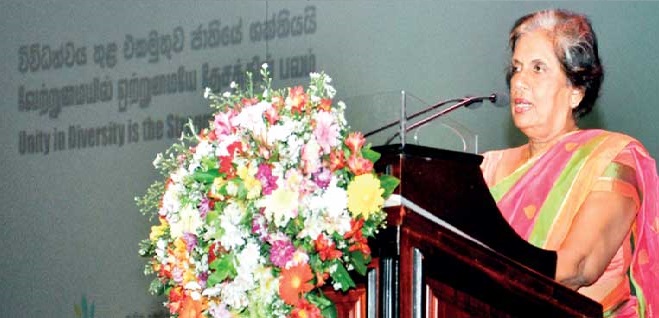
Sri Lanka has become a colony of China and trade unionists and others, who vehemently opposed a recent deal with India, but have not said a word in protest against Beijing making inroads in the island nation, said former Sri Lankan President Chandrika Bandaranaike Kumaratunga.

Speaking to the privately-owned NewsFirst network on Thursday, the former president said the parties that opposed the Indian deal are keeping mum about every national asset being allegedly handed over to China, reported Economy Next.

Her remarks come days after Sri Lanka cancelled oil storage and port deals with India. The Sri Lankan government said this week that it will cancel a lease on oil storage tanks in the eastern port district of Trincomalee that was awarded to India’s biggest refiner state-controlled Indian Oil Corporation (IOC).

Earlier this month, Colombo cancelled a trilateral deal with India and Japan to develop the eastern container terminal at Colombo Port.

The proposed deal drew heavy opposition from trade unions, left-leaning political parties, members of the clergy and sections of the government itself.

“If you look at their bank accounts – those in trade unions and others – how they become millionaires overnight – you have to wonder,” said Kumaratunga.

“We didn’t bow down to anybody. Those who are in charge must have an understanding of foreign policy and foreign relations,” she said, noting that certain individuals in the present government used to openly mock the very idea of foreign relations. “Today, for all intents and purposes, we are a colony of China,” she added.

Kumaratunga further said that in order for Sri Lanka to make any progress, the people must change their outlook and look for leaders of a different caliber.

“Each administration keeps undermining the one that preceded it. This is no way forward for this country. The people must change first. To change the people, the education system must be overhauled. We also need political leaders of a different caliber: young, educated, not given to corruption – people who do not treat politics as a business opportunity,” she said.

There is a growing Chinese influence in Sri Lanka. Beijing took over Hambantota port in the south of the country in 2016 after Sri Lanka failed to keep up with debt repayments, and is involved in the construction and operation of a neighboring port terminal in Colombo, as well as other critical infrastructure.

Core Group on Lanka to present its resolution at the UNHRC

The Core Group on Sri Lanka in the UN Human Rights Council (UNHRC) announced on Friday that it will present a resolution on the rights situation in Sri Lanka at the UNHRC. The Core Group comprises Canada, Germany, North Macedonia, Malawi, Montenegro and the UK.

In a statement issued through the British High Commission here the Core Group said that it wished to highlight its ongoing commitment to accountability, reconciliation, and inclusive peace in Sri Lanka.

“We recognize and welcome the progress made by the Government of Sri Lanka in rebuilding infrastructure, demining, land return and resettling internally displaced persons. However, it is clear that more needs to be done to address the harmful legacies of war and build a sustainable peace in the country.”

“This month, the United Nations Human Rights Council will consider an important report recently published by the Office of the United Nations High Commissioner for Human Rights (OHCHR), on human rights, reconciliation and accountability in Sri Lanka.”

“It has been important for the Core Group to work collaboratively and constructively with the Government of Sri Lanka over the last five years. Consequently, we have engaged with the Government of Sri Lanka in preparation for the Council.”

“The Core Group restates the ongoing importance of addressing Sri Lanka in the Human Rights Council. Informed by the report, the Core Group intends to present a resolution to promote reconciliation, accountability and human rights in Sri Lanka.”

The UN High Commissioner of Human Rights, Michelle Bachelet, had in her report presented earlier, expressed grave concern about the lack of progress in Sri Lanka in addressing human rights and war crimes issues and had recommended that Sri Lanka be referred to the International Criminal Court and targeted sanctions be instituted against Sri Lankan personnel alleged to have violated human rights and international humanitarian law in the war which ended in 2009 and thereafter.

The Sri Lankan government had replied to her charges point by point and had said that the charges are unsubstantiated, one-sided and unfair. Many of the observations and prescriptions violate the sovereignty of Sri Lanka and disregard its democratic institutions.

Sri Lanka had earlier said that it has disassociated itself from the previous government’s co-sponsored resolution because the resolution had no institutional and popular mandate. And some of its prescriptions were both unwarranted and not implementable.

The Core Group had earlier tried to work out a consensual resolution, but the two sides were unable to find common ground. Hence the Core Group’s decision to go ahead with its own resolution, incorporating the observations and prescriptions made by High Commissioner Bachelet.

Posted in Uncategorized

Weerawansa Holds One On One Meeting With Prime Minister Mahinda Rajapaksa To Iron Out Differences Within Ruling Camp

Minister Wimal Weerawansa has met Prime Minister Mahinda Rajapaksa for a one on one discussion in the wake of the recent controversy within the Sri Lanka Podujana Party (SLPP) over Weerawansa’s statement on the party leadersjip.

A source familiar with the matter said the meeting between the Prime Minister and Weerawansa was held to iron out differences between the two party. It is learnt that the meeting was cordial and ended on an amicable note.

Prime Minister Rajapaksa, commenting on Weerawansa’s remarks, recently said he understood the “essense” of the Minister’s statement.

In an interview with a Sunday newspaper, Weerawansa said President Gotabhaya Rajapaksa should be made the leader of the SLPP without isolating him at the Presidential Secretariat. The statement, however, drew severe criticism from SLPP MPs who asserted that Weerawansa had no right to express opinion on the SLPP leadership as it was an internal matter of the party.

Posted in Uncategorized

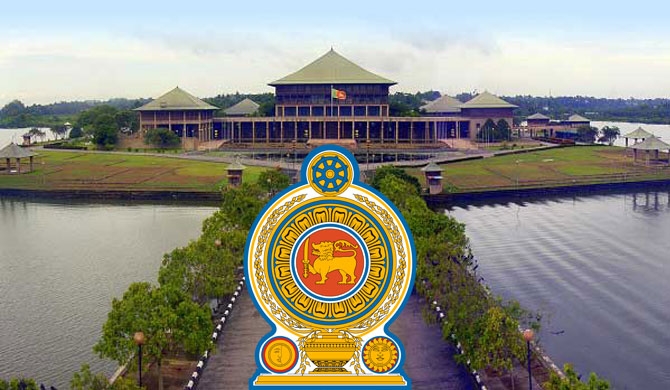
Parliament to convene for 3 days next week

The Committee on Parliamentary Business chaired by Speaker Mahinda Yapa Abeywardena has decided to hold Parliament Sittings for next week from February 23rd to 25th.

The Serjeant-at-Arms of the Sri Lanka Parliament says that arraignment have been made for the Members of parliament (MPs) who are yet to be vaccinated against Covid-19 to do so during the aforementioned dates.

He stated that MPs can volunteer to receive the vaccine at the Army Hospital in Narahenpita between 8.30 a.m. and 12 noon on February 23, 24 and 25.

Meanwhile a special Dhamma sermon in the memory of the late Speaker W. J. M. Lokubandara will be held on the February 22nd at 3.00 p.m. under the patronage of the Speaker Mahinda Yapa Abeywardena at Parliament.

The Secretary General of Parliament has invited MPs to attend this Dhamma sermon.

Sri Lanka’s coronavirus death toll climbs to 430

The Director General of Health Services has confirmed 08 more Covid-19 related deaths bringing the death toll in the country due to the virus to 430.

01. A 67-year-old woman from Dematagoda who had passed away at home on February 16. The cause of death is cited as Covid-19 pneumonia and high blood sugar.

02. 58-year-old male from Colombo 08 who had passed away at the Maithri Sevana Treatment Center in Anuradhapura on February 17. The cause of death is reported as heart disease with Covid-19, serious kidney damage and high blood pressure.

03. 43-year-old male from Meegoda who had passed away at the Homagama Base Hospital on February 16 due to respiratory failure caused by Bronchitis and Covid-19 pneumonia.

04. A 20-year-old female from Ridimaliyadda who had passed away at the Badulla General Hospital on February 17. The cause of death is cited as Covid-19 pneumonia and respiratory failure.

05. 52-year-old male from Dekatana who passed away at the Homagama Base Hospital on February 18 due to Covid-19 pneumonia, high blood sugar, high blood pressure and asthma condition.

06. 86-year-old female from Colombo 10 who had passed away at home on February 17 while the cause of death is reported as Covid-19 pneumonia, lung infection and asthma condition.

07. 74-year-old woman from Keselwatte who had passed away at the Mulleriyawa Base Hospital on January 22 owing to Covid-19 pneumonia.

08. 81-year-old male from Wattala who had passed away at the Mulleriyawa Hospital on January 20 due to heart and raspatory failure.

Posted in Uncategorized

India denies claims Trinco Upper Tank Farm deal has been scrapped

India has denied claims the Trincomalee Upper Tank Farm deal with Sri Lanka has been scrapped.

The Indian High Commission in Colombo said that there is no truth to reports in some sections of the media that the understanding between India and Sri Lanka on jointly developing and operating the Upper Tank Farm at Trincomalee has been ‘scrapped’.

“These reports did not correctly portray remarks made by the Minister of Energy of Sri Lanka at an event on 17 February 2021. The Minister has himself clarified the matter in detail today through a press briefing,” the Indian High Commission said.

The Indian High Commission said that as indicated in the Minister’s briefing, the two Governments have consulted each other to explore mutually acceptable modalities for jointly developing and operating the facility in accordance with existing bilateral understandings, including the MoU of 2017.

India looks forward to formal discussions on the matter, and expeditious implementation of their outcome to mutual benefit.

Will Canadian Prime Minister Trudeau Betray Tamils & Save Sri Lanka By Not Referring It to International Criminal Court? – Einnews

Hundreds of vehicles drove from Toronto and Montreal drove to the Parliament Hill in Ottawa to urge Prime Minister Justin Trudeau to Refer Sri Lanka to the International Criminal Court (ICC) for War Crimes, Crimes Against Humanity and Genocide Committed Against Tamil People by the Sri Lankan State.

Only five days left for the UN meeting, Prime Minister Trudeau’s administration have been silent on this important human rights issue, despite being a member of the powerful Core – Group on Sri Lanka at the UN Human Rights Council.

“If Canada wants it can Refer Sri Lanka to International Criminal Court (ICC)” said one of the organizers of the Car rally.

“We will know whether Prime Minister Justin Trudeau’s Administration is taking Tamil’s unified request seriously or saving Sri Lanka from facing international justice for killing tens of thousands of Tamils and sexually assulting and raping Tamil women.”

* Recently, Michelle Bachelet, the United Nation’s High Commissioner for Human Rights (OHCHR) in her Report dated 12th January 2021 urged UN Human Rights Council Member States to take steps toward the referral of the situation in Sri Lanka to the International Criminal Court (ICC).

* Former Prime Minister Stephen Harper in 2011, boycotted Commonwealth Conference (CHOGM) held in Sri Lanka to protest mass killings of Tamils by the Sri Lankan Government.

* Last week, Heather McPherson MP, for Edmonton Strathcona and deputy house leader of the New Democratic Party (NDP) authorized an e-petition 3168 s highlighting the UN High Commissioner’s report in its preamble and the High Commissioner’s recommendations in its prayers.

* In 2019 NDP MP Cheryl Hardcastle tabled a motion in the house of commons calling the UN to investigate allegations of genocide by the Sri Lankan state, which passed unanimously the Trudeau govt, so far has not adopted any resolution to that effect.

INFORMATION ON WAR CRIMES, CRIMES AGAINST HUMANITY AND GENOCIDE COMMITTED AGAINST TAMIL PEOPLE BY THE SRI LANKAN STATE:

1) According to the November 2012 Report of the UN Secretary-General’s Internal Review Panel on UN Action in Sri Lanka, over 70,000 people were killed during the last six months of the war that ended in May 2009.

2) Several were killed when Sri Lankan forces repeatedly bombed and shelled an area designated by the Government as No Fire Zones (Safe zones). Even hospitals and food distribution centers were bombed. Several also died of starvation and bled to death due to lack of medical treatment.

3) International Truth and Justice Project (ITJP) in February 2017 handed over details to UN of Sri Lankan Military run “Rape Camps”, where Tamil women are being held as “sex slaves.”

4) According to UK Foreign and Commonwealth Office report on April 2013, there are over 90,000 Tamil war widows in Sri Lanka.

5) Thousands of Tamils disappeared including babies and children. UN Working Group on Enforced Disappearances stated that the second highest number of enforced disappearance cases in the world is from Sri Lanka.
Canadian Tamil Civil Society
CTCS

+1 416-457-1633
roytheadvisor@gmail.com
Visit us on social media:
Twitter

Sri Lanka: Government suffocating dissent and obstructing justice for historic crimes says Amnesty report

The Sri Lankan Government has launched a renewed crackdown on dissent that is severely curtailing civil society freedom and obstructing efforts to deliver justice for conflict-era crimes under international law, said Amnesty International, in a new report published today.

The report, Old ghosts in new garb: Sri Lanka’s return to fear, exposes how the Sri Lankan government has targeted human rights organisations, media, lawyers, political opponents, and law enforcement officers in a concerted bid to suppress opposing voices and hamper the transitional justice process for crimes committed during the country’s 30-year armed conflict.

“Over the past year, the Sri Lankan government has radically transformed the country’s civic space, which is now defined by an increasing hostility and intolerance towards dissenting voices,” said David Griffiths, Director of the Office of the Secretary General at Amnesty International.

People from all walks of life have been threatened, intimidated, harassed and jailed, simply for expressing views or doing their jobs in ways that displease the authorities
David Griffiths, Director of the Office of the Secretary General at Amnesty International

“People from all walks of life have been threatened, intimidated, harassed and jailed, simply for expressing views or doing their jobs in ways that displease the authorities. The Sri Lankan government must cease this campaign against dissent and respect its obligations under international law to protect freedom of expression, peaceful assembly and association, the right to personal security, and freedom from arbitrary detention.”

Since withdrawing from the UN Human Rights Council-driven justice and reconciliation process for conflict-era crimes in February 2020, the authorities have cracked down on those pursuing justice while deliberately hindering ongoing efforts to secure justice and accountability.

Amnesty International is calling on the UN Human Rights Council to implement the recommendations of a damning report on Sri Lanka published by the UN High Commissioner for Human Rights last month, when it meets from 22 February to 23 March. This includes more robust monitoring and reporting on the human rights situation, and the collection and preservation of evidence for future prosecutions.

“The international community must not turn a blind eye to the deteriorating human rights situation in Sri Lanka, which is being abetted by the government’s regressive moves on justice and accountability. The Human Rights Council must take steps to end the cycle of impunity by holding the Sri Lankan government fully to account, and launching a new internationally agreed justice process,” said David Griffiths.

Justice and Accountability

Amnesty International’s findings reveal a pattern of targeting those who have played an active role in investigating, documenting, litigating, or reporting on human rights violations and abuses, and advocating on behalf of the victims, including at least six incidents where lawyers were targeted.

The country’s draconian Prevention of Terrorism Act was used, among others, against Hejaaz Hizbullah, a prominent minority rights advocate and lawyer, who has been detained for 10 months, without a shred of evidence of wrongdoing produced before a court.

Attorney Achala Senevirathne, who appeared on behalf of families of the disappeared in an enforced disappearance case, has been threatened with violence and sexualized abuse not only on social media but also by officials accused in the case.

Criminal investigators who pursued justice for crimes under international law have also come under increased scrutiny. The former director of the Criminal Investigations Department was demoted and later arrested for allegedly fabricating evidence in a case. He remains in custody and believes he is being targeted in reprisal for leading investigations in cases of abuses allegedly committed by the armed forces.

The Human Rights Council must take steps to end the cycle of impunity by holding the Sri Lankan government fully to account, and launching a new internationally agreed justice process
David Griffiths, Director of the Office of the Secretary General at Amnesty International

Members of the military leadership that were in command during the last phase of the war, when allegations of human rights and humanitarian law violations are widespread, were rewarded with promotions and positions of power under the new administration, including to civilian positions. This has had a chilling effect on victims demanding justice.

The report also details how legislative amendments brought by government have undermined any credible avenues locally available for justice, and how President-appointed Commissions of Inquiry are attempting to reverse accountability for perpetrators of human rights violations.

Assault on civic space

The Sri Lankan government did not waste any time in introducing new instruments and techniques to muzzle dissent.

State actors have led smear campaigns against NGOs and human rights organisations, while journalists have received death threats and have been summoned for investigations and interrogations after exposing human rights abuses.

Visits by state security officials to the offices of human rights NGOs have increased over the past fourteen months. Amnesty International recorded 18 such visits in that period, during which officials made enquiries about registration details, staff and donors’ bank details. Some staff members were even visited at their private residences.

Laws are also being misused to stifle free speech, including the International Covenant on Civil and Political Rights (ICCPR) Act, which was used to arrest and detain Ramzy Razeek for more than five months without charge or proper access to a lawyer, for a Facebook post in which he criticised the forced cremation of COVID-19 victims and called for an ideological struggle using the pen and keyboard as weapons.

Background

The report, Old ghosts in new garb: Sri Lanka’s return to fear, is available here. Sinhala and Tamil versions of this press release are available here.

The OHCHR report, published on 27 January 2021, is available to download here. The Human Rights Council will meet for its 46th session from 22 February to 23 March, during which Canada, Germany, Montenegro, North Macedonia and the UK – the current core group of states leading on Sri Lanka – are expected to present a resolution in follow-up to the OHCHR report.

Amnesty International published an assessment of the situation in Sri Lanka, setting out clear expectations for HRC action, in January 2021.