Sri Lanka has been invaded by China-CBK

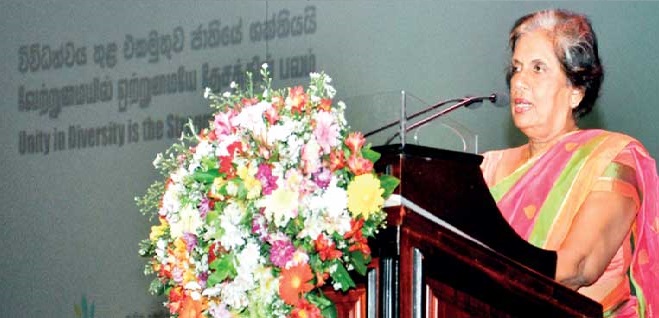
Former President Chandrika Bandaranaike Kumaratunga says the country that former leaders including her built by sacrificing themselves, is now on a decline.

Speaking to media at the monument of the Former President’s husband the late Vijaya Kumaratunga to mark his 33rd death anniversary, the Former President said one can only laugh at the country’s present status.

She charged that Sri Lanka will never move forward, adding that what was once built in Sri Lanka has been destroyed.

The Former President added young, educated and corruption free politics is required in the country where public representatives are not dependant on the country.

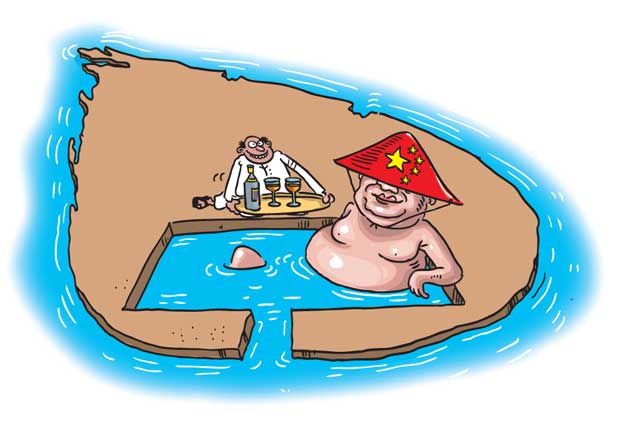
Kumaratunga claimed that foreign relations have ruined the country and charged that Sri Lanka has been invaded by China.

While stating she has no anger towards China, she rued that everything in the country has been vested with China.

No change in the government’s decision to hand over three islands in the North to China – Co-Cabinet Spokesperson

It was reiterated that there is no change in the Government’s decision to hand over the three islands in question in the North Province to China, in the Cabinet media briefing held on Tuesday (16).

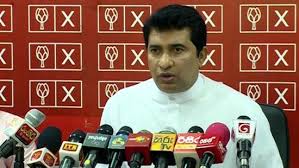
“Cabinet has approved the award of tender to a Chinese company, after a competitive bidding process”, Co-Cabinet Spokesperson, Udaya Gammanpila stated at the media briefing this morning.

“Minister of Power has not informed the Cabinet that he wants to post the decisions or cancel that decision so we think that decision prevails” he further added.

“Removing the Sri Lanka Navy Camp from the Port is out of the question since the President has held discussions with China and has granted Sri Lanka Navy the full control authority” Replying to a question posed by a journalist regarding the removal of the Naval base in the Hambantota port the Co-Cabinet Spokesperson, Udaya Gammanpila stated

Posted in Uncategorized

Sri Lanka may ask UNHRC to set up database on wartime dead

The Sri Lankan government is discussing the possibility of asking the UN Human Rights Council (UNHRC) to set up a data base on those who were killed, or were injured or had gone missing in the last phase of Eelam War IV, according to Dr.Rohan Gunaratna, Honorary Professor at the Sir John Kotelawala Defense University and Senior Advisor to its Department of Defense and Strategic Studies.

Dr.Gunaratna said that the UN’s unsubstantiated and oft-repeated allegation that 40,000 civilians were killed by the Sri Lankan armed forces in the last phase of the war continues to be made even twelve years after the end of the war in May 2009. The baseless figure of 40,000 and other charges of war crimes are based on dubious, anonymous and unidentified sources, and blithely passed off as “credible evidence” to provide a basis for accusing the Lankan armed forces of committing “war crimes” and demanding that its personnel be dragged before the International Criminal Court (ICC) he said.

Since there could not be “accountability” in the true sense of the term without credible evidence of culpability, data will first have to be collected scientifically and transparently, Dr.Gunaratna argued. The data should be on the dead, injured and missing. The best and the most suitable institution to undertake this task will be the UNHRC itself, Dr.Gunaratna said.

“Estimates of the number of dead range widely from 7,000 to 40,000. There is therefore a crying need for authentic figures. The UNHRC should take up the responsibility to create a data base on this matter. It has the wherewithal to undertake the task as it has an annual budget of US$ 200 million and a staff of 1400,” Dr.Gunaratna pointed out.

Conjecture

On why he thinks that the death toll of 40,000 is pure conjecture, he pointed out that the UN Country Team in Sri Lanka had estimated the figure of the dead in the last phase of Eelam War IV as 7,721. And the number of injured was 18,479. “These figures pertain to the period between August 2008 and May 13, 2009.”

Accountability can be established only when the data is based on proper scientific collection. Justice cannot be rendered if the background information is flawed, he said. Further, if accountability is to be established, and LTTE cadres who had committed acts of terrorism will also have to be punished. If this is so, then, many of the 12, 847 cadres who had been given amnesty and rehabilitated by the Sri Lankan government would have to be arrested again and proceeded against, he said.

“But I would not like them to be arrested. I have interviewed them and found them to have changed completely. They are now living normally in society and happily too,” Dr.Gunaratna said.

The UNHRC and OHCHR should also realize that the LTTE had kept lakhs of civilians hostage in Mulliwaikkal and using them as a human shield in the last days of the war, he said. He then referred to a letter dated February 16, 2009 written by Tore Hattrem, the Norwegian Ambassador, to Basil Rajapaksa a Minister in the Mahinda Rajapaksa government, in which Hattrem said that when the LTTE was asked by the Norwegians to release those held hostage in Mullivaikkal, the militant outfit flatly refused.

“Both Norway and the Sri Lankan government wanted the LTTE to release the civilians, but the terrorist group seemed hell bent on using them as a human shield,” Dr.Gunaratna said.

The total population in the battle zone (Mulliwaikkal area) during the last phase of the war, who were being used as a human shield, was 399,785 as per figures given by the District Government Agents at that time.

Alluding to the allegations made in the latest report submitted by Michelle Bachelet, the UN High Commissioner for Human Rights, Dr.Gunaratna said that it contained allegations based on the geopolitical needs of some powers and information provided by the lobbyists of the LTTE in Western countries.

He maintained that the huge amount of money collected by the LTTE from the Tamil Diaspora for its war chest, still exists and is being used to lobby human rights groups, politicians and governments. Dr.Gunaratna urged governments which level charges against Sri Lanka to go after those in the Diaspora who were involved in funding, shipping, arms smuggling and other activities for the LTTE to enable its cardes back home in Sri Lanka to perpetrate atrocities against its opponents and innocent civilians of all ethnic groups, Sinhalese, Muslims and Tamils.

In this context, Dr. Gunaratna referred to a report of UNICEF’s Family Tracing and Reintegration Unit which said that, as of June 2011, 2,564 tracing applications had been received from families, out of which, 676 related to children and 1888 to adults. The tracing unit’s report further said that 64% of the applications mentioned that the LTTE had abducted their children (to serve as child soldiers). The UNHRC should extend accountability to such crimes committed by the LTTE, Dr.Gunaratna urged.

The Sri Lankan government had rejected the Human Rights High Commissioner’s report and would be rebutting it point by point. But this does not mean that the government will not pursue justice and cease to cooperate with the UN, Dr.Gunaratna maintained.

The government is pursuing accountability in its own way. It has appointed a Commission of Inquiry chaired by a Supreme Court judge to examine whether human rights violations had actually occurred (other than collateral damage which is common in war). The Prevention of Terrorism Act is being reviewed.

The government has strongly objected to the UNHRC chief’s intrusions into areas which are the exclusive domain of a sovereign, elected government. These areas do not fall into the ambit of Resolution 30/1 and goes beyond the mandate granted by Resolution 40/1. The UN Secretary General’s Report A/59/2005 had said that UN bodies must conduct themselves in a way which would not lead to loss of credibility and professionalism.

On the withdrawal of the co-sponsored resolution on Sri Lanka, the government pointed out that co-sponsorship was done behind the back of the then Executive President of Sri Lanka, Maithripala Sirisena, the cabinet and parliament. The co-sponsored resolution also “contained commitments that are constitutionally undeliverable.” The co-sponsorship as well as the resolution itself “had no public endorsement,” the government maintains.

The government regrets that the OHCHR has failed to realize the basic fact that the conflict in Sri Lanka “was between the government forces and a ruthless terrorist outfit which committed heinous atrocities against not only the armed forces and the Sinhala and Muslim populations, but also against the very community of which it claimed to be the sole representative.”


Imran Khan’s address to Sri Lankan Parliament cancelled – Daily Express

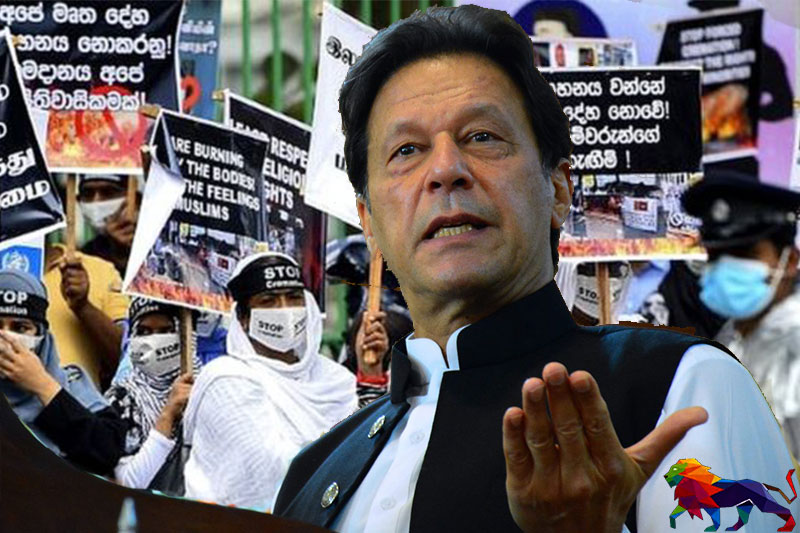
Sri Lanka has cancelled Pakistan Prime Minister Imran Khan’s address to the Parliament, scheduled for February 24, citing COVID-19 constraints. Khan is set to arrive in Colombo for a two-day visit on February 22.

Foreign Secretary Adm. Prof. Jayanath Colombage said Speaker Mahinda Yapa Abeywardena had written to the government, seeking a postponement of the event, saying that due to the COVID-19 pandemic and the virus variant, which has appeared in various parts of Colombo, he is unable to ensure full attendance in Parliament on the occasion.

According to Foreign Minister Dinesh Gunawardena, the government had agreed to a request by the Pakistan Prime Minister to address the Sri Lankan Parliament, and decided the address would be made on February 24. Indian Prime Minister Narendra Modi had addressed the Sri Lankan Parliament in March 2015.

According to unofficial but reliable sources, sections of the government had reservations about the decision to have the Pakistan Prime Minister address the Sri Lankan Parliament as it could sour relations with India. The sources believe India might apprehend the Pakistani leader would raise the Kashmir issue in his address.

Traditionally, the Sri Lankan government has been avoiding the Kashmir issue in deference to India’s sensitivity over the matter. But for Pakistan, the Kashmir issue has been the most important one, the fulcrum of the country’s foreign policy, as it were. If Imran Khan were to raise the issue in the Sri Lankan Parliament it would get him brownie points back home.

By seeking an opportunity to speak in the Sri Lankan Parliament, Imran Khan could also achieve parity with his regional rival, Indian Prime Minister Narendra Modi. But India might demur if Colombo were to equate it with Pakistan.

India-Sri Lanka relations are a bit fragile now, as India is nursing a wound inflicted on it by the sudden cancellation of a deal over the East Container Terminal in Colombo port.

According to an English language daily, the Pakistani Prime Minister is coming to Sri Lanka to strengthen ties with the only South Asian nation with which it has consistently close and good ties. It is undeniable that Sri Lanka-Pakistan relations have been cordial and strong right from the late 1940s when both got independence from Britain.

The All Ceylon Muslim League (ACML), headed by the renowned Muslim leader, the Late, T. B. Jaya, had been a firm supporter of the Pakistan movement through the 1940s. As the ACML was an ally of the then dominant United National Party (UNP), T.B. Jaya was sent to Pakistan as Ceylon’s envoy.

In the 1950s, both Ceylon and Pakistan were in the anti-communist US-led camp. The relationship remained strong even when Ceylon changed its political colour and became pro-Soviet and pro-Beijing during the premiership of Sirimavo Bandaranaike. In fact, Ceylon under Sirimavo Bandaranaike allowed Pakistani military aircraft to refuel in Colombo 174 times during the Bangladesh freedom struggle, when India had banned Pakistani aircraft from flying over its territory. To the latter’s surprise and dismay, Colombo ignored New Delhi’s objections.

Later, in the 1990s, when the West, as well as India, refused to sell or supply weapons to Sri Lanka to fight Tamil separatism and terrorism because they supported the Tamil minority’s political demands or were sympathetic to their plight from the human rights angle, Pakistan stepped into the breach and supplied much needed weaponry. Pakistan’s support had also come at some of the most critical junctures during the war. Pakistani pilots were on hand to advise the Sri Lankan Air Force, which had shifted to the offensive mode for the first time.

Pakistan (along with China and Russia) has been consistently and strongly supporting the Sri Lankan government in international forums on the issue of terrorism and separatism. It has consistently rejected the Western countries’ charge that the Lankan forces had committed “war crimes”.

Sri Lanka is eagerly waiting for Pakistan’s help to garner the support of Muslim countries in the 47-member UN Human Rights Council (UNHRC) in which a hostile resolution against it is likely to be introduced in March. The resolution is expected to call for Sri Lanka’s reference to the International Criminal Court at The Hague.

Pakistan and India are both members of the UNHRC and both can help Sri Lanka fight its case. As a result, Sri Lanka has to humour both, a delicate task.

Posted in Uncategorized

Roshan Ranasinghe appointed State Minister for Provincial Councils and Local Government Affairs

State Minister Roshan Ranasinghe has been appointed as the new State Minister of Provincial Councils and Local Government Affairs.

He previously held the portfolio of State Minister of Land Management, State Enterprises Land and Property Development.

The Polonnaruwa District MP was sworn in before President Gotabaya Rajapaksa at the Presidential Secretariat this morning, the President’s Media Division said.

Meanwhile State Minister of Production, Supply and Regulation of Pharmaceuticals Prof. Channa Jayasumana has been appointed as the Acting Cabinet Minister of Health.

He is to serve as the Acting Health Minster until Health Minister Pavithra Wanniarachchi returns to duty.

Posted in Uncategorized

If we Sri Lankans resolve minority issues ourselves the world will support us If we Sri Lankans resolve minority issues ourselves the world will support us BY DR. JEHAN PERERA

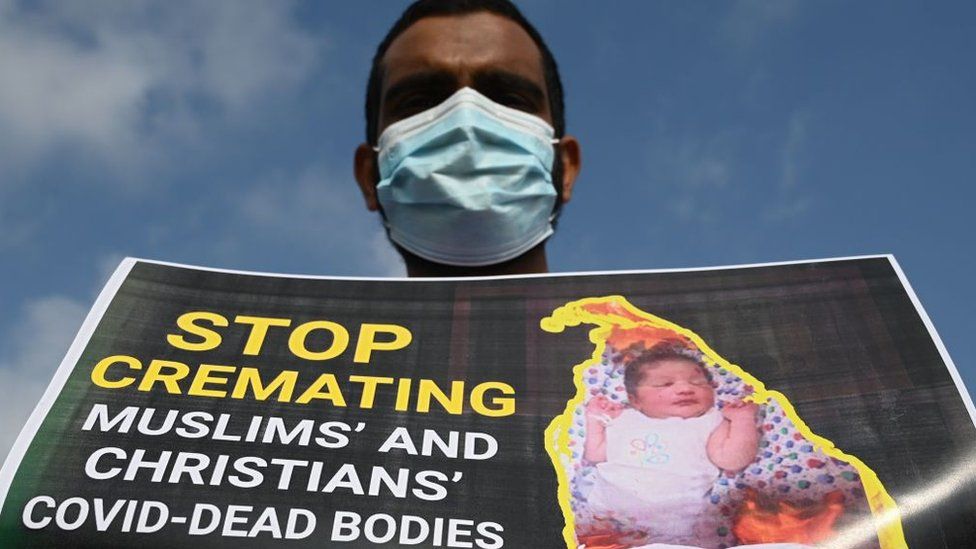
A key issue that has created internal division in the country is the cremation of those who have succumbed to the Covid virus. This policy of enforced cremations has been mostly opposed by the Muslim community for whom the burial of the dead is a part of their faith. It has also brought international disapproval to the country. The UN Human Rights Commissioner’s January report on Sri Lanka states that “The COVID-19 pandemic has also impacted on religious freedom and exacerbated the prevailing marginalisation and discrimination suffered by the Muslim community. The High Commissioner is concerned that the Government’s decision to mandate cremations for all those affected by COVID-19 has prevented Muslims from practising their own burial religious rites, and has disproportionately affected religious minorities and exacerbated distress and tensions.”

The shift away from international practices with regard to the burial of Covid victims was initially justified on the basis of science. During the early part of the pandemic when less was known about the disease and more stringent methods were adopted to halt its spread, such as the two-month-long 24-hour curfew practised in Sri Lanka, there was a real fear that the coronavirus could be spread through dead bodies and water. However, when the practice of burying those who died of Covid internationally began to be better known and scientists worldwide, and in Sri Lanka, began to downplay the significance of water transmission of the virus, Sri Lanka’s unwillingness to change its policy began to take on another dimension.

Among those who most strongly opposed the burial of Covid victims have been nationalist ideologues and religious clerics with limited knowledge of science. Many of them placed their faith in indigenous cultural practices of producing antidotes to the virus that had no basis in science. These included measures such as pouring pots of water which had been chanted over into rivers and a concoction of honey and herbs as being efficacious in protecting against infection. There have been some amongst the scientific community itself who have identified with these positions on the grounds of belief in the efficacy of indigenous knowledge. The opposition to burial also took on an anti-Muslim sentiment that had escalated following the Easter bombings of April 2019.

Opposition Support

Over the past ten months the government has come under pressure from a variety of sources to change its policy with regard to enforced cremation on both political and humanitarian grounds but to no avail. The main source of pressure has been the Muslim community within the country and their political representatives. They have been supported by sections of the Christian community to whom burial is the traditional way of farewell to the dead. The human rights organisations in the country and internationally also have made numerous appeals including a campaign of tying white ribbons on burial grounds. A further source of pressure has been the international community with governments of Muslim countries making their own representations to the government.

However, the ramping up of local and international pressure only led the government to harden its stance. It appears that a strategy of the government when it is under pressure is to rally its nationalist voter base. The election-winning platform of the government was the need to uphold national sovereignty and not to yield to either international pressure or to the ethnic and religious minorities. The electoral rejection of the leaders of the previous government who were seen as appeasing both the international community and the minorities within the country has been a lesson that has made inroads into the thinking of the main opposition parties who have been cautious in the positions they take on controversial issues. However, when Sajith Premadasa, the main Opposition leader, led a protest against enforced cremations which was also attended by civil society groups, the prospects of a bipartisan approach to resolving the problem became possible.

Prime Minister Mahinda Rajapaksa’s declaration in parliament last week that burials would be permitted even in the case of Covid victims was welcomed both locally and internationally and has not been politicized by the opposition parties. Ironically, the prime minister’s statement has been contested within the government and not been immediately operationalized. A ruling party parliamentarian had the audacity to say that the prime minister was referring to burials in general and not to Covid burials in particular. The Minister of Health has announced that the matter still needs to be assessed by a committee of experts prior to a final decision being taken. The problem is that different committees of experts have been coming to different conclusions depending on the degree of nationalism they espouse.

International Support

President Gotabaya Rajapaksa is reported to have informed ambassadors of Western countries who met him that the political decision regarding Covid burials had been taken and what remains is to implement the decision through the Health Ministry. The president is trying to find his way amongst contending powerful forces. The fact that the mainstream opposition parties are also supportive of following the WHO guidelines with regard to the option of burials would be reassuring to the government that this matter would not be politicized to its disadvantage. The problem that the government faces would be confined to an internal one which can more easily be resolved as it is in the self-interest of government members to come to a unified position on these issues.

The manner in which the Covid burial issue is being addressed suggests the way forward with regard to the issue of the upcoming session of the UN Human Rights Council in Geneva. Sri Lanka has been at the receiving end of a very strong report by the UN Human Rights Commissioner which recommends that a variety of punitive sanctions be utilized against the government leaders and those accused of human rights violations. It warns of the accelerating militarization of civilian governmental functions, a reversal of important constitutional safeguards, political obstruction of accountability, intimidation of civil society, and the use of anti-terrorism laws. The report also has several recommendations to the Sri Lankan government. Addressing the issue of the UN report and the recommendations it makes needs to be seen as a national issue in which the government and opposition work together without politicizing the issue for their own partisan advantage.

The issues being canvassed in Geneva are primarily about matters that concern the people of Sri Lanka. The recent march by Tamil and Muslim political parties and civil society groups from the east to the north highlighted issues such as the takeover of land, settling of Sinhalese and construction of Buddhist temples, the neglect of families of the missing, stopping memorials to the dead, and problems faced by cattle farmers. These are matters that are in the interests of all Sri Lankans to peacefully resolve regardless of their communities and political affiliations. Just as the opposition leadership has given its support to the practice of WHO guidelines for the disposal of Covid bodies it needs to give its support to the resolution of these issues of the past and the present. If the government and opposition leaderships are united in their resolve to address the grievances of the ethnic and religious minorities we can be assured that the international community will seek to support Sri Lanka rather than to engage in punitive measures.

Posted in Uncategorized

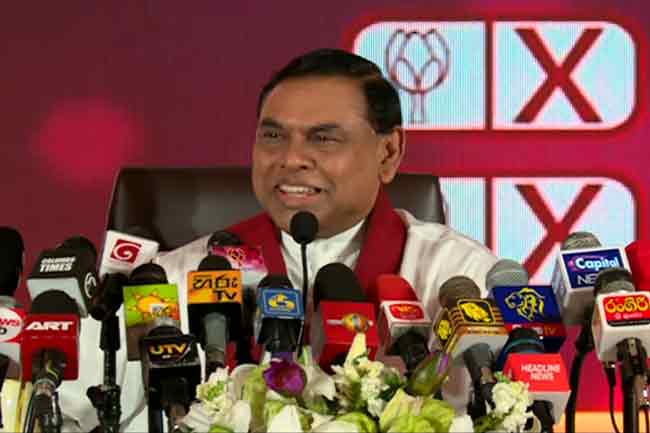
Basil’s pledge to Muslim MPs revealed?

When the nationalist forces within the government led by Wimal Weerawansa opposed the 20th Amendment to the Constitution, including the clause that permitted dual citizens to hold public office, SLPP national organiser Basil Rajapaksa was able to garner the support of a group of Muslim MPs to vote in favour of the Amendment.

In this backdrop, it has now been revealed how Basil Rajapaksa was able to secure the support of Muslim parliamentarians. Members of the Sri Lanka Muslim Congress (SLMC) said that they supported the 20th Amendment to the Constitution because the government had stated their desire to allow the burial of Muslim Covid-19 victims.

SLMC MPs Faizal Cassim, H. M. M. Harees, M. S. Thowfeek and Anwer Shamed had voted in favour of the 20th Amendment.

Elaborating further, SLMC MP Faizal Cassim said,

However, leader of the SLMC, MP Rauff Hakeem, said that the party has decided to pardon the MPs who voted in favour of the 20th Amendment if they seek forgiveness from the party and the general public.

The decision to pardon the MPs subject to certain conditions was taken when the Supreme Council of the SLMC convened yesterday (14), SLMC leader Rauff Hakeem said.

Posted in Uncategorized

Sri Lanka says no move to withdraw Navy from Hambantota Port

Sri Lanka says there is no move to withdraw the Navy from the Chinese funded Hambantota Port.

The Government said that President Gotabaya Rajapaksa has clearly informed China that the security of the port will be in the hands of Sri Lanka.

Cabinet co-spokesman Udaya Gammanpila, speaking to reporters at the post Cabinet virtual press conference today, said that the President had conveyed Sri Lanka’s position during talks with the Chinese Government, just after after he took office.

Following the signing of an agreement in December 2017 with China, the Hambantota port operations were handed over to Hambantota International Port Group (HIPG) and Hambantota International Port Services (HIPS).

Concerns have been raised in the past, particularly by India, over China’s involvement with the Hambantota Port.

There had been concerns the port will be used by the Chinese for military activities but the Chinese Government rejected the claims.

Canadian Tamil Vechicle Rally on Wednesday (17th) Urging Canada to Refer Sri Lanka to International Criminal Court (ICC)

Members of the Canadian Tamil Civil Society have organized a vehicle rally from Toronto and Montreal to the Parliament Hill in Ottawa, on Wednesday February 17th to urge the Government of Canada to Refer Sri Lanka to the International Criminal Court (ICC) for War Crimes, Crimes Against Humanity and Genocide Committed Against Tamil People by the Sri Lankan State.

Canada as a member of the Core – Group on Sri Lanka is currently involved in the drafting of the Resolution for the upcoming UN Human Rights Council Session.

“If Canada wants it can Refer Sri Lanka to International Criminal Court (ICC)” said one of the organizers.

“We will know whether Prime Minister Justin Trudeau’s Administration is taking Tamil’s unified request seriously”

Recently, Michelle Bachelet, the United Nation’s High Commissioner for Human Rights (OHCHR) in her Report dated 12th January 2021 urged UN Human Rights Council Member States to take steps toward the referral of the situation in Sri Lanka to the International Criminal Court (ICC).

Tamil’s in Sri Lanka and in the Diaspora have unitedly call for Sri Lanka to be referred to the International Criminal Court (ICC).

HISTORY OF FALSE PROMISES BY THE SRI LANKAN GOVERNMENT AND INTERNATIONAL CRIMES COMMITTED AGAINST THE TAMIL PEOPLE

1) Successive Sri Lankan Governments have failed to implement any of the UNHRC Resolutions, including the ones they voluntarily co-sponsored.

2) Previous Government not only failed to take any meaningful steps to implement the Resolution that it co-sponsored, on the contrary the President, Prime Minister and senior members of the Government have repeatedly and categorically stated that they will not implement the UNHRC Resolution.

3) The current new Government went one step further and officially withdrew from the co-sponsorship of the Resolutions 30/1, 34/1 and 40/1 and walked away from UNHRC accountability process.

4) Furthermore, as a snub to UNHRC, only soldier who was ever punished and sentenced to death for killing civilians including children was pardoned by the current President.

5) Also, several senior military officials who were credibly accused of committing war crimes have been given promotions and treated as “war heroes.” One officer who was named in UN reports as a suspected war criminal was promoted as a four-star General.

BACKGROUND ON INTERNATIONAL CRIMES COMMITTED IN SRI LANKA:

1) According to the November 2012 Report of the UN Secretary-General’s Internal Review Panel on UN Action in Sri Lanka, over 70,000 people were killed during the last six months of the war that ended in May 2009.

2) Several were killed when Sri Lankan forces repeatedly bombed and shelled an area designated by the Government as No Fire Zones (Safe zones). Even hospitals and food distribution centers were bombed. Several also died of starvation and bled to death due to lack of medical treatment.

3) International Truth and Justice Project (ITJP) in February 2017 handed over details to UN of Sri Lankan Military run “Rape Camps”, where Tamil women are being held as “sex slaves.”

4) According to UK Foreign and Commonwealth Office report on April 2013, there are over 90,000 Tamil war widows in Sri Lanka.

5) Thousands of Tamils disappeared including babies and children. UN Working Group on Enforced Disappearances stated that the second highest number of enforced disappearance cases in the world is from Sri Lanka.
Canadian Tamil Civil Society
CTCS
+1 416-457-1633
roytheadvisor@gmail.com

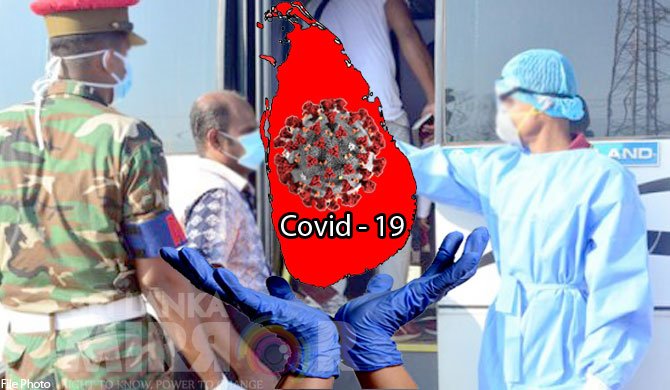
Coronavirus death toll in Sri Lanka crosses the 400 mark

The coronavirus death toll in Sri Lanka crossed the 400 mark today.

The Government Information Department said that six new deaths linked to the coronavirus were reported today.

This took the coronavirus death toll in Sri Lanka to 403 today.

Of the six victims, one is a 78-year-old man from Divulankadawala. He died while receiving treatment at the Infectious Disease Hospital (IDH).

The second victim is a 48-year-old woman from Pallethalawinna. She died while receiving treatment at the IDH hospital in Angoda.

The third victim is a 57-year-old man from Hanwella. He was transferred from the Apeksha Hospital in Maharagama to the IDH Hospital where he died.

The fourth victim is an 80-year-old man from Nugegoda. He died while receiving treatment at the IDH hospital in Angoda.

The fifth victim is a 68-year-old man from Wattala. He died at the Homagama Base Hospital.

The sixth victim is a 70-year-old man from Hunnasgiriya. He died while receiving treatment at the Kandy National Hospital.

Posted in Uncategorized