Tamil “P2P” Protest of 2021 and the Tamil “Satyagraha” of 1961 – By D. B. S. Jeyaraj

Years and years of witnessing a brutal armed struggle by Tamil militants has created an impression in the minds of many that the nature of Tamil politics in this country has been intrinsically violent

The Tamil political struggle was basically non – violent and adhered to the noble doctrine of “Ahimsa” (avoidance of injury/violence) enunciated by that great apostle of non – violence Mahatma Gandhi

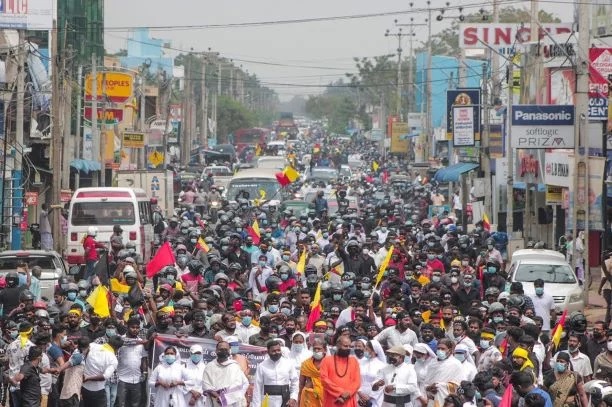
The “Pottuvil to Poligandy” (P2P) Protest that ended last week was a watershed moment in the political history of Sri Lankan Tamils. The Five day “P2P” protest march began in the East on Wednesday, February 3 and concluded in the north on Sunday, February 7. Thousands of Tamils marched on foot and proceeded in vehicles from Pottuvil in the Ampara District to Poligandy in the Jaffna District. The P2P protest trek proceeded along the littoral in the Eastern Province and crisscrossed the hinterland in the Northern Province. The long journey covered over a distance of 700 km across the Districts of Ampara, Batticaloa, Trincomalee, Mullaitivu, Vavuniya, Mannar, Kilinochchi and Jaffna. Tens of thousands of Tamils and Tamil speaking Muslims demonstrated their support for the protest along the route in a remarkable show of solidarity and unity.

What the P2P protest did was to provide an opportunity where the long-suppressed Sri Lankan Tamil community could engage in an imaginative political campaign of this scale and scope. It displayed to the world at large the creative potential within the community to organise and execute a huge political demonstration of this nature.

Above all, it refreshed memories of past non -violent protests by Tamils and indicated that the future course of Tamil politics in this country could, should and would be proactively dynamic in a democratic, non – violent mode.
Years and years of witnessing a brutal armed struggle by Tamil militants has created an impression in the minds of many that the nature of Tamil politics in this country has been intrinsically violent. This violence has even served vested interests to dismiss the justice of the Tamil cause as “terrorism” and portray the “problem” as being an issue concerning law and order only.

What is forgotten, ignored or conveniently overlooked is the fact that for over three decades in post–Independence Sri Lanka, the Tamil political struggle was basically non – violent and adhered to the noble doctrine of “Ahimsa” (avoidance of injury/violence) enunciated by that great apostle of non – violence Mahatma Gandhi.

It has been argued by many that it was the failure of the non –violent Tamil struggle to remedy prevailing political maladies that paved the way for an emerging, frustrated generation of Tamil youth to take to the gun. Whatever the merits or otherwise of this argument there is no denying that the third quarter of the twentieth century is replete with instances of non – violent political dissent and protest conducted by the Sri Lankan Tamils. Hartals, Satyagrahas, black flag demonstrations, marches, processions, mass demonstrations, protest fasts, days of mourning, civil disobedience, civil resistance, boycotts, etc were a regular feature of Tamil politics in those days.
The high watermark of this politics of non – violent protest was the great “Satyagraha” campaign launched on February 20, 1961. The “P2P” of February 3-7 has in a way revived memories of that non – violent protest. Just as the P2P drew widespread support from all the Tamil speaking districts of the North and East, the 1961 Satyagraha too had tremendous support of the people in North-Eastern districts then. It is against this backdrop therefore that this column re-visits the 1961 Satyagraha that paralysed civil administration in the North and East 60 years ago.

July 1960 Parliamentary Elections

The July 1960 Parliament elections resulted in the Sri Lanka Freedom Party (SLFP) winning 75 seats. Its chief rival the United National Party (UNP) came next with 30 seats. The Ilankai Thamil Arasuk Katchi (ITAK) known as Federal Party (FP) in English came third with 16 MP’s. The fourth-place went to Lanka Sama Samaja Party (LSSP) with 12 seats. Other Parties which won seats were the Communist Party (CP) -four, Mahajana Eksath Peramuna (MEP) -three, Lanka Prajathanthravadhi Pakshaya (LPP) -two, Janatha Vimukthi Peramuna (JVP) -two, and the All Ceylon Tamil Congress (ACTC)-one. Six Independent Candidates were also elected as MP’s. In addition, there were six Appointed MP’s who would be nominated by the Prime Minister.

The SLFP with 75 seats with the support of four Independent MP’s formed the Government with a slender majority. However, with the six appointed MP’s the SLFP Government had the support of 85 MP’s in a Parliament of 157 comprising 151 elected and six nominated MP’s. Sirimavo Bandaranaike created history as the world’s first woman Prime Minister.

The new government intended to implement the Bandaranaike (SWRD) policies in full. A key element in this was the total “Sinhalisation” of the Administrative and Judicial spheres. There was increasing insecurity among the Tamil people about their political future. There was much apprehension and fear that the Government was going to implement “Sinhala Only” in a big way throughout the Country. Tamil trepidation in this respect was enhanced by two announcements by the Government. One was that Sinhala would be implemented as the sole official language in all areas of administration with effect from January 1, 1961.The second was the announcement that the Government intended passing legislation making Sinhala as the Language of courts in all parts of the Island.

The ITAK/FP was now under tremendous pressure from its Tamil constituency to do something in this regard. The FP had contested 21 seats in July 1960 polled 218, 653 votes and obtained 16 seats. The party regarded itself as the legitimate representatives of the Tamil speaking people. The party, therefore, prepared a comprehensive memorandum incorporating the concerns of the Tamil people. The Government agreed to discuss the memorandum and a meeting between the Prime Minister and an ITAK delegation was set up at Temple Trees on November 8, 1960.

The two-hour-long discussion was conducted cordially. Issues were discussed in detail. A second meeting was also held November 23, 1960 to follow up on matters. Whatever the optimism generated at these two rounds of talks it soon began evaporating as other events began overtaking. Media reports about the Govt-FP talks caused a backlash among hawkish Sinhala elements within the SLFP. The Government went on the defensive and “apologised” to the Sinhala people for talking to the ITAK/FP.

Language of Courts Bill

Even as these brief signs of SLFP-ITAK rapprochement began to fade away, fresh clouds gathered on the political horizon. In a sudden move that took the FP by surprise, the then Justice Minister Sam P. C. Fernando introduced parliamentary legislation relating to the language of courts. The draft Languages of the courts’ bill empowered the Justice Minister to direct that Sinhala language alone be used for pleadings, recording of proceedings and maintenance of records in any court in the Island. This drastic move by the government made the ITAK feel betrayed. Tamils were upset and worried.

The ITAK’s working committee met in Batticaloa on December 4, 1960 and resolved to discontinue the ongoing dialogue with the Government until the draft Language of the courts’ bill was altered to incorporate provisions for Tamil language also. The FP felt no useful purpose would be served by further discussion until this was done.
The Government reacted harshly. It reiterated that it would go ahead as planned on the language of courts issue. Furthermore, the Government emphasised that it would implement the Sinhala only act in full and stated that the administration of the entire country would only be in Sinhala with effect from January 1, 1961.

With the Government flinging down the gauntlet the ITAK held an emergency meeting of its Parliamentary group on December 18. The party decided unanimously to observe a hartal or stoppage of work in the Northern and Eastern provinces on January 2, 1961. This was the first working day after the proposed switching to Sinhala. The hartal was a big success and paralysed normal life for a day.

National Party Convention

Elated by the hartal’s success, the ITAK/FP revived its dormant action committee. The ITAK had formed an action committee comprising selected leaders to plan, coordinate and implement non – violent protests on a mass scale. Now the party revived and reconstituted the action committee which met on January 8, 1961. The action committee decided on two courses of action. The first was to conduct a widespread “Satyagraha” campaign in the north and east before February 20, 1961. The second was to stage the seventh national party convention of the ITAK/FP in Jaffna on January 21, 1961 and ratify the decision to stage a massive Satyagraha campaign.

The stage was now being set for the launching of the Satyagraha campaign. The ITAK/FP leader S.J.V. Chelvanayakam was not convinced about the feasibility of a Satyagraha campaign. He was doubtful whether there would be public support for such a move because of the threat of repressive action by the government. He was also worried about the outbreak of violence and the potential harm to civilian participants.

Without Chelvanayakam’s support, there was little chance of the party endorsing a Satyagraha at the convention. The formidable task of persuading Chelvanayakam fell on the shoulders of former Kayts MP V. Navaratnam. Described as the “Thangamoolai” (Golden brain) of the FP, Navaratnam was a shrewd planner with the reputation of getting things done. In 1957 the action committee had entrusted him with the responsibility of planning and executing the famous FP march to Trincomalee.

Now the action committee had delegated the responsibility of conducting the Satyagraha to V. Navaratnam (different to ex-MP for Chavakachcheri, V.N. Navaratnam). Navaratnam met Chelvanayakam and outlined his proposed modus operandi for the Satyagraha. Chelvanayakam was half – convinced. Chelvanayakam was finally converted to the cause of Satyagraha after an unofficial meeting of party members held at the ITAK headquarters ( No 25, Second Cross Street, Jaffna). There Chelvanayakam invited V. Navaratnam to address the gathering and explain his blueprint for a Satyagraha.

Navaratnam then spoke. He said that batches of dedicated volunteers steeped in the tradition of non – violent protest would sit in front of the entrances to the Kachcheris or administrative secretariats of districts. They would prevent government employees from working by blocking them. If one batch was arrested another batch would replace it. The Satyagraha would continue on an ongoing basis.

Paralyse District Administration

Since the Kachcheris were the nerve centres of district administration day-to-day governance would be paralysed. Once that happened the Satyagraha could be expanded to other Government departments also. The campaign would commence in Jaffna. Thereafter it would be conducted in Batticaloa, Trincomalee, Mannar and Vavuniya. (At that time the Ampara, Mullaitivu and Kilinochchi districts had not been demarcated). The ultimate objective was to paralyse civil administration in the North and East through non – violent action.

After Navaratnam’s incisive explanation the audience was firmly convinced. Chelvanayakam a devout Christian then retired to a private room for prayer. After praying the ITAK leader decided to go ahead with the Satyagraha campaign. Thereafter Chelvanayakam was resolute in conducting the Satyagraha campaign. Once Chelvanayakam threw in his lot with the Satyagraha project party endorsement for the campaign was assured.
The ITAK convention took place on January 21. Paddiruppu MP S. M. Rasamanickam was elected ITAK/FP President at the convention. In his presidential address, Rasamanickam revealed details of the efforts made by the party to reach an understanding with the SLFP government and why they failed. He said the party had no choice other than to oppose the imposition of Sinhala by the Government. Four resolutions were passed at the ITAK/FP convention. They were on caste discrimination, economic development, citizenship and the prevailing political situation.

The political resolution was proposed by Chelvanayakam and seconded by Dr. Naganathan. It was carried unanimously amidst thunderous cheers and applause. The concluding part of the resolution stated – “This convention taking into consideration the history of repeated betrayals and the utter futility of the method of negotiation and parliamentary action in the present governmental set-up resolves that the only course open to the Tamil speaking people to protect their national honour and win back their freedom is to resort to non – violent direct action and ratifies the course of action set out in the directive of the party’s action committee”.

Enforce “Sinhala Only” Policy

While this was going on the government of Sirimavo Bandaranaike attempted to enforce the “Sinhala only” policy vigorously from January 1961 onwards without any compassion for the predicament of the Tamil speaking people. All government departments and semi-govt. boards and corporations were required to conduct official business in Sinhala only. All records and files were to be maintained in Sinhala alone. Communication with the public was also to be in the sole official language only. Highly educated Tamils in respectable positions were rendered officially illiterate by government fiat.

It could be seen therefore that the Tamil socio-political environment was rippling with tension. It was in this emotionally charged atmosphere that the ITAK/FP national convention ratified the decision to launch a Satyagraha campaign in a phased-out manner. The action committee was empowered to take necessary measures.

The ITAK action committee met on January 29, 1961 and decided to implement the preliminary phase of the direct action campaign. This was to issue a direct appeal to all government employees in the north and east to refrain from working in Sinhala after informing them of the ITAK plans to paralyse civil administration through a Satyagraha campaign. The ITAK followed through by holding meetings and rallies in various parts of the north and east. The public at large was informed of the Satyagraha and asked to be ready. The ITAK also began registering volunteers for the Satyagraha and conducting classes on the basic tenets of non – violent agitation.

The ITAK’s action committee went ahead with its plans for commencing the satyagraha on February 20, 1961. On February 19 the action committee formally approved the phased-out plan for the campaign. Chelvanayakam issued a lengthy statement informing the public of the direct action campaign.

The statement issued by Chelvanayakam set out the parameters of the direct action campaign. D-day dawned on February 20, 1961. The first batch of Satyagraha volunteers all from the Kankesanthurai electorate represented by S. J. V. Chelvanayakam converged at the party office at No 25, 2nd Cross Street, Jaffna. The non – violent contingent numbering over a thousand ,then started out in a procession towards the Jaffna Kachcheri situated along the Jaffna – Kandy A-9 highway.

Jaffna

The Satyagrahi’s reached the Kachcheri premises and took up positions in front of the entrances to the Kachcheri. The time was 7.30 am. The Satyagraha Campaign was officially launched in Jaffna (which included the present Kilinochchi) administrative district on February 20, 1961 with Chelvanayakam and other Jaffna district MP’s. The other Northern and Eastern districts followed suit in the days that followed. It had been decided to wait until the Satyagraha began in Jaffna before commencing the protest in the other districts.

Batticaloa

In Batticaloa (which included the present Ampara) administrative district Paddiruppu MP S. M. Rasamanickam, Batticaloa 1st MP, C. Rajaduria,Kalkudah MP P. Manickavasagar. Kalmunai MP M.C. Ahamed, “Thirukkovil” Ariyanayagam and S. M. Mashoor Moulana met with party stalwarts on February 21 and decided to stage a district-wise “Hartal” on February 27. This was a huge success. Thereafter the “Satyagraha” commenced on February 28 opposite the Batticaloa Fort within which the Kachcheri or administrative secretariat was located. Over 600 Satyagrahi’s marched from the ITAK office on Main Street towards the Fort and sat at both the front and rear entrances in two groups. The MP’s took turns sitting with both groups alternately.

Trincomalee

In the Trincomalee administrative district, Trinco MP N. R. Rajavarothayam and 1st MP for Mutur T. Ahambaram along with former MP M. E.H. Mohammed Ali held a conclave and decided to commence the “Satyagraha” on February 27 after a Hartal. This was done as planned. The Hartal was a roaring success. The Satyagraha campaign which followed soon electrified the town.

Mannar

In the Mannar administrative district the Mannar ITAK Parliamentarian V. A. Alegacone led a group of Tamil and Muslim volunteers on February 24 to all Government departments in the town and issued leaflets. Thereafter the “Satyagrahi’s” led by Alegacone carrying placards launched the Satyagraha opposite the Kachcheri.

Vavuniya

In Vavuniya (inclusive of present Mullaitivu) administrative district, the ITAK candidate G. B. Vincent had lost to an Independent candidate T. Sivasithamparam in the July 1960 Poll. Vincent “Master” and Vavuniya Town Council Chairman Subramaniam started preparing for a Satyagraha launch without the involvement of Sivasithamparam. On February 24 the Vavuniya MP however organised a public meeting in support of the Satyagraha in Mullaitivu town.

The Police in a high-handed action seized the microphone and took it away. T. Sivasithamparam then led 500 volunteers and squatted outside the Police station demanding the return of the confiscated microphone. After several hours it was returned. Sivasithamparam then vowed to join forces with the ITAK and commence a Satyagraha. Thereafter Sivasithamparam, Vincent Master, Subramaniam .and former State Councillor T. M. Sabaratnam together formed a committee and began the Satyagraha in Vavuniya on February 28.

Military Repression

This then was how and why the “Satyagraha” was launched and conducted 60 years ago. It is an event that the Tamils of Sri Lanka can be proud of as an achievement where a small, unarmed, defenceless people through united effort and dedication paralysed the administrative machinery of the Colombo government for nearly two months in the Northern and Eastern Provinces of Sri Lanka until military repression was unleashed. Brute force was displayed. Peaceful protesters including elected representatives of the people were placed under house arrest at the Panagoda Army cantonment. A democratic protest campaign was cruelly crushed.
Posted in Uncategorized

After Scrapping of ECT, Sri Lanka Foreign Minister Says Bigger Projects With India Will Continue – CNNNews18

Sri Lanka Foreign Affairs Minister Dinesh Gunawardena on Saturday said bigger projects and investments with India would continue, after the neighbour scrapped the trilateral deal with India and Japan to develop the Colombo Port’s Eastern Container Terminal (ECT).

In an exclusive interview to CNN-News18’s Maha Siddiqui, Gunawardena spoke about his recent meeting with the Indian High Commission, the country’s deals with China, and much more.

When asked about claims that the trade union protests against the project were orchestrated with the help of China, he said that all types of trade unions – from right to the left and of various ideologies had agitated against the matter. “As I’ve mentioned before, bigger projects and bigger investments and with India will continue. About China’s involvement… I don’t think so. That is not the position,” he said.

Asked about how deals with Japan and India had not gone through, and projects with China had, despite the trade unions protesting against foreign partnership, Gunawardena said that many projects were being carried out by China’s assistance, and that there was always criticism by trade unions.

On how the ECT project scrapping would affect India and Sri Lanka’s position, he said the countries’ relations were very strong and had been so for many years. He added that the recent meeting with the Indian High Commission had been a friendly and fruitful one. “We will continue keeping this dialogue with regards to many areas that India is involved in,” he said, signalling that the future relationship between the neighbours would be towards progress.

Former UN official tells Sri Lanka not to count on UN for justice

A former United Nations (UN) official has told Sri Lanka not to count on the UN for justice.

Former Assistant Secretary General and former Chair of a UN Panel, Charles Petrie, said that the UN lacks courage to act on the Sri Lanka issue.

Speaking at a webinar organised by the Global Tamil Forum, Center for Human Rights and Global Justice – New York University, Sri Lanka Campaign for Peace and Justice and the Canadian Tamil Congress, Petrie said that the UN cannot say it does not have the system in place to address the issue.

He said that there are UN officials in Colombo and elsewhere who want to do the right thing.

But he asserted that the UN lacks courage and so the Sri Lankan public must not depend on the UN.

He said that if the Sri Lankan public depend on the UN they maybe disappointed.

Instead, he said if the Sri Lankan public count on their own resilience and the UN performs it would be an unexpected win.

Petrie headed a panel appointed by then UN Secretary General Ban Ki-moon to conduct a comprehensive review of action by the United Nations system during the war in Sri Lanka and the aftermath.

The panel had found that the United Nations system failed to meet its responsibilities — highlighting, in particular, the roles played by the Secretariat, the agencies and programmes of the UN Country Team, and the members of the Security Council and Human Rights Council.

Scrapped Colombo Port Deal As Indian Firm Rejected Terms: Sri Lanka – NDTV

Sri Lanka has said it scrapped the trilateral deal with India and Japan to develop the Colombo Port’s Eastern Container Terminal (ECT) as the Indian firm involved in the project refused to agree to its new terms.
Prime Minister Mahinda Rajapaksa’s office on February 1 said that his government has decided to run the Colombo Port’s Eastern Container Terminal (ECT) as a fully-owned operation of the state-run port authority.

Answering the Opposition’s query in Parliament on Thursday on the deal, Sri Lanka Ports Minister Rohitha Abeygunawardena said a Cabinet sub-committee appointed to examine the deal had proposed new terms.

“We entered talks from a favourable position to us, then that company refused to go ahead with our conditions,” Mr Abeygunawardena told the Parliament, adding that the Indian company’s refusal forced Sri Lanka to scrap the deal.

India, Japan and Sri Lanka had inked an agreement in 2019 to develop the terminal project.

“The governments of India, Sri Lanka and Japan had signed a memorandum of cooperation in May 2019 to develop and operate the East Container Terminal of Colombo Port in a trilateral framework,” Ministry of External Affairs spokesperson Anurag Srivastava said at a media briefing in New Delhi on February 4, three days after Colombo cancelled the deal.

“We sincerely believe that the development of infrastructure in Sri Lanka, in areas such as ports and energy, with foreign investment from India and Japan will be a mutually beneficial proposition,” he said.

Mr Srivastava said the Indian High Commissioner in Colombo was in talks with the Lankan government on the issue.

On Friday, India said its interest to participate in the Colombo port project is a long standing one as most of the goods handled at the facility are from and to India.

“We had in principle agreement from the Sri Lankan government in this regard,” Mr Srivastava said in New Delhi, evading a reply to a question whether Sri Lanka offered India a project to develop the western container terminal project in Colombo port instead of the ECT.

Mr Srivastava further said: “Current government has, however, expressed a preference in engaging investors directly. I understand discussions are still underway.”

The state-owned Sri Lanka Ports Authority (SLPA) signed a memorandum of cooperation in May 2019 with India and Japan to develop the ECT during the previous Sirisena government.

The Colombo port trade unions opposed the proposal of investors from India and Japan buying 49 per cent stake in the ETC. They demanded the ECT to remain 100 per cent owned by the SLPA as opposed to the 51 per cent.

They claimed that the proposed deal with India’s Adani Group was a sell-out of the ECT.

President Gotabaya Rajapaksa had declared that he wanted the India-Japan deal on the ECT to go ahead.

However, after a week of protest, Prime Minister Mahinda Rajapaksa agreed to scrap the deal, prompting India to demand Sri Lanka to abide by its commitment to the trilateral deal with it and Japan.

Japan has also conveyed its unhappiness with the Sri Lankan government.

Posted in Uncategorized

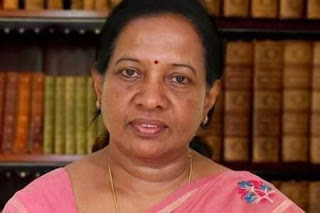
Former Jaffna Mayor included in Commission on human rights violations

Former Jaffna Mayor Ms. Yogeswari Patkunarajah has been included in a Presidential Commission on human rights violations.

In a gazette notice issued by the Presidential Secretariat, it was noted that a Presidential
Commission of Inquiry on Human Rights Violations was established on January 20, 2021.

The gazette notes that taking into consideration the necessity of reflecting the pluralistic character of Sri Lankan society and gender equity, President Gotabaya Rajapaksa, in accordance with the provisions of Section 3 of the Commissions of Inquiry Act, has appointed Ms. Yogeswari Patkunarajah, as a Commissioner of the Presidential Commission of Inquiry.

The President, as per the gazette notice, has placed great trust and confidence in her prudence, ability and fidelity.

In January President Gotabaya Rajapaksa issued a gazette notice appointing the panel headed by Judge of the Supreme Court A.H.M.D. Nawaz.

Others in the panel are retired Inspector-General of Police Chandra Fernando and retired District Secretary Nimal Abeysiri.

The President noted that the policy of the Government of Sri Lanka is to continue to work with the United Nations and its Agencies to achieve accountability and human resource development for achieving sustainable peace and reconciliation, even though Sri Lanka withdrew from the co-sponsorship of the UN Human Rights Council resolutions on Sri Lanka.

The panel has been appointed as the Human Rights Council prepares to discuss human rights in Sri Lanka at its next session in February-March 2021.

Posted in Uncategorized

Six more COVID-19 deaths bring tally to 390

Sri Lanka has reported 06 more coronavirus related deaths, the Director-General of Health Services confirmed today (February 13).

As per the Department of Government Information, three male patients and three female patients are among the victims.

The new deaths bring the number of COVID-19 related deaths witnessed in Sri Lanka to 390 in total.

Sri Lanka’s foreign policy scrambles in the dark – FT.LK

“The world must learn to work together, or finally it will not work at all” – Dwight Eisenhower, 34th US President

Sri Lanka’s foreign policy is in the midst of a storm on the international stage. On Monday the Core Group responsible for the country at the United Nations Human Rights Council (UNHRC) announced that they would be presenting a fresh resolution against Sri Lanka. Coupled with the growing tensions between the Sri Lankan and Indian Governments, the foreign office certainly has its work cut out for it in the coming weeks and months.

Local news cycles have been dominated this year by stories regarding the East Container Terminal (ECT) at the Colombo Port and the tripartite agreement signed between Sri Lanka, India and Japan to jointly develop and operate the terminal.

Following weeks of demonstrations by unions and members of the ruling coalition, the Government made the surprise announcement that they would not be proceeding with the agreement. This decision followed a late evening Cabinet meeting, and left both India and Japan scratching their heads.

The news that this agreement was to be cancelled was all the more surprising considering India’s External Affairs Minister, Dr. S. Jaishankar, had paid a visit to the country a month ago. The ECT featured prominently in the discussions between the Indian Foreign Minister and Sri Lanka’s President and Prime Minister. The confidence in which New Delhi spoke of the continued cooperation between the two countries suggests that at no point was the possibility of the project being scrapped raised.

In the days and weeks leading up to the cancellation, prominent Cabinet Ministers and unions loyal to the Government had undertaken a campaign to oppose the project. The cancellation of the ECT project appears nothing more than a desperate attempt by the Government to quell the growing opposition from within their support base due to a rising host of issues on the ground.

Having made opposition to the ECT project a central feature of their campaign at last year’s election, the Government’s decision appears to be no more than a politically motivated stunt. In fact, shortly after the announcement that the agreement would be cancelled, the Cabinet of Ministers attempted to pacify India by offering them a higher stake in the still to be built West Terminal at the Colombo Port.

To date there has been no indication from India as regards this fresh offer. However, our Northern neighbours have been swift in expressing their displeasure at the unilateral decision. Media quoted an Indian High Commission spokesman who called on the Government of Sri Lanka to ensure the “expeditious implementation of the trilateral Memorandum of Cooperation (MoC) signed in May 2019 among the Governments of India, Japan and Sri Lanka for the development of ECT with participation from these three countries”.

Anger in India toward this apparent public repudiation has grown in the past few days with Indian media reporting that New Delhi is continuing to pressure Colombo to reverse their decision.

Reports have also emerged in India suggesting that China had a role in blocking their involvement in this strategic investment. China has their own presence in the Colombo Port at the Colombo International Container Terminals Ltd., which they hold an 85% stake, and it is believable that they would wish to protect their sole presence. With tension rising in the Indian Ocean between Sri Lanka and India, and India and China caught in their own diplomatic row, the pressure was on Sri Lanka’s foreign policy experts to step in and ensure that the situation was resolved.

However, over the weekend news emerged that the Sri Lankan Cabinet had previously agreed to award a project to a Chinese firm to setup hybrid wind and solar energy projects in three islands in the Northern Province.

Sri Lankan Governments have historically balanced relations between India and China by ensuring that India maintained its interests in the North and Central Provinces of the country, while China was allowed to mark their presence in the South. The surprise decision by the Cabinet to award this project to a Chinese firm has reportedly not gone down well with the Indian Government, who have allegedly lodged “a strong protest” with the Sri Lankan Government.

Having approved this project two weeks prior to cancelling the ECT tripartite agreement, the Cabinet has shown itself as either being incapable or unwilling to balance relations with India and China.

With the Government placing the country firmly in China’s corner, the ramifications are beginning to be seen. Last week the Central Bank of Sri Lanka concluded a $ 400 million currency swap they had initiated with India back in July last year.

Denying reports that India had called for the early cancellation, the Indian High Commission issued a communique clarifying the fact that the continuation of this swap was dependant on Sri Lanka having negotiated an agreement with the IMF. However, the communique concluded by reiterating “that India abides by all of its international and bilateral commitments in letter and spirit.” A clear message to Sri Lanka that while respecting their previous agreements with Colombo, New Delhi would certainly be thinking twice when accommodating future requests from Sri Lanka.

With Sri Lanka’s foreign reserves being reportedly lower than their foreign debt obligation for 2021, the withdrawal of $ 400 million from the Central Bank will certainly increase the pressure on the Government.

India’s apparent assertion that they will no longer be backing Sri Lanka wholeheartedly has certainly come at the worst possible time for the Rajapaksa administration. The next few months will see the foreign office face up to their steepest test with momentum building around the pending resolution at the UNHRC.

The UK has announced that they would be presenting a resolution promoting human rights and accountability in the country at the 46th session of the council in Geneva next month. This resolution is expected to follow up on the damaging report produced by the Office of the High Commissioner of Human Rights last month.

This is not the first time a Rajapaksa Government has been faced with a UNHRC resolution. Following the end of the war in 2009 Sri Lanka has seen itself the subject of several such resolutions. With the then Government opposing these resolutions, the council often found itself divided. In 2015, following the defeat of Mahinda Rajapaksa at the Presidential Election, the Yahapalana Government decided to co-sponsor a resolution (Resolution 30/1) in an attempt to rebuild the faltering international relations. The decision to work with the international community paid dividends as the pressure on the Government was eased and subsequent trade agreements such as the GSP+ with the EU was re-instated.

However, it would appear that cooperation on the international stage has once again been put on the backburner, with the Sri Lankan Government choosing instead to undertake a campaign of opposition towards the resolution. Suggestions are now emerging from the international community that targeted sanctions and travel bans maybe recommended at the UNHRC. As the country attempts to rebuild the collapsed economy, such moves would further weaken the Government. With India now unlikely to support Sri Lanka at the Council, the Government is forced to turn to China in the hope that they will be able to muster enough votes to defeat the proposed resolution.

One possible ally for Sri Lanka may be found in the form of Pakistan. At the end of February Pakistan’s Prime Minister, Imran Khan, is scheduled to visit the island. Pakistan has enjoyed a close relationship with China, and the foreign experts in the Sri Lankan Government are hopeful that through China’s urging Pakistan will lobby Sri Lanka’s cause amongst other Muslim nations. Of course, with the ongoing forced cremations in Sri Lanka drawing widespread criticism from Muslims around the world, the likelihood of the Muslim bloc coming out in support of Sri Lanka is certainly slim.

Sri Lanka’s apparent decision to reduce ties with India has certainly come at the worst possible time. Backed by nationalist policies and growing dissent from within their camp, the Government has found itself backed into a corner in regards foreign policy. Whether or not the decision to hedge their bets on China alone will pay dividends is still to be seen. But at a time when the world is closing ranks on China, the Sri Lankan Government would certainly be better off returning to a middle path on the international stage.

Posted in Uncategorized

Sri Lanka looks to benefit from China’s Belt & Road Initiative, says Foreign Secretary Colombage

Sri Lanka believes it has great potential to be a maritime hub in the Indian Ocean, and the island nation sees China’s Belt and Road Initiative would help, Foreign Secretary Admiral Jayanath Colombage said.

“In that, I see the Belt and Road Initiative as a great prospect for Sri Lanka to be more connected to the global supply chain,” said Colombage in an interview to China’s state-run Xinhua news agency.

Sri Lanka has three deep water ports, which are viewed by Colombage as the country’s biggest assets.

“So we need to benefit from that. We need to benefit economically from the Belt and Road Initiative.

“We need to develop our maritime-related infrastructure,” he said.

Colombage statement comes amid Sri Lanka’s recent decision to pull out of a 2019 agreement with India and Japan, to jointly develop the East Container Terminal at the Colombo Port.

Adjoining the ECT, China holds 85 per cent stakes in the Colombo International Container Terminal which is under a 35-year ‘Build Operate and Transfer’ agreement with the Sri Lanka Port Authority.

China has helped Sri Lanka in its fight against the COVID-19 pandemic and the country now looks forward to furthering its ties with China in order to recover from the pandemic, Xinhua said.

Colombage said 2021 will be a very challenging year for countries including Sri Lanka due to the fight against the pandemic, and Sri Lanka now needs the support of its friends more than in any other years in history.

China has sent medical assistance such as surgical masks, personal protective equipment, and surgical gloves in large quantities to the country’s health authorities, Colombage said.

“This has helped Sri Lanka in its battle against the pandemic.”

Colombage said China has fought the virus very effectively as it has begun producing vaccines in large quantities and is helping other countries by do

“China is going to give us a large number of vaccines and arrangements are being made. I was told these vaccines will arrive here soon. That is a really great gesture. We need more support in this battle against the COVID-19,” Colombage said.

The foreign secretary said the COVID-19 has shattered the country’s economic hope and development progress.

“We now really need to catch up,” Colombage said.

“I think China, being one of the leading economies in the world, and the number one development partner of Sri Lanka, can help us,” Colombage added.

Attracting more investments from China will create more job opportunities for locals, said the official, adding that reaping the benefits from China’s Belt and Road Initiative will be a priority.

Source:http:uniindia

01st time SLPP MPs form new alliance within the main alliance

Newly elected MPs from the Sri Lanka Podujana Peramuna have formed an alliance, said the SLPPs Pramitha Bandara Tennakoon.

“This group does not have a leader or a convener. Everyone is treated equally with a right to express their opinion,” he said.

The MP said there are no heroes among those in the faction and the objective is to fulfill the duties on behalf of the government and the people who elected them to the parliament.

“As young parliamentarians, we look up to the government, the ministers, and senior lawmakers. We wish to emphasize the expectations of 6.9 million people lie on the shoulders of the parliamentarians who have not uttered a single word that causes inconveniences to the government,” he stressed.

A responsible government is required, said the SLPPs Pramitha Bandara Tennakoon adding one cannot forget the entire 22 million people including those who did not vote for the SLPP at the polls.

Sri Lanka to brief UNHRC during high-level segment

Sri Lanka is to brief the UN Human Rights Council (UNHRC) during the high-level segment of the 46th Session.

Foreign Minister Dinesh Gunawardena is scheduled to brief the council on 23rd February.

Sri Lanka is expected to assert its position on the human rights issue and the decision by the Core Group to submit a fresh Resolution on Sri Lanka to the Council.

Others scheduled to address the high-level segment are Minister for External Affairs of India Subrahmanyam Jaishankar, Secretary of State of the United States of America, Anthony J. Blinken and Wang Yi, State Councilor and Minister for Foreign Affairs of the People’s Republic of China.

The 46th Session of the UN Human Rights Council will be held from 22nd February to 23 March.

The Core Group on Sri Lanka had this week confirmed it will be submitting a Resolution on Sri Lanka at the upcoming session of the UN Human Rights Council in Geneva.

The British Ambassador and Permanent Representative to the UK in Geneva, Julian Braithwaite, informed the UNHRC of the decision to submit the Resolution.

The confirmation was made as the UNHRC met to discuss its plans for the 46th Session of the UNHRC.

The Core Group on Sri Lanka consists of Canada, Germany, Montenegro, North Macedonia, and the United Kingdom.

Braithwaite said that a Resolution will be submitted to the Council on promoting reconciliation, accountability and human rights in Sri Lanka.

The Resolution is a follow-up to one already co-sponsored by the former government, from which the current administration withdrew last year.

Braithwaite said the Resolution will be based on the recent damning report on Sri Lanka by the UN High Commissioner for Human Rights, Michelle Bachelet.

Bachelet had last month made public a damning report on Sri Lanka and has proposed targeted sanctions, such as asset freezes and travel bans against credibly alleged perpetrators of grave human rights violations and abuses.

The UN report warns that the failure of Sri Lanka to address past human rights violations has significantly heightened the risk of such violations being repeated. It highlights worrying trends over the past year, such as deepening impunity, and increased militarisation of governmental functions, ethno-nationalist rhetoric, and intimidation of civil society.

Nearly 12 years after the armed conflict in Sri Lanka ended, impunity for grave human rights violations and abuses by all sides is more entrenched than ever, with the current Government proactively obstructing investigations and trials, and reversing the limited progress that had been previously made, states the report, mandated by UN Human Rights Council Resolution 40/1.

The report urges enhanced monitoring and strong preventive action by the international community, warning that “Sri Lanka’s current trajectory sets the scene for the recurrence of the policies and practices that gave rise to grave human rights violations”.

Among the early warning signals the report highlights are the accelerating militarisation of civilian governmental functions, reversal of important constitutional safeguards, political obstruction of accountability, exclusionary rhetoric, intimidation of civil society, and the use of anti-terrorism laws.