China’s Panama Strategy: A Threat to Global Trade and Security

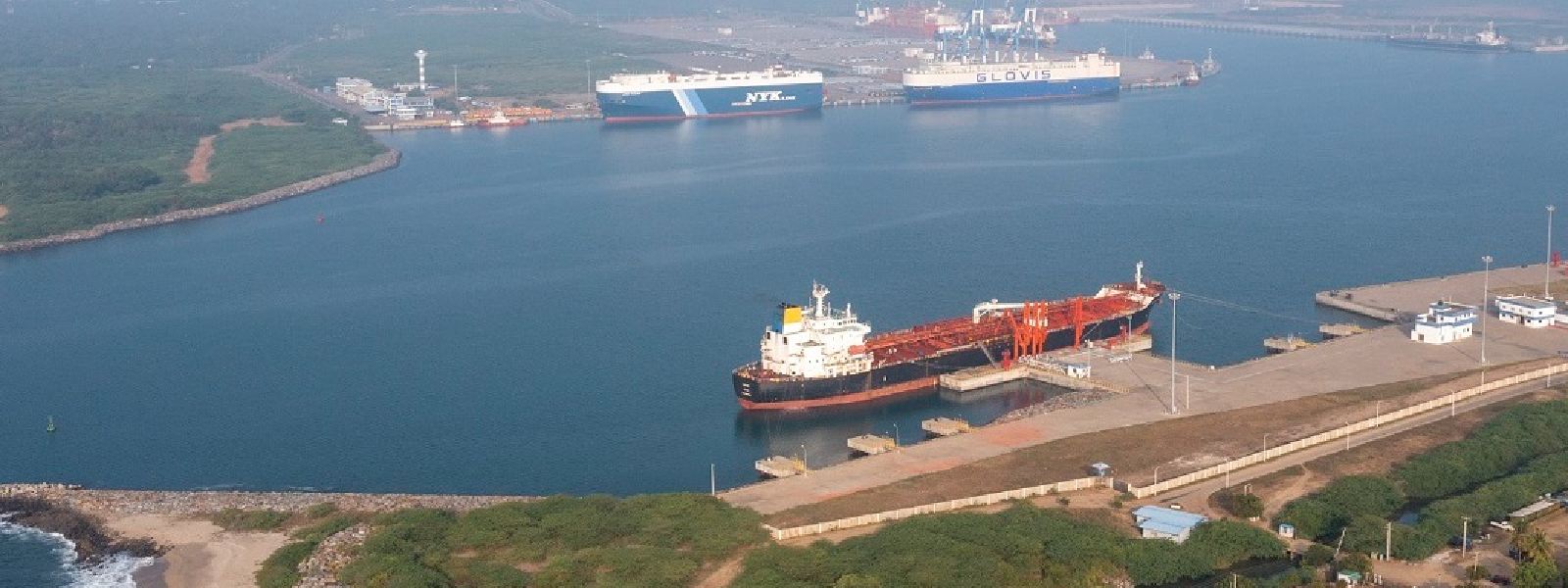
China’s growing global influence extends beyond its borders, and the so-called “Panama Strategy” serves as a crucial component of its broader geopolitical ambitions. By leveraging strategic trade routes and infrastructure, Beijing is seeking to reshape the global order to its advantage. The Panama Canal, a vital waterway legally controlled by Panama but influenced by Chinese investment, has raised significant concerns about the militarization of this global trade artery.

The Panama Canal is not only crucial to international trade, but also a symbol of China’s expanding reach. While the United States remains its largest user, China is second in terms of gaining disproportionate control over this critical shipping lane. Critics argue that China’s growing control has already led to higher costs for U.S. shipping and is undermining the neutrality that Panama once secured under the 1978 U.S.-Panama Treaty. The Trump administration has expressed concern that China’s actions violate these treaties, highlighting the growing intersection of China’s economic power and its geopolitical leverage.

This “Panama Strategy” is a key component of China’s broader Belt and Road Initiative (BRI), which is investing in infrastructure projects around the world. These projects often burden countries with massive debt burdens, giving Beijing leverage over their economic and political decisions. In Latin America, this approach has already deepened China’s influence, eroding the sovereignty of nations, and shifting the global balance of power away from U.S.-dominated institutions.

Beyond Panama, China’s maritime ambitions extend to contested regions such as the South China Sea, through which more than $3 trillion in global trade moves annually. Through militarized artificial islands, Beijing is challenging U.S. security commitments in the region, stoking tensions with allies such as Taiwan, Japan, and South Korea. These actions threaten the open seas doctrine that has governed global trade and security since World War II.

Strategic chokepoints such as the Straits of Malacca and the Suez Canal are also in China’s sights. Beijing’s investments in these regions offer a potential boost to global oil and trade flows. The same strategy can be seen in the Persian Gulf, where China has formed a partnership with Iran, and controls another crucial shipping lane – the Strait of Hormuz.

China’s strategy revolves around four main pillars: economic dominance, military dominance, unchecked geopolitical influence, and energy security. The Chinese Communist Party (CCP) is seeking to dismantle the rules-based international order and replace it with a system that favors Beijing’s rule. From Panama to the South China Sea, each strategic investment is part of a long-term effort to position China as the world’s preeminent power.

Critics warn that this expansion comes with risks, particularly in terms of breaking international treaties, eroding sovereignty, and increasing the potential for military conflict. The United States and its allies face an urgent challenge in countering China’s influence—not just through military and economic means, but also by reaffirming global principles of free trade, open seas, and the rule of law.

China’s “Panama Strategy” is a stark reminder that its ambitions are not limited to domestic policies, but are aimed at reshaping the world according to an authoritarian vision. For democracies around the world, the response is clear: vigilance, strategic alliances, and a commitment to openness and fairness will be key in countering China’s growing influence.

Posted in Uncategorized

‘Batalanda’ Commission report tabled in Parliament: calls for justice, accountability

The ‘Batalanda’ Commission report was presented to the Parliament this morning (14) by Leader of the House, Minister Bimal Ratnayake.

The Concluding Observation Notes of the 159 page report submitted by the commission states that the period from 1988 to 1990 was one of the darkest and most violent chapters in Sri Lanka’s history, marked by a cycle of terror that engulfed the nation and that the Janatha Vimukthi Peramuna (JVP) engaged in widespread insurgency, while state and non-state forces responded with brutal countermeasures, often outside the boundaries of the law.

The Batalanda Commission Report confirms that forces operating beyond the formal government structure, including shadowy “search teams,” carried out extrajudicial actions with the tacit approval of law enforcement agencies and elements within the government. In certain instances, these groups worked in coordination with official security forces, engaging in kidnappings, assassinations, and other illicit methods to suppress the insurgency, the report added, noting that while the government was determined to eliminate the insurrection, it showed little concern for the legality of the methods used to achieve this objective.

“Evidence presented to the commission underscores the government’s failure to prevent extrajudicial killings and its active role in shielding those responsible. A striking example was revealed in the testimony of the then Inspector General of Police (IGP), who stated that a senior police officer—implicated in the murder of journalist Richard de Zoysa—was shielded from arrest due to interference by the then Deputy Minister of State Security. In another case, government funds were allegedly used to cover the legal expenses of three police officers indicted for the murder of lawyer Wijedasa Liyanarachchi”, the report’s Observation Notes highlighted.

“While the JVP’s violent actions led to the deaths of hundreds of politicians, police officers, and civilians, and severely disrupted essential services, the government’s response should have adhered to the rule of law. Instead, the state resorted to counterterrorism through terror, with ruling party politicians at times directing police operations and actively participating in crackdowns. The infamous Batalanda torture camp stands as a grim symbol of these excesses”, it added.

The commission strongly condemned the government’s approach, stating:
“No matter the extent of provocation by the JVP, the government should never have sanctioned or directed extrajudicial actions in response. The attempt to suppress terrorism with state terrorism resulted not only in the elimination of actual insurgents but also in the deaths of many innocent young people who had no involvement in illegal activities.”

Key Recommendations of the Commission

The Batalanda Commission made several recommendations to prevent such atrocities in the future and ensure that law enforcement operates within legal frameworks. Among them are;

Legislative Reforms: The commission proposed the formulation of a Code of Conduct for politicians regarding their role in law enforcement during emergencies. It also recommended amendments to the Constitution and other laws to reinforce accountability.

Judicial Oversight: Magistrates should be given investigative powers to examine reports of illegal detention centers and human rights abuses, ensuring cases are referred to the Attorney General for prosecution.

Accountability for Law Enforcement: The Inspector General of Police (IGP) was urged to conduct full investigations into police officers implicated in crimes such as abduction, murder, and unlawful detention and take necessary disciplinary action.

Enhanced Judicial Powers: The Supreme Court should be empowered with additional jurisdiction to impose appropriate penalties in the form of “deprivation of civil rights” on individuals who are found to have repeatedly violated the fundamental rights of citizens, ensuring that impunity does not continue.

Cybercrime network with links to Sri Lanka busted in India

An international cybercrime network with links to Sri Lanka has been busted in India, the Indian media reported.

The Darjeeling Police have unearthed an international cybercrime network following the arrest of Md Saidur, a key operative from the Phansidewa police station area in Siliguri.

Addressing the media, Darjeeling Superintendent of Police Praween Prakash revealed that Saidur played a pivotal role in facilitating money laundering by renting out bank accounts to the racket.

Saidur, who operated a cyber café in Phansidewa, was linked to cybercrime syndicates based in Gujarat and Mumbai, which, in turn, were connected to a larger operation in Dubai. Saidur visited Gujarat to meet the racketeers, and later, a group of people from Gujarat arrived here to collect SIM cards from him. The racket utilised hundreds of rented bank accounts, many of which were operated from countries like Australia, New Zealand, and Sri Lanka.

“This is a massive, multi-layered cybercrime operation,” said Mr Prakash. “We have formed a five-member Special Investigation Team (SIT) led by an ASP and SDPO to delve deeper into the case.”

Saidur had been evading arrest for nine months before being apprehended by the police. During interrogation, he disclosed critical details about the racket, which exploited bank accounts of unsuspecting individuals across the country. Police investigations revealed that Saidur had provided hundreds of bank accounts from his locality, including the Chater Haat area in Siliguri.

The probe began after complaints from six residents of Chater Haat, eventually uncovering 314 related cases registered with the National Crime Bureau. A raid on Saidur’s residence yielded 414 ATM cards, over 545 passbooks, PAN cards, and other incriminating documents. Saidur’s arrest followed the detention of accomplices Anil Gope, Md Anwar, and Tapan Gope.

According to Mr Prakash, Saidur earned over Rs 60,000 per rented bank account, amassing nearly 1,000 accounts, though police suspect the number could exceed 3,000. The racket facilitated transactions worth Rs 80 crore through 230 accounts, all of which have now been frozen. Additionally, nine accounts belonging to Saidur’s relatives held Rs 35 crore, with transactions traced to multiple locations.

“So far, we have identified fraudulent transactions exceeding Rs 100 crore, but the total could surpass Rs 200 crore,” Mr Prakash added. He cited examples of victims, including a Kolkata woman blackmailed into paying Rs 13 lakh and cases in Tamil Nadu and Karnataka where victims lost Rs 42 lakh. The amounts were funnelled through accounts provided by Saidur.

The investigation is ongoing, with authorities working to uncover the full extent of the racket’s operations and bring all involved to justice.

(The Statesman)

2025 LG Elections: Deadline for postal voting applications extended

The Election Commission has issued a special notice to government officials, security officers, and postal vote certifying officers who wish to cast postal votes and are qualified to do so.

Accordingly, the deadline for submitting postal vote applications for the Local Government elections, originally set for midnight on March 12, has been extended to midnight on March 17.

This extension was granted due to possible postal delays and requests made to the commission, it said.

The Election Commission states that the relevant applications must be received at the relevant District Election Office before midnight on March 17.

Additionally, the relevant notice stated that to avoid potential delays in receiving applications, the commission advises against submitting postal voting applications completed between March 13 and 17 by post. Instead, applicants are advised to categorize them by district, place them in separate envelopes, and deliver them by hand to the District Election Office in the district where the Certifying Officer’s office is located.

Furthermore, the Election Commission has announced that the deadline for accepting postal vote applications is March 19 only for the Local Government institutions of Poonakary Pradeshiya Sabha in Kilinochchi District, Mannar Pradeshiya Sabha in Mannar District, and Dehiattakandiya Pradeshiya Sabha in Ampara District, as their nomination notice was published on March 10.

Posted in Uncategorized

Suspect army deserter arrested in Anuradhapura doctor rape case

The suspect wanted in connection with the alleged rape of a female doctor at the Anuradhapura Teaching Hospital has been arrested.

Police said the suspect, an army deserter, was arrested in the Galnewa area.

Several police teams had launched an investigation to capture the individual, who fled after sexually assaulting a 32-year-old doctor in training as a specialist on Monday night.

The suspect has been identified as Kiribandalage Nilantha Madhuranga Ratnayake, a resident of Galnewa.

It has also been reported that the suspect was previously remanded in custody in connection with another case and was released the day before the alleged assault on the doctor.

The 34-year-old suspect who had absconded from military service was arrested by a special police team in Galnewa today.

Posted in Uncategorized

Five Police Teams Deployed to Arrest Army Deserter in A’pura Doctor’s Rape Case

Minister of Public Security Ananda Wijepala informed Parliament today (11 March) that five police teams have been deployed to arrest the suspect who raped a female doctor at Anuradhapura Teaching Hospital last night (10 March).

In response to a question raised by Opposition Leader Sajith Premadasa, the minister stated that the suspect has been identified as an army deserter.

“The suspect, who is an army deserter, has been identified, and five police teams have been deployed to arrest him. We hope he will be arrested soon,” he said.

Meanwhile, doctors at the hospital have launched a strike, demanding the immediate arrest of the suspect.

Source:Aisa Mirror

Accepting postal voting applications ends tonight

The deadline for the accepting of applications to cast postal votes in the 2025 Local Government (LG) Elections ends at 12.00 midnight today (12).

The Election Commission earlier announced that the duly filled applications must be handed over to District Returning Officers through the District Election Office address on or before August 05.

The applications must be received by the respective District Election Offices before 12.00 midnight today, and mere delivery of applications by post on that day is not a reason for acceptance of applications, the Election Commission said.

The applications received after the deadline will be rejected without consideration, as per the Election Commission.

Posted in Uncategorized

India’s Adani ready to work on energy deal on “same terms”; govt demands revision

India’s Adani Green Energy has expressed its willingness to work with Sri Lanka on proposed renewable energy projects on the same terms decided earlier, a source said.

But Cabinet Spokesman Nalida Jayatissa said a discussion on the deal is possible only after a price revision.

Adani Group last month said it had decided to withdraw its wind power deals with Sri Lanka, after Colombo’s recently elected government demanded to lower the price.

The new government led by President Anura Kumara Dissanayake had demanded Adani to reduce per kilowatt-hour (KWH) to 6 US$ cents from 8.26 US$ cents, decided under the previous government.

“This is the same as our earlier communication,” said a source, who is privy to the latest correspondence between the Sri Lanka government and Adani company.

“We have written to the Sri Lanka government that we are willing to work on the same terms as earlier.”

The source said the company has responded to the Sri Lanka government via a letter on its stance.

“Our position is same as before. We are available to implement the project at the earlier agreed tariffs.”

Adani Green Energy was to invest $442 million to build two wind power stations in Sri Lanka’s Northern Province after protracted discussions to establish the 484 MW renewable energy wind farms at Mannar and Pooneryn, along with its associated Transmission system.

The government has revoked Adani project proposal’s earlier tariff. Sri Lanka’s Cabinet last year approved a 8.26 cents per unit tariff for the 484MW project, triggering a controversy over the price and court litigation by activists. Adani’s projects have also run into controversy after activists went to courts over possible impact on the environment and higher tariff.

Cabinet Spokesman Nalinda Jayatissa also said there was no change in the government’s stance on Adani deal.

“The government’s stance on Adani’s project has not changed yet,” he said.

“We are open for investment. If Adani brings suitable investments for us, we are ready to discuss. But the government has an opinion on the (unit) price in the proposed wind power project. It is high.”

“Our request is that the price revision should happen. If they come up with price revision, we can discuss. If they are not ready for price revision, then they can take a decision to give up the project.”

“It does not mean that all the investors coming to Sri Lanka are leaving. Whoever the investor, if the burden can’t be borne by us and if the government has to pass that burden to the people, then the government will take a decision with regard to this.”

He said President Dissanayake clearly told this when he went to India.

Adani’s announcement of withdrawal came after that.

“If they come up with price revision, we are ready to discuss. We don’t depend on one company or one country. We will discuss and decide everything depending on the benefits to the public. We don’t have any other interests,” Jayatissa, also the Minister of Health and Media, said.

Sri Lanka court has yet to decide on the legal cases.

Batalanda Commission Report to Parliament This Week

The Cabinet has decided to present the Batalanda Commission Report to Parliament this week.

The announcement was made during the press briefing on Tuesday (11) to make public decisions reached by the cabinet of ministers.

In Sri Lanka, multiple parties have been urging the government to present the Batalanda Commission Report to Parliament and to implement its recommendations.

This report, which investigates incidents that occurred during the 1988/90 period, has resurfaced in public discourse following former President Ranil Wickremesinghe’s recent appearance on Al Jazeera’s “Head to Head” program last Thursday (6), where he discussed related issues.

What is the Batalanda Commission Report?

In 1994, Chandrika Bandaranaike Kumaratunga was elected President of Sri Lanka, ending 17 years of United National Party (UNP) rule.

One of her key election promises was to seek justice for the human rights violations, murders and disappearances that occurred during the 1988/90 period.

Upon assuming office, President Kumaratunga established the Presidential Commission of Inquiry on September 21, 1995, to investigate these incidents.

This commission, known as the Batalanda Commission, was tasked with examining the illegal detention, torture, assassination and disappearances of individuals at the Batalanda Housing Scheme, which was under the purview of the State Fertilizer Manufacturing Corporation.

It was also tasked to identify those accountable, and make the necessary recommendations.

The commission was chaired by then Court of Appeal Judge D. Jayawickrama, with High Court Judge N.E. Dissanayake serving as a member.

A team of police officers was appointed to assist with the investigation, and the Attorney General’s Department provided legal support, leading the evidence in the presence of the commission.

Notable figures such as current Supreme Court Judge Yasantha Kodagoda and current President’s Counsel Sarath Jayamanne were part of this legal team.

The tenure of this Presidential Commission of Inquiry was extended on 12 separate occasions.

After nearly three years of gathering evidence, the commission submitted its report to President Kumaratunga on March 26, 1998.

What Happened to the Batalanda Report?

Despite being submitted to the then-President Chandrika Bandaranaike Kumaratunga, the recommendations of the Batalanda Commission Report were never implemented.

Over 155,000 new voters eligible for upcoming LG Polls – Election Commission

The Election Commission states that 155,976 new voters have qualified to cast their ballots in this year’s local government elections.

These newly eligible voters are in addition to those who were registered for the parliamentary and presidential elections held last year, the Election Commission highlighted.

According to the commission, the new voters have been included in the supplementary voter lists certified on October 1, 2024, and February 1, 2025.

As a result, a total of 1,729,330 voters have been registered for the local government elections scheduled for this year.

Meanwhile, Election Commission Chairman R.M.A.L. Ratnayake confirmed that all preliminary arrangements for the upcoming local government elections have been completed.

Additionally, the acceptance of postal vote applications for the elections will close tomorrow (March 12), the Commission stated.

Eligible postal voters are advised to submit their applications to the Returning Officer of their respective district before the deadline.