Batalanda Commission Report to Parliament This Week

The Cabinet has decided to present the Batalanda Commission Report to Parliament this week.

The announcement was made during the press briefing on Tuesday (11) to make public decisions reached by the cabinet of ministers.

In Sri Lanka, multiple parties have been urging the government to present the Batalanda Commission Report to Parliament and to implement its recommendations.

This report, which investigates incidents that occurred during the 1988/90 period, has resurfaced in public discourse following former President Ranil Wickremesinghe’s recent appearance on Al Jazeera’s “Head to Head” program last Thursday (6), where he discussed related issues.

What is the Batalanda Commission Report?

In 1994, Chandrika Bandaranaike Kumaratunga was elected President of Sri Lanka, ending 17 years of United National Party (UNP) rule.

One of her key election promises was to seek justice for the human rights violations, murders and disappearances that occurred during the 1988/90 period.

Upon assuming office, President Kumaratunga established the Presidential Commission of Inquiry on September 21, 1995, to investigate these incidents.

This commission, known as the Batalanda Commission, was tasked with examining the illegal detention, torture, assassination and disappearances of individuals at the Batalanda Housing Scheme, which was under the purview of the State Fertilizer Manufacturing Corporation.

It was also tasked to identify those accountable, and make the necessary recommendations.

The commission was chaired by then Court of Appeal Judge D. Jayawickrama, with High Court Judge N.E. Dissanayake serving as a member.

A team of police officers was appointed to assist with the investigation, and the Attorney General’s Department provided legal support, leading the evidence in the presence of the commission.

Notable figures such as current Supreme Court Judge Yasantha Kodagoda and current President’s Counsel Sarath Jayamanne were part of this legal team.

The tenure of this Presidential Commission of Inquiry was extended on 12 separate occasions.

After nearly three years of gathering evidence, the commission submitted its report to President Kumaratunga on March 26, 1998.

What Happened to the Batalanda Report?

Despite being submitted to the then-President Chandrika Bandaranaike Kumaratunga, the recommendations of the Batalanda Commission Report were never implemented.

Over 155,000 new voters eligible for upcoming LG Polls – Election Commission

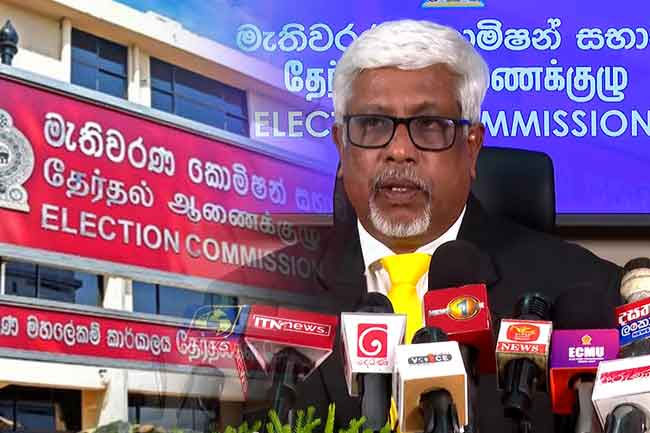
The Election Commission states that 155,976 new voters have qualified to cast their ballots in this year’s local government elections.

These newly eligible voters are in addition to those who were registered for the parliamentary and presidential elections held last year, the Election Commission highlighted.

According to the commission, the new voters have been included in the supplementary voter lists certified on October 1, 2024, and February 1, 2025.

As a result, a total of 1,729,330 voters have been registered for the local government elections scheduled for this year.

Meanwhile, Election Commission Chairman R.M.A.L. Ratnayake confirmed that all preliminary arrangements for the upcoming local government elections have been completed.

Additionally, the acceptance of postal vote applications for the elections will close tomorrow (March 12), the Commission stated.

Eligible postal voters are advised to submit their applications to the Returning Officer of their respective district before the deadline.

Indian PM Narendra Modi to break ground for Sampur solar project

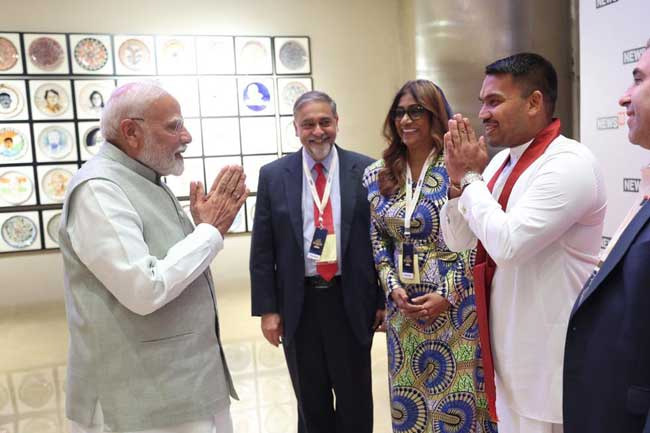
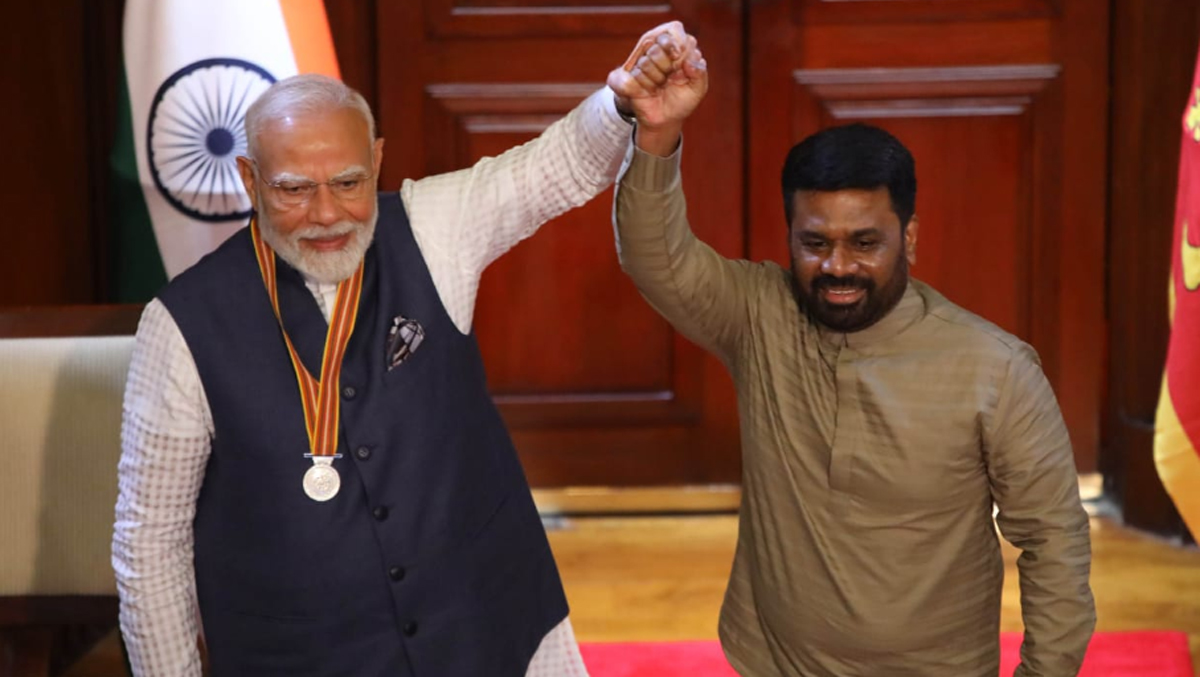
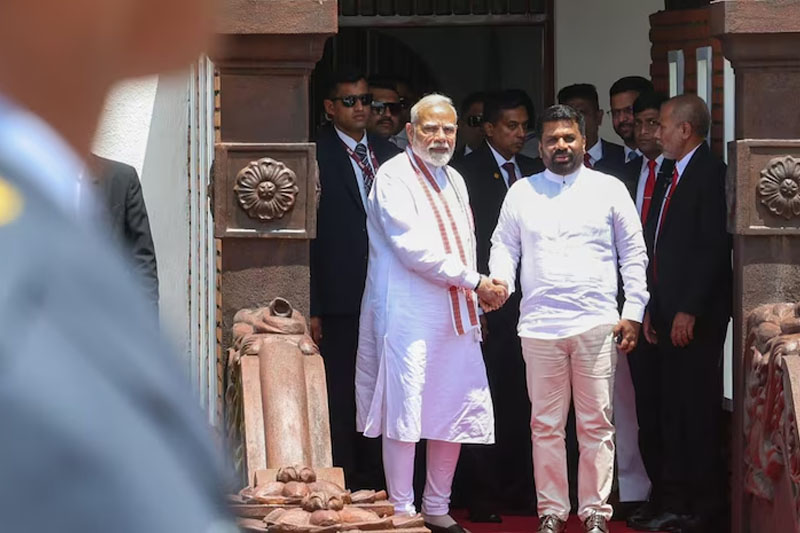
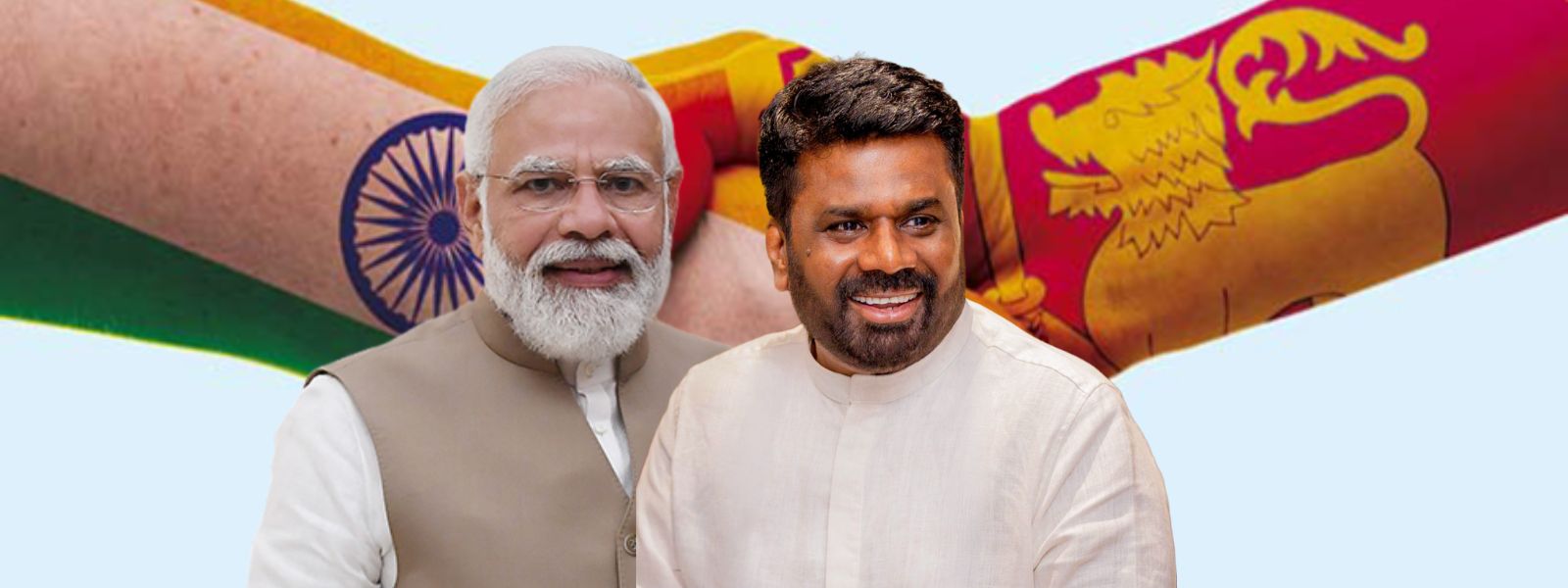
Indian Prime Minister Narendra Modi who is expected to visit Sri Lanka early next month will participate in the groundbreaking ceremony for the ground mounted solar project in Sampur in the Western Province, Daily Mirror learns.

The Indian leader is expected to arrive in the country on April 4 for a two-day visit at the invitation of President Anura Kumara Dissanayake.

The President extended the invitation during his first state visit to New Delhi in December, last year.

Energy connectivity, including the interconnection of the two power grids, is among matters envisaged in the joint statement between the two countries issued after the conclusion of the visit.

Emphasising the need for reliable, affordable and timely energy resources for ensuring energy
security and meeting basic needs of the people, both leaders underscored the importance of
strengthening cooperation in the energy sector and facilitation towards timely implementation of ongoing energy cooperation projects between India and Sri Lanka.

In this regard, the leaders agreed to: take steps towards the implementation of the solar power project in Sampur and further augment its capacity as per the requirements of Sri Lanka, according to the joint statement The Sampur solar project will be implemented as a joint venture between the Ceylon Electricity Board (CEB) and the National Thermal Power Corporation (NTPC) of India.

The Cabinet clearance has already been given for the power purchasing agreement. The power, to be generated,will be purchased at a little over five US cents per unit. It will be a 120 Megawatt power plant.The Indian Prime Minister arrived in Sri Lanka for the first time during first tenure in office in 2015.

During that visit that took place during the time of the Yahapalana government, he discussed the need for the development of Trincomalee as a petroleum hub. Later, in May, 2017, he arrived in Sri Lanka to participate in the International Vesak Day celebration.

Posted in Uncategorized

RAW uncovers Sri Lankan casino money laundering operation

The Indian Research and Analysis Wing (RAW) has uncovered a major money laundering operation tied to a Sri Lankan casino, allegedly used by Indian billionaires to launder undisclosed earnings.

The operation, involving a travel agency called Hamoos Travels, has raised alarms within the Indian intelligence community and law enforcement agencies.

Reports indicate that Hamoos Travels, a company offering services for Indian tourists visiting Sri Lanka, has been facilitating money laundering activities.

What started as a typical travel agency with flight and hotel booking services has reportedly expanded to offer access to Sri Lankan casinos, where payments for gambling can be made directly in India.

This has made the casino a popular choice for laundering black money from India.

The casino linked to Hamoos Travels is owned by a prominent Sri Lankan business tycoon, and its role in the laundering scheme is central.

The first phase of the operation involves transferring large sums of black money from India to the casino.

Once the money arrives, an agent travels to Sri Lanka to gamble.

The agent receives a substantial portion—about 80%—of the transferred amount as “winnings.” The remaining 20% is kept by the casino as commission for facilitating the laundering process.

This illicit operation, which has been ongoing for several years, drew the attention of Indian intelligence agencies due to the increasing number of Indian nationals reportedly receiving large casino winnings in Sri Lanka.

RAW launched an investigation and discovered that all of the casino winnings being transferred from Sri Lanka originated from a single casino.

RAW subsequently accessed the casino’s data, revealing that none of the individuals involved were genuine winners.

According to financial intelligence, the winnings were merely part of the laundering scheme, with the 20% commission going to the casino while the rest was funneled back to the launderers as “winnings.”

Based on this intelligence, Indian authorities have launched a major operation. The employees of Hamoos Travels attached to its Sri Lankan operations were arrested, including 65 individuals. Among those arrested are a number of Sri Lankan women.

In response to this operation, the Indian government has issued a warning to its citizens, advising them not to visit Sri Lanka to gamble in casinos.

Meanwhile, the Sri Lankan casino industry is reeling from the fallout.

Casinos that once saw large numbers of Indian nationals visiting in groups have seen a sharp decline in business.

One employee of a major Sri Lankan casino revealed that the number of Indian gamblers, who previously numbered over 150 each weekend, has now dropped to zero.

In a statement, an official from the Indian Embassy’s Commercial Section said that the Indian government will engage in diplomatic discussions with the Sri Lankan government to address the situation.

The casino in question has already begun to feel the financial impact, laying off a significant number of staff and announcing plans to close one of its major properties in April.

Nomination Dates Set for Mannar, Punakari, and Dehiattakandiya

The Election Commission has scheduled the nomination process for the local government elections in Mannar, Punakari, and Dehiattakandiya to take place from March 24th to March 27th, until 12 noon.

According to the Chairman of the Election Commission, R.M.A.L. Ratnayake, security deposits for these nominations will be accepted from today until March 26th, 12 noon.

This decision follows the conclusion of legal proceedings related to the previous nomination process for these local government bodies.

Meanwhile, the Election Commission has announced that the election for the Kalmunai Municipal Council will not be held due to an ongoing court case regarding the establishment of a new municipal council named Saindamaruthu.

Additionally, the Elpitiya Pradeshiya Sabha election will not be conducted this time, as members were already elected in a previous election.

Posted in Uncategorized

Election Officials Meet to Prepare for LG Polls

District Returning Officers, Deputy and Assistant Returning Officers were summoned by the Election Commission to discuss the upcoming Local Government Elections.

During the meeting, extensive discussions were held regarding the process of accepting nominations, according to National Election Commissioner General Saman Sri Ratnayake.

He emphasized that the acceptance of nominations is the first step in the election process.

As of now, 57 independent groups have deposited their security deposits for 168 local government institutions. Additionally, 18 political parties have also made their deposits.

The nomination acceptance process is scheduled to commence on March 17th.

Posted in Uncategorized

Chamal Rajapaksa to contest LG elections

Former Speaker Chamal Rajapaksa has announced his candidacy for the upcoming Local Government Elections under the Sri Lanka Podujana Peramuna (SLPP) from the Hambantota District.

Speaking to the media, Rajapaksa emphasized that the SLPP intends to field a significant number of young candidates in the district.

He also highlighted the party’s commitment to inclusivity, stating that its candidate list includes women and senior politicians, including himself.

Posted in Uncategorized

2025 LG Elections: 18 parties, 57 independent groups place deposits

The Election Commission has issued a statement regarding the political parties and independent groups that have placed their deposits thus far to contest the 2025 Local Government (LG) Elections.

It states that, as per the process of accepting deposits that began on March 3, deposits have been placed for 168 Local Government institutions as of 4.15 p.m. on Friday (March 7).

Accordingly, the Election Commission stated that 18 recognized political parties and 57 independent groups have so far placed deposits for these 168 Local Governments.

Meanwhile, Samagi Jana Balawegaya (SJB) MP Nalin Bandara says that it will be possible for the SJB to claim victories in a significant number of Local Government institutions in the upcoming Local Government Elections.

He says that a meticulous plan has already been prepared to gain power in the Colombo Municipal Council.

Meanwhile, MP Namal Rajapaksa claims that many who supported the National People’s Power (NPP) in the previous elections have rejoined the Sri Lanka Podujana Peramuna (SLPP) after realizing the truth.

However, Deputy Minister Nalin Hewage stated that the opposition parties will be left out and wiped out after the local government elections.

Posted in Uncategorized

Japan and Sri Lanka sign deal to restructure $2.5 billion in loans

Sri Lanka signed a deal with Japan Friday to restructure $2.5 billion in loans, marking the first agreement with bilateral creditors who had pledged debt relief to the cash-strapped nation last year.

Japan said it was granting concessions on a 369.45 billion yen ($2.5 billion) loan under a comprehensive debt treatment plan, which the International Monetary Fund considers essential for Sri Lanka’s economic recovery.

“The development of Sri Lanka, which is located at a strategic point in the Indian Ocean, is essential for the stability and prosperity of the entire Indo-Pacific region,” the Japanese foreign ministry said in a statement.

“Japan intends to further contribute to the sustainable development of Sri Lanka.”

Colombo’s finance ministry said Tokyo had played a “pivotal role” in helping Sri Lanka restructure its debt.

“Its leadership, commitment, and constructive engagement have been instrumental in helping Sri Lanka navigate the challenges of economic recovery,” the ministry said in a statement.

Sri Lanka announced last June that it had reached an understanding with all its bilateral lenders to delay repayments until 2028.

Formal agreements were delayed due to protracted negotiations, making Friday’s deal with Japan the first with an official creditor of the South Asian nation.

China remains Sri Lanka’s largest bilateral lender, accounting for $4.66 billion of the $10.58 billion borrowed from other nations. Japan is the second-largest lender, with just over $2.5 billion in loans.

The government of leftist President Anura Kumara Dissanayake, which came to power in September, had hoped to finalise debt deals before the end of last year.

The island nation defaulted on its $46 billion external debt in April 2022 after running out of foreign exchange to finance even the most essential imports, such as food and fuel.

Its economy has since recovered following an IMF rescue package and the implementation of austerity measures aimed at repairing the government’s ruined finances.

In November, Dissanayake announced that Sri Lanka would honor a deal secured by his predecessor to restructure $12.55 billion in international sovereign bonds, a key condition for maintaining the $2.9 billion, four-year IMF bailout loan.

A majority of private creditors to the South Asian nation agreed in September to a 27 percent haircut on their loans.

As part of the agreement reached in September and ratified by the new administration, bondholders will also take an 11 percent cut on overdue interest payments.

Sri Lanka secured its IMF bailout in 2023 after doubling taxes, withdrawing energy subsidies, and raising the prices of essential goods to shore up state revenue.

The new government has vowed to keep up the reforms in line with the IMF bailout.

The JVP insurrection of 1971 as I saw it as GA Ampara

In April 1971, there occurred the JVP insurrection which assumed significant proportions in the Ampara district. Rohana Wijeweera, the leader of the JVP at the time, had been arrested in Ampara, at the bus-stand a few months earlier and was in remand in far-away Jaffna. However, the cells he had initiated in the district schools, specially those with selected teachers and some of the best of the senior students continued to thrive — in Ampara those following science subjects were very active specially in the predominantly Sinhala areas.

On the night of April 4, 1971, the police station at Uhana — five miles away from where we lived — was attacked by a band of JVP militants. Shooting and grenade throwing had continued on both sides for or about two hours and some policemen suffered injuries. One JVP cadre had been killed and the police had seen others who were injured being carried away by the raiding party. As soon as the news was conveyed to me at daybreak, I motored up to Uhana and had my first sight of a dead militant.

He was a strong, strapping lad of about 20 years, dressed in a dark blue uniform. His body was still lying on the lawn of the police station grounds awaiting the post mortem. It had not been moved, and the weapon – a .303 rifle was lying by his side. His Che Guvera blue cap had fallen off and blood from the bullet hole in his forehead stained his face. I would never forget my first sight of the encounter of young militant against the state.

The police reacted very effectively in raiding the JVP hideouts in the jungles and I saw a group of captured students and a science teacher at the Maha Vidyalaya in Ampara being brought into the kachcheri cowering in the police jeep. The ‘boys’ had been camping out in the forest for a few days and appeared very dispirited and downcast having been badly assaulted.

Down towards the bottom of the district on the Moneragala border, a local JVP leader had set himself up as ‘Siyambalanduwa Castro’. His forte was the hijacking of government lorries laden with produce from the Eastern province bound for Badulla. Bags of rice and coconuts from Akkaraipattu were the main items of his brigandry. Soon, I had one of the cooperative department lorry drivers producing to me an official-looking receipt duly signed and sealed by ‘Castro’ which declared that the JVP had taken the twenty bags of rice being carried in lorry number such and such. It stated that the bags had been requisitioned at a time of emergency and acute food shortage for distribution to the poor. The driver should not be held responsible for any loss.

I gave the benefit of doubt to the lorry driver and absolved him from causing any loss to the state. I kept Castro’s receipt with me for a while as a memento of those stirring days of the beginning of the movement for the liberation of the poor of Uva.

The counter-action against the JVP uprising was intensive for the first month or so. Then in the month of May, there came an amnesty in which many thousands of young men and women surrendered. They were incarcerated, several, for quite some time. Many stories were later circulated about the number of young persons killed and the methods used by the military and the police in extracting information. My office and home became a place where anxious parents came to relate their tales of woe.

One morning, I was awakened by the sounds of heavy sobbing outside my gate. It was Jayawickrema of Uhana, whose house was a few yards away from the police station that had been attacked. He said his young son, Mihira, aged 23 had been taken in for questioning by the police and had been assaulted throughout the night. Jayawickrema had gone to the station and spoken to Weerasena, the OIC, who he knew well, but the OIC had denied that Mihira was taken in.

Later Jayawickrema found out that his son and three other boys had been taken away in a van to Batticaloa. I had the story inquired into and found that young Jayawickrema had indeed been taken in, beaten up badly and taken to the Batticaloa Hospital. On the way he had succumbed to his severe injuries. He had thereafter, been cremated in the Batticaloa cemetery. Old Jayawickrema was completely devastated and consoling him proved exceedingly difficult. He remained a constant friend until he passed away a few years ago.

Other stories also began to come from the colonies about police brutality. One that was particularly haunting was that of a group of youngsters from the 26 Colony shot in the presence of others as an example of what would be the fate of those who rebelled against the state. One of the mothers, whom we also began to know quite well, lost her mind on the death of her two sons and spent most of her time thereafter around the Buddangala Arannya where we used to meet her.

Once those who had surrendered came in, I was asked to find accommodation for about a thousand of them in Ampara. The only available site I had was the Malwatte Farm which was five miles away on the road to Samanthurai. I had earlier denuded the farm of all its goats and poultry, having to cater to the insatiable demands of the police for meat, when supplies stopped coming in from outside.

I sought authority from no one for my actions in dealing with an emergency but was certain I could adequately explain this to the government audit, if ever that were to arise. I remembered that Sir Oliver Goonetillake, when he was the Civil Defence Commissioner in war time, had done all manner of similar things and had had apparently 999 audit queries against him. I thought that if he could get away with it and yet go on to become governor-general, what had I to worry about?

We turned Malwatte Farm into a really effective rehabilitation center. Of course, the camp was heavily guarded and encircled with barbed wire and sentry points and looked like something out of an album of a prison camp in World War 11. But I was determined to make the inmates feel that they were to be rehabilitated and not imprisoned. I got them gifts of sports equipment and books from the local Rotary Club and some reconditioned two-wheel tractors from the department of agriculture which, along with the farm equipment, the boys began to use for their work on the farm. I used to drop by as often as I could to chat with them along with Esala, my 10-year-old son who became quite a favourite with the `boys’ since he was, as they said, the GA’s son and not the ASP’S son.

One day the camp inmates approached me and inquired if they could have a monk to visit them preferably on a Poya Day as some of them wanted to observe ‘sil’. This, I thought was such a good idea, that I prevailed upon the Nayake Priest of the Ampara Temple to come along with me to the camp and give a sermon to the inmates. It was a wonderful occasion when on that full moon night of Poson, the camp took on a most peaceful appearance and the boys used their bed sheets sewn together as ‘pavada’ which they laid for the priest to walk on to the platform from which he delivered a very appropriate sermon.

The atmosphere and the faces of the devout young men were indescribable. During that whole year there was only one case of a break out, when one night, a group of four boys had tunneled their way under the barbed wire fence and got away under the noses of the sentries.

Ampara Gets a CO

After the initial shock of the attack on the Uhana police station had been withstood and the police had mobilized their own defences however inadequately, the government imposed a coordinating officer for the district. He was a young Lieutenant Commander, Fernando, of the Navy who wanted to make a big impression. He migrated to Australia soon after his Ampara assignment. The coordinating officer had his own methods of imposing his leadership over me.

He set himself up at the Kondawattuwan Circuit Bungalow and had it ringed round by several concentric circles of armed sentries. It was very impressive. Consequently, it was quite an effort even to pay a call on him. I was received with great formality and courtesy but made to undergo quite an ordeal entering his fortress. My official driver, poor Weerasekera, was made to halt the car at least a 100 yards away from the entrance and wa1k.30 paces with his hands raised high above his head. It was only on his completely satisfying the sentries that he was indeed the driver of the GA that we were able to proceed inside. All this after informing them of my time of arrival in advance!

My own defence tactics were much more primitive. All I had were my faithful kachcheri staff officers: Piyadasa Liyanaarachi, U G Jayasinghe, Lakshman Perera, S B Niyangoda, A P Dainis, and the late Ananda Herath. They were duly mobilized and served with distinction as my personal bodyguards and doing night duty protecting the residency, smartly dressed in multi-coloured sarong and short-sleeved banian.

Damayanthi was persuaded to accommodate them, some on beds and some on camp cots, and feed us all for about three weeks at the residency. They provided great companionship and some much-needed good humour during a time of danger. Padmaseela de Silva — one of the braver ones — volunteered to act as the outdoor watchman choosing as a look-out point the hood of the balcony, which was, as he himself made out, both safe and from where he could not be seen. Everything went well for a couple of nights until Dainis going out for a ‘call of nature’ early one morning heard sounds of loud snoring. He discovered it came from Padmaseela, fast asleep and with his ancient 12 bore shot-gun, recently borrowed from the kachcheri, lying snugly by his side.

Source:The Island