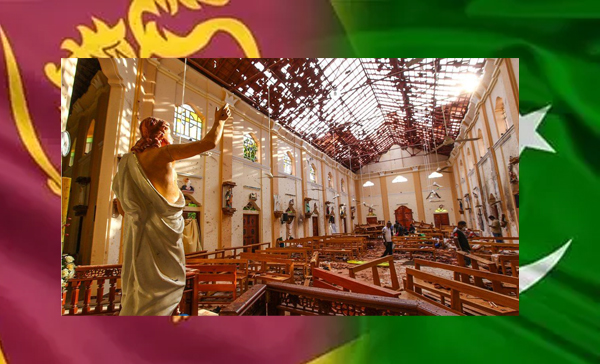
It has been five years since the 2019 Easter Sunday terror attack. Just like that fateful day, today’s fifth anniversary also falls on a Sunday. Despite the passage of time, numerous questions remain unanswered. It is no secret that the tragic events of that day had a significant impact on the political landscape, leading to the election of ousted President Gotabaya Rajapaksa in the 2019 Presidential Election and subsequent landslide victory in the 2020 General Election.
Furthermore, it is widely known that the Catholic Church in the country played a significant role in mobilising the Catholic community to support the ousted president, with the expectation of receiving justice for the victims of the attacks in return.
“Unfortunately, the hopes of the Catholic Church were dashed by former President Gotabaya Rajapaksa,” remarked His Eminence Malcolm Cardinal Ranjith. He expressed feeling deceived by Rajapaksa, stating that the support of Sri Lanka’s Catholic Church during the 2019 Presidential Election was obtained on false pretenses.
Fielding questions, during the Media briefing on 17 April, at the Colombo Archbishop’s House, Cardinal Ranjith lamented that ousted President Rajapaksa had given him and the Catholic Church a promise to probe the 2019 Easter Sunday Attack once he came to power. However, this did not happen. Explaining, he said that Rajapaksa had indefinitely postponed the probe after accepting the report of the Commission, appointed by former President Maithripala Sirisena, into the Easter Attacks.
“At one point we burnt our hands, we were deceived. I was tricked by the ousted President,” the Cardinal said with feeling.
Cardinal Ranjith said he hoped that the leaderships of all parties and all alliances would understand the seriousness of the 2019 Easter Attacks and investigate it. He said the Samagi Jana Balawegaya (SJB) had sent a written pledge that they would resolve the issue should they be voted into power. Also, the National People’s Power (NPP) has, by word of mouth, pledged to resolve the issue.
“However, we have not received it in writing yet,” he noted pointing out that although he had given an appointment to the NPP he was not aware as to why they wanted to meet him. “But, should they also give us such a written pledge that too would be reviewed for consideration.”
“We should not make pledges too close to the Elections, instead steps should be ataken to resolve incidences such as the 2019 Easter Attacks, when they occur,” Cardinal Ranjith observed noting that he saw a weakness in the leadership of the country. What Church and the community hopes is that the political leaders of the country would abide by the pledges they make, he said.
“What the country needs is a programme. With Presidential candidates mushrooming we don’t know what is going to happen,” he said noting that people do not have to eat, they don’t have money to spend, their salaries are not adequate to meet the daily expenses as the cost of living has increased tremendously. Giving 10 kilos of rice or some money or dry rations was no help for those living under a great deal of mental strain and pain,” Cardinal Ranjith observed adding that the poor and the middle-class families were those who had been affected the most.
Cardinal Ranjith announced that all names of those who perished in the explosions at the Katuwapitiya church, Kochchikade church and the Zion church will be handed over to Apostolate Nuncio ( Vatican Ambassador) during the commemoration programmes which are to be held on Sunday (21) and the process of declaring these victims as martyrs will begin on that day.
The victims will be initially declared as ‘heroes of faith’ which is the first step towards declaring someone as a martyr. These victims can be called martyrs as they went to church on that fateful day because of their faith, he added explaining the catholic tradition.
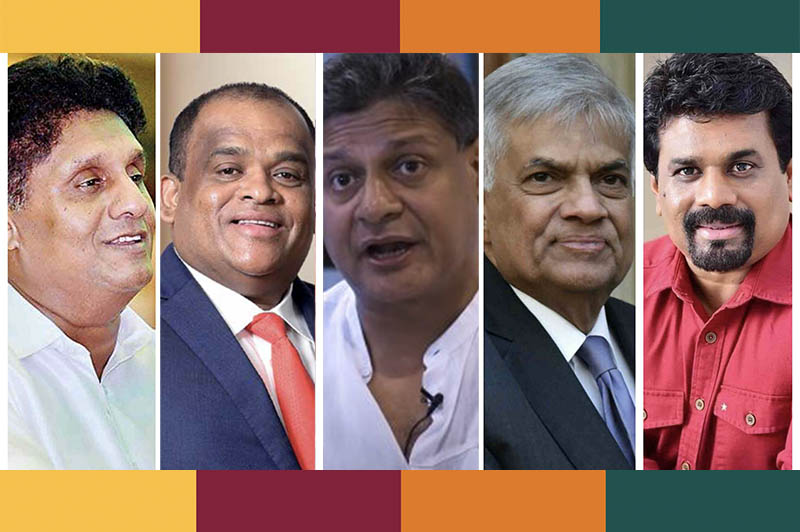
Meanwhile, amidst the political landscape, Opposition parties Samagi Jana Balawegaya (SJB) and National People’s Power (NPP), now rivals vying for support in the upcoming Presidential Election, have each presented their plans to Cardinal Ranjith regarding justice for the victims of the Easter Sunday attacks.
The SJB was the first to offer their proposals, as highlighted by Cardinal Ranjith in a press conference. Subsequently, the NPP also sought a meeting, though Cardinal Ranjith initially expressed uncertainty about their intentions. However, the following day, an NPP delegation met Cardinal Ranjith and presented their seven-point proposal on the matter.
Factions come together
After weeks of back-and-forth scathing attacks against each other and a series of lawsuits regarding the leadership of the Party, ‘Maithripala Sirisena’ and ‘Nimal Siripala de Silva’ factions of the Sri Lanka Freedom Party (SLFP) met on 17 April at the BMICH, Colombo to mark the 108th birth anniversary of the world’s first woman Prime Minister, the late Sirima Bandaranaike.
The event was attended by many high-profile members of SLFP.
The attendees included the daughter of Sirima Bandaranaike, former President Chandrika Bandaranaike Kumaratunga, former President Maithripala Sirisena, Minister of Justice Wijeyadasa Rajapakshe, Acting General Secretary of SLFP Sarathi Dushmantha Mithrapala, Treasurer of SLFP Lasantha Alagiyawanna, State Minister Jagath Pushpakumara, and State Minister Suren Raghavan and many others.
Interestingly, the two factions sat on either side of the event hall.
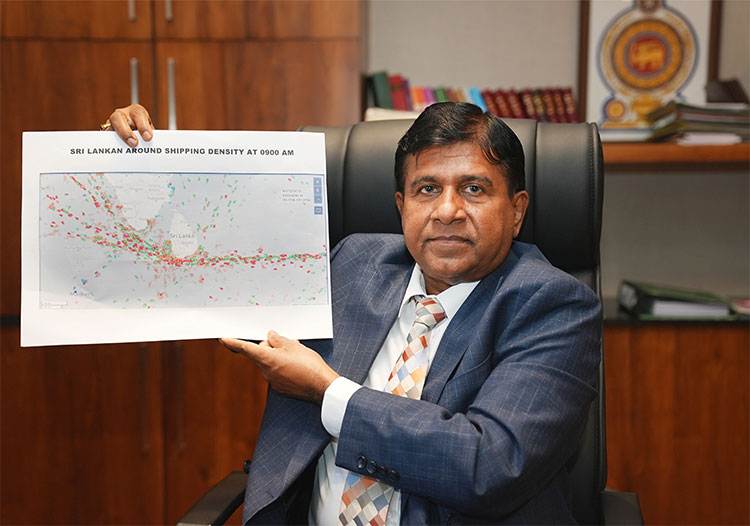
Addressing the event, Acting President of SLFP and Minister of Ports, Shipping and Aviation, Nimal Siripala de Silva, claimed the late Prime Minister Sirima Bandaranaike’s aura was more of a man than a woman and such a male leadership is required for Sri Lanka Freedom Party (SLFP) to move forward.
He passionately added that late PM protected the party by not handing out organiser posts to people for merely being a funder to the party or to random rouges who were gallivanting in the streets. He claimed that unlike some leaders, late PM Sirima did not take an authoritative stance when it came to the wellbeing of the party and protected the democratic values within the party.
Former President Sirisena, also addressed the crowd and said that the existing crisis in SLFP is but a trivial issue in comparison to the abolishing of civic rights of the late PM Sirima by the then J.R. Jayewardene government. Claiming that children and in-laws of the late PM Sirima abandonned her at such a moment, former President Sirisena said that members like himself, stood by the side of “the great mother”.
He also asked the gathered party members as to how they can work in collaboration with other parties while standing in front of the statues of S.W.R.D. Bandaranaike and Sirima Bandarainake. The former President also refuted any claims of him allegedly favouring members over funding or any other form of cronyism.
The Minister of Justice, who recently said he acknowledged the requests made by members of the SLFP working committee to contest in the upcoming Presidential Election and will announce his final decision in the coming days, received a warm and cordial welcome upon arrival by some SLFP members with State Minister Raghavan even publicly wishing the Justice Minister well in his future endeavours.
Former President Chandrika Bandaranaike Kumaratunga who spoke to the media, said their attempt is to rescue the SLFP from the grip of Sirisena who tries to destroy the party.
Meanwhile, the Election Commission said it has no legal authorisation to intervene to resolve the internal rifts of the SLFP.
Members of the election body convened a meeting on Thursday (18) to study the documents submitted by the factions within the SLFP with regard to the recent changes made to the party positions.
The documents pertaining to these new appointments were handed over to the Election Commission by MP Dissanayake, while the party’s Acting General Secretary Sarathi Dushmantha Mithrapala filed objections challenging them.
When the Election Commission met on Thursday, the submitted materials were extensively reviewed by the members, who were of the view that the party’s infighting should be resolved through the Courts, as the election body has no authorisation to do so under the existing legal scope and procedures.
Pointing out that it can neither intervene nor take action regarding the internal crises of any political party, the election body members noted that they can, however, decide on accepting the nominations of SLFP candidates if the party’s infighting is dragged out until after the elections are declared.
Debt restricting negotiantions
The government has rejected two counterproposals, presented by the bondholders, during last month’s Sri Lanka’s debt restructuring negotiations in London, as these counterproposals did not align with the Debt Sustainability Analysis (DSA) criteria set by the International Monetary Fund (IMF), Senior Adviser to the President on National Security and Chief of the Presidential Staff, Sagala Ratnayake said.
A group of bondholders, known as a steering committee and government representatives came away from a first round of negotiations in London without a deal.
Speaking to the media at the Presidential Secretariat, in Colombo, Ratnayake stated that Sri Lanka however agreed on two out of the four counterproposals presented during the London meetings.
He expressed optimism in concluding the entire debt restructuring process by June and accessing the next pending USD 337 million tranche of the IMF’s USD 2.9 billion Extended Fund Facility.
“We are hoping to commence the second round of debt restructuring discussions with bondholders as soon as the ongoing IMF/World Bank spring meetings in Washington, DC are over,” he added.
Following these meetings, Central Bank of Sri Lanka (CBSL) and Finance Ministry officials plan to visit Washington, DC to restart talks with bondholders.
He also revealed that the nondisclosure agreement relating to the London talks ended yesterday.
Depending on the final outcomes of these discussions, Sri Lanka plans to sign Memorandums of Understanding (MoU) with bilateral creditors.
The Official Creditor Committee (OCC) Secretariat is currently in a final drafting process of related MoUs in consultation with all Paris Club and non-Paris Club members, such as India and China according to sources.
China participates as an observer in the OCC meetings and has given assurances to the OCC that it will carry out debt restructuring negotiations on the same terms.
“The Government is still undecided about whether it will sign the bilateral agreements with each country or sign one agreement with all OCC member nations and non-OCC nations like India and China separately,” Ratnayake clarified.
As Ceylon Today exclusively reported on 7 and 14 February, the debt-ridden Government sent its updated private debt restructuring proposal to private creditors through its legal and financial advisers. Based on the counter proposal’s debt restructuring proposal, the Government and its financial advisers-initiated discussions in London.
However, during these meetings, bondholders submitted a counter-proposal containing four new suggestions.
CBSL Governor, Dr. P. Nandalal Weerasinghe and Finance Ministry Secretary K. M. Mahinda Siriwardana represented the GoSL in debt restructuring negotiations. They were joined by the Government’s financial adviser Lazard and legal adviser Clifford Chance at these talks.
Ratnayake also said that borrowings from the Chinese Development Bank (CDB), treated as private creditor debt and Sri Lanka intends to achieve a similar outcome with the CDB as with all private creditors.
GoSL earlier stated that they were seeking a six-year debt moratorium from all bilateral and private creditors starting from April 2022, the date when the debt standstill was announced.
According to sources the disagreements related to the DSA arose alongside Sri Lanka’s weaker-than-expected GDP growth forecasts. According to the IMF DSA, Sri Lanka aspires to bring down the debt-to-GDP ratio of 128 per cent to 95 per cent by 2032. This reduction is to be achieved through successful negotiations on debt restructuring, accompanied by reforms and growth projections.
CBSL is expecting a three per cent growth this year, but the World Bank’s forecast is around 2.2 per cent and the Asian Development Bank 1.9 per cent.
Among the USD 37 billion external debt undergoing restructuring, private creditors account for USD 20 billion. International bondholders hold USD 12 billion of this amount, specifically ISBs.
Iranian President’s visit
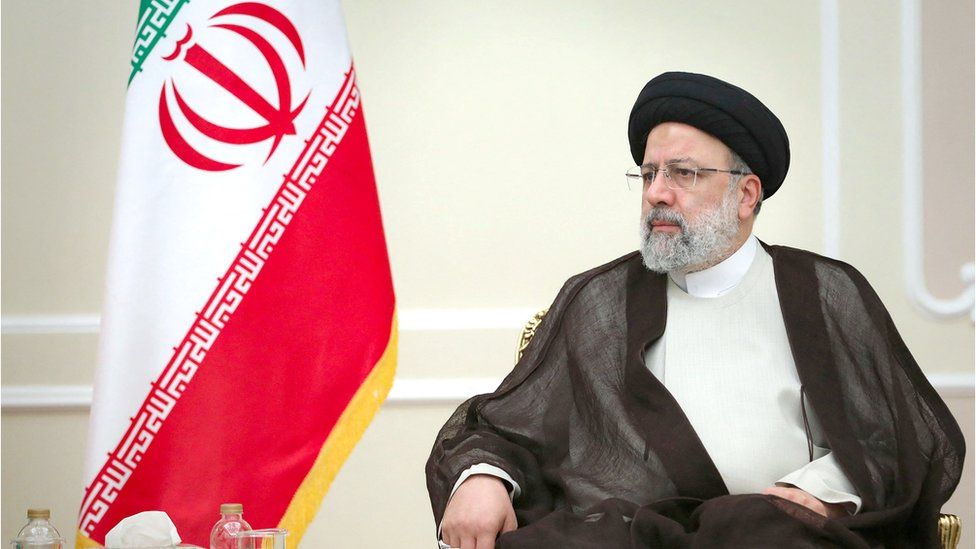
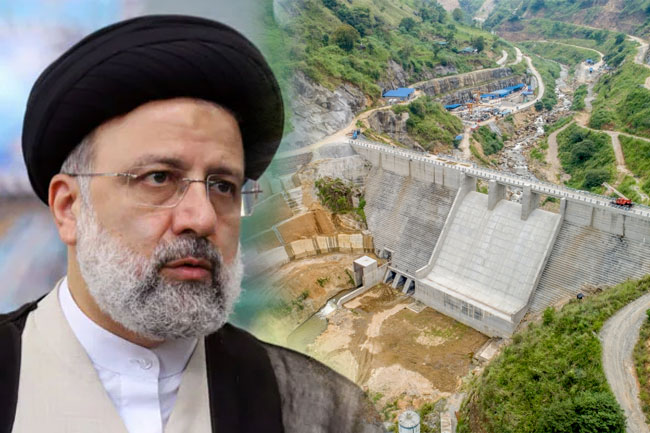
following an invitation extended three months ago, by President Ranil Wickremesinghe, Iranian President Ebrahim Raisi has agreed to visit Sri Lanka. The visit is scheduled for 24 April, during which President Raisi is expected to inaugurate the Uma Oya 120 MW project, funded by Iran. However, the Foreign Affairs Ministry has clarified that the date and visit are not yet officially confirmed.
This is the first time an Iranian President is visiting Sri Lanka after then President Mahmoud Ahmadinejad’s visit in April 2008.
The Uma Oya hydroelectric project, which received 85% funding from the Iranian Government, has recently reached completion at a total cost of approximately USD 529 million (approximately Rs 80 billion).
The Ministry of Foreign Affairs said that the invitation to President Raisi was extended some time ago by President Wickremesinghe. On the other hand, the Prime Minister’s office has confirmed the visit for 24 April and his visit is ‘positive’ however it can ‘change’. The Foreign Affairs Ministry emphasised that official confirmation will only be made in consultation with the Iranian Government.
President Raisi, a Muslim jurist who has previously served as Attorney General and Chief Justice and one of the four people on the prosecution committee, is slated to undertake the visit, although still pending confirmation amidst escalating tensions between Iran and Israel. This tension heightened after Iran fired missiles in response to an attack on the Iranian embassy in Syria.
Amidst heightened concerns regarding the timing of the Iranian President’s visit to the country, members of the ruling party raised inquiries during a Zoom meeting held on Thursday (18), questioning whether countries like Israel had expressed opposition to the visit.
Chief Government Whip Prasanna Ranatunga stated that thus far, no country has voiced opposition to the visit of the Iranian President.
In response, the President emphasised Sri Lanka’s commitment to a non-aligned foreign policy. He underscored that while maintaining diplomatic relationships with Israel, Sri Lanka also extends assistance to children in Gaza. The President highlighted the tradition of prudent foreign policy observed during the tenures of both the late Premier Sirima Bandaranaike and the late President J.R. Jayewardene, which continues to guide Sri Lanka’s approach in international relations.
President congratulates Chamari
President Ranil Wickremesinghe extended his personal congratulations to Sri Lankan cricketer Chamari Athapaththu following her remarkable performance in women’s cricket.
Athapaththu’s unbeaten innings of 195 runs off 139 balls led Sri Lanka to a memorable victory over South Africa, securing a draw in the ODI series.
In reaching out to Athapaththu, the President not only applauded her individual accomplishment but also acknowledged her significant contribution to enhancing the stature of women’s cricket in Sri Lanka.