US Deputy Secretary of State commends Sri Lanka’s economic efforts

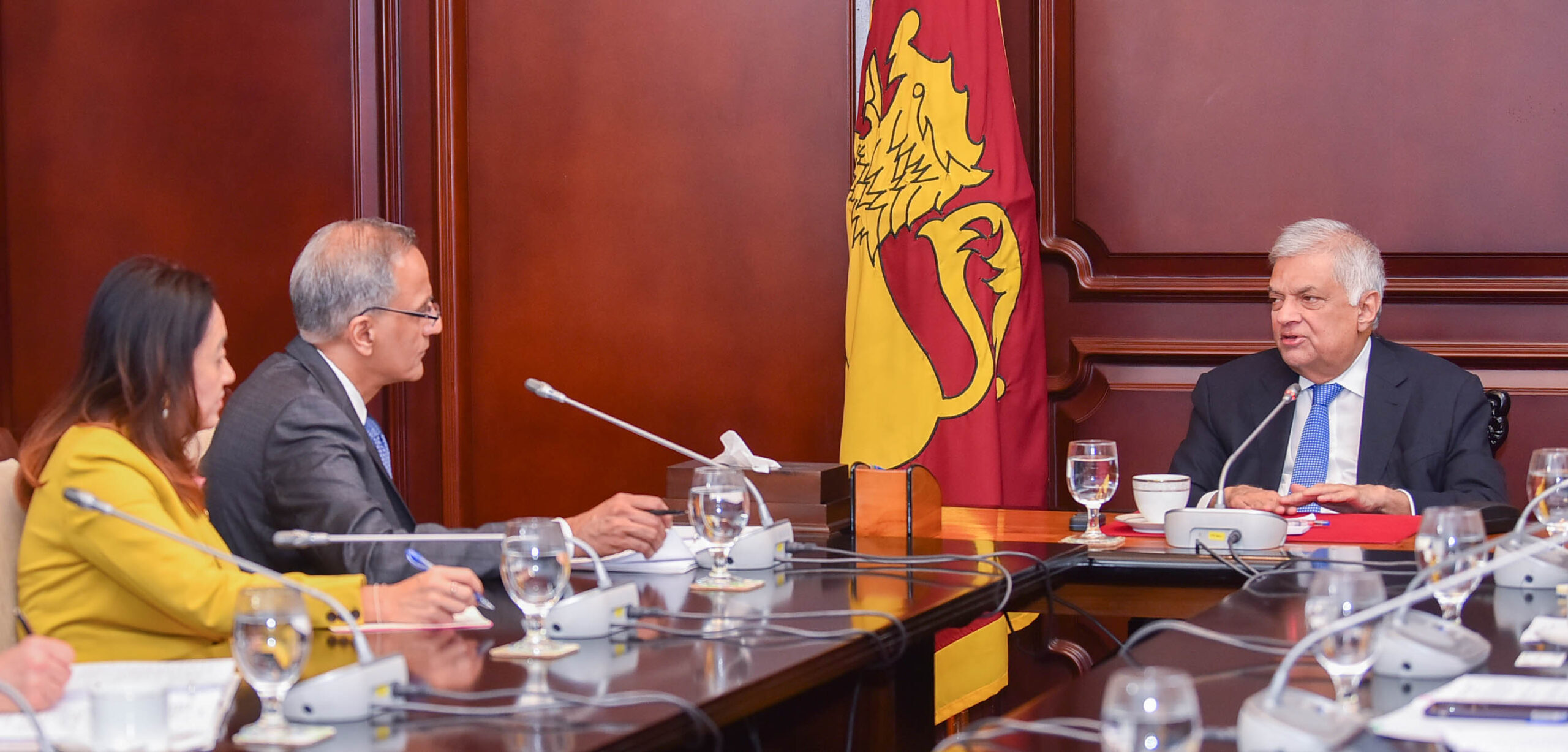
The United States Deputy Secretary of State for Management and Resources Richard Verma, who called on President Ranil Wickremesinghe expressed appreciation for the efforts taken by the Sri Lankan Government to turn the economy around.

During the discussions, the President outlined the progress of the debt restructuring, along with several key economic reforms measures, including the agriculture modernisation program.

Commenting on matters related to global security, the Deputy Secretary thanked the Sri Lankan Government for their assistance in the on-going naval operations in the Red Sea. The President stated that Sri Lanka remains committed to Freedom of Navigation in the Indian Ocean, echoing solidarity with Saudi Arabia’s stance on the Houthi rebels.

The President was accompanied by Secretary to the President Mr. Saman Ekanayake, Acting Secretary to the Ministry of Foreign Affairs, Mr. U.L.M. Jauhar, Director of International Affairs, Dinouk Colombage, and Director of America’s Desk at the Ministry of Foreign Affairs, Chathura Perera.

Posted in Uncategorized

Basil to Return for Sri Lankan Elections, claims Udayanga

A social media post by former Sri Lankan ambassador to Russia, Udayanga Weeratunga, has sparked speculation about the upcoming election.

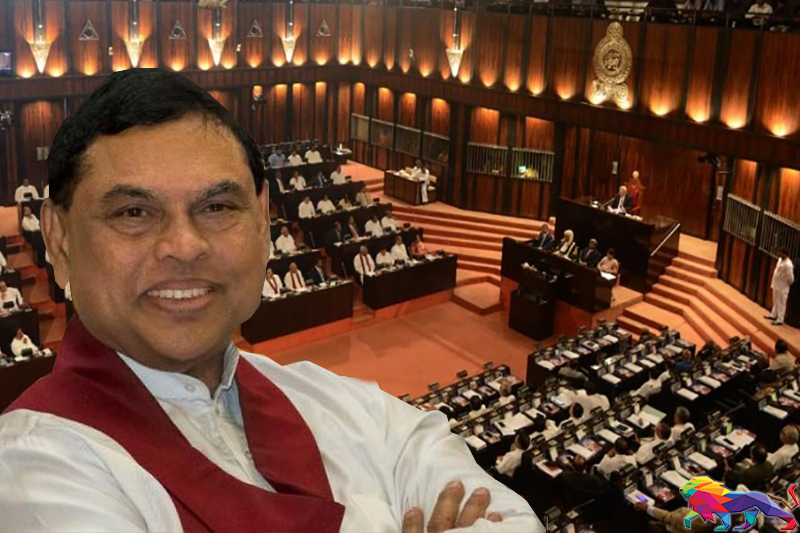
It claims that Podujana Peramuna’s “mastermind,” Basil Rajapaksa, will soon return to the island to lead the general election campaign.

The post further suggests that the elections will be held after Sinhala Tamil New Year and that Basil is working tirelessly to ensure his party’s victory, and not to reinstate Ranil.

Sri Lanka’s multi-aligned foreign policy based on friendship: Min

Sri Lanka’s multi-aligned foreign policy is based on friendship to all and enmity to none, its Minister of Foreign Affairs has said.

“Non-alignment means not becoming a bystander. Non-alignment means you are not forced or coerced into a camp to take sovereign decisions… you make your own choices. Whether it is commercial, security, regional or otherwise,” M U M Ali Sabry said on X (twitter).

“I have repeatedly stressed that sovereignty is the right to have your own opinion on what’s right and wrong, and to stand by your principles. Our multi-aligned foreign policy is based on friendship to all and enmity to none,” Sabry was quoting from his speech at the Lakshman Kadirgamar Institute of International Relations and Strategic Studies (LKI) Foreign Policy Forum, on the theme ‘Reassessing Non-Alignment in a Polarised World’.

Sri Lanka is one of the founding members of the Non-Aligned Movement.

The strategically located island has been increasingly walking a fine line between opposing global factions as it seeks to come out of a financial crisis.

Posted in Uncategorized

Internally Divided ITAK is in the Eye of a Legal Storm

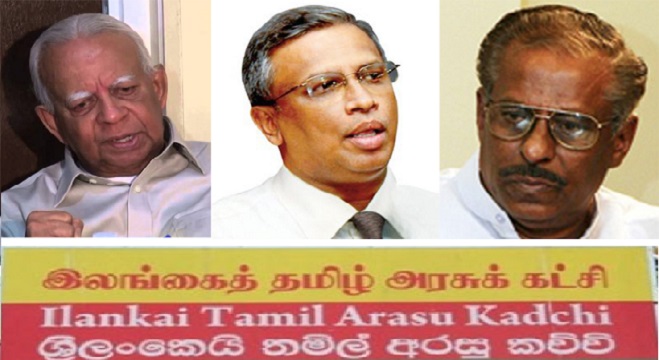
The Ilankai Tamil Arasu Kachchi (ITAK) known in English as the Federal Party (FP) is in the eye of a legal storm. The premier political party representing the Sri Lankan Tamils of the Northern and Eastern provinces is currently undergoing an internal crisis mainly due to recently held inner-party elections. Issues relating to the intra-party elections have brought about a clearly visible divide within the ITAK.

This in turn has led to an unprecedented situation where two members of the ITAK have sought legal recourse against allegedly illegal action by party authorities. Enjoining orders were obtained. Party Leaders were restrained from conducting its postponed National Convention on 19 February.

ITAK leaders were also restrained from implementing decisions made by the Party’s General Council on 21 and 27 January 2024. The General Council known as “Podhuchabhai” comprises members of the Central Working Committee and representatives elected by the party’s district branches. The stay order was issued on 15 February for 2 weeks until 29 February.

As a result of the court orders, the ITAK National Convention did not take place as planned on 19 February. Furthermore, courts have also restrained ITAK Party Leaders from implementing decisions reached at the party General Council meetings on Jan 21 and 27. The decisions reached on the two days were the election of a new party President on January 21, and the election of other office bearers on 27 January. Hence all the new party office bearers including the new President, Sivagnanam Shritharan are debarred temporarily from functioning in their posts.

As is the case with most democratic political parties, the ITAK too has several internal divisions. The fault lines within the ITAK came to the fore when the party’s General Council elected a new President, Secretary and other key office bearers in Trincomalee on 21 and 27 January 2024. These elections and their implications have been discussed by this writer in two articles published in our sister newspaper (Daily FT) on 24 January and 9 February 2024 respectively.

The new office bearers for the years 2024-26 were to be ceremonially announced at the party convention earlier scheduled for January 28. However the “old” ITAK President, Maavai Senathirajah in a controversial move unilaterally announced that the convention was being postponed indefinitely due to differences of opinion within the party. This had the tacit support of the “new” ITAK president Sivagnanam Shritharan. After some days it was announced that the party convention would be held in Trincomalee on February 19.

What happened next was that some party members sought legal intervention on 15 February to prevent the party convention from being held on February 19, on the basis that the number which voted at the elections was in excess of the numbers allocated to the General Council in terms of the ITAK party constitution. They also challenged the legality of the elections of office bearers on the basis that procedures set out in the party constitution were not followed.

Consequentially, the District Courts of Trincomalee and Jaffna issued Enjoining Orders staying the ITAK from holding its party convention or General Council meeting on February 19. This resulted in the party convention not being held on February 19. The Trincomalee Courts have also effectively stayed the functioning of the newly elected office bearers.

Trincomalee

Trincomalee was the venue of the ITAK General Council conclaves. The National Convention was also to be held there. In Trincomalee the complaint was filed by lawyer, Aishwarya Sivakumar on behalf of Para Chandrasekaram, the owner of “Para Hotel” and a resident of Konesapuri in Saambaltheevu. He is a member of the ITAK in the Trincomalee District. When the case was heard by Trincomalee District Judge, Manickavasagam Ganesharajah on 15 February, Geoffrey Alagaratnam PC along with Attorney-at-Law, Purantharan appeared for the petitioner.

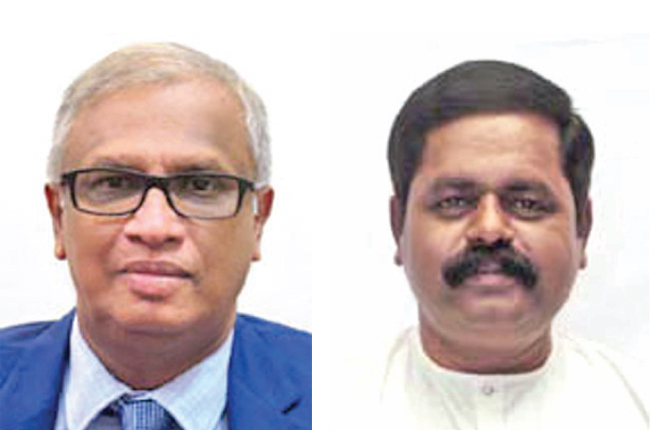
Seven ITAK leaders were named as respondents. They were Somasundaram Senathirajah, Sivagnanam Shritharan, M.A. Sumanthiran, Shanmugam Kugathasan, Pathmanathan Sathialingam, Seenithamby Yogeswaran and Xavier Kulanayagam.
Of these, Senathirajah known as “Maavai” was the ITAK President from 2014 to 2024. He remained as President officially on 21 January, when 321 members of the ITAK General Council voted to elect a new President. Shritharan was elected as the new ITAK President, with a 47 majority on January 21. Sumanthiran was a candidate at the party Presidential poll. He obtained 137 votes. The winner Shritharan got 184. Both Shritharan and Sumanthiran are Jaffna district MPs. “Maavai” is a former Jaffna MP.

Shanmugam Kugathasan is the ITAK Trincomalee District Chairman. He was elected as the new General Secretary of the ITAK on 27 January. Pathmanathan Sathialingam, a medical doctor was functioning as the Acting General Secretary of the ITAK until a new secretary was elected on the 27th. He is a former Northern Provincial Council Minister.
Seenithamby Yogeswaran is a former Batticaloa District MP. He was also a candidate for the ITAK Presidency, but withdrew in favour of Shritharan. Xavier Kulanayagam was elected as the ITAK’s new Deputy General Secretary on January 27. He was earlier the party’s Administrative Secretary.

Enjoining Orders

After hearing submissions praying for an Interim Injunction on behalf of Petitioner Para Chandrasekaram, Trincomalee District Judge, Manickavasagar Ganesharajah issued two Enjoining Orders valid for 14 days until 29 February when the next hearing is scheduled.

One enjoining order restrained the seven defendants namely, Messrs Senathirajah, Shritharan, Sumanthiran, Kugathasan, Sathialingam, Yogeswaran and Kulanayagam from holding/conducting the purported National Convention on 19 February 2024 until the hearing and determination of the application for an injunction.

The other Enjoining Order restrained the seven defendants, Senathirajah, Shritharan, Sumanthiran, Kugathasan, Sathialingam, Yogeswaran and Kulanayagam from implementing any of the purported decisions taken at the purported General Council meetings held on 21 and 27 January 2024 until the hearing and determination of the application for an injunction.

The Trincomalee Court’s Enjoining Order has restrained the party from implementing decisions taken by the General Council on January 21 and 27. What this meant was that the party Presidential election on January 21 and the election of other office bearers on January 27 cannot be followed through. None of those elected can function in their posts until the Courts make their final decision. The stay order is likely to be extended further unless an amicable agreement is reached.

The new office bearers elected are as follows – President – Sivagnanam Shritharan. Senior Vice President – CVK Sivagnanam. Vice Presidents – Charles Nirmalanathan, T. Kalaiarasan, P. Ariyanendran, P. Sathialingam and KV Thavarasa; General Secretary – Shanmugam Kugathasan. Deputy General Secretary – Xavier Kulanayagam. Assistant Secretaries – Shanthi Sriskandarajah, Ranjani Kanagarajah, Krishnapillai Seyon, T. Krukularajah, E. Saravanabavan and C Sivamohan. Joint Treasurers – P. Kanagasabapathy and Gnanamuthu Sreenesan.
Currently, none of these persons can function in the posts they were elected to.

Jaffna

The ITAK party headquarters is located at Martin Road in Jaffna. Peter Ilanchezhiyan, a member of the ITAK Central Working Committee petitioned the Jaffna District Court seeking an injunction against the postponed ITAK National Convention being held in Trincomalee on 19 February. Ilanchezhiyan is the son of former Northern Provincial Council Deputy Chairman, Anton Jeyanathan and the nephew of ITAK Deputy General Secretary, Xavier Kulanayagam. When the ITAK General Council meeting was in progress on January 27, Ilanchezhiyan had openly declared that he would go to Courts if the party constitution was not adhered to.

Ilanchezhiyan’s application was heard by Jaffna District Judge, Sinnathurai Sathiswaran. Lawyer Kumaravadivel Guruparan appeared on behalf of Peter Ilanchezhiyan. Five Persons were named as respondents. They were Somasundaram Senathirajah, Sivagnanam Shritharan, Shanmugam Kugathasan, Pathmanathan Sathialingam and Xavier Kulanayagam. Senathirajah and Shritharan are the old and new party Presidents, respectively. Kugathasan and Kulanayagam are the new General Secretary and Deputy General Secretary. Sathiyalingam is the former Deputy General Secretary cum Acting General Secretary.

In his submissions, Guruparan stated that the party constitution had been violated in constituting the General Council. Persons far in excess of the numbers eligible had attended the General Council meeting and voted at the election. Procedures set out in the party constitution were not followed. Some of the posts had been filled unlawfully.

Counsel Guruparan further stated that the holding of the party convention was improper because the party constitution stipulated that 21 days notice should be given in the media before the convention was held. This had not been done. An injunction against the National Convention being held on February 19 was sought. After hearing the submissions, the Courts issued an Enjoining Order. The convention was not held on the February 19.

Maavai Senathirajah

Several acts of commission and omission by ITAK leaders over the years have culminated in the current crisis. The main share of the blame should be borne by Maavai Senathirajah who functioned as party President for 10 years from 2014 to 2024. Senathirajah was the immediate cause for the present problem too. It was he who arbitrarily postponed the ITAK convention indefinitely. Otherwise it would have been held without any hitch on January 28.

Senathirajah postponed the convention unilaterally and illegitimately on the pretext that a group of persons from Batticaloa were objecting to the election of Shanmugam Kugathasan of Trincomalee as the new ITAK General Secretary. They were demanding that the post should be given to Gnanamuthu Srinesan a former Batticaloa district MP. Though Ex-President Senathirajah was not empowered to do so, he announced a postponement of the party convention until the issue was solved by electing a new General Secretary.

Shritharan and Sumanthiran met Senathirajah. In that meeting Sumanthiran emphasised that the election of Kugathasan as General Secretary was valid in fact and law. The Central Working Committee had endorsed it unanimously. The General Council had accepted it unanimously. Thereafter, it had been put to the vote also and carried forward with 112 voting in favour and 104 against. Therefore, it was not correct for Senathirajah to have postponed the convention on the basis that a new Secretary had to be elected.
Senathirajah disagreed. He said that he was going to Singapore for his son’s wedding and would be back in Sri Lanka on 10 February. He would re-convene a General Council meeting after his return and resolve the issue. Shritharan was amenable to Maavai’s suggestion. Srinesan and the Batticaloa group were Shritharan’s supporters. Kugathasan was perceived as being in the Sumanthiran camp.
Sumanthiran then said that Senathirajah’s suggestion was contrary to the ITAK party constitution. Senathirajah then retorted, “We don’t have to always work according to the party constitution.” Sumanthiran responded that violating the party constitution was unacceptable and could have legal consequences. Senathirajah, with tacit support from Shritharan, disregarded Sumanthiran’s legal advice and went off to Singapore.

Gentleman’s Agreement

After Senathirajah returned, an unofficial meeting was held in which an arrangement was arrived at. A gentleman’s agreement was reached where Kugathasan would function as General Secretary for one year. Thereafter, he would resign and Srinesan would function as General Secretary for a year. Thus the two year term of office was to be divided as one year each. This was followed by another announcement that the party convention would be held on 19 February 2024.

Subsequently, it was announced that the ITAK General Council too would be re-convened and a “mini –election” held. It was said that in terms of the ITAK constitution, it was the Deputy General Secretary who would automatically become General Secretary if the latter resigned. As such, it would be Deputy General Secretary, Kulanayagam who would become General Secretary, if Kugathasan resigned. Srinesan who had been elected joint Treasurer could not replace Kugathasan

Hence it was said that the General Council would be convened to hold two elections. Srinesan would become Deputy General Secretary, and Kulanayagam, Joint Treasurer. This was followed by a meeting between veteran ITAK Trincomalee MP, Rajavarothayam Sampanthan and Shritharan who was accompanied by ITAK Wanni MP, Charles Nirmalanathan. Tamil newspapers reported that Sampanthan had declared at the meeting that conspiracies should be thwarted and fresh elections to all posts in the ITAK should be held.

This caused a major upset in the ITAK circles. The party grapevine began humming that the idea of convening the General Council was not to have a mini-election but to have a major poll in which fresh elections were to be held for all the office bearers elected on January 27. It was strongly believed that people suspected of being Sumanthiran loyalists were going to be replaced by Shritharan supporters. Financial incentives provided by Tamil Diaspora elements were going to play a role as in the case of the party Presidential election of January 21. Rules, norms and procedures laid out in the ITAK Constitution were going to be brazenly flouted.

Constitutionalism Fought Back

It was then that the ITAK constitution or “Constitutionalism” fought back! The legal action initiated in Trincomalee and Jaffna was on the basis that the party constitution was not being adhered to. An Interim Injunction was sought. After ex parte proceedings, the courts have issued enjoining orders.

The crucial question that arises is what the ITAK leaders propose to do. It is blatantly obvious that the ITAK constitution has been flagrantly violated. Protracted legal proceedings may tie up the party in knots. There is also the danger of potential intervention by the Elections Commission. The party runs the risk of losing its registration and popular “House” symbol.

Crux of the Matter

This writer consulted some members of the legal fraternity over the ITAK legal wrangle. According to these legal eagles, the crux of the matter is the composition of the ITAK General Council and the decisions taken by this body on the 21st and 27th of January 2024.

The problem arose when Shritharan’s supporters disputed the decisions taken on the 27th of January and made attempts to change them. The legal challenges seem to be a defensive response to those perceived attempts.
If Shritharan and his supporters provide an assurance that no changes will be made to those decisions and that the newly elected office bearers including the General Secretary and Deputy General Secretary will be allowed to function in their posts, there are chances of persuading the two plaintiffs to withdraw the cases. If this is not done, the cases will drag on and even the position of Shritharan who was elected President on January 21st could be challenged.

Saner Counsel

As stated earlier, the ITAK is in the eye of a legal storm. Unless and until saner counsel prevails within the upper echelons of the ITAK, the party seems headed for protracted legal proceedings.
D.B.S. Jeyaraj can be reached at dbsjeyaraj@yahoo.com


Opp. fears govt. discarding SC recommendations on ‘Anti-Terrorism’ Bill

Former External Affairs Minister Prof. G. L. Peiris, MP, said that Speaker Mahinda Yapa Abeywardena’s refusal to accept that Supreme Court recommendations hadn’t been accommodated in ‘Online Safety Act No 09 of 2024’, would undermine their faith in the committee stage of a particular Bill.

The dissident SLPP MP said so when The Island sought his opinion on the SC determination on the ‘Anti-Terrorism’ Bill.

Against the backdrop of the continuing controversy over the circumstances under which the Parliament enacted the ‘Online Safety Bill’, the Opposition was seriously concerned about the Wickremesinghe-Rajapaksa government adopting the same strategy in passing the ‘Anti-Terrorism’ Bill.

Prof. Peiris emphasised that the Speaker even ignored the Human Rights Commission advice that SC’s recommendations hadn’t been accommodated. The academic, who recently aligned himself with the SJB, said that the genuine Opposition shared his concerns.

Several parties challenged the ‘Anti-Terrorism’ Bill in the SC in terms of Article 121(1) of the Constitution. The determination of the SC as to the Constitutionality of the Bill concluded as—

(a) Clause 3, Clause 42, Clause 53, and Clause 70 of the Bill are inconsistent with Article 12(1) of the Constitution and required a special majority to be passed by Parliament.

(b) However, the SC stated that the said inconsistencies can be ceased if the said Clauses are amended as per the Determination of the Court.

(b) Clause 4 has to be suitably amended as per the Supreme Court Determination. Clause 72 (1) is unconstitutional and needs to be passed by a Special Majority and a Referendum. The unconstitutionality will cease if this Clause is amended as per the Determination of the Supreme Court.

(c) Correspondingly, Clause 72(2) must be amended in accordance with the Determination.

(d) Clause 75 (3) infringed the Article 4 (c) read with Article 3 of the Constitution and required 2/3 majority and a Referendum. The invalidity will cease 7 upon the amendments suggested in the Determination.

(f) Clause 83 (7) requires a special majority to be passed into law. It has to be suitably amended as per the Supreme Court Determination.

Further, the Supreme Court has determined that subject to the amendments that have adumbrated to the provisions of the Bill by the Supreme Court, the Bill could be enacted into law with a Simple Majority only if the amendments determined by the Supreme Court are introduced to the provisions.

Prof Peiris said that the crisis highlighted the need for ex post facto judicial review, for which there is at present no provision in Sri Lanka. The position is otherwise in countries like the USA and India where an Act of Parliament can be impugned, even after completion of the legislative process, on the ground of conflict with imperative provisions of the Constitution. Such provision existed in Sri Lanka prior to the First Republican Constitution of 1972.

The former minister said that in the draft Constitution Bill which he presented to Parliament on 3 August 2000 on behalf of the Government of President CBK, appropriate provision in this regard was included. “Unfortunately, the Constitution was burnt in the Chamber of Parliament. This gap in our law should be filled, in my view, when a comprehensive exercise in constitutional reform is undertaken by a new Administration after the conduct of national elections this year.”

Posted in Uncategorized

Sri Lanka to get update on GSP+ cycle at EU joint commission meeting

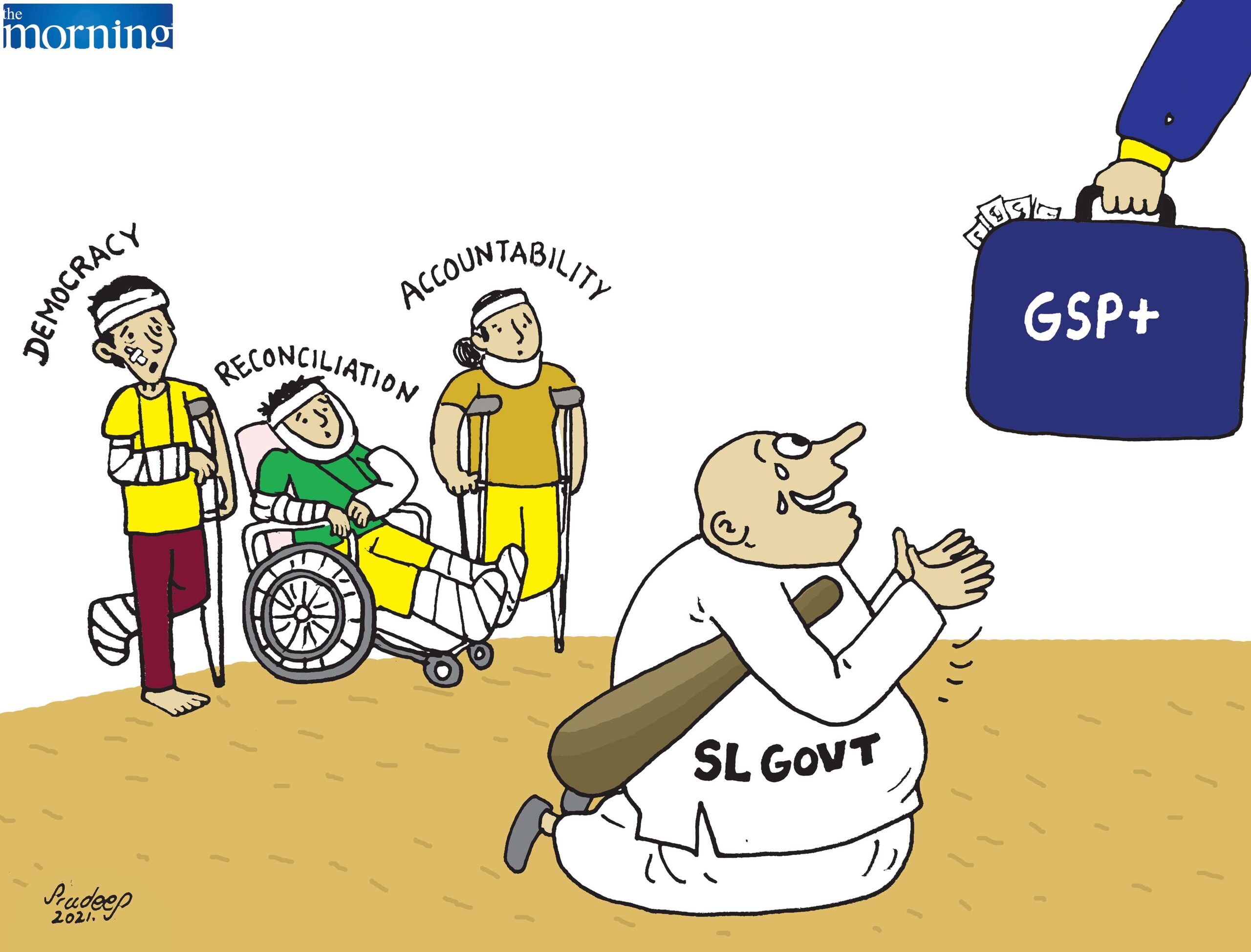
Sri Lanka will get an update on the GSP+ trade concessions at a Joint Commission meeting with the European Union, the Foreign Ministry said.

Three working groups on Governance, Rule of Law and Human Rights, Trade and Economic Cooperation, Development Cooperation will report to the Joint Commission.

“The European Union will also brief on the current developments in the EU including an update on new GSP Regulation and the new cycle of the EU GSP+ concessions,” the statement said.

The full statement is reproduced below:

The 26th session of the Joint Commission between Sri Lanka and the European Union will be convened on 22 February 2024 in Brussels. The meeting will be co-chaired by Secretary of the Ministry of Foreign Affairs of Sri Lanka Aruni Wijewardane and EU European External Action Service Deputy Managing Director for Asia Pacific Paola Pampaloni.

Sri Lanka delegation to the Joint Commission will comprise senior officials of the Ministry of Foreign Affairs, Attorney General’s Department and Ministry of Finance.

The EU- Sri Lanka Joint Commission serves as a platform for dialogue and cooperation between Sri Lanka and the European Union, covering a broad range of bilateral and multilateral issues of mutual interest inter alia trade and investments, development assistance, fisheries, education, counterterrorism, governance and human rights, Indo-pacific & maritime security and environment.

The outcome of the three Working Groups which reports to the Joint Commission, Governance, Rule of Law and Human Rights, Trade and Economic Cooperation, Development Cooperation will be presented to the Joint Commission.

The European Union will also brief on the current developments in the EU including an update on new GSP Regulation and the new cycle of the EU GSP+ concessions.

The previous session of the Joint Commission meeting was held in May 2023 in Colombo.

Posted in Uncategorized

Enjoining order issued restraining ITAK from holding national convention

The Trincomalee District Court issued an enjoining order restraining office bearers of Ilankai Tamil Arasu Kadchi (ITAK) from holding the National Convention which was scheduled to be held on February 19.

The District Court made this order consequent to a plaint filed by plaintiff Chandrasekaram Para, a member of the ITAK, and this enjoining order will be effective till February 29.

The plaintiff is challenging the election of the newly elected leader of the ITAK based on alleged irregularities followed at the election.

The plaintiff has named Mavai Senathirajah, S. Sritharan, P. Sathiyalingam, S. Kugathasan, S.X. Kulanayagam, M.A. Sumanthiran and S. Yogeshwaran as defendants.

The plaintiff further sought an enjoining order restraining the ITAK office bearers from implementing any of the decisions taken at the purported General Council meetings held on January 21, 2024 and January 27, 2024.

This plaint had been filed through Attorney-at-law Ishwarya Sivakumar.

Beggars can’t be choosers!

Sri Lanka’s inflation, based on the National Consumer Price Index (NCPI), for January 2024 was recorded at 6.5 per cent, Year-on-Year (YoY), the Department of Census and Statistics (DCS) revealed in its latest report published on Wednesday (21). This is an increase of 4.2 per cent compared to the headline inflation recorded in December 2023.

Compared to December, the reported inflation for January was mainly due to the higher prices in both food and non-food groups, according to the DCS report.

On a monthly basis, the YoY inflation of the food group went up to 4.1 per cent in January from 1.6 per cent in December. The YoY inflation of the non-food group meanwhile increased to 8.5 per cent in January from 6.3 per cent in December.

The contributions (YoY) to the inflation recorded in January from the food group and non-food group stood at 1.86 per cent and 4.66 per cent, respectively, in comparison to December.

Even in the absence of official data, the increased cost of living is felt by every ordinary citizen of this country except a privileged few. January has been difficult and February worse, with prices of everything soaring and income remaining stagnant, or, in some cases, reducing, making purchasing power even weaker.

Meanwhile, the new school year started a few days ago. Parents of an average family struggle to supply their children with the basics as the price of everything has doubled. For instance, school supplies for a Grade 1 student, including a lunchbox, small school bag, a water bottle, coloured papers, varnish papers, bristle boards, crayons and pencils which cost around Rs 8,000 last year has doubled this time. The items on the book list alone cost over Rs 15,000 this year.

Yet, as they are common citizens, they must grin and bear and tighten their belts even further. Meanwhile, the Central Bank of Sri Lanka (CBSL) as the apex financial institution in Sri Lanka that seeks to achieve and maintain a healthy and stable economic and financial system while maximising resource utilisation and maintain domestic price stability has instead gone for a massive salary increase while others are pushed to the wall by its miscalculations and flawed policies that led to a major economic recession.

The controversial salary hike even raised eyebrows at the Diyawannawa August Assembly. Members of both the Government and the Opposition were up in arms about the recent salary hike granted to CBSL employees.

The recent controversy was over the alleged 70 per cent salary increase of CBSL employees.

Chief Opposition Whip Lakshman Kiriella stated in Parliament that officers of the Central Bank, who allegedly led the country to bankruptcy, have been given a 70 per cent salary increase.

He queried whether such an action was justified while advising the people to tighten their belts and other institutions to reduce staff. The MP said the salary of a Deputy Governor of the Central Bank has been increased by over Rs 700,000 and noted that the salary of an office assistant at the Central Bank has been increased by Rs 75,000.

Minister Nimal Siripala de Silva said Parliament should be given the right to decide on salary increments of CBSL officials.

“Parliament should approve any salary hikes for Central Bank officials as it is the Legislature that has the power over finances. Let us bring in such a law,” he said.

“Do office assistants of the Central Bank perform any special role to become entitled to an exorbitant salary,” he asked in response to the salary hike given to Central Bank office assistants.

It was insisted that while the Central Bank has independence, it does not mean it could bypass Parliament; any changes in salaries require parliamentary sanction.

In response, State Minister of Finance Ranjith Siyambalapitiya clarified in Parliament that the increase in salaries at the Central Bank cannot be controlled by the Ministry of Finance.

According to their agreement, salaries are increased every three years and the decision lies with the Central Bank’s governing body, the State Minister explained.

He added that considering the current circumstances, it would be preferable if they could work with a minimum wage, highlighting that high salaries are common in central banks worldwide due to their need for top economic experts.

Siyambalapitiya stressed the importance of making special provisions for non-replaceable positions and said salaries at the Central Bank are paid from the consolidated fund, not from their account.

While the powerful and influential keep bargaining for their already high salaries to be increased further, a majority of citizens – who have literally become beggars – are compelled to carefully prioritise basics with meagre salaries, as they no longer have a say in the matter. And, demanding the Government to reduce the price of ‘gal arrakku’ or special arrack is certainly not a priority!

Sri Lanka should not become Indianized: Government MP Sarath Weerasekara

A government MP said today that Sri Lanka should not be subjected to Indianisation, claiming that he was against the Indian rupee being used in Sri Lanka and to provide Sri Lankan airports to Indian investors.

SLPP MP Sarath Weerasekara told Parliament that the President’s efforts to rescue the country from economic shambles was praiseworthy and that he was against it if Sri Lanka was gradually subjected to indianisation.

“We are against if the Indian rupee is used in Sri Lanka or Sri Lanka becoming the 29th State of India. We highly appreciate the support extended to Sri Lanka by India. However, we are against providing the airports to Indian investors. The airport, the access point to the country is a sensitive place. It is a threat to the sovereignty of the country if a foreign company gets hold of the country’s airport,” he said.

The MP said Sri Lanka should not sign the Economic and Technology Cooperation Agreement (ETCA) with India, adding that this would allow Indians to find employment opportunities in Sri Lanka.

“We are against if Sri Lanka is going to sign the ETCA agreement with India. This will allow Indians to enter the country for employment. There are 44 million people without jobs in India. Some 200,000 doctors are without jobs in India. Around 1.5 million engineers pass out anually from universities in India and 42 percent of the graduates below 25 years of age are unemployed. Allowing Indians to find employment in Sri Lanka will pose a threat to Sri Lankans,” he said..

Posted in Uncategorized

US sanction-hit Iran explores new partnerships with crisis-hit Sri Lanka

Iran, which is still grappling with a 2012 economic sanction imposed by the United States is exploring new ventures and trade and investment in Sri Lanka, the island nation which is still recovering from an unprecedented economic crisis.

Iranian Foreign Minister Amir Abdullahian met top Sri Lankan government officials including President Ranil Wickremesinghe, Prime Minister Dinesh Gunawardena, and his counterpart Ali Sabri on Tuesday (20).

Sri Lanka is unable to pay for Iran investment and imports due to the US sanctions, but it has successfully started paying for the dues in crude imports before 2012 through a “tea for oil” deal.

Iranian Foreign Minister comes after an official visit from Sri Lanka Foreign Minister Ali Sabri when he went to Tehran in August last year.

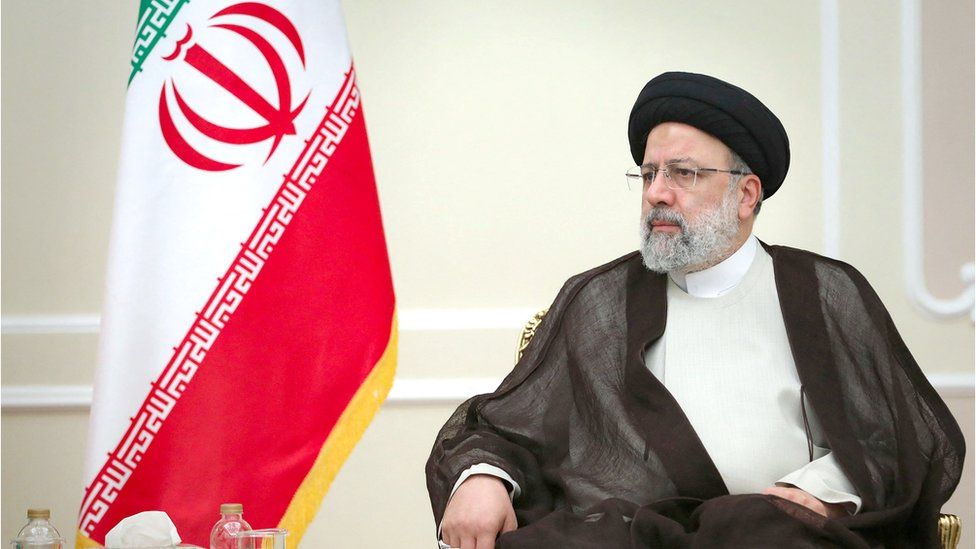
His visit also comes ahead of Iran President Ebrahim Raisi’s official visit later this year, government officials said.

“The visit of his excellency (Iran Foreign Minister) into Sri Lanka is vital and will further enhance the close and cordial bilateral relationship,” Sabry said after his Iranian counterpart met all top Sri Lankan political dignitaries.

“There is a huge potential for further corporation in multi-faceted areas. During our discussion today, we addressed key areas of mutual of interests. Including political, economic, and cultural corporation, reflecting very solid bilateral relations.”

Government officials said Iran President is likely to visit when Sri Lanka sees the commissioning of Uma Oya 120 MW power generation project this year.

“Sri Lanka and Iran stand united in our pursuit of peace, security, and prosperity in our regions,” Sabry added.

Before the 2012 US sanctions, Sri Lanka heavily depended on Iranian light crude to its only refinery constructed by Iran in 1969. The island nation is now paying $250 million due for crude imports through tea exports.

The Iranian Foreign Minister during the meeting with Prime Minister Gunawardena noted that Iran is keen to cooperate with Sri Lanka in future projects utilizing their expertise in energy, water, agriculture, nanotechnology, medicine and biotechnology.

“Iran has also agreed to provide another 31 million euro grant for the rural electrification project,” Prime Minister’s office said in a statement.

“The Prime Minister and the Iranian Minister agreed that trade should be done in Asian currencies instead of US dollars. Minister Amir-Abdullahian said that banking arrangements have already been made to trade with Iran, India and China and similar arrangements can be made with Sri Lanka.”

“The Prime Minister expressed his appreciation for Iran’s continued support to Sri Lanka at the United Nations Human Rights Council and other international forums.”