Human Rights Watch Warns of Backward Progress in Sri Lanka Under President Ranil Wickremesinghe

The Human Rights Watch organization has issued a stark warning, asserting that Sri Lanka is regressing in terms of human rights and social justice standards. Blaming misgovernance and a lack of accountability for the country’s ongoing economic crisis, Human Rights Watch criticizes the government, led by President Ranil Wickremesinghe, for prioritizing the suppression of dissent over addressing critical issues.

Meenakshi Ganguly, Deputy Asian Director at Human Rights Watch, expresses deep concern over Sri Lanka’s trajectory under the Wickremesinghe administration, citing a pattern of regressive policies and increasing repression.

As Sri Lanka prepares for a presidential election later this year, the report highlights President Wickremesinghe’s implementation of new laws aimed at curbing criticism and stifling dissent. Human Rights Watch underscores the urgent need for attention to human rights and social justice in Sri Lanka, urging the government to prioritize accountability and transparency to address the country’s challenges effectively.

For further details, refer to the full announcement on Human Rights Watch’s website: https://www.hrw.org/news/2024/02/14/under-ranil-wickremesinghe-sri-lanka-going-fast-reverse

Gammanpila to present private bill to remove police powers from Sri Lanka’s provinces

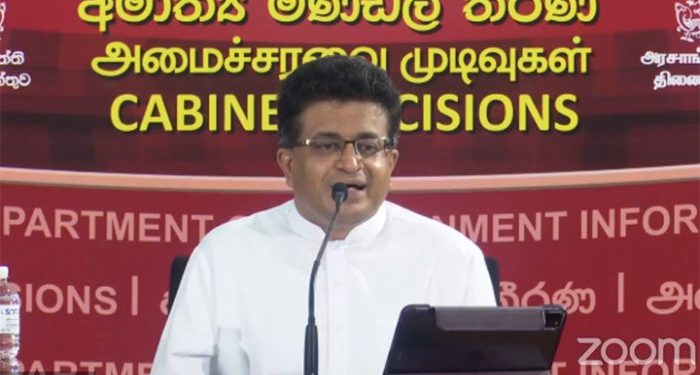
Former minister Udaya Gammanpila plans to present a private member’s bill to parliament seeking a ’22nd amendment’ to Sri Lanka’s constitution seeking the removal of police powers devolved to the provinces by the 13th amendment.

Gammanpila told reporters that devolving police powers to the provincial councils could pose a threat to national security.

“If there is a separatist war in the future, that war will be fought between the provincial police of the north and the Sri Lanka Army. Both will be official armies,” the former minister who now sits in the opposition said.

“Countries that work against Sri Lanka could openly, without hesitation, provide aid to that separatist armed movement, or in the other words, the northern police army,” he said.

Asked if his bill could get a two-thirds majority in parliament, Gammanpila said it would test parliament’s resolve.

“Removing police powers is something the whole country is asking for. Only Tamil separatists believe that it should remain. The 22nd amendment will be a test for parliament to see whether there are more patriots or more separatists,” he said.

There have been no widespread calls from the public in recent times on amending the constitution to remove police powers from provincial councils as provided for by the India-backed 13th amendment. The provision exists only on paper as the 13th amendment has yet to be implemented in full.

President Ranil Wickremesinghe has said that he is agreeable to full implementation of the 13th amendment except police powers.

At an all-party conference in July last year, Wickremesinghe said new police legislation would need to be introduced before police powers are dissolved to the provinces.

Foreign Minister Ali Sabry said in August last year that parliament must discuss the implications of devolving police powers to nine provinces controlled by nine chief ministers.

“We have no issues with the Tamil people on police powers. However, people are already saying that the police force is politicised. Having a separate police force in nine provinces or having nine chief ministers controlling the police while there is a single minister and [what that might mean for] the country is a question.

“Parliament must discuss what the implications of that are for not just the Tamil people but the whole country and arrive at a solution,” said Sabry at the time.

“The president has said he is committed to implementing the 13th amendment in full sans police powers,” he added.

Former Northern Province Chief Minister C V Vigneswaran has said President Wickremesinghe is keen to implement the 13th amendment and is open to discussing devolution of police powers to the provinces.

The law already provides for police officers at the provincial level, but it is not being implemented, said Vigneswaran.He said the president and the group of Tamil MPs had also discussed alternatives such as a provincial police force that does not have the authority to use weapons but can enforce traffic and other laws as well as record complaints.

At the July all-party conference, Wickemesinghe also said Sri Lanka must either retain its provincial councils (PCs) with powers adequately devolved as provided for by the 13th amendment to the constitution or abolish the PC system entirely.

The full implementation of the 13th amendment continues to be a point of debate, with a number of political parties in the south boycotting the July 26 all-party conference.

President Wickremesinghe has indicated his willingness to fully implement the amendment, particularly in light of India stressing on its importance. However, sharing police powers remains an issue, with many national parties in the south arguing against it.

The 13th amendment to Sri Lanka’s constitution emerged from the controversial Indo-Lanka Accord of 1987 as a purported solution to the worsening ethnic conflict, four years after war broke out. Provincial councils came in the wake of this amendment, though land and police powers have yet to be devolved to the provinces as originally envisioned. Both Sinhalese and

Tamil nationalists have historically opposed the amendment, the former claiming it devolved too much, the latter complaining it didn’t devolve enough.

A full implementation of the amendment would see land and police powers devolved to the provinces, a development that is not likely to garner support from Sri Lanka’s more hardline parties. In February, sections of the Buddhist clergy took to the streets against the proposed full implementation of the constitutional amendment.


Posted in Uncategorized

Top US official in Sri Lanka to discuss safeguarding information space

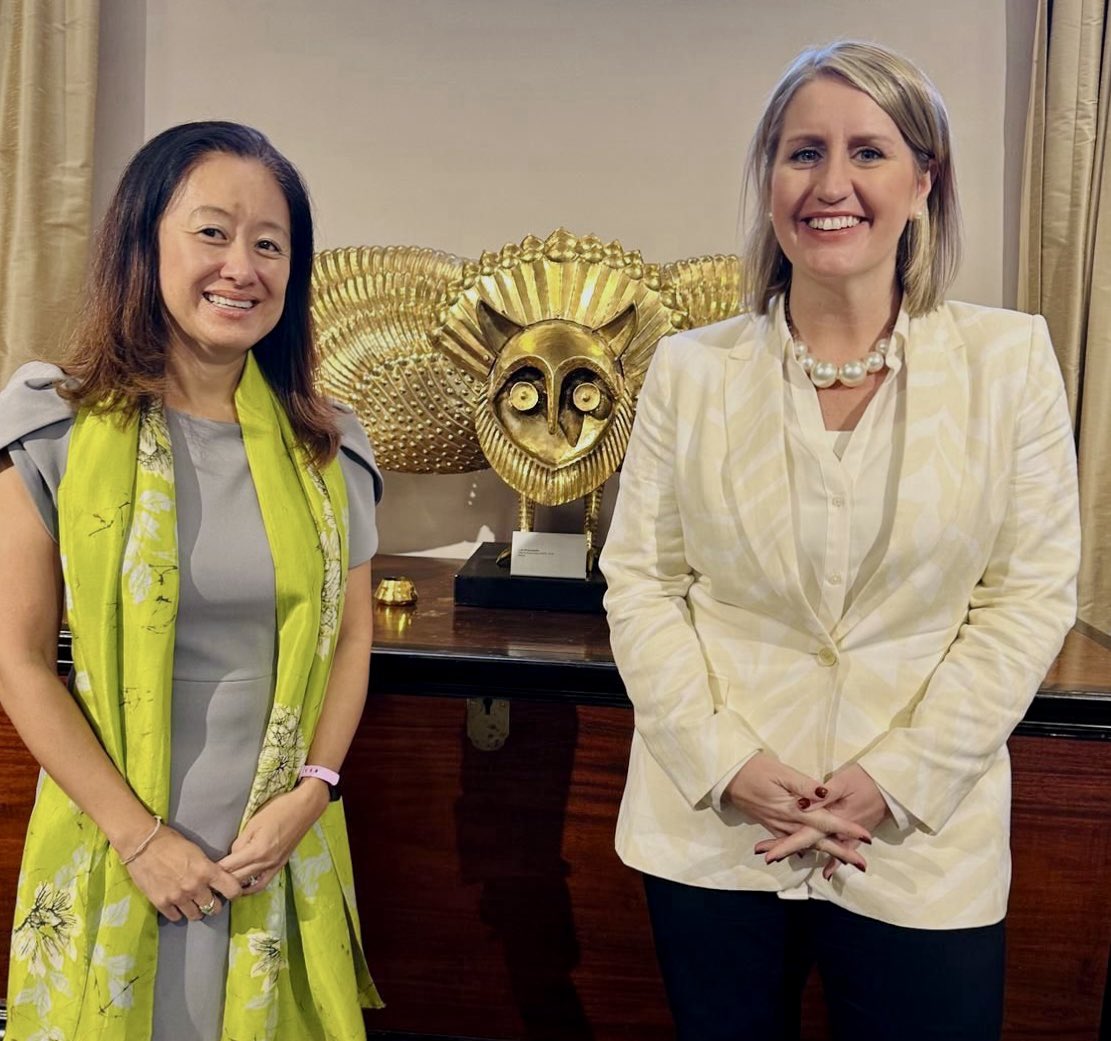
Under Secretary of State for Public Diplomacy Liz Allen arrived in Sri Lanka to discuss safeguarding the information and media space in the country.

This is the first visit from a US Under Secretary for Public Diplomacy to Sri Lanka, the US Ambassador to Sri Lanka Julie Chung said.

The US State Department said that while in Sri Lanka, she will reaffirm US support for Sri Lanka’s economic recovery and to promote a free and open Indo-Pacific.

Her agenda includes fostering dialogue on freedom of expression and democratic values with diverse groups of stakeholders, including journalists, civil society members, government officials, and the Embassy’s Youth Forum.

Her engagements with the Sri Lanka Press Institute, U.S. public diplomacy program alumni, and local content creators will emphasize the critical role of preserving diverse voices for a stable and inclusive Sri Lanka.

Additionally, she will meet with representatives from Sri Lanka’s multifaith community to underscore the importance of societal inclusivity.

Posted in Uncategorized

Another top U.S. State Dept. official to visit Sri Lanka next week

U.S. Deputy Secretary of State for Management and Resources Richard R. Verma is slated to travel to Sri Lanka, India and the Maldives from February 18 – 23.

According to a statement from the State Department, Verma’s visits are expected to bolster the United States’ cooperation with each of these key Indo-Pacific partners.

The Deputy Secretary’s meetings with senior officials in Colombo will support U.S.-Sri Lankan defense and maritime security cooperation, the statement read further.

Verma will visit the Colombo Port’s West Container Terminal, where the U.S. is supporting Sri Lanka’s ongoing economic recovery through USD 553 million in financing to transform Colombo into a regional shipping hub.

Subsequently, he will meet with civil society leaders to hear their perspective on democratic governance in Sri Lanka and with government officials to voice U.S. support for the protection of free speech and open discourse.

Prior to his Sri Lanka visit, Verma will travel to India and the Maldives to discuss full range of issues including economic cooperation, security, and technology.

Meanwhile, U.S. Under Secretary of State for Public Diplomacy, Elizabeth M. Allen is scheduled to visit Sri Lanka next week. The State Department said Allen’s visits to India, Sri Lanka and Jordan would underscore the United States’ unwavering commitment to reinforcing and expanding partnerships and alliances.

While in Colombo, she plans to foster dialogue on freedom of expression and democratic values with diverse groups of stakeholders, including journalists, civil society members, government officials, and the Embassy’s Youth Forum.

Her engagements with the Sri Lanka Press Institute, U.S. public diplomacy program alumni, and local content creators will emphasize the critical role of preserving diverse voices for a stable and inclusive Sri Lanka, the statement read further.

Additionally, she will meet with representatives from Sri Lanka’s multifaith community to underscore the importance of societal inclusivity.

Britain’s oldest warship named HMS Trincomalee

The HMS Trincomalee which was constructed in 1817 in Mumbai stands as the Royal Navy’s last ship built in India, boasting over two centuries of history.

According to the National Museum of the Royal Navy, prior to its current mooring in Hartlepool, this illustrious ship sailed more than 100,000 miles worldwide. Remarkably, HMS Trincomalee never engaged in battle but holds a rich narrative of service, ranging from patrol and protection to exploration.

Now anchored in Hartlepool, HMS Trincomalee represents one of the two Leda-Class Frigates commissioned by the Royal Navy in 1812. Its name commemorates the 1782 Battle of Trincomalee off the coast of the Indian subcontinent, the historic clash between British and French fleets during the Anglo-French War (1778-1783).

The choice to build in India was influenced by a scarcity of oak in England, exacerbated by the ongoing Napoleonic Wars, and the strategic location of Bombay.

The ship’s arrival in England, 18 months post-construction, coincided with the end of the wars, making the HMS Trincomalee surplus to the fleet requirement.

Its journey was further delayed when plans aboard the HMS Java were lost after its sinking by the USS Constitution, the oldest still-afloat ship. Consequently, HMS Trincomalee spent 28 years in reserve before being refitted as a 26-gun corvette for patrolling duties in the Atlantic and beyond, including participation in the Crimean War and operations in the Pacific. From 1860, it served as a stationary training and accommodation vessel, continuing in various capacities into the 20th century.

Distinguished from its counterparts by its teak construction, known for durability and resistance to decay, HMS Trincomalee has preserved much of its original framework. Among its notable early passengers was Eliza Bunt, a British resident in India, whose documenting of her journey to London provides invaluable insights into the ship’s history.

Posted in Uncategorized

Former Speaker calls for timely polls

The National Movement for Social Justice Chairman Karu Jayasuriya has strongly emphasised that his organisation will vehemently oppose any attempts to postpone the elections.

This assertion was made during a special discussion titled ‘A new electoral system for a strong democratic country’, which was organised by the organisation led by the former Speaker in Colombo earlier this week.

Former President Chandrika Kumaratunga, Professor G.L. Peiris, Ranjith Madduma Bandara, Anura Priyadarshana Yapa, Dr. Rajitha Senaratne, Sudarshani Fernandopulle, Azath Salley along with other politicians, former Election Commissioner Mahinda Deshapriya, and a cohort of professionals and academics participated in this conference.

Jayasuriya reiterated that the stance of his organisation remains unchanged regarding the abolition of the Executive Presidency. However, he emphasised the paramount importance of conducting all elections according to their designated schedules.

Additionally, Jayasuriya stressed that all candidates participating in the upcoming Presidential election must disclose their stance on the office of the Executive President to the nation.

“The President appointed a committee to investigate a new election system last December, and we have submitted our proposals to that committee,” Jayasuriya said.

“I want to stress a crucial point here. We adamantly oppose any postponement of elections. Elections must be conducted as scheduled. Similarly, all candidates vying for the Presidential election must unequivocally disclose their stance on the Executive Presidential system to the nation,” he added.

The Speaker also urged all candidates to disclose a specific date for the abolition of the post if they pledge to do so. “The citizens of this country have the fundamental right to be informed about the stance of each candidate regarding the Executive Presidential system,” Jayasuriya emphasised.

Posted in Uncategorized

AKD: JVP-led NPP will not undermine India’s national security

A National People’s Power (NPP) administration will not do anything that will undermine Indian security, but it will maintain economic and political relations with China, the NPP delegation to India told Indian officials, JVP/NPP Leader Anura Kumara Dissanayake said in an interview with Sirasa TV, on Thursday (15).

In his first interview since his return to the country, Dissanayake said India had extended an invitation to the NPP in December.

“However, we had other commitments in December. One of them was visiting China at the invitation of the Chinese Communist Party. We told India that we maintained full transparency in our external relations.”

The NPP leader said that the incumbent government’s privatisation drive had attracted both Indian and Chinese investors, and that had led to friction between the two major powers.

“The government has decided to privatise Sri Lanka Telecom, and the two main contenders are Chinese and Indian interests. It’s the same with Lanka Hospitals. It is the government that wants Amul to buy NLDB.”

From the J.R. Jayewardene administration onwards, successive governments followed disastrous foreign policies that made Sri Lanka a battleground between major powers, Dissanayake said.

“JRJ beckoned Americans to Sri Lanka, and at that time, India was with Soviet Union (Russia). This angered India. Then, other governments tried to balance China and India by selling each country valuable national assets and giving each country contracts that didn’t adhere to the tender process,” the NPP leader said.

The NPP adheres to a non-aligned foreign policy, Engaging all stakeholders transparently is the key to avoiding misconceptions and triggering hostilities, he said.

States operate in an information-sparse environment, which often leads them to operate on assumptions. The NPP believes in transparency and engagement in foreign and domestic affairs because of that very reason, he said.

“We know that some individuals, who frequently attend Embassy functions, are spreading misinformation about us. On the other hand, we don’t really have the time to attend all these functions. However, in recent months, diplomatic missions have reached out to us because they think we will win elections, and we have used these opportunities to explain what our policies really are.”

The NPP leader said that their political opponents are very worried about their Indian visit because it dispels the narratives they have built about the party.

“One of the claims made was that the NPP has no international connections or standing. Anyone who can think logically can understand that states engage with political actors that have power. India, China, the US, and many others are now engaging with us because they think we will win elections. Some people believed Ranil knew foreign leaders personally and that they would bail the country out. How has that worked out? States act out of strategic considerations. We have said this from the beginning. However, some of our political leaders thought it was a good idea to put a lot of their eggs in the ‘NPP has no international standing’ basket. Now this has been proven obviously wrong, and they are panicking,” he said.

Dissanayake added that they are well aware that the two main parties and their affiliates will do everything in their power to thwart an NPP win.

“This is not like Ranil replacing Mahinda or Ranil replacing Gota. A lot of crooked elements are afraid of us coming into power. They will do anything to stop us, and already we are seeing strange political bedfellows emerging,” he said.

Posted in Uncategorized

Iranian Naval Ships arrive in Colombo

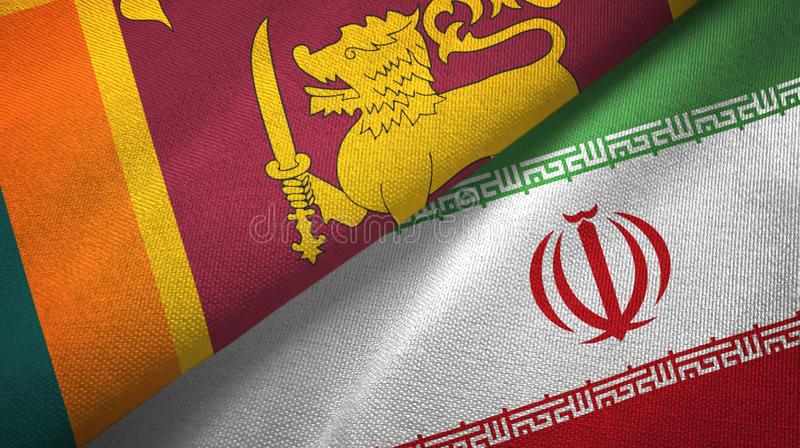
The Iranian Naval Ship (IRINS) Bushehr and Tonb arrived at the port of Colombo on a formal visit this morning (16th February 2024). The visiting ships were welcomed by the Sri Lanka Navy in compliance with naval traditions.

IRINS Bushehr is a 107 meter long ship manned by 270 crew members and she is commanded by Commander MAHDI BALVARDI. IRINS Tonb is a 94.94 meter long platform with a crew of 250. It is commanded by Commander MOHAMMAD HAJI ZADEH.

Meanwhile, the Commanding Officers of the ships are scheduled to call on Commander Western Naval Area and Director General Operations of the Navy, during their stay in the country.

Additionally, naval personnel from both nations are anticipated to participate in various programmes aimed at fostering cooperation. Furthermore, the crew members of the Iranian ships will have the opportunity to visit several tourist attractions in Sri Lanka.

Moreover, Officer Cadets and personnel from the Sri Lanka Navy will be able to visit Iranian Naval Ships in Colombo, and reciprocally, Officer Cadets and personnel from the Iranian ships will visit Sri Lanka Naval Ships. The duo of Iranian Naval Ships are scheduled to depart the island on 19th February.

Posted in Uncategorized

Sri Lanka to host first-ever Chinese marathon in May

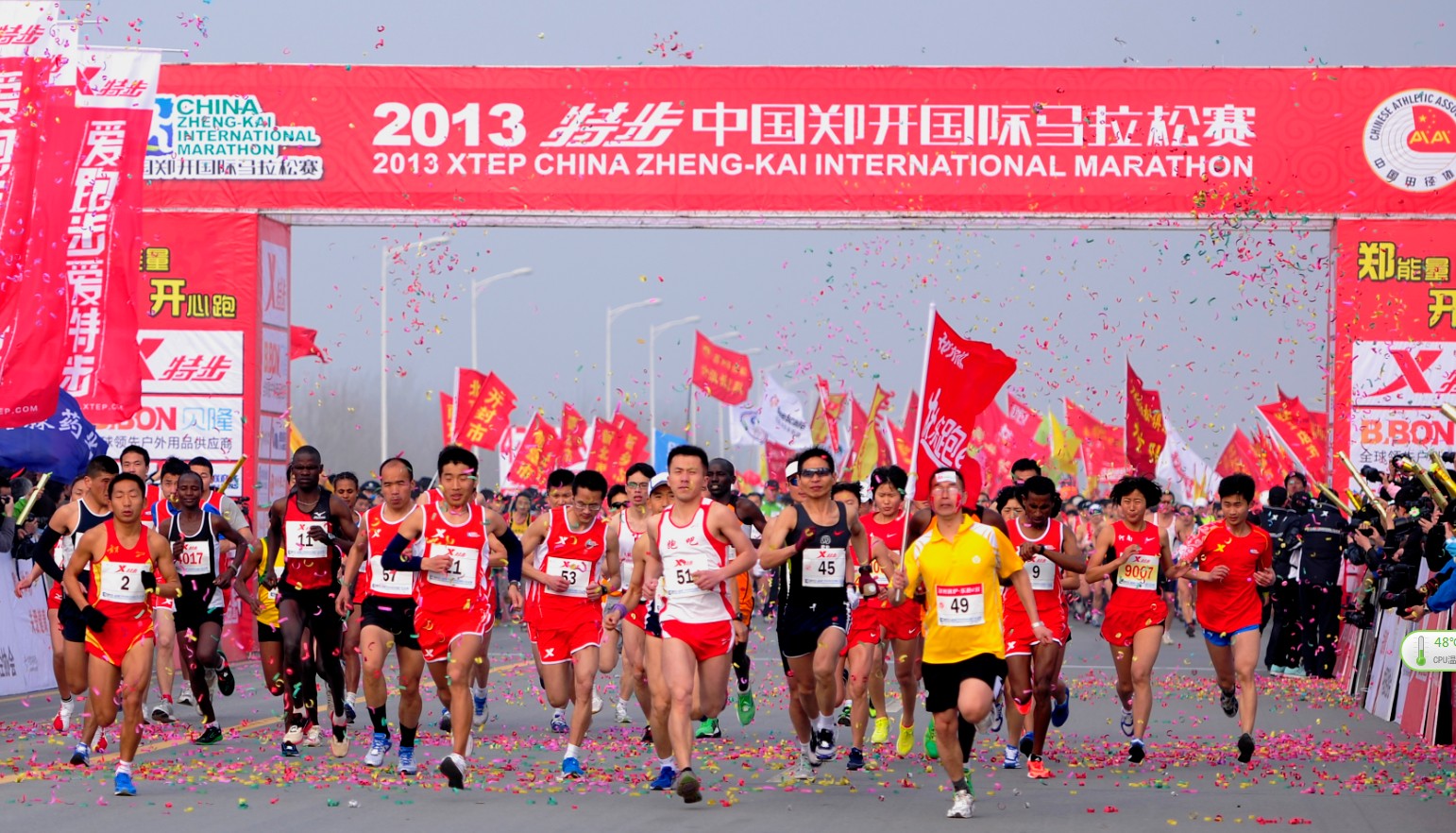
Sri Lanka will host the first-ever Chinese marathon this May, where over 2000-3000 Chinese athletes will arrive under the ‘Ni Hao Zhong Guo’ programme, Sri Lanka Institute of Tourism and Hotel Management Chairman Shirantha Peiris announced.

Peiris recently visited the municipality of Chongqing in China to finalise an agreement under the Ni Hao Zhong Guo programme to bring in additional Chinese tourists to Sri Lanka over the next two-year period.

Accordingly, it has been proposed to organise a marathon for the Chinese athletes from May 1 to 3, this year. This is to be followed by a seafood festival organised on the Unwatuna beach strip. Sri Lanka Tourism Promotion Bureau Chairman Chalaka Gajabahu revealed plans to make this an annual event.

According to the Ni Hao Zhong Guo programme, Sri Lanka is expected to lure one million tourists over the next two years. Sri Lanka is expected to generate a revenue of Rs.225 billion. However, Peiris noted that two years would be rather ambitious and instead, proposed a four-year period.

‘Strongly opposed to Indo-Lanka accord,’ confirms JVP

“As a political party we strongly opposed the Indo-Lanka Accord decades ago, and dedicated our initiatives to safeguarding Sri Lanka’s sovereignty, at the cost of many lives,” said Vijitha Herath of the Janatha Vimukthi Peramuna (JVP) led National People’s Power (NPP). “This stance has not changed and will not change,” he told reporters in Colombo.

Herath, who recently accompanied party leader Anura Kumara Dissanayake as he toured India last week, said that the party prioritises the national security and territorial integrity of the country at all costs.

“The political situation today is different, the world has changed, and so has global politics,” he said at a media briefing. “Even though we have changed as well, we will not allow ourselves as a nation to be pigeonholed to fit the needs or appease power struggles among other nations.”

He said that his party will engage in politics while ensuring the country’s sovereignty and territorial integrity remain intact. “Although we will not hesitate in engaging with other nations on economic pursuits, we will not fall victim to global power dynamics and stay on course to develop and advance our nation,” Herath continued.

The MP emphasised that under NPP governance, his party will deal transparently with other governments and ensure that the nation’s advancements particularly in terms of economic development are priotised. “Throughout the country’s history, we have consistently made decisions to safeguard our territorial integrity, and we stand by that commitment today and in the future. We give our assurance to the people of this country that these principles will not waver.”

The Indo-Lanka Accord was signed in 1987, without any input from Tamil parties, and established the 13th Amendment to Sri Lanka’s constitution which created the system of Provincial Councils, promising greater devolution of land and police powers to a merged North-East. The JVP staged two insurrections against the state in the early 1970s and the late 1980s. The latter of these was chiefly in response to the Indo-Lanka accord and the 13th Amendment which sought to devolve powers to Tamils in the North-East. Tens of thousands were killed. Then leader Rohana Wijeweera framed Tamil demands for self-determination as in-hoc with US imperialist interests in his 1986 book “Solutions for Tamil Eelam Struggle”.

Referring to the discussions over the visit by the leader of the NPP Anura Kumara Dissanayake to India, Herath remarked that this visit was not undertaken hurriedly as cited by other political commentators, stating “this meeting was organized well in advance and we were in India on an invitation by the Indian government over a month ago”.

He further said “India is our closest neighbour”. “Sri Lanka and India have longstanding bilateral and diplomatic relations. It was our intention to strengthen those ties formally through this visit.”

The JVP, which has historically held a frosty view of relregardations with its northern neighbour, has yet to clarify on any policy decisions with regards to Delhi.

In 2015, then-JVP Propaganda Secretary Herath told The Island, “the JVP is against federalism”. Whilst accepting that “the grievances of the Tamil people should be redressed,” Herath reiterated that “federalism is not that solution”. He also spoke out against the merging of the Northern and Eastern provinces, as outlined by the Indo-Lanka accord. “It is the JVP that went before the courts and got an order to demerge the two provinces that had been arbitrarily merged after the Indo-Lanka Accord,” he added, referring to when the JVP filed three separate petitions with the Supreme Court of Sri Lanka calling for the North Eastern Province to be demerged. The Province was formally demerged into the Northern and Eastern provinces on 1 January 2007.

Throughout the armed conflict, the JVP would weaponize the pretence of Marxism to justify their hardline opposition to Tamil demands. In the 2004 parliamentary elections, the JVP became a coalition partner of the United Peoples Freedom Alliance (UPFA) and stood opposed to continued peace negotiations with the LTTE; they further rejected the possibility of joint post-tsunami aid distribution, and in 2005 endorsed Mahinda Rajapaksa on a platform specifically opposed to the peace process. In early 2006 the JVP openly promoted a military solution that would culminate in the Mullivaikkal genocide.

During peace talks between the LTTE and the Sri Lankan government, the JVP would consistently protest against the ceasefire – slamming international mediation and the concept of granting devolution or autonomy to the Tamil homeland.