Second court order issued against SJB rally, barring entrance to parts of Colombo

Another court order was issued this morning (30 Jan.), preventing the Samagi Jana Balawegaya (SJB) supporters from entering parts of Colombo during its political rally due to be held later today.

The relevant order was issued by the Colombo Fort Magistrate’s Court against the political party.

As per the court order, the SJB rally from entering several areas in Colombo, including the Finance Ministry, the Presidential Secretariat, President’s House and Galle Face Green this evening.

Earlier today, the Colombo Chief Magistrate issued an order against SJB Leader Sajith Premadasa, SJB General Secretary Ranjith Madduma Bandara, former MP Mujibur Rahman and several others, barring them from inconveniencing the public and pedestrians in parts of the Maligawatte police area during the planned political rally.

Posted in Uncategorized

PA/UPFA: SLFP-led alliance leader to have executive powers

A future Sri Lanka Freedom Party (SLFP) alliance will be headed by the party Chairman, with executive powers, as per the alliance’s constitution, the party said yesterday (29).

This, despite former President Chandrika Bandaranaike Kumaratunga’s name has been suggested as the leader of the new political alliance which is to be formed under the leadership of the Sri Lanka Freedom Party (SLFP), The Daily Morning learns.

The SLFP’s incumbent President is Opposition Parliamentarian and former President Maithripala Sirisena.

In the wake of several media reports being circulated suggesting that Kumaratunga was to lead the new SLFP-led political alliance, SLFP Senior Vice President Prof. Rohana Luxman Piyadasa yesterday (29) told The Daily Morning that her name had been suggested as the leader of the alliance, but that her position would not have executive powers within the alliance, unlike the SLFP leadership.

Prof. Piyadasa also said that Kumaratunga’s name was suggested for the position as they wanted to unite all breakaway groups and political groups with different political opinions. “Kumaratunga’s name was suggested for the leadership of the alliance. But that position does not have executive powers. There is a separate Chairperson of the alliance who has the power as per the constitution of the alliance.

“The constitution says that the Chairperson and the General Secretary of the alliance should be members of the SLFP. Therefore, the alliance’s Chairperson will have the executive power within the alliance,” he also noted, adding that the SLFP would contest any upcoming election either as the People’s Alliance (PA) or the United People’s Freedom Alliance (UPFA).

In this context, Prof. Piyadasa recently told The Daily Morning that Sirisena would be the presidential candidate of the alliance that is being formed under the leadership of the SLFP targeting the upcoming elections. He also stated that this had been agreed upon by the party’s Central Working Committee, while the party’s All-Island Working Committee had also proposed and seconded the same.

He also reiterated that the party was not planning to ally with either the main Parliamentary Opposition party, the Samagi Jana Balawegaya or the ruling governing parties, the Sri Lanka Podujana Peramuna and the United National Party.

State’s role in the development of Buddhism in Sri Lanka By P.K.Balachandran

:It is by now well established that for any religious faith to be developed and accepted by the generality of the population, has to have State backing. “Convert the king and the population will follow suit,” had been a belief among missionaries other than those who chose to target the poor mainly.

At any rate, experience says that State power is essential for any faith to develop its doctrine, sustain it and ensure fealty to it. Conversely, any weakening of the State due to economic distress, alien hegemony, wars or economic distress will have a deleterious effect on the faith and its following.

The role of the State in the growth or decline of Buddhism in Sri Lanka from the days of the kings to those of the colonial powers is described by Prof. Kitisiri Malalgoda, Professor of Sociology in the University of Auckland in his book: “Buddhism in Sinhalese Society 1750-1900: A Study of Religious Revival and Change” (Tambapani Academic Publishers, Colombo, 2023).

It was due to the patronage of Emperor Asoka (268 – 232 BC) that Buddhism spread across the length and breadth of India. In Sri Lanka, the first convert was king Tissa (250-210 BC) and because of that Buddhism began to be accepted in the island. Prof. Malalgoda describes Tissa’s conversion as an event of great importance in the religious and political history of Sri Lanka.

Tissa’s rule also signified the beginning of the culture of kingship in Sri Lanka. Political centralization and the ritual, pomp and ceremony surrounding kingship came into vogue. The Indian tradition of performing Abhiseka or consecration was adopted as a rite of passage for kingship in the island.

Tissa and his successors also assumed the Mauryan (Asokan) title of Devanampiya (beloved of the Gods). Thus kingship combined the political and the spiritual to make it a powerful institution, which enabled the propagation of Buddhism.

Prof. Malalgoda says that the institution of kingship and its adoption of Buddhism enabled the formation of large and integrated territorial groups bound by a single ideology (Buddhism). Before this, territorial units were small, scatted and unconnected to a single framework. The belief systems were many and diverse. There was no ideological unity. But kingship and one faith, Buddhism, enabled State formation in Sri Lanka.

Be that as it may, there existed a dichotomy in religious beliefs and practices, he points out. People living in isolated village communities were heir to a variety of beliefs and practices of diverse origin and these continued to exist. Prof.Malalgoda calls these “Little Traditions” and Buddhism, the “Great Tradition.”

Notwithstanding the practice of Little Traditions, people supported the Great Tradition of Buddhism and practiced it to the extent possible. They venerated the symbols of the Great Tradition like the Bodhi tree, the Chetiyas (where the corporeal relics of the Buddha were kept) and the Tooth Relic.

The Tooth Relic was brought to Sri Lanka in the reign of King Sirimeghavanna (304–332 AD) with much pomp and ceremony. Later, it became the symbol of sovereignty. One who possessed it was the sovereign. The Tooth Relic was the centre and symbol of Sinhalese Buddhist polity.

The conspicuous role played by the King himself in ceremonies around the Tooth Relic was ample evidence of its political cum ideological significance. These ceremonies around a particular sacred object were necessary for Sinhalese society to express their collective identity apart from their particular identities.

Did these rituals and ceremonies clash with the pristine ideas of Buddhism? Did not Buddhism emphasise renunciation rather than pompous display? According to Prof.Malalgoda there was no contradiction as Sinhalese Buddhist society had a subordinate ideology wherein merit could be garnered by performing meritorious acts which included the performance of rituals (barring a few which were deemed to be evil). The belief was that meritorious deeds would give the performer a better birth in the cycle of births and deaths perfectly legitimate goals.

Giving alms to the Sangha was one of the chief meritorious deeds. The Sangha was called the Punnya Khetta (Field of Merit) sowing seeds in which would enable one to reap a rich harvest of merit and ensure a better life in the births to come. One way of serving the Sangha was to assign them lands so that they could live on their produce. The kings did this to earn merit.

There was a distinction between Pariyatti (the theoretical teachings of the Buddha) and Paṭipatti (practice of the Buddha’s teachings). Some members of the Sangha took to renunciation and others taught the theory and became guides to societies. There was a distinction between Aranyavasis and Gamavasis, the former lived outside society and the latter within society. The Gamavasis became society’s intellectuals and therefore indispensable.

The learning of Pali enabled Sri Lankan monks to communicate with Theravada monks in other countries. The Sutta Pitaka was translated into Sinhala under the patronage of King Buddhadasa (337-365 AD) to popularise the doctrine.

Plebeian religious practices and beliefs were not discouraged as they served a felt need. But those entertaining these beliefs accepted pristine Buddhism and its ideals as being superior. They knew that the Buddha did not grant favours and that for favours they should worship other local or Hindu deities and use charms and magic etc. But they knew that, powerful as these gods might be, they were subordinate to the Buddha. Their task was to safeguard Buddhism.

The Buddha was not a saviour but a Devatideva (Deity of deities). The gods derived their power (Varan) from the Devatideva, the Buddha.

When “evil sciences”” like astrology became too widespread or when monks were breaking the Vinaya (their code of conduct), the kings used to initiate regulative acts known as Dhamma Kamma performed by the Sangha. When performed without royal authority Dhamma Kamma would not be productive. The only magical practice that was allowed in Buddhism proper, was the Paritta (protection) performed to mitigate public calamities or private distress.

Enter Europeans

When the Portuguese established their hegemony in the maritime provinces in the 16th.Century, and the Dutch took over from them in the 17 th,Century, Buddhism was thrown into a crisis as these two foreign powers were inflicting Catholicism and Protestantism on Buddhists.

In this period, Buddhism lacked State patronage except in Kandy. Buddhists had lost the Kelaniya temple as the Kotte king Dharmapala, a Catholic convert, had gifted it to the Portuguese who passed it on to the Dutch later.

The Dutch used various coercive ways to convert Buddhists to Calvinism. They made baptism and Christian marriage compulsory. Conversion was mandatory to get a government job. All schools were religious schools.

But to their dismay, they found that the conversions were mostly formal. In the villages and homes, the converts followed Buddhism and native practices. The Portuguese and the Dutch were divided between the clergy, who wanted the administration to use its full power to get converts, and the civil servants and merchants who wanted to make govern or make money without alienating the population through coercive conversion. Buddhism survived in Sri Lanka due to the lack of unity in the Administration of the Portuguese and the Dutch.

Because of the hilly terrain of Kandy, European powers were unable to seize it and therefore Kandy remained a Buddhist kingdom till 1815. According to Prof. Malalgoda, Buddhist monks of Kandy took an active part in the administration of Kandy, especially that of king Vimaladharmasuriya II (1687–1707).

But such lay pursuits led to corruption and non-observance of Vinaya, he points out. The kings also spoilt the monks by allotting lands to them on an individual basis, which resulted in lands being passed on to their families through an improper system of recruitment to the order.

King Vimaladharmasuriya I (1591 -1604) and king Vimaladarmasuriya II (1687-1707) used their power and their Dutch connections to get down from Burma monks to improve Sri Lankan monks’ religious education and also to carry out proper ordinations. In the reign of Kirti Sri Rajasimha (1747-1782) again Dutch help was sought to bring Siamese monks to improve standards in the Buddha Sasana. They made the Buddha and not the other deities the centre of the Perheras. Siamese monks improved the religious behaviour of laymen as well.

When the kingdom of Kandy was handed over to British in 1815, the chiefs got a promise that the British would protect Buddhism. And the British deemed the Tooth Relic there as a symbol of their sovereign power.


Posted in Uncategorized

Indonesia stops Maldives-bound controversial Chinese vessel

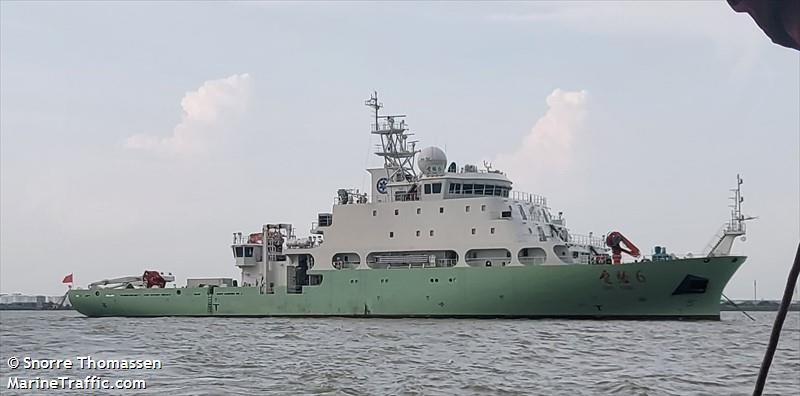
The Indonesian Coast Guard (ICG) stopped a Male-bound Chinese research vessel as it had turned off its automated information system, Maldives-based Adhadhu reported on Sunday. The Indonesian authority’s move came after the ship, while traveling through the country’s waters, turned off the transponder three times between January 8 and 12.

The US Naval Institute said the Chinese government vessel “XIANG YANG HONG 03” was stopped by the ICG on January 11 in the Sunda Strait area, the report said, adding that the crew on the vessel denied turning off the transponder and claimed that it was broken.

The automatic identification systems transponders are designed to be capable of providing position, identification, and other information about the ship to other ships and coastal authorities automatically.

The ICG did not attempt to board the Chinese ship but asked it to leave the country’s exclusive economic zone, reported The Asia Times. As per international maritime law, all vessels navigating the archipelagic sea lanes in Indonesian waters are required to have working transponders.

Adhadhu reported that sites that track marine traffic showed the vessel’s location on January 22 in the Java Sea and its present location was unknown.

Earlier this month, the Center for Strategic and International Studies (CSIS) published a paper titled: “China’s Dual-Use Research Operations in the Indian Ocean. The paper mentions that China’s vessels go dark for some hours or days while near PLA installations.

“Behavior at sea can also raise red flags. Repeated instances of “spoofing” (providing falsified identification information) or “going dark” (turning off automatic identification system signals for extended periods) are important warning signs. Data from Windward indicates these activities occur frequently—sometimes near foreign military facilities,” the paper states.

The paper also says that to survey the Earth’s oceans, China has developed the world’s largest fleet of civilian research vessels. While these ships support scientific and commercial objectives, it adds, they are also being used to advance Beijing’s strategic ambitions. Hidden Reach, a special initiative of CSIS, identified 64 active research and survey vessels. Of the 64 active vessels, over 80 per cent have demonstrated suspect behavior, the paper states.

On January 22, weeks after Maldivian President Mohamed Muizzu returned from China, Damien Symon, an open-source intelligence researcher, said China’s research vessel – XIANG YANG HONG 03 – was heading towards Male.

Just a day after this, the Maldives Foreign Ministry confirmed the development but said the Chinese vessel would not conduct research in Maldivian territory. However, India’s geostrategist Brahma Chellaney said Male’s claim that the ship won’t conduct any research was “laughable”.

“The Muizzu government claim that the PLA-linked ship would not conduct oceanographic research in the Maldivian waters is laughable as the Maldives has zero capability to detect such activity,” the geostrategist said.

Chellaney said China is aggressively engaged in mapping the Indian Ocean bed and collecting seismic and bathymetric data to facilitate submarine operations in India’s maritime backyard. “And the Maldives, under its new Islamist-leaning, pro-China president, is becoming an enabler,” he said.

Maldives to Buy Turkish Drones

The Maldives under pro-China President Mohamed Muizzu has signed a deal with Turkey to buy drones to patrol its exclusive economic zone waters. So far, New Delhi and Male jointly patrolled this region in the Indian Ocean.

Maldives-based Adhadhu on Tuesday reported that Male had signed an agreement with a Turkish company to purchase military drones to patrol the country’s waters. It has allocated $37 million from the state’s contingency budget to the Maldives National Defence Force (MNDF).

The deal comes just days after the Maldives asked India to withdraw its troops stationed there by March 15. New Delhi has 88 or so military personnel in the Maldives to operate and maintain India-sponsored radar stations and surveillance aircraft, including the Dornier plane and two Dhruv helicopters gifted to Male over the past decade.

India enjoyed a good relationship with Male during Mohamed Nasheed’s presidency from 2008 to 2013 and then Ibrahim Mohamed Solih’s stint from 2018 to 2023. From 2013 to 2018, Abdulla Yameen, who was also pro-China, ruled the island country.

In 2018, once Yameen was replaced by Solih, the Indian Navy deployed an offshore Patrol Vessel (OPV) – Sumedha – to carry out surveillance of the exclusive economic waters of Maldives with the Maldivian military. The elite Marine commandos of the Indian Navy were in Maldives to train the Maldivian military on asymmetric warfare.

However, equations have changed under Muizzu, who came to power on the plank of the ‘India-out’ campaign. Muizzu, who assumed power in November 2023, has so far made two foreign visits – Turkey and China. His five-day visit to China last week was also seen as a snub to New Delhi as the tradition so far was that the Maldivian always visited India before Beijing.

The relationship also deteriorated after three Maldivian deputy ministers made derogatory remarks against Prime Minister Narendra Modi following his visit to the Indian islands of Lakshadweep earlier this month.

For decades, India and China have been competing with each other for influence in Maldives, which is a few hundred nautical miles from Kerala and whose strategic location makes it important for both Asian powers.

On January 13, in an apparent reference to India, Muizzu said that the Maldives was not located in the backyard of any country. “Even though our islands are small, we are a huge country with a very large exclusive economic zone of nine lakh square kilometers,” he said. “Maldives is one country that holds the largest proportion of this ocean. This ocean is not the property of a specific country.”

Muizzu then said that Maldives had begun the work to build its power and capacity to do continuous surveillance of the nine lakh square kilometer exclusive economic zone. “Hopefully, soon we will establish our capacity to manage this vast area.”

Sri Lanka’s new transitional justice process lacks credibility – HRW

The Sri Lankan government’s proposed law to create another body to investigate wartime abuses replicates previous failed efforts, ignores the needs of victims, and falls far short of meeting Sri Lanka’s international legal obligations, Human Rights Watch said on Tuesday (29 Jan.).

In a statement, the Human Rights Watch claimed that “Sri Lankan authorities continue to silence and repress families of victims and their communities 15 years after the armed conflict ended”.

The Commission for Truth, Unity and Reconciliation in Sri Lanka Bill was published on January 1, 2024, following limited consultations in 2023 and government pledges to investigate human rights violations and war crimes committed during the 1983-2009 civil war with the separatist Liberation Tigers of Tamil Eelam (LTTE) and in its aftermath.

It excludes widespread abuses committed during the left-wing Janatha Vimukthi Peramuna (JVP) uprising of 1988-1990. Instead of providing truth, justice and redress, the proposed law appears designed to deflect international pressure over the lack of accountability for atrocity crimes and to persuade the United Nations Human Rights Council to end its scrutiny of Sri Lanka.

“A credible truth and justice process is desperately needed in Sri Lanka, where wartime abuses resulted in tens of thousands of deaths and enforced disappearances,” said Meenakshi Ganguly, deputy Asia director at Human Rights Watch.

“However, the government’s continuing repression of victim communities and its protection of alleged perpetrators shows a lack of will to deliver justice, ensuring that this commission will fare no better than previous ones.”

The bill states that the new commission would produce a “truthful record” of violations committed during the war, make recommendations on reparations, and propose measures to prevent a recurrence.

While the commission would also be able “to refer matters to the relevant law enforcement or prosecuting authorities … for further investigation and necessary action,” those authorities are already supposed to take up such cases, but routinely fail to do so. Successive Sri Lankan governments have blocked investigations, stalled trials, and silenced victims, in violation of international legal obligations to prosecute or extradite people responsible for serious crimes.

Since the 1990s, the government has created at least 10 similar commissions, at leave five of which have concluded reports. Many victims say they have “commission fatigue” and see no use in testifying again, risking re-traumatization and possible threats from the security forces with no expectation of justice and redress.

In 2023, after the government announced its plans to establish a new commission, numerous organizations representing conflict victims and civil society groups—especially in the most conflict-affected Northern and Eastern provinces—joined four separate joint statements rejecting the government’s approach and instead said it should act upon the work of previous commissions, while “building confidence” by ending ongoing abuses.

The current government, like its predecessors, has a record of making human rights pledges to deflect international pressure while continuing abuses and blocking meaningful reform and accountability. Many victims see the proposed commission as an attempt to persuade UN Human Rights Council member countries to end the council’s scrutiny, a view supported by statements from President Ranil Wickremesinghe’s office.

The proposed commission resembles the 2010-2011 Lessons Learnt and Reconciliation Commission. After this commission failed to achieve its stated objectives, the Human Rights Council in 2015 passed the first of a series of important resolutions to advance accountability for atrocity crimes committed in Sri Lanka.

From 2015 to 2020, when Wickremesinghe was prime minister, the Human Rights Council adopted resolutions with the endorsement of Sri Lanka that envisaged a “hybrid” justice mechanism including both foreign and Sri Lankan staff. In 2021, after a new Sri Lankan government repudiated this process, the council established an international evidence-gathering project to support possible future prosecutions abroad.

Meanwhile, the current government has continued to repress fundamental rights. In January 2024, the government presented two bills in parliament that threaten the right to freedom of expression. According to the UN Office of the High Commissioner for Human Rights, the Anti-Terrorism Bill, to replace a law that has long been used to target minorities and perceived government opponents, “grants wide powers to the police – and to the military – to stop, question and search, and to arrest and detain people, with inadequate judicial oversight.”

The Online Safety Bill, adopted by parliament on January 24, “will give authorities unfettered discretion to label and restrict expressions they disagree with as ‘false statements,’” the high commissioner’s office said. New speech-related offenses carry lengthy prison terms.

The government has also continued to target those campaigning for truth and accountability. On January 5, the authorities arrested and detained Sivananthan Jenita and Meera Jasmine Charlesnise, who have campaigned for years seeking answers after the enforced disappearance of their relatives for protesting against President Wickremesinghe during his visit to the north. In December, nine ethnic Tamils were held under anti-terrorism legislation for commemorating war dead.

Government agencies continue to appropriate Hindu and Muslim religious sites and lands occupied by Tamil and Muslim communities on a variety of pretexts, in some cases to convert the sites into Buddhist temples or transfer them to members of the majority community. These actions violate the right to freedom of religion or belief and are in direct opposition to the government’s purported goals of promoting “reconciliation” and addressing the causes of conflict, Human Rights Watch said.

The new commission’s proposed mandate would overlap in ill-defined ways with existing but nonperforming agencies, including the Office of Reparations, established in 2018, and the Office of Missing Persons, established in 2017. On January 9, Sri Lanka’s parliament passed legislation to formalize yet another institution with an ostensibly similar purpose, the Office of National Unity and Reconciliation, which was created in 2015.

Concerned governments should decline to fund or endorse the new Commission for Truth, Unity and Reconciliation, because it would not uphold Sri Lanka’s international obligations to address impunity or provide redress and does not have the support of victims and affected communities. Instead, they should work to ensure that the Human Rights Council mandate is renewed and enhanced to pursue accountability for past crimes and help end ongoing abuses.

“The actions of President Wickremesinghe’s government to silence dissent, protect and promote alleged rights abusers, and discriminate against minority communities give no grounds to believe that the latest ‘reconciliation’ plan will turn out differently from past commissions,” Ganguly said. “The government should start dealing with the past in good faith, by using the evidence already collected to advance accountability and stop persecuting victims and their families who demand justice.”

Posted in Uncategorized

British ship HMS Spey arrives in Sri Lanka

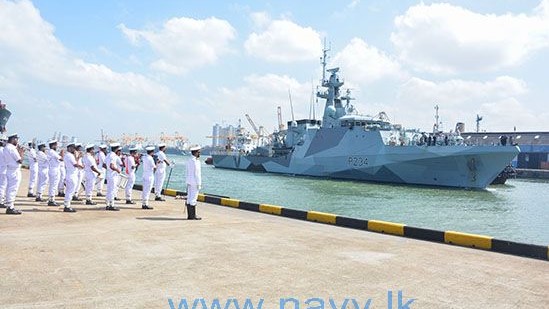
The Royal Navy’s HMS Spey, a 90.5m long Offshore Patrol Vessel (OPV) manned by a crew of 56, arrived at the port of Colombo on a formal visit over the weekend (28).

The ship was welcomed by the Sri Lanka Navy, a statement by the Navy said, adding that “During the ship’s stay in Colombo, its crew members will visit some of the tourist attractions of the country.”

Commanding Officer of the ship Paul Caddy will call on the Commander Western Naval Area and the Director General Operations.

The ship will conduct a Passage Exercise (PASSEX) with a Sri Lanka Navy ship in Colombo seas, and depart the island on January 31.

According to the Royal Navy’s website, the HMS Spey represents “the UK’s commitment to our persistent presence in the Indo Pacific. Spey is currently operating in South East Asia and the Indian Ocean supporting regional partners with anti-smuggling, fishery protection, border patrol and counter terrorism operations.”

President Ranil Wickremesinghe’s government has temporarily halted foreign research ships after strong security concerns raised by neighbour India and the United States after the visit of two Chinese research vessels.

Various vessels from several countries have called at the Colombo Port in the recent past.

Posted in Uncategorized

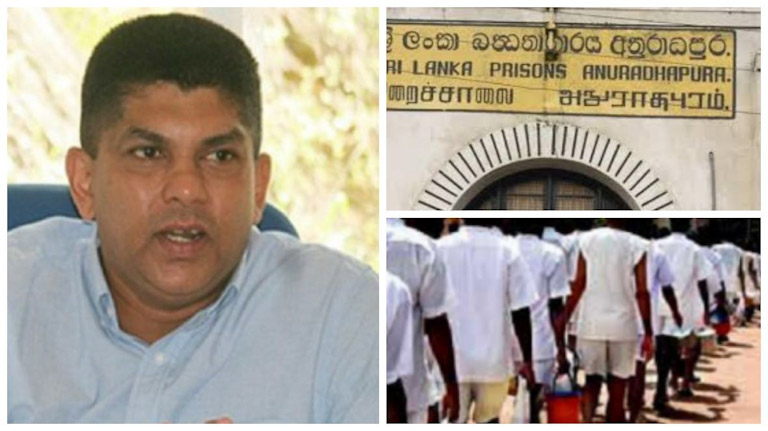
Controversial MP Lohan Ratwatte Appointed State Minister of Plantation and Mahaweli Development

In a move stirring controversy and raising eyebrows across political circles, Lohan Ratwatte, a contentious figure in Sri Lankan politics, has been appointed as the State Minister of Plantation Industries and Mahaweli Development.

Ratwatte, who hails from the Sri Lanka Podujana Peramuna (SLPP) and represents the Kandy District in parliament, previously held the position of State Minister of Prison Reforms before being compelled to step down amidst allegations of unruly behavior.

New political front formed to work for upcoming polls

A new political front, including cabinet ministers and government parliamentarians, was formed yesterday with the aim of working for future presidential and parliamentary elections.

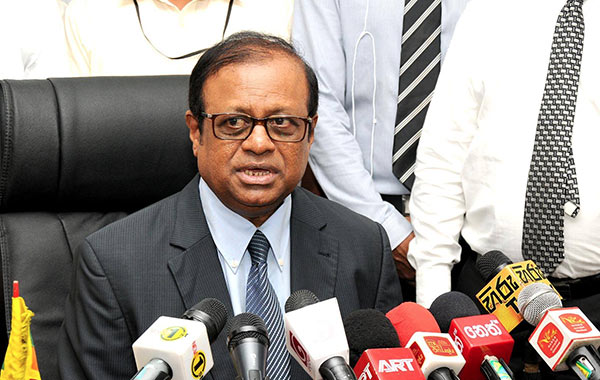
The front was launched at a meeting in Ja-Ela, and it was attended by Ministers Susil Premajayantha and Nalin Fernando, along with parliamentarians Nimal Lanza and Anura Priyadharshana Yapa. Mr. Yapa told the Sunday Times that the front would include more Sri Lanka Podujana Peramuna (SLPP) members, and they had already expressed their desire to join the group.

“We will be having meetings in each of the electorates where more members will be joining in, and thereafter we will hold district-level meetings to expand the front,” he said.

Mr. Yapa added that eventually the front would be supporting an alliance at the presidential elections, but the plans would be decided based on the outcome of the discussions and public meetings.

India and Sri Lanka are interlinked and intertwined, says Indian envoy

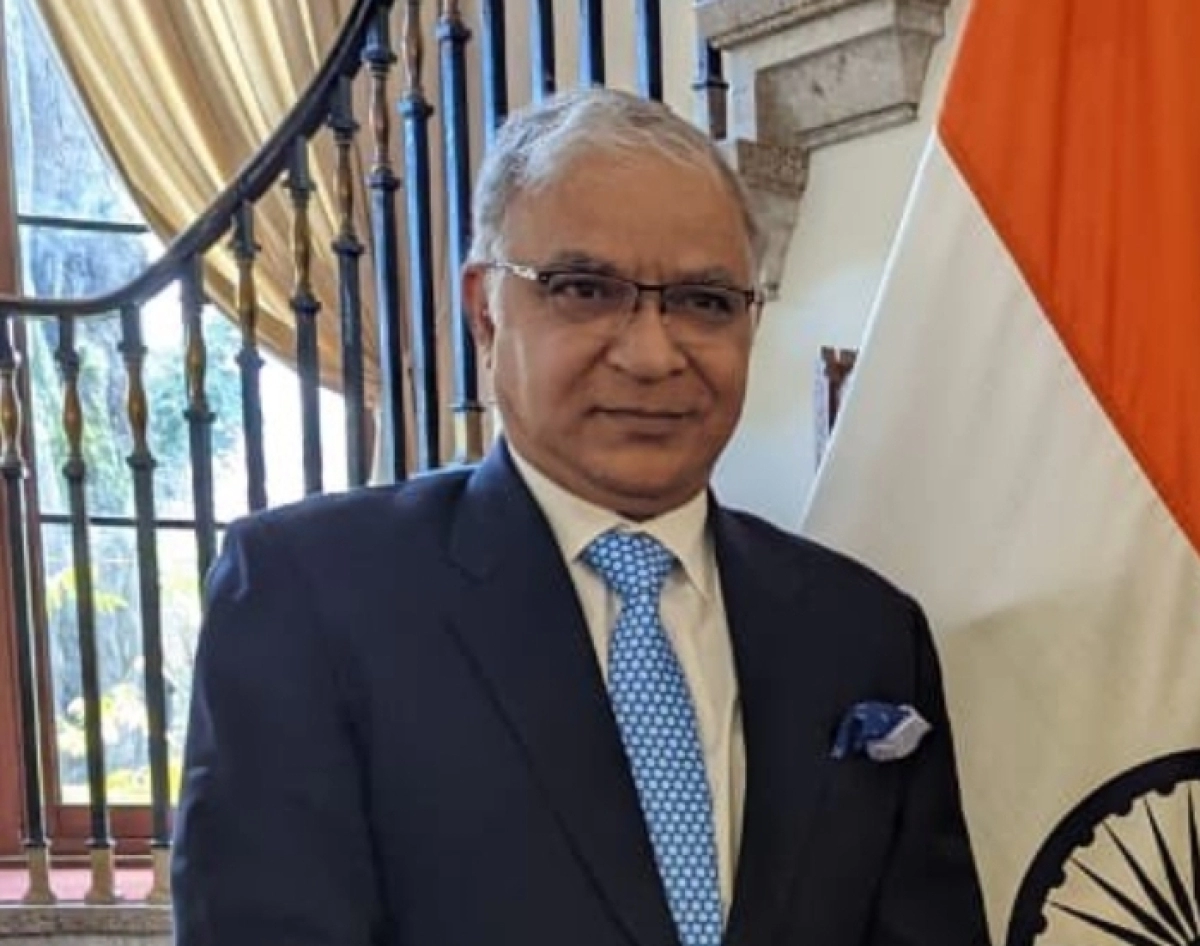
Indian High Commissioner Santosh Jha said at India’s Republic Day function here in Colombo on January 26 that whether it is in the realm of development or security, India and Sri Lanka are interlinked and intertwined.

Here is the full text of his speech:

I am grateful to all of you that you could join us as we celebrate the 75th Republic Day of India.

Your strong presence here is a testimony to the strong bonds of friendship, partnership and cooperation between India and Sri Lanka. I thank all of you from the bottom of my heart.

On this day, in 1950, the Constitution of India came into effect and India became a Republic. Today we celebrate the establishment of a modern Indian democracy, which is unprecedented in its size, scale and vibrancy.

It is unparalleled in size and scale because it enfranchises 950 million adult Indians.

It is vibrant because it demonstrates that democracy delivers.

And it is unprecedented because it empowers 1.4 billion Indians.

Our economic journey, in particular in the last decade, has also been remarkable. India is now the fastest growing major economy in the world. We are now the 5th largest economy and poised to become the 3rd largest by 2027-2028. That we were 10th largest ten years ago shows the speed of this journey!

India truly stands today at an inflection point. The vision of our Prime Minister is to make India a developed country – a Viksit Bharat or a developed India – by 2047. We believe that it is through ‘Sabka Prayas’ or through efforts of all that a ‘Viksit Bharat’ will materialize. There is realization that development, just as democracy, is of the people, for the people and by the people.

One of the many major transformations underway in India is built on the implementation of the Unique Digital Identity Number or Aadhar. This has delivered good governance and empowered the poor and the underprivileged in a way not seen before. To give you an example, the Aadhar has enabled the government to deliver food rations to 850 million, provide free medical insurance cover to 500 million and effect cash transfers to 450 million Indians. There are multiple examples of such welfare schemes reaching the poor and the most underprivileged without leakages and in full transparency. Today, India is perhaps the only low-middle income country in the world to deliver societal benefits on such scale and with such impact.

Beyond this, the Unique Digital Identity Number, along with the UPI, has also ushered a boom in digital financial transactions in India. Today, 46 of every 100 such transactions in the world are taking place in India. The digital public infrastructure has also led to spectacular growth of start-ups in India with over 100,000 registered start-ups in just the last decade. And among them are over 100 Unicorns or startups with more than a billion dollar valuation.

The speed and scale of change is also noteworthy. In the last 18 months, we have installed 400,000 5G sites. Every day in the last five years, we have opened two new colleges in India. Our physical infrastructure is acquiring world class standards. Our technological capabilities were best demonstrated when we landed the Chandrayaan-3 on South Pole of the moon – first by any country. Our journey on renewable energy has also been remarkable. We are on target to achieve 68.4% of our energy or 650 GW from non-fossil sources by 2032. We are also building a formidable green hydrogen capacity. Not surprisingly, we are the only G20 country that is on track to implement and even exceed its Paris Climate commitments.

Our growing national capabilities are also reflecting in our foreign policy. Our G20 presidency saw consensus on a common outcome, secured the membership for the African Union and championed the cause of the Global South.

Our domestic vision is also driving our Neighbourhood First policy. Our SAGAR policy which seeks security and growth for all in the Indian Ocean region is at the heart of our approach towards Sri Lanka.

The India-Sri Lanka partnership has been built on civilizational ties, geographical proximity, cultural connect, strong sense of solidarity and age-old goodwill. In recent years, be it during the COVID-19 pandemic or the economic crisis, India has reaffirmed itself as a trusted and reliable partner of Sri Lanka.

The Vision document adopted by our leaders in July 2023 seeks to build a stronger economic partnership with connectivity as its central theme.

Since July 2023, we have started daily flights between Jaffna and Chennai, and launched ferry services between India and Sri Lanka. We are working on building mechanisms to establish the India-Sri Lanka Connectivity Corridor.

We are also advancing multiple energy initiatives. These include the power grid connectivity eventually to enable Sri Lanka to export power to India; the multi-product pipeline, which will boost our shared interest in developing Trincomalee as an economic hub; and we are also working to set up a virtual LNG pipeline from Kochi to Colombo to bring down electricity costs in Sri Lanka. There are other clean energy projects in the private sector as well as the one by the NTPC in Sampur.

India is also Sri Lanka’s largest trading partner. In 2022, bilateral trade stood at USD 6 billion. In recent years, we have also been the largest foreign investor in Sri Lanka. India continues to be the largest source of foreign tourists in Sri Lanka. We hope to enhance our economic partnership and enhance Sri Lanka’s export potential through early conclusion of the Economic and Technology Cooperation Agreement, just as the FTA opened new export opportunities for Sri Lanka to India, which now stands at more than 1 billion dollars.

Till date, we have contributed over 5 billion US dollars towards our development partnership, which has touched every single district of Sri Lanka. We are working on projects for solar electrification of religious places across Sri Lanka, assisting in modernization of Sri Lanka railways, constructing houses for the poor, enhancing Sri Lanka’s health and education infrastructure, and engaging in ports and airports development. We are working on the Sri Lanka-Unique Digital Identity project and seeking to soon roll out UPI in Sri Lanka. In all of this, India’s priorities are determined by Sri Lanka’s needs and aspirations and that too principally of its citizens.

India and Sri Lanka are natural partners- we are, if I may say, irreplaceable, indispensable, and inseparable as partners. Our interests in matters of security or development are intertwined and interlinked. The huge potential our partnership holds and the tangible impact it can have on the lives of the common people drives me to work harder to further deepen and strengthen it. I look forward to your support and cooperation in this regard.

May a Viksit Bharat propel a Viksit Sri Lanka.

Posted in Uncategorized

Sri Lanka defence sector to join tourism initiatives

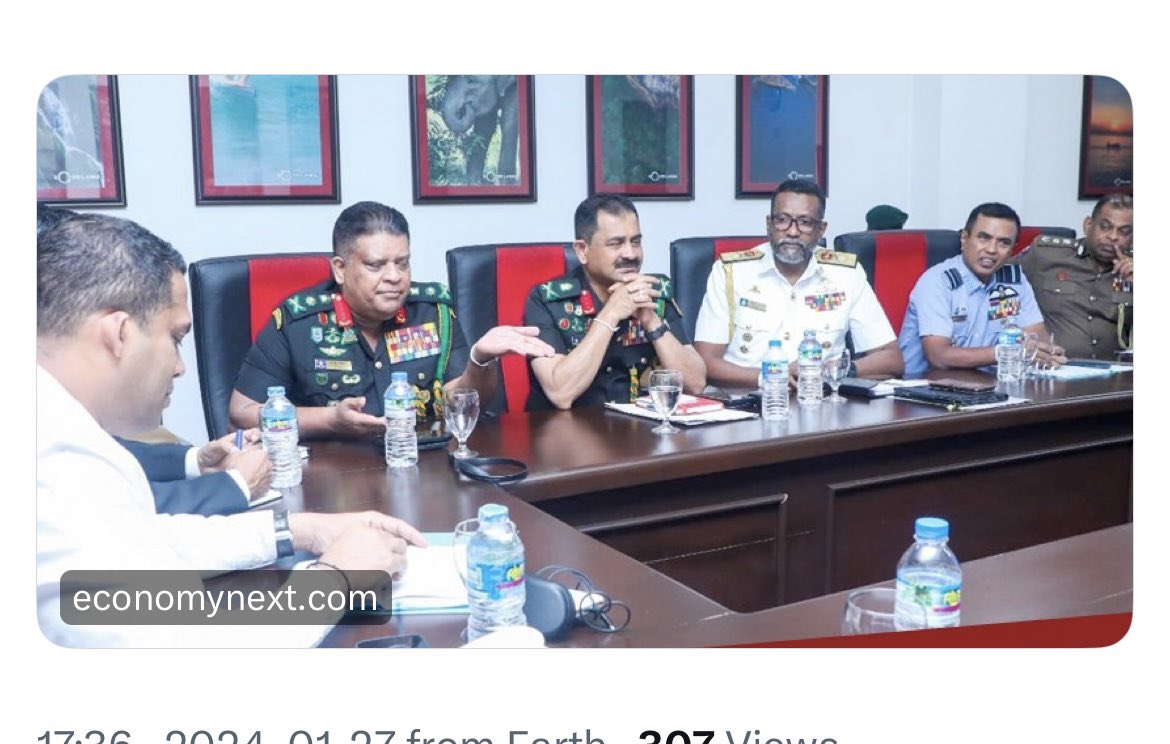
Minister of Tourism Harin Fernando has met the heads of the armed forces and the police to discuss tourism projects.

The forces will contribute to adding many new experiences to the tourism business, a statement by the Department of Government Information said after the meeting on Friday (26).

These include the police ensuring the safety of tourists, the air force increasing domestic flights within the island, developing marine tourism with the participation of the navy, and initiating a life-saving programme with the participation of the army.

Sri Lanka is eagerly focused on promoting tourism, a key foreign exchange source for the country, but lacks critical infrastructure and faces much red tape. However, the government has adopted an all hands on deck approach since of late.

Although surrounded by the sea, the island neither has a domestic yatch culture, nor yacht based tourism activities like liveaboard diving cruises.

Sri Lanka’s Tourism Promotion Bureau is in the process of clearing barriers to marine tourism, including leisure activities on yachts, Managing Director Nalin Perera said recently.

The country’s 2023 tourism revenues jumped over 80 percent to $2.1 billion from $1.1 billion in the previous year, official data show.