Sri Lanka’s proposed Online Safety Bill threatens upcoming elections – Human Rights Watch

The Human Rights Watch (HRW) states that Sri Lanka’s proposed Online Safety Bill will create broad and vague new speech-related offences punishable by lengthy prison terms, while critically threatening the right to freedom of expression.

“A repressive new internet law that Sri Lankan President Ranil Wickremesinghe is trying to rush through parliament this week would create broad and vague new speech-related offences punishable by lengthy prison terms. The law would seriously threaten the right to freedom of expression as Sri Lanka prepares for parliamentary and presidential elections later this year”, it said in a statement.

The proposed law, the Online Safety Bill, purportedly provides protections against online harassment, abuse, and fraud, the statement mentioned, highlighting that instead, it is mostly concerned with creating a new “Online Safety Commission,” appointed by the president, that can decide what online speech is “false” or “harmful,” remove content, restrict and prohibit internet access, and prosecute individuals and organizations.

Furthermore, the international non-governmental organization also states that the commission-appointed “experts” would be empowered to enter and search suspects’ premises. Offences under the law carry hefty fines and prison sentences up to five years. The United Nations Human Rights Office said the law “could potentially criminalize nearly all forms of legitimate expression, creating an environment that has a chilling effect on freedom of expression.”

The Asia Internet Coalition, an industry body including tech giants such as Google, Apple, and Meta, has called the bill a “draconian system to stifle dissent” and warned it “could undermine the potential growth of Sri Lanka’s digital economy”, it added.

“Sri Lanka is still reeling from an economic crisis partly caused by misgovernment and failures of accountability. In 2022, months-long protests demanding reform toppled the prime minister and president. Since coming to power that year, President Wickremesinghe has moved to stifle dissent.”

“Other repressive legislation before parliament includes a new broadcasting law, which the UN experts say could be used to ‘suppress dissenting voices,’ and a counterterrorism law that ‘grants wide powers to the police – and to the military – to stop, question and search, and to arrest and detain people, with inadequate judicial oversight’”, the statement mentioned.

Meanwhile, it has also expressed that according to the International Monetary Fund, which is supporting Sri Lanka’s economy, restrictions on civil society, including the “broad application of counter-terrorism rules,” already limit “oversight and monitoring of government actions,” contributing to “severe governance weaknesses and corruption vulnerabilities.”

Sri Lanka’s repressive laws have facilitated widespread human rights violations for decades and contributed to economic and political crises, the Human Rights Watch stressed, adding that passing the Online Safety Bill would be a ‘disastrous setback’.
Posted in Uncategorized

Online Safety Bill passed in Parliament

Sri Lanka’s Online Safety Bill, which seeks to regulate online content, was passed in Parliament with amendments on Wednesday (24), amidst objectios from opposition politicians and activists who allege the new law will muzzle free speech.

Accordingly, the Speaker of Parliament Mahinda Yapa Abeywardena informed the House that the Online Safety Bill was passed in the Committee Stage with amendments.

The Online Safety Bill proposes jail terms for content that a five-member commission considers illegal and makes social media platforms such as Google, Facebook and X, formerly known as Twitter, liable for those posted on their platforms.

The government says the Bill is aimed at battling cybercrimes including child abuse, data theft and online fraud.

The Second Reading of the Online Safety Bill was also passed in Parliament this evening (Jan. 24) with a majority of 46 votes. A total of 108 MPs had voted in favour, while 62 had voted against the Bill.

The division was followed by a committee stage debate, during which a heated situation ensued as opposition MPs objected to certain amendments brought by the ruling party, accusing them of being unconstitutional and in violation of the Supreme Court determination.

The Sectoral Oversight Committee on Media, Youth, Heritage and New Citizen had recently approved the Online Safety Bill, subject to the amendments determined by the Supreme Court.

The bill was approved when the Sectoral Oversight Committee met in Parliament on Monday (22) under the chairmanship of the MP Lalith Warankumara. Thus, the bill, which was tabled in Parliament by Minister of Public Security Tiran Alles was taken for the second reading debate on Tuesday (23) and Wednesday (24).

The Online Safety Bill, published in the government gazette on September 18, aims to ban online communication of certain statements in the country, prevent the use of online accounts – both authentic and inauthentic – for the use of prohibited purposes, to suppress the financing and other support of communication of false statements and other related matters.

However, the Bill has come under fire for some of its problematic aspects, with the AIC, the International Commission of Jurists (ICJ), the Bar Association of Sri Lanka (BASL), and the Human Rights Commission of Sri Lanka (HRCSL) voicing concerns.

The Asian Internet Coalition (AIC), which has Apple, Amazon, Google and Yahoo as members, warned Sri Lanka that the Bill could impact investments in the country’s information technology industry and called for extensive amendments to it.

Meanwhile, the collective of Information Technology (IT) and Business Process Management (BPM) industry stakeholders in Sri Lanka have also raised key concerns regarding the controversial Bill.

The Sri Lanka Association of Software and Service Companies (SLASSCOM), Federation of Information Technology Industry Sri Lanka (FITIS), the Computer Society of Sri Lanka (CSSL) and the British Computer Society (BCS) have also raised concerns pertaining to the Online Safety Bill, issuing a joint statement today (24).

A total of 45 petitions had been put forward by Cardinal Malcolm Ranjith, Samagi Jana Balawegaya (SJB), National People’s Power (NPP), journalist Tharindu Uduwaragedara and many other parties, alleging that the relevant bill is in violation of the fundamental rights of freedom of speech and expression guaranteed by the Constitution.

Later, the Supreme Court, after concluding the deliberation of petitions, communicated its determination on the constitutionality of the Bill and its provisions to President Ranil Wickremesinghe and Speaker of Parliament, emphasizing that pursuant to Article 84(2) of the Constitution, Clauses 3, 5, 7, 9, 11,12, 13, 14, 15, 16, 17, 18, 19, 20, 21, 22, 23, 25, 26, 27, 28, 29, 30, 31, 32, 36, 37, 42, 45, 53, and 56 should be passed by a special majority in the parliament.

However, if these clauses are amended during the Committee Stage, the Online Safety Bill can be passed by a simple majority in the parliament, the Supreme Court’s determination had further stated.

Sri Lankan Tamil leaders seek Indian intervention in implementation of 13A

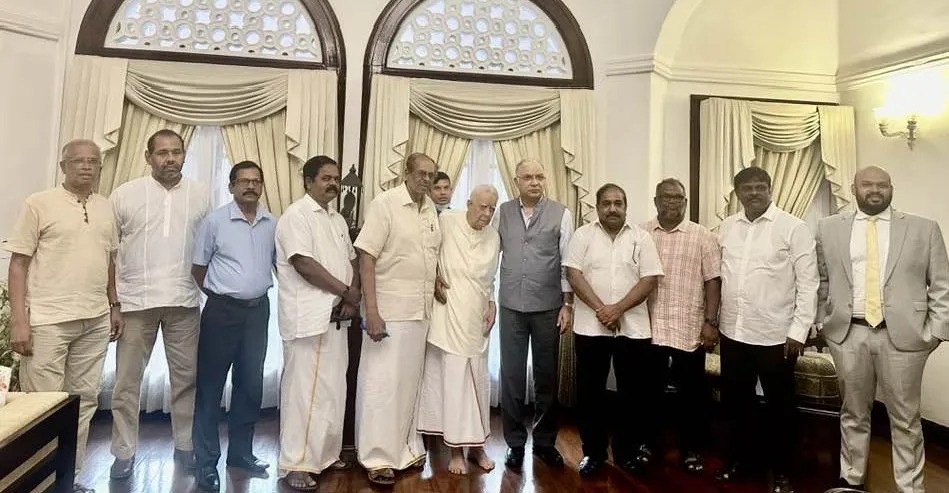
A group of Sri Lankan Tamil legislators has sought India’s intervention to ensure that Colombo fully implements the New Delhi-mooted 13th Amendment, which provides for the devolution of power to the minority community, PTI reported quoting sources.

The group led by the veteran politician and former TNA Leader R Sampanthan met India’s new High Commissioner to Sri Lanka, Santosh Jha, on Monday, said the source from the Tamil National Alliance (TNA), which represents Sri Lanka’s Tamil minority.

The two-hour-long talks were centred on the 13 Amendment, which created the provincial councils system for the island nation’s nine provinces.

The Tamil parties pointed out the need for India’s intervention in the current Sri Lankan political context for the meaningful devolution of power, the source said.

They also highlighted the issue of the Tamil political prisoners and the Tamil land grabbing by the state.

India has been pressing Sri Lanka to implement the 13th Amendment brought in after the Indo-Sri Lankan agreement of 1987. The 13A provides for the devolution of power to the Tamil community.

The 13A became a part of Sri Lanka’s constitution in 1987 through the direct intervention of the then-Indian government led by Prime Minister Rajiv Gandhi as part of the Indo-Lanka Accord.

The current Tamil political parties are sceptical of the political will of the majority Sinhala to fully implement the 13A, the PTI report said.

Meanwhile, the Indian High Commission in Colombo reports that the new Indian High Commissioner had met with Tamil leaders of Northern and Eastern Provinces, and discussed the issues concerning political, economic and social development of the region.

“Reiterating India’s longstanding position on reconciliation and full implementation of the Thirteenth Amendment, High Commissioner reaffirmed India’s continuous commitment to work for the well-being of the people of this region”, the High Commission said in a tweet.

Protest in Batticaloa against anti-terrorism and online safety bills laws

A protest took place near Gandhi Park in Batticaloa yesterday (22) against two draft laws presented by the government.

Civil society activists held the agitation over the anti-terrorism and online safety bills.

Carrying placards, they marched from Kallady Bridge with calls to the government to safeguard fundamental rights, right to expression and assembly, and to respect human rights.

Among the protestors was former state minister Ali Zahir Moulana.

Police banned a one-day hunger strike planned after the protest.

The two proposed laws are coming under local and international condemnation.

Posted in Uncategorized

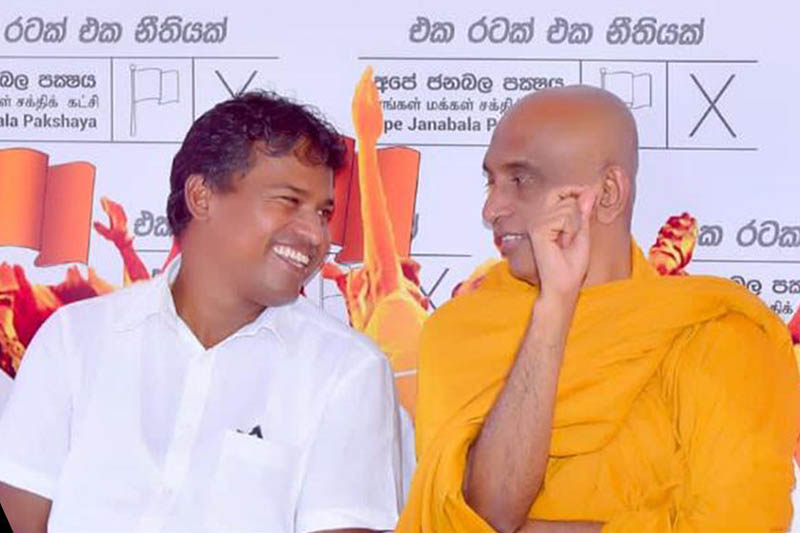
Rathana Thera tight-lipped over leader’s murder

MP Ven. Athuraliye Rathana Thera has declined to comment on the murder of his party’s leader.

Chief of Apey Janabala Party Saman Perera was among the five persons gunned down in Beliatta yesterday morning (22).

Rathana Thera has been elected to parliament on the party’s national list.

Meanwhile, the Colombo chief magistrate’s court issued notice yesterday on Perera to appear before the court on 04 June.

That is related to a case in connection with death threats alleged to have been received by Rathana Thera over the phone.

The court had not been informed about Perera’s murder.

Posted in Uncategorized

India, first country to back Sri Lanka’s IMF relief programme – IHC Santosh Jha

In overcoming the worst crisis in Sri Lanka’ s history, the country’s neighbor, India, became the leading backer of the International Monetary Fund (IMF) relief programme, India’s High Commissioner to Sri Lanka Santosh Jha said.

“Our desire to work closely with the government and the people of Sri Lanka manifested most visibly during the Covid-19 pandemic and the economic crisis in Sri Lanka in 2022. Our response was driven by our neighbourhood-first policy, which is based on a strong sense of solidarity and an outcome based, non- reciprocal and generous approach, H.C. Jha said at a recent forum held at the Cinnamon Grand, Colombo titled, ‘Colombo Leadership Retreat: Aspire, Achieve, Inspire: Women in Leadership Roles’.

H.C. Jha added: ‘India stood shoulder- to- shoulder with the people of Sri Lanka as a trusted and reliable friend. We provided foreign exchange support as well as helped to source essential items like fuel, food and medicines from India. Overall, we deployed concessional loans and credit facility of around USD 4 billion.

‘I congratulated the All India Management Association (AIMA) for organizing the event to promote dialogue about and between the women leaders of India and Sri Lanka.

‘I am confident that such events will not only bring the peoples of our two countries together and forge deeper economic, social and intellectual exchanges but will help in promoting greater access for women to leadership roles in all sectors and organizations.

‘I am delighted that AIMA has gathered some top business leaders from India and Sri Lanka to address this exclusive event over the next three days. The presence of leaders of the industry such as Mr Pai and Mr Shivakumar here today attest to the importance and seriousness attached to this event.

‘The visit of President Ranil Wickremesinghe to India in July 2023 had created further momentum to the multifaceted partnership. During the visit, our countries adopted a vision document for strengthening India-Sri Lanka ties, centred on enhanced connectivity and promoting a deeper economic partnership. Our governments are closely working together to transform this vision into reality.

‘We are exploring synergies in new areas to achieve our economic and developmental aspirations jointly.

‘India strongly advocated international support for Sri Lanka at various fora. We were the first country to provide financing assurances to the IMF for the Extended Fund Facility programme to Sri Lanka. We co-chaired an Official Creditors Committee with Sri Lanka’s other bilateral creditors to hold discussions on debt restructuring.

`As in other neighbouring countries, development partnership is one of the strongest pillars of our bilateral relationship with Sri Lanka. We are undertaking projects through concessional lines of credit and grant assistance. Our support is to the tune of USD 5 million. We are involved in rehabilitation and modernization of Sri Lanka Railways; construction of houses for the poor; solar electrification of religious places; port development, renewable energy and connectivity, among others. One of the principal vehicles for project implementation has been the high impact community development project. This is particularly useful as it enables us to implement a larger number of relatively smaller projects with high community impact. It also enables us to cover all the different provinces of Sri Lanka, including remote locations and underprivileged sections.

‘Apart from this, India’s private sector is also contributing to infrastructure development in Sri Lanka. The newest addition to Sri Lanka’s skyline, ITC, is built with an investment of about USD 500 million.

`The West Container Terminal at Colombo Port and renewable energy projects in the North are some other shining examples of recent Indian investments in Sri Lanka. These projects are a symbol of the trust that Indian companies repose in the Sri Lankan economy and its people.

‘We are advancing multiple energy connectivity initiatives. These include the power grid connectivity, eventually to enable Sri Lanka to export power to India; the multiproduct pipeline to Trincomalee, which will help advance the Trincomalee Tank Farms and Harbour interests; and we are also working to set up a virtual LNG pipeline from Kochi to Colombo. These are in addition to the power projects that I have mentioned earlier, which along with the NTPC solar power project at Sampur promises to transform the Sri Lankan energy mix and profile.

‘It is well known that India is Sri Lanka’s largest trading partner. In 2022, bilateral merchandise trade between India and Sri Lanka stood at USD 6 billion.

`Our governments have recently resumed discussions on the Economic and Technology Cooperation Agreement, which seeks to further advance our trade and economic partnership beyond the Free Trade Agreement, which came into force in 2000. Once signed, it will help in achieving the true potential of the India-Sri Lanka trade partnership. If we go by the FTA experience, it will enable Sri Lanka to significantly expand its exports both in goods and services to India. This is also our objective in keeping with our Neighbourhood-First policy.

‘India has also been the largest source of investments to Sri Lanka in the past four years. We continue to work to generate greater interest among Indian industries to maintain this trend. Investments in infrastructure, energy, renewable energy, transport and telecommunications, among others, are likely to assist us in this regard.

`In the last 10 years we have emerged from being the 10th largest economy to becoming the 5th largest in the world. We are confident that by 2027-2028, we should emerge as the 3rd largest economy. Riding on economic reforms and various government programmes, such as the production linked incentive scheme, we seem to be on the cusp of a big manufacturing boom in India. However, the biggest stories are from the ongoing digital and green transition in India.

‘Not many in Sri Lanka may be aware that India is the only G20 country that is on track to implement and even exceed its Paris Climate commitments. The Climate Change Performance Index, rates India 10 places above the European Union, which is traditionally perceived as the climate leader. Our national electricity authority projections for 2032, predict that 68.4% of our energy capacity will come from non-fossil sources. We are promoting renewables at a breathtaking speed and also implementing ambitious targets for green hydrogen. Existing investment commitments and ongoing project implementation would confirm that green energy growth in India will maintain its current leadership of the climate agenda. There are of course also India-led initiatives, such as the International Solar Alliance, the Coalition for Disaster Resilient Infrastructure and the Life Initiative that are existing manifestations of our climate leadership.’

Introductory remarks at the forum were made by Rekha Sethi, Director General, AIMA. Welcoming remarks were by T V Mohandas Pai, chairman, Aarin Capital Partners and concluding remarks were by Shiv Shivakumar, Operating Partner at Advent International Private Equity and former chairman, PepsiCo India.

Google, Facebook could close up operations in Sri Lanka after OSB: Opposition MP

Sri Lanka might lose access to international platforms such as Google and Meta (formerly Facebook) with the introduction of the Online Safety Bill, Member of Parliament Eran Wickremeratne said in parliament.

“Once this law is introduced, they will review the offences they would be accused of and most likely close up its access to users in Sri Lanka. Further, if the Sri Lankan government requests for certain information from Google, they will most likely not comply anymore as it may be self incriminating,” Wickremeratne said on Tuesday (22) when the bill was being debated.

He was responding to the opening statement to the bill presented by Minister of Public Security Tiran Alles.

“The minister spoke about intermediaries, and that they were in agreement [with the bill]. But, it should be said that they are not in favour of the bill, of which they will express their displeasure through their own social media platforms,” the minister said, referring to representatives of information technology platforms.

In September 2023 the Asia Internet Coalition released a statement saying that it had concerns over the government’s push for the Online Safety Bill “without undertaking any stakeholder consultation”.

Notable members co-signing the statement were Google, Meta, X, LinkedIn, Apple, Spotify and Bookings.com.

“While our member companies take seriously the online safety of those who use their services, legislation should not dampen innovation by restricting public debate and the exchange of ideas that can consequently impact the digital economy.”

“We strongly urge the Government to work closely with industry stakeholders to develop regulations that are proportionate, reasonable, consistent with international best practices, and most importantly, support the growth of Sri Lanka’s nascent digital economy.”

Sri Lanka’s Supreme Court said in November that the controversial bill was eligible to be passed in parliament, once subject to amendments to 31 of its provisions.

Among the offences listed in the draft bill were the communication of false statements on incidents within Sri Lanka, false statements causing defamation, disturbing religious assembly through false statements, communication of false statements with the sole intention of hurting religious emotions, communication of false statements with the sole intention for the abomination of religious emotions.

In addition to the online truths, the bullet points also included criminal activities such as fraud, cheating and child abuse, as part of ‘Online Safety’.

The MP said that he had received the bill in its full form from the legal draftsman’s office only yesterday.

“Yesterday we went to the Sectoral Oversight Comittee, that was the first time we received the legal draftsman’s department’s copy. Other parliamentary ministers are likely to have never seen this.”

The MP said that the bill, which is meant to stringently regulate online platform use, will create a great risk for locals and foreigners.

“We shouldn’t just dwell on whether this is constitutional or not. We have to go beyond that… We as participants in a global digital economy, abide by international conventions such as the ICCPR.”

The minister said that creating avenues for dollar revenues through the technological and internet based sector is key. “That is why we should introduce laws that do not hinder the economy.”

Posted in Uncategorized

UN experts call on Sri Lanka to immediately suspend and review ‘Yukthiya’ anti-drug operation

UN experts on Monday expressed alarm at the heavy security-driven approach of Sri Lanka’s drug response. They called on authorities to immediately suspend and review so-called Operation ‘Yukthiya’ and to focus on policies based on health and human rights.

“Drug users have human rights,” the experts said. “They deserve to live a life with dignity without facing further discrimination and stigmatisation.”

They deplored reported cases of arbitrary arrests of thousands of drug offenders from marginalised socio-economic groups, and the detention of hundreds in compulsory military-run rehabilitation centres. Torture and ill-treatment were also reported during the security operation known as ‘Yukthiya’.

“The current context of severe repression against suspected drug offenders is deeply worrying,” the experts said.

They stressed that rehabilitation must be conducted from a harm reduction perspective, respecting the autonomy and informed consent of drug users, including the right to refuse medication.

“Compulsory rehabilitation centres should be closed immediately and replaced by voluntary, evidence-based, rights-based and community-based social services,” said the experts, who stand ready to provide technical cooperation.

They urged Sri Lankan authorities to investigate thoroughly and impartially any allegations of torture, ill-treatment and denial of due process and fair trial rights.

“Irregularities in the judicial process of sending people to rehabilitations centres should also be investigated,” the experts said.

They called on the Government to review its current legislation on drug offences and to end the involvement of armed forces in drug control and treatment activities, in line with international human rights law and standards.

The experts raised concerns about Sri Lanka’s legislation on the treatment of suspected drug offenders in a letter sent to the Government in 2023.

The UN experts include Priya Gopalan (Chair-Rapporteur), Matthew Gillett (Vice-Chair on Communications), Miriam Estrada-Castillo, and Mumba Malila, Working Group on arbitrary detention; Margaret Satterthwaite, Special Rapporteur on the Independence of Judges and Lawyers and Tlaleng Mofokeng, Special Rapporteur on the right of everyone to the enjoyment of the highest attainable standard of physical and mental health.

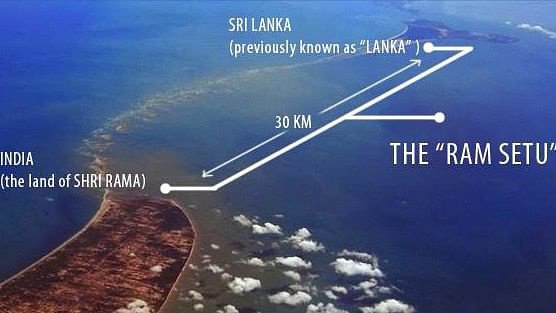
Government likely to carry out feasibility study for 23-km sea bridge between India, Lanka

Will the government accelerate the proposal for construction of a sea bridge linking India’s Dhanushkodi— believed to be the place where Lord Ram had ordered Hanumana to build a bridge to carry his army across to Sri Lanka—with Talaimannar? Sources said the government is likely to carry out a feasibility study soon for building the 23-km bridge.

India and Sri Lanka had agreed to examine the viability for developing land access to the ports of Trincomalee and Colombo during Sri Lankan President Ranil Wickremesinghe’s visit to Delhi last July. Following this, the external affairs ministry (MEA) had held a meeting with other ministries and government agencies on this issue. Sources said the MEA officials had informed the meeting about its plan to carry out the feasibility study for the bridge before preparing a detailed plan.

“A host of issues pertaining to other sectors including dairy, oil, power and shipping which came up during Wickremesinghe’s visit were also discussed at the meeting. The long sea bridge would require huge funds, but it will prove to be a boon for bilateral trade. But for that, the government has to evaluate technical, economic, and environmental aspects to see whether it’s viable,” a source said.

The need for this sea bridge has been part of discussions for more than a decade. In December 2015, Union road transport minister Nitin Gadkari had spoken about the plan to build a road-cum rail bridge following his meeting with Wickremesinghe.

Posted in Uncategorized

Sri Lanka’s main opposition files petition against anti-terrorism bill

Sri Lanka’s main opposition party the Samagi Jana Balawegaya (SJB) has filed a petition against a proposed Anti-Terrorism bill which the party claims is being introduced in an election year to repress opposition parties.

The petition was filed by SJB general secretary Ranjith Madduma Bandara Monday January 22 morning at the Supreme Court.

Speaking to reporters, the MP said the proposed bill is a threat to Sri Lanka’s opposition parties and to democracy itself.

“This bill is being presented not at a time of terrorism prevailing in the country but during an election period. The bill has not defined nor analysed what a terrorist is. Anyone can be arrested,” he said.

“We think this is being done in the face of an election to repress political parties and stifle democracy of this country. That is why we filed a case against this, for democracy,” he added.

The MP said both the anti-terrorism bill and the controversial Online Safety Bill are being introduced in an election year to quell democracy.

Sri Lanka’s proposed new counter-terror law as well as the Online Safety Bill has drawn criticism from various quarters including opposition parties and civil society. Most recently, the Centre for Policy Alternatives (CPA) said in early January that the introduction of the two bills and other measures are some examples where Sri Lanka’s space for dissent is “fast shrinking with fears of increasing authoritarian and militarised trends that erode the rule of law and threaten Sri Lanka’s fragile peace.”

“In such a context, CPA urges the government to withdraw these bills and initiate a process at genuine confidence building measures and reform that addresses the multiple challenges confronting Sri Lanka,” it said.

Human rights activists both local and international have repeatedly called for the repeal of the island nation’s existing Prevention of Terrorism Act (PTA), which critics have called draconian. The proposed new Anti Terrorism Act which was supposed to replace the PTA has also been the target of much criticism both locally and internationally.

The Human Rights Watch (HRW) said in April 2023 that the act, if passed, would empower the authorities to systematically violate fundamental human rights.

The Anti-Terrorism Bill, which was published on March 22, 2023, is intended to replace the “notorious” PTA, HRW said in its statement, which led to “widespread torture and arbitrary detentions since its introduction in 1979”.