Presidential Elections: three-pronged battle takes shape

In anticipation of the upcoming Presidential Elections scheduled towards the end of the year, the political arena is witnessing a flurry of activities as various parties and groups strategically position themselves for the impending electoral contest.

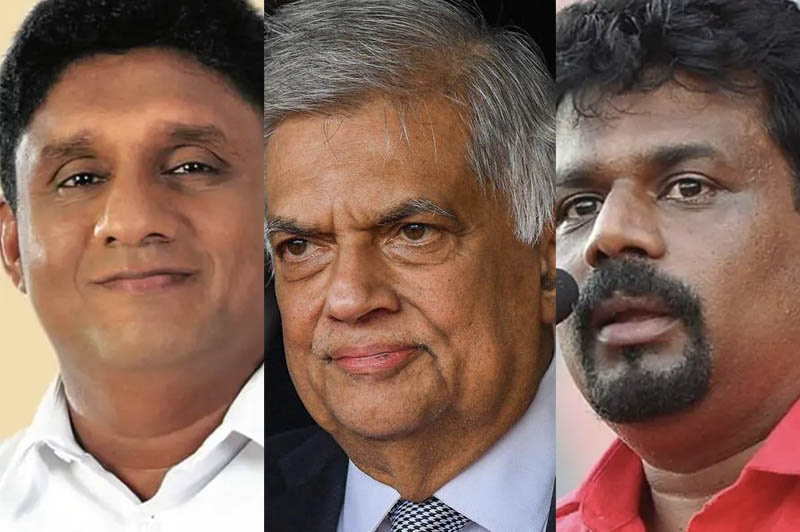
The National People’s Power (NPP), led by the Janatha Vimukthi Peramuna (JVP), has taken an early plunge into the electoral fray by announcing Anura Kumara Dissanayake as its presidential candidate and conducting countrywide rallies. Sajith Premadasa, the Opposition Leader, is widely expected to lead the charge for his Samagi Jana Balawegaya (SJB).

The United National Party (UNP) has thrown its hat into the ring by nominating its leader, President Ranil Wickremesinghe, as the presidential candidate. With this development, the political landscape is shaping up for a three-pronged contest.

It is not yet clear whether the Sri Lanka Podujana Peramuna (SLPP) led by former President Mahinda Rajapaksa will field its own candidate or back President Wickremesinghe who is in alliance with the party in the government.

The NPP is going around the country with major election rallies. They have started the campaign earlier than others and even created a kind of a momentum triggering doubts whether they will be able to sustain it in the long run. The proclamation announcing the presidential election has to be issued only in the middle of September 2024 in accordance with the constitutional provisions.

It means there are eight more months for the election. As such, the political parties have swiftly launched into action. The SLPP, as a party, slipped out of the public eye in politics in the face of severe economic woos that even led to the untimely of resignation Mr. Gotabaya Rajapaksa from office. Recently, the party conducted a workshop for its activists primarily to educate them on how to counter allegations against it over the present economic predicament of the country. The workshop was organized with the involvement of MP Namal Rajapaksa. It is a strategy to position the party well ahead of the elections and strengthen the rank and file ideologically – albeit challenging it be.

Next, the party is planning to educate its leaders at the local level. The party is not prepared to initiate a fully-fledged election campaign at the moment, since it is impractical to sustain such a movement for eight months. It has not yet declared its presidential candidate, though. However, political indications lead to the conclusion that it will back President Wickremesinghe.

Besides, the political group led by MP Anura Priyadharshana Yapa will launch its electoral addresses on January 27 in Ja-Ela, Gampaha. That is to galvanize the electoral support of people for the possible candidacy of President Wickremesinghe. The group is also planning to form an alliance ahead of the elections. As the political chessboard continues to evolve, these early moves and strategic alignments set the stage for a gripping presidential contest in the months to come.
Posted in Uncategorized

Indian High Commissioner Santosh Jha visits Kandy

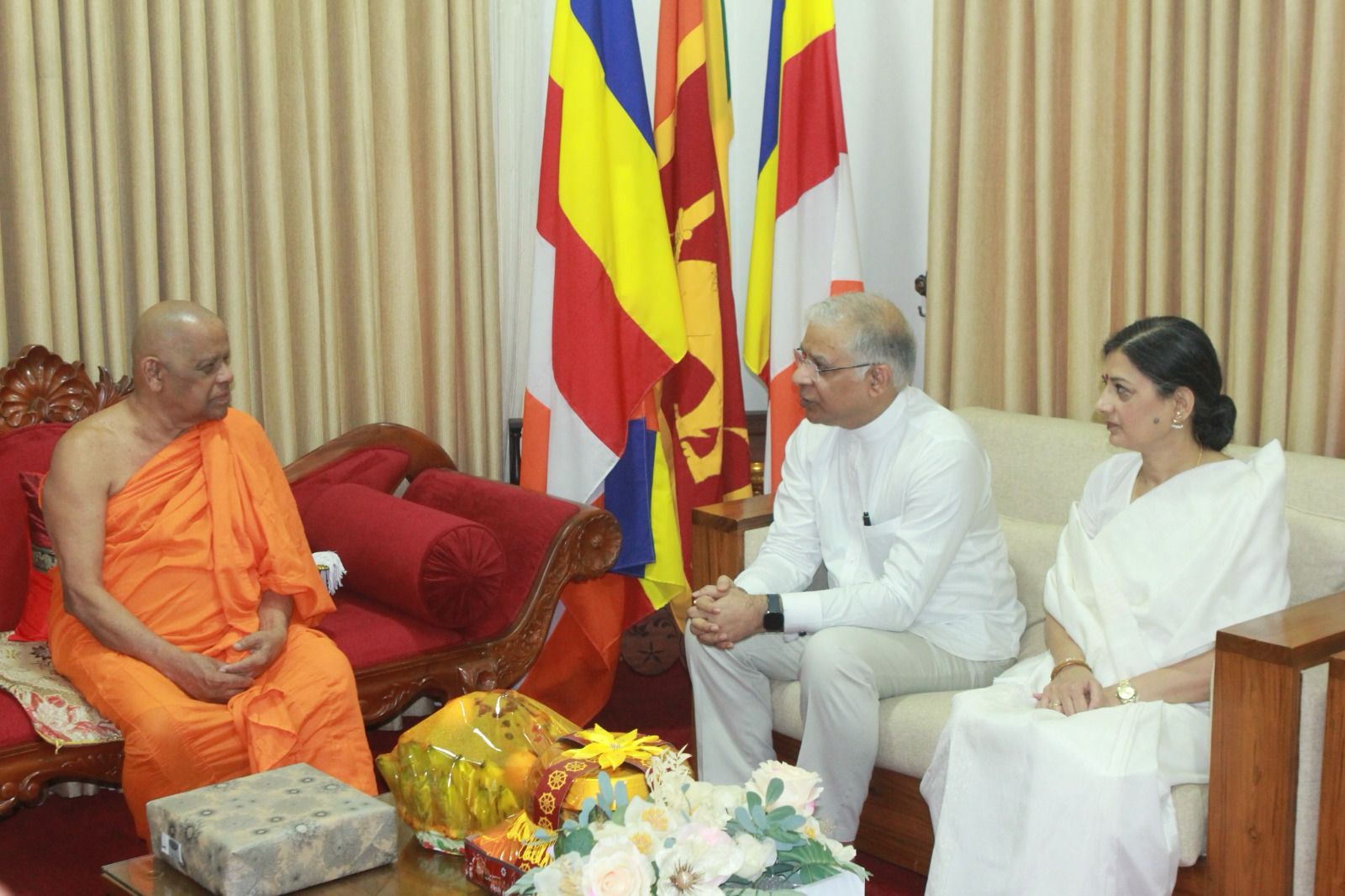
The High Commissioner India, Santosh Jha, sought the blessings of the Mahanayaka Theros of Asgiriya and Malwatte chapters, the Most Ven. Warakagoda Sri Gnanarathana Mahanayaka Thero and Most Ven. Thibbatuwawe Sri Siddhartha Sumangala Mahanayaka Thero respectively during a visit to Kandy on Thursday.

The High Commissioner underlined that Buddhism was central to age-old connect between the people of India and Sri Lanka and briefed the Mahanayakes, of various initiatives undertaken by Government of India to strengthen bilateral Buddhist ties.

He specifically mentioned that measures are being taken expeditiously to roll out the solar electrification of temples across the country through Indian government assistance.

He offered prayers at the Dalada Maligawa for the prosperity and well being of the people of the two countries as also stronger and deeper connections between them.

He also prayed for closer bilateral relations through further diversification in both scale and scope at the Kataragama Dewalaya.

He visited Hanthana Estate and took stock of the Indian Housing Project. While the Indian government has already built 50 houses in the Estate under the third phase, more housing units are being constructed in the next phase of the project.

Overall, the government of India has committed to building 14,000 new houses for plantation workers in the two phases of the project.

The High Commissioner inaugurated an Ayurveda camp, aimed at the physical well being of the plantation workers. He also distributed study materials and umbrellas to school going children in the Estate. He remarked that these are keeping in line with India’s firm commitment to the overall uplift of the plantation workers and the Indian origin Tamil community in particular.

It may be recalled that a multi-sectoral grant package to the tune of SLR 3 billion was announced by the Indian government during the visit of President Ranil Wickremesinghe to India in July 2023.

Jaffna University commemorates 23rd anniversary of Pongu Tamil Declaration

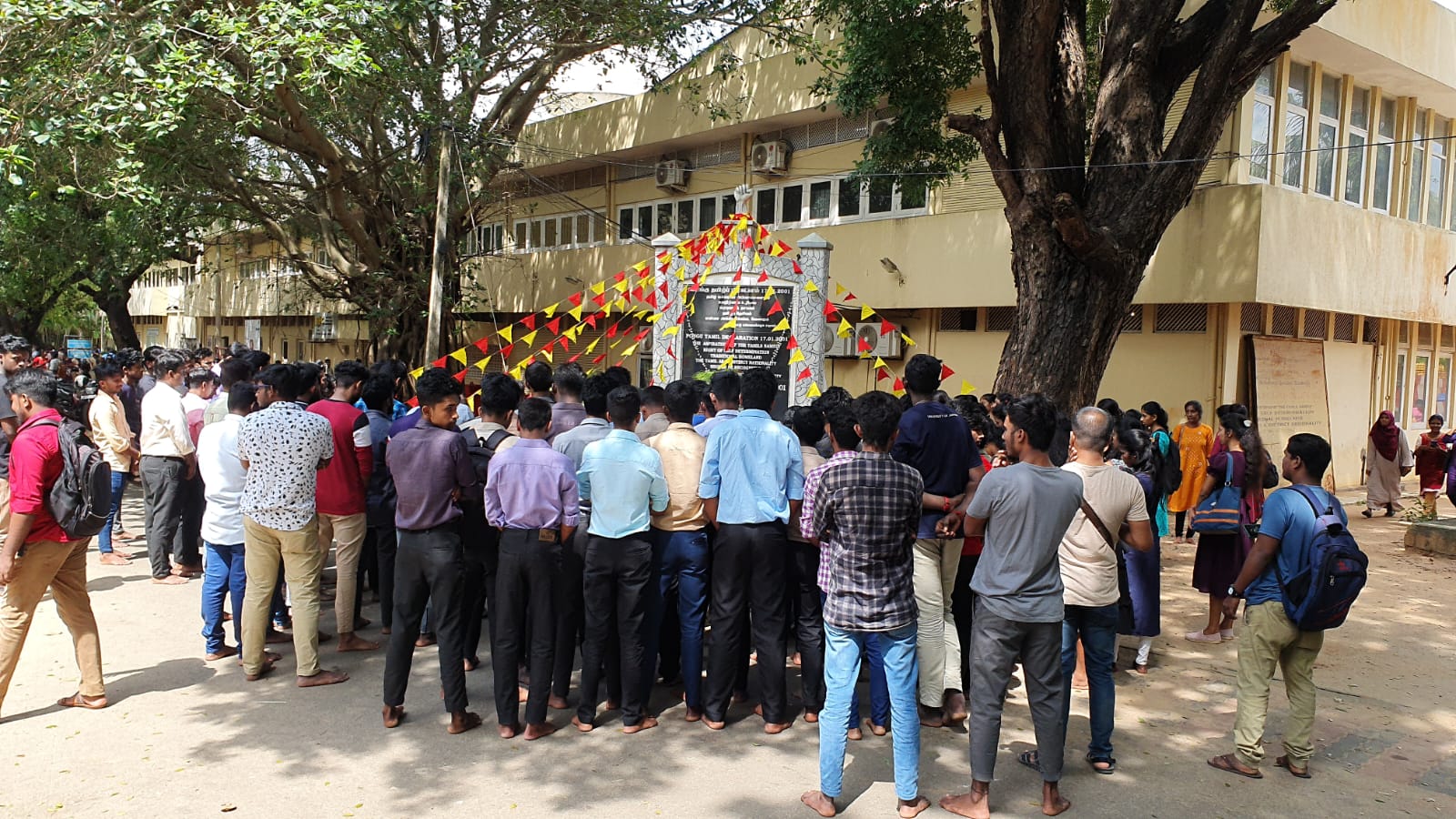
The commemoration of the 23rd anniversary of the Pongu Tamil Declaration took place at Jaffna University, marking a significant event in the region’s history.

On Wednesday, a commemoration was observed at the Pongu Tamil Memorial Obelisk, situated in front of the Faculty of Arts at the University of Jaffna.

The gathering paid homage to the Pongu Thamizh Declaration, a pivotal moment in the struggle for Tamil rights.

In 2001, amidst the suppression by the occupying Sri Lankan military, the Jaffna University community organized a massive uprising event themed “Pongu Tamil.”

Despite facing challenges, including security checkpoints and restrictions imposed by the Sri Lankan security forces, over ten thousand people, comprising university and high-school students, residents, and representatives of civil organizations, demonstrated on January 17th, urging the government to respond to the unilateral ceasefire declared by the Liberation Tigers of Tamil Eelam (LTTE) and engage in negotiations.

Thousands more people were turned away by Sri Lankan security forces at checkpoints set up along the major roads leading to the university, residents said. Reporters were not permitted into the university either.

Following this, there were mass protests and rallies held throughout the North-East, particularly in Vavuniya and Batticaloa in support of the Pongu Thamil rally in Jaffna.

Hundreds of undergraduates of the Eastern University in Batticaloa and the College of Education in Vavuniya gathered for peaceful rallies urging the Sri Lankan government to start peace talks with the LTTE and to recognize the Tamil people’s right to self-determination.

The rallies were later echoed in Tamil diaspora communities worldwide in 2008.

The Pongu Thamil Declaration articulated the aspirations of the Tamil people, emphasizing the withdrawal of the Sri Lanka Army from Tamil land and the establishment of an interim administration with full powers entrusted to the LTTE.

The international community was urged to recognize and support this interim administration.

Excerpts from the Pongu Thamil Declaration stated, “We want our land. Hence Sri Lanka Army should leave our land. To restore normalcy in our lives, an interim administration with full powers should be handed over to the LTTE. The international community should come forward to recognize such an interim administration.”

“We cannot think of peace while our lands and homes are occupied by the government troops. Under this circumstance, peace talks should be held on the basis of traditional homeland, self-determination, and Tamil nationalism concepts and a just and lasting political solution should be found for the ethnic conflict.”

The commemoration day, organized by the Jaffna University Students’ Union, saw the participation of University Senior Lecturer M. Lambirayan, the University Staff Association, and students.

Presidential pardon for two LTTE prisoners serving life terms

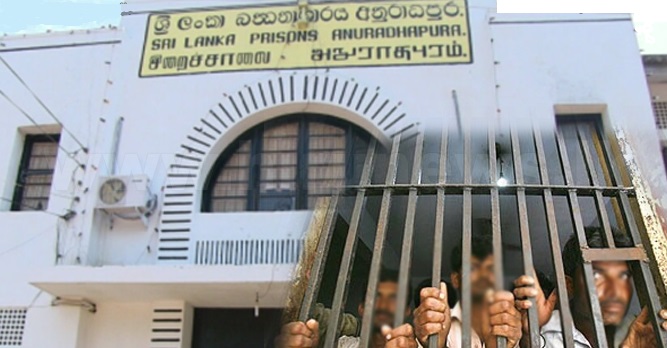
President Ranil Wickremesinghe has pardoned two prisoners who had been serving life sentences for LTTE activities after being convicted under the Prevention of Terrorism Act (PTA) and Emergency Regulations.

The prisoners, Nagalingam Madansekar and Selvathurai Kirubakaran, have been pardoned following Justice Minister Wijeyadasa Rajapakshe’s recommendation, backed by a Prison Department report that said the duo had displayed good behaviour.

The prisoners have been pardoned by the President under powers vested with him under Article 34(1) of the Constitution.

Both men had been convicted after being indicted in the Colombo High Court. Mr. Madansekar had been convicted of charges filed under the Emergency (Miscellaneous Provisions and Powers) Regulations on March 29, 2023 and sentenced to life in prison.

Mr. Kirubakaran had been found guilty of charges filed under the PTA. He had filed an appeal against his conviction, but on July 20, 2022, the Court of Appeal affirmed the ruling and sentence given by the Colombo High Court.

Posted in Uncategorized

No agreement with Dhammika Perera on Presidential candidacy: Prasanna

Minister Prasanna Ranatunga ruled out any agreement between Parliamentarian Dhammika Perera and the Sri Lanka Podujana Peramuna (SLPP) on the Presidential candidacy.

He told reporters after the Matara District Coordination Committee meeting that they cannot put the country in trouble again by appointing an inexperienced President.

“I am an active member of the party. As far as I know, the SLPP has not entered into any agreements with Dhammika Perera on the Presidential candidacy,” he said responding to a question.

He said the SLPP has not taken a decision to field a candidate for the Presidency as yet and added that the SLPP should give President Ranil Wickremesinghe another chance if he is contesting.

Posted in Uncategorized

‘Patti Pongal is a black day for Tamil farmers’

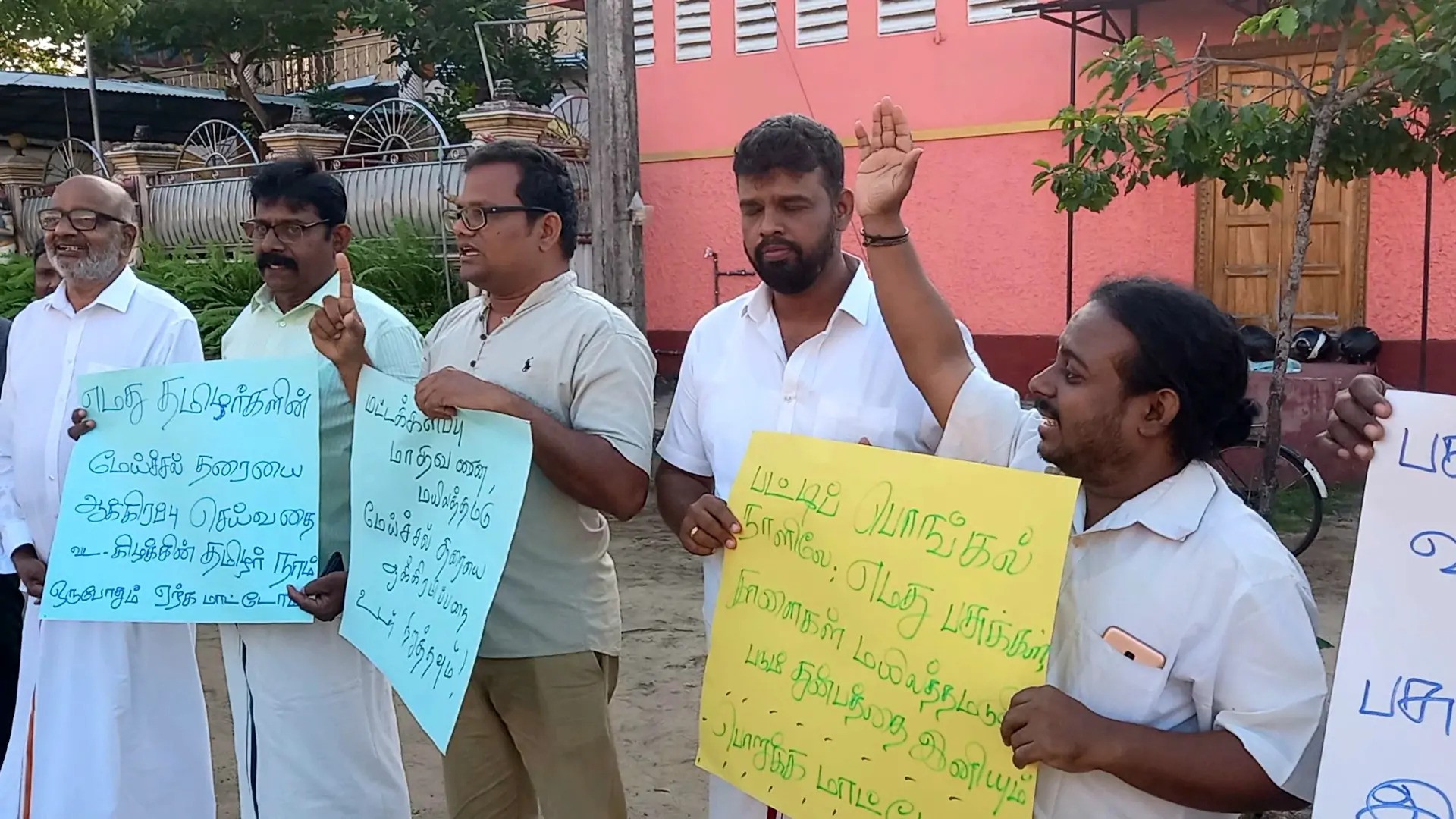
Tamil farmers rallied through Batticaloa yesterday (16) on Patti Pongal to highlight their ongoing plight as illegal Sinhala settlers continue to destroy their livestock and grab their lands.

Patti Pongal, also known as Maatu Pongal, is a festival celebrated by Tamils to give thanks to cattle for allowing farmers to cultivate and harvest their crops.

Cows are often bathed and adorned with flower garlands and bells.

However, this year to mark Patti Pongal and 126 days of continuous protest, Tamils carried 126 Pongal pots as they demonstrated from Gandhi Park to the District Secretariat office, demanding that the illegal encroachers should be removed from the pastureland in Madhavanai and Mayilathamadu.

Once the protest reached the District Secretariat Office, the protesters chanted for the Government Agent to come out and speak to the farmers.

Nimalan, the head of the Cattle Welfare Organisation met with the Government Agent who agreed to investigate the ongoing encroachment of their land.

Tamil farmers in Mayilathamadu and Madhavanai, have been protesting the encroachment of their lands and the killing of their cattle by Sinhala settlers since at least 2021.

In recent months, tensions have risen between Sinhalese settlers and Tamil farmers as Sinhala settlers have escalated their efforts to attack livestock owned by Tamil farmers.

In one incident in October 2023, Sinhala settlers had fed explosives to a cow owned by a Tamil farmer, ripping its jaw open.

At the time, the farmer said: “They have been doing awful things like this in Mayilathamadu. They’ve fed explosives. They’ve electrocuted the animals. They’ve fired shots at the animals.”

Despite their longstanding protest, the Sri Lankan government has failed to intervene and redress the grievances of Tamil farmers.

HRCSL makes key recommendations for Bill on Commission for Truth, Unity and Reconciliation

The Human Rights Commission of Sri Lanka (HRCSL) has made five key recommendations pertaining to the Bill on the Commission for Truth, Unity and Reconciliation in Sri Lanka, which was published by way of gazette notification on 29 December 2023.

In a letter addressed to the President, the HRCSL recognized the well-established human right to truth under international law, emphasizing its crucial role in transitional justice.

However, it asserted that the promotion of this right should be aligned with the advancement of other transitional justice pillars, including accountability, reparations, and preventing the recurrence of past injustices.

Accordingly, the HRCSL made the following five key recommendations:

1) Without delay, a high-level committee should be set up under the Presidential Secretariat, comprising pertinent experts and representatives from victim groups and civil society. The primary responsibility of this committee is to oversee the implementation of all positive recommendations from prior truth-seeking mechanisms, including the Lessons Learnt and Reconciliation Commission (LLRC).

2) Programmes that inform the country as a whole about the findings of previous truth-seeking mechanisms should be carried out.

3) Establish a strong, impartial entity for investigating and prosecuting serious human rights violations and crimes, promptly providing it with essential resources and access to expertise, including international perspectives as needed.

4) Transitional justice in Sri Lanka should address both armed conflicts and civil disturbances, including insurrections, delving into their political and socioeconomic roots for a holistic national reckoning.

5) The Presidential Secretariat should serve as the host for any transitional justice mechanism in Sri Lanka, providing it with the utmost status and significance.

Posted in Uncategorized

Supreme Court deems Duminda Silva’s presidential pardon invalid

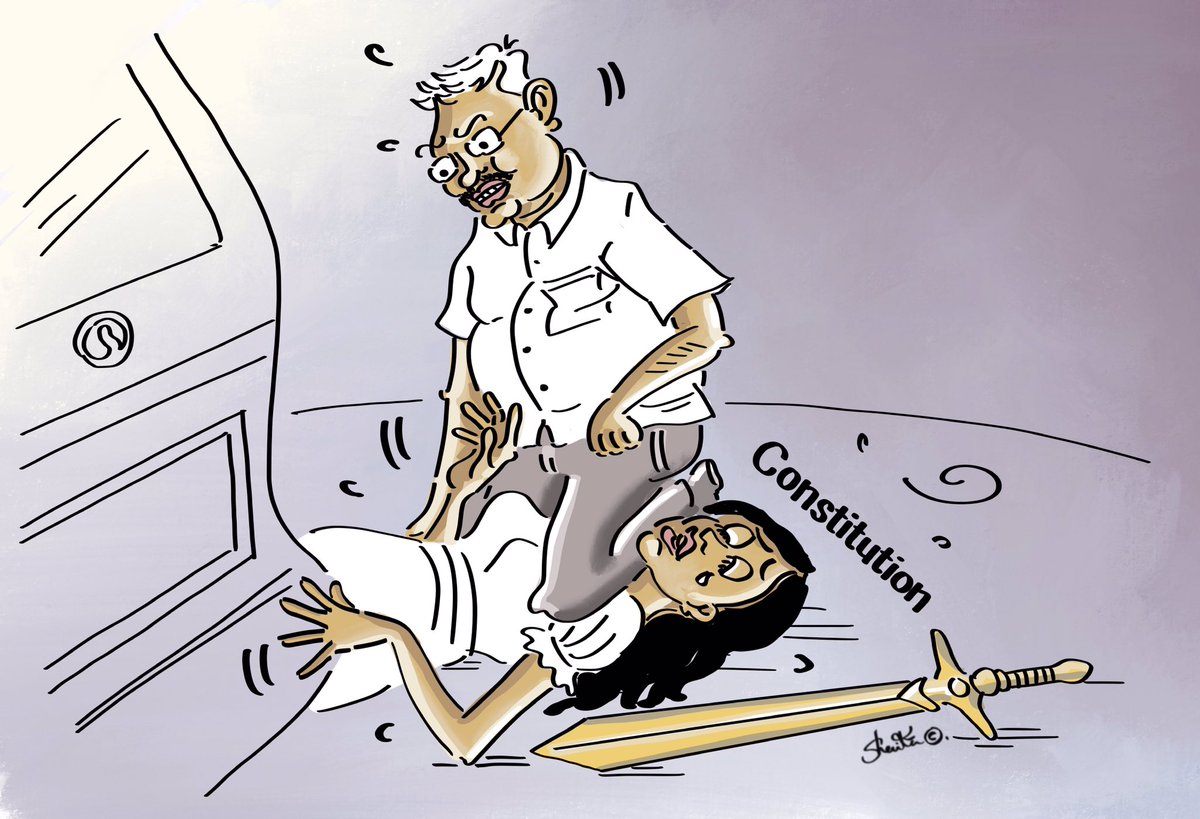
The Supreme Court has declared former President Gotabaya Rajapaksa’s decision to grant presidential pardon to former MP Duminda Silva, convicted and sentenced to death for the murder of Bharatha Lakshman Premachandra, as invalid.

The relevant court order was issued by a three-judge bench of the Supreme Court when several petitions filed by the late Premachandra’s wife and daughter, Sumana and Hirunika Premachandra and former Commissioner of the Human Rights Commission of Sri Lanka (HRCSL) Attorney-at-Law Ghazali Hussain, was taken up in court this morning (17 Jan.).

The judge bench was presided over by Justice Preethi Padman Surasena and consisted Justices Gamini Amarasekara and Arjuna Obeysekara.

Thus, the Commissioner General of Prisons was instructed by the Supreme Court to take the relevant measures necessary so as to impose the impending sentence against Duminda Silva, adding that former President Gotabaya had failed to follow the proper legal procedure when granting the said amnesty.

Accordingly, the Supreme Court ordered the Commissioner General of Prisons to take steps to implement the sentence previously imposed on this petitioner.

Vegetable prices skyrocket again

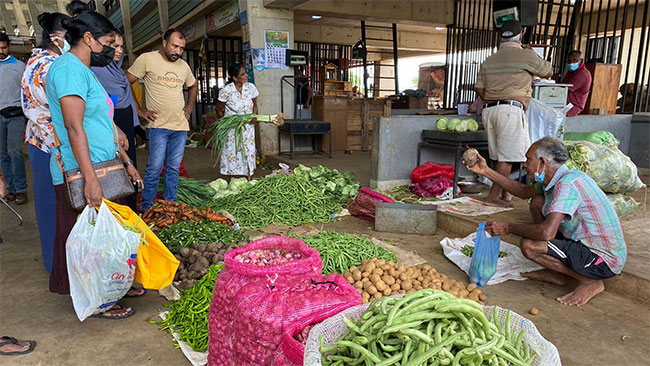
Despite forecasts predicting a decrease in vegetable prices after the festive season, the actual prices have remained high. Most vegetable varieties are now priced at over Rs. 1,000 per kilo, with carrots and beans reaching the highest levels, surpassing Rs. 1,200 per kilo.

Yesterday, the country witnessed its highest recorded vegetable price, with a kilo of carrots reaching Rs. 1,400 at the New Manning Market in Peliyagoda.

The escalating prices have led to a decline in vegetable consumption, as many consumers express their inability to afford them at these prices.

People report that the prices of nearly all vegetable varieties have increased, creating significant financial challenges for consumers.

The current market prices reveal that beans are priced at Rs. 1,000 per kilo. However, there have been fluctuations in the prices of other vegetables, with green chillies and tomatoes decreasing to Rs. 800 and Rs. 350 per kilo respectively. On the other hand, the cost of lime has seen an increase, reaching Rs. 500 per kilo.

Meanwhile, the business community running tourist hotels and guest houses across the country expressed concern about the high prices of vegetables that has affected the industry.

Traders in Nuwara Eliya’s Dedicated Economic Centre said the prices of vegetables had sky rocketed and that it resulted in a sharp drop in purchases. They pointed out that the price of carrot was Rs.2000 a kilo, cabbage Rs.680, leeks Rs. 500, capsicum Rs.650, tomatoes Rs. 800, beetroot, Rs.500, broccoli, a variety in demand among foreign tourists, Rs.3600, basil Rs. 2600, cauliflower Rs.,1300.

Meanwhile many customers said it is with great difficulty that they manage to have one vegetable curry for a meal. They pointed out that the price hike in the retail market was unprecedented and that the vegetables available were of poor quality.

Posted in Uncategorized

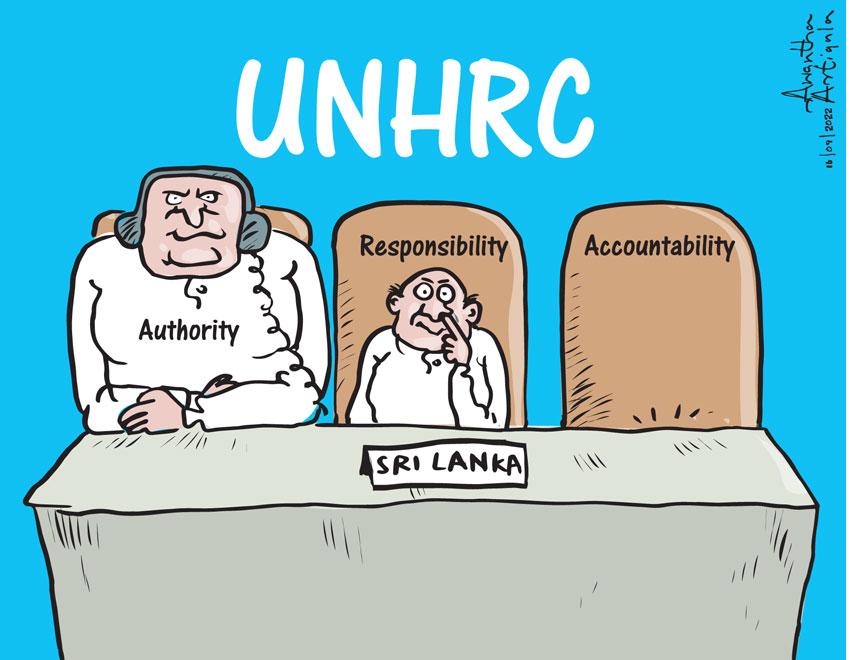
Sri Lanka Mounts Diplomatic Offensive to Thwart UNHRC Challenges

Sri Lanka is to make fresh approaches to counter the UNHRC process during its upcoming session in March, this year by engaging the leaders of the different countries including those from Africa, Daily Mirror learns.

President Ranil Wickremesinghe who is currently in Davos, Switzerland will head to Uganda to attend the Non-Aligned Summit that kicked off last Monday. The leaders from about 120 countries across the world have converged in the Ugandan capital Kampala for the 19th Summit of the NAM.

On the sidelines of the summit, the President is slated to hold bilateral talks with the leaders of a number of African countries for strengthening bilateral ties including cooperation at the UNHRC.

Sri Lanka has been in the UNHRC limelight since 2012 after the civil war ended. Sri Lanka’s case will be taken up once again in the upcoming session.

The government of Sri Lanka consistently rejected the latest Resolution 46/1 and 51/1 that led to the setting up of the so-called ‘Accountability Project’ calling it intrusive.

An informed source said the government will make fresh engagements with the United Kingdom, the country which leads the core-group countries which advocated the resolution on Sri Lanka. The President recently decided to join the operations led by the United States and the UK in the Red Sea to counter attacks by Houthi rebels from Yemen, an act interpreted by some as a move, in part, to engage these countries ahead of the UNHRC process.

The government has taken measures to implement measures envisaged in the latest UNHRC resolution. The government enacted a bill recently to establish a national unity and reconciliation office, in a key step towards post-conflict reconciliation with the Tamil community.

The bill to set up the ‘Office for National Unity and Reconciliation’ was passed with a majority of 48 votes, while 7 Members of Parliament voted against it.