HRW accuses Sri Lanka of regressive policies

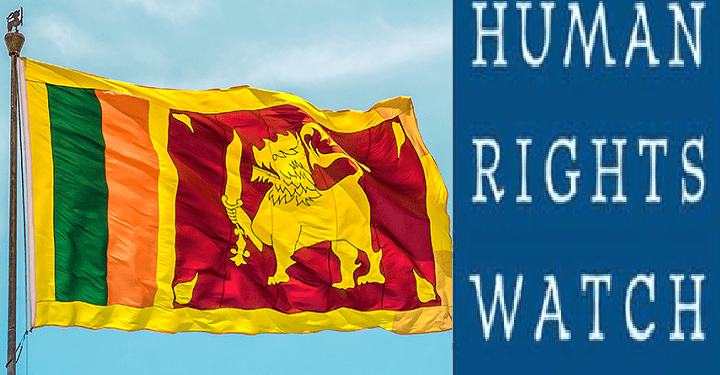
Regressive government policies and inadequate social protection left many Sri Lankans at risk from the worst effects of the country’s economic crisis, Human Rights Watch said in its World Report 2024.

The Government of President Ranil Wickremesinghe continued to repress freedoms of expression and association, and pursue policies that discriminate against minority communities.

“Millions of Sri Lankans are struggling to survive an economic crisis that partly originated in corrupt, unaccountable governance,” said Meenakshi Ganguly, Deputy Asia Director at Human Rights Watch. “The current administration is responding with policies that weigh heaviest on those who have least, while suppressing voices that are essential for accountable, democratic decision-making.”

In the 740-page World Report 2024, its 34th edition, Human Rights Watch reviews human rights practices in more than 100 countries. In her introductory essay, Executive Director Tirana Hassan says that 2023 was a consequential year not only for human rights suppression and wartime atrocities but also for selective government outrage and transactional diplomacy that carried profound costs for the rights of those not in on the deal. But she says there were also signs of hope, showing the possibility of a different path, and calls on governments to consistently uphold their human rights obligations.

The Sri Lankan government and International Monetary Fund’s (IMF) response to the economic situation undermined human rights in the country. More than 17 percent of the population are moderately or acutely food insecure and in need of humanitarian assistance, and 31 percent of children aged under 5 are malnourished, according to the United Nations. The IMF program focused on raising government revenues, and emphasized tackling corruption and improving social protection, but as structured it shifted the burden of recovery principally onto people with low incomes.

The Government raised electricity tariffs, doubled value-added taxes, and phased out fuel subsidies. The reform program included a “social spending floor” set at 0.6 percent of GDP, less than half developing countries’ average. The government’s plan of targeted social protection benefits led to the exclusion of many who do not have an adequate standard of living. In an attempt to manage its domestic debts, the government reduced the value of state-run pension funds in which ordinary people hold their savings.

The families of victims of enforced disappearance and human rights defenders in the north and east, faced government surveillance and intimidation. Government agencies pursued a policy of “land grabbing” that targeted the property of Tamil and Muslim communities, including religious sites.

President Wickremesinghe sought to suppress dissent, ending a moratorium on the use of the draconian Prevention of Terrorism Act. A proposed new counterterrorism law, which was withdrawn for further revision, would grant authorities sweeping powers and create new speech-related offenses. The proposed Online Safety Bill would further restrict speech by creating a commission, appointed by the president, that could decide whether online statements were false or prohibited, order their removal, and participate in police investigations and prosecutions.

CWC opposes move to privatise State plantations

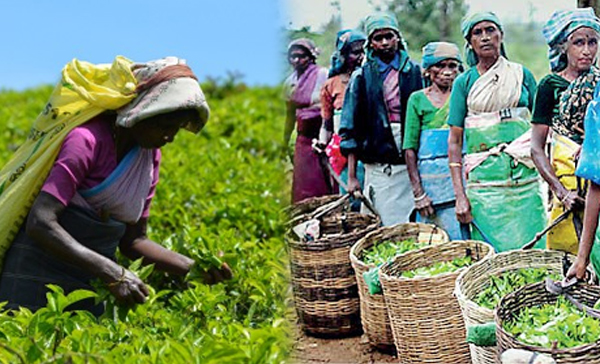
Vice President of the Ceylon Workers’ Congress (CWC) and Head of the Plantation Manpower Institute Bharat Arulsamy, has vehemently opposed the potential privatisation of key Sri Lankan State-owned plantation entities, namely the Sri Lanka State Plantation Corporation (SLSPC), Janata Estate Development Board (JEDB) and Elkaduwa Plantations.

The Government has already announced that loss-making State-owned enterprises would be privatised and these three entities are on the list.

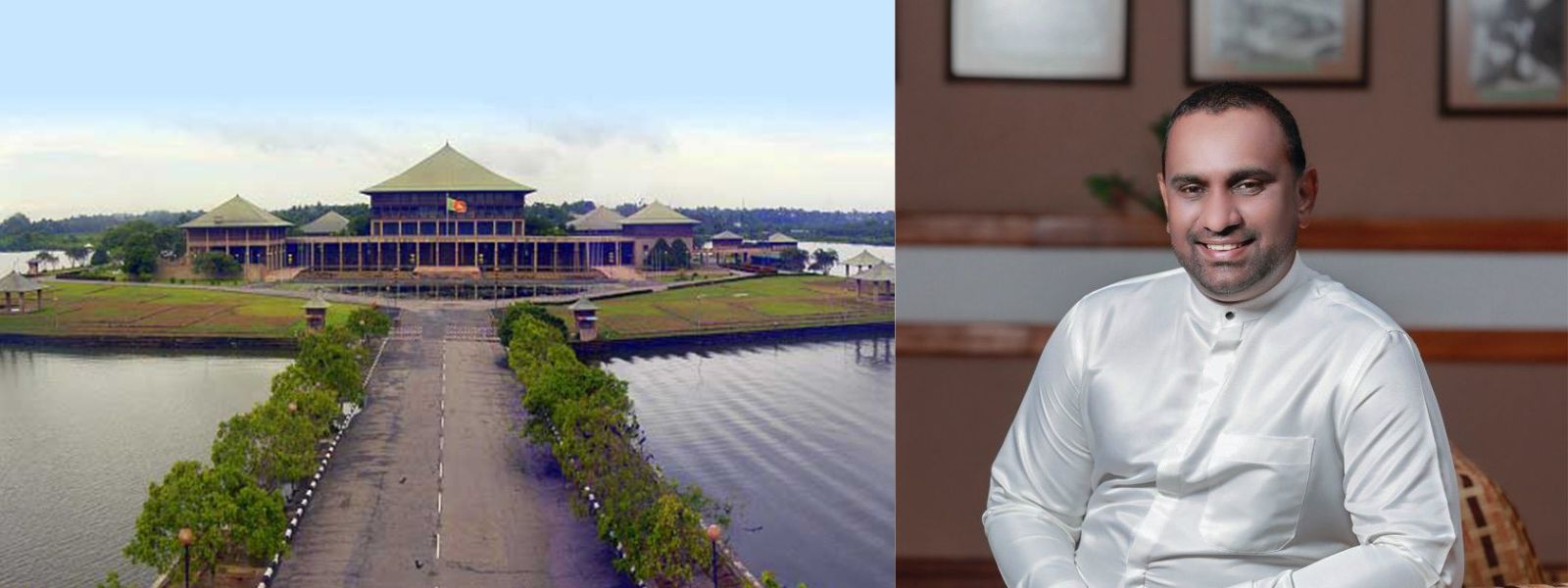
Following State Minister of Finance Ranjith Siyambalpitiya’s announcement in Parliament about the intended privatisation yesterday (10), confusion has gripped the workers in these State-owned sectors, Arulsamy said.

He emphasised that the CWC stands firm against this move, ensuring that workers’ dues, including land rights, are duly honoured to prevent injustice to those who have dedicated decades to these estates.

Arulsamy raised this concern, highlighting that the matter was brought to the attention of Estate Infrastructure Development Minister Jeevan Thondaman, expressing strong opposition to the privatisation of these State plantations.

He stressed that should the Government proceed with its privatisation plans, adequate compensation in the form of EPF and ETF, along with service allowances, must be ensured for the affected workers.

Further, the demand for rightful ownership transfer of the houses and lands presently occupied by the workers. He emphasised the need for a just solution, suggesting the allocation of one acre of land per worker to enable them to become small-scale tea growers, thereby providing a sustainable solution for their livelihoods.

Posted in Uncategorized

SJB asks whether govt. decided to do away with LG elections

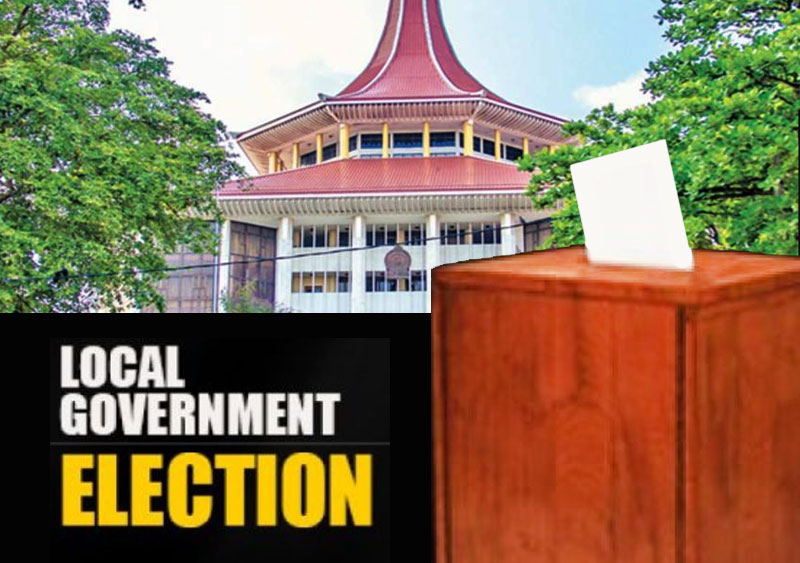
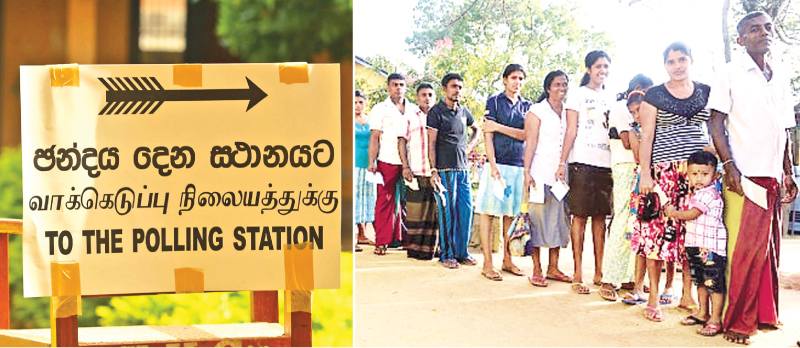
Former Samagi Jana Balawegaya (SJB) parliamentarian Mujibur Rahuman yesterday (10) asked whether the Wickremesinghe-Rajapaksa government had decided to do away with Local Government (LG) polls.

The SJB Mayoral candidate for the Colombo Municipal Council at the indefinitely postponed LG polls said that the so-called UNP Management Committee Tuesday (09) evening had declared that presidential election would be held in September this year, followed by parliamentary election and Provincial Councils in January and March, 2025, respectively.

Rahuman, who first entered Parliament in 2015, as a UNP member, contested the 2020 general election on the SJB ticket. He resigned his parliamentary seat on January 21, 2023 to join the fray as the SJB’s Mayoral candidate at the LG poll in Colombo.

The UNP Management Committee consists of Assistant Leader and ex-MP Akila Viraj Kariyawasam, MP Vajira Abeywardena (National List), Minister Harin Fernando (SJB), Minister Manusha Nanayakkara (SJB), ex-MP Dr. Karunasena Kodituwakku, ex-MP Ravi Karunanayaka, ex-MP Ruwan Wijewardene, Lasantha Gunawardena and Shamal Senarath.

Responding to The Island queries, Rahuman pointed out that having declared presidential, parliamentary and Provincial Council polls that could cost as much as Rs 30 bn, within a space of seven months, the government couldn’t claim it lacked funds to conduct the LG poll.

The ex-Colombo District MP said that the Election Commission should take up this matter with President Wickremesinghe.

President Wickremesinghe yesterday appointed Prof. Lakshman Dissanayake as the fifth member of the EC, headed by R.M.A.L. Ratnayake.

The other members are M.A.P.C. Perera, Ameer Mohammed Faiz and Anusuya Shanmuganathan. Saman Sri Ratnayake functions as the EC Director General.

SJB spokesman Rahuman said that the incumbent government deferred the LG poll, which was to be conducted before the end of March 2023, claiming it couldn’t allocate funds due to the economic crisis. In spite of that, the Supreme Court directed that the funds allocated through the budget for the conducting of election be made available, the ex-MP said, adding that he, too, subsequently moved the Supreme Court in that regard.

Alleging that the SLPP and UNP feared to face the electorate, against the backdrop of Aragalaya, hence the decision to put off LG polls, the former lawmaker said that Gotabaya Rajapakas’s government, in Dec 2021, announced its decision to put off the LG poll to March 2023, blaming it on the COVID-19 pandemic.

Rahuman said that the EC should also be concerned about the inordinate delay in holding the Provincial Council polls. Political parties seemed to have quite conveniently forgotten that all nine Provincial Councils were dissolved, with effect from Oct 08, 2019. The last PC dissolved was the Uva council.

The terms of the Northern Provincial Council came to an end on Oct 25, 2018, the Central Province on Oct 8, 2018, North Western Province on Oct 10, 2018, Sabaragamuwa on Sept 26, 2018, Eastern Province on Sept 30, 2018, North Central Province on Oct 1, 2018, Southern Province on April 10, 2019 and Western Province on April 21, 2019.

Referring to President Wickremesinghe’s repeated assurances regarding devolution of powers in terms of the 13th Amendment and the declarations made in Jaffna during his recently concluded visit, the ex-parliamentarian said that the government should explain why PC polls couldn’t be held for well over four years.

The Parliament, as the supreme institution tasked with enactment of laws and ensuring financial discipline, should be held accountable, the ex-MP said, pointing out the failure on the part of political parties to vigorously pursue the issue.

Rahuman said that those among the international community concerned over the developments here couldn’t remain silent over the postponement of the PC and LG polls. The sudden announcement on presidential, general and PC polls could be in line with the UNP strategy, the former MP said.

EC Director General Saman Sri Ratnayaka said that though they initially estimated the LG poll, if conducted in March 2023, could have cost as much as Rs 10 bn, he was now confident of spending a much lower amount. “We spent about Rs 1 bn on that poll by the time the postponement was declared,” the forthright official said, adding that the EC could have managed with Rs 6 bn. However, against the backdrop of all round tax increase effected this year, expenditure was going to be high, the official said.

In late Nov 2023, State Finance Minister Ranjith Siyambalapitiya, addressing the media at the Presidential Media Centre, declared that Rs 10 bn had been allocated through the 2024 Budget for the EC.

Stung by Indian calls to boycott Maldives, Muizzu appeals to China to send more tourists

Maldivian President Mohamed Muizzu has appealed for increased efforts to have China reclaim its spot as the top source market for tourist arrivals to the Maldives.

He made the appeal in his address at the Invest Maldives Forum at the Fuzhou Strait International Convention and Exhibition Centre in Fuzhou, China, on Tuesday morning.

In his address, President Muizzu noted that China had been the top source market for tourist arrivals to the Maldives before the Covid-19 pandemic.

“China was our number one market pre-COVID, and it is my request that we intensify efforts for China to regain this position,” he said.

President Muizzu said his administration is focused on diversifying Maldives’ economic base and ensuring economic security, while continuing to strengthen and drive the tourism industry and boost visitor numbers.

“The government has plans to diversify the tourism product and offer new experiences. Initiatives include a top-tier school of hospitality and exploring sports, medical and cultural tourism,” he said.

President Muizzu said his administration’s development plan targets revolutionizing the Maldivian economy and doubling its GDP from the current USD 6 billion to USD 12 billion by 2028.

While China had dominated tourist arrivals to Maldives pre-pandemic, the top spot is currently claimed by India. Other top source markets include Russia, Germany and the UK.

FTA with China

Muizzu says his administration is committed to the quick implementation of the Free Trade Agreement signed with China, describing it as a symbol of the close commercial ties between the two countries.

Muizzu said the FTA between Maldives and China is the first comprehensive FTA between China and a South Asian country.

“The FTA’s aim to boost bilateral trade and investments, especially increasing our export of fish products to China is a key priority for us through the FTA,” he said.

“My government is committed to ensure quick implementation of the agreement.”

He added that other initiatives spearheaded by China, such as the Global Development Initiative and the Asian Infrastructure Investment Bank, have also been crucial in accelerating the implementation of Maldives’ developmental projects.

Maldives and China signed the FTA after two years of negotiations in December 2014 – during President Abdulla Yameen Abdul Gayoom’s administration. The agreement wasn’t approved by the Parliament until November 2017.

However, President Ibrahim Mohamed Solih’s administration – which replaced Yameen’s – did not implement the agreement.

Opposition Leaders’ Condemnation

Top Maldivian opposition leaders have condemned the uncharitable remarks made by three Junior Ministers against Indian Prime Minister Narendra Modi X formerly called Twitter.

“We, the Democrats, are dedicated to upholding the stability of the nation’s foreign policy and preventing isolation of any neighbouring country. Are you willing to take all necessary steps to remove (President) Mohamed Muizzu from power? Is Maldivian Democratic Party (MDP) prepared to initiate a vote of no confidence?” MP, Azim Ali said in a post on X.

Former deputy speaker Eva Abdullah told news agency ANI that the comments made by the now ousted ministers were ‘racist’. “I think it is important that the Government of Maldives issue a formal apology to the Indian people. The remarks by the minister are simply shameful, racist and intolerable. The minister’s words are in no way a reflection of the opinion of the people of Maldives. We’re very aware of how dependent we have been on India, and that India has always been the first responders whenever we are in need,” Abdullah said.

“I condemn the use of hateful language against India by Maldivian government officials on social media. India has always been a good friend to Maldives and we must not allow such callous remarks to negatively impact the age-old friendship between our two countries,” former Maldivian president Ibrahim Solih said.

“Derogatory remarks made by two deputy Ministers of the current Maldives government and a member of a political party in the ruling coalition, towards Prime Minister Narendra Modi and the people of India on social media is reprehensible and odious,” former Maldivian foreign minister Abdullah Shahid said.

“We should respond with strong action so that this is not repeated,” former vice-president of Maldives Ahmed Adeeb told news agency ANI.

“India has been our 911 call, whenever we need it, we give a call and you all come to our rescue. That kind of a friend. When you see such disparaging remarks about friends like this, it is sad for everyone concerned,” former Maldivian defence minister Mariya Didi said.

Posted in Uncategorized

Ranil gives timeframes for presidential, general elections

Senior UNP leader Akila Viraj Kariyawasam has given tentative timeframes for the presidential and general elections as decided by president Ranil Wickremesinghe.

Speaking to ‘The Leader’, Kariyawasam said the presidential election would take place in September this year, followed by parliamentary polls in January 2025.

The president said so at a meeting of the party’s management committee at the Presidential Secretariat yesterday (09).

The provincial council election will be held in March, said the president.

He said further that he would contest the presidential polls as an apolitical candidate.

Wickremesinghe told the management committee to organize arrangements to win the elections.

With his full-time commitment needed for a further few months to revive the economy, he will be joining election campaign after April only, the president told the meeting.

UNP MP Wajira Abeywardena has agreed to host the party’s first public rally for the presidential election at Galle town in mid-January.

Posted in Uncategorized

US expresses concerns over Human Rights violations during Sri Lanka’s ’Yukthiya’ operation

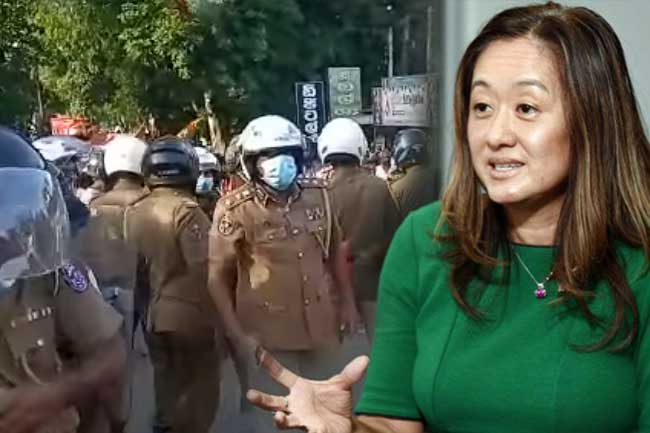
The United States has echoed the concerns raised by the Human Rights Commission of Sri Lanka (HRCSL) regarding alleged human rights abuses during the recent ‘Yukthiya’ Operation conducted by the Sri Lanka Police and the Ministry of Public Security.

US Ambassador to Sri Lanka, Julie J. Chung, emphasized the importance of combating drug trafficking while stressing that law enforcement operations must adhere to the principles of the rule of law and due process.

“Striking this balance is vital for justice and maintaining public trust,” she said.

Earlier, the HRCSL expressed deep unease and initiated an immediate inquiry into reports of cruel, inhuman or degrading treatment during search operations associated with the ‘Yukthiya’ Operation.

The Bar Association of Sri Lanka has also expressed serious concerns about the operation, emphasizing the contradiction between reports of widespread injustice and the operation’s title, ‘Yukthiya,’.

Posted in Uncategorized

UNP decides on candidate for next Presidential Election

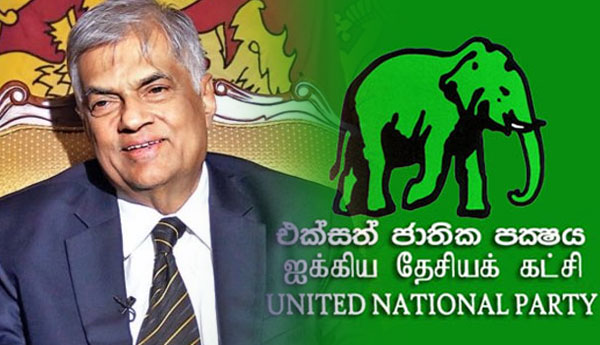
The United National Party (UNP) has decided to field President Ranil Wickremesinghe as its presidential candidate in the upcoming election, which is tipped to be held in September.

Management Committee of the UNP convened a meeting at the Presidential Secretariat in Colombo on Tuesday evening (Jan.09), under the patronage of the party’s leader, President Wickremesinghe.

At the meeting, the Head of State revealed that plans are afoot to hold the Presidential Election in September this year, followed by the General Election in January 2025.

The UNP’s Management Committee unanimously decided to field President Wickremesinghe in the next presidential election.

Posted in Uncategorized

Princess Anne calls on President Ranil Wickremesinghe

Her Royal Highness Princess Anne, the Princess Royal of the United Kingdom accompanied by her spouse Vice Admiral Sir Timothy Laurence, who are on a three-day official visit to Sri Lanka, met with President Ranil Wickremesinghe at the President’s House a short while ago.

The Princess Royal and her spouse arrived in Sri Lanka this afternoon for a three-day visit. The visit comes as Sri Lanka and the UK mark 75 years of diplomatic relations. During the visit, The Princess Royal is scheduled to undertake engagements in Colombo, Kandy and Jaffna.

Earlier today, The Princess Royal toured the MAS Holdings Nirmaana facility and heard about their innovative excellence in product creation and development for strategic international partners, including British brands like Marks & Spencer.

As patron of Save the Children UK, The Princess Royal also met and thanked staff at the Save the Children offices in Colombo for the work they do to support humanitarian needs across Sri Lanka. She received a briefing on their work and celebrated their 50th year of operations in Sri Lanka.

Princess Anne last visited Sri Lanka nearly 30 years ago in 1995 as patron of Save the Children to see projects supported by the charity.

Princess Anne was welcomed to Sri Lanka today with a dazzling performance by traditional dancers as she walked down the plane’s steps at Bandaranaike International Airport in Katunayake.

She’s been joined by her husband Vice Admiral Sir Timothy Laurence, 68, for the start of a three-day visit celebrating the UK’s ties with the South Asian Island. The trip is the royal family’s first overseas tour of 2024.

A large group of dancers and musicians performed for the couple with drummers playing a hypnotic beat in the hot and humid conditions.

The princess is visiting the country at the request of the Foreign Office and will begin a whistle-stop tour to mark the UK’s bilateral relations with the nation, including a meeting with President Ranil Wickremesinghe and First Lady Maithree Wickremesinghe.

Sri Lanka’s Foreign Minister, Ali Sabry and British High Commissioner to Sri Lanka, Andrew Patrick were among the dignitaries who formally welcomed the princess at the airport.

SJBs Chaminda Wijesiri Quits Parliament

In a surprise move, Sri Lankan opposition lawmaker Chaminda Wijesiri tendered his resignation from Parliament, effective Tuesday, January 9, 2024.

Chaminda Wijesiri represents the Samagi Jana Balavegaya in Parliament.

Wijesiri, delivered a statement to the Parliament, formally announcing his decision and requesting Mahinda Yapa Abeywardena to accept his letter of resignation.

MP Wijesiri said he is giving up active politics as well. “I don’t have any issue with SJB, though I am going out of politics,” he also said.

If 13-A is good, Mr President, do it now, why and how! By N Sathiya Moorthy

In northern Jaffna ahead of the annual Tamil harvest festival of ‘Thai Pongal’, President Ranil Wickremesinghe promised the full implementation of the India-facilitated 13th Amendment as the way forward to restore ethnic peace in full. Coming as it did after his none-too-distant uttering that he was for ‘13-A minus police powers’, he has to clarify what he meant this time.

If Wickremesinghe is all for 13-A, why should he delay full implementation? After all, 13-A has been in the statute book for over 36 years, since 1987, when Parliament passed it. It was aimed at giving a constitutional accent to the Indo-Sri Lanka Accord earlier in the year, by President J R Jayewardene for Sri Lanka and Prime Minister Rajiv Gandhi of India.

The Accord was an expression of the larger Indian neighbour to help usher in ethnic peace, hence prosperity, in the island-nation. After all, India was not a domestic stake-holder, but by signing the Accord, New Delhi was also sending a clear message not only to the SrI Lankan State but also to the Sri Lankan Tamil community, whose case it had taken up with Colombo in every which way.

It had become clear that neither the LTTE, claiming to be the ‘sole representative’ of the SLT community would sign what was otherwise an agreeable agreement, nor would it allow other militant and moderate Tamil groups to sign the document. Having shepherded the negotiations between the government and the LTTE from the start, neither the Indian State, nor Rajiv Gandhi as Prime Minister could allow the opportunity to slip by.

That’s if the Tamils were to get their due within a unified Sri Lanka sans separation as the LTTE was campaigning, through its three-pronged attacks, politically, militarily and through unending acts of terrorism. The LTTE targeted fellow-Tamil leaders at tangent with its leadership than any new ideology as much as the Sri Lankan State and symbols of the Sinhala-Buddhist majority like renowned Buddhist temples.

Diluting the spirit

Today, President Wickremesinghe seems convinced that 13-A is workable (but not functional). Successive governments since 1987 have diluted the spirit by side-stepping 13-A in key aspects of power-devolution by creating ‘national schools’ and ‘national hospitals’, which the Tamils naturally resented. The truth is that like 13-A with its universal applicability these national institutions that aimed at improved quality and services were set up also in non-Tamil areas.

If anything, more of these institutions cropped up outside the Tamil areas. It was because of the LTTE war that delayed development in the Tamil areas. It has remained so to the present, 15 years after the conclusion of the ethnic war.

If only a (unified) North-East Tamil Province was in existence, it could have argued for the diversion of federal funds that went into creating national schools and national hospitals to the provincial administrations, for them to build and operate them. They could have also ‘educated’ and ‘united’ the seven provincial administrations, elected under the 13-A in the Sinhala South, to take a unified stand in the matter.

Today, there is no knowing if the once-touted if the association of the provincial councils have met in recent years. With no elected administration in any of them, the association has become defunct. It is another instance of the federal administration arrogating to itself the powers vested in the provinces under the Constitution – dissolving them at whim all at once and not holding what should have been once-in-five-year periodic elections.

Specific restrictions

Any improvement to the 13-A, as sought by the divided Tamil polity, should include specific provisions specifying the powers of the federal centre to interfere with the administration of provincial councils, dissolve them and order fresh elections – but within a specific time-slot. If nothing else, at every such extension, like the monthly extension of emergency powers required, a parliamentary vote should be taken.

A majority/majoritarian government / leadership could do it without effort. Yet, the idea of a parliamentary vote by the month, or every quarter, could bring the issue back to the national platform, where TV debates and social media discourses could embarrass the polity and political administration enough to order early polls.

In specific cases, government leaderships that were delaying provincial council polls for fear of losing them may soon find that the unjustified delays themselves would be the top reason for their losing it, whenever held. President Wickremesinghe should get the credit or discredit for delaying PC polls almost indefinitely since his days as Prime Minister under the government of President Maithripala Sirisena, who was in power from 2015-2019.

Local economy

In Jaffna, Wickremesinghe told the local business leaders thus: “If we examine the provisions of the 13th Amendment, there is ample authority to establish a robust local economy. We pledge not to intervene in those affairs. I am encouraging you to take the initiative.”

As Wickremesinghe pointed out, the Western Province with capital Colombo at its politico-economic centre, is the sole region capable of substantial independent -spending, while others are financially dependent on it, he said. “This situation warrants reconsideration. By utilising the powers within the 13th Amendment, each province can chart its course to development. It’s time to put these powers into action,” he said.

When the Western Province is the only one that is economically viable, what does Wickremesinghe intend doing to mid-wife the other eight to achieve self-sustainability. Tamil political and social leaders, including those that trigger them from the confines of their more comforting Diaspora settings overseas, should give a deep thought to it all, if they want not to be left out – either as a people or province or political entities.

Innocent victims

The Tamil leadership missed the bus at least once earlier in the post-war period, they cannot afford to miss it again and again and bemoan later that they had committed a mistake again (‘meendum pizhai vittom’). That was when the TNA caused the government to walk out of well-advanced talks post-war, by aligning with the US and diverting national and global attention away from a political solution to war crimes. A decade later, the Tamils have neither.

Already, the post-war generation, including those who were then below ten and who had suffered the horrors of the horrendous war without being a part of it in any which way other than as innocent victims, has a life of its own to live. They are already living it.
The more the war moves away from them in calendar years, the greater this gap will be. In the same house, the grandparents would still be talking about SJV and Amirthalingam, the parents still sympathetic to the LTTE constantly evaluating and re-evaluating as to what (all) went wrong, Gen X, Y and Z, amusedly looking at one another as to what their (fossilised?) family elders were talking about.

The present-day Tamil political and social leaderships have already lost credibility even among their own generation. The newer generation(s) has/have utter contempt for them, if not worse. Both sections demonstrated their distrust for their otherwise divided political leadership even when they gave a joint call late last year, first for a human-chain and later for a day-long ‘hartal’ or ‘shut-down’ on the ‘Judge Saravanarajah’ issue.

Both the human-chain and substitute hartal failed miserably, sending out a clear message from the Tamil people to their own leaderships. The latter’s connectivity to issues real and/or imaginary were exposed when credible doubts were raised about the truthfulness of Saravanarajah’s resignation and exit from the country. It turned out that the hon’ble judge might have faked the issues, fully or partially, to create sympathy for himself and the larger Tamil cause, for exiting the job legally and then leaving the country – which he seemed to have organised early on.

Selfish but…

Even if Wickremesinghe were to look at his current promise on 13-A from a selfish stand-point, he only needs to take real initiatives whose effects can be felt on the ground, for him to win over a substantial section of Tamil votes. With that and similar initiatives viz the Muslims and Upcountry Tamils, he may have a majority of the ‘minority votes’ in his pocket.

As calculations have shown, nearly 25 per cent of the 42-per cent of the votes that went to the losing Sajith Premadasa, then in Ranil-led UNP, came from the minorities. If Ranil could woo them back through substantive measures that those voters can touch and feel in time for the presidential poll, he may have to work only for another 25-30 per cent votes from the Sinhala South to make the grade in the presidential polls later this year – and retain the presidency.

There is a catch. The post-war regime of Mahinda Rajapaksa having made major progress in talks with the TNA, including freedom for the Tamil province to seek and obtain direct foreign funding, loans and investments, Ranil only needs to put that into practice. Given that every nook and corner of the country can do with those extra dollars, the freedom should be made operational and extended to every Province.

But for all this, to begin with, the President has to set the date for nation-wide PC polls, here and now, even if it is later in the year, after the presidential polls and before or after the parliamentary elections, which again he has promised for the year. He cannot continue to build castles in the air and expect the people to believe that they are living in them already.

That will still leave behind two major issues. One, re-merger of the North and the East, as the Tamil polity wants. That may have to wait until after the presidential, parliamentary and even provincial council elections. Possibly, the younger generation may not be too keen on them, as they may not share the emotional attachment that SJV instilled after he had to shift base from the North to the East when he lost the 1952 parliamentary polls from his native Kankesanthurai constituency in the North.

Barking up the wrong tree

The second issue is about police powers for the provinces. It has made some progress when the government was talking to the TNA, post-war. In his stalemated rounds of talks with the Tamil parties and with all the rest, Wickremesinghe indicated that he was ready to move on with 13-A minus police powers.

For the Tamils, it would be a letdown. For the Tamil polity it would have been worse as the entire LTTE war in a way was for police powers and re-merger. Yet, if Wickremesinghe was serious, even about 13-A minus the police powers, he should have begun it somewhere. By implication, it needed only executive order(s) to put 13-A into practice. He has not done it either.

Yet, for all that he has been promising the Tamil people and polity, including his address to the Jaffna business community, Ranil or Wickremesinghe or Ranil Wickremesinghe is barking up the wrong tree. He should have begun with the southern provinces and southern polity, to tell them how 13-A had provisions that would make them all economically strong, self-reliant and independent, even if over the years and decades.
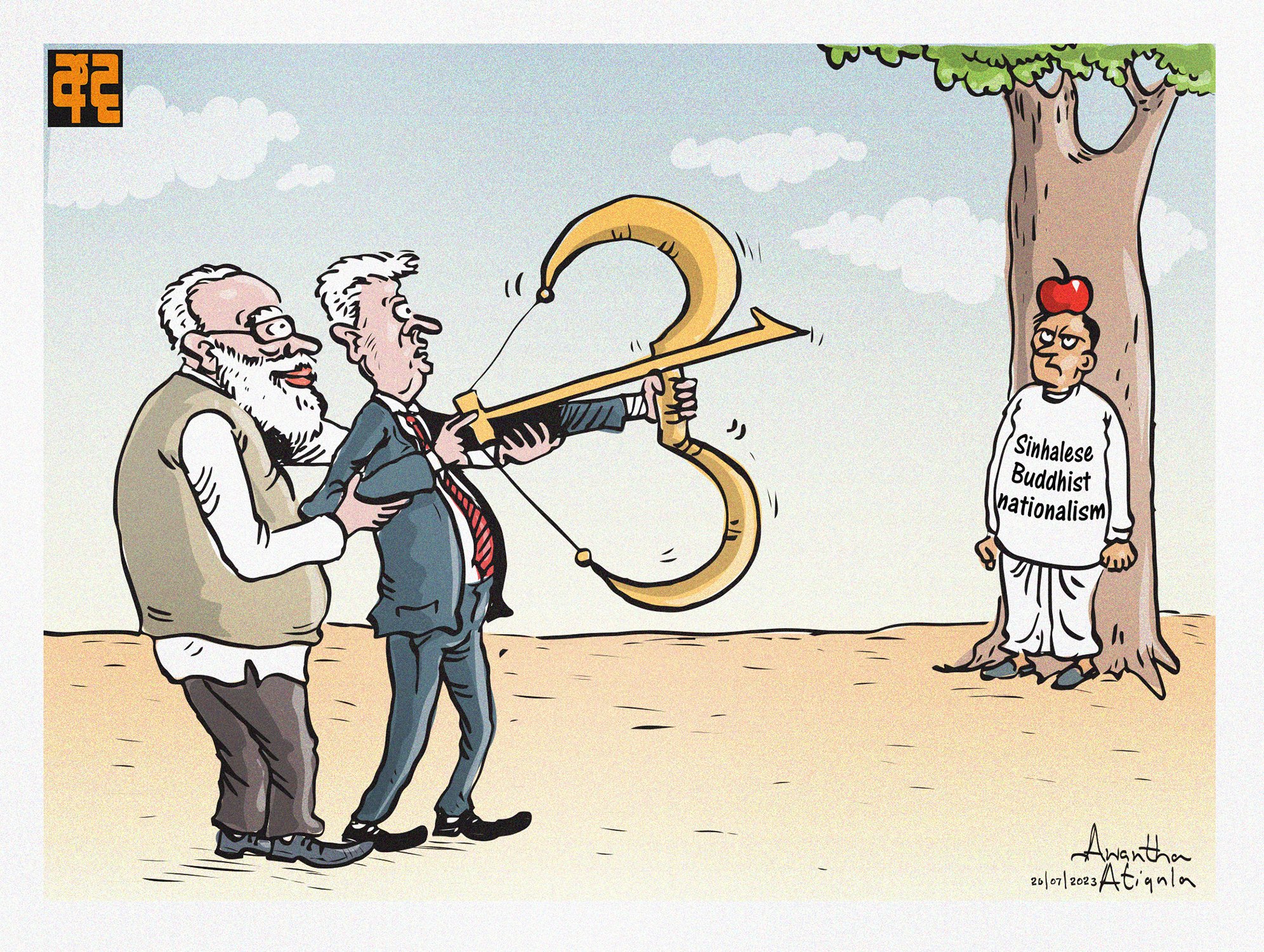
That is, if they had begun in 1987, they all would have become prosperous by now, and would have helped the country to become more prosperous than what alone a stand-alone Western Province has been supposedly shouldering and failing, successively, since Independence, and before. That being the case, is economic prosperity of the nation that the Buddhist clergy is denying the people, that too at this critical hour, in the name of wanting a ‘unitary State’ structure without understanding, hence appreciating, the economic nuances of the 21st century.

Maybe in public, maybe not, but the government, whoever is in power, has to engage the Buddhist clergy, including the prelates, in an economic discourse, as a part of the burgeoning possibilities and problems of a resilient nation that the present generation has to leave behind for the future, near and distant. Well, it can begin now. An element of defiance, when put into practice, can also show the benefits of 13-A for the people from across the country to touch, feel and benefit from – and which in turn can silent, if not stupefy, all sections that are opposed to it, under wrong notions and influences.
It has to begin there, begin there early, here and now.

(The writer is a Policy Analyst & Political Commentator, based in Chennai, India. Email: sathiyam54@nsathiyamoorthy.com)


Posted in Uncategorized