Jallikattu goes global, Tamils in Sri Lanka tame bulls

Experts in the field from Tamil Nadu and members of the Jallikattu Protection Committee helped the organisers conduct the event in Sri Lanka, while the Animal Husbandry department ensured the bulls were fit for participation.

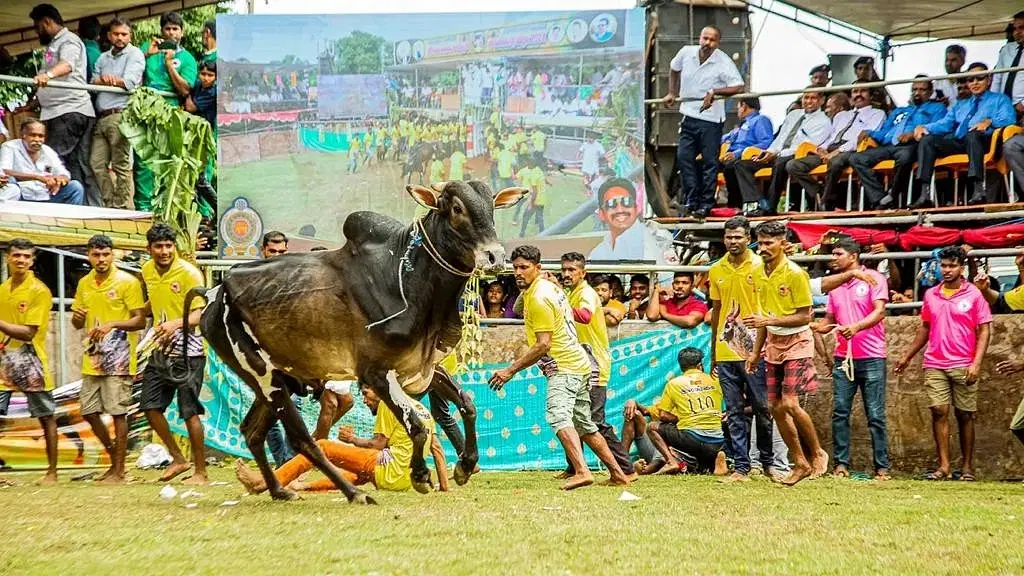
Pongal, the harvest festival celebrated by Tamils across the globe, came a week early this year for the people of Sri Lanka’s Eastern Province, which scripted history on Saturday by organising the first-ever Jallikattu, a bull taming sport, outside Tamil Nadu.

The event, which was organised by Eastern Province Governor Senthil Tondaman and the Tourism Bureau, saw the participation of over 200 bulls and 100 bull tamers. Hundreds of people queued up at the Sambur public playground in Trincomalee, the capital of Sri Lanka’s Eastern Province, as early as 7 am to catch a glimpse of jallikattu for the first time in person.

Thondaman flagged off the event after which a temple bull was the first to be released via the vaadivaasal into the playground as tens of young men jostled with each other to tame the bull.

Over 200 bulls decorated with flowers, including at least half a dozen raised by Tondaman’s family, were released into the ground one by one with winners returned home with plenty of prices like mixer grinders, rice cookers, and ceiling fans among other household appliances and items.

Vaadivaasal is a narrow passage from where the bulls are let into the ground to be tamed by men. Though ethnic Tamils and plantation Tamils, whose forefathers were taken from several parts of Tamil Nadu to work in coffee and tea plantations in Sri Lanka by the British, celebrate Pongal every year but jallikattu was never part of the harvest festival.

“This is the first time that the sport was conducted in Sri Lanka. Over 5,000 people participated in the jallikattu event held on Saturday,” A P Mathan, Chairman, Eastern Province Tourism Bureau, told DH over the phone.

Experts in the field from Tamil Nadu and members of the Jallikattu Protection Committee helped the organisers conduct the event in Sri Lanka, while the Animal Husbandry department ensured the bulls were fit for participation.

Jallikattu is celebrated with much fervour in several parts of Tamil Nadu, especially in Madurai, Sivaganga, and Pudukkottai districts, during the Tamil month of Thai (mid-January to mid-February).

Referred to as eru thazhuvuthal (embracing the bull) in Sangam Literature, jallikattu is deep-rooted in Tamil culture and a symbol of Tamil pride and valour. Jallikattu is derived from Tamil words salli kaasu (coins) and kattu (a package). It means those who tame the bull will get the package (prize money) that is tied to the animal’s horns.

Kalithogai, a rich Sangam Era Tamil literature dating back to 200 BCE, calls eru thazhuvuthal (embracing the bull) as a sport played in Mullai (forest) land. Historians say eru thazhuvuthal was a sport of the masses and it has a deep-rooted cultural identity.

Posted in Uncategorized

Sri Lankan Tamil parties are in sixes and sevens over Presidential election By Veeragathy Thanabalasingham

Sri Lanka has seen eight Presidential elections after the introduction of Executive Presidency in 1978. But no previous election has been hyped like the upcoming Presidential election months before it is due to be held.

President Ranil Wickremesinghe, who was elected by Parliament for the remainder of the term of President Gotabaya Rajapaksa, after he resigned under a cloud in July 2022, can only remain in office until November 18 this year.

According to the constitution, the next Presidential election should be held within a period of not less than one month and not more than two months before the end of the term of office of the President.

Therefore, the next Presidential election should be held between September 18 and October 18 this year. The date for the election will be determined by the National Election Commission.

There was a stage when there was a serious suspicion that President Wickremesinghe, who postponed the local government elections indefinitely citing the economic crisis, might try to delay the national elections as well. However, he announced several times in recent months that the Presidential elections will be held later this year, followed by parliamentary elections.

Even after his announcement, there is widespread doubt in political circles as to which election will be held first. The President had the power to dissolve the current parliament at any time after February 20, 2023.

Many political observers had commented that Wickramasinghe might dissolve Parliament and go for the general election by the coming March to facilitate the creation of a favourable political situation for him to face the presidential elections.

However, the main opposition political parties have started preparing themselves for the Presidential election since the middle of last year.

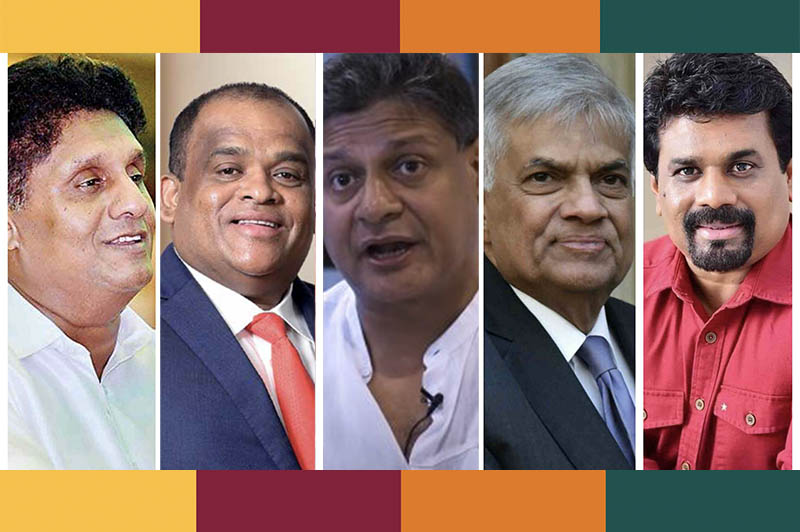
A few months ago, United People’s Power (Samagi Jana Balavegaya- SJB) announced that opposition leader Sajith Premadasa was their Presidential candidate and National People’s Power Anura Kumara Dissanayake as their candidate. Both the parties have already started their election campaigns by holding meetings.

Although United National Party politicians say that Wickremesinghe will contest the Presidential election, he is yet to publicly announce his decision. The President says he will decide whether to run for office only after stabilizing the battered economy. But he has been making efforts to build a broad coalition to support him. It is not known how far these efforts have progressed. Some ministers from Rajapaksas’ Sri Lanka Podujana Peramuna (SLPP) have already expressed their willingness to support the President.

The SLPP, which recently held its second national convention in Colombo, has shown dubious signs of fielding billionaire businessman and casino owner Dhammika Perera as its Presidential candidate. Maithripala Sirisena has also announced that he will contest.

A wide range of candidates are likely to contest. The lowest number of candidates contesting in Presidential elections so far was the December 1988 election which was held during the JVP’s second armed insurgency. Former President Ranasinghe Premadasa contested as the candidate of the United National Party, former Prime Minister Sirima Bandaranaike was the candidate of the Sri Lanka Freedom Party and Ossie Abeygunasekara as the candidate of the Sri Lanka Mahajana Party.

35 candidates contested the November 2019 Presidential election. It was the election with the largest number of candidates in the fray. It would not be surprising if even more candidates contest this time.

If the incumbent President is powerful, it is customary for opposition parties to field a common candidate against him. However, this time, it seems that there is no need for the southern political parties to consider fielding a common candidate as President Wickremesinghe doesn’t have much support among the people. His United National Party is in a very weak position without proper grassroots vote base.

And there is no possibility that he will win the hearts and minds of the people in the coming days amidst the steep rise in prices as a result of the tax hikes. It is also doubtful if he will come forward to contest the election if he does not get the support of many other parties.

But this time, in a strange turn of events, some Tamil national political parties have started talking about fielding a common candidate in the Presidential election. Such an idea has never arisen in Tamil politics before.

Tamil candidates have contested Presidential elections before. In the first election held in October 1982, Kumar Ponnambalam, leader of the All Ceylon Tamil Congress, contested. But he got only 173,934 votes.

Even in Jaffna district, Ponnambalam got only about 10,000 more votes than Hector Kobbekaduwa, who contested against the then President J.R. Jayawardene as the candidate of the Sri Lanka Freedom Party. Kobbekaduwa got more than 10 thousand votes than Ponnambalam in Vanni district. But votes for him in the electoral districts of Eastern Province were negligible.

MK Sivajilingam of TELO was the other candidate from a Tamil political party who contested the Presidential election. He contested the 2010 January and 2019 November Presidential elections. No need to talk about the votes he got. A maverick, he once contested the parliamentary election from Kurunegala district.

One Sundaram Mahendran of the NSSP and Subramaniam Gunarathnam of Our National Front contested the 2015 January Presidential Election and the 2019 Presidential Election respectively. Though ethnically Tamils, they could not be considered as having stood for a Tamil cause as they belonged to Leftist parties.

It seems that some of those who are currently talking about a common Tamil candidate are confident that the votes of Tamils, especially North East Tamils, will play a decisive role in electing the next President. There are those who are of the opinion that a common Tamil candidate can use his votes as bargaining power to try to get assurances from the main Presidential candidates on the Tamil question.

There was a time when the votes of ethnic minorities determined the winner of the Presidential elections. That situation, which existed until the latter part of the last century, has largely changed. At the same time, Tamils have invariably been voting on the basis of who “should not” become President, not to “elect” someone as president.

An exception to this was when minority communities’ votes helped Maithripala Sirisena defeat Mahinda Rajapaksa in the 2015 Presidential election. But in the next Presidential election, Gotabaya Rajapaksa won a landslide victory by receiving the overwhelming majority of Sinhalese votes. He openly declared that it was the majority community which elected him as the leader of the country. The votes of the ethnic minorities did not have any influence in that election.

Meanwhile, in today’s political context, no major candidate in the coming Presidential poll is going to give any guarantee to the Tamils regarding a solution of the ethnic problem as naively expected by some Tamil politicians in the north.

In such a situation, there will be no chance for a common Tamil candidate to negotiate with the main candidates. President Wickremesinghe told Tamil parliamentarians who met him last week that the Parliament elected after the next general election will deal with the issue of a political settlement through a new constitution with a view to ensuring that the political solution to the ethnic problem does not become a major issue in the next Presidential election.

There is a section among Tamil polity that suggests that the Presidential election should be used to get a mandate from the Tamils to show the world what kind of political solution they stand for 0in the aftermath of the of the civil war that came to an end almost 15 years ago.

They should think for a moment about the fate of the mandate given to the Tamil United Liberation Front (TULF ) by the Northern and Eastern Tamils in the July 1977 parliamentary elections after more than a year after the famous Vattukkoddai resolution. The tragedy that happened to the politics of the Tamil leaders of those days who claimed that the Tamil people gave them that mandate to carry out a non-violent struggle to achieve Tamil Ealam should be a lesson for today’s Tamil politicians who are unable to launch even a small human chain campaign successfully.

Above all, can the leaders of today’s Tamil political parties, who cannot even come together to deal with the immediate issues facing the Tamil people, be expected to come to a consensus on selecting a common candidate? Is there a Tamil leader today who commands wide acceptance among the Tamil people in both the Northern and Eastern provinces?

Leaders of the Tamil political parties who do not know how to effectively move the struggle for the rights of the Tamil people to the next level in a meaningful will be well advised to allow the Tamil people to vote the way they want without getting into the perverse political act of boosting their egos. It is unfortunate that Sri Lankan Tamil politics is increasingly becoming a laughing stock.

Two northern Tamil activists arrested as they tried to meet president

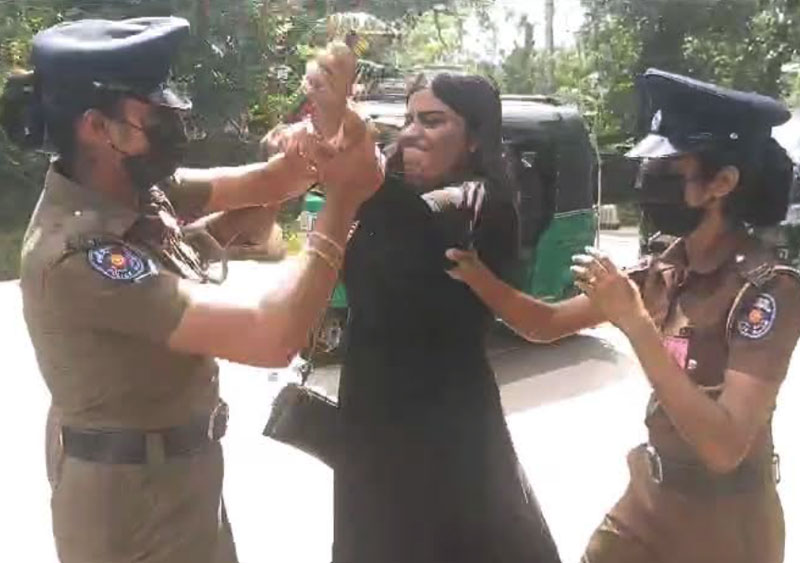
Two Tamil women activists were taken into custody yesterday (05) as they attempted to meet president Ranil Wickremesinghe who is now touring the north.

The president travelled by air on a four-day visit there and was participating in a district coordinating committee meeting at the town hall when the arrests were made.

Police prevented protesting members of the association of missing persons from entering the premises.

Secretary of its Vavuniya branch Sivanandan Jenita and Meera Jesmine were then arrested and dragged into a bus, video footage by the media showed.

Police claimed to have obtained a court order against Jenita that prevents her from holding protests.

Families of missing persons are on a campaign for more than 2,500 days to demand justice for their loved ones.

Posted in Uncategorized

BASL demands end to rule by force, upholding law and justice

The Bar Association of Sri Lanka (BASL) has expressed deep concern over a recent rise in arbitrary arrests, police raids without proper warrants, and extrajudicial killings.

In a statement, the BASL underscored the importance of due process and the rule of law, urging authorities to promptly rectify these issues and restore public trust in the justice system.

The statement said, “The police raids, including the demolition of property carried out without valid search warrants and/or valid search orders, whilst flagrantly violating established legal protocols, render them unlawful. Such actions not only undermine the bedrock principles of justice, but also erode public confidence in the integrity of law enforcement agencies.”

The statement strongly condemned the prospect of extrajudicial killings, emphasizing that even convicted criminals have a right to due process and life as per Article 13(4) of the Sri Lankan Constitution.

The BASL also noted a disturbing trend of arbitrary arrests without proper investigation or legal procedure.

The BASL expressed deep concern over recent statements by the Public Security Minister implicating certain lawyers as conspirators with drug offenders.

The Association highlighted the need for police accountability and transparency in legal proceedings. Unchecked impunity creates an environment where no individual feels secure, regardless of their involvement.

The statement stressed the importance of steadfastly upholding the rule of law and due process for building a just and equitable society for all Sri Lankans.

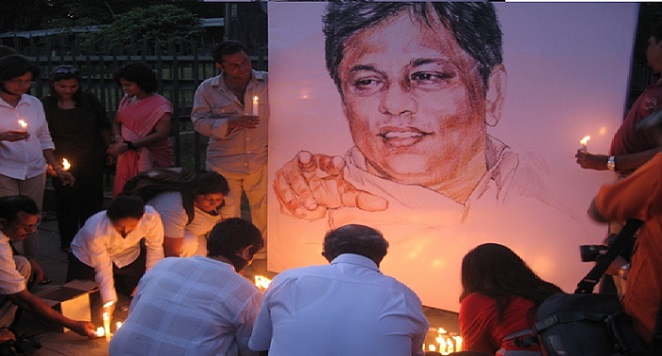
Graveside memorial service to mark 15th anniversary of Lasantha’s murder

The 15th anniversary of the assassination of The Sunday Leader founder Editor-in-Chief Lasantha Wickrematunge, which falls on Monday, 8 January, will be marked with a service at his graveside.

Family, friends, former colleagues, and others will gather at Borella Kanatte at 9 a.m. to mark the anniversary and remember Lasantha.

Assassinated on 8 January 2009, Lasantha was one of Sri Lanka’s leading journalists and an outspoken critic of the then Rajapaksa Government. He was attacked as he drove to work and later died of his injuries.

The brazen attack was carried out by two gunmen on motorcycles in the middle of morning-rush-hour traffic.

The investigation into Lasantha’s murder has yielded no tangible results thus far and his killers still roam free, 15 years later.

Posted in Uncategorized

Wickremesinghe backs India-mooted 13A as solution to Tamil autonomy

President Ranil Wickremesinghe backed the India-mooted 13th Amendment as a solution to address the minority Tamil community’s long-pending demand for political autonomy.

The 13A became a part of Sri Lanka’s constitution in 1987 through the direct intervention of the then-Indian government led by prime minister Rajiv Gandhi. It created nine provincial councils for nine provinces with a temporary merger of the North and East which the Tamil minority claims is their traditional homeland.

If we examine the provisions of the 13 Amendment, there is ample authority to establish a robust local economy. We pledge not to intervene in those affairs. I am encouraging you to take the initiative,” Wickremesinghe said. Presently, the Western Province is the sole region capable of substantial independent spending, while others are financially dependent on it, he said. “This situation warrants reconsideration. By utilising the powers within the 13th Amendment, each province can chart its course to development. It’s time to put these powers into action, he said.

Wickremesinghe’s willingness to grant full powers other than police to provinces was shot down by the powerful Buddhist clergy who claimed the move could endanger the unitary state of Sri Lanka. An all-political party meeting called by Wickremesinghe last year to reach a consensus on implementing the 13A ended up in a stalemate.

Take Japan, for instance, it is not a federal state yet various departments and regions are well developed…Look at the United Kingdom – Scotland and Wales have their own developed economies. Why can’t we emulate such functioning regional economies, the president asked. The Liberation Tigers of Tamil Eelam (LTTE) which fought for a Tamil homeland for nearly 30 years had rejected the 13A.

They fought the Indian Army that was deployed as part of the Indo-Lanka Accord. In 2013, the Tamils for the first time voted for their own chief minister for the North. The previous provincial elections were severely hampered by the LTTE’s armed campaign.

The current Tamil political parties stay sceptical of the political will in the majority Sinhala south to fully implement the 13A. The Tamils put forward their demand for autonomy since gaining independence from Britain in 1948 which from the mid-70s turned into a bloody armed conflict.

Over the years, the Sri Lankan government has been aggressive against Tamilian groups following its war with LTTE which collapsed in 2009 after the Sri Lankan Army killed its supreme leader Velupillai Prabhakaran.

(PTI)

Posted in Uncategorized

Jaffna’s Musical Prodigy Kilmisha Yaazhisai Captivates President Wickremesinghe with Sa Re Ga Ma Pa Little Champs Victory

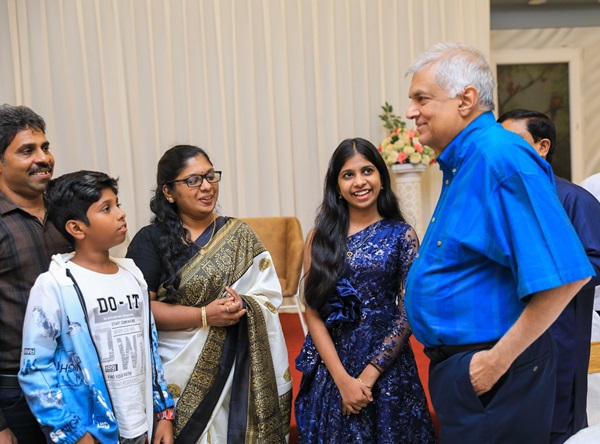
The talented young artist Kilmisha Yaazhisai, hailing from Jaffna, has garnered both regional and national acclaim by clinching victory in the Sa Re Ga Ma Pa Little Champs Season 3 on Zee Tamil. The musical prodigy recently had the honor of meeting President Ranil Wickremesinghe during his visit to Jaffna, where he extended his heartfelt congratulations to the young star.

Kilmisha Yaazhisai, whose melodic prowess has enchanted audiences and judges alike, emerged triumphant in the popular Indian television singing competition. Her exceptional talent not only brought pride to her hometown but also captured the attention of the nation.

President Wickremesinghe, during his visit to Jaffna and as part of engaging with various stakeholders in the Northern province, took a moment to meet Kilmisha Yaazhisai. The President, visibly delighted by the young artist’s achievement, offered his sincere congratulations on her victory in Sa Re Ga Ma Pa Little Champs Season 3.

In a gesture of camaraderie and celebration, President Wickremesinghe and Kilmisha Yaazhisai posed for a selfie, capturing the joyous moment. The meeting is symbolic of the President’s recognition of the immense talent that exists within Sri Lanka, especially in regions that have often been in the spotlight for their cultural richness.

Kilmisha Yaazhisai’s accomplishment serves as an inspiration to aspiring musicians and artists across the country, emphasizing the importance of nurturing and celebrating local talent.

Northern Province to undergo complete development in next five years under comprehensive plan

President Ranil Wickremesinghe emphasized the imperative for the full development of the Northern Province within the next five years under a unified plan.

Highlighting the Western Province’s pivotal role, contributing over 50% to the country’s economy and currently serving as the primary engine, the President asserted the commitment to strengthen the nation’s economy through five main engines, encompassing the South, North, Central Province and the North-West.

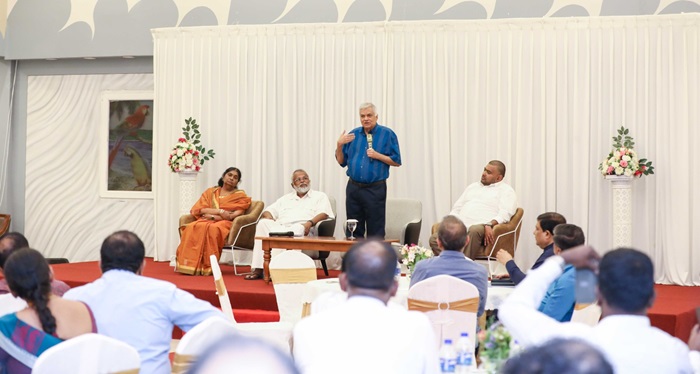
President Ranil Wickremesinghe conveyed these directives during his participation in the special District Coordination Committee meeting for Vavuniya, Mullaitivu and Mannar districts, which convened today (05) at the Vavuniya District Cultural Hall.

Extensive discussions were conducted on the challenges in the domains of education, health, resettlement, land, electricity, water, tourism, forestry and fisheries in the districts of Vavuniya, Mannar and Mullaitivu. The President actively engaged in addressing some of these issues by working towards effective solutions.

Furthermore, the President highlighted the strategic vision to transform Colombo, Kandy and the Northern Province as the three main centres of education in the country, emphasizing a focused effort to enhance educational development in Sri Lanka.

President Ranil Wickremesinghe, providing additional remarks, expressed:

“Our country’s economy has traditionally relied on a single engine, namely the Western Province, which contributes over 50% to the national economy. However, the economic contributions from other provinces have been relatively modest. To propel our nation forward swiftly, it is imperative to diversify and strengthen the engines that drive economic growth. We have identified five provinces—South, North, West, Central and North-West as focal points for cultivating robust economies that will contribute significantly to Sri Lanka’s national economic landscape.

Currently, the country possesses financial stability, enabling the resumption of stalled projects. Additionally, projects reliant on foreign aid have regained momentum, capitalizing on the available financial strength.

Furthermore, the Northern Province possesses significant potential to substantially enhance the national economy of the country. The unique wind and thermal conditions in the Northern Province create ample opportunities for renewable energy production. By harnessing the energy potential of the Northern Province, surplus energy can be exported to India, generating additional revenue. Conversations on this matter have already been initiated.

The farmers in the Northern Province exhibit remarkable talent and efficiency. Through the implementation of the Agricultural Modernization Program, there is the potential to establish export agriculture, thereby maximizing the productivity of farmland in the Northern Province.

Minister of Transport, Highways, and Mass Media Dr. Bandula Gunawardena expressed appreciation for President Ranil Wickremesinghe’s commendable role in steering the country towards economic stability during a challenging period of severe recession.

Upon assuming office, President Wickremesinghe faced critical shortages, including gas, fuel and electricity cuts lasting up to ten hours. The foreign reserves had depleted to zero. Despite these challenges, the President implemented measures to fortify the economy, ultimately facilitating the resumption of development projects in the Northern Province. In a recent development, the President directed the acceleration of road projects in the Northern Province, while initiatives are underway to enhance transportation and promote tourism in the region.

Recognizing the challenges faced by farmers in transporting their crops, arrangements have been made to provide a train for goods transportation, enabling storage and market accessibility. Furthermore, the President has instructed the provision of buses from India to every depot in the Northern Province, aiming to expedite the overall development of the region.

Governor of the Northern Province, Mrs. P. S. M. Charles reported that the Jaffna district achieved a milestone by producing the top results in the recent G.C.E. Advanced -Level Examination across the island. Additionally, the Northern Province demonstrated commendable performance in the G.C.E. Ordinary Level Examinations. Plans are underway to establish an education zone by amalgamating the Madhu and Thunukkai areas.

Dedicated and efficient efforts from teachers are contributing to the development of education in the Northern Province, a positive trend that is cause for satisfaction. The administration is actively addressing issues within the health sector.

Acknowledging a lack of a formal system for transporting farmers’ crops in the province, the Governor expressed the intention to engage in discussions with the Minister of Transport to explore and implement viable solutions.

State Minister Mr. Kader Mastan, expressed gratitude to President Ranil Wickremesinghe for his continued attention and efforts to address the needs of their area during his recent visit.

In the Mullaitivu district, steps have been taken to release the necessary land for agriculture, and there is a request to extend this initiative to areas surrounding ponds for agricultural purposes. Additionally, the Minister urged the President to provide solutions to challenges related to the maintenance of elephant fences and fishing issues.

Member of Parliament Kulasingham Thilipan acknowledged and appreciated the significant announcement regarding the release of land in the Vavuniya district by the Department of Forestry, marking the first instance of such an initiative. Gratitude was extended to President Ranil Wickremesinghe and the relevant authorities for this positive development.

Furthermore, the Member of Parliament highlighted the President’s proposal to boost milk production in the Vavuniya district and requested the release of the necessary pastures to support and implement this proposal.

Member of Parliament, Mr. Charles Nirmalanathan expressed gratitude to the President for his visit, acknowledging the release of two out of three political prisoners, as announced during the budget session. However, he highlighted that approximately 12 political prisoners, arrested during the last war, are still awaiting special permission for release or bail.

Member of Parliament, Mr. Selvam Adaikkalanathan noted that despite the end of the war, significant development work in Vavuniya has not taken place. He commended President Ranil Wickremesinghe for focusing on this issue and expressed hope for appropriate solutions with the on-going confidence-building efforts in land release. Additionally, he urged prompt development work for hospitals in the district.

The gathering included Minister of Transport, Highways, and Mass Media Bandula Gunawardena, State Minister Cader Mastan, Member of Parliament Wajira Abeywardena, Chairman of the Vavuniya District DCC – Member of Parliament MrKulasingham Pradeepan, Mr. Selvam Adekkalanathan, Mr. Charles Nirmalanathan, Mr S. Noharathalingam, Northern Province Governor Ms. P.S.M. Charles, President’s Secretary Mr. Saman Ekanayake, President’s Trade Union Director General Mr. Saman Ratnapriya, Director General Community Affairs Mr. Rajith Keerthi Tennakoon, Vavuniya District Secretary Mr. P.A. Sarath Chandra, and other public representatives from Vavuniya, Mannar and Mullaitivu districts, along with various government officials.

–PMD–

Chinese vessel visits will be a persistent geopolitical challenge to Sri Lanka -The Morning

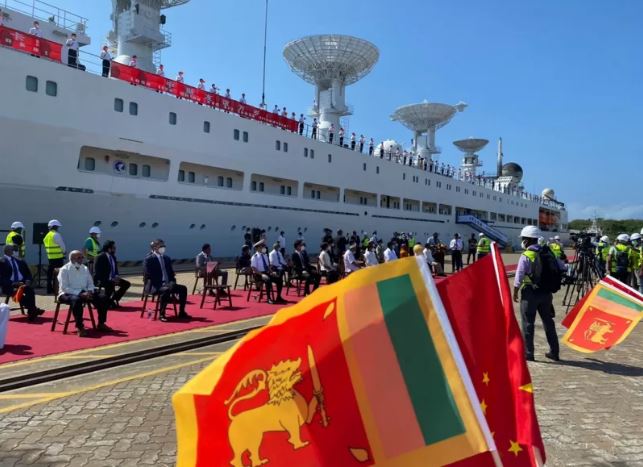
Sri Lanka’s recent decision to enact a moratorium on foreign Marine Scientific Research (MSR) vessel visits to the strategically placed island nation in the Indian Ocean Region (IOR), is a short-term solution to what will become a bigger headache in the coming years.

The moratorium essentially buys Sri Lanka some breathing space to navigate around geopolitical rivalry and diplomatic pressure in 2024, which is a crucial year for the island, in terms of economic and political stability, with the possibility of multiple elections on the horizon.

However, Sri Lanka needs to formulate a robust strategy to deal with MSR visit requests, which will likely increase in the coming years, as tensions between India – China – and the United States are likely to continue to complicate situations for the littoral states of the IOR.

India, the United States and others have exerted significant diplomatic pressure on Sri Lanka regarding the high frequency of Chinese MSR visits to the island nation.

Sri Lankan policymakers and those who craft foreign policy, need to fully grasp that China has long-term designs for the IOR, and that Chinese presence in the “Indian Ocean” will only grow in the coming years. China, seems to be borrowing a page from the British Empire, US and Soviet “Cold War” period playbooks, and has begun “patrolling” and seeking basing options for the PLA Navy along its lengthy lines of communication (supply routes).

With a significant tonnage of China’s energy supply, raw materials, and exported goods traversing through the Indian Ocean, China is clearly trying to ensure that its supply chain vulnerabilities are reduced.

While China is now pushing hard to expand its maritime science boundaries and build expertise, the kind of joint research they have collaboratively carried out thus far with local institutions, are yet to deliver significant scientific results which have global implications.

Further, China’s track record of playing by the international rule book when it comes to maritime matters, is problematic. China’s reaction to international law and verdicts about its claim to disputed maritime territories in the South China Sea, paints a poor picture.

In what may be indicative of what’s in store for the future, China recently began to refer to the IOR as the “China-Indian Ocean Region” (CIOR), at a recent conference on “Boosting Sustainable Blue Economy to Build Together a Maritime Community with a Shared Future,” which was held in the Yunnan Province of China, in early December, 2023.

The United States several years ago ‘re-envisaged’ the Indian Ocean as the ‘Indo-Pacific’ to suite its strategic aims. The re-designation of the IOR as China-Indian Ocean Region indicates China’s ambitions, and how it views the world, where a rising China wants to become a “superpower”.

Such re-envisioning of the IOR along with projects like the Belt and Road Initiative (BRI), will see China shift focus towards the Indian Ocean in the coming years.

The Chinese long-range fishing fleet, and MSR’s equipped with unmanned and autonomous systems will increase their visits to the IOR. Already, several Chinese MSR’s have been flagged by some South East Asian countries for operating with their Automatic Ship Identification (AIS) tracking systems shut off, in what is termed as “going dark”, deifying international law.

Further, several such vessels have been accused of deploying autonomous undersea and surface craft to collect scientific data in coastal waters and in the Exclusive Economic Zones (EEZ) of Southeast Asian Countries to collect data, which also have military applications, without the expressed permission of such countries.

As such, Sri Lanka needs to move swiftly to formulate well thought-out foreign policy measures to deal with what could be an escalation of the Chinese inroads to the IOR, though these have been mostly legitimate under international law to date.

It is said that the Government is reviewing its foreign policy, in tandem with a defence review which is also said to be ongoing. With both “reviews” lacking transparency, or Parliamentary oversight, let’s hope that they are actually taking place, with the competent subject matter experts being consulted, and would not end up like many other “reviews” which have in the past only rubber-stamped the ideas which a few politicians and their advisors deem fit for the nation.

It is also incumbent on the Government and policymakers to ensure that such key policy matters are not “shelved” due to 2024 being an “election” year. Given the weak economic state Sri Lanka finds herself this year, the state and policymakers cannot afford to be distracted by an “election fever” and become complacent regarding critical foreign policy challenges.

Posted in Uncategorized

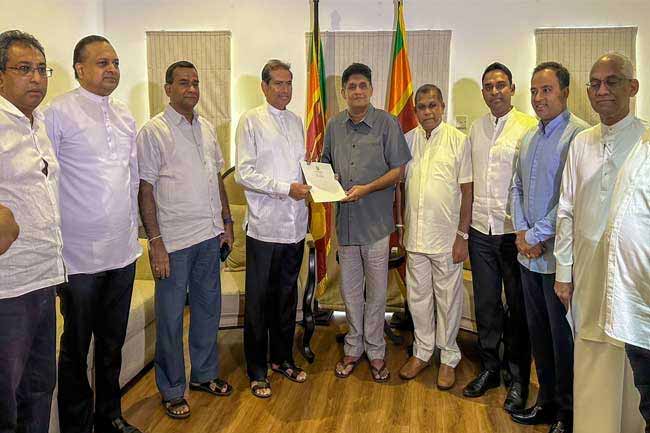
SLFP stalwart Dayasritha Tissera joins SJB

Former Parliamentarian of the United People’s Freedom Alliance (UPFA) Dayasritha Tissera has joined the alliance of the Samagi Jana Balawegaya (SJB).

Tissera, who met with Opposition Leader Sajith Premadasa, has vowed to support the SJB’s political program.

Furthermore, the Opposition Leader has appointed Tissera as the SJB’s Organizer of the Naththandiya electoral district.