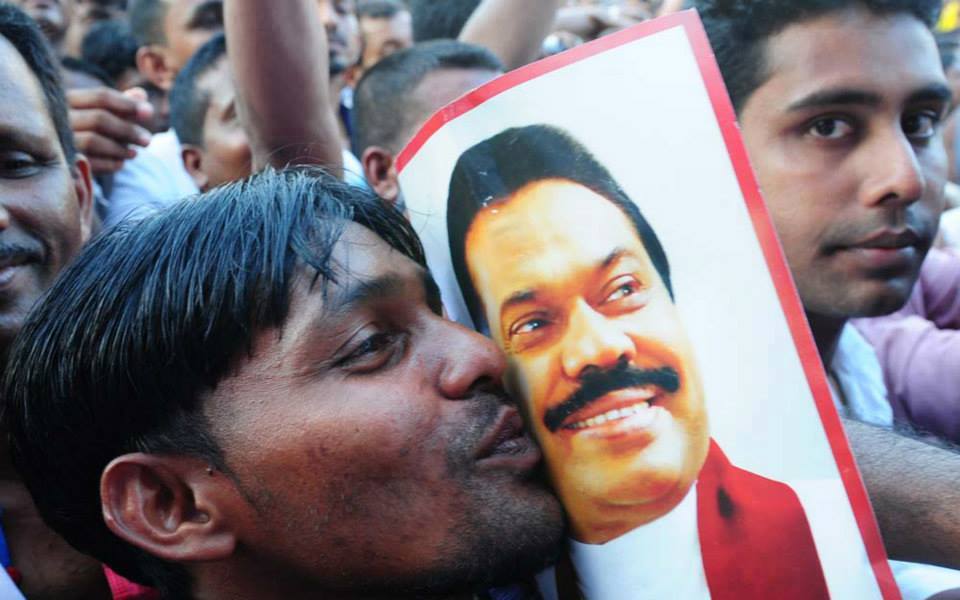
Will the Rajapaksas’ dream of coming back to power come true? By Veeragathy Thanabalasingham

Former Sri Lankan President Mahinda Rajapaksa seems to believe that if the Sri Lanka Podujana Peramuna (SLPP ) is not rebuilt as a strong political party in his time, other Rajapaksas may not be able to do so in the future.

Although the Rajapaksas of Ruhunu had been involved in politics and held various positions since the early part of the last century, it was only after Mahinda became the Executive President in the early part of this century that they grew into a powerful family wielding immense influence in politics. Mahinda is the political face of the Rajapaksa family.

The Rajapaksas, who stepped down from power after last year’s ‘Aragalaya’ uprising, within a few months started talking about coming back to power in the near future. They went along with President Ranil Wickremesinghe’s decision to indefinitely postpone the local government elections. But they were not hesitant about claiming that their party would win any future election. It can be seen that in recent times such talk has increased.

Mahinda is well aware that the landmark November 14 Supreme Court judgement holding the three Rajapaksa brothers directly responsible for last year’s economic crisis has grave implications for his family’s political prospects. But he said that he did not accept the ruling and that all economic decisions taken during his regime were with the approval of Parliament.

Two weeks later, on November 28, he released a report with numerous statistics, saying that the economy had seen healthy growth during his tenure from 2005 to 2014 and that the actions of the ‘ Yahapalanya ‘ government that came to into office was the main reason for present economic crisis.

Through the statement, Mahinda appealed to the people of the country to never again take a decision like the one taken in the 2015 elections. His message to the people was “bring SLPP back to office.”

Neither the leaders nor the ministers of the ‘ Yahapalanaya ‘ government issued a strong reply denying Mahinda’s allegations.

Exactly one month after the Supreme Court’s ruling, on December 15, the second national convention of the SLPP was held at the Sugatadasa Indoor Stadium, Colombo. Mahinda was re-elected leader of the party.

The post of national organizer, earlier held by former finance Minister Basil Rajapaksa, was left vacant. This could not be without a good political reason. Former President Gotabaya Rajapaksa was conspicuous by his absence at the convention. Only Mahinda and Basil addressed the gathering. SLPP General Secretary Sagara Kariyawasam was only allowed to deliver the welcome address.

” The SLPP is prepared to come back to power. The party will start a new journey according to the needs of the country. We invite people of all communities to join us in creating a new nation. With all our strength we will win any election. Many political parties are waiting for our invitation to join our journey,” Mahinda thundered.

“We will create a new political culture eschewing falsehood. We will strive until our efforts and work are written in history. We are ready to start our journey from where we failed to take Sri Lanka to the front of the world as a proud country,” Mahinda said.

He once again claimed credit for the war victory saying that during the three decades of war, no other leader had the courage to confront LTTE leader Prabhakaran head-on.

The Rajapaksas will definitely need Prabhakaran to regain influence among the Sinhalese people. Not only that, communal politics will once again play a key role in their quest for recovery.

A strange feature is observable in the current approach of the Rajapaksas. Having used their party’s parliamentary majority to install Wickremesinghe as President last year, they are now keen on distancing themselves from his administration.

Although President Wickremesinghe is the leader of the United National Party, all but one or two ministers in his government are members of the SLPP. Many of them were ministers in the government of two Rajapaksa brothers.

Bills and resolutions brought by the Wickramasinghe government are passed in the House with the support of the members of the SLPP. The two budgets presented by Wickramasinghe, in his capacity as Finance Minister could not have been passed without the support of SLPP. Not only that, the Rajapaksas do not fail to say from time to time that the President is working efficiently in rescuing the country from crisis and has restored law and order.

Everyone knows that Basil Rajapaksa has often urged President Wickremesinghe to give ministerial posts to the district leaders of the SLPP but to no avail.

Mahinda, who issued a statement on the government’s tax policies, said that the current government is not run by the SLPP. He tries to justify his support to the Wickramasinghe administration by saying that though the SLPP is part of the government, the head of the government is the leader of another party that follows a different policy. It is the duty of SLPP to ensure that a stable government is in office until the next national elections.

Also, Mahinda has expressed an opinion against tax hikes as people are worried about the impending rise in the cost of living.

Mahinda made such statements after his MPs had raised their hands in support of bills to increase taxes like the Value Added Tax (VAT) which was raised from 15 percent to 18 percent.

While Mahinda supported the VAT bill, his eldest son, Namal Rajapaksa, who is said to be his political heir, did not. Namal was not present in the House during the vote on the bill. He said he could not support the tax bill which would bring untold hardship to the people.

What can be said about this other than that it is an insult to the intelligence of the people? Namal did not have the courage to be in the House vote against it.

Tax policy will become a key political issue in the new year, with Mahinda saying it will be a major focus of their campaign in the national elections.

Mahinda’s two statements issued in November and December and his comments to the media from time to time make it clear that he expects the people of the country to believe that the origin of the economic crisis facing the country today lies in the policies and actions of the ‘Yahapalanaya’ government and that the Rajapaksas are not responsible despite what the Supreme Court said in its judgment.

Even last week, Mahinda said that the SLPP would regain power in the next election. He seems to believe that by repeating this he can influence the masses.

Clearly, the Rajapaksas have not learned lessons from the way they were humbled and driven out of office within years of the grand image they had built about themselves. They dream of coming back to power without really understanding what people really think about them. However, the general estimate is that the SLPP will not suffer the same fate as the United National Party in the last parliamentary elections.

Be that as it may, it is unlikely that a Rajapaksa will contest the next Presidential election. They know that a defeat in that election will be detrimental to rebuilding the party. The Rajapaksa’s strategy in the next elections will be to ensure a government that does not hold it accountable for past mistakes.

Even if the Rajapaksas try to present some people to the country like Dhammika Perera as potential presidential candidates of their party, they have no ‘safer choice’ than Wickremesinghe.

Posted in Uncategorized

Indian Government will further assist development of the North – New Indian HC

The new Indian High Commissioner to Sri Lanka, Santosh Jha, affirmed the Indian Government’s unwavering support for the advancement of the maritime and aviation sectors, as well as the development of the northern region of Sri Lanka. He made these observations during a meeting held on December 28, 2023, with the Minister of Ports, Shipping, and Aviation, Nimal Siripala de Silva.

The discussions at the Ministry also focused on the progress of Palali airport, along with the ports in Kankesanthurai, Talaimannar, and Trincomalee. Minister de Silva emphasized the government’s willingness to provide opportunities for Indian investors to engage in the maritime and aviation services sectors in Sri Lanka. Specifically, he highlighted investment prospects in the vicinity of the Trincomalee Port for ship and small craft building industries.

High Commissioner Jha brought attention to a proposal regarding the initiation of a passenger ferry service linking all ports of Sri Lanka to India. He expressed his intention to engage in discussions with the Indian government to promptly implement the proposal.

He also said that Indian technology and investors would be made available for the commencement of several renewable energy projects in Sri Lanka. Highlighting the collaborative efforts between Indian Prime Minister Narendra Modi and Sri Lankan President Ranil Wickramasinghe, High Commissioner Jha underscored their commitment to fostering a strong and sincere brotherhood between the two neighboring countries.

K.D.S. Ruwanchandra, Secretary to the Ministry of Ports, Shipping, and Aviation, and Irina Thakur, the First Secretary (Commerce and Culture) at the Indian High Commission in Sri Lanka also attended the discussions.

Debt Restructuring, Policy Reforms Critical for Stability

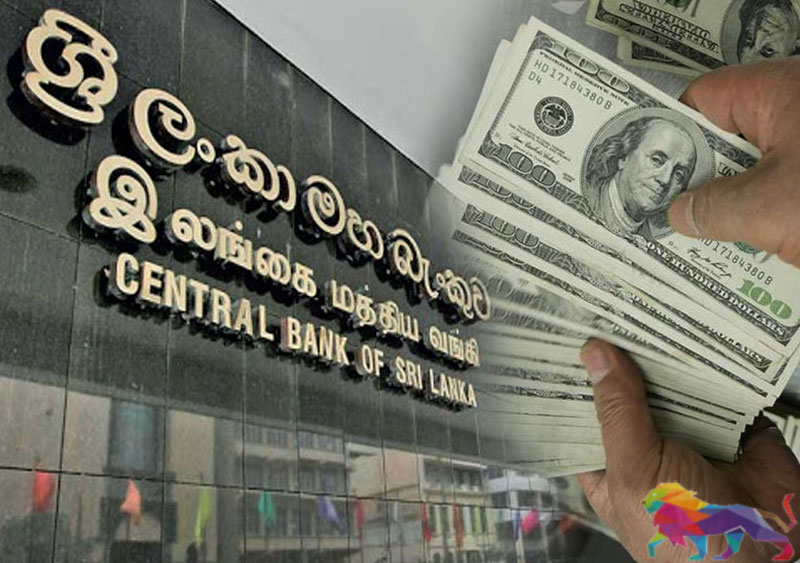
The Central Bank of Sri Lanka released its Financial Stability Review (FSR) for 2023, painting a picture of a resilient financial sector navigating a challenging economic landscape.

The report, covering data up to September 2023, highlights the sector’s resilience in navigating the aftermath of the economic crisis while acknowledging lingering vulnerabilities and ongoing policy efforts.

The Central Bank of Sri Lanka acknowledged the significant headwinds faced by the financial sector this year due to the economic crisis.

Despite these challenges, the Central Bank highlighted the positive outcomes of implemented measures, including interest rate stabilization.

This policy approach appears to be encouraging a gradual return of credit growth within the banking system, offering a glimmer of hope for revitalization.

The Central Bank further expressed optimism for the near future, projecting inflation to stabilize around 5% in the coming months.

Additionally, successful completion of the ongoing foreign debt restructuring process is expected to serve as a significant catalyst for further solidifying the financial sector’s stability.

However, the path towards sustained recovery remains intricately linked to unwavering commitment to policy reforms outlined in the agreement with the International Monetary Fund’s extended credit facility.

The Central Bank acknowledged the challenging nature of adhering to this narrow path, but firmly emphasized the potential for irreversible consequences, impacting both the financial system and the broader economy, should any deviations occur.

India and Sri Lanka discuss expediting proposed joint projects

India and Sri Lanka discussed expediting some of the proposed joint projects in Sri Lanka.

India’s new High Commissioner to Sri Lanka Santosh Jha on Friday called on Prime Minister Dinesh Gunawardena and discussed a wide range of topics related to the multidimensional bilateral ties and facilitating more Indian investments in the island nation.

Jha assumed charge as the High Commissioner of India to Sri Lanka last week.

”High Commissioner called on H.E PM @DCRGunawardena today. They discussed a wide range of topics pertaining to the multidimensional India-Sri Lanka relationship” the Indian mission posted on X.

They also emphasised that centuries-old linkages in Buddhism are central to the abiding connection between the people of the two countries.

A statement issued by the Sri Lankan government said that during the meeting, Prime Minister Gunawardena and High Commissioner Jha discussed several issues such as the possibility of more Indian investments in the arena of the energy sector, joint projects on Trincomalee oil storage tanks, ports, railways and other sectors.

“They held a detailed discussion on economic ties and cooperation between the two countries and examined ways and means of expediting the proposed joint projects,” the statement said.

Gunawardena thanked India for the assistance provided to Sri Lanka in facing the current economic crisis by extending debt restructuring facilities and providing relief material, food and medicine and also for the support given to obtain the IMF package to solve liquidity issues.

A senior Indian diplomat, Jha was India’s Ambassador to the European Union, Belgium & Luxembourg before taking up his assignment in Colombo.

Jha had also served in Colombo from 2007-2010 as Counsellor at the High Commission, handling work related to commercial and economic matters.

During this period, he played a major role in building the architecture of India-Sri Lanka development cooperation.

Jha, recalling his previous stint in Sri Lanka, said that he considers it a great privilege to be in Colombo once again to work for further strengthening bilateral friendship and cooperation.

“My mission is to work with the people of Sri Lanka, for the benefit of Sri Lanka, under the guidance of Sri Lankan leadership,” he said.

He assured that Indian expertise will be extended to Sri Lanka for its plans for digital infrastructure development including introducing digital IDs for every citizen and for development of IT education”, he was quoted as saying. (Courtesy PTI)

Posted in Uncategorized

Catholic Church queries Prez’s silence over Alles’ claims

The Catholic Church claimed that it is in doubt as to whether President Ranil Wickremesinghe is allowing Public Security Minister Tiran Alles to continue making baseless accusations against Colombo Archbishop Malcolm Cardinal Ranjith and the Catholic Church with the aim of undermining their (the Church’s) programme to demand justice for the Easter Sunday terror attacks of 2019.

In the recent past, Alles was seen criticising Cardinal Ranjith and the Catholic Church based on two key matters – the Church’s allegation that the Government had not properly investigated the said terror attacks and the Church’s opposition when the Government was earmarking Senior Deputy Inspectors General of Police (SDIGs) Nilantha Jayawardena and Deshabandu Tennakoon for the post of Inspector General of Police (IGP).

Speaking to The Daily Morning, Catholic Bishops Conference of Sri Lanka National Director of Communications Rev. Fr. Jude Chrishantha Fernando said that they had reasonable grounds to accuse the Government of not investigating the Easter Sunday terror attacks properly.

“The Presidential Commission of Inquiry (CoI) that investigated the terror attacks has made a set of recommendations including action against several individuals, but the Government has not implemented any of those recommendations. There are several aspects that the Police and other related agencies have not looked into. If the situation is as such, how can we say that we are satisfied with the investigations?”

In response to Alles’ criticism of the Church over their opposition to appointing Jayawardena and Tennakoon as the IGP, Rev. Fernando said that they had objected to the duo over nothing but their failure to prevent the terror attacks in 2019.

“If you look at the list of police officers who are to be appointed as the IGP, there is not a single Catholic officer. We have never asked the Government to appoint a Catholic as the IGP. What we always say is that the CoI report clearly mentions that Jayawardena and Tennakoon have neglected their responsibilities. It states that the terror attacks could have been prevented if they worked properly. That is the reason for our opposition to their appointment as the IGP.”

Commenting on a recent statement made by Alles that there are religious leaders who even maintain links with organised criminal gangs, and in turn, make remarks critical of the police crackdown on suspected criminals, Rev. Fernando said that the Church had been launching various programmes to help eliminate drugs and criminal activities in the country.

“We even organised two peaceful protest marches before the terror attacks in 2019 in order to urge the Government to eliminate drugs and criminal activities. In addition, the Archbishop has appointed a Catholic priest to look into drug addicts, and to help them. The Church is also maintaining two rehabilitation centres in Colombo for drug addicts. While doing all these things, why should we have links with criminals?”

Noting that Alles has made critical remarks against Cardinal Ranjith and the Church on several occasions in the past few months, Rev. Fernando said that President Wickremesinghe is doing nothing to stop the former from doing so.

“Wickremesinghe does nothing and allows Alles to make critical remarks against the Cardinal and the Church. We have a doubt that what Alles is doing is fulfilling a contract given by the President with the aim of disrupting our struggle to seek justice for the victims of the Easter Sunday terror attacks.”

The Catholic Church and Cardinal Ranjith have been subjected to various criticisms by pro-Government parties including Parliamentarians and Ministers as a result of their (the Church’s) programme to seek justice for the victims of the terror attacks. The Church has been emphasising that the relevant investigations have not been conducted properly, while the Government, particularly Alles, has been asserting that almost 90% of the related investigations have been concluded. In addition, critical remarks have also been exchanged by the Church and Alles over Tennakoon’s appointment as the Acting IGP.

Posted in Uncategorized

Who asks for ‘deputy leader’ status in partnership with the SJB By Kassapa

Politics, as the old saying goes, is said to be the art of the possible. This is exactly why political parties form coalitions even with partners who are not like-minded, when they believe this would give them a better chance of obtaining state power which is the ultimate objective of a political party.

This is what the major opposition party in Parliament, the Samagi Jana Balavegaya (SJB) is engaged in right now. It is trying to forge an alliance with the Nidahasa Janatha Sabhawa (NJS), the splinter group led by G.L. Peiris and Dullas Alahapperuma that broke away from the Sri Lanka Podujana Peramuna (SLPP) during the weeks that followed the political turmoil in mid-2022.

It will be recalled that, in the lead up to the vote in Parliament to elect a President following Gotabaya Rajapaksa’s sudden resignation, SJB leader Sajith Premadasa withdrew in favour of Alahapperuma who eventually lost to President Ranil Wickremesinghe. So, they have worked on common objectives and against common enemies before.

The SJB and NJS are approaching the idea of a ‘coalition’ for different reasons. The SJB is aware that although they are numerically the largest opposition in Parliament, this is not a reflection of the ground situation just as much as the SLPP no longer commands a majority of the public vote even though they still retain a simple majority in Parliament. The SJB’s strength at the grassroots level is being sorely tested by the Jathika Jana Balavegaya (JJB) and some would even argue that it is the JJB that has the upper hand.

Then, there is the ever-present danger of Wickremesinghe poaching a few more vulnerable or disgruntled SJB parliamentarians, just as he did with Harin Fernando, Manusha Nanayakkara and Diana Gamage. Thus, the SJB is not a solidly united group of parliamentarians waiting in the wings, supremely confident that they will form the next government. Many SJBers are watching with trepidation which way the ‘swing’ is, hoping to align themselves with whoever they believe will win.

In such a scenario, it makes political sense to bolster your party’s image by getting some of the so-called ‘independents’ from the SLPP to the SJB. The latter are also aware that they won’t get over the line by themselves. Hence, the invitation to the NJS.

For the NJS, the reason is the same, but with a greater magnitude. If they were to contest by themselves, they would be lucky to win five seats and many of their thirteen parliamentarians would be out of a job after the next election. They have, after all, associated themselves with the tainted Rajapaksas and been part and parcel of their shenanigans, so the public are reluctant to warm to them yet again. Besides, their leading lights are Alahapperuma and G.L. Peiris, not the type of politicians who ooze charisma, captivate audiences and invite the public to vote for them by the sheer force of their personality.

So, the bottom line is that the NJS needs the SJB much more than the SJB needs the NJS. Because of this, negotiations between the two parties should be proceeding with the SJB having greater leverage. However, reports are that the discussions have come to some kind of a stalemate because of Alahapperuma’s insistence on certain issues.

The journalist-turned politician and former Minister of Transport was at first of the view that any opposition alliance, if it is to be successful, needs to incorporate the JJB. Having the JJB on board would certainly be the icing on the cake for any opposition coalition but that party is no longer an ‘also ran’ in the race, it is a serious contender which believes it can win. That is why it is not taking any ‘partners’ with them. So, Alahapperuma’s thinking will remain a fantasy.

It has also been reported that Alahapperuma is asking for ‘deputy leader’ status in any partnership with the SJB. Even Premadasa, who is not averse to doling out official party positions by the dozen to keep his MPs happy, has baulked at the prospect. He knows that if he does so, he will face the wrath of his own party and Sarath Fonseka will be heading the queue to shower him with choice epithets.

It is not only Premadasa who is worried, even the rank and file of the SJB are concerned. They are perturbed that, should there be a SJB-NJS alliance and the two parties field a common list of candidates at a general election, at least some SJB MPs will lose their seats because some NJS stalwarts such as Alahapperuma, Dilan Perera and Charitha Herath for instance have better ‘name recognition’ in their respective districts. A recent example of this was when the SJB accommodated Kumar Welgama from the Kalutara district at the last general election which cost Ajith Perera his seat in Parliament. These MPs, uncertain of their return at the next election on the SJB ticket, would be sitting ducks for Wickremesinghe.

Another factor weighing on the minds of the SJB leadership is the presence of the likes of Channa Jayasumana in the NJS. It was Jayasumana who first spearheaded a very communal campaign against Dr. Shafi Sihabdeen claiming he forcefully sterilised Sinhalese women. Dr. Sihabdeen was later acquitted of all charges against him but the anti-Muslim propaganda this issue generated helped Gotabaya Rajapaksa win the presidential election.

Jayasumana remains a key member of the NJS and has neither retracted his comments nor apologised for his actions. Muslim parties who are partners of the SJB have indicated they do not wish to be on the same platform with Jayasumana pointing out that his presence will cost the party a significant number of Muslim votes, even in urban areas such as Colombo.

Forming political coalitions may be fashionable but they must also be fit for purpose. If it is the presidential polls that the SJB is gearing for, the SJB must question the value of forming partnerships for the sake of doing so- for some alliances may in fact lose the party more votes than it gains.

How Sajith Premadasa deals with this conundrum will be an indicator of his political maturity.

Dayasiri ready to join presidential race

Ousted SLFP General Secretary, MP Dayasiri Jayasekara, expressed his willingness to contest the forthcoming Presidential Election if the majority of his Party consents. He revealed this at a press conference held on Wednesday (27).

Furthermore, he insisted that before the Party agrees to such an action, his Party membership, revoked by former President Maithripala Sirisena must be reinstated. Jayasekara argued that the vacuum left by leftist progressive nationalist political forces cannot be filled by the outdated politicians from the 1950s who make up the majority in SLFP, SLPP and UNP.

Refuting claims about former President Sirisena running for the presidency from the SLFP and the possibility of former Prime Minister Mahinda Rajapaksa running for elections, Jayasekara indicated that SLPP will focus on corrupt businessmen for the role. He asserted that spaces occupied by these outdated politicians should be given to a younger generation of politicians, expressing his readiness to take on the responsibility if given the opportunity.

According to Jayasekara, his 27-year-long political career, graduation from the University of Colombo and legal background, make him a suitable candidate, particularly in comparison to corrupt politicians whom SLPP prioritises. Jayasekara emphasised having a more comprehensive plan for Sri Lanka, noting the need for a leader willing to collaborate with professionals, intellectuals, or a democratic leader chosen by the people to rescue the country from the current situation. He expressed preparedness to make necessary sacrifices to achieve this goal.

Responding to a question about Minister Mahinda Amaraweera’s allegation of his joining the SJB, Jayasekara denied any intention to join SJB and criticised Amaraweera for alleged opportunism. He clarified that ongoing multilateral and bilateral meetings have not influenced his decision to join hands with SJB.

Jayasekara alleged that many SLPP MPs are direct and indirect beneficiaries of President Ranil Wickremesinghe’s Government, valuing ministerial portfolios more than their party or its values. While commending President Wickremesinghe for positive policies and actions since assuming office, Jayasekara warned that the austerity measures and inconclusive privatisation policies of the country’s financial strongholds could result in disastrous consequences.

Despite the division within SLPP, which Jayasekara claims is between pro-SLPP MPs and pro-Ranil Wickremesinghe MPs, he urged the public not to take the risk of electing non-career politicians and to choose a president from experienced politicians. If inexperienced individuals are elected, he also asserted that he would not be held responsible for a repeat of the disaster that occurred in the previous government.

Posted in Uncategorized

UAE a major hub for China/Myanmar cybercrime syndicate

Amidst ongoing concerns over the fate of 56 Sri Lankan youths held captive by a terrorist group in Myanmar, a disturbing new development has emerged.

Chinese nationals with criminal backgrounds have reportedly forced the Sri Lankan Youth to participate in a New Year’s party organized by their captors.

Sources within the captive group informed that they were instructed by the terrorist organization to actively participate in the entertainment aspects of the party.

Speculations suggest that the party is intended as a deliberate attempt to deflect international scrutiny and pressure surrounding the ongoing crisis.

Following a recent failed rescue operation, a significant development has emerged in the ongoing hostage situation involving 56 Sri Lankan youth held captive in Myanmar.

According to sources within the captive group, the captors, currently identified as Chinese nationals with criminal backgrounds, have indicated a potential pathway to release – in exchange for financial compensation.

The specific figure reported is US$8,000 per individual, which equates to approximately Rs. 2.5 Million in Sri Lankan currency.

While reports suggest captors may be considering release for US$8,000 ransom per person, discrepancies have emerged, when considering the agreement signed by the Sri Lankans with the Chinese firm,

These agreements stipulate a significantly lower penalty of 8,000 Thai baht for leaving before six months, contradicting the reported ransom figure.

Thai baht is the currency used in Thailand, and 8,000 Thai Baht is approximately 75,000 rupees.

Additionally, the agreements impose a daily fine of 500 baht for unfulfilled targets, described as defrauding two people per day.

Service time under the agreements spans from 3:30 PM to 4:30 AM the following day.

As per a News 1st revelation, another key location from which this human trafficking ring operates is the United Arab Emirates.

News 1st has obtained exclusive footage from inside an office building operated by the Chinese Criminals based in Ajman, Dubai.

Chinese nations with criminal backgrounds are reportedly operating their cybercrime offices on 23 floors of this building.

These criminals continue with their scams to lure Sri Lankan job-seekers for IT jobs in Myanmar, Laos, and Dubai, and these are some of the messages that they send to unsuspecting victims.

One of the key questions posed by them is the nationality, and if it is confirmed that the applicant is a Sri Lankan, the criminals fix an interview for the unsuspecting Sri Lankan job-seekers on that very day.

The interview is simple, type 30 or more words in English within a minute, and if the applicant passes, they will be directed to commit cybercrime.

Wiggie throws hat in ring for Presidential race

Former Northern Province Chief Minister and Leader of the Tamil Makkal Thesiya Kuttani (TMTK) party C.V. Wigneswaran publicly expressed his intention to contest at the upcoming Presidential election yesterday.

Addressing a press conference at his residence in Jaffna, Wigneswaran said however his candidacy will depend on the agreement and unity of all Tamil political parties. According to Wigneswaran, a collective request from all parties will be the main factor for his candidacy.

“I believe I am the best candidate if a common Tamil candidate is to be put forward,” he said. He also noted that a common Tamil candidate would be timely.

Wigneswaran also claimed the participation of a Tamil candidate in the Presidential race could undermine the prospects of any Sinhala candidate attaining 50% of the votes.

According to political commentators, Wigneswaran’s possible candidacy could in fact lead to a potential shift in the country’s political landscape.

Lately, Wigneswaran has expressed criticism of President Ranil Wickremesinghe, highlighting unmet promises that were made during discussions with Tamil politicians.

He recently declined the invitation to participate in the 21 December dialogue between Wickremesinghe and Tamil MPs from the North and East, citing the ongoing failure to implement the 13th Amendment to the Constitution, which outlines provisions for devolution to the North and East.

Posted in Uncategorized

A Himalayan folly BY Mario Arulthas

Since the end of the war in 2009, Eelam Tamils across the world have increasingly embraced their identity and the politics that are intrinsic to it. Kilmisha Yaazhisai from the north-east, who recently won a popular Tamil Nadu singing competition, and Maithreyi Ramakrishnan from Canada, who is now a household name due to her successful Netflix show, are two emblematic examples of how Eelam Tamils have taken ownership of their identity and use their platforms to highlight the injustices Tamils face. Tamil nationalism as resistance is thriving and will continue to dominate Tamil politics for the foreseeable future. Tamil nationalist mobilisation, across borders and continents, has kept Sri Lanka on the international agenda, particularly around issues of justice and accountability for atrocity crimes. Sri Lanka is discussed as a problem that requires solving, from Geneva to DC, from London to Delhi, and Tamil nationalists are right in the mix participating in these processes. Tamil mobilisation has kept the state from returning to the worst version of itself – not out of goodwill but out of fear of an international backlash, ill-afforded during the near-constant state of crisis Sri Lanka has been in. One of the key things impelling the international community to continue to take seriously the conflict in Sri Lanka is a principled Tamil nationalist polity, one that is rooted in the demands for justice and accountability and rejection of Sinhala-Buddhist primacy.

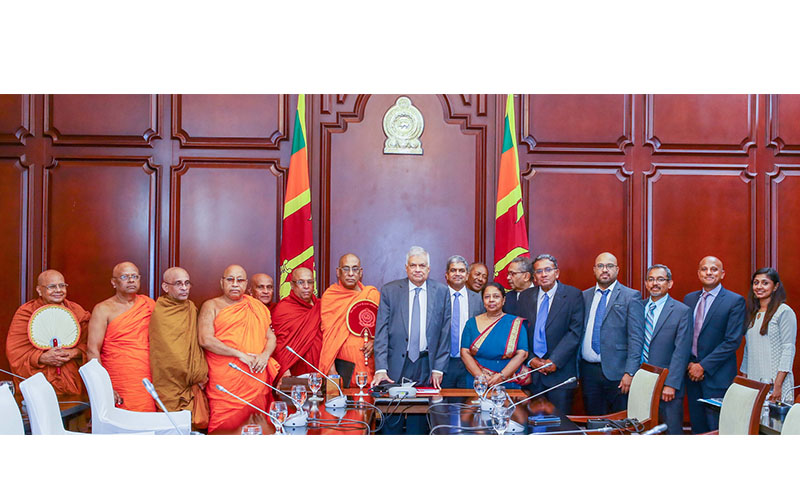
It is in this political context that the Global Tamil Forum participated in a dialogue with Buddhist clergy in Nepal earlier this year, which led to a much-publicised tour of Sri Lanka this month. The declaration was handed over to various members of civil society, political leaders, and diplomats, in carefully planned photo-ops. These efforts remain disconnected from the wider Tamil polity, which remains firmly committed to nationalist principles and continues to defy Sinhala-Buddhist supremacy.

There is not much Himalayan about this declaration. It’s a fairly hollow document, which on one hand doesn’t challenge Sinhala-Buddhist hegemony and on the other, lowers the Tamil political bar even further than the Tamil National Alliance has done since the end of the war. This will, once again, allow the Sri Lankan State to point towards engagement with some fringe actors, in an attempt to assuage the international push for accountability and a political solution. The State’s argument has consistently been that the push for accountability and justice for mass atrocities harms reconciliation efforts. The GTF just handed the Government another reason to drag their feet on accountability and political reforms.

The root causes of the conflict are not complicated and the legitimacy of Tamil grievances is largely uncontested outside Sri Lanka. In brief, after the country’s independence in 1948, the majority Sinhala population pursued a nation-building project that privileged Sinhala-Buddhism and Sinhala Buddhists. Other groups, such as Eelam Tamils, Malaiyaha Tamils and Muslims faced discrimination. The Eelam Tamil political leadership, with the support of its population, pushed back against the building of a Sinhala-Buddhist ethnocratic state. This fostered a strong national and political identity as Eelam Tamils, the mere existence of which became the biggest obstacle to the Sinhala-Buddhist ethnocracy that was being built. This in turn gave the Sri Lankan leadership enough of a reason to embark on a genocidal campaign to crush Tamil resistance to Sinhala-Buddhist hegemony. From the Sinhala-Only Act of 1956 to President Wickremesinghe’s order to the police last month to crack down on Tamil Heroes’ Day commemorations, the Sri Lankan State seeks to subjugate Tamils, often violently, within a broader Sri Lankan nation, with “minorities” forced to accept the supremacy of Sinhala-Buddhism and not “demand undue things”, to quote Sarath Fonseka. Till this day this conflict – supremacy and the resistance to it – remains the core contestation in Sri Lanka and the one that will continue to prevent stability and co-existence on the island.

Till this day this conflict – supremacy and the resistance to it – remains the core contestation in Sri Lanka and the one that will continue to prevent stability and co-existence on the island

Broadly speaking, there are three ways this can go. One, Sri Lanka becomes a truly pluralist island, with multiple national entities that can fulfil their own collective aspirations without encroaching on the rights of others. This is the option that Tamils have aspired to since independence. Two, the status quo continues, with no accountability for mass atrocity and no political settlement. Sinhala Buddhist supremacy and Tamil resistance to it will continue to clash, resulting in ever-increasing tensions and furthering instability. Three, Eelam Tamils accept the primacy of Sinhala-Buddhism in Sri Lanka and State impunity for mass atrocities, in return for some sort of settlement. They will be tolerated but will continue to be at the whims of the majority, as evidenced by continuing discrimination and even violence against Muslims and Malaiyaha Tamils. This is the manifest destiny of Sri Lanka’s State-building project, enacted by all major Sinhala parties.

Most reasonable people know that the status quo is unsustainable and will lead to escalation, but it is also the most likely to continue, given current developments. One would think it would be common sense to push for option one, the best possible solution for all on the island. But what is essentially touted by some sections of the international community and a few Tamils like GTF and leaders of the TNA as the most “pragmatic” option is option three, with the hope that some day it may lead to option one. But option three expects Eelam Tamils to accept Sinhala-Buddhist supremacy, willingly embrace second-class status, forget the atrocity crimes that occurred and be grateful that the harm faced today moment isn’t as bad as it was in 1983 or 2009.

For large sections of the Tamil people this subjugated existence is already reality, particularly for those who live in the south of the country, living at the whim of the majority. While in the north-east there is some defiance against the State’s repression and observations of commemorations and anti-Government protests, this isn’t an option for those outside the Tamil homeland. Eelam Tamils in the south do not claim the south in that way – it is not their homeland where they will risk resisting the State. Tamil economic survival in Colombo after the pogroms of Black July in 1983, which saw the majority of Tamil businesses in the capital decimated, naturally meant the acceptance of some level of second-class status, more so than in the north-east.

Eelam Tamils live in an abusive relationship with Sri Lanka, from which the only respite is the prospect of justice for atrocities and a restructuring of the Sri Lankan State. It is the confrontation of Sinhala-Buddhist supremacy by Tamil nationalism that has prevented the State from fulfilling its manifest destiny – a country in which Sinhala Buddhism reigns supreme and Tamils have their nationhood violently dismantled.

Just to be clear, having a dialogue in itself is not the issue. There must be dialogue with political parties, civil society, and clergy of all religions. But dialogue must be meaningful and not just a kumbaya exercise. Successive Governments have used the intransigence of the Buddhist clergy to cover up for their own lack of political will to enact meaningful reforms, including during the peace talks in the early 2000s. It was Sinhala nationalist politics which elevated the Buddhist clergy to this status. The monks were a convenient tool deployed when necessary to counter perceived threats to Sinhala-Buddhist supremacy, including Tamil demands, but also efforts at increased economic cooperation and connectivity with India and Tamil Nadu. The clergy is fundamentally politicised and used by Sinhala politicians as convenient. Therefore, unless there is political will within the Sri Lankan State, these exercises are meaningless.

And that brings us to the central problem with GTF’s efforts. They undermine the possibilities for change in Sri Lanka by lowering the bar to such an extent that it is counterproductive for the bare minimum to happen – accountability for mass atrocities and the pushback against an ethnocratic state. By posing with those seriously implicated in atrocity crimes, such as Mahinda Rajapaksa and Chandrika Kumaratunga, GTF demeans the demands of Tamil survivors and victims of the war, particularly those of the families of the disappeared. The Buddhist clergy and Sinhala politicos will happily pose for pictures with GTF because they know Tamils are a powerful threat to Sinhala supremacy and believe this will help defuse Tamil advocacy efforts in the international fora.

Like the TNA’s and GTF’s engagement with the Yahapalana Government after 2015, all this declaration will do is provide the Sri Lankan State with a fig leaf to push back against internationalised demands for accountability, justice, and a sustainable political solution, by arguing that a parallel reconciliation effort is ongoing. But the Tamil polity is full of seasoned and articulate activists who know how to deal with these arguments, as illustrated by the unanimous show by a diverse range of Tamil actors in the north-east and across the diaspora, in rejecting these efforts.

This type of engagement isn’t novel. Those who are participating and those who are enthusiastically cheering the efforts on from the side-lines, are the same actors and states who in naïve hopefulness bought into the Ranil-Siri Yahapalana moment. Throughout Sri Lanka’s history, sections of the Tamil elite have repeatedly attempted to eke out concessions from the majoritarian state, in return for the abandonment of core Tamil principles. They all failed. This type of elite actor craves legitimacy and acknowledgment of status. The lower the political bar, the more acknowledgment and appreciation they receive from powerful international players, such as the US government, but also within Sri Lanka.

Posing for pictures with accused war criminals such as Mahinda Rajapaksa or Chandrika Kumaratunga is in their eyes a badge of honour, a recognition of their importance. But the problem is that every time Tamils lower their bar, Sri Lanka lowers it even further. When Tamils demanded a separate state, the State said it wanted federalism. When Tamils demanded federalism, the State said it won’t go beyond the limited provincial devolution of the 13th Amendment. Now that a few Tamil groups ask for full implementation of the 13th Amendment, the State is speaking about “13 minus”, an even weaker form of devolution.

While the GTF and ITAK (and members of the international community) seem to prefer the path of least resistance, it’s an unconscionable expectation that Eelam Tamils willingly choose subjugation. A pluralist island is feasible.

Since 1948, the Sinhala majority’s utter lack of political will to engage in a frank dialogue about the root causes of conflict even amongst themselves, let alone with Tamils, remains the biggest obstacle to peace in Sri Lanka. The hollowness of this declaration is evidence of that. Let’s not make a mountain range out of this mole hill

The problem is that the GTF and the TNA’s (ITAK)leadership don’t have the will and vision to embrace and exert the political power Tamils have, because it would mean confronting not just the Sri Lankan State but also those sections of the international community which over the years have come to accept Sri Lanka as a “manageable problem”. This was made clear during the Yahapalana Government when the TNA again and again would support the coalition unconditionally, including during the coup attempt in 2018. Their reasoning at the time was that they wanted to prevent a return of the Rajapaksas. But, alas, a year later the Rajapaksas returned anyway.

To sum up, there is nothing Himalayan about this declaration. It will go the same way as the Yahapalana engagement and any other time some elite Tamils lowered their bar to such an extent that it does not present a challenge to Sinhala-Buddhist hegemony and thus is easy for the monks and the Sinhala politicians to smile and be photographed with. The folly lies in the TNA’s and the GTF’s belief that they know better than the majority of other Tamil actors but also better than generations of Tamil leaders before them.

Both the former TNA leader and the GTF spokesperson claimed that such an initiative is unprecedented, with Sampanthan even saying, “We should have done this many years ago” and “We are years behind you”. This is patently false and deeply disrespectful to the many years of Tamil efforts at dialogue. Sampanthan may have forgotten his own outreach to the clergy during the ceasefire, which was fruitless. From the Jaffna Youth Congress, to the Banda-Chelva pact, from the ceasefire, to the TNA’s unconditional support to the Yahapalana Government, the Tamil path of resistance is littered with the corpses of such initiatives – all of them much more significant than this one.

Thousands of lives on both sides could have been saved if peaceful Tamil efforts over the decades were reciprocated by the south. Since 1948, the Sinhala majority’s utter lack of political will to engage in a frank dialogue about the root causes of conflict even amongst themselves, let alone with Tamils, remains the biggest obstacle to peace in Sri Lanka. The hollowness of this declaration is evidence of that. Let’s not make a mountain range out of this mole hill.

(The writer is a Phd Candidate, Dept. of Politics and International Studies, SOAS, University of London)