Indian firm to manage Sri Lanka’s three key airports: Minister

An Indian firm is in the process of being given to manage Sri Lanka’s three airports including the main Bandaranaike International Airport (BIA) where the island nation has now seen an over saturation in foreign tourists, Tourism Minister Harin Fernando said.

The island nation is expecting 2.2 million tourists for 2024, but the main airport needs capacity improvement to handle the

“An Indian firm is going to manage three airports. If it happens, the airports could reach a good level,” Harin Fernando told Economy Next on Wednesday (31).

However, he did not name the Indian firm.

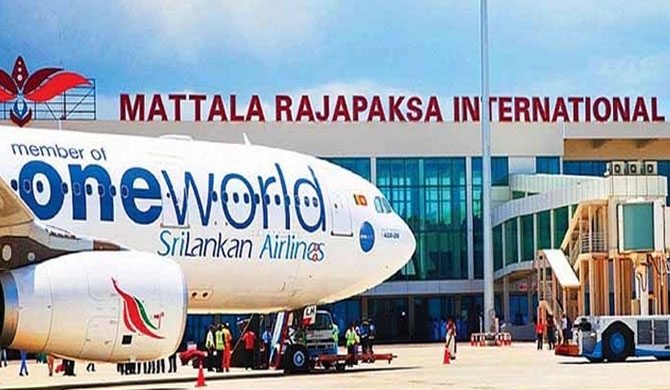
The three airports are Colombo (Bandaranaike International Airport), Rathmalana, and Mattala, he said.

Media reports last month suggested that Russia has expressed its keenness to get into a joint venture with India involving private entities to run the Mattala Rajapaksa International Airport (MRIA) in southern Sri Lanka.

Analysts have said the move to manage Chinese built Mattala Airport, which is considered as the “World’s Emptiest Airport” would be to check in China in Sri Lanka’s deep Southern city of Hambantota where Beijing owns a massive port and is awarded to build a $4.5 billion oil refinery.

The latest move also comes when the island nation’s expansion plan at the main airport has been delayed after the country declared bankruptcy in April 2022.

As a move, tourists face some difficulties at immigration, government officials have said.

“That’s a mess, honestly. That’s one of the biggest worries,” Fernando said.

“Immigration cannot handle the Airport load in Sri Lanka. That’s why I told the president to let the Charter flight operations to be landed in Mattala and Indian (Charter) flights to be landed in Ratmalana airport.”

“Most of them (Indians) travel to Wellawatta and Colombo. So, it is easier for them. The only issue is there is a ban that the flights can’t go above the parliament. But still you can divert two knots and come through the sea. Again, there is an issue with landing bigger aircraft.”

US says Online Safety Bill sends negative signal

The United States says the Online Safety Bill, which was recently passed by Sri Lanka’s Parliament, sends a negative signal.

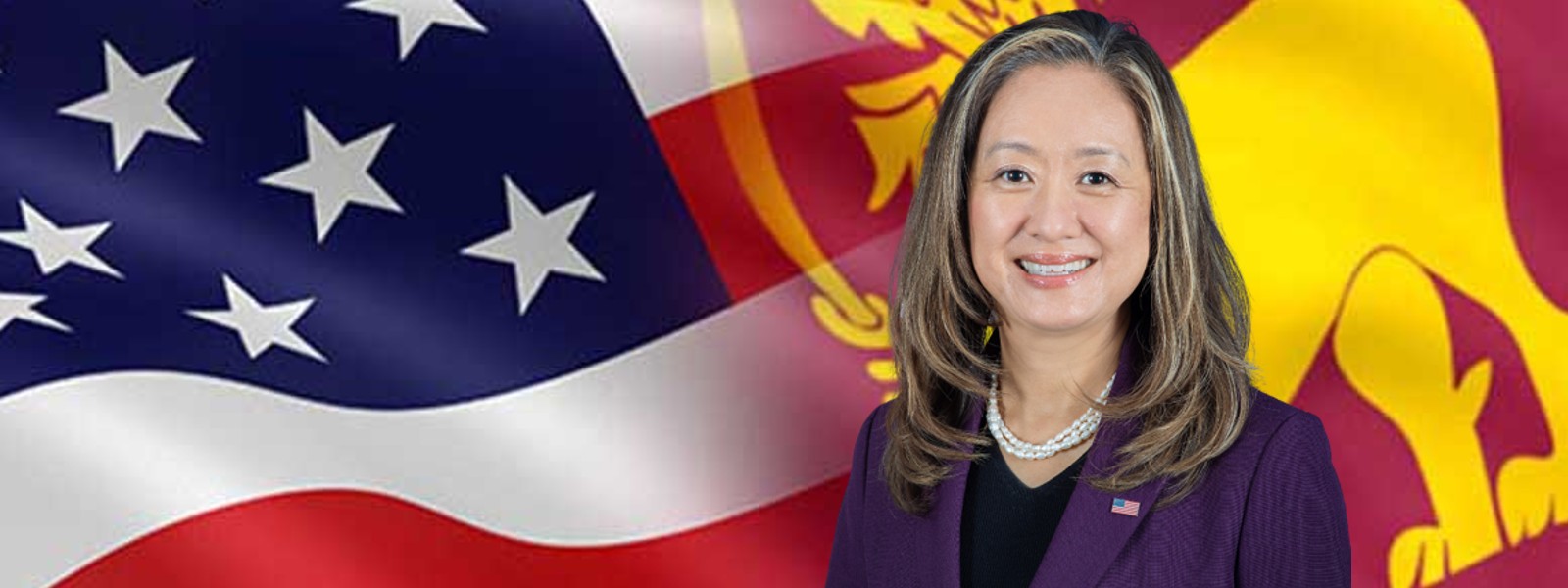
Ambassador Julie J Chung’s Remarks at Amcham CXO Forum “75 years and Beyond: U.S.– Sri Lankan Business Relations in 2024”

January 31, 2024

Thanks to the Amcham President Shirendra Lawrence, members of the Board, and everyone here! It’s good to be back among friends.

Last year, we marked 75 years of the Sri Lankan/American relationship by focusing on People, Progress, and Partnership. As that celebration of 75 years concludes, it’s time to acknowledge where we are, then turn the page and look to the future. Here we are, at the dawn of a new year, just days before Sri Lanka’s Independence Day commemoration, to review the outlook for this year. I’ve already ticked off one of my new year’s resolutions: hiking up to the summit of Sri Pada/Adams Peak a few weeks ago to see the sunrise. What summits can Sri Lanka reach this year?

Just a few months ago, we were proud to announce the International Development Finance Corporation’s investment of $553 million in the Western Container Terminal at the Port of Colombo. Why was this so incredibly important? Beyond the large dollar amount, which is DFC’s second largest exposure in the entire Indo Pacific region; beyond the critical injection of private sector financing this country needs; beyond the confidence building signal it sends to potential investors and financiers that we believe in Sri Lanka’s future, it demonstrates the United States’s continuing commitment to the prosperity of Sri Lanka.

But building that future won’t be easy. The commitments required by the IMF as part of the Extended Fund Facility program call for government reform measures in both tax compliance and combatting corruption. These are hard steps, and not always popular. Sri Lanka has taken difficult measures to put the country on a long-term sustainable footing and comply with the IMF commitments. But the people of Sri Lanka deserve and continue to demand openness, transparency, and accountability from their leaders as the process of reforms moves forward. The new higher VAT rates have been a hit on the average Sri Lankan and your businesses. We understand that while there may be short term necessary pains, the public deserves to know that such measures are being taken looking at the wholeness of the problem and endemic issues that must be addressed in a structural, sustainable way, fair and transparent to all. That includes not just raising taxes but eliminating tax loopholes, addressing government inefficiencies, particularly in state owned enterprises. It means digitalizing customs to raise revenue and reduce corruption. Creating predictable customs duties and streamlined processes would encourage importers, who want to import more to Sri Lanka but are worried about the uncertainty in the import process. Unpredictable customs fees discourage importers and limit the amount of customs revenue the Sri Lankan government can collect. This shifts the burden of tax revenue further onto the shoulders of the people, who can’t bear much more. Earlier this week, I met with the National Chamber of Exporters who relayed some of their challenges – red tape, regulatory challenges, and unpredictability that impact their businesses. Exports and private sector growth will be the engine of recovery, but they need the space and support to thrive. As the largest export market for Sri Lanka, the United States can help be part of the solution.

It’s important that the government of Sri Lanka carry out reforms. But it’s also important to explain those reforms to the people in a clear manner. It makes for slower, but better legislation and reforms. One example is the Online Safety Bill. The Centre for Policy Alternatives reported from a poll earlier this month that more than 70 percent of Sri Lankans were unaware of the bill before its passage. When major global tech companies characterize the bill as “unworkable” and stifling innovation and democracy, instead of actually addressing online crimes, frankly this sends a negative signal in Sri Lanka’s path towards reform and recovery. Previous bills, such as the Personal Data Protection Act, took much longer to craft, but did a better job of taking stakeholder feedback into account. To work on legislation and reforms that will be durable, enforceable, and wise, the Sri Lankan government will need to do better in the future. This will be key to improving the business climate.

But businesses shouldn’t just sit back and wait for the Sri Lankan government to act. The private sector has a crucial role to play. Business leaders, like all of you in this room, have a role to play. You’re not only purveyors of goods and services; you’re also community thought leaders. One powerful example of this comes from the American south, during our country’s struggle for civil rights in 1964. Dr. Martin Luther King, Jr. (whose birthday we just commemorated on January 15) had just been awarded the Nobel Peace Prize for his non-violent struggle for racial equality. When Atlanta’s business leaders refused to attend a banquet in his honor, the Coca-Cola company’s president at the time, J. Paul Astin, weighed in. He had spent 14 years in South Africa and had seen firsthand what apartheid had done to that country’s economy. He publicly said, “Coca-Cola cannot stay in a city that’s going to have this kind of reaction and not honor a Nobel Peace Prize winner.” How courageous is that during those times? The city’s business leaders relented, and they honored Dr. King. Atlanta continued to grow into a city that’s now an economic powerhouse. Thamari and Lakshan from that same Coca-Cola company are in the room with us today and Coca-Cola is a valued member of our own AmCham community. Coca-Cola in Sri Lanka today leads the way in eliminating waste, better stewarding water, taking care of local communities, and taking action to combat climate change. I know all of you share in these priorities. I also encourage you to raise your collective voices to push the Sri Lankan government to fight corruption and create a stable business environment.

Two years ago, I looked across this audience and only saw one woman on AmCham’s board. I challenged you to increase that number, and you’ve done it! I’m heartened to see four women now serving on this board, including the newest member, Neela Marrikar. This is a positive step. This could be a symbol for all economic growth in Sri Lanka. Economic growth should always be inclusive growth. There’s little point in growing an economy if it doesn’t lead to better lives for all participants, including women.

One example to follow is Tania Polonnowita Wettimuny, group managing director at IAS Holdings. Since founding the company in 2016, she has overseen dramatic growth and is now employing more than 300 people across four companies. She has also served as the first female chairperson of the Sri Lanka Logistics & Freight Forwarders Association. In the same way that this group needs 20 more Tanias, the country of Sri Lanka needs thousands more like her. And the good news is that you have them; they are waiting in the wings! They need examples like Tania and encouragement from the rest of us to take up the leadership roles of the future.

We’re hopeful as we look ahead to that future. We see a resurgence of U.S. investment interest in Sri Lanka. We also see some companies in Sri Lanka like GRI Tires, Melwa, Fortude, and M.A.S. who are making investments in the United States. We all know that trade and investment are a two-way street. We believe that these investments in the United States, if wisely made, will lead to economic growth both in Sri Lanka and in the United States.

For anyone who wants to look at how investing in the United States can help drive growth that benefits Sri Lanka, we invite you to attend the SelectUSA Investment Summit in June at Baltimore’s National Harbor. Today is the last day to sign up at the Early Bird discounted price. If you want more information, you can see Andrew Shinn, one of our economic officers, who is here today. He can help you get signed up.

Even as we see a resurgence of interest in two-way investment, we also see challenges ahead that will require leadership. Both of our countries will have elections this year. We need to do all we can to stabilize the business environment. As leaders, we need to think about both the medium-term and the long-term. In the medium term, we need to create an environment that’s conducive to trade, investment, and business expansion. One with transparent governance, where corruption is no longer tolerated. In the long term, we need to raise up a generation of leaders to take our place. There are several ways we should be doing this. Prabhash Subasinghe provides one example: he brought his daughter Saanya into GRI’s marketing leadership. Saanya was educated in the United States, at my alma mater Columbia University, and returned to Sri Lanka to work with GRI. I had the chance to talk with her about six months ago at the U.S. Embassy, where we talked about empowering women leaders. And Harry Jayawardena has similarly recruited his daughter Stasshani to work with him at Aitken Spence. Stasshani, another impressive up-and-coming leader whom I’ve also met with, is another beneficiary of U.S. training and education. Other leaders are looking to middle ranks to find successors to mentor. Every one of our organizations needs to think more about tomorrow’s leaders. To do that, we need to use our proactive priority-setting power to drive our organizations to identify and train future leaders – both women and men- at all levels. They will, after all, inherit the world we have worked so hard to build.

I’ll end with a thought about Apple. Apple just became the world’s most valuable brand, beating out Microsoft, Google, and Amazon. Apple increased its brand value by 74% in the past year. The top four global brands are American. Nearly 50 years after it was created, after almost going bankrupt, after facing tumultuous management changes, how did Apple become the world’s most valuable brand? It took innovation, openness to making mistakes, and creativity — all things that Sri Lankans can be and Sri Lankan companies can do. We should see Sri Lanka’s own Apple take seed here and grow to be a global leader. The United States government is cheering for you, and we stand ready to partner to create an environment that enables you and the next generation of companies to succeed. Let’s all hike up our own summits this year, whether in our personal lives, in your companies, or for Sri Lanka as a country. Thank you.


Posted in Uncategorized

Republican lawmaker nominates Trump for Nobel Peace Prize for ‘historic’ Middle East policy

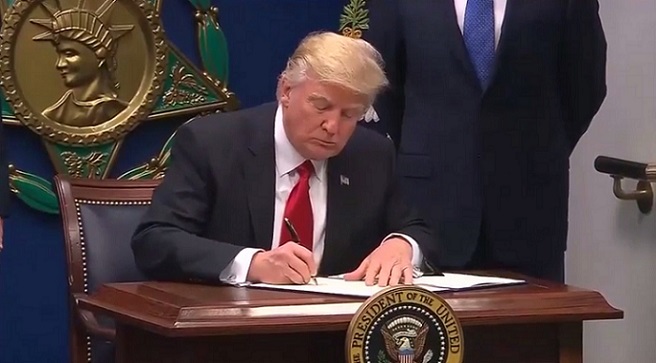
A Republican lawmaker has nominated Donald Trump for a Nobel Peace Prize, citing his ‘historic’ policy in the Middle East.

New York representative Claudia Tenney said in a statement that she decided to nominate the former president for his role in the Abraham Accords treaty, which formally normalised relations between the United Arab Emirates, Bahrain and Israel.

‘Donald Trump was instrumental in facilitating the first new peace agreements in the Middle East in almost 30 years,’ she claimed in a statement posted on her website.

‘For decades, bureaucrats, foreign policy ‘professionals’, and international organisations insisted that additional Middle East peace agreements were impossible without a resolution to the Israeli-Palestinian conflict. President Trump proved that to be false,’ she added.

‘The valiant efforts by President Trump in creating the Abraham Accords were unprecedented and continue to go unrecognised by the Nobel Peace Prize Committee, underscoring the need for his nomination today. Now more than ever, when Joe Biden’s weak leadership on the international stage is threatening our country’s safety and security, we must recognise Trump for his strong leadership and his efforts to achieve world peace. I am honoured to nominate former president Donald Trump today and am eager for him to receive the recognition he deserves,’ the statement continued.

Mr Trump has previously complained that he has not received enough recognition for his work on foreign policy.

But while the Abraham Accords have been cited as a way to introduce and strengthen Israeli-Arab ties, the historic agreements have also been criticised for so far failing to produce meaningful solutions for the Israeli-Palestinian conflict.

‘The Abraham Accords without the Palestinians were a disaster, just like his deal with the Taliban without the Afghan government. On top of that, he bombed the Middle East more than Obama,’ one person posted on X, following news of Mr Trump’s Nobel Prize nomination.

‘Someone explain to me how she nominates him for a Nobel for a peace accord in the middle east WHILE the middle east is at war in Gaza!’ another person wrote.

Despite such criticism of Mr Trump’s foreign policy, the 77-year-old was nominated for a Nobel Peace Prize several times during his presidency. However, he failed to win the prize.

‘I would get a Nobel Prize for a lot of things, if they give it out fairly, which they don’t,’ the former president complained at a press conference in New York in 2019.

Mr Trump was nominated for the prize in 2020 by far-right Norwegian politician Christian Tybring-Gjedde, citing his efforts to bring reconciliation to North and South Korea.

But despite a period of improved relations between North and South Korea, the negotiations ultimately failed in making any clear progress towards denuclearizing the North.

Swedish MP Magnus Jacobsson also nominated Mr Trump in 2020 for his role in brokering a deal to normalise relations between Serbia and Kosovo.

The following year, Swedish nationalist MP Laura Huhtasaari and a group of Australian lawmakers then nominated him for his role in brokering the Abraham Accords.

Mr Trump lost out that time to Filipino and Russian journalists Maria Ressa and Dmitry Muratov, who received the prize ‘for their efforts to safeguard freedom of expression, which is a precondition for democracy and lasting peace’.

The former president has routinely conflated his Nobel Peace Prize nominations – which the organisation does not record, release or consider to be endorsements – as an honorific.

Speaking at an Iowa rally in 2020, he said: ‘I get home, I turn home the television and they talked about your floods in Iowa. How is Iowa doing? The crops. How is this happening? How are they doing in Florida? Three or four stories, one after another.

‘Where is my Nobel Peace Prize? They don’t talk about it. I said, ‘You know, darling. This news is a little tough to crack’.’

Meanwhile, former White House press secretary Kayleigh McEnany previously described the nomination as a ‘well-deserved honour’ for Mr Trump.

The organisation stresses that receiving a nomination, which any one of thousands of people can make, is not an ‘extended honour’.

While Mr Trump has never won the prize, his predecessor, former president Barack Obama, was awarded the Nobel Peace Prize in 2009 for his ‘extraordinary efforts to strengthen international diplomacy and cooperation between peoples’.

Mr Obama donated the $1.4m award to charity.

His win is something that has irked Mr Trump, who previously suggested his predecessor had ‘no idea’ why he was nominated for the prize just months into his presidency.

‘When Obama got it he didn’t even – he just said, ‘What did I do?’ He had no idea what he did,’ Mr Trump said at a rally in 2020.

‘And they made it a big story,’ he added. ‘I did a great job.’

In 2013, Mr Trump tweeted calling for Mr Obama’s award to be rescinded.

The former director of the Norwegian Nobel Institute, Geir Lundestad later said he regretted Mr Obama’s selection. ‘Even many of Obama’s supporters believed that the prize was a mistake,’ he told the AP news agency. ‘In that sense the committee didn’t achieve what it had hoped for.’

The Nobel Peace Prize will be announced in October.

Source – The Independent

Online Safety Bill to come into effect from today

Speaker of Parliament Mahinda Yapa Abeywardena has endorsed the Online Safety Bill, and it will be brought into effect as the Online Safety Act No.9 of 2024.

The legislation which seeks to regulate online content was passed in Parliament, with amendments, on 24 January, amidst objections from opposition politicians and activists who allege the new law will muzzle free speech.

The controversial Bill garnered not only the attention of local activists and organisations, but also that of diplomats and large international organisations, claiming that the Bill had numerous problematic aspects.

The Sri Lankan government says the Online Safety Bill, published in the government gazette on 18 September, aims to ban online communication of certain statements in the country, prevent the use of online accounts – both authentic and inauthentic – for the use of prohibited purposes, to suppress the financing and other support of communication of false statements and other related matters.

Additionally, the Speaker endorsed the certificate on National Hydrographic Bill passed on January 9th with amendments and the Contempt of a Court, Tribunal or Institution Bill passed on January 10 with amendments.

These two Bills will come into effect as the National Hydrographic Act. No.7 of 2024 and the Contempt of Court, Tribunal or Institution Act. No.8 of 2024.

Posted in Uncategorized

72 health trade unions on strike

72 health trade unions have launched a strike from 6.30 on Thursday (01) morning.

Co-convener of the Health Trade Union Alliance Ravi Kumudesh said the health unions joined the strike demanding that the Rs.35,000 allowance granted to doctors be given to them as well.

The government did not respond to their demands despite a strike being launched on a previous occasion as well.

The All Ceylon Nurses’ Union has reached a decision to refrain from supporting today’s strike action.

This was confirmed by its Chairman Ravindra Kahandawarachchi on Wednesday (31) afternoon, while speaking to media after visiting the Malwathu Maha Viharaya.

Posted in Uncategorized

Protest against president’s visit to Kelaniya University

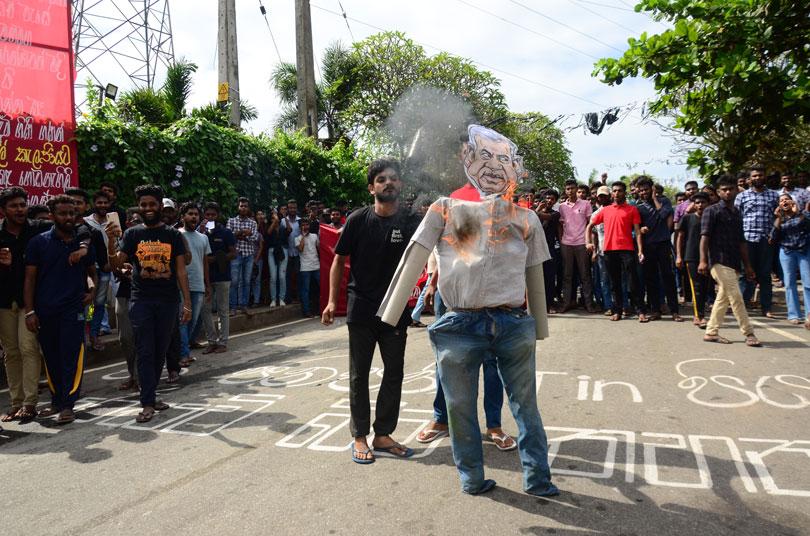
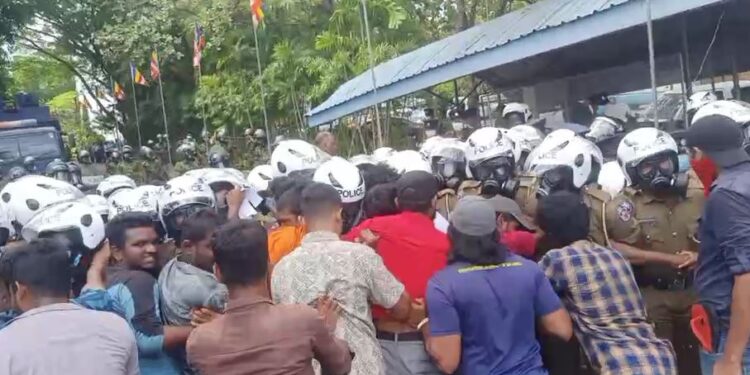
President Ranil Wickremesinghe visited Kelaniya University to declare open the new building on the premises of the Department of Pali and Buddhist Studies at the university this morning. The students of Kelaniya University staged a protest blocking the Colombo-Kandy Road against the president’s visit to the university

Posted in Uncategorized

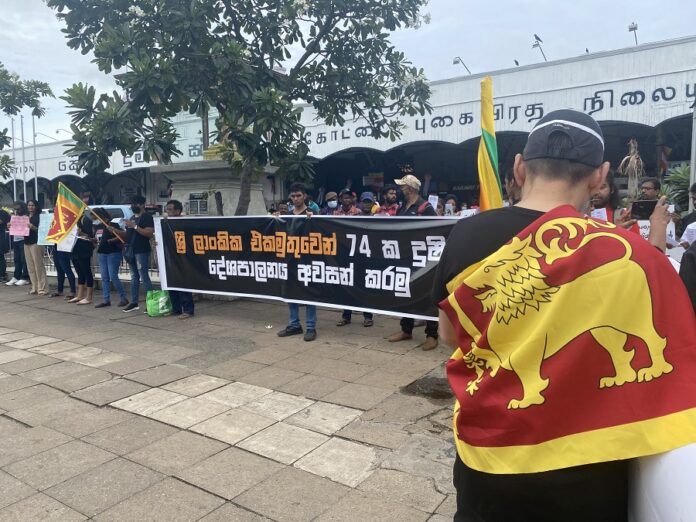
Sri Lanka drops further in corruption perceptions index

Sri Lanka dropped further in the latest corruption perceptions index (CPI) for the year 2023.

Sri Lanka dropped 2 places to 115 with a score of 34 in the 2023 Corruption Perceptions Index (CPI) released by Transparency International.

The Corruption Perceptions Index (CPI) is the most widely used global corruption ranking in the world. It measures how corrupt each country’s public sector is perceived to be, according to experts and businesspeople.

The index notes that in South Asia, both Pakistan(29) and Sri Lanka (34) grapple with their respective debt burdens and ensuing political instability. However, the two countries have strong judicial oversight, which is helping to keep the government in check.

The CPI global average remains unchanged at 43 for the twelfth year in a row, with more than two-thirds of countries scoring below 50. This indicates serious corruption problems.

Denmark (90) tops the index for the sixth consecutive year, with Finland and New Zealand following closely with scores of 87 and 85, respectively. Due to well-functioning justice systems, these countries are also among the top scorers in the Rule of Law Index.

Somalia (11), Venezuela (13), Syria (13), South Sudan (13) and Yemen (16) take the bottom spots in the index. They are all affected by protracted crises, mostly armed conflicts.

Posted in Uncategorized

Pakistani naval ship SAIF docks at Colombo Port

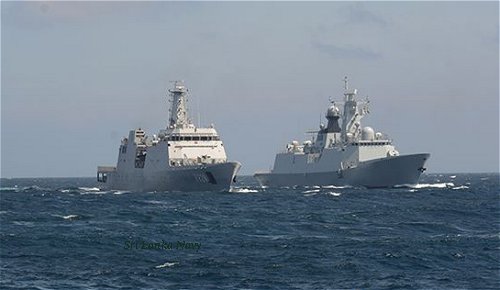
The Pakistan Naval Ship (PNS) SAIF arrived at the port of Colombo on a formal visit this morning (Jan.30). The visiting ship was welcomed by the Sri Lanka Navy in compliance with naval traditions.

PNS SAIF is a 123m-long Sword Class Frigate commanded by Captain Muhammad Ali. It is manned by a crew of 276.

The Commanding Officer of the ship is also expected to call on the Commander Western Naval Area.

During the ship’s stay in Colombo, its crew members will visit some of the tourist attractions of the country, Sri Lanka Navy said.

Concluding the visit, PNS SAIF will leave the island on February 01 and conduct a Passage Exercise (PASSEX) with a ship of the Sri Lanka Navy in Colombo seas, on her departure.

China’s threat to India would come from Sri Lanka, warns Vaiko

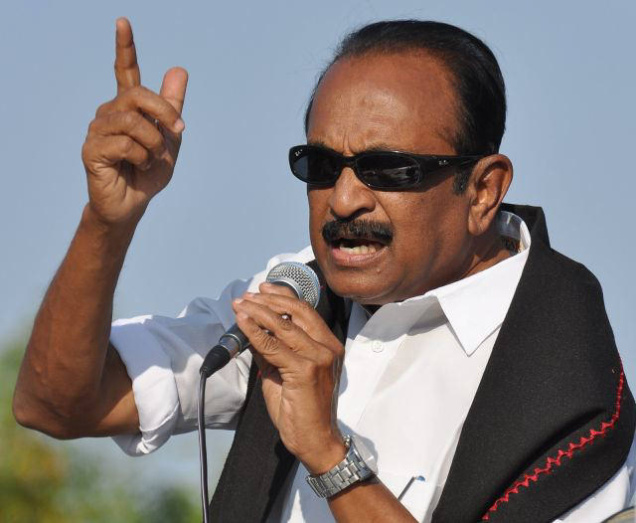
India’s MDMK general secretary and Rajya Sabha member Vaiko on Tuesday urged the Indian government to handle its relationship with Sri Lanka, considering the threat posed by China’s entry into the island nation.

Addressing an all-party meeting chaired by Defence Minister Rajnath Singh in New Delhi, Mr. Vaiko said China had constructed a port in Hambantota and the Indian government should realise that the threat to the country from China would emerge first from the south.

A statement from the party said that he also drew Mr. Rajnath Singh’s attention to the alleged attack on Tamil fishermen by the Sri Lankan Navy, claiming that “over 800 fishermen had been killed so far” and there was no protection to their lives and belongings. He also used the occasion to launch an attack on Tamil Nadu Governor R.N. Ravi, accusing him of “blabbering on one issue or another.”

When Mr. Vaiko said Mr. Ravi had remarked that the country attained Independence because of Subhas Chandra Bose, Parliamentary Affairs Minister Prahalad Joshi said that the Governor had clarified his comments. “His comments have appeared in all newspapers and other media. Probably, the Minister has not read them,” Mr Vaiko said.

He further said that the Indian democracy was facing a major threat and would die if “Hindutva forces” succeeded in implementing one country, one election, one language and one religion.

Source: The Hindu

Presidential candidates: IUSF opposes meetings in unis.

The Inter University Students’ Federation (IUSF) said that it is against any kind of political meeting held within university premises with the participation of Presidential candidates of any party.

Speaking to The Daily Morning yesterday (30), IUSF Convenor Madushan Chandrajith said that the IUSF would not endorse any political meeting organised by Presidential candidates of any party and would not let the university premises be a platform where rallies of political parties are held ahead of the Presidential Election.

State Minister of Higher Education Dr. Suren Raghavan, alleged that some universities are planning to invite politicians and Presidential candidates to universities, opining that such moves should be stopped.

“I am informed that some State universities are making plans to invite politicians and Presidential candidates to universities. This should be stopped completely. Universities are solely for academic activities. Politics must be kept away from university premises,” Raghavan said.

Chandrajith stated that the recent protest that took place on Monday (29) at the University of Kelaniya was launched against the attendance of President Ranil Wickremesinghe at the University. He claimed that the Government is trying to use universities as a part of Wickremesinghe’s Presidential campaign, adding that the students’ protest was therefore a good example for those who are planning to do the same.

Moreover, Chandrajith noted that no politician has the moral right to come to universities at a time when the continuous grievances of the students are being neglected by the political elite. He said that the IUSF would not let any Presidential candidate hold meetings inside the universities, despite his or her political leanings.

He said that students as individuals have the right to hold any political view inside the universities and that student activism is always promoted by the IUSF. “But, politicians are not allowed to hold meetings. They don’t have a right to do so. They have not addressed any of the issues that we raised. Yesterday (29), several students were attacked during the protest. First, they have to be patient enough to tolerate our opinions,” he added.

The University Grants Commission Chairman Prof. Sampath Amaratunge and the Spokesperson of the Federation of University Teachers’ Associations, Senior Lecturer Charudaththa Illangasinghe were unavailable for comment.

Posted in Uncategorized