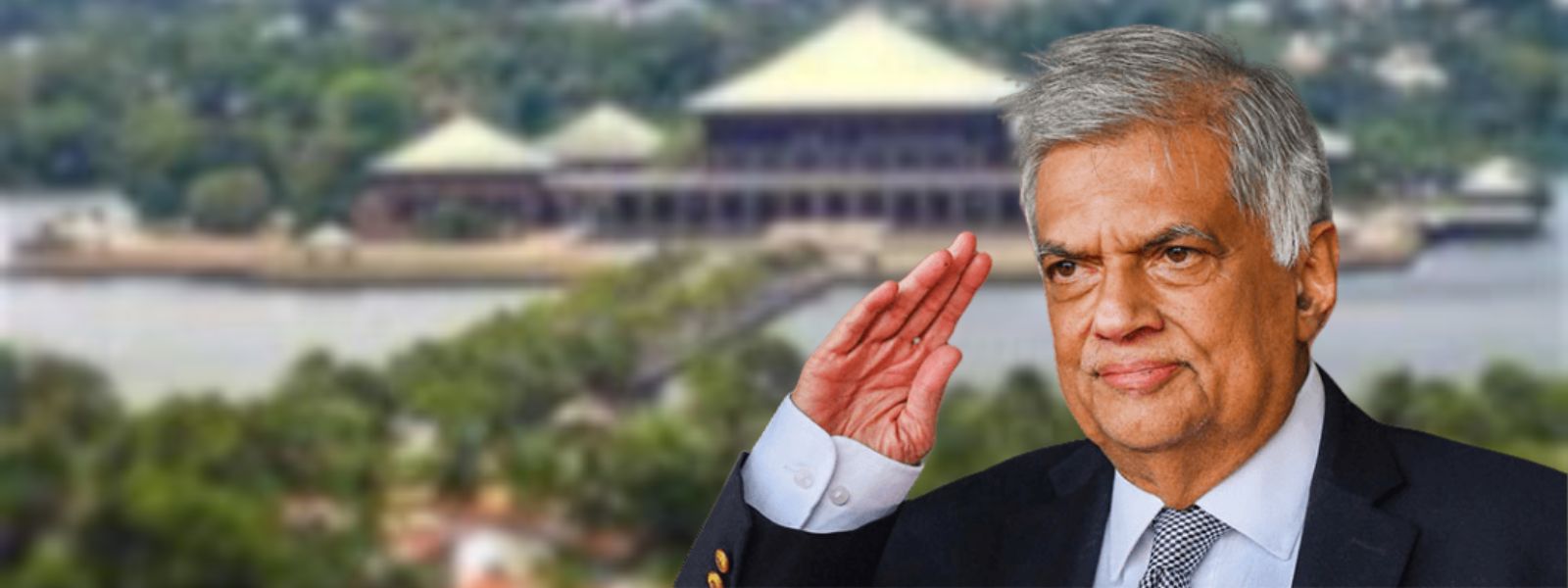
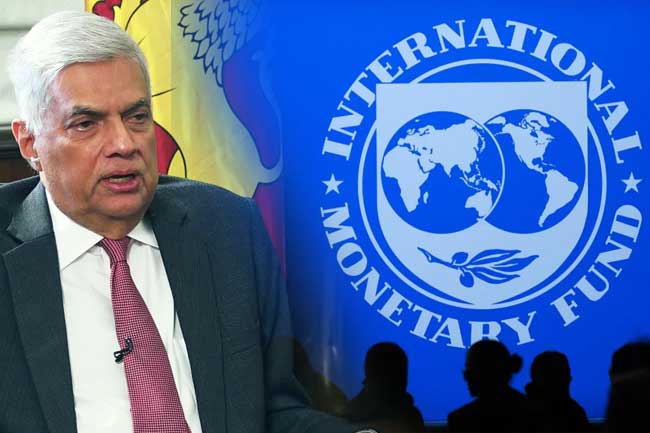
The Ranil Wickremesinghe Government, while preparing for the announcement by the International Monetary Fund (IMF) on Tuesday (12) on the disbursement of the second tranche under the Extended Fund Facility (EFF) and concluding the 2024 Budget proceedings on Wednesday (13) with the third reading vote in Parliament, is now moving in line with the agenda for the national-level elections next year.
It is no secret that much of Sri Lanka’s economic recovery plan currently hinges on the IMF and its sentiments on Sri Lanka’s economic reforms.
It is in such a backdrop that Foreign Affairs Minister Ali Sabry noted last week that the disbursement of the second tranche on Tuesday would indicate international acknowledgment of Sri Lanka’s positive economic trajectory. According to Sabry, the strategic reduction in debt payments and interest rates would position Sri Lanka to gain a substantial economic advantage of $ 17 billion.
The Official Creditor Committee (OCC) on Sri Lanka and China have already agreed in principle to the initial framework on restructuring Sri Lanka’s debt.
Meanwhile, in another confidence boost for the Sri Lankan Government, an official from the Asian Development Bank (ADB) was quoted as telling Reuters on Tuesday (5) that Sri Lanka would get about $ 600 million, on a staggered basis, from the ADB after the IMF released the second tranche of a $ 2.9 billion bailout for the country.
Alongside the IMF programme, the ADB is likely to provide total budget support of $ 2 billion over the next four years, ADB Sri Lanka Resident Mission Country Director Takafumi Kadono had said.
“I would say $ 500 million to $ 600 million budget support is what is planned (for 2024) but, again, it is subject to attainment, satisfying the policy actions, so it’s not free money,” Kadono had said in an interview with Reuters.
Meanwhile, the ADB last week approved a $ 200 million concessional loan to Sri Lanka, stating that the loan had been approved to help stabilise Sri Lanka’s finance sector.
Given the ongoing economic developments, First Capital has stated that it expected bond yields to drop between 10-12% by June 2024 to pre-crisis levels with the build-up of investor confidence due to the successful debt restructuring completion, State-Owned Enterprise (SOE) reform, and receiving the second tranche of the IMF programme.
Despite the developments in the country’s overall development, the economic strain on the masses is expected to continue till the end of the first quarter of 2024. One of the key burdens on the people will be the increase in the Value Added Tax (VAT) percentage on goods and services from January 2024.
It is this reason that resulted in Committee on Public Finance (COPF) Chairman Dr. Harsha de Silva informing Parliament on Wednesday (6) that the committee had approved the increase of VAT to 18% subject to amendments. De Silva had stated that the COPF had recommended waiving the VAT for infant foods, medical equipment, and fertilisers.
State Finance Minister Ranjith Siyambalapitiya in response had told Parliament on Thursday (7) that the Government was prepared to reassess the inclusion of 97 of the 138 items in the list of goods that would see an increase in VAT.
Polls calendar
President Wickremesinghe, meanwhile, has clearly laid out the election map for next year.
During the Budget speech, the President noted that next year would see the Presidential and General Elections, followed by Provincial Council and Local Government Elections the following year.
The statement caused much confusion in political circles, with everyone trying to figure out whether it would be a Presidential or a General Election that the country would face first. However, Wickremesinghe last week stated that the Presidential Election would be held first, followed by the General Election.
It is learnt that the President had discussed the holding of elections with several of his confidantes and while some had opined that a General Election held first under Wickremesinghe’s presidency could give the edge to the United National Party (UNP), the current economic and political state in the country could also result in no party being able to obtain a majority at such a poll. Besides, it was also noted that the Janatha Vimukthi Peramuna (JVP)-led National People’s Power (NPP) could benefit from the current situation in the country at a General Election.
It was also discussed that in the event the outcome of a General Election brought about a hung parliament or a parliament with a considerable number of NPP members, it would definitely reduce Wickremesinghe’s days as President. Therefore, it was finally decided that holding a Presidential Election was the way to go.
Back to CBK
Former President Chandrika Bandaranaike Kumaratunga (CBK) had always figured prominently during decisive periods in the country’s political landscape. It was CBK who played a key role in defeating the then Mahinda Rajapaksa (MR) Government in 2015 by presenting then General Secretary of the Sri Lanka Freedom Party (SLFP) Maithripala Sirisena as the common presidential candidate by mustering the support of the then main Opposition UNP and other Opposition political parties.
CBK once again played an active political role during the 52-day constitutional crisis during former President Sirisena’s tenure in 2018 where MR was ousted from the premiership by reinstating then Prime Minister Wickremesinghe in the post.
However, it is now learnt that CBK is back in action once again, playing a role in the formation of a broad political alliance. It is also learnt that senior SLFPers as well as a group of Sri Lanka Podujana Peramuna (SLPP) dissidents have been in touch with her, discussing the latest political developments and preparing to face them.
Common candidate
One of the key topics discussed in the political circles, including the parties looking at forming political alliances, has been on the candidate to field at the next Presidential Election.
With rumours that President Wickremesinghe might not contest at the Presidential Election, the focus of many political parties is on identifying candidates or a common candidate to field at the polls. Several Opposition politicians have already hinted at the formation of a broad political alliance aimed at elections.
Proroguing House
However, amidst the ongoing political drama, President Wickremesinghe is considering proroguing Parliament after the conclusion of the 2024 Budget proceedings until January 2024, when the House is scheduled to meet next.
In the event Parliament is prorogued, the President will yet again receive the opportunity to ceremoniously open the new session of Parliament. In terms of the provisions stipulated in Paragraph (2) of Article 33 of the Constitution, the President is empowered to make a statement of Government policy.
The prorogation will also result in the lapse of pending business in Parliament as well as the parliamentary committees like the Committee on Public Enterprises (COPE), COPF, and Committee on Public Accounts (COPA).
COPE undecided on Chair
Meanwhile, the ongoing controversy surrounding COPE and its Chair continues with the members of the committee yet to reach a consensus regarding the removal of its Chairman, SLPP MP Prof. Ranjith Bandara.
The Samagi Jana Balawegaya (SJB) has claimed that other members of the Opposition in the COPE have not been able to reach a consensus on the action to be taken with regard to the committee Chair.
However, a senior Government source noted that any issue pertaining to parliamentary committees, especially COPE, would be resolved in the event Parliament was prorogued since all committees would have to be freshly constituted once the House was reconvened.
SJB MP Nalin Bandara had said the COPE members would have to make a decision on the Chairman soon and that Speaker of Parliament Mahinda Yapa Abeywardena would have to convene a COPE meeting since it was not possible to postpone it continuously.
When asked about the speculation about Parliament being prorogued to convene the new committee meetings, Bandara had said that the SJB had not discussed the matter thus far but added that he believed the ruling SLPP would not allow President Wickremesinghe to do so.
Sacking more ministers
Meanwhile, President Wickremesinghe, it is learnt, is looking at sacking several State ministers prior to the impending Cabinet reshuffle next month.
It is learnt that the President had been keeping a close watch on parliamentary proceedings during the 2024 Budget debate and has looked into the attendance of Cabinet and State ministers during the Budget debates, especially during the second reading vote.
Wickremesinghe had identified several State ministers who have kept silent in Parliament while also staying away from the House during most part of the Budget debate and the voting times. Therefore, he will once again be monitoring the third reading vote on Wednesday (13) to see which Government members, especially Cabinet and State ministers, will be in the House for the third and final vote on the Budget.
Wickremesinghe, it seems, has already decided on whom he will remove from State ministerial portfolios. Therefore, new State ministerial appointments are likely to be made along with the Cabinet reshuffle.
The President is also looking at making new appointments to the Cabinet. However, several of his advisors have cautioned Wickremesinghe that expanding the number of members in the Cabinet will not bode well with the general public, especially when they will face a fresh round of price hikes in January due to the VAT increase. Wickremesinghe has however pointed out that there are already two vacancies in the Cabinet that can be filled.
Nevertheless, it will not be an easy task for Wickremesinghe to decide on the new entrants to the Cabinet with the ruling SLPP’s name list of 10 MPs and several MPs from the Opposition – SJB and SLFP – in the waiting list.
It is learnt that the President is looking at appointing around two members to the Cabinet while the rest are to be offered State ministerial portfolios.
SJB alliance in Jan.
Come 2024, the focus of all main political parties will be on preparing for Presidential and General Elections.
The main Opposition SJB is also in the process of forming a new political alliance that is to be launched early next year. According to Party General Secretary Ranjith Madduma Bandara, the proposed new alliance will be ceremonially launched along with 20 other like-minded parties in January to target the upcoming elections.
Madduma Bandara has further noted that several people’s organisations are also among the groups to support the new alliance. Accordingly, agreements are to be signed with all these parties and organisations.
Sajith’s pledge
Meanwhile, Opposition and SJB Leader Sajith Premadasa made a pledge in Parliament last week, where he vowed to act against the individuals who had been named by the Supreme Court as being responsible for the economic crisis faced by the country.
Premadasa had noted that despite claims by certain political party leaders on initiating legal action against those who had engaged in fraud and corruption once they came to power, it was the SJB that had already taken those responsible for bankrupting the country before court by taking necessary legal action while being in the Opposition.
Premadasa had told a meeting in Minuwangoda that the SJB was in the best position to act against those responsible for the economic crisis since the party did not have any deals with them. The Opposition Leader had requested the public not be fooled by the theatrics of certain politicians who displayed files on alleged corruption.
Meanwhile, the Chairman of the Parliamentary Select Committee (PSC) investigating the country’s economic bankruptcy and the factors that led to it, SLPP MP Sagara Kariyawasam, has said that the PSC will not, in any way, relate the recent Supreme Court ruling with regard to economic bankruptcy to its proceedings.
Kariyawasam had told the media: “There is no need for us to relate that ruling to our proceedings. That was issued based on affidavits submitted by the petitioners. What we do as the PSC is totally different and we don’t have to consider the Supreme Court ruling in any way.”
On 14 November, the Supreme Court ruled that former President Gotabaya Rajapaksa, former Prime Minister MR, former Finance Minister Basil Rajapaksa, and several others were responsible for the economic crisis.
Premadasa had also called on the Foreign Minister to formulate a mechanism to recover the ill-gotten wealth hidden overseas by politicians and racketeers. He had stated that the Supreme Court had named and determined the Rajapaksas and others as the persons responsible for the country’s bankruptcy and had urged the Minister to work as per that court ruling, and bring back the swindled money and assets.
Sacked Suresh to RW
While the Opposition and SJB Leader vowed action against those responsible for the economic crisis and worked on forming a political alliance, SJB MP Vadivel Suresh, who was recently sacked by the SJB from positions held by him in the party, openly joined forces with President Wickremesinghe.
Suresh was appointed as a Senior Advisor to President Wickremesinghe and will be responsible for reporting on the full integration of Hill Country Tamils into Sri Lankan society. Suresh was appointed as a Presidential Advisor after he voted in favour of the 2024 Budget during the vote on the second reading.
SLPP slams Sajith
Meanwhile, the showdown between Premadasa and SLPP MP Mahindananda Aluthgamage in Parliament on Wednesday (6) during the debate on the Cultural Affairs Ministry, which was held by Premadasa during the previous Yahapalana Government, became one of the highlights of the week.
The argument between the two politicians had heated up when Aluthgamage had said an audit report had revealed that billions of rupees had been misused during Premadasa’s tenure as Minister of Housing and Cultural Affairs.
“A sum of Rs. 10 billion has been misused from the Central Cultural Fund while State funds have been used to pay salaries for the 10 security officers attached to the salon owned by the Opposition Leader’s wife. The Minister of Cultural Affairs should make a statement on this matter,” Aluthgamage had said.
He had further claimed that Premadasa had released Rs. 1.6 million to repair Sirikotha during his tenure as Minister.
Opposition Leader Premadasa, responding to Aluthgamage’s claim, had alleged that millions had been used from the Central Cultural Fund in 2011 for a cycle race and for the swearing-in ceremony of the then President (MR). “I will resign from my post if the allegations against me are proved,” Premadasa had said.
Aluthgamage had then made his way to the well of the House, calling on Premadasa to resign.
Meanwhile, Minister of Cultural Affairs Vidura Wickramanayaka had revealed that certain amounts had been spent from the Central Cultural Fund without proper approval of its Board of Management. The cross-talk had continued from time to time during the committee stage debate, with Aluthgamage making allegations and SJB MPs saying Premadasa had been cleared of all charges.
Sajith hits back
Premadasa, however, claimed that the internal audit report prepared by a Chief Internal Auditor of the State Engineering Corporation (SEC), one N.V.T. Dhammika, that was tabled in the House, was aimed at slinging mud at him and his wife. The Opposition Leader further claimed that he had evidence to prove that the audit report presented to the House was aimed at discrediting him.
According to Premadasa, the individual in question, N.V.T. Dhammika, had been appointed as an executive member of a trade union affiliated to the SLPP on 3 February 2020. He had further noted that the SLPP had in writing informed the SEC on 18 February 2020 to appoint the individual as acting internal auditor of the institution.
Therefore, Premadasa had observed that the alleged audit report had been prepared by persons affiliated to the SLPP with the intention of slinging mud.
New Ex-Co for SLPP
Meanwhile, in its preparation for the impending national elections next year, the ruling SLPP will hold its second party convention on Friday (15).
There has been much talk about the possible change in the SLPP leadership, with MR tipped to take a backseat while making way for SLPP National Organiser Basil Rajapaksa to play a larger leadership role in the party. However, it is learnt that there will be no change in the SLPP leadership at this week’s convention.
There will also be no changes made to the SLPP’s office bearers. However, changes are expected to be made to the membership of the SLPP’s Executive Committee. It is learnt that Basil has proposed the formation of a strong Executive Committee in order to prepare the party to face the impending polls.
SLPP candidate
Meanwhile, SLPP MP Namal Rajapaksa spoke last week about the party’s candidate at the next Presidential Election. He had noted that several people from various sectors had expressed interest in contesting the Presidential Election under the SLPP.
Namal had told the media that the SLPP was ready to face the Presidential Election if it was held next year. “There have been several requests. Businessmen, politicians, and even presidents have expressed interest in contesting under the SLPP,” he had said.
UNP’s 1%
SLPP MP S.B. Dissanayake meanwhile claimed that the SLPP no longer enjoyed a voter base of 6.9 million recorded at the 2019 Presidential Election. He has said that the party’s vote base had now halved.
Dissanayake noted that the SLPP had faced a great setback in the past few years and was now in the process of restructuring and rebuilding the party. “The other political parties in the country like the SJB, SLFP, and the NPP are also facing a decline in their voter base,” he said.
Dissanayake further claimed that President Wickremesinghe’s UNP and the SLFP consisted only of around 1% of the voter base in the country. “Even if the UNP joins forces with the SJB, SLFP, and NPP, it will still only have a 1% voter base,” he added.
SLPP dissidents’ alliance
Meanwhile, yet another political alliance is being finalised by the SLPP dissidents’ group headed by MPs Anura Priyadarshana Yapa and Nimal Lanza. Like the SJB alliance, the Yapa-Lanza alliance is also expected to take off in January next year.
It is learnt that talks are ongoing with its expected affiliates and that a symbol has been selected. It is also learnt that among groups that would be joining this alliance are 37 trade unions affiliated to the SLPP, with the latest to join being its graduates’ union that played a key role in former President Gotabaya Rajapaksa’s election campaign.
Yapa had also chaired the first meeting of electoral coordinators recently.
Roshan’s move
Meanwhile, former Sports Minister Roshan Ranasinghe has also made a political move by taking over a political party.
Ranasinghe has reportedly taken over the political party – Ruhunu Janatha Party – that was owned by businessman Ajantha de Soyza. It is also learnt that Ranasinghe had taken over this party a few months earlier with the plan of building a fresh political alliance under the theme of anti-corruption.
The talk in the political circles is that Ranasinghe will get around 12 MPs who also focus on anti-corruption to join the party.
It is in such a backdrop that Ranasinghe had told Parliament he had not been allocated time to speak in Parliament at the Committee Stage Debate of the Sports Ministry and requested the Speaker to mediate to allocate time for him to speak.
He had requested the Speaker to provide him time to speak at the Committee Stage Debate of the Sports Ministry, claiming that it was against parliamentary democracy to prevent him from speaking. “I wonder why I am not given time to speak in Parliament. It may be because I speak of corruption at Sri Lanka Cricket (SLC),” he had said.
Speaker Abeywardena had said he would look into the matter and provide him time to speak.
SLC targets Roshan
SLC meanwhile announced last week that it had formally filed a complaint with the Commission to Investigate Allegations of Bribery or Corruption (CIABOC) against Ranasinghe over the alleged misuse of funds provided by SLC.
Issuing a statement, SLC had said the funds had been provided to the National Sports Fund for the development of various other sports in Sri Lanka. The decision to file this complaint stems from the concern that Ranasinghe has not appropriately disclosed the utilisation of funds allocated by SLC for the intended purposes.
This move comes in the wake of a discernible disparity between the information disclosed to the media by Ranasinghe and the response received by the SLC under a Right to Information (RTI) application, outlining the specifics of the expenditures made, SLC had said.
Emphasising on the importance of maintaining the integrity of financial transactions and ensuring that funds are utilised for their designated purposes, the SLC had said that the formal complaint filed with the Bribery Commission underscored the SLC’s dedication to upholding the highest standards of governance and ethics within the realm of sports administration.
Harin loses cool
Amidst the continuing SLC saga, newly-appointed Sports Minister Harin Fernando had lost his cool during a live TV interview recently and had threatened to walk out after objecting to the manner in which the presenter had posed questions.
Fernando had reportedly accused the presenter of posing some of the questions like a thug. The Minister had told the host that he had agreed to the relevant interview to make clear his plans for cricket in Sri Lanka.
An exchange of words had taken place when the presenter had reportedly accused the Minister of making contradictory remarks with regard to the International Cricket Council (ICC). Fernando had objected to the statement made by the presenter of the private television station and engaged in a heated exchange.
The Minister had at one point threatened to leave, telling the presenter that he was not prepared to give the responses the presenter wanted.
Internal clashes
Meanwhile, the UNP is continuing to experience several internal clashes among senior members of the party.
Recent news reports quoting UNP General Secretary Palitha Range Bandara have stated that the party has unanimously decided at a recent meeting that Party Leader, President Wickremesinghe will be the UNP’s candidate at the next Presidential Election. However, it has now been revealed that the party has not taken such a decision although a meeting of party seniors had been held at the Party Headquarters, Sirikotha.
During this meeting, party seniors Vajira Abeywardena and Ravi Karunanayake had engaged in a heated exchange of words. The discussion at the meeting had been mainly focused on party reorganisation work. The clash between Abeywardena and Karunanayake had taken place during a discussion on the reorganisation work related to the Colombo District.
During the argument, Abeywardena had accused Karunanayake of not being loyal to the party leadership. This statement had angered Karunanayake and he had claimed that the party had been destroyed by the many deals being done by the likes of Abeywardena. Karunanayake had further claimed that some individuals in the party were more interested in their personal agendas and making deals than ensuring the party’s victory.
However, when the media had inquired from the party General Secretary the following day about the decisions reached at the party seniors’ meeting, Range Bandara had responded that it had been decided that Wickremesinghe would be the party’s presidential candidate.
EC vacancy
The appointment to fill the existing vacancy at the Election Commission (EC) has now become a talking point among members of the Opposition amidst talk on the conundrum faced by the Constitutional Council over the delay in appointing the 10th member to the council.
SLPP dissident MP Prof. G.L. Peiris last week questioned whether the Government was not appointing a suitable person for the current vacancy in the Election Commission as part of an effort to avoid holding the Presidential and Parliamentary Elections next year.
He had said that the Election Commission was the most important among the commissions and that its role had special importance as it had now been announced that the Presidential and Parliamentary Elections would be held next year.
“What is the situation now? There should be five members in the Election Commission, including its Chairman, but there are only four at present. There has been a vacancy for a long time. The Government does not fill it intentionally.”