Indian State elections go the Modi way, but Congress makes a dent in the South

The Bharatiya Janata Party (BJP), whose mascot is Indian Prime Minister Narendra Modi, has won in three of the five States which went to the polls on different days in November.

The results of all elections, except the one held in Mizoram, were announced on Sunday. The counting of votes in Mizoram will take place on Monday.

The States in which the BJP won are: Rajasthan, Madhya Pradesh and Chhattisgarh, all in North India and all Hindi-speaking. The BJP has always been strong in what is called the “Hindi belt” (or “cow belt” as it is largely agricultural and culturally conservative).

As per the past pattern, the BJP lost in the South Indian State of Telangana, where the language is Telugu. In Telangana. the Congress wrested the government from a regional party Bharat Rashtra Samiti (BRS).

In a State election held earlier in 2023, another South Indian State, Karnataka, had gone to the Congress. So, the entire South Indian region is a non-BJP area. Andhra Pradesh and Tamil Nadu, which are also in South India, are ruled by regional parties. And Kerala is under the Communists.

The North and South differ in ideological orientation. While the North is very receptive to Hindu nationalism or “Hindutva” the South is not. The South is not only more secular but is also equalitarian in its ethos. In the North, religious affiliation overwhelms other considerations such as social justice, caste inequality etc.

Of course, there are considerations other than Hindu nationalism in a voter’s mind when he or she makes a political choice. Among these are: the way the government delivers social welfare schemes and whether there is corruption and malfeasance in the implementation of schemes.

It is generally granted that in the BJP-ruled States in the North, delivery of welfare schemes is satisfactory. The BJP government in Karnataka fell because it was wanting in this regard. It lost the last elections to the Congress.

The latest round of elections signified the popularity of “Hindutva”, an ideology which is based on Hindu consolidation against the minorities (especially Muslims), in the Hindi belt. The Congress tried to divert the attention of the voters by speaking loudly against glaring caste and economic inequalities. It proposed that a census of castes be taken to know their relative social and economic status. But this appeal got no traction. Hindu unity got traction.

The Congress leaders’ attempt to portray themselves as good Hindus by publicly performing Hindu (Brahminical) rituals did not cut ice with the voters for whom the BJP was the only genuine Hindu party.

A factor related to Hindutva is a muscular foreign policy. Hindutva entails strong steps to counter perceived threats from Muslim Pakistan and the Islamic world. The Modi government’s aggressive stance on Pakistan and cross-border terrorism and its resistance to the hegemony of Western democracies are lauded by sections which are under the spell of Hindu nationalism. Israel is their role model.

For the Congress to make headway in the North, many experts suggest that it should stop pretending to be a Hindusitic party. It should give an alternative world-view to the voters, one that is secular, equalitarian and Gandhian in its approach. But there are others who argue that since the flavour of the season is aggressive Hindu nationalism at home and jingoism abroad, it will be futile to propagate a secular and Gandhian ideology which has passed its expiry date.

Rahul Gandhi kept saying that the Congress offers love in place of the hate touted by the BJP, but clearly, it fell on deaf ears.

The Congress may also have to change the issues that it has been taking up, issues such as the concentration of wealth and economic influence in the hands of a few oligarchs like the Adanis and the patronage they get from Modi. The Adani’s monopolies and his alleged shady dealings are clearly not an issue for the common man.

Coming to the consequences of the election results, the most striking consequence is the tremendous psychological advantage that the victories have given the BJP and Modi, personally. The BJP and Modi will now go with gusto into the country-wide parliamentary elections in May 2024.

Conversely, the results will dampen the spirit of the Congress and its allies who come under the rubric of “I.N.D.I.A”.

The leadership of Rahu Gandhi may be challenged within I.N.D.I.A. But will Rahul and the Gandhi family give in without a fight? After all, the Congress is still the single largest party in the alliance and the only all-India party among them.

The constituent parties of I.N.D.I.A will be meeting in New Delhi on December 6 to take stock of the situation and chalk out a plan for the future.
IMF Review of Sri Lanka’s Extended Fund Facility Pushed to December

The First International Monetary Fund Review of the Extended Arrangement Under the Extended Fund Facility for Sri Lanka will be on December 12.

Sri Lanka officials were expecting the review to be completed in December as soon as official creditors gave their assurances.

The review was originally expected around September with another review based on December data, leading to September and March disbursements.

Posted in Uncategorized

Jeevan wants India and Sri Lanka to rectify historical wrongs

Minister Jeevan Thondaman says both Sri Lanka and India must take responsibility for restoring the rights and dignity of every Indian Origin Tamil (IOT) community of Sri Lanka.

Though half a century has lapsed since India signed the Indo-Sri Lankan agreements (Sirimavo-Shastri Pact of 1964 and Sirima-Gandhi Pact of 1974) to resolve the status of Indian Origin Tamils (IOT) in Sri Lanka, the Indian government has still not fulfilled its treaty obligations, the Madurai Bench of the Madras High Court observed on Thursday.

Issuing a statement today, Minister Jeevan Thondaman welcomed the decision of the Madras High Court, which he says brings to light the longstanding injustices faced by the Indian Origin Tamil (IOT) community of Sri Lanka.

He said the Sirima-Shashthri pact’s forced repatriation of our people, who had enriched Sri Lanka for over 150 years at the time, remains a stark reminder of the historical injustices imposed on my community that continue to resonate.

“Our community, torn from their homeland, denied Sri Lankan citizenship for nearly 50 years, and left in limbo without Indian citizenship, has endured decades of statelessness. Although citizenship issues were finally resolved in Sri Lanka in 2009, this has profoundly affected their access to basic rights, identity, and dignity. Today, our Government is working on healing the deep scars left by these injustices,” the Minister said.

Thondaman said that President Ranil Wickremesinghe’s Committee on Integration of the Plantation Community seeks to find and implement practical solutions to fully integrate the IOT plantation community to Sri Lankan society.

“The President’s recent announcement to give every estate worker family 10 perches of land, will finally give them ownership over the land they have lived and toiled in for 200 years,” he said.

However, Thondaman asserted that this is not enough and that every IOT forcibly taken away, must also have the right to return back to Sri Lanka.

“This is not just a demand; it’s a call to rectify historical wrongs. Both Sri Lanka and India must take responsibility for restoring the rights and dignity of every individual affected. The long-term impact of statelessness on the IOTs is a collective failure of both countries,” he said.

Thondaman said he is committed to work with all partners including India, to ensure justice and a rightful place for the IOT community in Sri Lanka and Indla’s shared history.

Posted in Uncategorized

Indian envoy visits Sri Lanka’s north, underscores India’s commitment to country

The Indian envoy in Colombo has visited Sri Lanka’s Northern Province to emphasise New Delhi’s abiding commitment to the development and well-being of the people of the country through enhanced development cooperation and expanded economic partnership.

Indian High Commissioner Gopal Baglay has completed a three-day visit to the province, the Indian High Commission said in a statement on Saturday. He was accompanied by senior diplomats of the High Commission on the visit from November 29 to December 1.

The High Commissioner visited three islands off Jaffna, Nainativu, Analaitivu and Delft to assess the preparedness for implementing the Hybrid Renewable Energy Systems project. The Government of India have committed to support this project with a grant to address the energy needs of the inhabitants of these islands.

This was the High Commissioner’s last of several visits to Jaffna during his assignment to Sri Lanka and underscored India’s abiding commitment to the development and well-being of the people of Sri Lanka, including in the Northern Province, through enhanced development cooperation and expanded economic partnership in accordance with the priorities and the requirements of the people of the region, the statement said.

He visited Thalaimannar and Kankesanthurai passenger facilities in pursuance of the ongoing efforts for enhanced connectivity through ferry services between mutually agreed points in India and Sri Lanka.

“Attesting to the significance of developing railway infrastructure under the India-Sri Lanka development cooperation partnership for the benefit of the people of Sri Lanka, the delegation undertook a journey by Sri Lankan Railways from Colombo to Medawachiya in modern coaches supplied under an Indian credit line.

The train journey also provided an opportunity to experience the riding comfort offered by the upgraded railway line from Anuradhapura.

The work is undertaken by reputed Indian public sector company IRCON, under an ongoing Indian line of credit for the upgradation of the Maho-Omanthai segment.

The High Commissioner inaugurated a programme to donate 1,000 school bags to students across Mannar District at Murunkan Maha Vidyalayam whilst also launching a special financial assistance scheme for underprivileged students at the University of Jaffna. In addition, he distributed dry rations to more than 500 families in Jaffna and Delft Islands. Deep freezers were donated to 15 fishermen cooperatives for the use of fishermen in the Jaffna region.

“Interacting with representatives of the cooperatives at Pasaiyoor, the High Commissioner stressed that India is striving to bring benefits of scientific research and expertise for commercially sustainable development of fisheries in Sri Lanka, including in the Northern Province so that the benefits can directly reach the fishermen and the common people”.

At the Indian Peace Keeping Forces (IPKF) memorial in Jaffna, the High Commissioner paid homage on December 1 to the brave sons of India who made the supreme sacrifice in Sri Lanka.

The IPKF was formed under the mandate of the Indo-Sri Lankan Accord signed in 1987 that aimed to end the civil war in the country between militant Sri Lankan Tamil nationalists such as the Liberation Tigers of Tamil Eelam (LTTE) and the Sri Lankan military.

Source: PTI

Pakistan, Sri Lanka call for cementing bilateral ties in diverse sectors

Pakistan and Sri Lanka have emphasized the need to deepen and strengthen the longstanding cooperation in political, economic, and cultural domains, focusing on enhancing people-to-people ties.

The resolve came at a meeting between Pakistan’s Caretaker Prime Minister Anwaar-ul-Haq Kakar and Sri Lankan President Ranil Wickremesinghe on the sidelines of the COP-28 summit in Dubai today.

The two leaders expressed satisfaction over the close and amicable nature of the bilateral relations between the two countries, highlighting the goodwill towards the people of both nations.

Speaking on the occasion, the Sri Lankan President highlighted Sri Lanka’s efforts and initiatives to overcome economic challenges and the crisis of excessive debt.

Pakistan’s Caretaker Prime Minister Anwaar-ul-Haq Kakar, in turn, briefed the Sri Lankan President on Pakistan’s endeavors for economic upliftment.

The leaders of both the nations underscored the importance of collaborative efforts to address common challenges, including fostering peace and prosperity in South Asia and tackling the adverse effects of environmental changes.

Sri Lankan President shared insights from Sri Lanka’s experiences, particularly in overcoming financial crises and challenges associated with excessive debt.

Pakistan’s Caretaker Prime Minister Anwaar-ul-Haq Kakar acknowledged Sri Lanka’s initiatives and expressed interest in learning from their experiences.

Both leaders emphasized the significance of cooperation to address shared challenges, working towards peace, security, and sustainable development in the region.

The meeting concluded with a commitment to continue joint efforts in the pursuit of mutual prosperity and addressing environmental challenges, including climate change.

Meanwhile, on the sidelines of COP28 in the UAE, the Prime Minister Anwaar ul Haq Kakar met with Scotland’s First Minister Humza Yousaf.

The Prime Minister wrote on X that “had a productive meeting with Scotland’s First Minister and discussed collaborative efforts in tackling climate change and strengthening bilateral ties”.

Source: BOL News

Posted in Uncategorized

Sri Lanka, India leaders meet at COP-28, discuss issues

Sri Lanka President Ranil Wickremesinghe has met with India Prime Minister Narendra Modi in Dubai on the sidelines of the COP-28 global climate summit.

Modi tweeted Friday December 01 afternoon that it was “wonderful to connect and discuss various issues” with Wickremesinghe.

The run-in occurred amid ongoing discussions between the two South Asian nations on separate agreements on investment and trade. Wickremesinghe told this week’s Sri Lanka Economic Summit in Colombo that an attempt to join the Regional Comprehensive Economic Partnership (RCEP) has been hit by a lack of rules to admit new members.

Sri Lanka was earlier attempting to have a Comprehensive Economic Partnership Agreement (CEPA) which was scuttled by economic nationalists during the previous Rajapaksa administration.

“We have recommenced the talks with India,” President Wickremesinghe said on Wednesday November 29 at the economic summit organised by the Ceylon Chamber of Commerce.

“Earlier it was to be one. It has told us … they want one separate one on investment, and one separate one on trade. The investment one I think will take off first,” he said.

Posted in Uncategorized

Rishad Bathiudeen Says He Will File Legal Action Against Gota and TID Director Over Harassment and Injustice

All Ceylon Makkal Congress (ACMC) Leader Rishad Bathiudeen revealed his intention to file legal action against former President Gotabhaya Rajapaksa and the Director of the Terrorism Investigation Division (TID) over what he claims is an injustice committed against him. Bathiudeen, who was under investigation by the TID in the aftermath of the Easter Sunday attacks, alleges coercion, intimidation, and false testimonies.

During his parliamentary statement, Bathiudeen expressed his intent to seek legal recourse against specific individuals involved in what he characterized as an orchestrated plan to file false charges against him. He asserted that high-ranking officials, including the Ministry Secretary, officers, and directors of the Industrial Development Board (IDB), were allegedly coerced into providing false testimony.

Bathiudeen claimed that the underlying motive was to imprison him for a period of five years, suggesting a calculated effort to influence elections by leveraging his potential incarceration. He further alleged harassment directed towards his entire family.

The ACMC Leader’s revelations shed light on the complex dynamics surrounding the investigations into individuals linked to the Easter Sunday attacks.

Posted in Uncategorized

US Ambassador concerned over ‘continued use of PTA’ in Sri Lanka

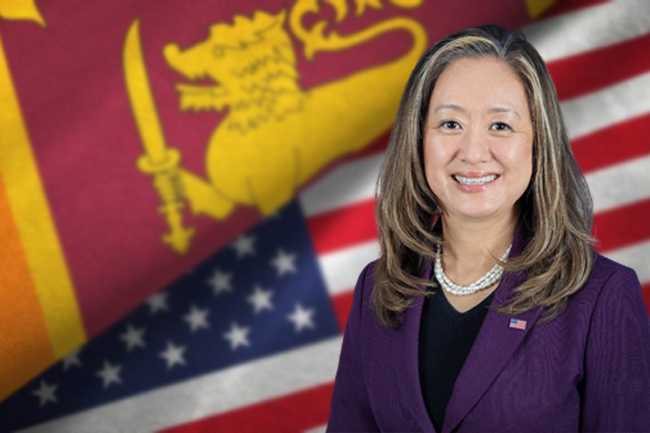
US Ambassador to Sri Lanka Julie Chung has raised concerns pertaining to the ‘continued use of the Prevention of Terrorism Act (PTA)’, highlighting the importance of the need to protect certain ‘fundamental freedoms’.

In a post on ‘X’, formerly known as Twitter, Ambassador Chung raised concerns over the repeated use of the controversial legislation as a tool for the arrest of peaceful protesters and the inhumane treatment of detainees in prison.

“It’s vital to ensure freedom of expression and humane treatment of those in custody. Especially as the government looks to replace the PTA in line with its international commitments and implement key reforms, it must protect fundamental freedoms”, Chung said.

The much-disputed PTA is set to be replaced by Sri Lanka’s new Anti-Terrorism Bill, after the PTA came under fire for being repeatedly abused and violating several fundamental rights.

Posted in Uncategorized

SLPP convention on Dec. 15

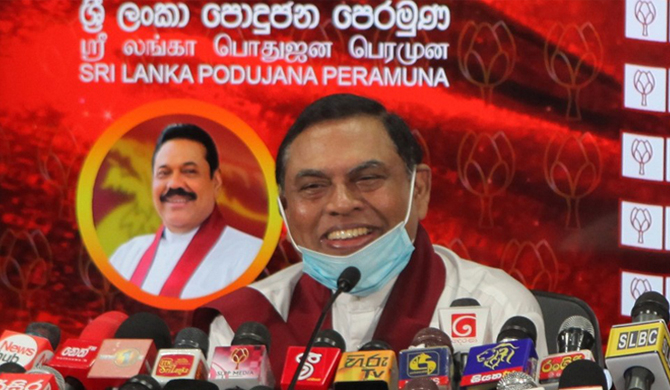
The ruling SLPP yesterday (30) announced that its second national convention would be held on 15 Dec., at the Sugathadasa Indoor Stadium with the participation of former President Mahinda Rajapaksa and party founder Basil Rajapaksa.

A statement issued by the SLPP quoted former Finance Minister and National Organiser Basil Rajapaksa as having said that the future plans of the party and their role in the agenda for the country would be placed before the people at this event.

NP Governor receives assurance from Erik Solheim

President Ranil Wickremesinghe’s International Climate Advisor Eric Solheim said he would provide his fullest cooperation for the development of the Northern Province when he met the Governor of the Province P.S.M. Charles in Jaffna recently.

Solheim served as the Norwegian peace envoy for talks between then Premier Ranil Wickremesinghe’s government and the LTTE in 2002.

The Office of the NP Governor said that Charles explained in detail to the international climate consultant Eric Solheim, about many issues including the risk management of the Northern Province, the daily living conditions of the people, effects of climate changes, economy, and the development to be carried out in the province. Solheim, the President’s International Climate Advisor who heard about the issues, said that he was very happy to meet the Governor of the Northern Province during his visit to Sri Lanka.

Also, he said that he is happy to promote green projects for Sri Lanka’s development. Since Sri Lanka has the resources for solar, wind and hydro power generation, it can carry out the green hydrogen project. At the same time, the President’s International Climate Adviser, assured the Governor that he would provide the necessary full cooperation for the development of the Northern Province.