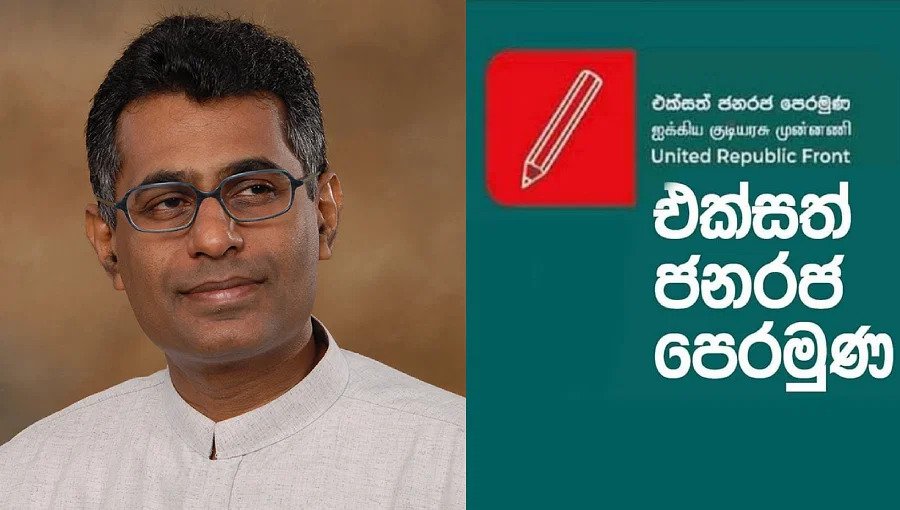
2024 Prez poll: Champika denies alliance with MR-Ranil grouping, won’t contest

Rebel Samagi Jana Balawegaya (SJB) lawmaker Patali Champika Ranawaka yesterday (31) denied speculative media reports pertaining to him being the presidential candidate of the ruling Wickremesinghe-Rajapaksa alliance.

In a hastily issued statement over the weekend, the leader of the Eksath Janaraja Peramuna (EJP) emphasised that there was absolutely no basis for such claims.The next presidential election is scheduled to be held later this year. The parliamentary election is scheduled to be held thereafter.

Declaring that he wouldn’t close ranks with the Rajapaksas under any circumstances, the former Minister urged the ruling Sri Lanka Podujana Peramuna (SLPP) to replace party leader Mahinda Rajapaksa.

Ranawaka contested the last parliamentary election in August 2020 on SJB ticket.The SJB secured 54 seats, including seven National List slots.A co-founder of former Jathika Hela Urumaya (JHU), Ranawaka said that Wickremesinghe, who had been picked by the SLPP as the eighth President, in July 2022, brazenly advanced the SLPP’s political agenda, hence there couldn’t be any alliance between his party and the incumbent administration. The MP alleged both Rahapaksas and Wickremesinghe promoted utterly corrupt business interests hell-bent on making money at the expense of the country and the people.

Referring to President Gotabaya Rajapaksa’s ouster in July 2022, following an intense protest campaign (though apparently hatched by outside forces), Ranawaka said that his party had explicit faith in the public power to achieve their political objectives.

Commenting on various political proposals advanced by different parties, MP Ranawaka stressed that daunting challenges faced by the country couldn’t be overcome by pursuing now defunct JRJ, Premadasa strategies or socialist experiments. The parliamentarian who had served the Cabinets of both Mahinda Rajapaksa and Maithripala Sirisena declared their efforts were meant to harness public opinion against the current corrupt set up and help facilitate a new social order.

A dissident SLPP MP told The Island that a section of the ruling party seemed uncertain about Wickremesinghe’s candidature at the presidential poll though the likes of Minister Kanchana Wijesekera publicly declared the party’s support for the incumbent President. Power and Energy Minister Wijesekera is on record as having said that the majority of the SLPP parliamentary group backed Wickremesinghe for a second term.

In July 2022 the SLPP, at a vote in Parliament, picked Wickremesinghe to complete the remainder of the five-year term won by Gotabaya Rajapaksa at the 2019 Nov presidential election.

The dissident SLPP lawmaker pointed out that a group, led by Gampaha District MP Nimal Lanza, that had been at loggerheads with the top leadership over criticism of the President’s policies, also backed Wickremesinghe’s candidature, regardless of SLPP National List MP Dammika Perera being promoted as their candidate.

MP Ranawaka said that both the Rajapaksas and Wickremesinghe had been rejected by the people and they couldn’t regain public confidence under any circumstances. MP Ranawaka was among those who voted against the Budget 2024 at the Third Reading of the Appropriation Bill on Dec 13. It was passed with a majority of 41 votes, with 122 for and 81 against. Jaffna District MP C.V. Wigneswaran was absent at the time of the voting.

MP Ranawaka said that his party was in touch with members of the SLPP, the UNP as well as the SJB. However, the EJP wouldn’t seek a consensus with the Rajapaksas and Wickremesinghe but would continue to work with other parliamentarians, he said.

The former Minister also dealt with the continuing controversy over the procurement of fake immunoglobulin. Declaring that the corrupt deal on the purchase of immunoglobulin had been first disclosed by Chairman of the EJP, Medical Specialist Ajith Amarasinghe, MP Ranawaka urged President Wickremesinghe to allow the law to take its course. According to MP Ranawaka, Dr. Amarasinghe had revealed the controversy pertaining to blood samples.

MP Ranawaka said that former Health Minister Keheliya Rambukwella and the others involved in the immunoglobulin scam shouldn’t be allowed to side-step the issue and escape justice.
Posted in Uncategorized

First crossover of 2024 : SLFP MP Shan Wijayalal joins SJB

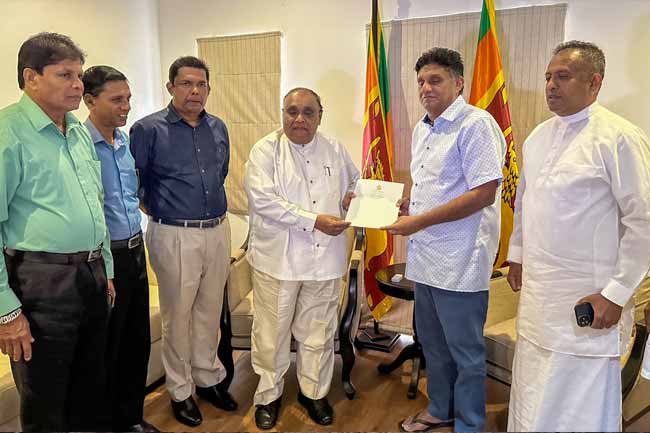
The first crossover of 2024 has been reported, with Sri Lanka Freedom Party (SLFP) MP Shan Wijayalal de Silva joining the opposition, Samagi Jana Balawegaya (SJB).

MP Shan Wijayalal de Silva met SJB and opposition Leader Sajith Premadasa confirming his crossover.

The MP reportedly received his SJB party membership and letter of appointment from MP Sajith Premadasa this morning (Jan 01).

MP Shan Wijayalal de Silva who is a senior member of the SLFP was elected as a Member of Parliament during the last general election representing the Sri Lanka Podujana Peramuna (SLPP).

Senior vice president of the Sri Lanka Freedom Party (SLFP) Shan Wijayalal de Silva,Silva was the chief organizer of the SLFP for Ambalangoda. He has served thrice as the Southern Province Chief Minister for five years.

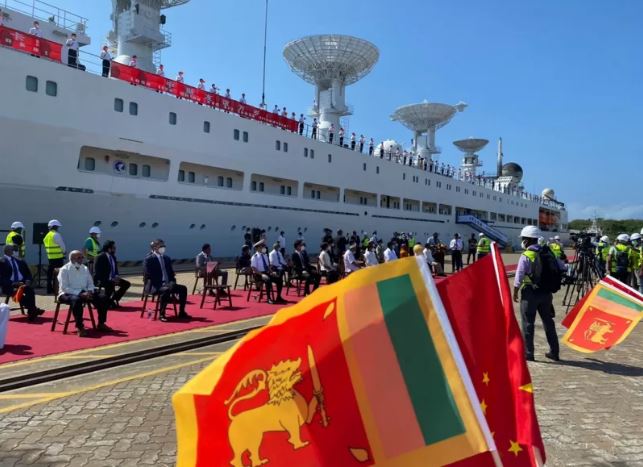
Mint Explainer: Why has Sri Lanka banned Chinese ‘research vessels’?

Sri Lanka has imposed a one-year ban on Chinese “research vessels” in its Exclusive Economic Zone (EEZ), according to a report. India has been raising concerns about these vessels with Sri Lanka for some time now, amid speculation that they are used to track Indian military tests and survey strategically important waters. In July, Prime Minister Narendra Modi had urged Sri Lankan President Ranil Wickremesinghe to respect Indian strategic and security concerns.

India and China have been vying for dominance in Sri Lanka, which has been courting China to diversify its diplomatic relationships while attempting to strike a balance between the countries. While New Delhi

https://www.livemint.com/news/india/mint-explainer-why-has-sri-lanka-banned-chinese-research-vessels-from-its-ports-11704097540739.html

Easter Sunday attack victims go before SC against Deshabandu

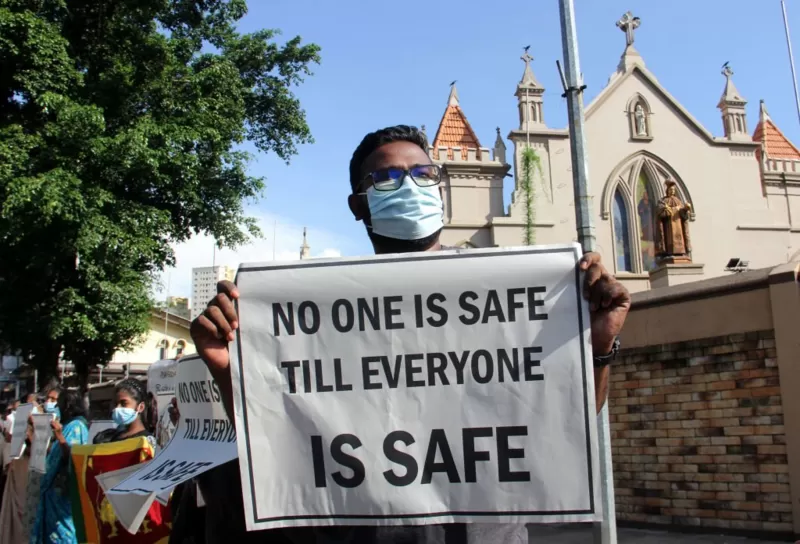
Three victims of the Easter Sunday terrorist attacks have filed a Fundamental Rights petition before the Supreme Court seeking an order restraining Senior DIG Deshabandu Tennakoon from accepting any further appointments as Acting Inspector General of Police.

The petitioners A.M.A. Nishantha, P.M.R. Fernando and J.A.D.F. Priyantha, victims of the Easter Sunday terrorist attacks in 2019 filed this petition naming the Attorney General, members of the Constitutional Council and Acting IGP Deshabandu Tennakoon as respondents.

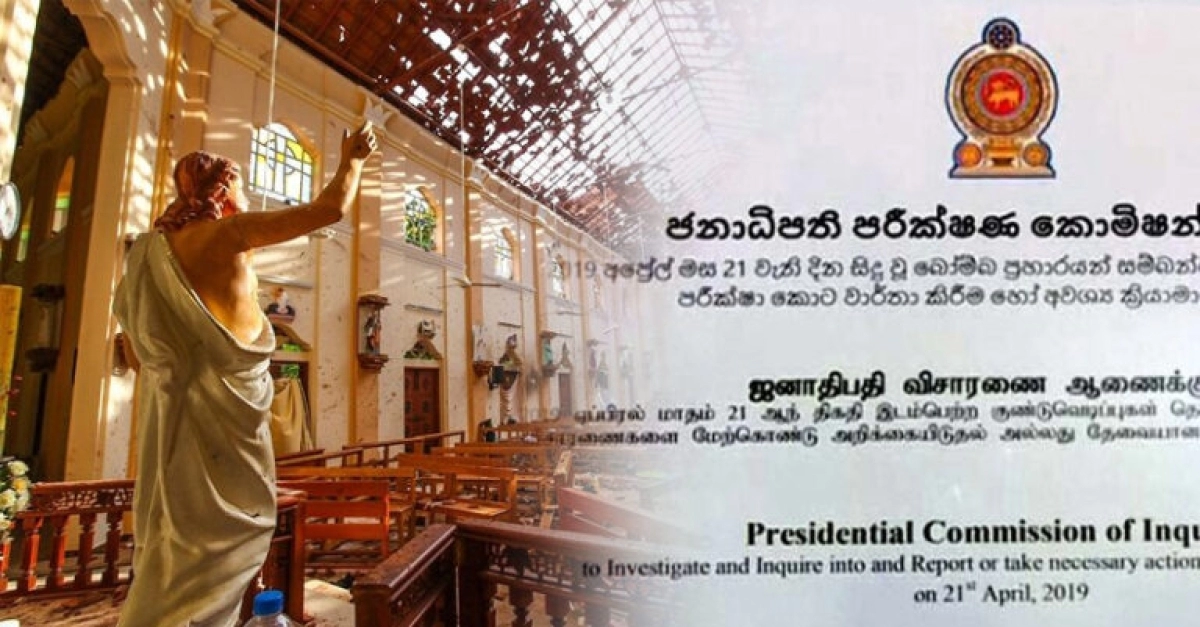
The petitioners stated that the Commission of Inquiry appointed by former President Maithripala Sirisena, to inquire into the Easter Sunday bombings of 2019 had made several findings of serious negligence and or lapses on the part of numerous public officials, and officials serving in the Sri Lanka Police including Senior DIG Deshabandu Tennakoon and had recommended taking disciplinary action against them.

The petitioners further said by letter dated June 26, 2023, Colombo Archbishop Malcom Cardinal Ranjith wrote to the Speaker expressing concerns relating to Senior DIG Nilantha Jayawardena and Senior DIG Deshabandu Tennakoon and explaining the reasons on why the said individuals were not qualified to be appointed as IGP.

The petitioners further seek an order restraining the Constitutional Council from granting approval to the President, in terms of Article 41C of the Constitution, with regard to the appointment of Deshabandu Tennakoon as the Inspector General of Police.

This petition has been filed through Attorney-at-Law Thushari Jayawardena.

Posted in Uncategorized

Will the Rajapaksas’ dream of coming back to power come true? By Veeragathy Thanabalasingham

Former Sri Lankan President Mahinda Rajapaksa seems to believe that if the Sri Lanka Podujana Peramuna (SLPP ) is not rebuilt as a strong political party in his time, other Rajapaksas may not be able to do so in the future.

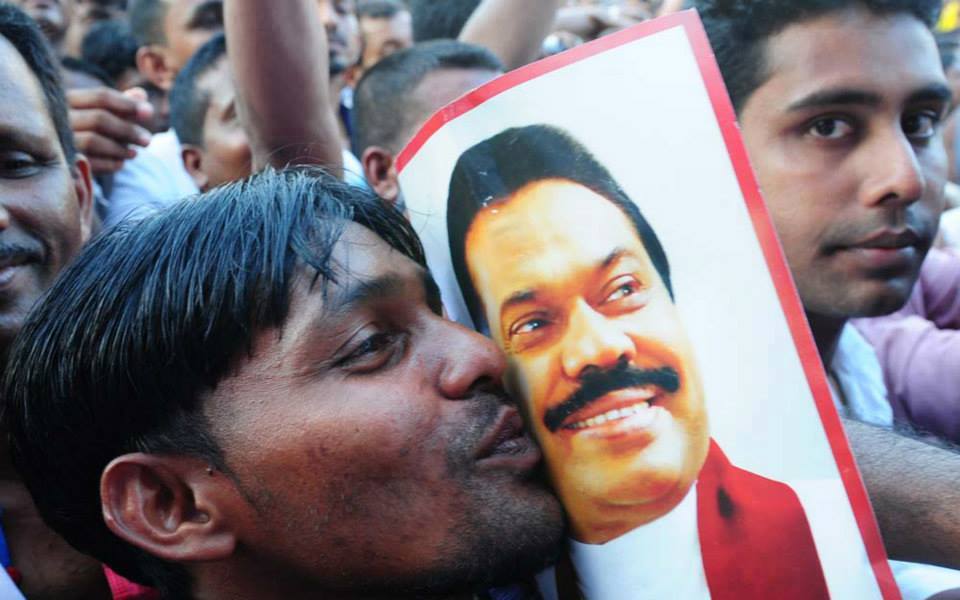
Although the Rajapaksas of Ruhunu had been involved in politics and held various positions since the early part of the last century, it was only after Mahinda became the Executive President in the early part of this century that they grew into a powerful family wielding immense influence in politics. Mahinda is the political face of the Rajapaksa family.

The Rajapaksas, who stepped down from power after last year’s ‘Aragalaya’ uprising, within a few months started talking about coming back to power in the near future. They went along with President Ranil Wickremesinghe’s decision to indefinitely postpone the local government elections. But they were not hesitant about claiming that their party would win any future election. It can be seen that in recent times such talk has increased.

Mahinda is well aware that the landmark November 14 Supreme Court judgement holding the three Rajapaksa brothers directly responsible for last year’s economic crisis has grave implications for his family’s political prospects. But he said that he did not accept the ruling and that all economic decisions taken during his regime were with the approval of Parliament.

Two weeks later, on November 28, he released a report with numerous statistics, saying that the economy had seen healthy growth during his tenure from 2005 to 2014 and that the actions of the ‘ Yahapalanya ‘ government that came to into office was the main reason for present economic crisis.

Through the statement, Mahinda appealed to the people of the country to never again take a decision like the one taken in the 2015 elections. His message to the people was “bring SLPP back to office.”

Neither the leaders nor the ministers of the ‘ Yahapalanaya ‘ government issued a strong reply denying Mahinda’s allegations.

Exactly one month after the Supreme Court’s ruling, on December 15, the second national convention of the SLPP was held at the Sugatadasa Indoor Stadium, Colombo. Mahinda was re-elected leader of the party.

The post of national organizer, earlier held by former finance Minister Basil Rajapaksa, was left vacant. This could not be without a good political reason. Former President Gotabaya Rajapaksa was conspicuous by his absence at the convention. Only Mahinda and Basil addressed the gathering. SLPP General Secretary Sagara Kariyawasam was only allowed to deliver the welcome address.

” The SLPP is prepared to come back to power. The party will start a new journey according to the needs of the country. We invite people of all communities to join us in creating a new nation. With all our strength we will win any election. Many political parties are waiting for our invitation to join our journey,” Mahinda thundered.

“We will create a new political culture eschewing falsehood. We will strive until our efforts and work are written in history. We are ready to start our journey from where we failed to take Sri Lanka to the front of the world as a proud country,” Mahinda said.

He once again claimed credit for the war victory saying that during the three decades of war, no other leader had the courage to confront LTTE leader Prabhakaran head-on.

The Rajapaksas will definitely need Prabhakaran to regain influence among the Sinhalese people. Not only that, communal politics will once again play a key role in their quest for recovery.

A strange feature is observable in the current approach of the Rajapaksas. Having used their party’s parliamentary majority to install Wickremesinghe as President last year, they are now keen on distancing themselves from his administration.

Although President Wickremesinghe is the leader of the United National Party, all but one or two ministers in his government are members of the SLPP. Many of them were ministers in the government of two Rajapaksa brothers.

Bills and resolutions brought by the Wickramasinghe government are passed in the House with the support of the members of the SLPP. The two budgets presented by Wickramasinghe, in his capacity as Finance Minister could not have been passed without the support of SLPP. Not only that, the Rajapaksas do not fail to say from time to time that the President is working efficiently in rescuing the country from crisis and has restored law and order.

Everyone knows that Basil Rajapaksa has often urged President Wickremesinghe to give ministerial posts to the district leaders of the SLPP but to no avail.

Mahinda, who issued a statement on the government’s tax policies, said that the current government is not run by the SLPP. He tries to justify his support to the Wickramasinghe administration by saying that though the SLPP is part of the government, the head of the government is the leader of another party that follows a different policy. It is the duty of SLPP to ensure that a stable government is in office until the next national elections.

Also, Mahinda has expressed an opinion against tax hikes as people are worried about the impending rise in the cost of living.

Mahinda made such statements after his MPs had raised their hands in support of bills to increase taxes like the Value Added Tax (VAT) which was raised from 15 percent to 18 percent.

While Mahinda supported the VAT bill, his eldest son, Namal Rajapaksa, who is said to be his political heir, did not. Namal was not present in the House during the vote on the bill. He said he could not support the tax bill which would bring untold hardship to the people.

What can be said about this other than that it is an insult to the intelligence of the people? Namal did not have the courage to be in the House vote against it.

Tax policy will become a key political issue in the new year, with Mahinda saying it will be a major focus of their campaign in the national elections.

Mahinda’s two statements issued in November and December and his comments to the media from time to time make it clear that he expects the people of the country to believe that the origin of the economic crisis facing the country today lies in the policies and actions of the ‘Yahapalanaya’ government and that the Rajapaksas are not responsible despite what the Supreme Court said in its judgment.

Even last week, Mahinda said that the SLPP would regain power in the next election. He seems to believe that by repeating this he can influence the masses.

Clearly, the Rajapaksas have not learned lessons from the way they were humbled and driven out of office within years of the grand image they had built about themselves. They dream of coming back to power without really understanding what people really think about them. However, the general estimate is that the SLPP will not suffer the same fate as the United National Party in the last parliamentary elections.

Be that as it may, it is unlikely that a Rajapaksa will contest the next Presidential election. They know that a defeat in that election will be detrimental to rebuilding the party. The Rajapaksa’s strategy in the next elections will be to ensure a government that does not hold it accountable for past mistakes.

Even if the Rajapaksas try to present some people to the country like Dhammika Perera as potential presidential candidates of their party, they have no ‘safer choice’ than Wickremesinghe.

Posted in Uncategorized

Indian Government will further assist development of the North – New Indian HC

The new Indian High Commissioner to Sri Lanka, Santosh Jha, affirmed the Indian Government’s unwavering support for the advancement of the maritime and aviation sectors, as well as the development of the northern region of Sri Lanka. He made these observations during a meeting held on December 28, 2023, with the Minister of Ports, Shipping, and Aviation, Nimal Siripala de Silva.

The discussions at the Ministry also focused on the progress of Palali airport, along with the ports in Kankesanthurai, Talaimannar, and Trincomalee. Minister de Silva emphasized the government’s willingness to provide opportunities for Indian investors to engage in the maritime and aviation services sectors in Sri Lanka. Specifically, he highlighted investment prospects in the vicinity of the Trincomalee Port for ship and small craft building industries.

High Commissioner Jha brought attention to a proposal regarding the initiation of a passenger ferry service linking all ports of Sri Lanka to India. He expressed his intention to engage in discussions with the Indian government to promptly implement the proposal.

He also said that Indian technology and investors would be made available for the commencement of several renewable energy projects in Sri Lanka. Highlighting the collaborative efforts between Indian Prime Minister Narendra Modi and Sri Lankan President Ranil Wickramasinghe, High Commissioner Jha underscored their commitment to fostering a strong and sincere brotherhood between the two neighboring countries.

K.D.S. Ruwanchandra, Secretary to the Ministry of Ports, Shipping, and Aviation, and Irina Thakur, the First Secretary (Commerce and Culture) at the Indian High Commission in Sri Lanka also attended the discussions.

Debt Restructuring, Policy Reforms Critical for Stability

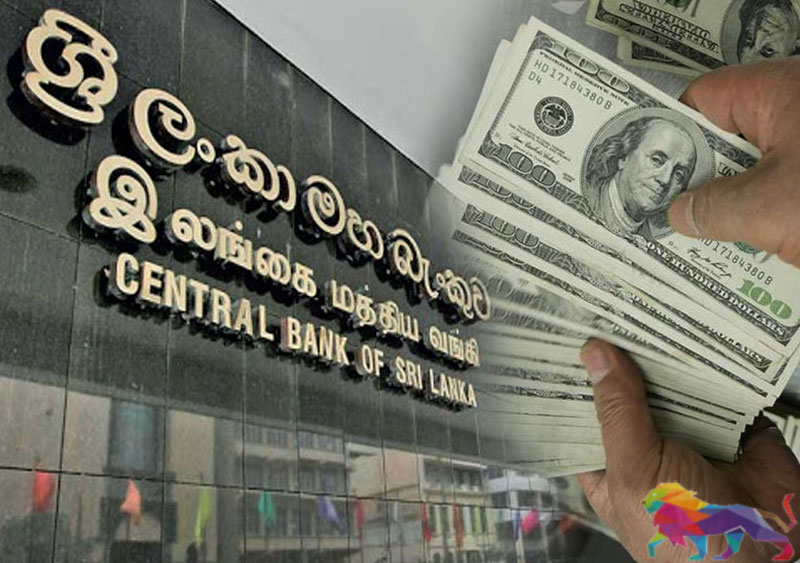
The Central Bank of Sri Lanka released its Financial Stability Review (FSR) for 2023, painting a picture of a resilient financial sector navigating a challenging economic landscape.

The report, covering data up to September 2023, highlights the sector’s resilience in navigating the aftermath of the economic crisis while acknowledging lingering vulnerabilities and ongoing policy efforts.

The Central Bank of Sri Lanka acknowledged the significant headwinds faced by the financial sector this year due to the economic crisis.

Despite these challenges, the Central Bank highlighted the positive outcomes of implemented measures, including interest rate stabilization.

This policy approach appears to be encouraging a gradual return of credit growth within the banking system, offering a glimmer of hope for revitalization.

The Central Bank further expressed optimism for the near future, projecting inflation to stabilize around 5% in the coming months.

Additionally, successful completion of the ongoing foreign debt restructuring process is expected to serve as a significant catalyst for further solidifying the financial sector’s stability.

However, the path towards sustained recovery remains intricately linked to unwavering commitment to policy reforms outlined in the agreement with the International Monetary Fund’s extended credit facility.

The Central Bank acknowledged the challenging nature of adhering to this narrow path, but firmly emphasized the potential for irreversible consequences, impacting both the financial system and the broader economy, should any deviations occur.

Posted in Uncategorized

India and Sri Lanka discuss expediting proposed joint projects

India and Sri Lanka discussed expediting some of the proposed joint projects in Sri Lanka.

India’s new High Commissioner to Sri Lanka Santosh Jha on Friday called on Prime Minister Dinesh Gunawardena and discussed a wide range of topics related to the multidimensional bilateral ties and facilitating more Indian investments in the island nation.

Jha assumed charge as the High Commissioner of India to Sri Lanka last week.

”High Commissioner called on H.E PM @DCRGunawardena today. They discussed a wide range of topics pertaining to the multidimensional India-Sri Lanka relationship” the Indian mission posted on X.

They also emphasised that centuries-old linkages in Buddhism are central to the abiding connection between the people of the two countries.

A statement issued by the Sri Lankan government said that during the meeting, Prime Minister Gunawardena and High Commissioner Jha discussed several issues such as the possibility of more Indian investments in the arena of the energy sector, joint projects on Trincomalee oil storage tanks, ports, railways and other sectors.

“They held a detailed discussion on economic ties and cooperation between the two countries and examined ways and means of expediting the proposed joint projects,” the statement said.

Gunawardena thanked India for the assistance provided to Sri Lanka in facing the current economic crisis by extending debt restructuring facilities and providing relief material, food and medicine and also for the support given to obtain the IMF package to solve liquidity issues.

A senior Indian diplomat, Jha was India’s Ambassador to the European Union, Belgium & Luxembourg before taking up his assignment in Colombo.

Jha had also served in Colombo from 2007-2010 as Counsellor at the High Commission, handling work related to commercial and economic matters.

During this period, he played a major role in building the architecture of India-Sri Lanka development cooperation.

Jha, recalling his previous stint in Sri Lanka, said that he considers it a great privilege to be in Colombo once again to work for further strengthening bilateral friendship and cooperation.

“My mission is to work with the people of Sri Lanka, for the benefit of Sri Lanka, under the guidance of Sri Lankan leadership,” he said.

He assured that Indian expertise will be extended to Sri Lanka for its plans for digital infrastructure development including introducing digital IDs for every citizen and for development of IT education”, he was quoted as saying. (Courtesy PTI)

Catholic Church queries Prez’s silence over Alles’ claims

The Catholic Church claimed that it is in doubt as to whether President Ranil Wickremesinghe is allowing Public Security Minister Tiran Alles to continue making baseless accusations against Colombo Archbishop Malcolm Cardinal Ranjith and the Catholic Church with the aim of undermining their (the Church’s) programme to demand justice for the Easter Sunday terror attacks of 2019.

In the recent past, Alles was seen criticising Cardinal Ranjith and the Catholic Church based on two key matters – the Church’s allegation that the Government had not properly investigated the said terror attacks and the Church’s opposition when the Government was earmarking Senior Deputy Inspectors General of Police (SDIGs) Nilantha Jayawardena and Deshabandu Tennakoon for the post of Inspector General of Police (IGP).

Speaking to The Daily Morning, Catholic Bishops Conference of Sri Lanka National Director of Communications Rev. Fr. Jude Chrishantha Fernando said that they had reasonable grounds to accuse the Government of not investigating the Easter Sunday terror attacks properly.

“The Presidential Commission of Inquiry (CoI) that investigated the terror attacks has made a set of recommendations including action against several individuals, but the Government has not implemented any of those recommendations. There are several aspects that the Police and other related agencies have not looked into. If the situation is as such, how can we say that we are satisfied with the investigations?”

In response to Alles’ criticism of the Church over their opposition to appointing Jayawardena and Tennakoon as the IGP, Rev. Fernando said that they had objected to the duo over nothing but their failure to prevent the terror attacks in 2019.

“If you look at the list of police officers who are to be appointed as the IGP, there is not a single Catholic officer. We have never asked the Government to appoint a Catholic as the IGP. What we always say is that the CoI report clearly mentions that Jayawardena and Tennakoon have neglected their responsibilities. It states that the terror attacks could have been prevented if they worked properly. That is the reason for our opposition to their appointment as the IGP.”

Commenting on a recent statement made by Alles that there are religious leaders who even maintain links with organised criminal gangs, and in turn, make remarks critical of the police crackdown on suspected criminals, Rev. Fernando said that the Church had been launching various programmes to help eliminate drugs and criminal activities in the country.

“We even organised two peaceful protest marches before the terror attacks in 2019 in order to urge the Government to eliminate drugs and criminal activities. In addition, the Archbishop has appointed a Catholic priest to look into drug addicts, and to help them. The Church is also maintaining two rehabilitation centres in Colombo for drug addicts. While doing all these things, why should we have links with criminals?”

Noting that Alles has made critical remarks against Cardinal Ranjith and the Church on several occasions in the past few months, Rev. Fernando said that President Wickremesinghe is doing nothing to stop the former from doing so.

“Wickremesinghe does nothing and allows Alles to make critical remarks against the Cardinal and the Church. We have a doubt that what Alles is doing is fulfilling a contract given by the President with the aim of disrupting our struggle to seek justice for the victims of the Easter Sunday terror attacks.”

The Catholic Church and Cardinal Ranjith have been subjected to various criticisms by pro-Government parties including Parliamentarians and Ministers as a result of their (the Church’s) programme to seek justice for the victims of the terror attacks. The Church has been emphasising that the relevant investigations have not been conducted properly, while the Government, particularly Alles, has been asserting that almost 90% of the related investigations have been concluded. In addition, critical remarks have also been exchanged by the Church and Alles over Tennakoon’s appointment as the Acting IGP.

Posted in Uncategorized

Who asks for ‘deputy leader’ status in partnership with the SJB By Kassapa

Politics, as the old saying goes, is said to be the art of the possible. This is exactly why political parties form coalitions even with partners who are not like-minded, when they believe this would give them a better chance of obtaining state power which is the ultimate objective of a political party.

This is what the major opposition party in Parliament, the Samagi Jana Balavegaya (SJB) is engaged in right now. It is trying to forge an alliance with the Nidahasa Janatha Sabhawa (NJS), the splinter group led by G.L. Peiris and Dullas Alahapperuma that broke away from the Sri Lanka Podujana Peramuna (SLPP) during the weeks that followed the political turmoil in mid-2022.

It will be recalled that, in the lead up to the vote in Parliament to elect a President following Gotabaya Rajapaksa’s sudden resignation, SJB leader Sajith Premadasa withdrew in favour of Alahapperuma who eventually lost to President Ranil Wickremesinghe. So, they have worked on common objectives and against common enemies before.

The SJB and NJS are approaching the idea of a ‘coalition’ for different reasons. The SJB is aware that although they are numerically the largest opposition in Parliament, this is not a reflection of the ground situation just as much as the SLPP no longer commands a majority of the public vote even though they still retain a simple majority in Parliament. The SJB’s strength at the grassroots level is being sorely tested by the Jathika Jana Balavegaya (JJB) and some would even argue that it is the JJB that has the upper hand.

Then, there is the ever-present danger of Wickremesinghe poaching a few more vulnerable or disgruntled SJB parliamentarians, just as he did with Harin Fernando, Manusha Nanayakkara and Diana Gamage. Thus, the SJB is not a solidly united group of parliamentarians waiting in the wings, supremely confident that they will form the next government. Many SJBers are watching with trepidation which way the ‘swing’ is, hoping to align themselves with whoever they believe will win.

In such a scenario, it makes political sense to bolster your party’s image by getting some of the so-called ‘independents’ from the SLPP to the SJB. The latter are also aware that they won’t get over the line by themselves. Hence, the invitation to the NJS.

For the NJS, the reason is the same, but with a greater magnitude. If they were to contest by themselves, they would be lucky to win five seats and many of their thirteen parliamentarians would be out of a job after the next election. They have, after all, associated themselves with the tainted Rajapaksas and been part and parcel of their shenanigans, so the public are reluctant to warm to them yet again. Besides, their leading lights are Alahapperuma and G.L. Peiris, not the type of politicians who ooze charisma, captivate audiences and invite the public to vote for them by the sheer force of their personality.

So, the bottom line is that the NJS needs the SJB much more than the SJB needs the NJS. Because of this, negotiations between the two parties should be proceeding with the SJB having greater leverage. However, reports are that the discussions have come to some kind of a stalemate because of Alahapperuma’s insistence on certain issues.

The journalist-turned politician and former Minister of Transport was at first of the view that any opposition alliance, if it is to be successful, needs to incorporate the JJB. Having the JJB on board would certainly be the icing on the cake for any opposition coalition but that party is no longer an ‘also ran’ in the race, it is a serious contender which believes it can win. That is why it is not taking any ‘partners’ with them. So, Alahapperuma’s thinking will remain a fantasy.

It has also been reported that Alahapperuma is asking for ‘deputy leader’ status in any partnership with the SJB. Even Premadasa, who is not averse to doling out official party positions by the dozen to keep his MPs happy, has baulked at the prospect. He knows that if he does so, he will face the wrath of his own party and Sarath Fonseka will be heading the queue to shower him with choice epithets.

It is not only Premadasa who is worried, even the rank and file of the SJB are concerned. They are perturbed that, should there be a SJB-NJS alliance and the two parties field a common list of candidates at a general election, at least some SJB MPs will lose their seats because some NJS stalwarts such as Alahapperuma, Dilan Perera and Charitha Herath for instance have better ‘name recognition’ in their respective districts. A recent example of this was when the SJB accommodated Kumar Welgama from the Kalutara district at the last general election which cost Ajith Perera his seat in Parliament. These MPs, uncertain of their return at the next election on the SJB ticket, would be sitting ducks for Wickremesinghe.

Another factor weighing on the minds of the SJB leadership is the presence of the likes of Channa Jayasumana in the NJS. It was Jayasumana who first spearheaded a very communal campaign against Dr. Shafi Sihabdeen claiming he forcefully sterilised Sinhalese women. Dr. Sihabdeen was later acquitted of all charges against him but the anti-Muslim propaganda this issue generated helped Gotabaya Rajapaksa win the presidential election.

Jayasumana remains a key member of the NJS and has neither retracted his comments nor apologised for his actions. Muslim parties who are partners of the SJB have indicated they do not wish to be on the same platform with Jayasumana pointing out that his presence will cost the party a significant number of Muslim votes, even in urban areas such as Colombo.

Forming political coalitions may be fashionable but they must also be fit for purpose. If it is the presidential polls that the SJB is gearing for, the SJB must question the value of forming partnerships for the sake of doing so- for some alliances may in fact lose the party more votes than it gains.

How Sajith Premadasa deals with this conundrum will be an indicator of his political maturity.