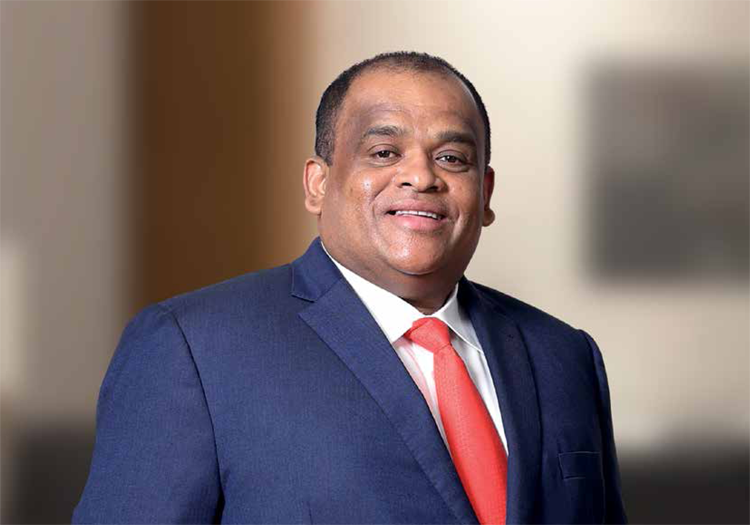
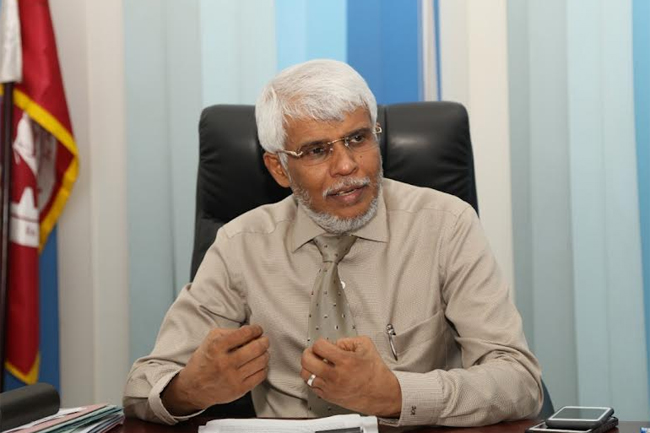
MP Dhammika Perera says, he is ready to contest the Presidential elections if Political parties guarantee 51% of majority

MP Dhammika Perera says he is ready to contest the upcoming Presidential Election if the political parties can provide assurances that a 51% majority can be obtained at the election.

When inquired by Newsfirst he stated, that support is required from all the political parties including the Sri Lanka Podu Jana Peramuna.

He noted that 1.5 million students from 1.1 million families out of the total 5.5 million families in Sri Lanka are benefiting from the D.P. Education initiative commenced by him.

Posted in Uncategorized

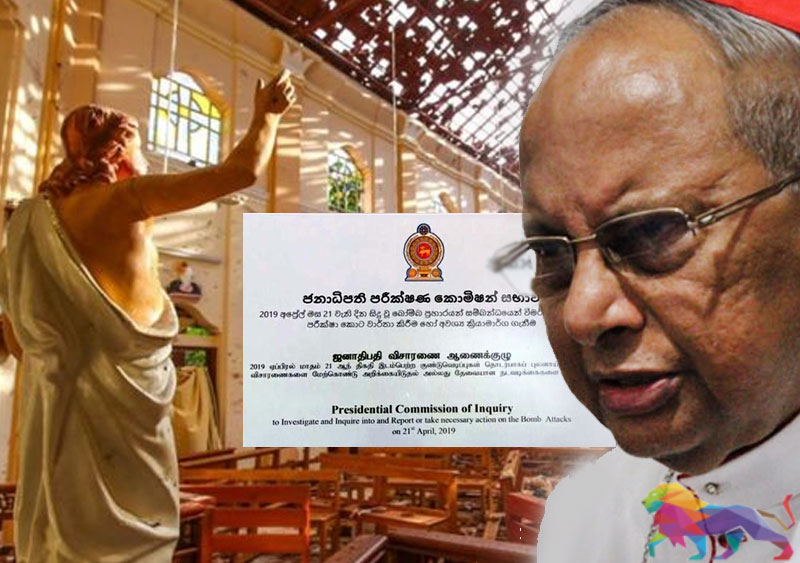
Catholic Bishops want Ranil to give reports from FBI, others

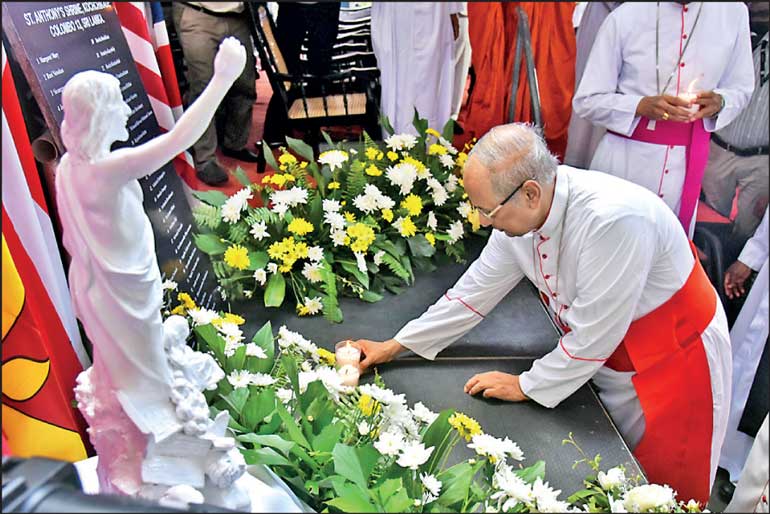
The Catholic Bishops’ Conference has asked President Ranil Wickremesinghe to share the reports on the Easter Sunday attacks he claims to have received from the Federal Bureau of Investigations (FBI), as well as the UK, Indian and Chinese intelligence services.

In a letter to President Ranil Wickremesinghe, the Catholic Bishops’ Conference of Sri Lanka noted that the claim he had received such reports was first made public by the President in his recent interview with Deutsche Welle.

In the interview the President had said that the Catholic Bishops’ Conference had wanted documents of all the proceedings of the commission which investigated the Easter Sunday attacks and those details have been handed over.

In the letter the Catholic Bishops’ Conference thanked the President for handing over all the volumes of the Presidential Commission of Inquiry Report into the Easter Sunday attacks.

The Catholic Bishops’ Conference of Sri Lanka also noted that Cardinal Malcolm Ranjith is an integral and most vital member of the Catholic Bishops’ Conference of Sri Lanka.

During his recent interview, the President had said that he is not dealing with Cardinal Malcolm Ranjith but only with the Catholic Bishops’ Conference.

Batti livestock farmers protest against pasture land encroachers

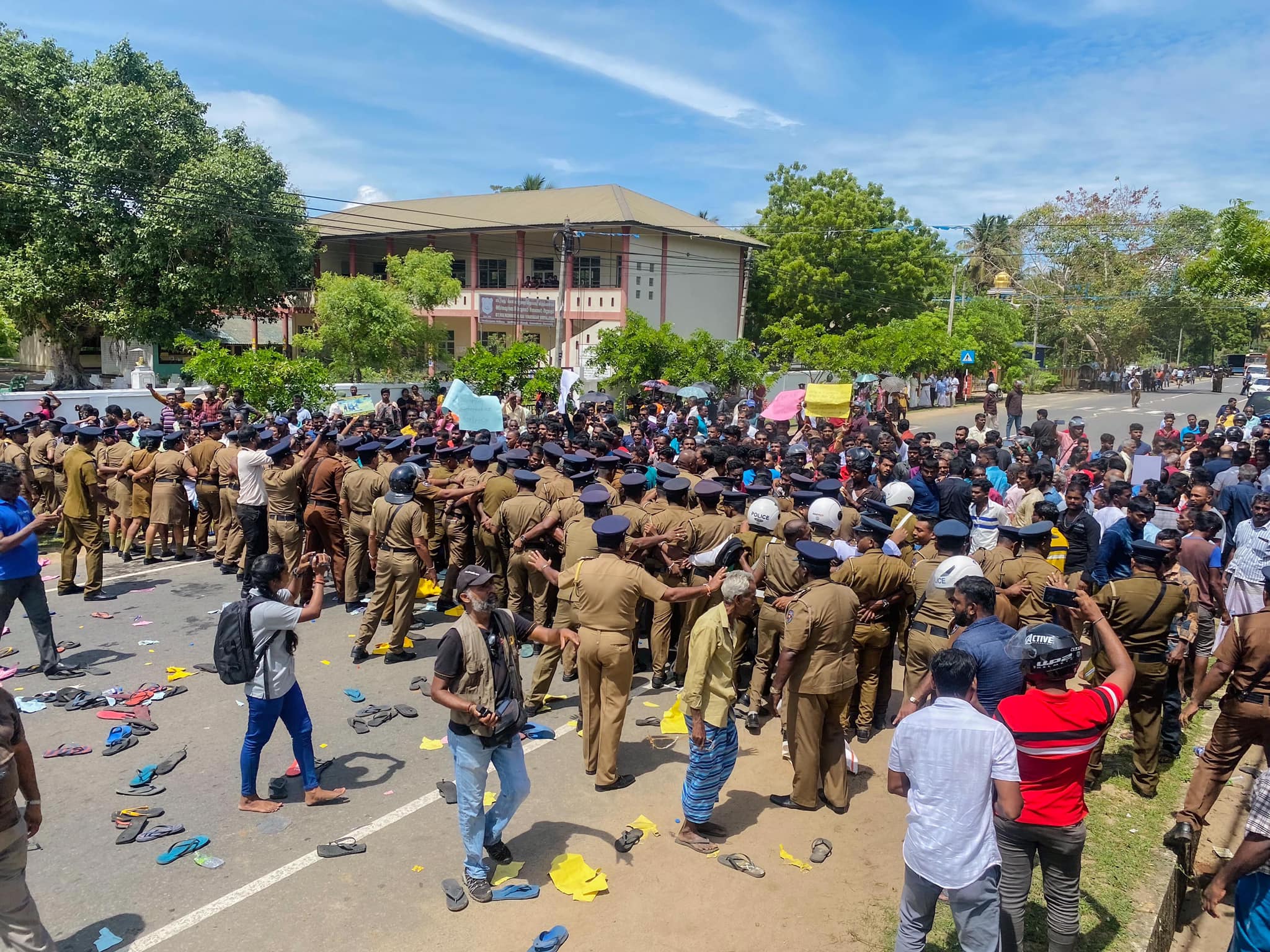
While President Ranil Wickremesinghe was attending the 149th anniversary celebration of Chenkaladi Madhya Maha Vidyalaya in Batticaloa yesterday (8), livestock farmers staged a protest demanding the removal of encroachers from their pasture land.

During the event, the President unveiled an ambitious 10-year initiative aimed at boosting agriculture and tourism in the Eastern Province, with a focus on the development of Trincomalee.

There were protesters from two communities, one led by ITAK MP Shanakiyan Rasamanickam, who led a group of MPs and other organisations close to a venue where the President was attending an event in the school.

The issue has been highlighted since the Mahaweli Development Authority settled people for corn cultivation on pastoral land.

Protesters wanted to meet the President to express their grievances but Police objected and asked the protestors to leave the site which led to a tense situation between the Police and the public. The President later met some State officials to discuss the issue related to pastoral land. However, protesters said that discussions were futile as he did not speak to them. Banners were destroyed and several women were injured in the commotion with the Police

Rasamanickam accused the Government of allowing chena cultivators to illegally encroach on grazing land in the Mayilathamadu District, traditionally used by cattle farmers during the period, October to February.

“The State is responsible for capturing land for farming purposes without paying adequate heed to the 200,000 cattle that use the land for grazing and produce 17,000 litres of organic milk daily,” said Rasamanickam.

Meanwhile, Ven. Ampitiye Sumanarathana Thera protested by sitting on the road and confronted Police urging that pastoral land be given to corn cultivators.

BY Sulochana Ramiah Mohan

Posted in Uncategorized

Sri Lanka lawyers hold demonstration over Mulaitivu judge’s resignation

Lawyers from Mulaitivu, Sri Lanka, held a protest walk followed by a demonstration in Aluthkade in connection with the controversial resignation of Mullaitivu District Judge T. Saravanarajah.

Tamil National Alliance (ITAK) parliamentarian M A Sumanthiran who also attended the demonstration on Monday October 09 said the government and the Judicial Services Commission said rule of law itself becomes a moot discussion in light of Saravanarajah’s resignation.

“We tell the government and the judicial services commission that this has to change. An investigation must be held and justice be done for this judge.

“Or this will make history as an instance where rule of law was lost,” said Sumanthiran.

The protest was also attended by southern, politically active lawyers such as Nuwan Bopage and Sunil Watagala.

The Mullaitivu judge sent a letter to the Judicial Services Commission on September 23 informing the commission of his decision to resign from the post of District Judge and a number of other judicial positions, citing death threats. The judge had previously issued an order prohibiting constructions at a controversial archaeological site.

Media reports said he had left the country upon his resignation citing threats and pressure from authorities to change his verdict

On October 02, the Bar Association of Sri Lanka (BASL) wrote to the Attorney General, the Inspector General of Police (IGP) and the Minister of Public Security to inquire into Saravanarajah’s resignation.

Minister Alles that same day ordered the Criminal Investigation Department (CID) to investigate Saravanarajah resignation and subsequent departure from the country, according to media reports.

Ferry service fees between TN, KKS announced

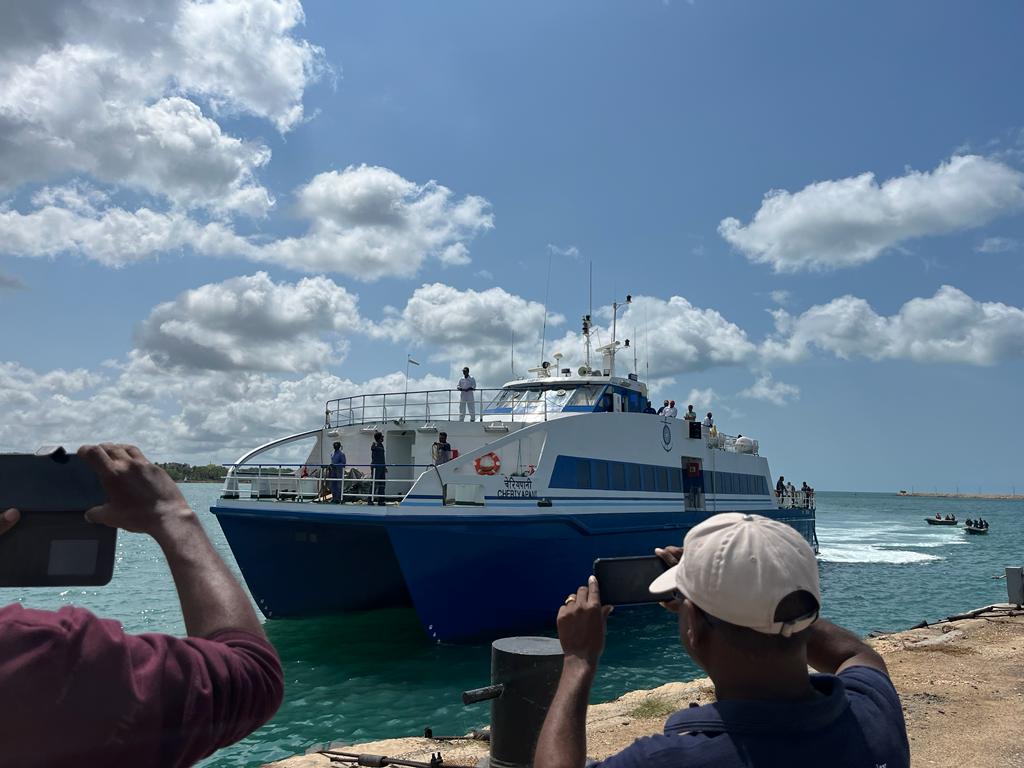
The passenger ferry service connecting India’s Nagapattinam and Sri Lanka’s Kankesanthurai (KKS) will commence operations tomorrow (October 10), Ports, Shipping and Aviation Minister Nimal Siripala de Silva announced.

Addressing the meida, he said the passenger ferry service experienced a delay of almost six months due to various reasons.

A trial session for the service was conducted on August 8.

As per the schedule, the passenger vessel named “Cheriyapani” is set to depart from Nagapattinam Port to Kankesanthurai Port tomorrow at 12:30 PM.

The maiden voyage will carry approximately 50 passengers, and the vessel is scheduled to return to Nagapattinam at 4:00 PM on the same day.

The high-speed vessel “Cheriyapani,” measuring 35 meters in length and 9.6 meters in height, is owned by the Shipping Corporation of India (SCI) and has a capacity of accommodating 150 passengers.

The journey from Nagapattinam to Kankesanthurai Port is estimated to take approximately four hours, with a one-way ticket costing Rs. 26,750 and a round-trip ticket priced at Rs. 53,500.

The operators of the passenger ferry service have indicated that each passenger is allowed to carry up to 50 kilograms of luggage. The operation and marketing of this ferry service are managed by the Sri Lankan company “Asha Agency Ltd,” and a ticket sales agent has also been appointed in Jaffna.

Minister de Silva highlighted that the Sri Lanka Ports Authority (SLPA) has invested Rs. 450 million to construct a modern passenger terminal at the Kankesanthurai port.

This terminal is equipped with state-of-the-art facilities, including provisions for immigration, Customs and health services.

Furthermore, the Minister said that the initiation of the passenger ferry service was the result of extensive discussions between the Ministry of Ports, Shipping and Waterways of India and the Ministry of Ports, Shipping and Aviation of Sri Lanka.

The vessel “Cheriyapani,” which undertook a trial voyage yesterday, was also inspected by the relevant authorities.

Posted in Uncategorized

Cardinal, Bishops’ Conference deny difference of opinion over Easter Sunday carnage

President of the Catholic Bishops’ Conference (CBC) Most Rev. Dr. Harold Anthony Perera said there was absolutely no difference of opinion between the CBC and Archbishop of Colombo Malcolm

Cardinal Ranjith on the responsibility on the part of the government to punish those who planned suicide attacks or neglected public security.

Bishop Perera reiterated their longstanding demand for the implementation of the recommendations made by the Presidential Commission of Inquiry (PCoI) in its final report handed over to former President Gotabaya Rajapaksa on 01 February, 2021.

Pointing out that incumbent President Ranil Wickremesinghe took over the Office of the President 14 months ago, Bishop Perera stressed the inordinate delay in addressing the issue.

Bishop Perera said so in response to The Island query whether the Catholic Bishops’ Conference differed from the Malcolm Cardinal Ranjith’s stand on the Easter Sunday culpability. Bishop Perera received the appointment as President of the Catholic Bishops’ Conference in June last year.

President Ranil Wickremesinghe, during an interview with Deutsche Welle, Germany’s international news broadcaster, recently in Berlin, asked whether DW had raised the issue at hand with the Catholic Bishops’ Conference.

When the interviewer acknowledged DW hadn’t done so, President Wickremesinghe declared that a particular question shouldn’t be posed to him.

President Wickremesinghe categorically stated that no international investigation would be held into the Easter Sunday carnage.

Bishop Perera said that the President had visited him in early October last year, in Kurunegala, and he had on behalf of the Catholic Church emphasised the need to bring the investigations into a successful conclusion.

The Bishop said that there couldn’t be any issue whatsoever regarding the Cardinal’s stand and that of the Catholic Bishop’s Conference as the former represented the body consisting of 15. One position remained vacant.

Responding to another query, Bishop Perera acknowledged that the appointment of a six-member ministerial team to examine the PCoI report on 20 February, 2021 caused suspicions not only among the Catholic community but all other concerned parties as well.

The Bishop said that he was surprised by the controversy over the calls for an international inquiry as President Wickremesinghe himself declared his intention to seek the assistance of Scotland Yard over a year ago.

The Bishop stressed that the urgent need was to implement the PCoI recommendations.

The Bishop said that the government couldn’t, under any circumstances, absolve itself of the responsibility for implementing recommendations made by its own inquiring authority.

Top spokesperson for the Catholic Church Rev Father Cyril Gamini Fernando said that President Wickremesinghe’s dismissal of international inquiry during an interview with German broadcaster was quite surprising as the government repeatedly declared direct involvement of Federal Bureau of Investigation (FBI) of the US, Australian Federal Police as well as the Maldivian Intelligence Services in the Easter Sunday investigations.

The priest said that President Wickremesinghe actually owed an explanation why the PCoI recommendations couldn’t be implemented. In fact, the ruling SLPP, too, couldn’t remain silent, especially against the backdrop of accusations that the Easter Sunday carnage facilitated their 2019 presidential polls campaign.

Rev. Father Fernando said that the US and Australian investigators were here in April/May 2019 and the government continued to receive international assistance at different levels. The crux of the matter is the government’s refusal so far to implement PCoI recommendations, the priest said. Had the government done so, the continuing hostile public view would change, the priest said.

The government recently proved its insensitivity in this regard again when Senior DIG Nilantha Jayawardena, who had been named by the PCoI and against whom recommendation to the Attorney General to the effect that he (AG) consider criminal proceedings against the Director, State Intelligence Service (SIS) under any suitable provision in the Penal Code was asked to brief parliamentarians as regards the status of the inquiry, the Church’s spokesperson said.

Rev. Fernando said that they were aware the US pointed out to Sri Lanka in April last year there wouldn’t be any purpose in an additional US investigation as they have completed a comprehensive inquiry into the attacks and criminal complaint filed against those responsible for the deaths of US citizens. Forty-five foreigners also perished in those multiple blasts.

(island.lk)

Posted in Uncategorized

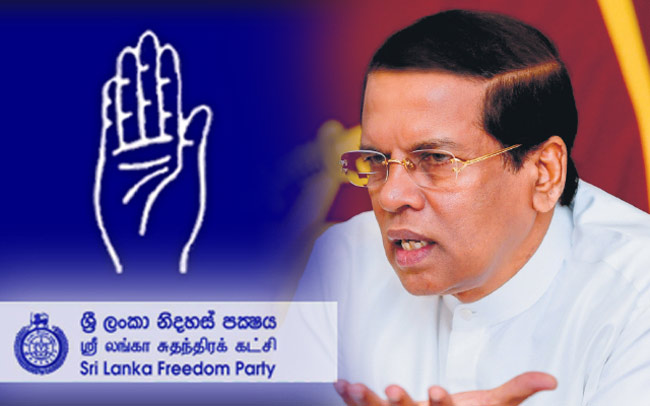
SLFP will not join hands with SLPP – Sirisena

Former President Maithripala Sirisena, chairman of the Sri Lanka Freedom Party (SLFP), has highlighted that there are no plans for the SLFP to join hands with the Sri Lanka Podujana Peramuna (SLPP).

Speaking to the media in this regard, Sirisena noted, however, that the SLFP aims to present a manifesto targeting the upcoming election, and to expand its work at the district-level.

SC delivers landmark ruling on Naseer Ahamed’s party membership

The Supreme Court (SC) delivered a landmark ruling determining that the decision taken by the Sri Lanka Muslim Congress (SLMC) to sack Minister Naseer Ahamed from the party was valid.

Ahamed had had filed a petition before the Supreme Court challenging the decision to suspend his party membership.

However, the bench comprising Justice Padman Surasena, Justice S. Thurairaja PC, and Justice Mahinda Samayawardhena, ruled that the decision taken by the SLMC to remove the Minister was legal.

Justice Padman Surasena, in his judgement, with Justice S. Thurairaja PC agreeing, observed that the Petitioner had pledged that he would be loyal to the Party, shall recognize honour and submit to the authority of the hierarchy of the Party, and abide by and honour the decisions, rules, regulations, directives, and policies of the Party as decided by the SLMC High Command.

However, it was determined that the Petitioner had breached this solemn pledge.

Justice Mahinda Samayawardhena, in a separate judgement, also dismissed the petition.

M.A. Sumanthiran PC with Viran Corea, Anne Kulanayagam and Divya Mascranghe appeared for the SLMC.

Sumanthiran told reporters the ruling was historical as several MPs who crossed over to other parties in the past had remained MPs because they had come to court and got judgements that their expulsion was invalid.

“This judgement is holding that if you violate party discipline, and cross over, then you lose your parliamentary seat,” Sumanthiram said.

Sanjeeva Jayawardena PC with Ruwantha Cooray, Rukshan Senadheera and Punyajith Dunusinghe appeared for the petitioner.

Cannot endorse int’l investigations into Sri Lanka’s internal matters – PMD

The President’s Media Division (PMD) says Sri Lanka cannot endorse the idea of international investigations into the island’s internal matters.

The Constitution of Sri Lanka and all other existing laws do not provide for conducting international investigations, the PMD said further, explaining that carrying out such investigations would be in violation of the law.

These remarks were made in a statement on Friday (Oct. 06) in which the PMD raised concerns about the editorial published in the local Catholic newspaper ‘Gnanartha Pradeepaya’ dated October 08 (Sunday), as well as the article titled “An international investigation team is needed for an independent, transparent, and thorough investigation and monitoring.”

The PMD says Public Security Minister Tiran Alles, on April 20, 2023, had delivered 88 volumes and 48,909 pages of the presidential commission report on the Easter attack to Most Rev. Bishop Harold Anthony, following a request made by him.

Additionally, during a recent telephone conversation with Minister Tiran Alles, the President of the Catholic Bishops’ Conference, Bishop Harold Anthony had mentioned that he was personally reviewing the report.

In light of this, the PMD said President Ranil Wickremesinghe is preparing to engage in discussions with representatives of the Bishops Conference.

The statement read that the idea of international investigations into Sri Lanka’s internal matters cannot be endorsed, explaining that the Constitution of Sri Lanka and all other existing laws do not provide for conducting international investigations.

The PMD said a committee, led by a retired Supreme Court judge, has been established to conduct an inquiry and produce a report regarding the Channel 4 television program.

“The government also intends to engage in further discussions on this issue once the Bishops’ Conference have thoroughly reviewed the report from the Presidential Commission.”

Posted in Uncategorized

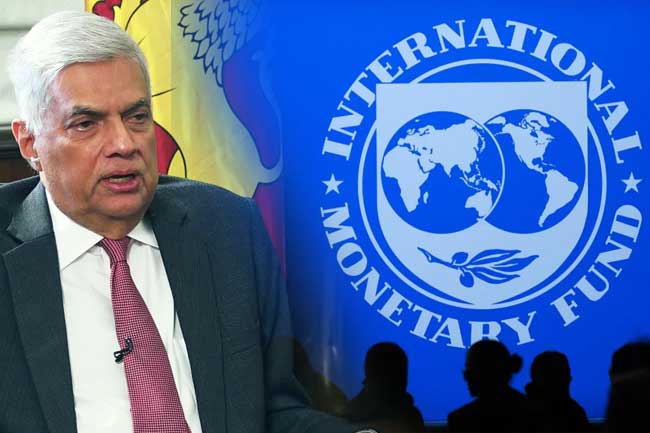
IMF Checkmates Ranil’s “Game” Of Governance! By Hema Senanayake

President Ranil Wickremesinghe by his own admission during an interview with a journalist in Germany said that politics is a game for him. He boasted that he knows it well. With his vision comes his governance. Desperate Sri Lankans experience it on daily basis. Quite contrary to his cheap vision, the IMF insists throughout its Governance Diagnostic Assessment report issued in the end of September, 2023 that politics and governance is not a cheap game but a process that supports for sound fiscal planning which sets the foundation of effective control of public funds ensuring transparency, minimizing risks of corruption at every level, prevents breaching fiscal rules, ensure political stability with proper democratic process to face severe economic, social and governance challenges. None of these is a game.

But Ranil plays a game. IMF indirectly explains how he does it. Corrupt budgeting process is the beginning of his game. Let me give you an example. The government allocates funds in the budget to hold elections. This budget was approved by parliament too. Then the secretary of the Ministry of Finance goes to courts and tells them that there are not enough funds to hold the election. How can this be possible? IMF’s answer is the corrupt budgeting practice. But it is written in IMF’s technical language.

Kindly read carefully. IMF explains that “an effective budget process supports sound fiscal planning and sets the foundation for effective control as well as transparency. To enable sound fiscal planning, the budget should be based on a medium-term fiscal framework that is informed by reliable forecasts and analysis of risk. The budget should comprehensively cover all of the general government sector to ensure full transparency of fiscal planning and other policy interventions. The budget should be prepared through a defined, transparent and timely process to respect the authority of Parliament to approve the budget and to hold budget entities to account for use of resources. Deviations from those principles increase bad fiscal governance and corruption risks.” (Page 56, subsection 125, “Sri Lanka Governance Diagnostic Assessment”, IMF, Sept. 2023. The word in italic in the above quote is inserted by the author of this article).

What does this say? It says that, if the budget is prepared to cover the government sector to ensure transparency respecting the authority of parliament to approve it, the election commission being a budget entity has to account for use of allocated resources. This did not happen. In other words, the secretary of the Ministry of Finance literarily tells the court that the government’s budget process does not support sound fiscal planning and does not set the foundation for effective control and transparency. That’s why the treasury does not have funds to hold elections. Bad budgeting process that did not support sound fiscal planning led to the political game of not holding elections.

IMF noticed it. In its Governance Diagnostic report, the IMF says that among many other reasons for popular discontent, the postponement of local government elections has been a source of popular discontent.” (Page 11).

IMF further insists that “Corruption risks emerge when the budget is not credible. Risks are generated if the executive arm of government is able to spend in excess of budget limits. In such conditions, projects and activities can be funded without due consideration of costs and benefits, and without external scrutiny and oversight by the Parliament.” A recent case was that a few member parliamentarians had gone to New York for the U.N. General Assembly. Nobody knows how their expenditure got covered.

Other bad repercussions of this practice are explained by IMF as follows. “Where there is consistent overestimation of revenue, this typically results in pressure being applied to enhance revenue collections via administrative actions, which can result in deviations from tax policy and collection procedures, creating an environment conducive to subjective actions by tax assessors that raises corruption risk. Where expenditure allocations in the budget are not aligned with underlying cost structures this results in the need for administrative level adjustments during budget execution, where associated approval requirements create a corruption risk. In addition, unrealistic expenditure plans in budgets can create situations whereby payments are rationed by the executive due to a lack of liquidity, creating a situation in which suppliers are required or encourage to offer bribes in order to have their payments prioritized.” The message is clear. IMF wants proper procedure in budgeting and use allocated funds by budget entities.

IMF has checkmated executive branch preventing another bad practice. The IMF says that there exists a range of funds outside of the Consolidated Fund which are not covered by the budget. The budget, therefore, provides incomplete information on the use of all public funds, fiscal policy setting, and equally incomplete transparency regarding public revenue and spending. The risk of corruption is exacerbated as off-budget funds are typically not subject to standard internal control procedures, have limited transparency and do not receive the same level of external oversight as applied to budget entities. The IMF’s message is to stop this game of having funds outside the Consolidated Fund.

Similarly, the IMF’s Governance Diagnostic Assessment revealed systematic and severe governance weaknesses and corruption vulnerabilities across state functions that have broader macroeconomic impact. The IMF demands fixing them.

Conclusively the IMF says that “regular civil society participation in oversight and monitoring of government actions is restricted by limited transparency, the lack of platforms for inclusive and participatory governance, and by broad application of counter-terrorism rules.” (Page 11, GDA report). Indirectly, all these mean that Ranil’s style of suppressive governance is a scam if not a game.