Addressing local voters from Berlin By M.S.M Ayub

President Ranil Wickremesinghe during his interview with German broadcaster Deutsche Welle (DW) in Berlin on October 2 countered the suggestion to hold an international investigation over the claims made by Britain’s Channel 4 Television on Easter Sunday terrorist attacks on April 21, 2019, with strong arguments, no doubt.

Channel 4, in a documentary on the Easter Sunday carnage, last month alleged through the ‘whistleblower’ Azad Maulana that the Easter Sunday carnage was engineered by the State Intelligence Service (SIS) in order to create an environment that would be helpful to Gotabaya Rajapaksa at the Presidential election held in the same year.

It is not clear what went wrong to provoke the President to drag the ‘West’ into the heated argument with the DW journalist at a time when Sri Lanka is seeking assistance from the same West to come out of an unprecedented economic crisis

“Germany does not have such inquiries. The UK does not have such inquiries. What international inquiries have they gone into?” President Wickremesinghe was questioned at the interview after participating in the inaugural event of the Berlin Global Dialogue held on September 28 and 29 in the German Capital, yet with a counter-attack on the region in the world the interviewer belongs to.

“Why is it for Sri Lankans and Asians? You think we are second class? Take this Western attitude out. You are talking nonsense,” he said angrily.

Putting forth another strong argument to negate the demands and suggestions to hold an international probe on the terrorist attacks, he said that investigators from the Federal Bureau of Investigation (FBI), the UK Police and other authoritative bodies in Australia, India, China and Pakistan have all issued reports on the attack, effectively making Channel 4’s allegations moot.

“If those secret services have given reports, what are these allegations,” he questioned.
However, the President had been irritated over the DW journalist Martin Gak asking him this question. He accused that the journalist of holding a Eurocentric worldview that treats countries like Sri Lanka as second-class nations. He gave vent to his annoyance by stating “You have no right to ask me this question” while answering it with strong arguments.

It is not clear what went wrong to provoke the President to drag the ‘West’ into the heated argument with the DW journalist at a time when Sri Lanka is seeking assistance from the same West to come out of an unprecedented economic crisis.

Even a Japanese or an Indian journalist would have asked him the same question in such an interview, as the Chanel 4 documentary is still a hot topic and the terrorist attacks on the 2019 Easter Sunday was an incident that drew attention and interest from all over the world.
The choice of questions at a media interview purely lies with the journalist and not with the interviewee. The latter can refuse to answer a particular question if he does not like it to be asked, but risking the possibility of various negative inferences being created in the minds of the audience by such refusal.

The President’s interview with the DW might be a good case study for journalists in handling tough interviewees. However, Martin Gak was not so unfortunate as BBC’s Douglas Brown who got only answers like “I won’t tell you that”, “Don’t ask me that,” “leave that to me,” “That’s my business,” and “Need you ask me that question at this stage” during the famous interview (which some call a notorious interview) with former Malawian President Dr Hastings Kamuzu Banda on June 21, 1962.

Whatever provoked President Wickremesinghe into such a fury, it might have worked well locally, especially in the southern parts of the country, as he flatly denied any international investigation into any issue – including human rights issues.

And also, at a time when the Presidential election which is said to have been prioritized over the now suspended local government election and the provincial council elections, contesting the allegations against the SIS and thereby against Gotabaya Rajapaksa – especially with an unwanted ferocity – would have gone well with the Sri Lanka Podujana Peramuna (SLPP) from which the President is said to be seeking support for his next term.

Yet, only time will tell if the salvos fired in Berlin will be translated into votes at the next year’s Presidential race.

It is interesting to note that not only the President who challenges the West while relying heavily on the same West in pursuance of recovery from the current economic crunch and facing human rights conundrum at the United Nations Human Rights Council (UNHRC).

Foreign Minister Ali Sabry on September 25, reacting to the India-Canada diplomatic row over the killing of Hardeep Singh Nijjar, a Canadian citizen but designated as a terrorist in India outside a Gurdwara in Canada’s Surrey on June 18 launched a scathing attack on Canadian Prime Minister Justin Trudeau. Trudeau had accused India of the murder.

According to India’s ANI, Sabry had said terrorists have found haven in Canada and their Prime Minister Justin Trudeau came out with the outrageous allegations without any proof. Justifying his meddling in the row between two friendly countries he said “The same thing they did for Sri Lanka, a terrible, total lie about saying that Sri Lanka had genocide. Everybody knows there was no genocide in our country.”

What the minister said about Trudeau’s statement on Sri Lanka was not something of his imagination. Ministry of Global Affairs (of Canada) had very clearly said recently that Sri Lanka did not go through a genocide, whereas PM Trudeau had commemorated the ‘Tamil Genocide Remembrance Day’ on May 18.

However, why should we take a side in a row between two other countries? This is a time when we need more friends. Last year, Sabry was lamenting the difficulty in seeking assistance from the West Asian countries to face the economic crisis as Sri Lanka had antagonized them.
Canada is the prime mover of the Sri Lanka Core Group at the UNHRC. And more pages are being added to Sri Lanka’s human rights file in Geneva almost every month irrespective of the veracity of allegations levelled.

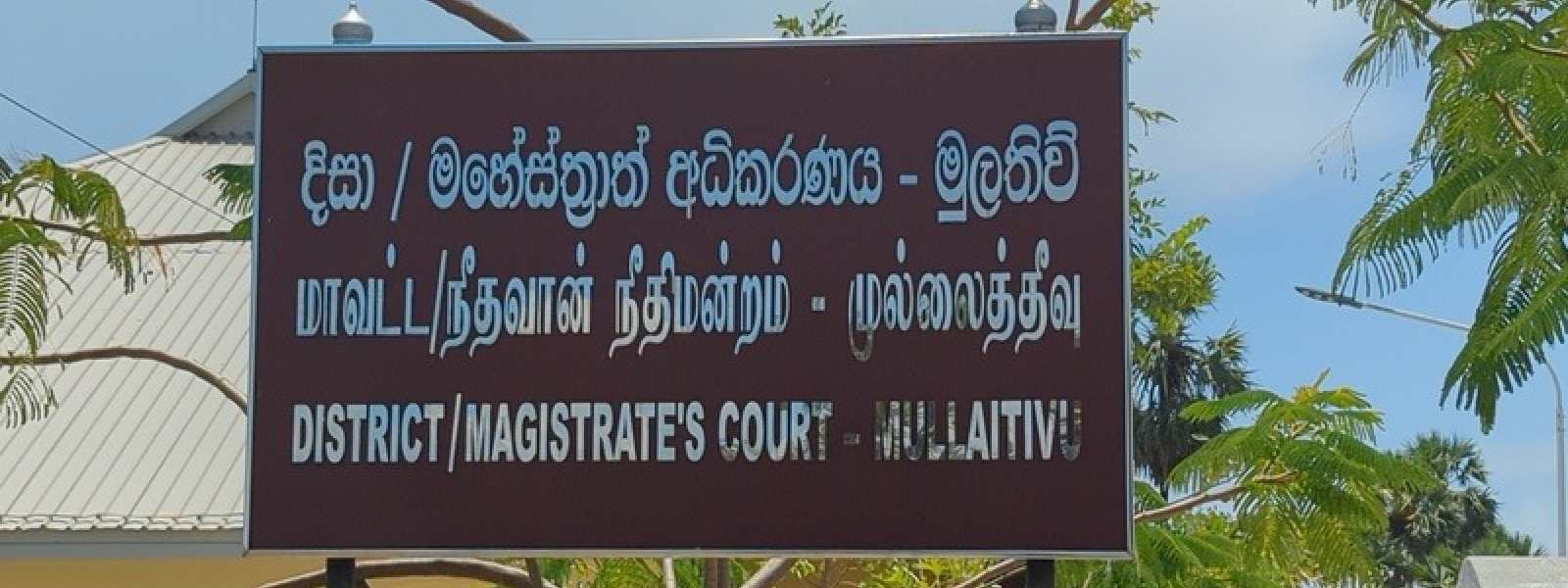
The latest in the list is the resignation of the Mullaithivu Magistrate and District Judge T. Saravanaraja citing life threats and pressures from outside, after the ones about economic crimes and promulgation of various repressive laws.

Sometimes the speculations that the life threats that the judge had cited may be a ruse to seek asylum in Canada where he is said to have gone after his resignation, as speculations had it in the south.

Yet, it was the politicians who gave him ammunition by criticizing his rulings in public. The fact that the West looks down upon the people in countries like Sri Lanka as ‘Second Class’ nations and that LTTE leaders like Nediyavan have taken refuge in Canada is undeniable.
Yet, they should be raised at proper form and not in the media, especially in an inapt manner.
Posted in Uncategorized

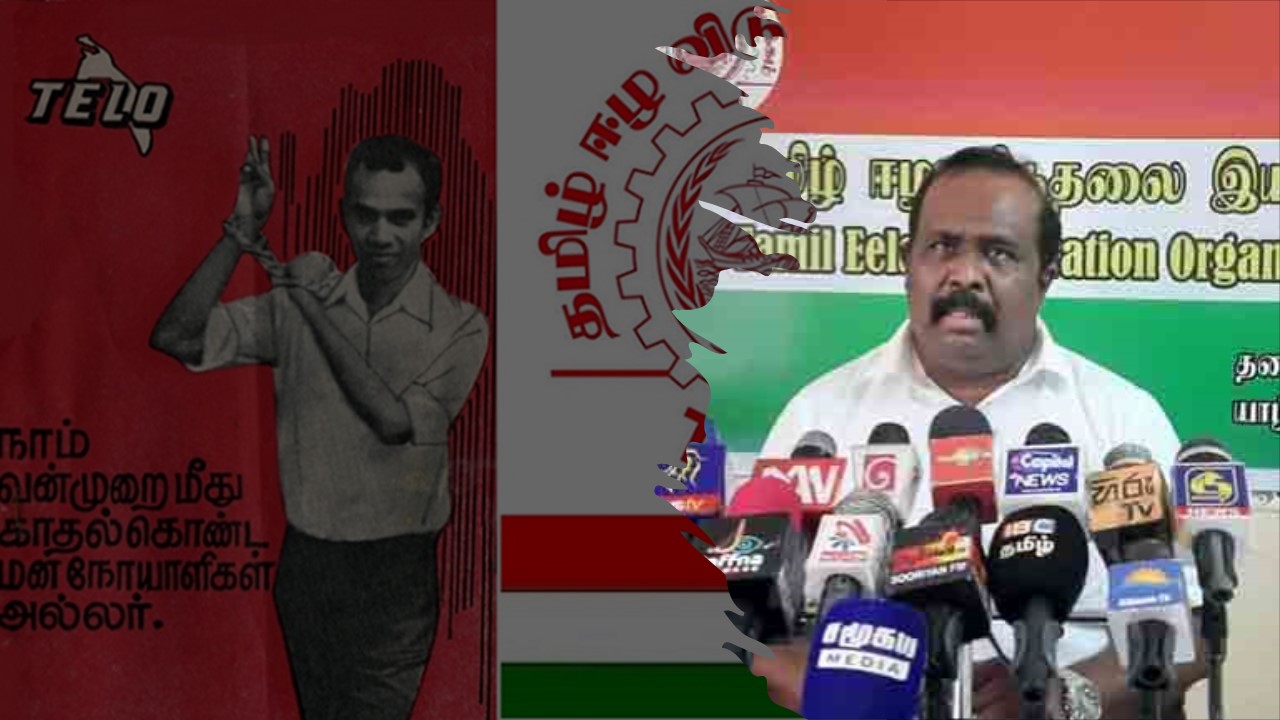
TELO leader warns of armed struggle by Tamils again

Continuing injustices against the Tamils could lay the foundation for them to take to arms again, said Tamil Eelam Liberation Organization (TELO) leader Selvam Addaikkalanathan.

He was speaking at the launch of a book to mark the 60th birthday of party secretary MP Govindan Karunakaran in Batticaloa.

“Buddhist monks, Army, Navy, Air Force and wildlife authorities get together and continue to forcibly take over agricultural and land owned by Tamils. There is no solution. Southern people rejected the armed struggle, but we regret as to why we gave it up,” said Addaikkalanathan.

“This situation should change soon. If not, there could be an armed struggle again,” he warned.

Also present on the occasion were eastern province governor Senthil Thondaman,PLOTE Leader Dharmalingam Siddharthan,EPRLF Leader Suresh Premachandran and M.K. Sivajilingam.

German interview : Ranil praised by Pro Sinhala Nationalist Sarath Weerasekara

Former Minister Sarath Weerasekara has praised President Ranil Wickremesinghe’s response during a recent interview with German media, Deutsche Welle.

The exclusive interview took place on the sidelines of the President’s visit to Germany to attend the ‘Berlin Global Dialogue’.

Video footage shows President Ranil Wickremesinghe being angered by questions raised by the interviewer, especially on British Media Channel 4’s allegations on the 2019 Easter Sunday attacks, and the newly appointed Truth and Reconciliation Commission.

Praising the President, MP Sarath Weerasekara said he appreciates the President for putting in place a foreign journalist who was preparing for a mudslinging interview.

“Even though we don’t agree with the President on other things, the President’s actions during the interview to put the foreign journalist in his place is commended,” he added.

Posted in Uncategorized

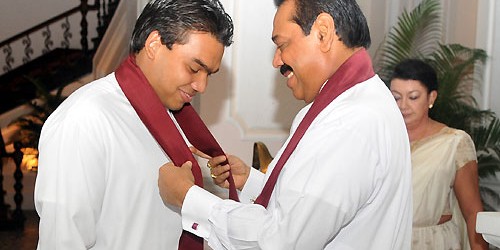
MR says will not retake power, calls for new leadership

In conversation with reporters, former President Mahinda Rajapaksa says Sri Lanka needs a new leader.

Journalist: “Do you intend to retake power?”

MR: “No. I think I have ruled enough. A new leadership is needed to move forward”

Journalist: “The people are facing serious difficulties at present. Will you raise this issue? Are you on the side of the people?”

MR: “We have told the government that it is essential to assist the public at this time. Of course! We have been on the side of the public since back then.”

Journalist: “To be honest, the situation was much better under your rule and the people did not face this much difficulty.”

MR: “That is true. If you are saying this, then it is absolutely correct.”

Sri Lanka’s Rajapaksa gives mixed signals on support for Wickremesinghe

Former President Mahinda Rajapaksa continues to give mixed signals on his party’s continued support for Sri Lanka President Ranil Wickremesinghe; on the one hand commending the latter’s outburst at a foreign journalist and, on the other, criticising price increases and hardships on the public.

Fielding questions from reporters on Wednesday October 04, Rajapaksa said Wickremesinghe’s controversial interview with a Deutsche Welle (DW) journalist was “good”.

One of the journalists who had surrounded Rajapaksa on his way to his official vehicle prompted Rajapaksa with a call back to his own confrontations with foreign media during his tenure as president. The journalist said: “You were also once someone who spoke firmly to foreign media. Now Mr Wickremesinghe has reached that same level. What do you make of that?”

“That’s good. It’s how it should be done,” replied Rajapaksa.

Asked about Wickremesinghe’s insistence in the DW interview that no international investigation will be held on the 2019 Easter Sunday bombings, the former president and leader of the ruling Sri Lanka Podujana Peramuna said: “That’s very correct. It is what the people are expecting too.”

Commenting on allegations made by the UK’s Channel 4 relating to the Easter attacks, he said: “We can’t dance to the tune of Channel 4.”

Rajapaksa also dismissed concerns about the controversial “online safety bill” that was tabled in parliament on Wednesday.

“No one will raise their hand for that,” he said, despite the bill being tabled by an SLPP MP: Minister of Public Security Tiran Alles.

Amid reports of increased splintering within the SLPP, speculation has been rife of different factions of the once formidable party struggling to make up its mind on continued support for President Wickremesinghe.

Against this backdrop, Rajapaksa, who leads the SLPP, offered some thinly veiled criticism of the Wickremesinghe administration, despite the government comprising almost entirely SLPP MPs.

“That’s what we’re telling the government. The people are struggling. The people must be helped. That’s what we’re saying too,” he said.

One journalist offered, ostensibly to egg the former president on, that the people didn’t suffer as much during his administration from 2005 to 2015.

“That is true. If you’re saying that, it must be absolutely correct,” replied Rajapaksa.

“Are you on the side of the people?”

“Yes, definitely.”

Asked if he could not offer some advice to the incumbent president, Rajapaksa said: “The thing is, if our advice is sought, we can give it. You can’t force advice.”

The SLPP leader added that the parliamentary group of the party is discussing reported plans to impose another power tariff hike.

Asked if Rajapaksa did not wish to take back control, he said: “I think I served long enough. We need to go ahead with a new leadership now.”

Posted in Uncategorized

China keeps Sri Lanka in debt grip, stalling IMF relief

(NIKKEI ASIA) Sri Lanka’s diplomatic failure to secure a concrete debt relief framework from China, its largest bilateral lender, is blocking access to desperately needed cash under a $3 billion bailout from the International Monetary Fund.

A visit by IMF officials last month highlighted once again the bankrupt South Asian nation’s slow progress in restructuring its external debt. The fund, which has insisted on “financing assurances” from bilateral lenders as a key pillar, gave Sri Lanka a failing grade in the first review of the bailout, denying it a second tranche of $330 million in aid.

Now the stakes are rising for an expected mid-October visit to China by President Ranil Wickremesinghe to attend a 10th anniversary summit of the Belt and Road Initiative, Beijing’s regionwide infrastructure building program. Wickremesinghe, government sources say, is due to meet Chinese President Xi Jinping to discuss debt relief.

In its statement on the review, the IMF did not point fingers. But multiple diplomatic sources from Asian and Western missions in Colombo told Nikkei Asia that China’s foot-dragging on Sri Lanka’s debt was an issue.

The fund did say that a green light for additional aid “requires the completion of financing reviews,” after scrutinizing the country’s record since the first injection of $330 million was approved in late March.

“These financing assurances reviews will focus on whether adequate progress has been made with debt restructuring to give confidence that it will be concluded in a timely manner and in line with the program’s debt target,” said the IMF team, headed by Peter Breuer, senior mission chief for Sri Lanka.

China was the last bilateral creditor to join lenders like Japan and India early this year to offer initial financial assurances that met the IMF’s conditions to approve the March bailout, an Asian diplomat revealed. “Beijing offered a two-year moratorium for the Sri Lankan debt and talked of providing new loans to pay for existing debt,” the source said on condition of anonymity.

But China balked at an April invitation to join a committee of Sri Lanka’s bilateral creditors chaired by Japan, India and France, aimed at drafting an external debt restructuring framework. Beijing opted to deal directly with the Sri Lankan government.

“The other lenders were OK with this arrangement and were prepared to let Colombo deal with Beijing at a bilateral level,” the diplomat added. “But there cannot be any special deals favoring Chinese debt terms, such as no haircuts, yet expecting haircuts from the other countries.”

Wickremesinghe — who stepped into the role of president in the middle of last year — has assured bilateral lenders of equal treatment. The incumbent then, Gotabaya Rajapaksa, had fled in the wake of unprecedented street protests driven by public anger over the collapsed economy.

“We will not have separate deals,” Wickremesinghe told Nikkei Asia in an interview in Tokyo in May. “We won’t give advantage to one party, we will work on the same principles.”

A meeting of Sri Lanka’s creditor nations held online in May was attended by 26 countries. Many were from the Paris Club, a network of wealthy nations that have a history of resolving external debt crises in developing countries to which they have given loans. China stood by only as an observer.

Within the group of countries besides China, diplomatic sources familiar with the talks revealed that concrete progress on a blueprint and timeline is still elusive. “Nothing has moved concretely within the Japan-India-French creditor committee because of no progress from China,” said one source. “So we will be following President Ranil’s visit to China closely.”

Consequently, the scope of Sri Lanka’s debt to China remains under scrutiny.

Sri Lanka ran out of foreign reserves at the end of 2021 to pay for its imports and faced pressure to service a $7 billion external debt the next year, pushing it to the brink of the worst economic crisis since independence in 1948.

By 2021, public debt stood at 114% of gross domestic product — 47% of it in the form of foreign loans, with private creditors who had bought international sovereign bonds topping that list, followed by bilateral lenders led by China.

In May 2022, Sri Lanka became the first Asian lower-middle income country to default on its sovereign debt this century.

Chinese loans had financed a spree of large infrastructure projects, including highways, an airport and a port. “China will have to play a major role in Sri Lanka’s debt restructuring process, with $7.4 billion or 19.6% of outstanding public debt owed to China at the end of 2021,” wrote Umesh Moramudali and Thilina Panduwawala, two Sri Lankan economists, in “Evolution of Chinese Lending to Sri Lanka since the mid-2000s — Separating Myth from Reality.”

Their November 2022 study, published by the U.S.-based Johns Hopkins University, observed that “China’s approach to Sri Lanka’s debt restructuring and the extent of debt relief offered will set a precedent for China’s role and behavior in other countries.”

Chinese lending to Sri Lanka mainly came from two major policy banks, China Exim Bank, which accounted for $4.3 billion, and China Development Bank, which gave $3 billion.

By contrast, interest-free loans provided directly to Sri Lanka as part of official aid from the Chinese government amounted to only $16 million by the end of 2021, said the Sri Lankan economists Moramudali and Panduwawala in an e-mail interview. “We have not come across EXIM or CDB loans that are interest-free.”

China’s opaque response to Sri Lanka’s restructuring effort has many questioning its motives.

“China appears to be taking a strategic approach rather than pursuing the Sri Lanka case from a financial position,” said Manjuka Fernandopulle, a Sri Lankan commercial lawyer advising Sri Lanka’s sovereign bond holders. “It is trying to provide an extra level of protection to its major lenders — EXIM and CDB.”

Source : NIKKEI ASAI

China stalling IMF relief for debt grip Sri Lanka: Report

(ANI): Sri Lanka’s is facing a big challenge from its largest bilateral lender, China to secure a concrete debt relief framework, as it is blocking access to desperately needed cash bailout of 3 billion US dollars’ from International Monetary fund, Nikkei Asia reported.

Last month’s visit by IMF officials to the crisis-recovering nation seems like a hope for the country. But IMF which has insisted on “financing assurances” from bilateral lenders as a key pillar, gave Sri Lanka a failing grade in the first review of the bailout, denying it a second tranche of $330 million in aid.

According to the Nikkei Asia, the chances of the relief for Sri Lanka is rising for an unexpected mid-october visit to China by Lankan President Ranil Wickremesinghe to attend a 10th anniversary summit of the Belt and Road Initiative, Beijing’s regionwide infrastructure building program where he will meet the Chinese President to discuss debt relief.

Meanwhile the IMF has said that the further relief aid requires the completion of financing reviews after analysing the country’s record since the first injection of 330 million US dollars, approved in late march.

Nekkei Asia reported quoting IMF team, headed by Peter Breuer, senior mission chief for Sri Lanka said, “These financing assurances reviews will focus on whether adequate progress has been made with debt restructuring to give confidence that it will be concluded in a timely manner and in line with the program’s debt target.”

China is one among other nations to join lendors like Japan and India early this year to offer initial financial assurances that met the IMF’s conditions to approve the March bailout, an Asian diplomat revealed.

“Beijing offered a two-year moratorium for the Sri Lankan debt and talked of providing new loans to pay for existing debt,” Nikkei Asia reported.

Notably, Sri Lanka has invited China to join a committee of country’s bilateral creditors chaired by Japan, India and France, aimed at drafting an external debt restricting framework, which China rejected in April this year. And opted to directly deal with the Sri Lankan government.

“The other lenders were OK with this arrangement and were prepared to let Colombo deal with Beijing at a bilateral level,” the diplomat added. “But there cannot be any special deals favoring Chinese debt terms, such as no haircuts, yet expecting haircuts from the other countries.”

Sri Lankan President Wickremesinghe who assumed the charge after the former president had fled from the country amid protests driven by public anger over the collapsed economy has promised to deal with all the bilateral lendors to treat them equally.

“We will not have separate deals,” Wickremesinghe told Nikkei Asia in an interview in Tokyo in May. “We won’t give advantage to one party, we will work on the same principles.”

A meeting of Sri Lanka’s creditor nations held online in May was attended by 26 countries. Many were from the Paris Club, a network of wealthy nations that have a history of resolving external debt crises in developing countries to which they have given loans. China stood by only as an observer.

Within the group of countries besides China, diplomatic sources familiar with the talks revealed that concrete progress on a blueprint and timeline is still elusive. “Nothing has moved concretely within the Japan-India-French creditor committee because of no progress from China,” said one source. “So we will be following President Ranil’s visit to China closely.”

Consequently, the scope of Sri Lanka’s debt to China remains under scrutiny.

Sri Lanka ran out of foreign reserves at the end of 2021 to pay for its imports and faced pressure to service a $7 billion external debt the next year, pushing it to the brink of the worst economic crisis since independence in 1948.

By 2021, public debt stood at 114% of gross domestic product — 47% of it in the form of foreign loans, with private creditors who had bought international sovereign bonds topping that list, followed by bilateral lenders led by China.

In May 2022, Sri Lanka became the first Asian lower-middle income country to default on its sovereign debt this century.

Chinese loans had financed a spree of large infrastructure projects, including highways, an airport and a port. “China will have to play a major role in Sri Lanka’s debt restructuring process, with $7.4 billion or 19.6% of outstanding public debt owed to China at the end of 2021,” wrote Umesh Moramudali and Thilina Panduwawala, two Sri Lankan economists, in “Evolution of Chinese Lending to Sri Lanka since the mid-2000s — Separating Myth from Reality.”
Chinese lending to Sri Lanka mainly came from two major policy banks, China Exim Bank, which accounted for $4.3 billion, and China Development Bank, which gave $3 billion.

By contrast, interest-free loans provided directly to Sri Lanka as part of official aid from the Chinese government amounted to only $16 million by the end of 2021, said the Sri Lankan economists Moramudali and Panduwawala in an e-mail interview. “We have not come across EXIM or CDB loans that are interest-free.” (ANI)

Threats to judge: Northern lawyers conduct token strike, warn of continued action

Lawyers in the Northern Province launched a token strike yesterday (3) demanding a thorough investigation into threats made to Mullaitivu District Court Judge T. Saravanarajah, and measures to protect the safety of judges and the independence of the judiciary.

Lawyers in the Jaffna, Kilinochchi, Mannar, Vavuniya, and Mullaitivu Districts joined hands in this regard as part of the Northern Province bars.

Sources within the Northern Province bars told The Daily Morning that due to lawyers withdrawing from court proceedings, the daily activities of courts in the Northern Province were hampered. The Mullaitivu Lawyers’ Association said that the Mullaithivu District Lawyers will conduct a formal investigation into the threats against Saravanarajah and demand that authorities enforce the law against the concerned persons. The sources also said that a decision on a continuous strike is to be made if the authorities fail to provide them with a proper solution.

When contacted by The Daily Morning yesterday (3), Bar Association of Sri Lanka (BASL) President attorney-at-law Kaushalya Nawaratna said that the BASL has not endorsed any such union action concerning the resignation of the said judge, but that regional bars have the independence to organise as such if they wish. He also said that the BASL is continuously pressurising law enforcement authorities to take necessary action, but that no decision has been taken so far by its Executive Committee regarding a protest or other similar union action.

Judge Saravanarajah, in a letter to the Judicial Service Commission, resigned from all his judicial posts recently, citing death threats and stress, and he has subsequently left the country. The threats are attributed to orders he has given in a controversial case concerning the Kurundi Temple. The Inspector General of Police and the Criminal Investigations Department have since been ordered to commence a probe into the resignation and circumstances of the same, while the BASL has met the Chief Justice for the same reason.

Posted in Uncategorized

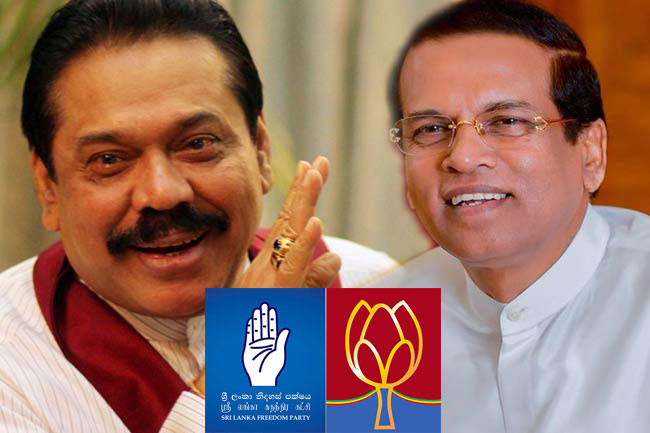
SLFP not inclined to merge with SLPP– Sirisena

Sri Lanka Freedom Party (SLFP) Chairman, former President Maithripala Sirisena yesterday (3) asserted that the SLFP has no intention of merging politically with the Sri Lanka Podujana Peramuna (SLPP) and it is not possible at the moment.

During a media briefing at SLFP Headquarters, Sirisena said, “To be honest, the majority of people in the country are against the government. This is clear from the people’s reactions towards the government.”

He added that the unbearable cost of living has left the people of this country disenchanted with the government. He claimed that they (SLFP) are in the Opposition in Parliament and have their own political paths, similar to what the government has. There is no need to associate with former President Mahinda Rajapaksa, as their policies are entirely different, he claimed.

“Each political party has its own unique policies and agendas that may not align with each other. We have different political ideologies and it is not feasible for us to go on the same path. However, we do not hold any personal animosity towards any other political party or their representatives. Our differences are purely based on our political ideologies,” Sirisena said.

“As SLFP members, in accordance with our party’s general policies and objectives, we are ready to work for the country while putting aside our personal political policies and agendas in order to form alliances. The SLFP has formed numerous alliances and collaborated with other political parties, prioritising the advancement of the country over our party’s individual policies,” he said.