The highlight of the month of October is Prime Minister Harini Amarasuriya’s official visit to India from October 16 to 18. This was 55 year-old former academic’s first visit to India after she became PM. She is no stranger to India, particularly New Delhi, having studied and graduated from the Hindu College with B.A. degree in Sociology. Mrs Amarasuriya went on to acquire a Master’s degree in Applied Anthropology from Australia and a doctorate in Anthropology from University of Edinburgh. The visiting PM had just returned from a three-day visit China to attend the Global Leaders’ Meeting on Women. During her China visit, she met with the Chinese President Xi Jinping, Chinese Premier Li Qiang and China’s top political advisor Wang Huning. Their talk was generally about joint venture and collaborations between the two countries particularly about the Colombo port city, the Hambantota port and the central expressway. She also lauded the commitment made by Xi to gender equality and women’s empowerment globally during the opening ceremony of the Global Leaders’ Meeting. Her visit to New Delhi immediately after the visit to China is significant.
Though Dr Amarasuriya was in Delhi to participate in NDTV’s World Summit, it was evident the visit was part of ruling NPP’s efforts to strengthen Sri Lanka’s bonds with India. At her meeting with PM Modi covered a wide spectrum of subjects. In PM Modi’s own words, “Our discussions covered a broad range of areas, including education, women’s empowerment, innovation, development cooperation and the welfare of our fishermen. As close neighbours, our cooperation holds immense importance for the prosperity of our two peoples as well as the shared region.” Dr Amarasuriya, on her part, said, “It was very good. We discussed how we can continue to maintain the good relations that we have established. Prime Minister Modi gave me quite a few ideas about the education reforms that are going on here. We discussed our respective policies.” She did not avoid the sensitive issue of fishermen either; she said, “That is an ongoing issue and something that needs to be discussed. We need to protect the livelihoods of our fishermen as well, but we understand that that’s a sensitive issue and we will continue to talk about it.”
Her visit to NITI Aayog, policy coordination think tank, in New Delhi is of special significance. The visit focused on fostering deeper collaboration between the two countries and sharing insights on India’s transformative initiatives in the sectors of infrastructure, education, tourism, skill development, and artificial. She showed special interest in understanding how NITI Aayog functions alongside central ministries and states—linking analysis, evidence-based policymaking, and feedback from citizens into effective governance. She also shared Sri Lanka’s own reform journey and the need for institutions that promote policy coherence, evidence-based decisions, and consistency beyond political cycles.
The discussions provided an overview of India’s ongoing initiatives such as PM Gati Shakti for multimodal infrastructure planning, the National Education Policy 2020 for holistic and inclusive learning, collaborative opportunities in tourism and cultural exchange, and frontier technologies including artificial intelligence and digital governance. Presentations made on the occasion particularly the Economic and Technology Cooperation Agreement (ETCA), PM Gati Shakti, showcasing integrated infrastructure planning and the potential application of India’s multimodal logistics model to Kandy City, Education Reforms under NEP 2020 show future areas of Indo-Sri Lanka projects. While technology-driven learning systems will benefit Sri Lanka’s tourism, Sri Lanka can benefit from collaboration in digital innovation and governance, to enable NPP to deliver systemic improvements. As NITI Aayog said “The visit underscored the shared vision of India and Sri Lanka to deepen strategic partnerships, promote sustainable development, and leverage innovation and skills to address regional challenges and opportunities. Both sides reaffirmed their commitment to advancing a knowledge-based, technology-driven, and people-centric partnership under India’s “Neighbourhood First” and ”MAHASAGAR” frameworks.
The extra effort put in by the Janatha Vimukthi Peramuna (JVP)-led NPP government of President AK Dissanayaka (AKD) and PM Amarasuriya to strengthen ties with India is remarkable for its ideological transformation. The core tenets of the JVP’s early ideology were outlined in the “Five Lectures” delivered by its founder, Rohana Wijeweera, to its cadres. These lectures covered: an analysis of the local economy and high unemployment rates among youth, critiques of the “old left” parties’ failure to achieve a true revolution and anti-imperialist stance (which explicitly included criticism of Indian “expansionism”) and the necessity of a sudden, violent armed insurrection to seize power.
The JVP has historically viewed India as an expansionist power and a threat to Sri Lanka’s sovereignty. The party consistently criticized India’s involvement in Sri Lanka’s internal affairs, fearing a potential loss of independence. The arrival of the Indian Peace-Keeping Force (IPKF) and the signing of the Indo-Sri Lanka Accord in 1987, which aimed to address the Tamil ethnic conflict through devolution of power, was a primary catalyst for the JVP’s second and more violent insurrection between 1987 and 1989. Rohana Wijeweera gave specific lectures against “Indian irredentism” as part of the party’s core indoctrination. The JVP leadership even framed Tamil demands for self-determination as being aligned with U.S. imperialist interests.
The JVP’s transformation from its India-hating revolutionary Marxist-Leninist philosophy to accept a democratic socialist framework came after the failure of its two violent insurrections (in 1971 and 1987-89). Of course, the ideological transformation was aided by the collapse of the Soviet Union. Its evolution from insurrection to democratic engagement involved abandoning armed struggle. However, the reframed ideology has retained its leftist orientation by reinterpreting Marxist principles to suit pluralist democracy. It features emphasis on anti-imperialism, social justice and economic equity while abandoning authoritarian socialism. The JVP’s present Avatar has embraced electoral politics, and rebranded its ideology around anti-corruption, civic empowerment, and inclusive governance. The NPP coalition’s success in the last presidential and parliamentary elections show people have welcomed its focus on grassroot democracy, transparency and participatory governance aligned to democratic norms. So far, JVP MPs parliamentary behaviour has been more constructive.
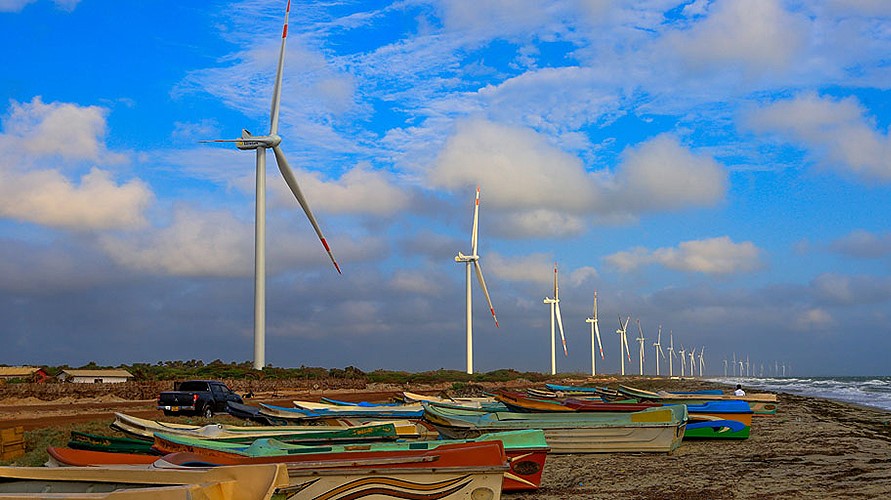
The Frontline Socialist Party (FSP) which shares ideological roots with JVP maintaining a separate identity, is a not a formal member of the NPP coalition. It considers itself as the inheritors of JVP’s revolution, retaining its anti-Indian stance. It often criticises the NPP government for its pragmatic alliance sacrificing ideology. The FSP has questioned NPP’s recent deals with political actors to help NPP gain control of local councils, branding them as betrayal of anti-establishment principles. An activist of the Party Wasantha Mudalige has recently criticised the NPP government for allowing India to expand investments in the strategic Trincomalee District “at the expense of people” (whatever that means). Recently, when the President visited SLAF Academy in Trincomalee, the FSP activist said the government had “brazenly facilitated high-profile Indian projects, such as the Trincomalee oil tank farm project, launched decades ago. He alleged that the NPP was pursuing an agenda inimical to Sri Lanka, contrary to what the JVP/NPP had been saying over the years. Another FSP spokesman said the government seemed to have adopted a very similar strategy in the Mannar District, where the people have launched protests on controversial wind power projects. None of those NPP lawmakers, from the Northern and Eastern Provinces, spoke on behalf of the people, for obvious reasons as the government was bent on appeasing India, regardless of consequences. The FSP has recently called a press conference in Colombo where the party leader Duminda Nagamuwa questioned India’s motive in implementing housing projects in many parts of the country. He pointed out that there were so many people without proper housing in India, while New Delhi was engaged in mega housing projects here. He was referring to India’s announcement that it will support the construction of 14,000 houses for the Indian-Origin Tamil community in Sri Lanka under Phase IV of the Indian Housing Project. Officially the project was launched at a ceremony on October 12, 2025, attended by Sri Lankan President and Indian High Commissioner to Sri Lanka.
Unlike the Rajapaksas, AKD seems to have abandoned personality-based leadership style and adopted an inclusive leadership for JVP’s NPP coalition with affiliate wings – NPP Youth and Progressive Women’s Collective. Its core strength o appears to be pragmatic governance, mass appeal and reformist agenda. In pragmatic governance and reformist agenda, India’s learnings and assistance have become indispensable to Sri Lanka; the cultural and historical connections give India a feet up in tackling Chinese competition in Sri Lanka. Apparently, its form has appealed to the people as NPP accounts for 159 out of 225 parliament members and 266 out of 341 local body members.
However, while managing the coalition, AKD must manage JVP’s lingering residual radicalism visible in its rhetoric, centralized party control and difficulties in managing ideological purity with coalition politics. Otherwise, NPP runs the risk of being marginalised in the cut throat politics of Sri Lanka. As far as relations with India are concerned, AKD’s problem is likely to be in handling the sizeable population of India-baiters present in almost all parties. The Indo-Sri Lanka Accord and 13th Amendment and Indian poachers fishing in Sri Lankan waters are their rallying point to trigger anti-Indian propaganda.
*Col R Hariharan VSM, a retired MI specialist on South Asia and terrorism, served as the head of intelligence of the Indian Peace Keeping Force in Sri Lanka 1987-90. He is associated with the Chennai Centre for China Studies.