Sri Lanka’s healthcare in distress as doctors leave for Middle East, other countries

After they lost access to most medicine and medical supplies when their country spiraled into a financial crisis earlier this year, Sri Lankans are now also losing doctors as many migrate to the Middle East and Western countries with more opportunities.

People have been struggling with daily power cuts and shortages of basic commodities amid the worst economic crisis since Sri Lanka gain independence from the British in 1948. The island nation of 22 million officially defaulted in April, and without foreign currency reserves was left unable to pay for imports.

Medical professionals in the country that relies on imported drugs for about 85 percent of its pharmaceutical needs have been sounding the alarm for months, saying they are struggling to provide timely and adequate treatment to patients.

The working conditions and little hope for improvement have lately forced hundreds of them to leave, and according to Sri Lanka’s Foreign Employment Bureau the exodus is an increasing trend.

“There is a rising trend in professionals moving out of the island in search of greener pastures because of the current situation in the country,” the bureau’s general manager Priyantha Senanayake told Arab News earlier this week. “A good number of doctors too have left.”

Data from the Government Medical Officers’ Association shows that at least 500 doctors from state medical institutions have migrated abroad in the first eight months of 2022.

But the real number may be much higher. Dr. Ruvaiz Haniffa, former president of the Sri Lanka Medical Association, said at least 100 more doctors working in the private sectors have left too, while those who traveled for training and have not returned have yet to be counted.

“We do not have an accurate estimate of doctors sent by the state for overseas training on state expense who have decided not to return at least for the foreseeable future,” he told Arab News.

“For postgraduate studies they mainly go for Australia, New Zealand and Singapore. For employment to Australia, UK and New Zealand. Middle grade doctors mainly go for employment to countries in the Middle East especially Oman and UAE.”

And there was no way to prevent them from leaving, Dr. Haniffa added.

“The government, while being aware of this massive brain drain, is not proactively or even reactively trying to stem this not because it does not want to, but simply because it can’t.”

While official estimates are not yet exact, the magnitude of the situation can be illustrated by the fact that Sri Lanka has already lost 25 percent of specialists treating kidney diseases.

“Out of the 40 nephrologists in Sri Lanka, 10 have left the country,” said Omar Sheriff, general manager for Western Hospital in Colombo, the main kidney transplantation center in Sri Lanka.

“Most of them are going to the UK because they can not only get more lucrative income but also continue their higher studies.”

The possibility to progress in their career is for specialists one of the main forces motivating them to migrate as they do not see this chance coming to their crisis-hit country anytime soon.

A doctor from a leading government hospital in Colombo, who requested not be named, said that the medical profession has lately been “downgraded to a lower level in the society.”

With no supplies to perform their duties, medics have been under increasing pressure and facing increasing stress in a situation where their hands are tied.

“There is a dearth of important medicines to treat people,” the doctor said. “It’s a sorry state of affairs.”

Source: Arab News

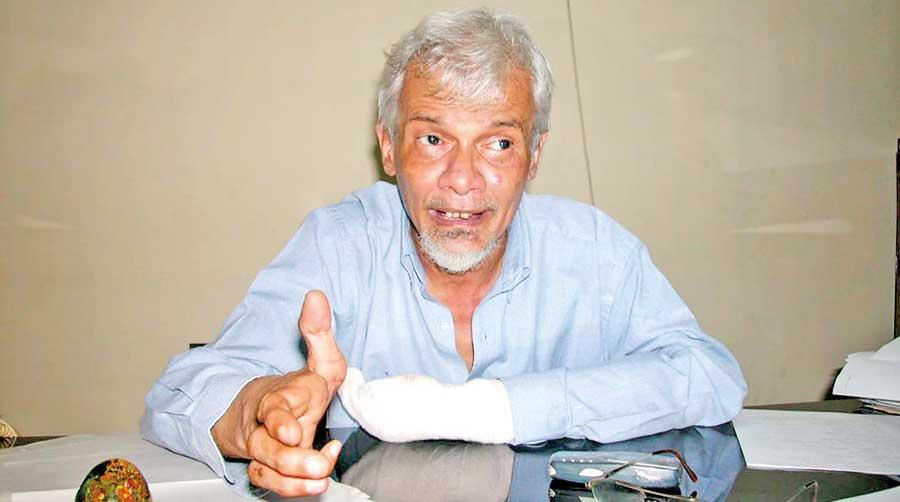
Paradise in Tears By Victor Ivan

Due to a sudden illness, I had to refrain myself from writing for two consecutive weeks. I must admit that the comment made by Shehan Karunathilaka, the Booker Prize winner 2022 about my book titled ‘Paradise in Tears’, which was published in September 2008, generated an innocent pride in me while I was confined to a sick bed recently.

Karunathilaka, who was eight when the war began, says that he found his memories came back when he read a book called Paradise in Tears by the journalist Victor Ivan. “It brought back the mobs, and my mum pulled my face away. Later I found out they were pulling people out of cars to test whether they could speak Sinhalese; if they couldn’t, they were set on fire.” Despite it has not been subjected to an adequate academic review, the ‘Paradise in Tears’ is a valuable pictorial resume of the main events connected with the present crisis; it contains a large number of photographs (444) of historic importance followed by a brief description of each of them, and could be considered as a significant research study on how Sri Lanka has been pushed to its present state of failure, collapse and bankruptcy.

It has covered a large portion of the episode of the great collapse in the socio-political system of Sri Lanka. In that sense, this book explains not only the historical development of the crisis but also the way Sri Lanka was moving towards great devastation. In fact, what I really wanted was to present the serious events and the grim atmosphere that affected the course of the country in the form of an appropriate pictorial resume using a collection of rare photographs that have been published in regard to each event as and when they occurred, with a brief narration of each picture in a manner they would make an intense impact and a deep shock in the reader.

I originally dreamt not only of publishing just a book with a collection of annotated photographs, but also having an exhibition of them held across the country with the aim of educating and enlightening the general public of the situation. I had been working for a long time to achieve this objective. About 15 years had passed by the time the final collection of photographs was completed. Needless to say, that the selection of 442 photographs of historic importance and illustrating them with background details with specific dates alone is not a simple or easy task

Mangala’s intervention

In 1997, Mangala Samaraweera who was a powerful minister in the Cabinet of the Chandrika government knew that I had a comprehensive collection of photographs with captions written in respect of each of them and it could be used for a photo exhibition about the crisis in Sri Lanka. He called me and not only did he have a look at the collection of photographs but also read the captions I had written on them. He was of the opinion that this collection of photographs should be exhibited across the country. Along with that, he said that the narrative on the pictures, especially the critical ones written about the Bandaranaikes, should be edited in such a way that they would be acceptable to President Chandrika Bandaranaike.

But, I was of the view that the editing could only be allowed if the facts contained in the narrations are not true, and that it is not appropriate to edit them to please the Bandaranaike family. Consequently, the efforts made by Mangala to persuade me to change my authoritarian attitude proved to be unsuccessful; he gave up the idea of ​​holding a photo exhibition at the national level using the collection in my possession. Had I not adhered to such a policy strictly and become flexible to the extent that Mangala wanted, it would have been possible to have an exhibition held across the country making a profound impact on the public. At the same time; it might have caused a big distortion in the purpose of exhibiting the photographs.

Investigator of the Rajiv Gandhi assassination case

Dr. Pathum Kerner, who can be considered as a colourful young liberal leader of the youth struggle, had commented on my book ‘Paradise in Tears’ on social media, two to three weeks ago. Some experiences I encountered in regard to this work may be of importance not only for me but also for the people of this country. One day a person came to me with three copies of the English version of it. The price of the English version was Rs. 3,500 and I was curious to know his identity since he had purchased three copies of it. The happiness I felt when he disclosed his identity was immense and inexpressible. He was the retired CBI officer K. Raghothaman, the chief investigation officer of the Special Investigation Team (SIT) that probed the Rajiv Gandhi assassination case in the early 1990s.

When asked as to why he had purchased three copies of the book, he replied that one copy was for him, one for the Central Bureau of Investigation (CBI) library and the other for Sonia Gandhi. When I asked him about the relevance and importance of it for him he said that the importance of the book can be seen from the manner in which it has been compiled, and the notes written on the assassination of Rajiv Gandhi can be considered quite special and outstanding. Unfortunately, this excellent investigator died of COVID-19 in May 2021, at the age of 76.

I had commented that it was ironic that Rajiv Gandhi was assassinated by a Tamil woman from the north when in fact he could have been killed before that by a Sinhalese navy soldier in the south. I had a great respect for Rajiv Gandhi. He tried to rectify the mistakes made by his mother. He visited Sri Lanka to sign the Indo-Sri Lanka Peace Accord in Colombo on 29 July 1987, knowing that there was a big risk involved in it. If the Indian troops were not sent to Sri Lanka at that stage at the request of President Jayewardene, Sri Lanka would certainly have ended up in a great destruction being unable to face two powerful rebellions.

If the responsibility of defeating the LTTE was entrusted to the Indian Peace Keeping Force (IPKF) instead of following a policy that demanded the IPKF to cease their operation against the LTTE, the defeat of the LTTE would have been a short-term affair and the damage to the Tamil people would have been minimal. Also it would have paved the way for arriving at a political solution to the Tamil problem. If that had been the case, the crisis facing Sri Lanka would not have reached such a decrepit state and the unfortunate situation that the country is in now. According to its location, Sri Lanka should not become a country which is either pro-Indian or anti-Indian. But, in view of the prominence India has gained in the region in terms of its location, size and power and the other aspects, it is important that Sri Lanka should always maintain close and healthy cooperation with India.

Patrick Lawrence

Another wonderful relationship that I developed as a result of this book is as follows. He was Patrick Lawrence, a British national and the editor of the Asian edition of the International Herald Tribune. One day he came to my office with a copy of the English translation of ‘Paradise in Tears’ to have it autographed by me as a memento. I asked him about his opinion of the book. He started the conversation by explaining how he came to know about it. He stayed in Mt. Lavinia. During a conversation he had with a Muslim shopkeeper whom he knew in that area, Patrick had asked him the kind of Sri Lanka that he would expect to live in. The latter had opened a table drawer in the shop and respectfully picked up a book from it and handed it to him and had said that he hopes for a Sri Lanka of the kind that the author of this book is looking forward to.

It was a copy of the Sinhala original of the ‘Paradise in Tears’ the trader had handed him. Although Patrick couldn’t read the Sinhala book, he was able to get an idea about the nature of the book to a certain extent with the aid of the visuals produced in it. Having come to know that there is an English edition as well, of the book he had bought a copy and read it. After that, we had several meetings.

He had read the English translation of ‘Nonimi Aragalaya’ (Unfinished Struggle) authored by me about the crisis in the judiciary. He said that the quality of the English translation of ‘Nonimi Aragalaya’ was not of a satisfactory standard and suggested that it should be re-edited urgently. I also knew that the English version of it was not in a satisfactory standard as the translation was done in a hurry. However, this defect was not rectified with an adequate speed as he expected. Later, he asked for the soft copy of the English translation and was kind enough to copy edit the English text by himself, improving its quality a great deal and without any payment which even after a long time I wish to place on record here as a mark of respect for this celebrated newspaper editor.

Later he quit the field of journalism for some time and worked with the Asian Human Rights Commission. During that time, he wrote and published a book about Sri Lanka titled ‘Conversations in A Failing State’ (in 2008). It was the conversation he had with me on this issue that he had included as the last conversation in that book. This can be considered as a book written on the emerging failure of Sri Lanka based on the views of various people whom he knew in Sri Lanka, about the country. It includes a critical analysis of the great collapse of the judiciary during the tenure of Chief Justice Sarath Nanda Silva. He wonders as to how the judiciary of the country has gone into such a state of ruin by the intervention of a single person.

Rectifying mistakes

The struggle I launched against Chief Justice Sarath Silva continued for 10 years. I neither won nor lost that long, protracted and abysmal struggle. More than a decade has passed since Sarath Silva’s retirement, but the legislature or the judiciary has not rectified the serious mistakes committed by him to the judiciary. Even the Bar Association has not made any effort to correct those mistakes. 15 years have lapsed since I wrote the ‘Paradise in Tears’. Sri Lanka is still living in tears. So far, Sri Lanka has not been able to rectify this ugly situation. Not only the outdated politicians but also the strugglers have failed to realise the reforms the country needs and act accordingly. What is needed now is a reform program that will bring about a profound change in the system. It is something that should be achieved with the support of the Parliament and not through a struggle on the street. Even a change of the government could be effected only by an election, not by a struggle on the street. Only if all conflicting political forces are able to work together to achieve that purpose can the country be oriented to a reform program leading to a profound change in the system.

Posted in Uncategorized

Staggering increase in school dropouts in the North

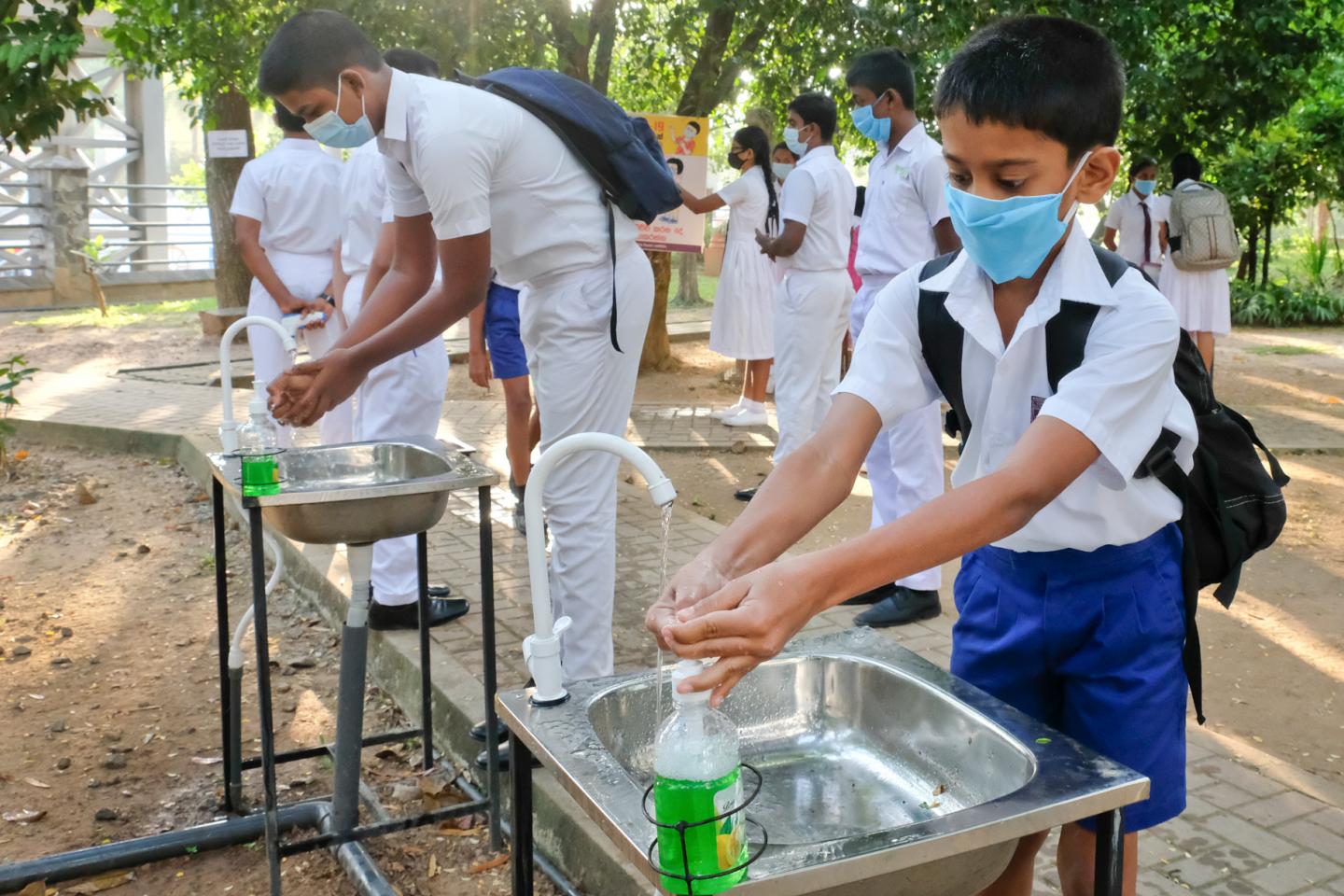
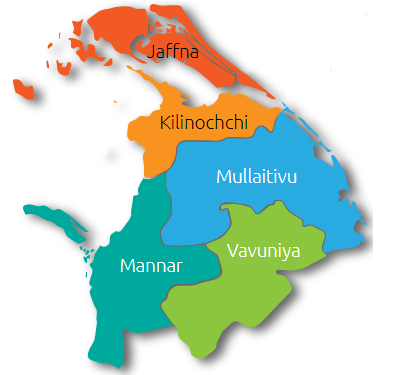
Since the beginning of the COVID-19 pandemic in 2020, many schoolchildren between the age of 14 to 16 years in the Northern province have dropped out of school.

In 2020, 485 students in the region had dropped out. The number reduced to105 last year. But this year, the number of school dropouts has sharply risen to 519, so far.

In 2020, the highest number of school dropouts was from Madu (94). Mannar had 72 dropouts, while Kilinochchi had 52. The Kilinochchi North Zonal Education Division had 51 dropouts, while 48 drop outs were reported from Mullaitivu.

Northern Provincial Education Director S. Udayakumar said extreme poverty was the main reason for children dropping out of school.

The economic crisis had resulted in parents losing their livelihoods, so many male students had dropped out to seek odd jobs to support their families, he said.

Many of them even left the province to seek jobs in other areas including Colombo, he added.

Meanwhile, the parents of female students had been seeking partners for them either based in Sri Lanka or overseas, and this had resulted in a rise of underage marriages in the province, officials said.

UNP opens door to other political parties

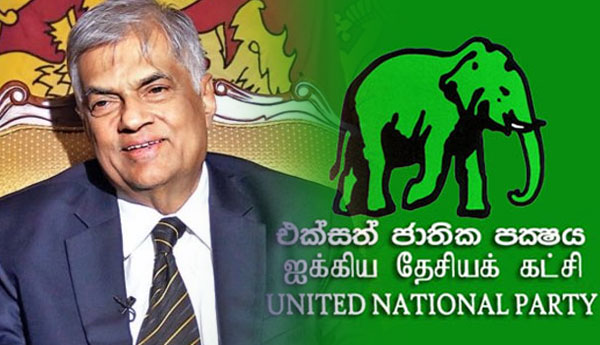
President and the Leader of the United National Party (UNP) Ranil Wickremesinghe has instructed the senior leaders of the party to prepare a new mechanism bring political activists representing all major parties into the UNP fold based on their consent.

The UNP Leader had called upon the UNP seniors to commence work to bring in mainstream representatives as well as the political activists at the rural level of all parties including Sri Lanka Podujana Peramuna, Samagi Jana Balawegaya, Janata Vimukthi Peramuna, National Freedom Front, Tamil National Alliance, and Sri Lanka Muslim Congress to the UNP as soon as possible.

These measures have been taken by directing attention to the rapidly changing political climate of the country.

President Wickremesinghe has called upon the party hierarchy to prepare this program as soon as possible and to start the future activities of the party accordingly.

It has been reported that the UNP leader had given these instructions at a high-level political meeting comprising Deputy Leader Ruwan Wijewardene, Chairman Wajira Abeywardena, General Secretary Palitha Range Bandara and Deputy Leader Akila Viraj Kariyawasam.

Posted in Uncategorized

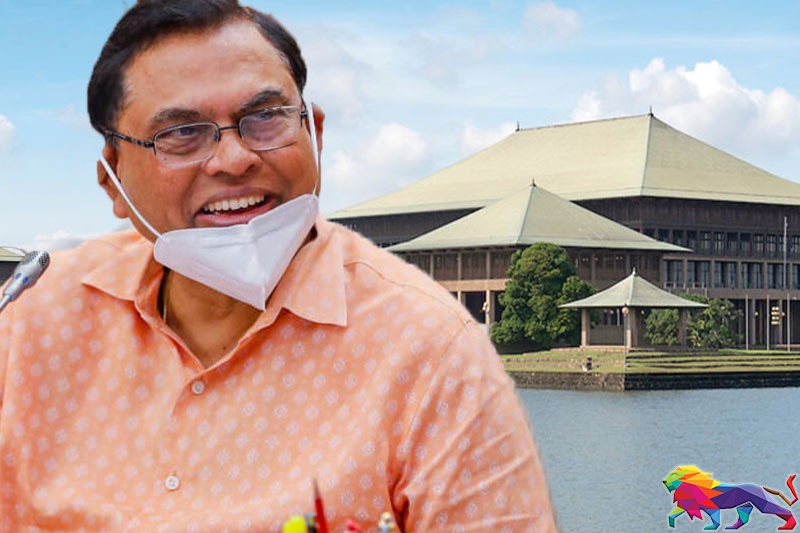
Basil wants to butter his bread on both sides? EDITORIAL The Island

Whether or not President Ranil Wickremesinghe took SLPP General Secretary Sagara Kariyawasam seriously when the latter publicly pronounced that his party cannot support the recently enacted 21st Amendment to the Constitution (introduced through the 22A Bill) because of provisions there that dual citizen cannot run for elected office, we do not know. But Kariyawasam, clearly went on record making that pronouncement, or more accurately threat. He also said that the SLPP would be discussing the matter with the president at a scheduled meeting. If that meeting was held, and if so what transpired there, is not in the public domain.

What we do know is that 22A (later dubbed 21A) was comfortably passed with the required two thirds majority with Admiral (Retd.) Sarath Weerasekera of the SLPP casting the only dissenting vote. Explaining his party’s stance, Kariyawasam said it was clear that the clause banning dual citizen from running for political office targeted former Finance Minister Basil Rajapaksa. This, he said, was totally unacceptable because laws are not meant to target individuals.

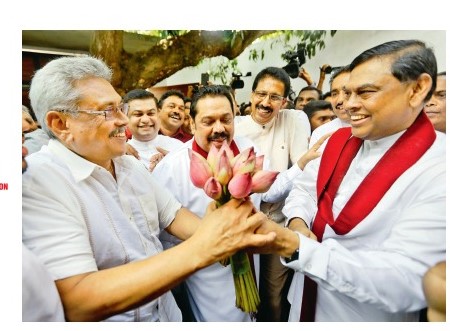
In the event many SLPP members, including three Rajapaksas, Namal, Chamal and Sasheendra, voted for the Bill. Party leader Mahinda Rajapaksa was among the many absentees at voting time. Basil Rajapaksa, the national organizer of the SLPP, widely credited to be the brains behind party and its eminence grise has been praised for the SLPP’s success at the 2018 local elections. This was the take-off point for Gotabaya Rajapaksa’s 2019 election as president with the frequently flaunted 6.9 million vote mandate. That paved the way for Mahinda Rajapaksa’s return to office as Prime Minister in 2020.

All that is now old hat. What is important right now is that Basil, more so than his siblings Gotabaya and Mahinda, is perceived as the genius behind the SLPP victory. Some party men have even sycophantically dubbed him as a “man with seven brains.” Brother Gotabaya renounced his U.S. citizenship to run for president in 2019. But Basil was not willing to do likewise and did not run for parliament in 2020 for the reason he was barred by provisions of 19A. While sections of the SLPP-led coalition that swept that election did not favour the removal of the constitutional prohibition of dual citizen from running, President Gotabaya was able to secure the enactment of 20A removing that barrier. He did so with the promise that the new constitution he promised would not include that provision. It was widely anticipated that this was done solely for Basil’s benefit. In eight months he was back in parliament on the SLPP National List assuming the finance ministry brother Mahinda long held both as president and prime minister.

Basil Rajapaksa was permitted by the courts to return to his U.S. homeland where his family lives, for medical attention on the promise he would return. He is now considered the SLPP puppeteer, pulling the strings from far away and setting his party’s agenda. If Basil engineered that some SLPP Member of Parliament, including ministers, were absent at voting time on 21A a few days ago, he did not secure blanket backing for his wishes. Even the Rajapaksas have broken ranks with only Mahinda, with no explanation offered up to now of his reasons for keeping away, remaining on Basil’s side with three other family members voting for the amendment. Does this signal cracks in the party and family? Only time can tell.

SJB, SLFP and dissident SLPP support was necessary for the amendment to get through with the required two thirds majority. The president understood that very well and he would have socked that into the SLPP that elected him president. Given that he only has the assured support of the solitary UNPer who succeeded him in his party’s single national list slot in parliament, Wickremesinghe remains a prisoner of the SLPP in the legislature until February next year when the constitution empowers him to dissolve parliament. Whether he has held out any assurances that he would not do that, and those MPs who would not qualify for a parliamentary pension if they do not have five years parliamentary service would be apprehensive of an early dissolution, he has levers to pressure sections of the SLPP if required.

Justifying his stand, Sagara Kariyawasam pointed out that a Briton of Indian origin has become the prime minister of the UK and urged that the world was now becoming or has become a global village. Implicit in that remark is “why can’t dual citizen Basil retain his U.S. and Sri Lanka citizenships and enjoy the rights of both?” Rishi Sunak was born in Britain, schooled there and graduated from Oxford. His parents immigrated to the UK from East Africa. But comparing Sunak’s case to Basil’s is like comparing chalk and cheese. Basil was born here and sought greener pastures in the U.S., possibly for economic reasons, and acquired citizenship there. He came back after this side of the fence became even greener with MR’s election. Unlike GR, he is unwilling to renounce that citizenship in return for elected office. He has not discussed the reasons for this stance. Reportedly he has a home in the U.S. but not in Malwana according to a court determination. Kariyawasam obviously wants to help Basil to butter his bread on both sides.

Posted in Uncategorized

New US Embassy in Colombo opened

The newly revamped United States Embassy in Sri Lanka was officially declared open in Colombo yesterday.

President Ranil Wickremesinghe, US Ambassador to Sri Lanka Julie Chung, and the US Department of State’s Under Secretary for Management John Bass officially opened the new Embassy in a festive event.

Full statement:

Colombo, October 28, 2022: In a celebration of more than 70 years of U.S.-Sri Lankan friendship, partnership, and bilateral ties, the Honorable President Ranil Wickremesinghe, U.S. Ambassador to Sri Lanka Julie Chung, and the U.S. Department of State’s Under Secretary for Management John Bass officially opened the new U.S. Embassy on Galle Road today in a festive event that included officials and private citizens from both countries.

“It was a great honor to celebrate our new Embassy in the presence of the President of Sri Lanka, honored guests, and colleagues,” said U.S. Ambassador Chung. “We have had an embassy in Colombo since Sri Lanka’s independence in 1948, and the new campus symbolizes our enduring partnership with Sri Lanka. Americans and Sri Lankans worked together to build this state-of-the-art facility that epitomizes respect for the environment and appreciation of Sri Lankan architectural, cultural, and artistic themes. We are pleased to open our new doors to our Sri Lankan friends.”

Under Secretary Bass stated: “The new embassy highlights the important diplomatic relationship between the United States and Sri Lanka and provides the first impression of the United States for many Sri Lankans. It also demonstrates sustainable design, construction, and operations that represent the best of U.S. architecture, engineering, and building standards.”

The new Embassy is situated on the existing, expanded embassy site along the seafront in central Colombo and provides a secure, modern, sustainable, and resilient platform for U.S. diplomacy in Sri Lanka. The architecture and landscape of the new Embassy were designed to embrace Sri Lanka’s ecology, history, and culture and are heavily informed by Colombo’s tropical climate. Domestically sourced natural stone and wood reference the region’s rich selection of materials in a neutral palette that draws attention to the lushness of the landscape. The Embassy’s interior incorporates textures and patterns inspired by local culture, art, and the surrounding gardens.

A model of environmental stewardship, the new embassy was designed to reduce energy costs and greenhouse-gas emissions while increasing security and augmenting renewable energy usage. To mitigate the effects of strong sun and heavy rainfall, the new embassy integrates regionally available weather-resistant materials, an advanced stormwater management system, and, soon, photovoltaic arrays that will offset roughly eleven percent of the building’s annual energy use. The project is registered with Leadership in Energy and Environmental Design (LEED®) — a global green building certification program that recognizes best-in-class building strategies and practices — and is on track to achieve Silver certification.

The new Embassy also contains a permanent art collection, curated by the Office of Art in Embassies, that includes art in a variety of media, including painting, photography, textiles, and sculpture by both U.S. and Sri Lankan artists. Highlights include site-specific commissions of Birds for Sri Lanka and a wall sculpture representing the atolls and coral life in the oceans. These works reflect an understanding of the diversity and richness of U.S. and Sri Lankan ecology and cultural heritage.

The Bureau of Overseas Building Operations spearheaded the new embassy’s construction. Integrus Architecture of Seattle was the architect for the project, and Caddell Construction Company, LLC of Montgomery, Alabama, constructed the complex, injecting roughly $90 million into the local economy.

-US Embassy Colombo

Posted in Uncategorized

Over 12,500 resettlers in the North

The Ministry of Justice says more than 7000 Sri Lankan families who fled the country as refugees, and returned from India have resettled in the Northern Province.

According to the Justice Ministry, there are around 12,500 such Sri Lankans who returned back to the country.

The Justice Ministry has launched a mobile programme to resolve the legal issues faced by these people in terms of re-obtaining Sri Lankan citizenship.

The mobile legal aid programme will be carried out on Monday and Tuesday in Jaffna and Killinochchi.

Posted in Uncategorized

Government says staff level agreement with IMF not a document

The Sri Lanka Government says the staff level agreement with the International Monetary Fund (IMF) is not a document but only an understanding.

State Minister of Finance, Shehan Semasinghe tweeted saying the actions that need to be completed before any formal approval by the IMF Executive Board are being discussed with Government authorities.

“The IMF “Staff Level Agreement” is not a document but an understanding between the GOSL and the IMF staff. The actions that need to be completed before any formal approval by the IMF Executive Board are being discussed with government authorities. This does not mean that a “Staff Level Agreement” is given out to various individuals as alleged. The IMF press release with elements of this understanding is already in the public domain,” the State Minister said.

He was responding to a tweet by opposition MP, Dr. Harsha de Silva who questioned if the staff level agreement that has thus far been hidden even from the Parliament Committee on Public Finance has been given out to various individuals in committees appointed by the President.

Dr. Harsha de Silva said that if the allegations are true then that is a serious breach.

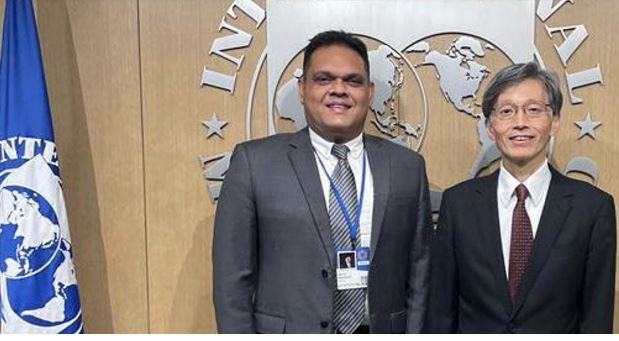
An mission led by Peter Breuer and Masahiro Nozaki visited Colombo from August 24 to September 1, 2022 to continue discussions on IMF support for Sri Lanka and the authorities’ comprehensive economic reform program.

At the end of the mission the Sri Lankan authorities and the IMF team reached a staff-level agreement to support the authorities’ economic adjustment and reform policies with a new 48-month Extended Fund Facility (EFF) with a requested access of about SDR 2.2 billion (equivalent to US$2.9 billion).

German Envoy meets G7 partners on SL’s debt restructuring

German Ambassador Holger Seubert met local G7 partners, including envoys from Canada, France, Germany, Italy, Japan, the UK, and the US, as well as the International Monetary Fund, on Friday (27), to discuss restructuring Sri Lanka’s debt to its donor nations. Sri Lanka is currently experiencing a severe financial crisis and is seeking a bailout from the IMF, after the Government failed to make payments to its development partners, including India, China and Japan, among others.

At the outset, Deputy Assistant Secretary of the United States Treasury Robert Kaproth was in Sri Lanka, where he met President Ranil Wickremesinghe and discussed Sri Lanka’s plans to conduct economic reforms in accordance with the negotiated IMF deal. After the discussion, US Ambassador Julie Chung tweeted, “Political will and forceful actions will help get the economy back on track.” Kaproth also met the AmCham to discuss US corporate opinions on Sri Lanka’s investment climate and ideas to help the country transit from economic stabilisation and recovery to a stronger, more resilient economy.

US Top Envoy Kaproth also had an open conversation about the IMF programme with members of the Opposition Party, the SJB, given the new reality of a rapid increase in poverty from 3.0 million in 2019 to possibly 9.6 million by mid-2022.

Kaproth also met CBSL Governor Nandal Weerasinghe, with whom he highlighted Sri Lanka’s sustained adherence to IMF staff-level agreements and efforts to establish a resilient, sustainable economy. According to the US envoy, IMF staff-level agreements are better able to weather financial crises. Economic changes that promote accountability and address the needs of all Sri Lankans are critical to the country’s economic revival.

21st A: Split SLPP loses ground, BR suffers setback

Former Health Minister Pavitradevi Wanniarachchi recently declared that regardless of who served as the President, that person should abide by the decisions taken by twice President Mahinda Rajapaksa.

Ratnapura District SLPP (Sri Lanka Podujana Peramuna) lawmaker emphasized that Mahinda Rajapaksa’s word, on whatever matter, should be accepted by all, including the President, regardless of the consequences.

Ever the blind Mahinda Rajapaksa loyalist, Wanniarachchi said so at the launch of the SLPP campaign meant to revive the party, amidst continuing deterioration of its position, both in and outside Parliament. The declaration was made at the meeting chaired by Mahinda Rajapaksa, at Kalutara, on Oct 08, close on the heels of calling off the vote on the 21st Amendment to the Constitution. The vote that was to be taken in the first week of October had to be put off due to the warning issued by the SLPP.

MP Wanniarachchi faulted ousted President Gotabaya Rajapaksa for the heavy setbacks suffered by the SLPP. Declaring that only those with political background should have been given top posts in their government, the Ratnapura District MP alleged that the SLPP suffered as a result of its pathetic failure to provide jobs.

Turning towards Mahinda Rajapaksa, and sounding more like a frivolous schoolgirl, rather than the Attorney-at-Law she is, Wanniarachchi recalled how she, in her capacity as Minister of Youth Affairs and Samurdhi, provided jobs for her supporters in the public sector. Appreciating the support extended by the then President Mahinda Rajapaksa for her endeavours, MP Wanniarachchi lashed out at President Gotabaya Rajapaksa for depriving her of that opportunity.

Exposing more of her immature and selfish thinking, despite the terrible situation the country is facing, the former Health Minister alleged that she couldn’t recruit even one supporter, during her tenure as Health Minister whereas her predecessors, Maithripala Sirisena, and Nimal Siripala de Silva, recruited 10,000 each. Obviously, she hadn’t heard, or taken any notice of the ongoing debate over how massive expansion of the public service contributed to the unprecedented economic fallout.

Public Administration Secretary Priyantha Mayadunne, in late May this year, didn’t mince his words when he warned political parties, represented in Parliament, state and private sector trade unions, and the civil society, that they would soon be categorized as traitors unless they agreed to a far reaching economic reforms agenda.

In late August, the Governor of the Central Bank, Dr. Nandalal Weerasinghe, vigorously assailed the political party system when he was invited by Speaker Mahinda Yapa Abeywardena to address the members of Parliament. Soft spoken Dr. Weerasinghe dealt with the current situation, and related issues at hand. The CB Governor flayed those who governed the country, including the present lot, for bankrupting the country.

Obviously, MP Wanniaarachchi didn’t care or seemed to have conveniently turned a blind eye to ground realities. Otherwise she wouldn’t have blamed Gotabaya Rajapaksa for not allowing her, as well, to further expand the public service, now an unbearable burden on the taxpayer. She had also forgotten the daunting challenge posed by Covid-19, at that time, and the national economy was in such a precarious state a large scale recruitment campaign would have been unthinkable.

A week later, the SLPP followed up with the second meeting of its propaganda campaign. The second meeting, held at Mahindananda Aluthgamage’s Nawalapitiya stronghold, was meant to consolidate the SLPP. However, last week it, and the man who behaved as its godfather, dual citizen Basil Rajapaksa, may have suffered an irreparable setback when the Parliament overwhelmingly voted for the 21st Amendment. A staggering 179 members voted for the new amendment, during the division held at the end of the second reading, whereas just one SLPP, MP Rear Admiral Sarath Weerasekera, voted against it. Subsequently, at the third reading of the Bill, 174 voted in favour, and Sarath Weerasekera again voted against the Bill. Of the 179, who voted for the new law, five refrained from doing so in the third division. Weerasekera had the guts to stand by his principles and voted against the 19th Amendment.

The Navy veteran declared, in Parliament that he couldn’t vote for the 21st Amendment that was meant to revive the 19th Amendment that he then, too, opposed it alone. His stand should be applauded as no other MP, serving the current Parliament, had the strength to take a principled stand. On that day, during the crucial vote, 45 lawmakers hadn’t been present.

A large section of the Rajapaksa Camp abstained, though Chamal Rajapaksa, his son Shasheendra Rajapaksa, and Namal Rajapaksa, voted for it. Among those who skipped the vote was the chief organizer of the Kalutara public rally, MP Rohitha Abeygunawardena and Pavitradevi Wanniarachchi. However, in spite of being dubbed as a staunch Rajapaksa loyalist, Mahindananda Aluthgamage voted for the 21st Amendment. The following is the list of government MPs, not present in Parliament, on that day: Mahinda Rajapaksa, Pavitra Wanniarachchi, Gamini Lokuge, Sanath Nishantha, Sagara Kariyawasam, Jayantha Ketagoda, Sanjiva Edirimanne, Prasanna Ranatunga (overseas), Mahinda Amaraweera (overseas), Prameetha Bandara Tennakoon (overseas), Anuradha Jayaratne (overseas), Siripala Gamlath (overseas), Dr. Seetha Arambepola (overseas), Rohitha Abeygunawardena (overseas), S.M.M. Mushraff (overseas), Maj. Pradeep Udugoda (overseas), Nipuna Ranawaka (overseas), Wimalaweera Dissanayake (hospitalized), Sahan Pradeep Withana (hospitalized), Jayantha Weerasinghe (sick), Janaka Bandara Tennakoon (sick), S.M. Chandrasena (State funeral of Ven. Pallegama Siriniwasa), Johnston Fernando (have to attend Court) and Nalaka Bandara Kottegoda (wedding of his brother)

Jathika Jana Balavegaya (JJB) lawmakers, Anura Kumara Dissanayake, Vijitha Herath and Dr. Harini Amarasuriya voted for the new law, while four out of the10 Tamil National Alliance (TNA) MPs skipped the vote. Rebel SLPP MP Prof. G.L. Peiris was out of the country whereas his group voted for the new amendment. The former Foreign Minister would have definitely voted for the new law if he was present in Parliament, on Oct 21. Other notable absentees were Speaker Mahinda Yapa Abeywardena, Chief Government Whip Prasanna Ranatunga, Johnston Fernando and Sagara Kariyawasam. As party General Secretary Attorney-at-law Kariyawasam wielded immense power being close to Basil Rajapaksa.

Of the 40 parliamentarians, who abstained, approximately 30 skipped the vote over the following issues: (a) With the passage of the new Amendment, anyone who is a dual citizen will no longer be allowed to be a member of Parliament, and present dual-citizen MPs will also lose their seats (b) The constitutional amendment also allows the President to dissolve the Parliament after two and a half years of a Parliament being elected.

In addition to the above-mentioned issues that infuriated former Finance Minister Basil Rajapaksa, the new law also ensured a role for the Opposition Leader in the appointment of civil society members to the constitutional council.

Prez consolidates his position

President Ranil Wickremesinghe has consolidated his position at the expense of the SLPP. At the time the then President Gotabaya Rajapaksa invited Wickremesinghe to accept the premiership, on May 12, he wouldn’t have envisaged losing the presidency to the UNP leader. The SLPP, too, wouldn’t have realized the consequences of electing Wickremesinghe, on July 20, to complete Gotabaya Rajapaksa’s term. The SLPP voted for Wickremesinghe, at the expense of Dullas Alahapperuma, who managed to poll 82 votes, while the winner obtained 134. The SLPP’s strategy caused another split in the party as 13 of its members broke ranks. The SLPP dismissed the challenge posed by the dissidents. They were denied the opportunity to speak in Parliament. Key members were also deprived of positions in the coveted parliamentary committees.

Friday’s vote proved that of the 145-member SLPP parliamentary group, elected at the 2020 August parliamentary election, it has been reduced to between 20 to 30. The Rajapaksas, who voted for the 21st Amendment, are among that group. Chamal Rajapaksa, his son Shasheendra Rajapaksa, holding state ministerial post, and Namal, aspiring to re-join the Cabinet, move can be safely described as a precautionary measure. The SLPP is in a dilemma. The once powerful political grouping is now in a political minefield. But, the Rajapaksa group should never be underestimated to prevent unnecessary complications.

It would be pertinent to mention that a section of the SLPP parliamentary group (Vasudeva Nanayakkara, Wimal Weerawansa, Udaya Gammanpila, Gevindu Cumaratunga et al) vigorously campaigned to retain the 19th Amendment provision on dual citizenship. The 19th Amendment, enacted in 2015, disallowed dual citizens from contesting parliamentary or presidential elections. They refused to vote for the 20th Amendment over the discarding of that provision. But, they changed their stand after getting an assurance from President Gotabaya Rajapaksa, that provision would be included in the proposed new Constitution. The new Constitution project never materialized, though a nine-member expert team, led by President’s Counsel Romesh de Silva ,drafted a new Constitution.

Although many asserted that the enactment of the 21st Amendment diluted executive powers, the incumbent President retained sufficient powers to face political challenges. Contrary to speculation, President Wickremesinghe is very much unlikely to exercise conditional authority to dissolve Parliament, two and half years after the first meeting of the incumbent Parliament. Wickremesinghe is expected to complete the remainder of Gotabaya Rajapaksa’s five-year term. The UNP leader wouldn’t, under any circumstances, explore the possibility of holding early parliamentary elections as his party wouldn’t be able to take any advantage from it in the current state of the country.

With just one seat in Parliament, the UNP is not in a position to face early elections at a time the country is experiencing severe economic difficulties. Chances of re-unification with the main Opposition, Samagi Jana Balavegaya (SJB), their erstwhile colleagues at the moment, also seem unworkable, unless the UNP can engineer a mass exodus from the SJB.

The Thilini-Janaki affair reverberates

Before the vote on the 21st Amendment, Justice Minister Wijeyadasa Rajapakse, PC, raised a privilege issue over the reportage of Thilini Priyamali’s case, by a section of the media. Denying a statement attributed to Maithree Gunaratne, PC, that the alleged fraudster was represented by lawyers from Wijeyadasa Rajapaksa’s chambers, an angry Minister alleged that some journalists could be bought for two bottles of arrack. Gunaratne appeared for businessman Abdul Sakthar who had been defrauded to the tune of Rs 226 mn. Minister Rajapaksa requested Speaker Mahinda Yapa Abeywardena to direct the House privileges committee to initiate an inquiry into the alleged unfounded allegations directed by the media. The Minister, who is also the Chairman of the House privileges committee, said that he would step down from his post, temporarily, to allow another member to lead the investigation.

Wijeyadasa Rajapaksa, who first entered Parliament in May 2004 and served different political parties, alleged that some media believed they could manipulate and influence governments. The Minister warned that the media would be appropriately dealt with for propagating lies. Wijeyadasa Rajapakse declared that the day he received a ministerial appointment he closed down his Chambers.

In the wake of the Justice Minister declaration in Parliament, Maithree Gunaratne, in an interview with Chamuditha Samarawickrema (Truth with Chamuditha on social media) said that having seen Attorney-at-Law Dasun Nagasena (Coordinating Secretary to the Justice Minister) and Rakitha Rajapaksa (Justice Minister’s son) at the Fort Magistrate Court, representing Thilini Priyamali, he quipped that the Justice Minister’s full team was here.

Gunaratne said that the media had picked up the conversation between him and the lawyers representing Thilini. Responding to another query, Gunaratne declared that had he served as the Justice Minister he wouldn’t have his sons to represent an accused in such a controversial case.

Gunaratne, no stranger to controversies, questioned the failure on the part of law enforcement authorities so far to apprehend CEO and Director of The One Transworks Square (Pvt) Ltd. Janaki Siriwardena, whose name transpired in the Fort Magistrate Court, and in police investigations. Alleging that a lawmaker in the current Parliament protected Siriwardena and interfered with investigations, Gunaratne said that the matter was brought to the notice of the Fort Magistrate Court. The lawyer asserted that The One Transworks Square (Pvt) Ltd., or Krrish project, built on a five acre land, provided by the Urban Development Authority (UDA), is the eye of the storm. Reference was made to those who had invested in that particular project.

Responding to Chamuditha Samarwickrema’s questions, Gunaratne said that his client invested Rs 226mn with Thilini Priyamali’s Thico Investments based at the World Trade Center on the advice of former Western Province Governor Azath Sally. Gunaratne acknowledged that his client made the investment on the basis of the assurance given by Azath Sally, who is believed to have known Janaki Siriwardena for nearly 20 years.

Gunaratne speculated that the total amount of money collected by Thilini Priyamali and Janaki Siriwardena duo could be as much as Rs 6 to 7 billion though at the moment they estimated the misappropriated sum at Rs 3 bn. The President’s Counsel stressed that an impartial investigation couldn’t be possible as long as Janaki Siriwardena remained free. They discussed whether among those who received calls from Thilini Priyamali after her arrest was Janaki Siriwardena. They also deliberated on the suspect requesting Rs 30 mn from a person to secure bail/release.

Gunaratne questioned the culpability on the part of the Central Bank and the banking system. How could they have failed to detect the transfer of extraordinarily large sums of money within a short span of time?

The Fort Magistrate court was told last week how Rs 3 bn deposited and withdrawn from an account belonging to Thilini Priyamali between January and June this year. Gunaratne disclosed that Thilini Priyamali’s luxurious office at the WTC had been opened by a senior official of the Sampath Bank.

Referring to the yahapalana government allowing the Easter Sunday carnage (April 2019) to take place by ignoring specific intelligence received from India, Gunaratne pointed out that the police and the Attorney General Department pursued an agenda meant to protect the wrongdoers. The lawyer cited the failure on the part of the police and the Attorney General to arrest senior DIG Deshabandu Tennakoon who failed to prevent May 09 attacks on Galle Face protesters in spite of specific directive from the then President Gotabaya Rajapaksa, a glaring case of inaction. Gunaratne acknowledged that he couldn’t say where the embessled money had been secreted to, but expressed the strong belief such a vast amount of money couldn’t have been spent.

Gunaratne asserted that perhaps the Thilini Priyamali-Janaki Siriwardena duo carried out the ‘operation’ within a couple of months.

Over a week ago SJB MP Hesha Vithanage, too, raised the issue at hand. The MP questioned the circumstances under which some interested party posted a list naming several Opposition MPs, including him as investors in the Thico project. The lawmaker questioned the rationale in naming them when former first lady Shiranthi Rajapaksa accepted an invitation from Thilini Priyamali to attend the launch of a movie in March last year. MP Withanage said that former President Maithripala Sirisena, too, had been among the guests. Former President Mahinda Rajapaksa’s Office has denied links between Mrs. Shiranthi Rajapaksa and Thilini Priyamali and also the family.

The Rajapaksas are in a bind, struggling to cope up with new political alliances in the making. The decision for three Rajapaksas to vote for 22nd Amendment and the rest, including Mahinda Rajapaksa to abstain appears to be nothing but a desperate measure that further undermined the party. However, such measures are unlikely to help the Rajapaksa camp to regain lost ground. The SLPP seems unlikely to recover heavy damages suffered with the constitutional impediment imposed on dual citizen Basil Rajapaksa with the passing of 21A.

Source: The Island

Posted in Uncategorized