Debt advisors in Sri Lanka, IMF team on June 20: PM

Financial and legal advisors appointed to help Sri Lanka with debt re-structuring are in Sri Lanka and a team from the International Monetary Fund will be in Colombo from June 20 to negotiate a program, Prime Minister Ranil Wickremesinghe said.

Wickremesinghe said he had talked with IMF Managing Director Kristalina Georgieva on June 07 and she promised to expedite the program and would send a team by June 20.

Sri Lanka has to re-structure its foreign debt, or make substantial progress before the IMF lends money.

“Because of that we have taken the advisors Clifford Chance and Lazard,” Wickremesinghe said in a video statement.

“By now they have come to Sri Lanka. We hope to conclude these matter by end June.”

Sri Lanka is printing money to finance some state expenditure and also to finance imports (sterilizing after giving dollars for imports mainly from deferred payments by India) creating forex shortages.

Wickremesinghe said money was also printed to pay for a fuel ship.

However the government had raised some taxes to finance state spending.

“We do not have rupee income,” Wickremesinghe said. “That is why we are introducing taxes. There are a few more taxes. By the end of the year we hope to end the problem with rupees.”

Posted in Uncategorized

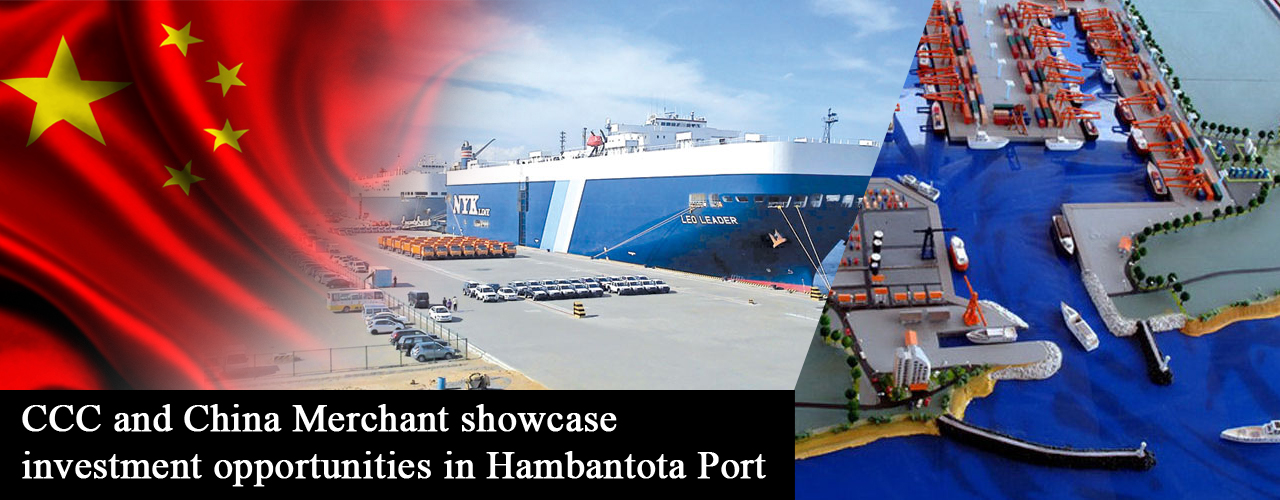
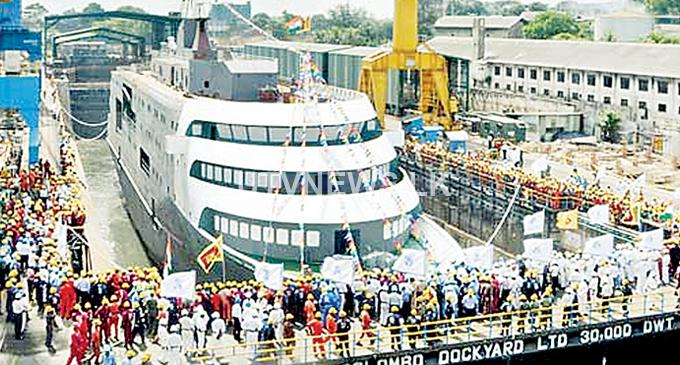
Hambantota Port is not profitable yet-Nimal

Minister of Ports and Shipping Nimal Siripala de Silva says the Hambantota Port is not profitable yet.

Speaking to media after an observational tour of the Hambantota Port today, Minister de Silva said the government is keen on generating profits through the port.

The Minister said operations of the Hambantota Port, despite privatisation, are being carried out by the Sri Lanka Ports Authority, adding that a miniscule income is generated.

However, Minister de Silva noted that discussions were held today in length pertaining to generating an income including the various difficulties faced by employees.

The Minister stated that 500 acres has been made available for various industrial zones and foreign investments claiming that efforts are underway to increase investors around the port.

WTO fails to secure Sri Lanka’s support for food security deals

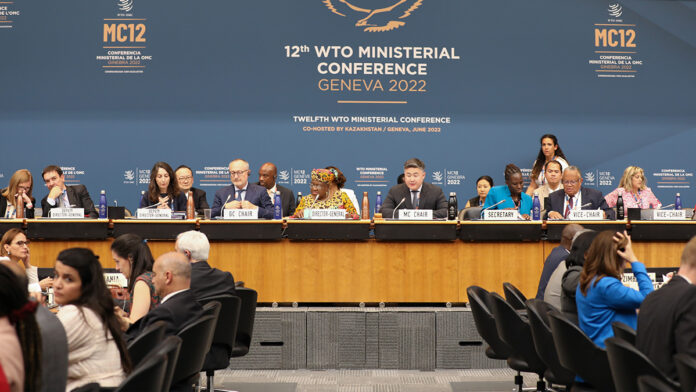
Sri Lanka has refused to support two agreements on food security proposed by the World Trade Organization (WTO), the Reuters news agency reported.

The 164-member trade body is seeking to reach two agreements at a major meeting of trade ministers this week in Geneva on steps to alleviate a food crisis that threatens the least developed and most vulnerable countries.

One would be a declaration to keep markets open, not restrict exports and be more transparent. The other would be a binding decision not to curb exports to the World Food Programme (WFP), which seeks to fight hunger in places hit by conflicts, disasters and climate change.

The International Monetary Fund has said that about 30 countries have restricted exports of food, energy and other commodities, including India with wheat.

WTO members expressed broad support for both texts, with the exception of Egypt, India and Sri Lanka, a WTO spokesperson told a news conference. Previously hesitant Tanzania decided to endorse the texts, the spokesperson added.

Egypt and Sri Lanka, both net food importers, want recognition that their ability to export food might be limited, Reuters reported.

India, which has a history of blocking multilateral trade agreements, wants the WTO to allow developing countries to hold food stocks without facing penalties for breaching rules on farm support. WTO members agreed to such a shield in 2013, but only on a temporary basis.

Posted in Uncategorized

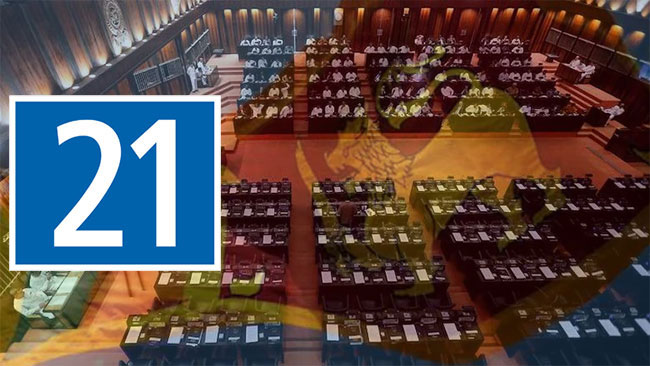
Cabinet postpones approval for 21st constitutional amendment

Approving the proposed 21st Amendment to the Constitution has been further postponed by the Cabinet of Ministers.

According to Justice Minister Wijeyadasa Rajapakshe, the weekly meeting of the Cabinet of Ministers convened yesterday has not green-lighted the constitutional amendments as it was decided that further educating the political party leaders in this regard is necessary.

Thereby, several political party leaders will be informed of the 21st Amendment to the Constitution at a discussion scheduled for next Thursday.

Subsequently, the 21st Amendment to the Constitution is expected to be approved at the meeting of the Cabinet of Ministers next Monday.

The 21st Amendment was tabled in the Cabinet last week and the discussion on it was adjourned until this week.

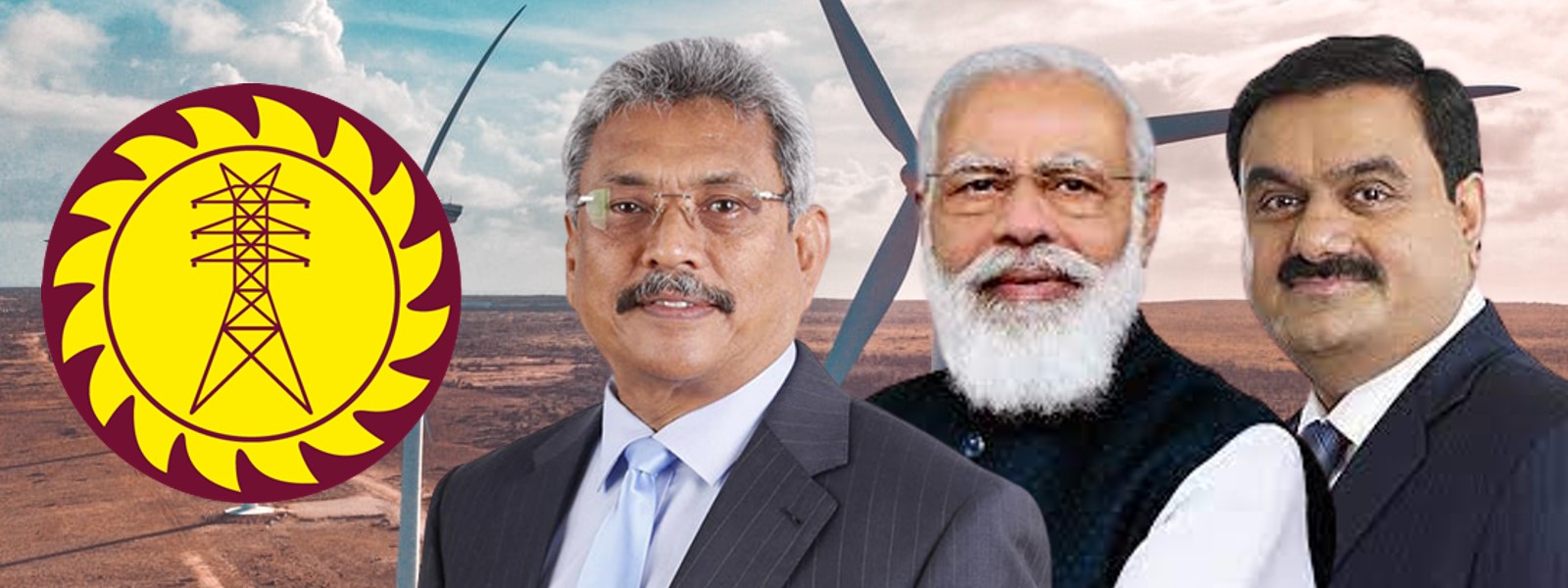
“Clearly disappointed”: Adani reacts to Sri Lanka controversy on energy project

The Adani Group today said it was “disappointed” as it reacted to a massive controversy over an energy project in Sri Lanka awarded to the group, after a Lankan official’s claim that President Gotabaya Rajapaksa acted under pressure from Prime Minister Narendra Modi.

“Our intent in investing in Sri Lanka is to address the needs of a valued neighbour. As a responsible corporate, we see this as a necessary part of the partnership that our two nations have always shared. We are clearly disappointed by the detraction that seems to have come about. The fact is that the issue has already been addressed by and within the Sri Lankan Government,” said a spokesperson of the Adani group.

MMC Ferdinando, the chairman of Sri Lanka’s Ceylon Electricity Board (CEB), resigned today, three days after he claimed before a parliamentary panel that he was told by President Rajapaksa about PM Modi pressuring him to give the wind power project directly to the Adani Group.

The government has not reacted to the claim, which the official retracted on Sunday evening and which President Rajapaksa has emphatically denied.

The allegations involve a 500-Megawatt renewable energy project in Sri Lanka’s Mannar district. A video of Mr Ferdinando’s comment at the parliamentary hearing has been widely circulated on Twitter.

“On November 24, the President summoned me after a meeting and said that India’s Prime Minister Modi is pressuring him to hand over the project to the Adani group. I said ‘this matter doesn’t concern me or the Ceylon electricity board and this consists of the board of investments’. He insisted that I look into it. I then sent a letter that the President has instructed me and that the Finance Secretary should do the needful. I pointed out that this is a government-to-government deal,” the official said in Sinhala in the video, addressing the panel.

On Sunday evening, following a strong denial by President Rajapaksa on Twitter, Mr Ferdinando also withdrew his comments, claiming he had been “overcome with emotion” while facing questions that suggested wrongdoing by him.

President Rajapaksa had tweeted: “Regarding a statement made by the #lka CEB Chairman at a COPE committee hearing regarding the award of a Wind Power Project in Mannar, I categorically deny authorisation to award this project to any specific person or entity. I trust responsible communication in this regard will follow.”

His office followed it up with a longer statement “vehemently denying” the charge. The President has “categorically stated that he had not at any time given authorisation to award a wind power project in Mannar to any person or any institution,” the statement said.

“Sri Lanka is currently in an acute shortage of power and President desires to expedite implementation of mega power projects as early as possible. However, no undue influence will be used in awarding such projects. Project proposals for large-scale renewable energy projects is limited, but special attention will be paid to the selection of institutions for the projects, which will be carried out strictly in accordance with the transparent and accountable system by the government of Sri Lanka,” said President Rajapaksa’s office.

The controversy erupted a day after Sri Lanka changed its laws to remove competitive bidding for energy projects. The Adani group figured in the parliamentary debate on the Electricity Amendment Bill before it was passed amid opposition protests. The opposition accused the government of ramming the bill through parliament to facilitate large renewable energy deals to the Adani group, which signed an unsolicited government-to-government agreement to build the Mannar wind power plant.

The main opposition SJB in Lanka asserted that projects beyond 10 MW capacity should go through a competitive bidding process, but government MPs voted against it.

The Adani Group reportedly won contracts to develop two wind power projects, in Mannar and in Pooneryn, in December.

Gautam Adani had visited Sri Lanka in October and had tweeted about his meeting with President Rajapaksa.

In 2021, the Adani Group had signed a $700 million deal with the state-run Sri Lanka Ports Authority (SLPA) to develop and run the strategic Colombo Port’s West International Container Terminal.

Source: NDTV

Posted in Uncategorized

Should Sri Lanka join the ranks of the “Poorest of the World’s Poor”?

UNITED NATIONS- As one of the world’s foremost international humanitarian organizations, the United Nations has pledged to provide food and medicines to cash-strapped Sri Lanka –a country suffering from a major financial crisis.

As of last week, a UN team, led by the Resident Coordinator in Colombo, Hanaa Singer-Hamdy has appealed to international donors for more than $47 million in “life-saving assistance” to 1.7 million people in a country with a population of over 22 million.

This stands in contrast to the staggering $5.0 billion the government is seeking for the island’s economic survival during the next six months—primarily for food, fuel and fertilizer.

Last month, the UN announced that with a $1.5 million donation from the Government of Japan, the UN’s children’s agency UNICEF will procure medicines for over 1.2 million people, among them 53,000 pregnant mothers and nearly 122,000 children with immediate medical needs.

The World Food Programme (WFP) is expected to receive about $1.5 million from Japan to provide food assistance to children and families in need of support.

In addition, Australia has made available the equivalent of nearly $5 million for food security, essential medicines for women’s health, nutrition data collection and analysis with UN agencies working together, including the Food and Agriculture Organization (FAO), the World Food Programme, the World Health Organization (WHO), the UN Population Fund (UNFPA) and the UN Children’s Fund.

Currently, some of the UN’s biggest aid recipients are either countries embroiled in military conflicts such as Ukraine, Afghanistan and Yemen – or the 46 member states categorized as Least Developed Countries (LDCs), “the poorest of the world’s poor”.

The majority of LDCs are from Africa, including Angola, Rwanda, Zambia, Burkina Faso, Ethiopia, Somalia and the Central African Republic, while the LDCs from Asia include Nepal, Bhutan, Bangladesh, Myanmar and Afghanistan.

https://www.un.org/development/desa/dpad/least-developed-country-category/ldcs-at-a-glance.html

According to published reports, Sri Lanka’s foreign exchange reserves have hit a low of $1.9 billion, equivalent to funds that could finance less than one month’s imports while its debt service repayments amount to about $6.9 billion. Last month, Sri Lanka defaulted on its debt repayments for the first time in history.

An editorial in the Sri Lanka Sunday Times put the problem in its right perspective: “Once called the ‘Granary of the East’, Sri Lanka is also considering tapping the SAARC Food Bank – from the buffer stocks of India, Pakistan and Bangladesh. The country is not only financially bankrupt, it is facing a famine in a few months”.

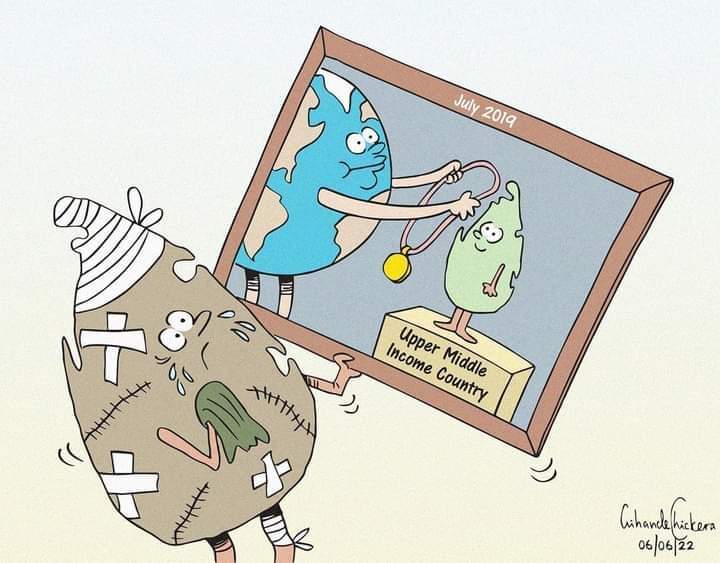
“From a middle-income country not long ago, it has come to this”, said the editorial.

“What an inglorious comedown for the country and humiliating stigma for its people no better personified by the presence of its Foreign Minister and chairman of the ruling party accepting a container of food aid from abroad at the Colombo harbour”.

“Brought about by stupendously irresponsible agricultural policy decision-making at the highest levels of Government, it is now humble-pie that is left to be eaten as Sri Lanka appeals to the world for food in the midst of a global economy facing recession, inflation, and a hurricane of shortages of oil, gas and wheat.”

Should Sri Lanka, long designated by the UN as a “middle-income country,” be heading towards the ranks of the 46 LDCs?

In an interview with IPS, Ambassador Anwarul K. Chowdhury, former Permanent Representative of Bangladesh and the first Under-Secretary-General and UN High Representative for LDCs, Landlocked Developing Countries and Small Island Developing States, responded to questions on the benefits and privileges of being an LDC.

“LDCs benefit from exclusive international support measures (ISMs) in the areas of trade, development cooperation and participation in international organizations and processes.”

Such measures in the area of trade, he pointed out, include preferential market access for goods and services; special treatment under World Trade Organization rules and certain regional trade agreements; and technical assistance and capacity building.

A range of financial and technical assistance provided by multilateral and bilateral partners, such as special programmes and budget allocations at the UN, including the Technology Bank for LDCs and Fund for LDCs, established by the United Nations Framework Convention on Climate Change (UNFCCC). Support for debt cancellation and/or debt rescheduling are also available for LDCs, he added
.
Other support measures help LDCs participate in international forums, such as caps and discounts on contributions to the budget of the United Nations and financial support for representatives of LDCs to travel to General Assembly and other meetings, said Ambassador Chowdhury, who was also Senior Special Adviser to UN General Assembly President (2011-2012).

Excerpts from the interview:

Q: Do you think that Sri Lanka, which has appealed for humanitarian assistance from the UN, may end up being an international basket case?

A: It is not conceivable that Sri Lanka would become an international basket case. But it needs to steer away from the man-made, to say more directly, the current corruption-driven economy, in the right direction to return to its steady developing socio-economic development of yester years.

Among the eight members of SAARC only three are not LDCs, but among the other five LDCs, the Maldives have already “graduated” out of the LDC category and Bhutan, Nepal and Bangladesh are scheduled to graduate by 2026 (as their economies improve).

Being the victim of a catastrophic economic mismanagement should not prompt Sri Lanka to think of seeking an LDC status. The United Nations defines LDCs as countries that have low levels of income and face severe structural impediments to sustainable development.

Q: If the situation continues to deteriorate, what are our chances of joining the 46 LDCs?

A: Joining the LDCs group involve a long process and requires fulfillment of all three criteria to be eligible. According to the UN, those three are:

1. Income: Countries must have an average per capita income (GNI) of below USD$1,018 for inclusion, and above USD$1,222for graduation.
[The Gross Domestic Product per capita in Sri Lanka was last recorded at 4052.75 US dollars in 2020.]
2. Human Assets: Countries must also have a low score on the Human Assets Index (HAI), a tool that measures health and education outcomes, including under-five mortality rate, maternal mortality, adult literacy rate and gender parity for secondary school enrolment. [Sri Lanka is much above the “60 or below” threshold.]
3. Economic and Environmental Vulnerability: Countries must score high on the Economic and Environmental Vulnerability Index (EVI), which measures factors like remoteness, dependence on agriculture and vulnerability to natural disasters.
[ Sri Lanka is below “36 or above” threshold. The current economic downturn and challenges faced by Sri Lanka may not fully fit the country’s EVI threshold]
IPS – How does this work? Does Sri Lanka have to apply to the UN for LDC status?

A: The Committee for Development Policy (CDP) reviews the list of LDCs and makes recommendations for inclusion in and graduation from the category every three years.

According to UN guidelines, the time frame of the eligibility procedure includes preliminary finding that the country satisfies inclusion criteria; notifies the country of its findings; prepares a country assessment note; provides a draft to the country; finds the country eligible and formally notifies the country of eligibility conclusion; and the General Assembly finally takes note of the CDP recommendation.

Q: What’s the downside of being an LDC?

A: In reality, there is no downside except the psychological perception of being categorized as one of the poorest countries. Some say that foreign direct investment (FDI) is not forthcoming.

If there is a downside, how come six countries have “graduated” from LDCs over the years since the category was established by the General Assembly in 1971 and ten more are in the pipeline for graduation by 2026.

IPS UN Bureau Report (Source)

Posted in Uncategorized

Sri Lanka clears projects linking Jaffna with Tamil Nadu, Puducherry

On a day when allegations continued to resonate that Colombo had pushed through an Adani Group proposal for a wind energy farm in the north-west of the country at the behest of Prime Minister Narendra Modi, the Sri Lankan cabinet green lighted two long pending connectivity proposals — flights from Jaffna to Tiruchirapalli in Tamil Nadu, and a ferry service from Kankesanthurai in Jaffna to Karaikal in Puducherry.

The connectivity projects have been part of India’s wishlist for long, to build more people to people linkages between the two countries in a way that will also contribute to economic activity in Sri Lanka’s Tamil north, the main theatre of the long civil war from which the area’s recovery has been slow. For Sri Lanka, tourist traffic from south India could contribute valuable foreign exchange to its beleaguered economy.

The idea of reviving transport links between Tamil Nadu and northern Sri Lanka — there used to be flights and a ferry service until 1970s — was mooted after the war ended in 2009, but the response from Colombo was tepid. It was in November 2019 that Palaly airport, which was earlier a military airfield, opened for international civilian flights for the first time with thrice weekly Jaffna-Chennai ATR flights operated by Alliance Air. However, the airport shut down in months amid pandemic.

Fisheries Minister Douglas Devananda, who is also a Jaffna district parliamentarian, said the two new connections, would bring a considerable number of pilgrims from south India for temple tourism in northern Sri Lanka.

PM speaks to US Secretary of State Anthony Blinken

Prime Minister Ranil Wickremesinghe has held discussions with the US Secretary of State Anthony Blinken this evening (13).

The Prime Minister during the telephone conversation explained the current status of ongoing discussions with the International Monetary Fund.

Premier Wickremesinghe said Sri Lanka is looking forward to working closely with the United States and further strengthening ties between the two nations.

Meanwhile, US Secretary of State Anthony Blinken agreed to support Sri Lanka and to promote investments in Sri Lanka after the conclusion of IMF talks.

Prime Minister Wickremesinghe also requested Anthony Blinken to extend his greetings to US President Joe Biden.

US, China envoys meet for talks in Colombo

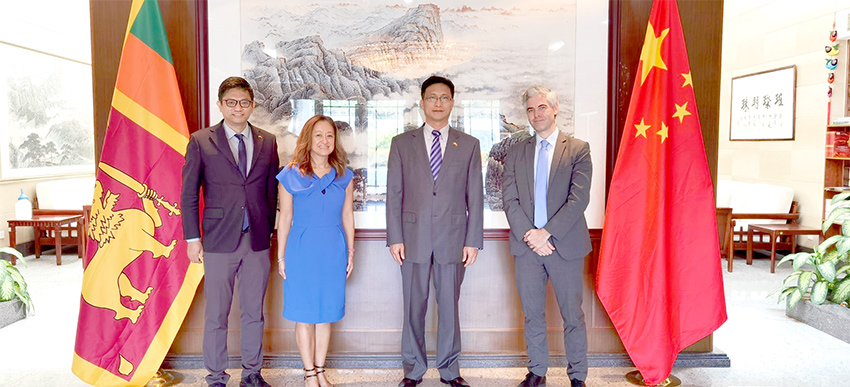
The Chinese Ambassador to Sri Lanka Qi Zhenhong has met with US Ambassador Julie Chung at the Chinese Embassy in Colombo for a discussion.

The Chinese Embassy said the two Ambassadors had a friendly discussion on broad topics of mutual interest.

China and the US could work together to help Sri Lanka overcome the current difficulties, the brief statement further said.

Posted in Uncategorized

Funds to print school textbooks from India, uniforms from China

A Cabinet paper has been directed to the Cabinet of Ministers to double the allowance allocated for school meals.

Minister of Education Susil Premajayantha said the estimates have been submitted to the Treasury to obtain paper required to print textbooks for next year under the Indian loan facility.

Furthermore, the Education Minister said while China has already agreed to provide 50% of school uniforms required for next year he hopes to conduct talks with China to obtain the remaining uniforms quota as well.