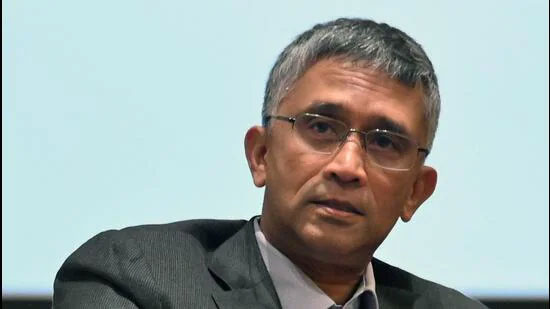
Sri Lanka foreign minister meets UNHRC core group

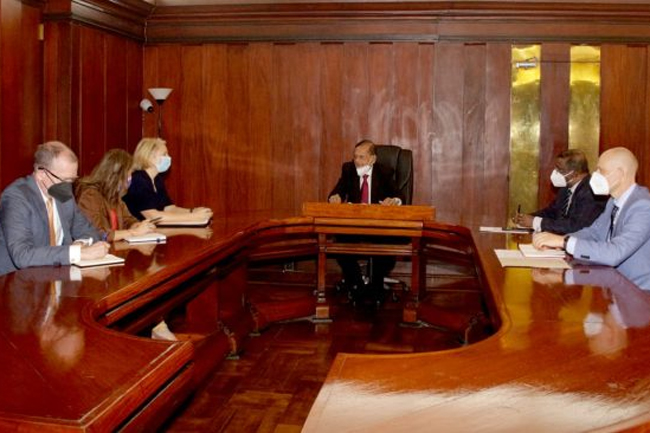
Foreign minister G L Peiris had informal discussions with representatives of the United Nations Human Rights Council (UNHRC) core group of countries on Sri Lanka on Friday (18) in Colombo.

A foreign ministry statement did not elaborate on the discussions, but noted that ministry secretary Jayanath Colombage also took part.

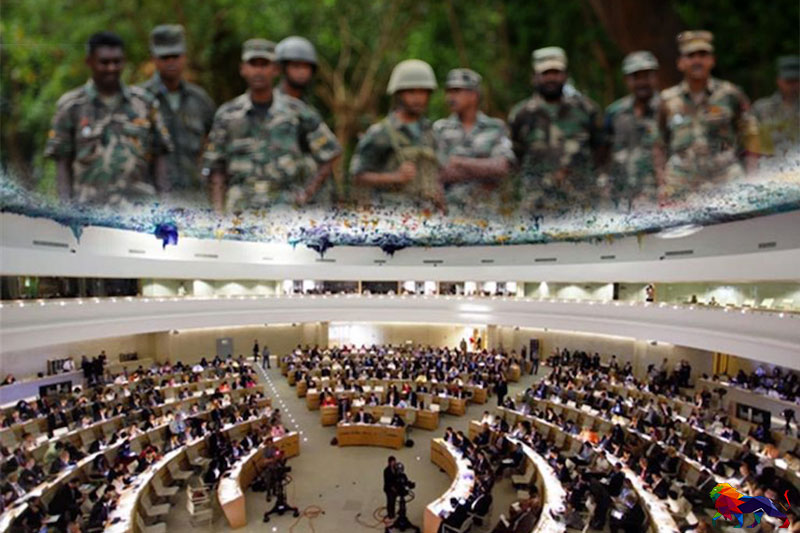
The core group comprises Canada, Germany, North Macedonia, Malawi, Montenegro, the United Kingdom, and the United States. At the 49th session of the UNHRC session in Geneva earlier this month, the core group said its concern over surveillance and intimidation of civil society persists, and detentions, threats and intimidation of journalists and human rights defenders continue while the proposed changes to the controversial Prevention of Terrorism Act (PTA) are very limited.

“The new ‘One Country One Law’ taskforce risks undermining Sri Lanka’s pluralist society. We urge Sri Lanka to ensure that this taskforce’s work is inclusive and non-discriminatory,” the UK’s Global Ambassador for Human Rights Rita French in her statement on behalf of the core group said.

The ‘One Country One Law’ task force is headed by a controversial Buddhist monk appointed to the position by President Gotabaya Rajapaksa. The monk’s name has been linked to anti-Muslim violence in the island nation.

Sri Lanka claimed “overwhelming” and cross-regional support, particularly from the global south, at the interactive dialogue of the UNHRC session. However, Western countries noted setbacks on the human rights front and called for increased engagement with minority political parties.

“Sri Lanka received overwhelming support from countries of the global south who expressed support for the government’s significant efforts towards reconciliation and reiterated the importance of objective and constructive cooperation as the fundamental basis for multilateral engagement,” Sri Lanka’s foreign ministry said in a statement last Tuesday (08).

However, the United States, which recently joined the core group, called for increased engagement with Tamil and Muslim parties and civil society organisations to “advance an inclusive, lasting political solution”.

The UK, meanwhile, noting continued lack of progress on accountability and “setbacks in several emblematic human rights cases”, called on the Sri Lankan government to engage constructively with the recommendations in resolution 46/1 passed in March 2021 and to cooperate with the Office of the Human Rights Commissioner (OHCHR).

Sri Lanka tests UN’s patience on human rights -BBC

Memories of the dark cell and constant fear for his life still haunt Murugiah Komahan, who spent six years in prison on anti-terrorism charges in Sri Lanka.

Mr Komahan, 40, is among thousands of Tamils and others detained under the Prevention of Terrorism Act (PTA) in recent decades.

Successive governments dominated by the Sinhalese majority used the PTA primarily to arrest those suspected of links with the separatist Tamil Tigers until the rebels’ defeat in 2009.

But more than a decade after the civil war ended, the act is still in use and Sri Lanka is under pressure to reform it.

The island’s access to lucrative export markets in Europe depends on it making progress on human rights.

Mr Komahan, who’s from northern Jaffna region, was first arrested under the anti-terrorism act in 2010 on charges of links with the rebels.

“Police tried to force me to sign a confession but when I refused, I was severely beaten. An officer even threatened to shoot me. When I complained to a judge about being tortured, I was beaten even more,” Mr Komahan told the BBC.

Finally, he said, he signed a confession in Sinhala, a language he doesn’t understand. He was worried that if he refused, he might be sent to solitary confinement.

A court freed him in 2016 for lack of evidence – but Mr Komahan says he is still being monitored by intelligence agencies.

“The constant surveillance is making it difficult to return to a normal life,” he says.

Rights groups say the PTA has been used to make arbitrary arrests, to detain people for years without due legal process and to extract false confessions under torture, accusations the authorities deny.

It was first introduced as a temporary measure more than 40 years ago, when the insurgency for a Tamil homeland was in its early stages. But it’s also been used to target other minority groups, government critics and civil society activists over the years, campaigners say.

“We have cases of people who spent several years in prison before they were discharged – that means there was no evidence and no indictment was filed,” said Ambika Satkunanathan, a prominent human rights activist.

She alleges the PTA was used to target Muslims after the island’s 2019 Easter Sunday bomb attacks by Islamist militants.

These include prominent Muslim lawyer Hejaaz Hizbullah, a vocal opponent of President Gotabaya Rajapaksa. He was released on bail in January amid growing international criticism after spending almost two years in detention.

According to the Sri Lankan prison authorities, there are still nearly 300 people detained under the PTA, some of whom have been held for more than a decade.

Following years of criticism, the government has now tabled amendments to the act with “the objective of bringing it in line with international norms and best practice”.

Justice Minister Mohamed Ali Sabry told the BBC: “One of the key provisions in the amendments is if the indictment is not filed for more than a year, then the detainee can apply for bail.”

He said officials were trying to expedite pending anti-terrorism cases and 86 people had recently been released.

But campaigners say the proposed changes do not go far enough. For example, “a confession given to an assistant superintendent of police or above can still be used as evidence in trial”, Ms Satkunanathan said.

The United Nations Human Rights Council (UNHRC), which is holding its spring session in Geneva, and others are watching closely. Another critical assessment by the council later this year would not augur well for Sri Lanka.

The European Union has already warned it will suspend tariff free access for Sri Lankan companies if there is no progress on human rights. The island’s exporters sent garments worth more than $2bn to the bloc in 2020.

Given Sri Lanka’s foreign exchange reserves crisis, a bailout from the International Monetary Fund looks on the cards.

Last month, UN Human Rights chief Michelle Bachelet acknowledged the Sri Lankan government had taken some steps in addressing human rights issues. But she also called on member states “to investigate and prosecute international crimes committed by all parties in Sri Lanka”.

Last year, member states authorised her to collect and preserve evidence of alleged war crimes by both sides in the 26-year conflict. The UN estimates 80-100,000 people were killed and thousands disappeared.

“The initial step is to create a centralised repository for the wide array of material that is available, including that collected by the UN over the years, which is substantial,” Rory Mungoven, Asia-Pacific chief at the Office of the UN High Commissioner for Human Rights, told the BBC.

“We are analysing all the material and pinpointing particular cases, particular perpetrators where further action may be possible.”

After the inaction of successive Sri Lankan governments, the intention is that material gathered could be used to try war crimes suspects outside the island under the principle of “universal jurisdiction”.

President Rajapaksa, a hardliner who led the war efforts, has consistently rejected allegations of war crimes by the military and it’s highly unlikely that he might agree to the conditions set by the UN. Many of his supporters in the Sinhalese majority see those accused of wrongdoing as heroes.

His foreign minister criticised the UN decision earlier this month.

“It creates obstacles to reconciliation efforts, breeds hatred by reopening past wounds, and polarises society,” GL Peiris told the session in Geneva.

Ministers in Colombo point to measures already taken, such as rehabilitating former rebels and the setting up of an office to determine the status of those still missing in the war.

Critics argue little came of such initiatives.

People like Murugiah Komahan agree. He and others who were jailed unjustly say their lives were ruined – and they’ll never get back the years they lost.


Posted in Uncategorized

West and Japan urge Sri Lanka to extend “vocal support” for Ukraine

Envoys of the United States and several other key nations in the west, as well as Japan on Friday, called on Sri Lanka to join in active support against the Russian invasion of Ukraine.

In a joint statement, the ambassadors and high commissioners to Sri Lanka urged the island nation to raise “vocal support” for Ukraine, international law, including the United Nations charter.

“We urge Sri Lanka to join us in calling on Russia to end it hostilities immediately.”

The statement was issued by the head of the delegation of the European Union, high commissioners of Australia, Canada, New Zealand and the United Kingdom, and the ambassadors of France, Germany, Italy, the Netherlands, Norway, Japan, Rumania, Switzerland and the United States.

“We will work together with our friends and allies around the world to ensure that the sovereignty and independence of Ukraine is restored. We stand with Ukraine; and for freedom, democracy, and the sovereignty of nations around the world,” the envoys said.

The envoys condemned Russia’s invasion of Ukraine as an unprovoked, unjust and illegal attack on a peaceful, democratic and sovereign state. “This outrageous attack is a gross violation of international law, including the UN charter.”

The statement slammed Russia for dramatically escalating its attacks on civilian neighbourhoods and infrastructure, leading to large numbers of civilian casualties. Millions of ordinary civilians – mainly women, children and older persons – have been forced to flee from their homes into neighbouring countries as refugees, making it the fastest-growing refugee crisis in the last 70 years, it read further.

Russia threatens the fundamental principles of sovereignty and territorial integrity that underpin peace and security around the world, the representatives to Sri Lanka stressed.

The statement also read: “We stand united in condemnation of the Russian government’s attacks on Ukraine. In the UN General Assembly on 2 March, 141 countries – an overwhelming majority – voted to condemn Russia’s invasion. This demonstrates Russia’s utmost isolation from the international community. Countries supporting Ukraine have imposed an unprecedented package of targeted sanctions to inflict heavy cost on Russia. These aim to degrade Russia’s capacity to pursue its attacks against Ukraine, and to press Russia to withdraw from hostilities. We have seen organisations from banks to oil companies, to football leagues, make it clear that Putin’s actions have consequences and his regime can no longer be part of the international community.”

It said the friends and allies of Ukraine have committed significant levels of economic and humanitarian assistance with many countries opening their boarders to Ukrainian families fleeing the war.

The envoys also accused Russia of promoting false narratives as a pretext for invasion.

“The Russian government has conducted an aggressive disinformation campaign against Ukraine in a spurious attempt to justify its invasion. There is no justification for Russia’s campaign to subvert its democratic neighbours. Russia falsely accuses NATO of provocation. NATO is, and always has been, a defensive alliance, and poses no threat to Russia.”

Posted in Uncategorized

Chinese Ambassador meets with Foreign Minister, discusses China-SL FTA

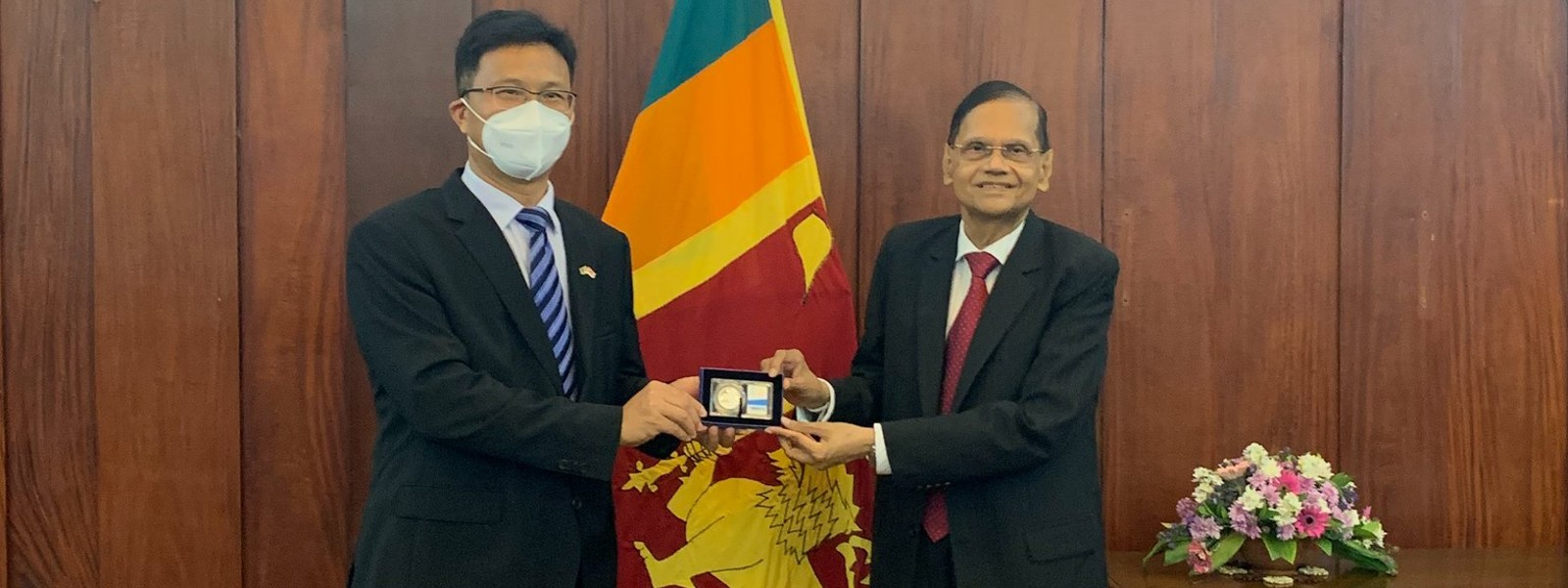
The Chinese Ambassador of Sri Lanka, Qi Zhenhong met with the Sri Lankan Foreign Minister Prof. G.L. Peiris yesterday (18).

The Chinese Embassy stated that the two dignitaries highly appraised the mutual understanding and support which remained between Sri Lanka and China at the 49th session of the United Nations Human Rights Council, which concluded recently.

Prof. G.L. Peiris, who chairs the newly founded Cabinet Sub Committee on Economic Way Forward initiate with China and several other countries, explored the potential of financial and trade collaboration in the meeting with the Chinese Ambassador.

The Cabinet Sub Committee recently discussed on the topic of expediting the Free Trade Agreement between China and Sri Lanka.

Cash-strapped Sri Lanka cancels school exams over paper shortage – Aljazeera

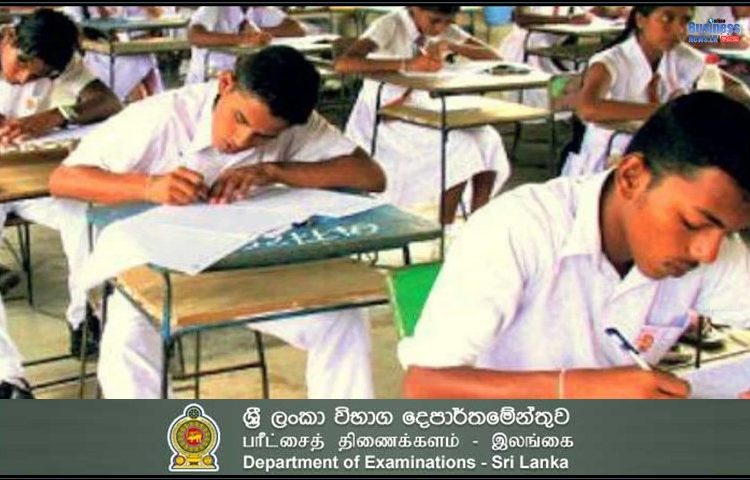
Sri Lanka has cancelled exams for millions of school students in the Western Province as the country ran out of printing paper with Colombo short on dollars to finance imports, according to officials.

Education authorities said the term tests, scheduled a week from Monday, were postponed indefinitely due to an acute paper shortage as Sri Lanka contends with its worst financial crisis since independence in 1948.

“School principals cannot hold the tests as printers are unable to secure foreign exchange to import necessary paper and ink,” the Department of Education of the Western Province, home to nearly six million people, said.

Term tests for classes 9, 10 and 11 are part of a continuous assessment process to decide if students are promoted to the next grade at the end of the year.

A debilitating economic crisis brought on by a shortage of foreign exchange reserves to finance essential imports has seen the country run low on food, fuel and pharmaceuticals.

IMF bailout

The cash-strapped South Asian nation of 22 million announced this week that it will seek an IMF bailout to resolve its worsening foreign debt crisis and shore up external reserves.

The International Monetary Fund on Friday confirmed it was considering President Gotabaya Rajapaksa’s surprise Wednesday request to discuss a bailout.

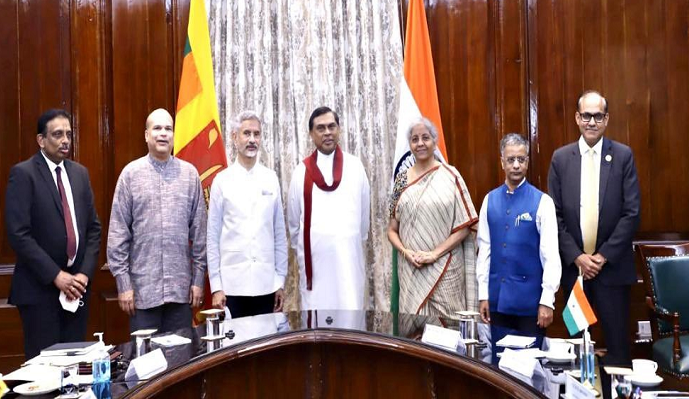
The island nation secured a $1bn credit line from India to buy urgently needed food and medicine, officials said, after Finance Minister Basil Rajapaksa’s visit to New Delhi.

About $6.9bn of Colombo’s debt needs to be serviced this year but its foreign currency reserves stood at about $2.3bn at the end of February.

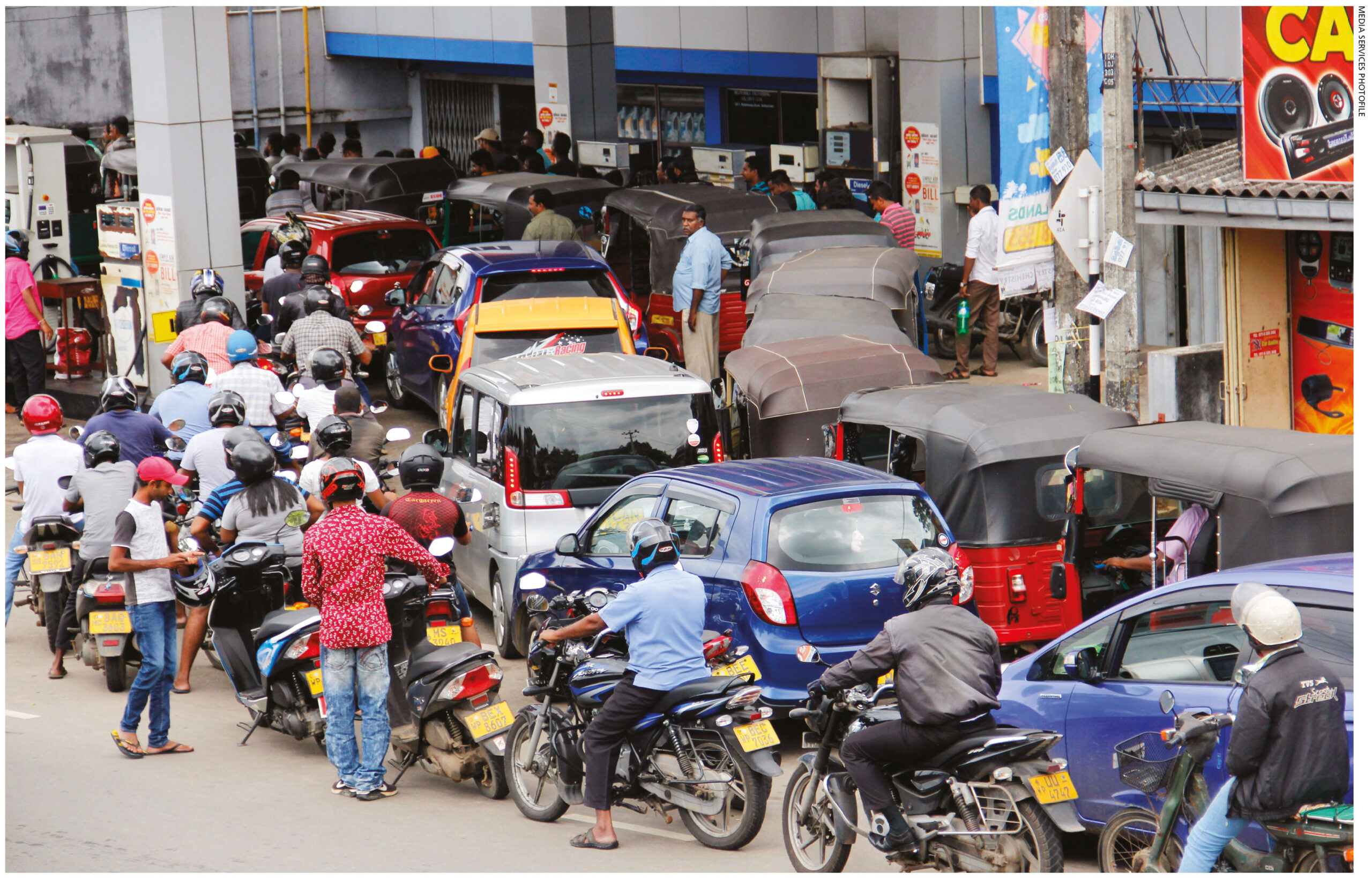
Long queues have formed across the country for groceries and oil with the government instituting rolling electricity blackouts and rationing of milk powder, sugar, lentils and rice.

Sri Lanka earlier this year asked China, one of its main creditors, to help put off debt payments but there has been no official response yet from Beijing.

Posted in Uncategorized

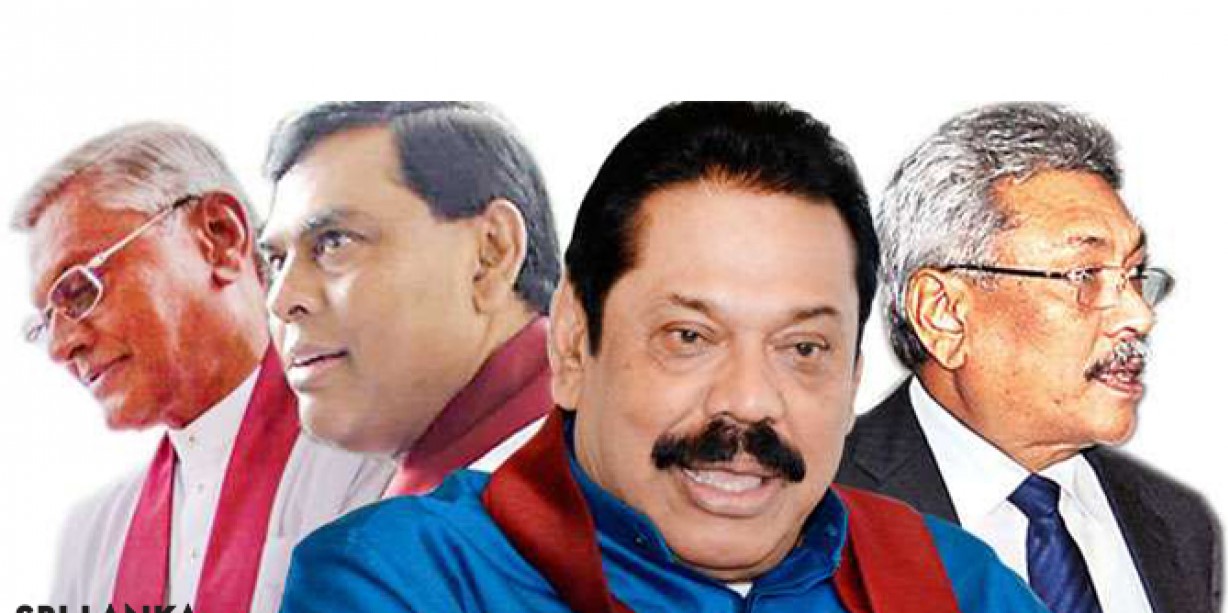
How Four Powerful Brothers Broke an Island Nation – Bloomberg

In just over two years, Sri Lanka’s first family has presided over a series of crises mostly of its own making.

The island nation of 22 million people is facing its worst economic upheaval in a decade. From an ill-fated fertilizer ban that led to a dramatic fall in yields of crops like rice and tea, to its failure to deal with a foreign-currency crisis that’s now a humanitarian emergency, the government of President Gotabaya Rajapaksa is fast running out of solutions. Relying until now on help from its two major backers — India and China — and stubbornly refusing wider international aid, the country is on the verge of default.

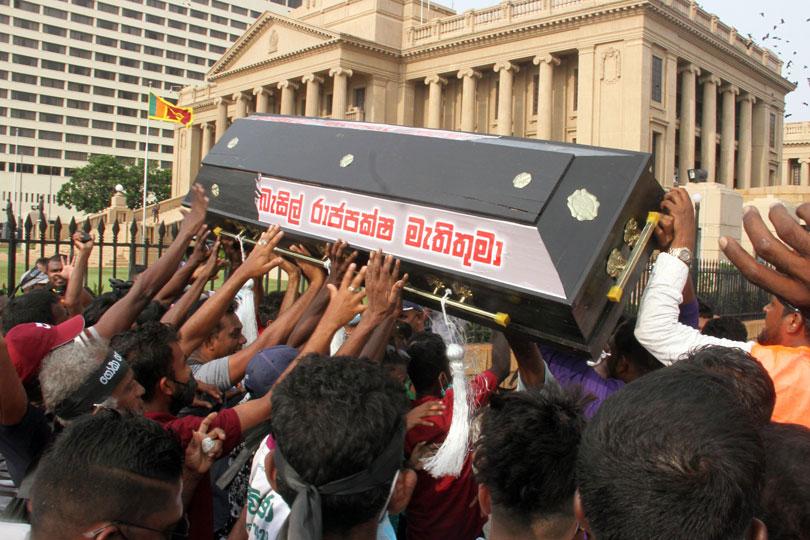
Protests roiled Colombo on Tuesday, with upwards of 10,000 opposition supporters gathering outside the president’s office to call for his resignation. Shortages of electricity, fuel, food and medicine are widespread and causing real pain for everyone from daily wage earners to operators trying to jumpstart the key tourism industry after two years of Covid interruptions and the 2019 Easter Sunday bombings that targeted churches and luxury hotels, killing nearly 270 people. Inflation has soared to 15% — the worst in Asia.

It’s hard to overstate the influence of the Rajapaksa clan in all this. Gotabaya, who won office in the November 2019 presidential elections, appointed his brother, Mahinda, as prime minister. If this pairing sounds familiar, it’s because it is. Mahinda first came to power in 2004, initially as prime minister and then as president. At the time, Gotabaya was defense secretary and was notorious for his role in the 2009 operation to end the civil war with Tamil rebels. Thousands died or disappeared amid allegations of torture, rape, extra-judicial killings and the abduction and assassination of Tamil separatists, journalists and opposition figures. Gotabaya denies all these allegations.

The Rajapaksas were out of power briefly from 2015, when Maithripala Sirisena and Ranil Wickremesinghe led the country, until Wickremesinghe was removed from his post in 2018, sparking a constitutional crisis. Their party won a landslide victory in the August 2020 general election, and quickly restored sweeping executive powers to the presidency that had been previously curbed. Another brother, Basil, was appointed finance minister in July 2021. He was already a controversial figure due to his American-Sri Lankan nationality — his entry into Parliament was only made possible when the government removed a constitutional provision barring dual citizens.

Their eldest brother, Chamal, is a Cabinet minister, while his son is a non-Cabinet minister. One of the prime minister’s sons is also in the Cabinet, another is his chief of staff, and a nephew is a member of Parliament. According to some estimates, about 75% of the budget is under the control of Rajapaksa ministers in government. It is dynastic politics at its purest.

But all the Rajapaksas in power haven’t been able to do what needed to be done to help Sri Lanka out of this mess.

Basil was in India March 16-17, where he secured a $1 billion credit line to help stave off the crisis, exacerbated by spikes in oil prices driven by Russia’s invasion of Ukraine. The war is also badly affecting the travel sector: About 30% of visitors so far this year were from Russia, Ukraine, Poland and Belarus, while Russia is also one of the biggest buyers of Sri Lankan tea, its main goods export.

Things are bad enough that the brothers’ resistance to seeking support from the International Monetary Fund is softening, Bloomberg News reported earlier this week. Sri Lankan officials began talks with the IMF on Monday and may present policy proposals by early next month.

Authorities have recently allowed the rupee to weaken and borrowing costs to rise, in line with expectations of IMF conditions. But experts have criticized the sequencing of these moves. Debt restructuring was the first priority, said economist and executive director of the Colombo-based Verité Research, Nishan de Mel, told me. Increasing interest rates and depreciating the rupee should have come next.

The situation has snowballed because it was mismanaged for some time, de Mel said. What Sri Lankans are facing now is unprecedented, he said, and beyond anything experienced during the decades of civil war. Sri Lanka has about $2 billion of foreign-currency reserves against total debt repayment of as much as $7 billion for 2022, including a $1 billion dollar bond maturing in July. It has three months, maybe less, before a default, de Mel said.

There is now a growing demand for the government to clearly articulate some concrete solutions, said Dushni Weerakoon, executive director of the Institute of Policy Studies of Sri Lanka. “There is no painless way out of this,” Weerakoon noted. “The economic conditions will tighten before they get better.”

It all began with the government’s capital market borrowing back in 2007, she said. (Mahinda was president then.) That now accounts for 38% of the country’s foreign debt, while loans from China accounted for 10%. Given the severity of Sri Lanka’s plight, the initial reliance on government-to-government deals to finance the foreign exchange gap hasn’t been sufficient, she said. Approaching the IMF is now the best option, complemented by efforts to access financing from India and China. Sri Lanka has asked both Beijing and New Delhi to consider restructuring its debt repayments after India in January extended a $400 million swap line and deferred an Asian Clearing Union settlement of $500 million.

The country is also seeking to negotiate a new loan with China. The Hambantota port — part of China’s Belt and Road Initiative — is widely viewed as an example of what can go wrong with Beijing’s infrastructure drive. Sri Lanka borrowed heavily to build the port, couldn’t repay the loans, and then gave China a 99-year lease for debt relief.

Gotabaya is hardly the unifying figure Sri Lanka needs right now. However, with a two-thirds majority in Parliament and elections not due until 2024 and 2025, the opposition protests are unlikely to loosen the family’s grip on power.

He addressed the nation Wednesday evening, vowing to work with the IMF to resolve the crisis and saying he was “sensitive to the many sufferings the people have had to experience over the past two months.” But the clock is ticking and people are angry — and hungry. Any delay in an agreement with the IMF brings the country one step closer to a hard default. And that is a road no one wants Sri Lanka to travel.

Posted in Uncategorized

Sri Lanka forced into IMF U-turn after financial crisis sparks protests -FT.COM

Sri Lanka has begun talks with the IMF over a debt relief package after protests over a deepening economic crisis forced Gotabaya Rajapaksa’s government into a policy U-turn.

The president told the country on Wednesday night that he was “attempting to immediately resolve this crisis and provide relief to the people”.

“Subsequent to my discussions with the International Monetary Fund, I have decided to work with them,” Rajapaksa said, according to a transcript of his comments by Sri Lanka’s Daily FT newspaper. “Through those discussions, we hope to find a way to pay off our annual loan instalments, sovereign bonds and so on.”

Sri Lanka has for months faced mounting economic pain as its depleted foreign currency reserves triggered shortages of imports and fuel, power blackouts and double-digit inflation.

Thousands of protesters and opposition parties gathered in Colombo this week calling on Rajapaksa’s government to resign over its handling of the economy.

The government has until now insisted that Sri Lanka would be able to navigate the crisis without IMF assistance. But its strategy, which involved securing bilateral aid from countries such as India and a post-pandemic revival in tourism, was dismissed by many investors and analysts as unrealistic.

The island nation had debt and interest repayments worth about $7bn due this year, its finance minister Basil Rajapaksa told the Financial Times in January. But analysts estimate that usable foreign currency reserves have fallen as low as $500mn.

Among its more immediate challenges is a $1bn bond due in July, which many investors are sceptical Colombo will be able to repay without restructuring.

Sri Lanka is Asia’s largest high-yield bond issuer, borrowing heavily in the years following the end of its 2009 civil war. It has never defaulted.

About one-third of its debts are owed to international bondholders while other large creditors include countries such as China and India. It is expected to finalise a $1bn credit line this week with New Delhi.

However, after Rajapaksa came to power in 2019, his government introduced large tax cuts that eroded Sri Lanka’s revenue base. Combined with the blow to tourism from the Covid-19 pandemic, it prompted a series of rating downgrades into junk territory, leaving Sri Lanka locked out of international debt markets and unable to refinance.

Analysts said that any programme with the IMF would probably involve restructuring its debts to bring them to sustainable levels.

In a consultation document with Sri Lanka released this month, the IMF warned that challenges included “public debt that has risen to unsustainable levels, low international reserves and persistently large financing needs in the coming years”.

If it restructures, Sri Lanka will join countries such as Suriname, Belize, Zambia and Ecuador that have defaulted on their debts during the pandemic.

Posted in Uncategorized

Diesel, Jet fuel consignments stuck at Port

The government has been unable to clear two consignments of fuel consisting of diesel and jet fuel which is presently docked at the Colombo Port totalling to 42 million US dollars and due to the delay in clearance, the foreign company is now claiming a fee for demurrage, the Daily Mirror learns.

According to inside sources, the consignment consists of 22,000 metric tonnes of diesel and 22,000 metric tonnes of jet fuel, and it has been docked at the port for five days awaiting payment.

The Letters of Credit were opened for the purchase, but the government has been unable to provide the funds as yet leading to the company now claiming a fee for demurrage.

The government’s failure to clear this shipment has led to a severe shortage of diesel in the market, with queues lengthening further at all petrol stations in the country.

Presently payments have been released only to clear the gas shipments and the President’s Office said yesterday that unloading and distribution of domestic LP gas had recommenced after people had raised severe frustration at the lack of gas available in the market. This week, local primary gas suppliers Litro Gas Lanka and Laugfs Gas were compelled to suspend the operations due to the unavailability of stocks.

Meanwhile, senior sources at the BIA told Daily Mirror that airline operations were continuing and there was no shortage of jet fuel. However, if the present shipment of jet fuel is not cleared soon, then airline operations may be affected.

Posted in Uncategorized

Sri Lanka Secures $1 Billion Credit Facility From India

Sri Lanka firmed up a $1 billion credit line from neighboring India, a move that will ease a foreign exchange shortage for the nation even as it inches closer to an International Monetary Fund bailout.

The agreement, which includes aid for essentials like food and medicines, was signed between State Bank of India and the Sri Lankan government during Finance Minister Basil Rajapaksa’s visit to India Thursday.

The aid comes at a time when a surge in oil prices, slower exports and a stunted tourism revival due to the war in Ukraine have jolted the $81 billion economy. President Gotabaya Rajapaksa said the government was in discussions with international financial institutions and friendly countries for repayment of loan installments, in an address to the nation on Wednesday.

India is largest target market for the port city project – Saliya Wickramasuriya

The Indian subcontinent is the largest target market for the $1.12-billion Port City Colombo, which will build on ongoing political alignment between Sri Lanka and the country to offer key opportunities to Indian businesses, says the head of the commission overseeing the project.

Colombo Port City Economic Commission director general Saliya Wickramasuriya said in an interview that the project will offer opportunities both to Indian players, that already have a presence in Sri Lanka, and to those making their maiden foray into the island nation. He highlighted the separate laws being enacted for the port city and bespoke business solutions as its main attractions for Indian investors.

“With the changing economic circumstances both here and overseas, our target market is shifting slightly and the value proposition has to change accordingly…While there is recovery, there are still economic constraints everywhere and there are political disturbances everywhere,” Wickramasuriya said.

“So what we’re looking here is building on the relationships that already exist with entities who have invested in Sri Lanka. In particular, the Indian subcontinent is by far our largest target market,” he added.

The commission wants the “port city to be an international city” but it is also looking at more detailed, bespoke and customised solutions to “create value propositions for key anchor investors”, Wickramasuriya said.

Port City Colombo is being implemented by China Harbour Engineering Company, part of the China Communications Construction Company, to create a city on land reclaimed from the sea and extend Colombo’s central business district. The project consists of 269 hectares of reclaimed land, and the developers of the project are hoping it will benefit from a recent increase in economic cooperation between India and Sri Lanka.

The Indian side has provided a $500-million line of credit for purchasing fuel and a currency swap of $400 million under the Saarc facility. It has also deferred the payment of $515 million due to the Asian Clearing Union. The two sides also finalised the long-gestating project to refurbish and develop the Trincomalee oil farm, a storage facility with a capacity of almost one million tonnes.

Wickramasuriya acknowledged the economic problems currently being faced by Sri Lanka but was upbeat that the growing political alignment with India will benefit the project.

“I think bridges are being strengthened on the political front, which is good because it’s something we should do and keep doing with India, our oldest and biggest trading partner and also home to our largest contingent of arriving visitors,” he said.

Highlighting the port city’s potential for commercial and retail activities, he added, “There’s a lot of potential for Indian businesses to move one step closer to the world by coming to Sri Lanka, because a lot of Indian goods get trans-shipped through Sri Lanka…So, this is why we are offering an international financial centre concept in a convenient physical location for businesses that are in the goods and services movement business.”

The Colombo Port City Economic Commission is currently working on a set of 10 key policy frameworks and regulations, including regulations for banking and finance, setting up and winding down businesses, immigration, dispute resolution.

“Those regulations are being drafted and we are sealing up the ease of doing business indicator types. I would say by the end of April, we should be able to roll out our drafts to the market…,” Wickramasuriya said.