Pakistan PM calls for optimal use of FTA with Sri Lanka

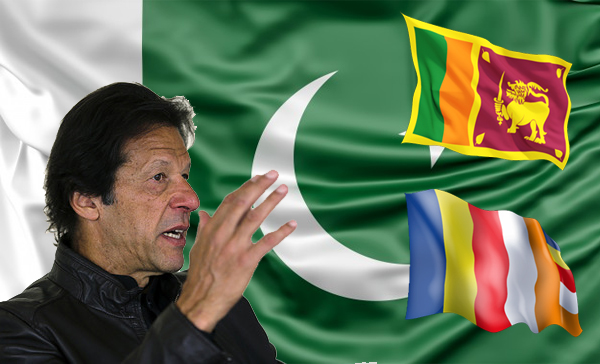
Pakistan Prime Minister Imran Khan has called increased bilateral trade relations between Pakistan and Sri Lanka through the optimal use of the free trade agreement (FTA) between the two countries, the Pakistan high commission in Colombo said.

Regular high-level exchanges must be made to strengthen bilateral relations, the high commission statement quoted Khan as saying.

The prime minister had made these remarks when ri Lanka’s Minister of Trade Bandula Gunawardhana and State Minister for Regional Cooperation Tharaka Balasuriya paid him a courtesy call on Tuesday (25).

Khan had also referred to the “strong cultural bond” between the two nations and expressed his hope that more Sri Lankans would visit Pakistan for religious tourism, considering the “rich Buddhist Heritage” of the country, the statement said.

The two Sri Lankan officials are in Pakistan along with a business delegation from January 20 to 27. They had previously met Pakistan’s Foreign Minister Shah Mahmood Qureshi.

According to the statement, Sri Lanka’s “growing need for international aid in areas including ICT, pharmaceuticals, minerals, textiles, education, defence, tourism, human resource development through B2B contacts, joint ventures, investments in high potential sectors and technology transfers etc” have been discussed at the two meetings.

According to data from 2020, Sri Lanka generated more than five times the number of exports than imports to and from Pakistan via free trade agreements, the statement said.

In August 2021, Sri Lanka’s cabinet of ministers approved a proposal to import 6,000 metric tons of rice into the island to deal with a rice shortage created by a ban on inorganic fertilizer. Currently, Pakistan is also Sri Lanka’s primary importer of betel, the statement said.

According to the high commission’s official website, the two countries are also looking to strengthen ties in the education field, and in 2021 the Pakistan Higher Education Commission announced the ‘Allama Iqbal Scholarships’ under the Pak-Sri Lanka Higher Education Cooperation Programme, providing 1000 Sri Lankan students with the opportunity to visit Pakistan and pursue undergraduate, postgraduate, and doctoral degree programs in Engineering Science, Basic and Natural Sciences, and Social Sciences over the next five years.

The scholarship was provided to promote “an effective exchange of knowledge and a better understanding of cultures and tradition between Sri Lankan and Pakistani students,” a report on the website said.

Sri Lanka has already drawn up new agreements in several sectors including education, transport, healthcare and infrastructure in 2022, with countries like the UK, Hungary and India. The latest trade delegation, headed by Gunawardhana, was to strengthen ties between Sri Lanka and Pakistan, the statement said, and will be returning to the island on Thursday (27).

Iran’s Foreign Minister to visit Sri Lanka next week

Iran’s Foreign Minister Hossein Amir-Abdollahian is to visit Sri Lanka next week for crucial talks.

According to reports, he is scheduled to arrive in Sri Lanka on Tuesday following a visit to India on Sunday.

The Iranian Foreign Minister’s visit to Colombo comes a month after Iran agreed to accept tea from Sri Lanka to settle outstanding payments for oil purchased from Iran.

The Ministry of Plantation of Sri Lanka and the Ministry of Industries, Mines and Trade of the Islamic Republic of Iran agreed last month to formulate a scheme for the settlement of a sum of US$ 250,925,169 outstanding from the Ceylon Petroleum Corporation to the National Iranian Oil Company by means of utilizing the said sum to facilitate the export of Ceylon Tea to Iran by signing a memorandum of understanding (MoU).

The MoU is a form of mutual commitment in complimenting each other`s duties and function in the Formulation of a Scheme for the Settlement of Sri Lanka’s Oil Outstanding to the Islamic Republic of Iran through the Exportation of Ceylon Tea.

Iran is among the top 10 importing countries of Ceylon Tea for the past several decades. Ceylon Tea which had a market share of around 47% in 2016 dropped to around 25% in 2020 due to the economic sanctions resulting in banking restrictions, payment problems and depreciation of Iranian Riyal. From a peak of 38.42Mn Kgs in 2013, tea exports from Sri Lanka to Iran dropped to 14.73Mn Kgs in 2020.

Due to US sanctions imposed on Iran in November 2012 and with the absence of an accepted payment mechanism through the banking system, Sri Lanka tea exporters found it difficult to receive the export proceeds from Iranian buyers.

Posted in Uncategorized

Sri Lanka doesn’t need IMF relief, Cabraal tells foreign media

(CNBC) – Sri Lanka’s central bank governor told CNBC that the South Asian nation doesn’t need an economic lifeline from the International Monetary Fund (IMF).

“Well, we don’t need relief if we have an alternative strategy,” Ajith Nivard Cabraal said on CNBC’s “Squawk Box Asia” on Monday.


He claimed Sri Lanka is able to finance its outstanding debt, especially international sovereign bonds, “without causing any pain to our creditors.”

Credit agencies have recently warned Sri Lanka may need support to cushion the blow from inflation and foreign exchange headwinds, but Cabraal disagreed with that assessment.

He argued the government does not need to approach the IMF, especially if it is successful in finding government-to-government as well as central bank solutions in the short term.

“And we have a strategy to change that into something a lot more sustainable in the next one year or two,” Cabraal said.

Credit downgrades

Earlier this month, S&P Global Ratings downgraded Sri Lanka from CCC+ to CCC with a negative outlook, indicating the country’s increasing financial vulnerability.

“Sri Lanka’s foreign exchange-denominated debt is vulnerable given the government’s declining foreign exchange reserves and high repayments. The government faces international sovereign bond maturities of US$500 million in January 2022 and US$1 billion in July 2022,” S&P said in a note.

This followed a similar move by Fitch Ratings in December to downgrade Sri Lanka from CCC to CC, suggesting imminent default.

“We believe it will be difficult for the government to meet its external debt obligations in 2022 and 2023 in the absence of new external financing sources,” said the report.

India has recently offered credit and foreign exchange support, saying the measures illustrate its commitment to Sri Lanka and its economic growth. That includes a $500 million line of credit to help Sri Lanka purchase fuel as the country grapples with surging inflation.

Inflationary pressures

Analysts are increasingly concerned about Sri Lanka’s inflationary problems, which they said could be amplified by foreign exchange issues.

“We think this foreign exchange scarcity will continue to fuel inflationary expectations, which can be only temporarily mitigated by Sri Lanka’s access to credit facilities from India, if a $1.5bn deal can be finalized. Moreover, elevated energy prices and risks from further administered adjustments to curtail losses in the electricity sector still loom,” Citi analysts said it a recent note.

While the government is likely to avoid IMF assistance for now, “we believe pressures will remain high going into the July bond maturity,” they added.

Sri Lanka’s benchmark inflation rate accelerated to 14% in December, up from 11.1% in November, according to data published Friday.

The central bank said food inflation hit 21.5%, noting price spikes for vegetables, rice and green chilies. Non-food inflation rose to 7.6% in December, which the central bank attributed to price hikes at restaurants, hotels as well as for alcoholic beverages and tobacco.

But Cabraal, Sri Lanka’s central bank governor, dismissed concerns about shortages.

“We don’t have any fuel shortage… There isn’t any shortage of medicines. We have imported $870 million worth of medicines last year,” he said.

“So just one or two items have been highlighted, but that doesn’t mean that Sri Lanka has any shortage. We have all the foodstuffs available. And I don’t think there’s any reason to say anything much of that,” added Cabraal.

Posted in Uncategorized

Indo-Sri Lanka relationship threatened by Minister Douglas Devananda’s actions

The cordial relationship between Sri Lanka and India has been threatened by an attempt by Fisheries Minister Douglas Devananda to sell confiscated equipment belonging to Indian fishermen in a money-making venture, especially at a time when India has supported Sri Lanka to recover from its economic crisis.

A decision has now been taken to auction off at least 105 trawlers confiscated by the Sri Lankan Navy from Indian fishermen hailing from Tamil Nadu after they were found to be carrying out illegal fishing activities in Sri Lankan waters.

However, in response, a Tamil Nadu based political party has requested the Indian central government to intervene and halt the auction by the Ministry of Fisheries.

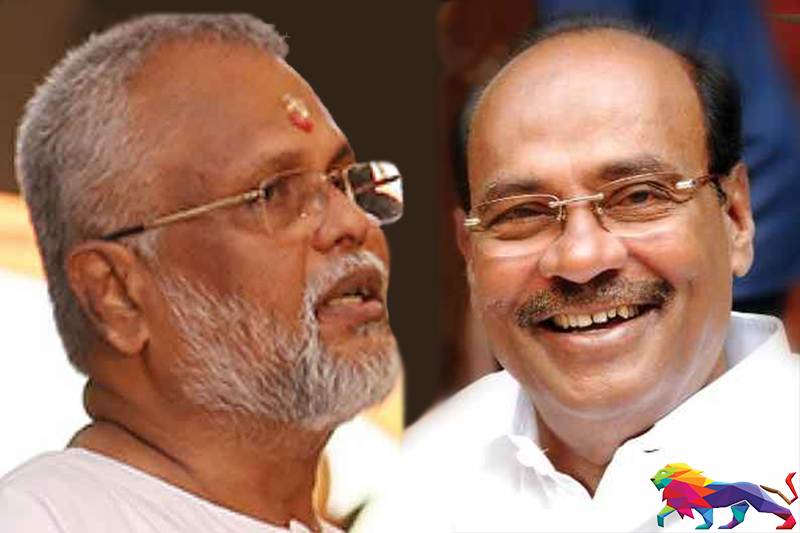
“The Sri Lanka Navy continues to arrest Indian fishermen and confiscate their trawlers based on accusations that they were engaging in illegal fishing in Sri Lankan waters. At least 105 trawlers have been confiscated between 2015 – 2019. The Sri Lankan government has no right to auction off trawlers belonging to our fisherman”, leader of the Pattali Makkal Katchi (PMK) S. Ramadoss said, voicing his opposition to the auction.

Sri Lankan Fisheries Minister Douglas Devananda however has promised to provide trawlers and fishing equipment of Indian fishermen detained in Sri Lanka to fishermen in the North.

Meeting fisherfolk in Jaffna on December 24, Devananda had said following discussions with the President and Prime Minister, all confiscated trawlers and equipment belonging to Indian fishermen will be provided to local fisherfolk of the Northern province at an auction. Minister Devananda said that these auctions will be held at the location where the trawlers have been docked.

Accordingly, on February 7, 65 trawlers will be auctioned off at the Karainagar fisheries harbour while on February 8, five trawlers will be auctioned at the KKS harbour. Auctions will be held on February 9, 10 and 11 at the Kiranchi, Talaimannar and Kalpitiya fisheries harbours respectively. 24 trawlers will be up for auction at Kiranchi while nine trawlers will be auctioned off at Talaimannar. Two boats will be auctioned in Kalpitiya.

“The Sri Lankan government has obtained loans amounting to Rs. 180 billion from India. But right after obtaining the loan, they are attempting to sell boats belonging to Indian fishermen that are vital for their livelihoods,” the PMK leader added.

The PMK has requested the Indian government to force Sri Lanka to return the trawlers to the Indian fishermen who were released after their arrest and to also secure the release of the remaining 56 fishermen currently in Sri Lankan custody and their trawlers as well.

Chinese company takes fight against Sri Lanka to UN

A Chinese company embroiled in a dispute with Sri Lanka over organic fertilizer, has made a formal complaint with the Food and Agriculture Organization of the United Nations.

Qingdao Seawin Biological Group Co., Ltd, in an email to Daily Mirror sent through a local agent, said that the complaint was made just before the company and Sri Lanka reached an agreement over the payment for the disputed fertilizer.

“Before reaching a Terms of Settlement on the L/C enjoining order cases between Seawin and the buyers on Jan 5, 2022, Seawin has filed a complaint with FAO and IPPC headquarters and applied for international institutions to intervene in the investigation. The above international institutions also replied to Seawin by email, and they can intervene in the investigation if necessary,” Seawin said.

The Chinese company wants FAO to intervene and eliminate misunderstandings as soon as possible through technical consultations to avoid losses of both sides.

“At present, there are still some irresponsible university professors in Sri Lanka who are doing their best to resist the implementation of the president’s green agriculture strategy and question the test reports of international authoritative institutions without reason, regardless of the strategic policy of green agriculture promulgated by the president, the long-term interests of Sri Lankan people, and do not contribute to the country and the people with their own study and knowledge,” Seawin said in the email to Daily Mirror.

In its complaint to the FAO, Seawin said they respect the right of each member state to control the spread of pests, in accordance with the International Plant Protection Convention (IPPC).

However, the company noted that the phytosanitary of each member state should be technically reasonable and transparent, and should not constitute disguised restrictions on international trade.

Seawin urged the FAO to apply for the publication of the detailed test record of the National Plant Quarantine Service (NPQS) on the rejected fertilizer as well as the scientific basis for explaining the results.

Posted in Uncategorized

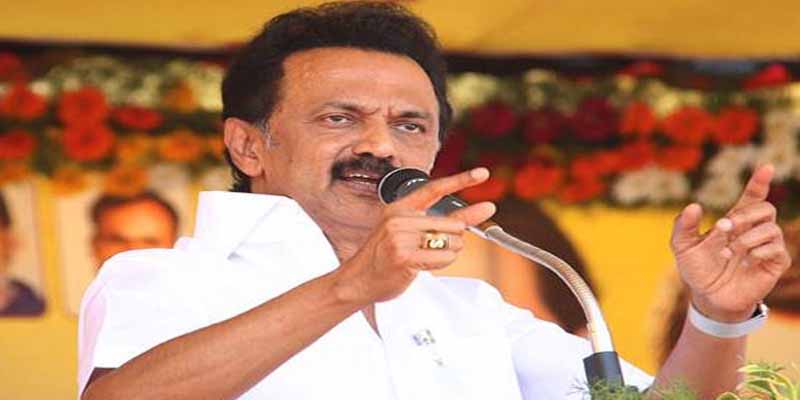
Ask Sri Lanka to stop attacks on Indian fishermen, M K Stalin tells Centre

Tamil Nadu on Tuesday condemned the “outrageous attack” against three fishermen from the state by Sri Lankan nationals and asked the Ministry of External Affairs to take up the matter with the neighbouring country.

In a letter to External Affairs Minister Dr S Jaishankar, Tamil Nadu Chief Minister said India cannot continue to be seen as “a mute spectator as the rights of Indian fishermen is repeatedly trampled upon.”

He said three fishermen from Nagapattinam District, Tamil Nadu had ventured out for fishing on January 23 in their FRP boat and were attacked by a group of unidentified Sri Lankan nationals around 9.00 pm, while they were fishing near 16 Nm from Southeast of Vedaranyam coast.

“In this attack, they were robbed of a 300 kg fishing net, GPS & VHF equipment, 30 litres of diesel, and also were physically attacked. The injured fishermen are undergoing treatment in Government Hospital, Vedaranyam, Stalin said.

“It is observed that continuing attacks on innocent Tamil Nadu fishermen by the Sri Lankan Nationals are clearly aimed at keeping the Tamil Nadu fishermen away from their traditional fishing waters of Palk Bay. I am constrained to point out that these incidents of attacks by Sri Lankan nationals are disconcerting,” Stalin told Jaishankar.

The continued attacks have become a matter of life and death for thousands of fisherfolk in Tamil Nadu whose livelihood is under serious threat.

“I request the Government of India to take this up with the Sri Lankan Government in a stern manner such that acts of physical assault and robbing or damaging of assets of Tamil Nadu fishermen does not take place in future. I solicit your urgent action in this regard,” he added.

Posted in Uncategorized

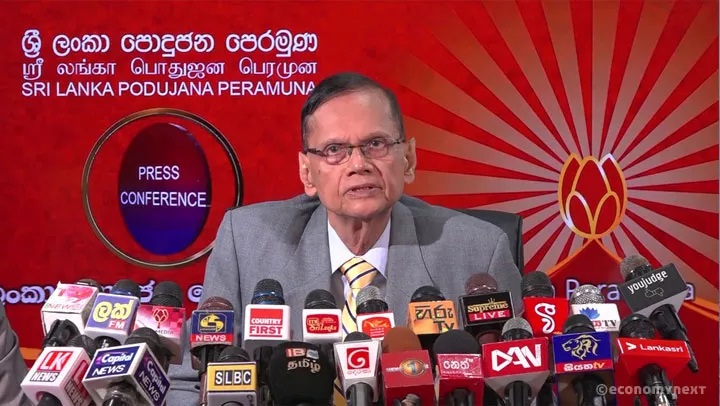
Introduction of new Constitution, govt.’s next task-GL

Foreign Minister GL Peiris says the compilation of a new Constitution is the government’s next crucial task.

The Minister speaking at a media briefing at the Sri Lanka Podujana Peramuna headquarters this morning said the committee appointed to draft a new Constitution is expected to submit its final report in the days ahead.

Minister Peiris said the President pledged to introduce a new Constitution adding that the current Constitution was formed in 1978 and many changes have taken place in society since.

The Minister also claimed that assumptions should not be made of the compilation of the Constitution being vested with a group of experts, stating that the group comprises President’s Counsels, and professors.

Minister Peiris said the report will then be tabled in Parliament to be reviewed.

The Foreign Minister said a Constitution lasts through generations adding that for it to be a success a common consensus must be reached with all political parties and the public.

Commenting on the next three years of the government, Minister Peiris said while there is sufficient time for the next election, many opportunities persist to fulfil promises cited in the Vistas of Prosperity and Splendour policy statement of the government. Minister Peiris said the next three years must be utilised to the utmost to reap the best results

Posted in Uncategorized

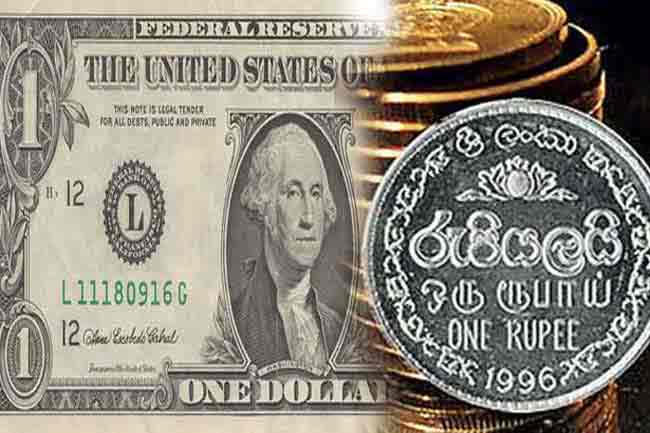
Telling hotels to accept foreign currency is equal to money laundering ; FSP

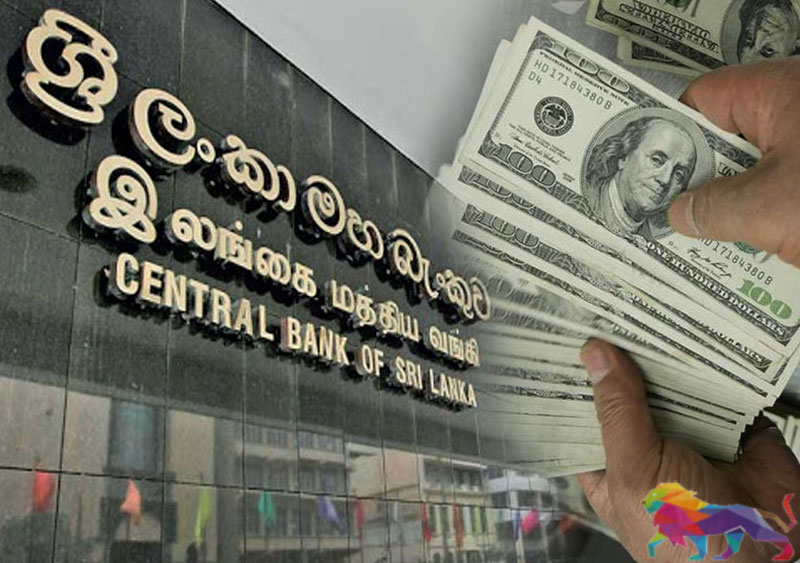
Tourists visiting Sri Lanka are encouraged to pay hotels in foreign currency instead of converting money into rupees, the country’s Central Bank announced recently.

However, activists allege that this is an attempt to launder money in US currency into Sri Lanka.

Duminda Nagamuwa, the Propaganda Secretary of the Frontline Socialists Party alleges that the Monetary Board decision directly violates all the treaties Sri Lanka has signed internationally to counter money laundering.

He further noted that massive amounts of money with undisclosed means of being generated can flood the Sri Lankan economy via these moves.

The Monetary Board of the Central Bank of Sri Lanka recently issued Rules making it mandatory for hotel service providers to accept payments from persons resident outside Sri Lanka, only in foreign exchange.

These Rules are published in the Gazette Extraordinary No. 2263/41 dated 21 January 2022.

At the same time, hotel service providers may accept payments in Sri Lanka Rupees from persons resident outside Sri Lanka provided they submit original documentary evidence to prove that such Sri Lanka Rupees represent the foreign currency brought into Sri Lanka and converted through a licensed bank or an authorized money changer.

Posted in Uncategorized

China rejects Sri Lanka’s rice donation request

Despite a statement by Co-Cabinet Spokesman Minister Dr. Ramesh Pathirana last week that Sri Lanka will be receiving one million metric tonnes of rice from China as a donation, The Morning reliably learnt that the Chinese Government has rejected the request for such a donation.

Diplomatic sources told The Morning yesterday (23) that China had not agreed to the request by Sri Lanka and that there will be no donation made.

However, when contacted by The Morning yesterday (23), the Trade Ministry’s Media Secretary Mahesh Wickrama said that the said stock of rice is to be received by Sri Lanka following a request made by Trade Minister Dr. Bandula Gunawardana and that there has been no change to that position.

“They agreed to provide the stock of rice. Currently discussions are underway through the Finance Ministry’s Foreign Affairs Unit regarding the type of rice,” he said.

Based on 2016 per capita consumption of 104.5 kg per annum, the annual national rice demand in Sri Lanka is 2.1 million MT and if this donation had been received it would have been the equivalent of a half year’s national demand, which our sources said was unlikely to be agreed to anyway, not to mention the issues around storage and logistics.

Dr. Pathirana announced at the weekly Cabinet decisions press briefing last Tuesday (18) that the consignment is expected to arrive on the island in March and that the donation is being made to mark the 70th anniversary of the Rubber-Rice Pact signed between the two countries in 1952.

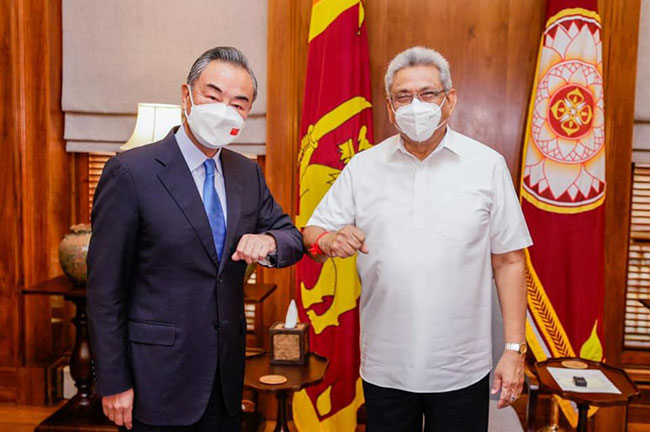
Following Chinese State Councillor and Foreign Affairs Minister Wang Yi’s recent visit to Sri Lanka, Chinese Foreign Ministry Spokesman Wang Wenbin had reiterated that his country is ready to “carry forward the spirit of the Rubber-Rice Pact characterised by independence, self-reliance, unity and mutual support”.

Dollar drought leaves Sri Lanka groping in the dark -Nikkei

COLOMBO — As Sri Lanka’s dollar scarcity worsens, a fresh crop of unusual signs has surfaced about spreading shortages of basic goods. “Candles not available due to gas shortage” was one. It was placed at St. Anthony’s church, located in a mixed commercial and residential quarter of Colombo.

The significance of the announcement was not lost on regular worshippers. “Lighting candles is very much part of one’s worship in this church,” said a disappointed mother of two following her visit to the church this week. “I have been visiting this church for over 25 years — never have they not had candles!”

As homes seek light in the wake of rolling power outages, candles are one of a growing list of domestic items that have vanished from the shelves of supermarkets. They also include powdered milk, a favorite addition to a cup of tea, the national drink. Those lucky enough to get access to a few remaining packets share details of their find in whispers, as if discussing contraband items.

The lack of candles is not the only indication of the debt-strapped South Asian nation’s inability to cough up foreign exchange to pay for imported oil to run generators of the state’s energy utility. Government ministers in the ultra-nationalist administration of President Gotabaya Rajapaksa have kept the country on edge about dark nights ahead with public spats over the country’s energy security.

“I have instructed the Ceylon Petroleum Corporation to give 10,000 tons of oil to the Ceylon Electricity Board,” Energy Minister Udaya Gammanpila told reporters on Wednesday, referring to a state utility that uses the Indian Ocean island’s former name. “The CEB needs about 1,500 tons a day and this will be enough for eight days.”

In return, Power Minister Gamini Lokuge has been spinning another message, assuring the public that his officials are committed to uninterrupted power supplies. The country will be free of “power cuts” by the end of the month, he told the local media.

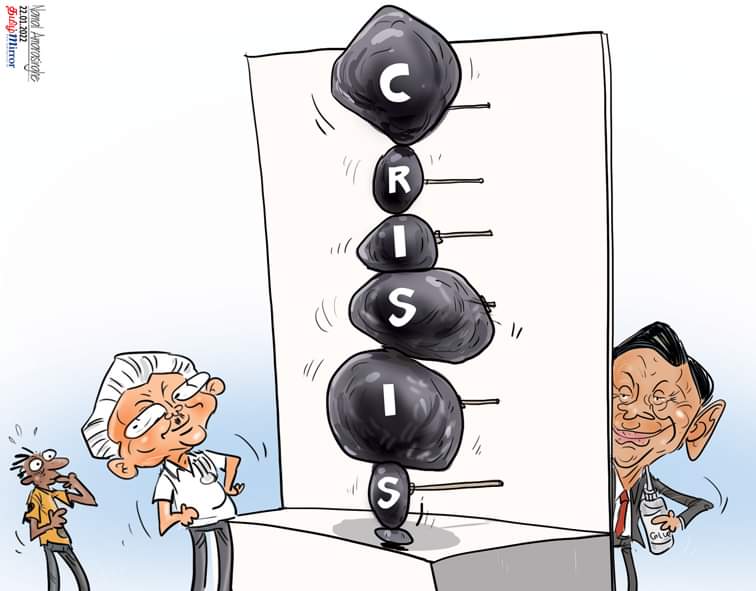
But power outages are in the cards, seasoned observers warned, in the wake of the Rajapaksa government’s decision this week to dip into the country’s dwindling foreign reserves to pay a $500 million sovereign bond, which matured on Jan. 18. That cut off the flow of limited foreign exchange to pay for a long list of imports, including oil, they said.

“We were already short of fuel but we decided to pay the debt,” said Nishan de Mel, executive director of Verite Research, a Colombo-based think tank. “In any kind of tough situation you should share the pain … you shouldn’t frontload the pain on the country — putting more pain on the country and less on the creditors.”

The government’s decision to favor creditors has brought Sri Lanka’s dollar dilemma into sharp relief. Finance Minister Basil Rajapaksa, the younger brother of the president, has said the country’s total external debt for 2022 is $6.9 billion, including a $1 billion sovereign bond maturing in July. The country began the year with only $1.6 billion in usable foreign reserves, with an additional $1.5 billion drawn from a swap with the People’s Bank of China, which, commercial banking sources say, cannot be used to pay debts to non-Chinese entities.

A new report by the World Bank suggests stronger headwinds in 2022, challenging the government’s exaggerated growth forecasts. Officials in Colombo have estimated that this year’s gross domestic product growth to hit 5.5% on the back of a revived tourism sector. That comes in the wake of claims that the country will reach an expected 4.5% growth in 2021.

But the World Bank places Sri Lanka as an economic laggard among its South Asian peers, forecasting growth of 2.1% in 2022, down from an expected 3.3% in 2021. This is the worst 2022 growth estimates in the region, which includes India, expected to grow by 8.3%; Bangladesh, to grow by 6.4%; and Nepal, to grow by 3.9%. South Asia’s regional projected growth will accelerate to 7.6% in 2022, the World Bank says in its “Global Economic Prospects” report, released last week.

The early signs that Sri Lanka was running out of dollars first surfaced in mid-2020, when the country was shut out from accessing international capital markets to raise dollars through sovereign bonds to refinance its bulging foreign debt, an estimated $35 billion in the $81 billion economy. It followed a massive tax cut by the newly elected Rajapaksa government in late 2019 to boost the economy, which in turn worsened the budget deficit. That spooked international ratings agencies, according to analysts.

“Ever since the ratings agencies’ downgrade in mid-2020 to CCC the alarm bells should have gone off, because we lost access to the markets so we could not refinance and roll-over the debt,” said Murtaza Jafferjee, managing director of JB Securities, a financial consultancy in Colombo. “The scarcity of dollars will only get worse from now on.”

Several key numbers illustrate that the inflow of foreign exchange is far from stellar. Foreign direct investment, which the Rajapaksa government flagged as an alternative to foreign borrowing, has only trickled in, with the first half of 2021 attracting a mere $398 million, according to the Central Bank of Sri Lanka. The country’s Board of Investment had set its sights on securing $1 billion by the end of 2021, an ambitious target by the state’s premier foreign invest agency after a sub-par record of attracting only $550 million in 2020, down from $793 million the previous year.

A host of factors have added to the dollar woes. The country’s persistent trade deficit has been averaging $10 billion annually in recent years; tourism has slumped due to COVID-19; and a government plan to raise $1.5 billion by offering high-value properties in Colombo to foreign investors has struggled to attract interest. “We have never felt such a dollar crunch like this,” remarked a veteran commercial banker. “Importers have been running around the last three months to check which commercial banks have dollars.”

The Port of Colombo affirms that sentiment. Containers loaded with goods are piling up as importers are unable to secure dollars to clear them, according to shipping industry sources. Oil shipments at the country’s busiest harbor are also tied up, waiting for the dollar tap to open.