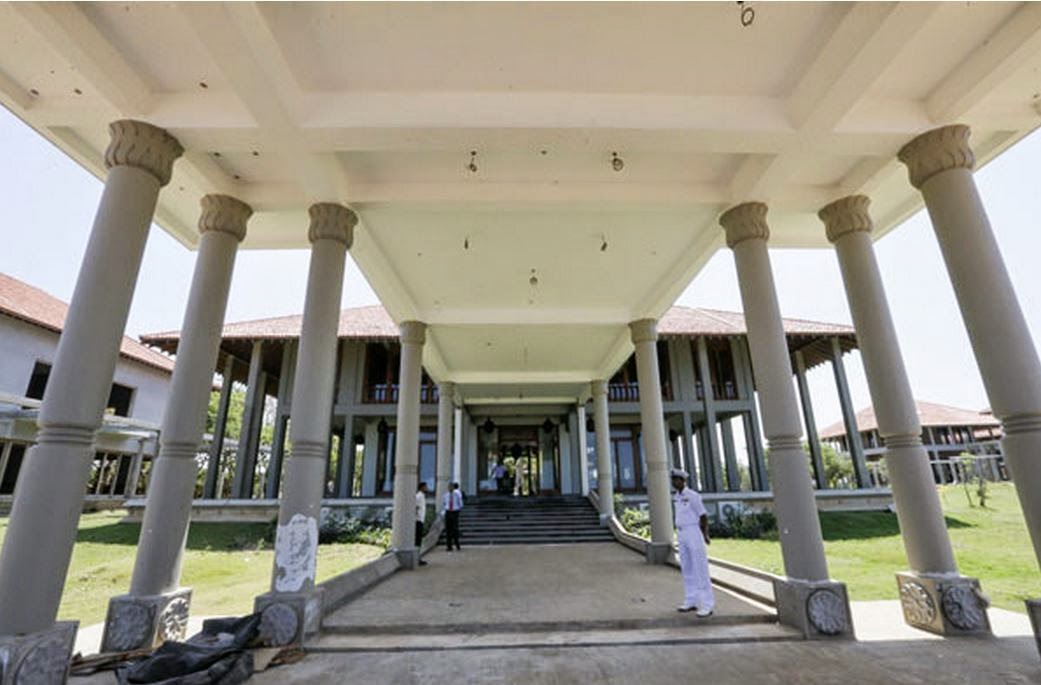
Ranil On International Response to Easter Attacks

Former President Ranil Wickremesinghe, leader of the United National Party, speaking to supportersdisclosed details about the international response following the Easter bombings in Sri Lanka.

Speaking on the matter, Wickremesinghe revealed that then-President of the United States Of America Donald Trump was among the first to reach out, offering assistance from the FBI.

American officials were dispatched to aid in the investigation, followed by experts from the UK, Australia, China, and other nations.

Wickremesinghe recounted conversations with these international representatives, who ultimately concluded that the attacks were orchestrated by ISIS-affiliated groups, including Saharan and his associates. He said that he was told that no external entities were involved, confirming the attacks were planned and executed internally.

Posted in Uncategorized

Batalanda Commission Report handed over to AG

The report of the Commission of Inquiry into the alleged establishment and operation of illegal detention centres and torture chambers in the ‘Batalanda’ Housing Scheme has been handed over to the Attorney General.

The Presidential Secretariat has handed over the report to the Attorney General following a directive from President Anura Kumara Dissanayake, the President’s Media Division said.

The report, originally compiled over 25 years ago, was tabled in Parliament recently. The Government has taken a decision to take necessary action and as a result, actions have been initiated to hand over the report to the Attorney General’s Department today (29), the PMD communiqué noted.

The report was presented to Parliament on 14 March by the Leader of the House, Minister Bimal Ratnayake.

North-East: 250k acres of forest land to be released

The Department of Forest Conservation is set to release 250,000 acres of lands in the Northern and Eastern Provinces to their original owners, according to the Ministry of Land and Irrigation.

The frequent issues that the Northern and Eastern people face include the occupation of their lands by the military forces and State departments.

Speaking to The Daily Morning, the Deputy Minister of Land and Irrigation, Dr. Susil Ranasinghe said that a major issue had arisen in the Northern and Eastern Provinces as the Department has marked forest reserve boundaries using Google Maps, without properly consulting the local communities. As a result, he said that large areas of land that belonged to the people have been mistakenly demarcated as forest reserves.

“We had preliminary discussions with all the stakeholders including the Environment Ministry, the Provincial Governors, the Forest Conservation Department, and the Land Commissioner General’s Department. During these discussions, it was agreed that 250,000 acres of land acquired by the Forest Conservation Department would be released back to the people. The boundaries of the forest reserves will be redrawn, this time under the supervision of the respective Divisional Secretaries (DSs) and with input from the Grama Niladharis (GNs) and local communities,” he added.

The land issues in the Northern and Eastern Provinces are connected to the past internal conflict and the struggles of the people who live there. Many families lost their homes and lands during the conflict, and even years after the conflict ended, some are still fighting to get them back. Some lands are under military control, while others have been taken over by various governmental departments. Successive governments have returned some lands, but, many people are still waiting for their lands to be returned.

Posted in Uncategorized

CBK writes to EC over misuse of her image in election propaganda

Former President Chandrika Bandaranaike Kumaratunga has informed the National Election Commissioner via a letter that her name and image have been used without her permission for election propaganda activities.

The letter states that certain candidates of the United People’s Freedom Alliance (UPFA), contesting under the symbol of the ‘chair’ for the Attanagalla Pradeshiya Sabha at the 2025 Local Government (LG) election, have been distributing leaflets containing her image, along with those of former Ministers Lasantha Alagiyawanna and Sarana Gunawardena, and that they have also put up posters.

The former President further notified the Election Commission that she has not granted permission to use her image for the distribution of such leaflets or for the printing of election posters.

Kumaratunga emphasized that she had previously informed the candidates contesting under the chair symbol in Attanagalla and other areas not to use her image for any audio-visual promotional activities. Despite this, the former President alleges that certain candidates have unlawfully used her photograph in their campaigns.

Former President Chandrika Bandaranaike Kumaratunga also stated that using her photograph in a manner suggesting her support constitutes a violation of election laws. Therefore, she has urged the Election Commission to immediately inform the relevant party leaders to halt this activity and to take the necessary actions promptly.

If Religion is the Opium of People By N Sathiya Moorthy

When people voted the centre-left JVP-NPP to power last year, they had thought that they were voting for ‘change’, not only as far as governmental policies and programmes went. They did not expect much change in either of the two, given the inherent institutional limitations. What they instead expected was a new ‘political culture’, top-down, bottom-up.

Come the nation-wide local government elections, and you now have the JVP-NPP leadership starting from President Anura Kumara Dissanayake, every tested trick in the trade that had been in vogue for generations of political parties since before Independence. Translated, the centre-left leadership is following in the footsteps of Comrade Karl Marx, who said, ‘Religion’ is the opium of the people.’ If their non-left, anti-left right reactionaries, while in power, could feed the people more of it, can Dissanayake & Col be seen as doing injustice to Marx?

It is thus that the government reportedly caused the display of Lord Buddha’s Tooth Relic at Sri Dallada Malligawa in Kandy, for the nation’s Sinhala-Buddhist majority to clear their minds and brains before queuing up before the polling stations on 6 May. According to reports, an expected 20 million Buddhists are expected to have darshan, standing in long queues that on days stretch 10 km and more. At least four persons have lost their lives standing in the queue and many more have been hospitalised, possibly owing to the summer-heat.

Mastermind of ‘em all

It does not stop with the Sinhala-Buddhist majority, when it comes to the government parties wooing the voters. There is no majoritarianism of the kind displayed by their predecessors when it comes to matters of religion when mixed with matters of elections, you should say of their secular approach.

Yes, it’s about the Easter blasts six years back – rather the fresh police probe ordered by the present government. The way President Dissanayake and Media Minister Nalinda Jayatissa were going about it through their public statements every day at every venue, the government should not be upset if someone thought that they personally and not the Police-CID wing was in charge of the fresh probe into the 2019 ‘Easter blasts’.

If however there is some breathing space now to the discourse, at least directly from ruling JVP-NPP leaders, it does not seem to flow from a sudden adherence to discretion. Instead, the passing on of Pope may have meant that it was improper for them to campaign in the name of religion – which it after all was – when the Catholic community in the country was in mourning, like their brethren across the world.

In the campaign prior to Pope’s passing-on, minister Jayatissa in particular used to hint at his knowing much more about the daily probe outcomes than he was telling the media and through them the nation. This raises a further question if the investigation team was getting fresh directions from the political leadership every other day, going beyond the ‘need-to-know’ clause that is generally attached to such high-profile, sensitive investigations.

In between, you have had the Catholic Bishops Conference telling the government that the CID investigations should also identify the ‘mastermind’ behind the blasts other than those already identified on-the-spot, and are all dead. Such a construct prima facie implies that there was a larger conspiracy and the Catholic Church would not be satisfied if the police did not come up with (new) names for the mastermind(s).

It is immaterial how high and mighty those ‘great conspirators’ may be, but then even the very idea of a larger conspiracy can be established only when the CID investigations moved further. In effect, if some of those later charged with a role in a greater conspiracy approaches the court that they were ‘fixed’ to please someone somewhere, then the judges may be constrained to consider that possibility more than at present.

It is in this context, you need to recall at every turn, the American FBI’s findings that Zahran Hashim, a sucide-bomber among the perpetrators of the heinous crime, was the master-mind. This is what then Prime Minister Ranil Wickremesinghe said on the night of the serial blasts that shook the nation and the region after a decade after the dreaded LTTE’s exit.

It would be a feather on the Sri Lankan CID’s cap if they could prove that there was a real mastermind behind the FBI-identified master-mind. The general perception here and elsewhere is that the FBI does a thorough job, because it has abundant resources at its disposal for its agents to undertake world-wide travel to follow any lead that might have come their way.

That American lives too were lost in the Easter blasts was reason and justification for the FBI to get involved goes without saying. But the question is if the Sri Lankan police and government should accept the FBI’s findings as gospel truth that should not be revisited, reviewed and reinvestigated.

Thankfully, minister Jayatissa has since conceded, in public, that it was the ‘responsibility’ of the police and courts to ‘reveal’ the mastermind(s)behind the blasts. What he possibly left unsaid was that he and his President were only helping the police CID up to the ‘mastermind’ that their investigations otherwise may, or may, not expose.

Divine opportunity

Guess what is still the height of the ‘Religion…opium’ mix? Or, is it only a mix-up, still? The other day, newspapers reported that JVP-NPP’s candidate for the prestigious Colombo mayoralty, Vraie Cally Balthazaar, her running mates and party colleagues campaigning for her, participated in the memorial bhajans and pujas on the 14th death anniversary of Sri Sathya Sai Baba, in the national capital.

Sai Baba was a Hindu god man based in south India, with permanent abodes in native Puttaparthi in Andhra Pradesh and White Field, in what used to be suburban Bangalore, now Bengaluru, capital of neighbouring state of Karnataka. Maybe (or, maybe not), the candidate and her supporters are all followers of Sai Baba, but they have considered their presence at the Baba bhajan session as a divine occasion and opportunity to mix religion and politics, to attain the desired results in both, at one-go.

The good thing about Sri Lankan left theology is that unlike the founders and followers of communism elsewhere, they are not atheists. Instead, they are as much believers as any other. The way communism propped up in the country may have something to do with it.

Missing symbolism

Sri Lanka, earlier Ceylon, has been an avowedly religious country with even more religious people. As is known, the rural poor, their women especially, save all that they can through a long life of hardship only to go on a pilgrimage to centres of Buddhist religious importance in India. Once done, they are mentally and spiritually ready to depart.

Recall how S W R D Bandaranaike mixed symbols of religion, (Sinhala) nationalism and politics to win the historic 1956 elections, and that is the path that even the (breakaway?) JVP walked despite taking extremist positions in everything else, starting with their violent methods to oppose / challenge the State, and at the same time, reach out to the people.

Today, there is hardly any centre-left leader in the country, including those from the JVP, who are not seen without the sacred pirit thread around their wrists. They clearly indicate that their differences with the traditional political opposition is only about socio-economic ideology, and not every day practices. It begins with religion, as with every good thing and its good beginning. In the case of others before them, it however did not end there.

But then government leaders are not known to have extended such religious symbolism to the nation’s Muslim community, at least not yet – did you say?

(The writer is a Chennai-based Policy Analyst & Political Commentator. Email: sathiyam54@nsathiyamoorthy.com)

Posted in Uncategorized

Over 90% of Polling Cards Distributed

Sri Lanka Post said that over 90% of the official polling cards for the local government elections have been distributed.

Deputy Postmaster General Premarathna Herath stated that the door-to-door distribution of these polling cards will be completed by tomorrow.

Voters who have not received their official polling cards by tomorrow can collect them from their nearest post office.

This opportunity will be available until 4 PM on May 6th, the day of the election.

The postal voting for the local government elections continues today for the third day and is scheduled to conclude tomorrow.

Posted in Uncategorized

LG Polls: Postal Voting Continues Today

Eligible voters can continue to mark their postal votes for the upcoming local government elections today, between 8:30 AM and 4:15 PM.

Chairman of the Election Commission R.M.A.L. Ratnayake confirmed that those who are unable to cast their postal votes today can do so tomorrow.

Meanwhile, the distribution of official polling cards is scheduled to conclude tomorrow as well.

The local government elections are set to take place on May 6th.

China to send top Minister to SL amid trade roiled by Trump’s tariffs

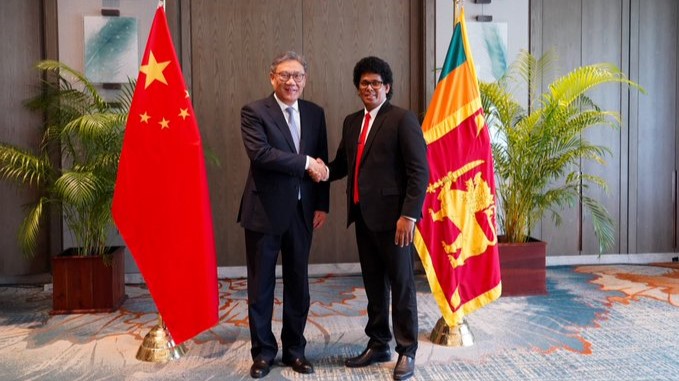
In the wake of Sri Lanka trying hard to mitigate the impact from the chaotic announcement of reciprocal tarrifs announced by U.S. President Donald Trump, Chinese Commerce Minister Wang Wentao is expected to visit Sri Lanka in June in a bid to foster trade links, an informed source said.

The Chinese authorities in Sri Lanka indicated about such a visit during a recent meeting at the Trade Ministry.

Following tariffs announced by the U.S. President, the countries across the globe look for new markets instead of depending solely on one country or bloc. The U.S. and the European Union absorbs a bulk of Sri Lankan exports at the moment.

Following President Trump’s decision, Sri Lanka now remains engaged with the U.S. authorities to seek redress from reciprocal tariffs after the 90-day pause now in progress. The government has pledged to increase imports from the U.S. to narrow the trade gap which is now in favour of Sri Lanka.

In the meantime, the Chinese Commerce Minister is slated to arrive here in the backdrop of Sri Lanka seeking to expand its export markets. The programme agenda is yet to be worked out.

China and Sri Lanka started negotiations on a Free Trade Agreement more than ten years ago. Talks currently remain stalled.

After six rounds of negotiations, the FTA discussions came to a standstill in 2018 over tariff lines and the value of trade to be liberalised.

Following the visit of President Anura Kumara Dissanayake to Beijing, Sri Lanka and China had greed to work toward an early conclusion of a comprehensive FTA.

China is the 10th export destination for Sri Lanka. The total export value from Sri Lanka to China was US $ 251.91 Mn in 2024 and total imports from China to Sri Lanka for the same period were US $ 4,332.48 million. China is the first import origin for Sri Lanka, the Export Development Board said.

Sri Lanka-based FitsAir starts business class

Sri Lanka-based FitsAir said it was starting business class from April 25 with flexible rebooking and lounge access, combining a premium service with its low cost offering.

FitsAir’s route network includes South Asia and the Middle East.

“As a low-cost carrier, our goal has always been to make air travel more accessible,” Ammar Kassim, Executive Director of FitsAir, said in a statement.

“Following the launch of Business Class, we’re taking that a step further, allowing the budget-conscious traveller to experience the comfort, exclusivity, and personalised service traditionally reserved for premium fares.”

The upgraded service includes includes priority check-in, fast-track boarding, and expedited baggage handling along with flexible rebooking and cancellation options, targeting business travellers.

Business Class passengers get a baggage allowance of 40kg check-in and 10kg hand luggage, free seat selection and personal in-flight entertainment devices.

Posted in Uncategorized

Panic in Pakistan as India vows to cut off water supply over Kashmir

Spraying pesticides on his parched vegetables one street away from the Indus River, Pakistani farmer Homla Thakhur is worried about his future. The sun is at its peak, the river is running very low, and India has vowed to cut supplies upstream after a deadly militant attack in Kashmir.

“If they stop water, all of this will turn into the Thar desert, the whole country,” said Thakhur, 40, before heading back to the river to refill the tank for the spray gun.

India says two of the three militants who attacked tourists and killed 26 men in Kashmir were from Pakistan. Islamabad has denied any role and said “any attempt to stop or divert the flow of water belonging to Pakistan … will be considered as an Act of War”.

The treaty split the Indus and its tributaries between the nuclear-armed rivals.

Government officials and experts on both sides say India cannot stop water flows immediately, because the treaty has allowed it to only build hydropower plants without significant storage or dams on the three rivers allocated to Pakistan. But things could start changing in a few months.

“We will ensure no drop of the Indus River’s water reaches Pakistan,” India’s water resources minister, Chandrakant Raghunath Paatil, said on X.

He did not respond to questions about the fears in Pakistan.

Two Indian government officials, who declined to be identified discussing a sensitive subject, said the country could within months start diverting the water for its own farms using canals while planning hydroelectric dams that could take four to seven years to finish.

Immediately, India will stop sharing data like hydrological flows at various sites of the rivers flowing through India, withhold flood warnings and skip annual meetings under the Permanent Indus Commission headed by one official each from the two countries, said Kushvinder Vohra, a recently retired head of India’s Central Water Commission.

“They will not have much information with them when the water is coming, how much is coming,” said Vohra, who was also India’s Indus Commissioner and now advises the government occasionally.

“Without the information, they cannot plan.”

And it is not just agriculture, a shortage of water will also hit electricity generation and potentially cripple the economy, economists say.

Vaqar Ahmed, economist and team lead with UK consulting firm Oxford Policy Management, said that Pakistan had underestimated the threat of India walking away from the treaty.

“India hasn’t got the kind of immediate infrastructure to halt the waterflows, especially during flood times, so this period creates a crucial window for Pakistan to address the inefficiencies in its water sector,” he said.

“There are a lot of inefficiencies, leakages.”

Running Disputes

In recent years, Indian Prime Minister Narendra Modi’s government has been seeking to renegotiate the treaty and the two countries have been trying to settle some of their differences in the Permanent Court of Arbitration in the Hague over the size of the Kishenganga and Ratle hydroelectric plants’ water storage area.

“We can now pursue our projects in free will,” said Vohra.

In a letter on Thursday, India told Pakistan that circumstances had changed since the treaty was signed, including population increases and the need for more cleaner energy sources, referring to hydropower.

A World Bank spokesperson said it was a “signatory to the treaty for a limited set of defined tasks” and that it does “not opine on treaty-related sovereign decisions taken by its member countries”.

Nadeem Shah, who has a 150-acre farm in Sindh where he grows cotton, sugar cane, wheat and vegetables, said he was also worried about drinking water.

“We have trust in God, but there are concerns over India’s actions,” he said.

The three rivers meant for Pakistan, a country of 240 million people, irrigate more than 16 million hectares of farmland, or up to 80% of the total.

Ghasharib Shaokat of Pakistan Agriculture Research, a Karachi research firm, said India’s actions inject uncertainty “into a system that was never designed for unpredictability”.

“At this moment, we don’t have a substitute,” he said. “The rivers governed by the treaty support not just crops, but cities, power generation, and millions of livelihoods.”

The treaty remained largely unscathed even when India and Pakistan fought four wars since separating in 1947, but the suspension sets a dangerous precedent, Pakistani politicians said.

“We’re already locked into generations of conflict, and by exiting the Indus Water Treaty, I believe we’re locking future generations into a brand new context of conflict,” said Bilawal Bhutto Zardari, Pakistan’s former foreign minister.

“That must not happen.”

Source: Reuters