Sri Lanka and UK discuss relations with the diaspora

Sri Lanka and the UK have discussed relations with the Tamil diaspora based in the UK.

The focus on the diaspora comes after President Gotabaya Rajapaksa had said recently that he is willing to have talks with the Tamil diaspora.

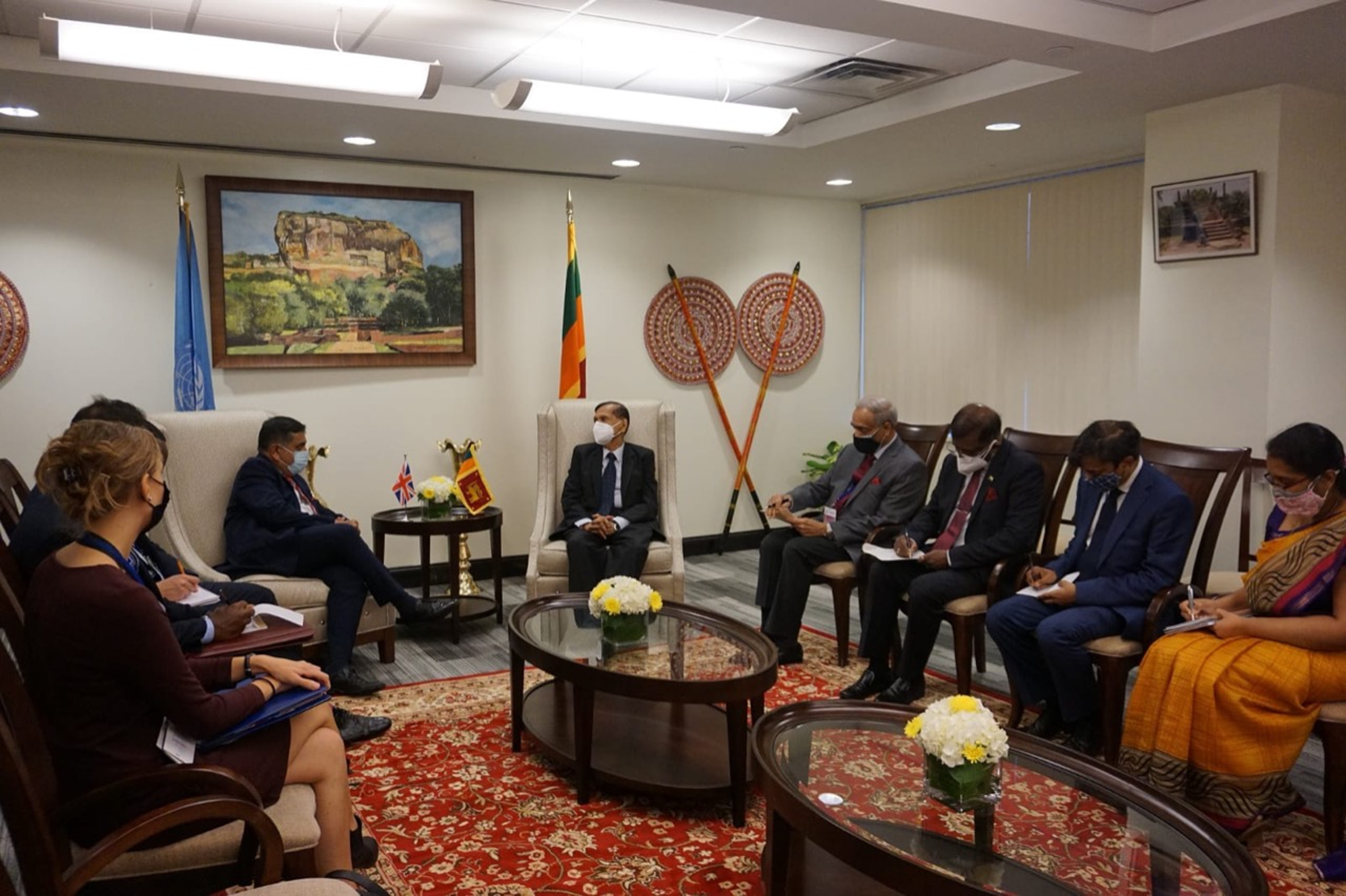
Foreign Minister Prof. G. L. Peiris and British Minister of State for South Asia, United Nations and the Commonwealth Lord Ahmad of Wimbledon had discussions at the Sri Lanka Mission in New York.

The Ministers discussed a wide range of issues including trade, investment opportunities available in the Port City and elsewhere, resumption of tourism, and matters relating to development and reconciliation with particular reference to relations with the diaspora.

Minister Peiris briefed Lord Ahmad in detail about the substantial progress on the ground in a variety of sectors by domestic institutions, despite constraints imposed by the Covid pandemic.

Lord Ahmad accepted with pleasure the invitation by Minister Peiris to visit Sri Lanka at his early convenience.

Posted in Uncategorized

War crimes must be investigated: Norwegian Tamil MP Kamsaini

An external inquiry should be held into the war crimes committed in Sri Lanka. Kamsaini, a Jaffna-born Norwegian parliamentarian, said it was necessary to find out the facts.

She was speaking at the first press conference held online on Sunday after being elected Member of Parliament for Norway.

The press conference, which lasted for an hour and a half, was moderated by Balasingham Yogaraja (Baskaran), a well-known figure in Norwegian Tamil politics.

At the beginning of the press conference, Kamsaini introduced herself in both Tamil and English. She said that when She was 3 years old, she moved with his parents to Hampest, Norway in 1991 and later moved to Oslo, the capital of Norway, with the aim of learning Tamil properly.

She said his family had no political background and that the inequalities she faced between the communities in Oslo were one of the main reasons he came into politics.

She also visited Iraq, Mozambique, Palestine and Sri Lanka and participated in women’s empowerment events.

Kamsayeni recalled that 69 young people had been killed by Andes Privy at an event attended by Labor youth in Norway in July 2011, and emotionally stated that she was a member of the youth executive at the time and had lost many of his friends at the event.

She pointed out that the Norwegian government should continue to maintain a positive relationship with Sri Lanka and that it would then have the opportunity to ensure that all projects reach out to all people when providing assistance.

Kamsaini stressed that her primary task was to work for the Norwegian people who had sent him to parliament, and did not fail to express his interest in working with his party, the Labor Party, for the Tamil people. She added that he was ready to talk to anyone in the matter.

Teachers to hit the streets again

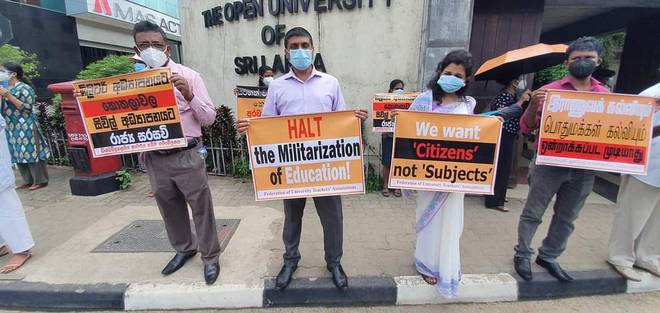
The teachers’ and principals’ trade unions have warned that if the Government continues to delay resolving their issues, including the teacher-principal salary anomalies, the protests on the streets that were suspended due to the current Covid-19 pandemic situation will have to be resumed once the country is reopened.

Speaking to The Morning, Ceylon Teachers’ Union (CTU) President Priyantha Fernando said that after the reopening of the country, plans are afoot to organise a series of protests following the Covid-19-related health guidelines. He further said that not only teachers and principals but also a large number of trade union members representing several sectors will participate in these protests.

“It has been nearly 80 days since the trade union struggle was launched by us, but the Government does not seem to be prepared to provide a solution or to at least negotiate with us. Therefore, we will have to once again organise street protests which will be attended by a large number of people representing many other sectors,” he added.

Meanwhile, following a discussion between the Federation of University Teachers’ Associations (FUTA) and the teachers’ and principals’ trade unions yesterday (27) regarding the issues of teachers and principals, including that of salary anomalies, the FUTA has decided to support the ongoing trade union struggle. Speaking to the media after the discussion, CTU General Secretary Joseph Stalin said that they hope to discuss at length regarding the actions that could be taken in collaboration with the FUTA and the actions that could be taken separately, in order to force the authorities to provide solutions to their issues.

“After discussions with us, the FUTA expressed their willingness to support our ongoing trade union struggle. Accordingly, we look forward to discussing actions that we can take together as well as those that can be taken separately in the future,” Stalin added.

He further said that teachers’ and principals’ trade unions are to discuss the ongoing trade union struggle with trade unions representing a number of sectors today (28). According to him, trade union representatives from sectors such as health, transport, plantations, and telecommunications are to attend the discussion.

Nearly 30 teachers’ and principals’ trade unions have embarked on a number of trade union actions, demanding a solution to the teacher-principal salary anomaly issue, the provision of facilities for teachers and students to carry out online education activities, and several other issues since 12 July 2021.

The trade unions have withdrawn from all online and physical teaching activities and they have also withdrawn from duties related to sending applications for examinations including the General Certificate of Education (GCE) Advanced Level (A/L) and Grade Five Scholarship examinations, online. In addition, they have also warned that they would not report to examination-related duties once the A/L and Scholarship examinations commence.

Posted in Uncategorized

Pakistan rubbishes claims Sri Lanka outraged over destruction of Buddhist sites

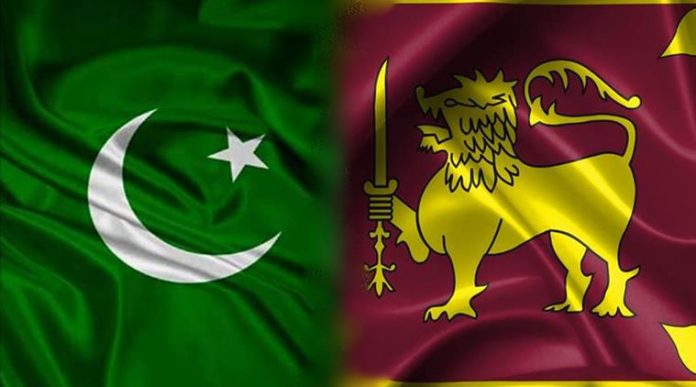
Pakistan has rubbished claims that Sri Lanka was outraged over the destruction of Buddhist sites in Pakistan.

The Pakistan High Commission in Colombo said that the incident where some Buddhist sites in Pakistan were destroyed was an isolated incident which occurred in 2020.

The ANI news service had reported that the destruction of a number of Buddhist heritage sites in Pakistan had angered Sri Lanka.

According to ANI, Buddhist carvings and stupas and statues of Buddha, especially in Swat valley, had been demolished.

The Pakistan High Commission in Colombo said that the Pakistan Government had responded to these reports earlier.

The High Commission also noted that the Pakistan takes the sanctity of hold places of all religions seriously.

It also accused the Indian media of being hell bent on reporting fake news.

Sri Lanka reports 51 Covid-19 deaths on Monday, toll rises to 12,731

Sri Lanka Monday reported 51 deaths due to COVID-19 after the figures were confirmed by the Director General of Health Services on Sunday, September 26.

Among the deaths reported today, 29 are of males and 22 of females. The majority of deaths – 41- are of elderly people in the 60 years and above age group.

According to the data reported by the Government Information Department, the total deaths due to Covid-19 since the pandemic began last year has now risen to 12,731.

Posted in Uncategorized

PTA reforms to Cabinet in two weeks

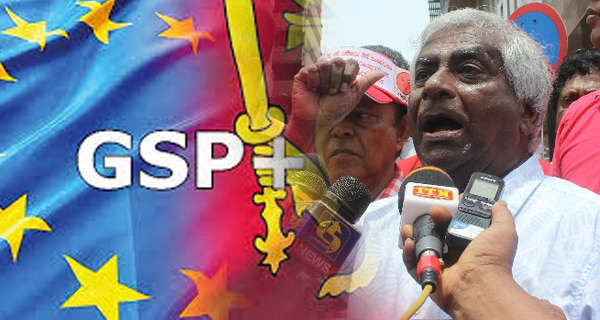
With a Monitoring Mission on the European Union (EU) Generalised Scheme of Preferences Plus (GSP+) trade concessions set to arrive in Sri Lanka today (27), the reforms to the controversial Prevention of Terrorism (Temporary Provisions) Act No. 48 of 1979 as amended (PTA), proposed and recommended by the Cabinet Sub-Committee appointed for that purpose, are expected to be submitted to the Cabinet of Ministers within two weeks, by early to mid-October.

Speaking to The Morning concerning the matter, Justice Ministry Secretary M.M.P.K. Mayadunne, who is also a Member of said Cabinet Sub-Committee that was appointed in June this year, further added that the European Union (EU) had raised concerns regarding certain Sections and provisions of the PTA, and that the Cabinet Sub-Committee had therefore looked at addressing such whilst maintaining national security and parallelly ensuring prisoners’ rights and other universal rights.

“Almost 95% of the work is done and there is only a small area we need some clarification on, and therefore, we are working with experts pertaining to the matter. Most probably in two weeks’ time, we should be able to handover our recommendations concerning changes to the PTA to the Cabinet,” he explained.

When queried as to whether aspects of the PTA, such as those concerning the admissibility of confessions made to the Police as evidence in courts and the capacity for prolonged and excessive detention, had also been addressed by the Cabinet Sub-Committee, Mayadunne noted that the three member Advisory Board instituted under the PTA and chaired by former Chief Justice Asoka de Silva is to make recommendations concerning prisoners, both in remand and convicted, under the PTA. Said Board is empowered to make recommendations to and advise the President on the investigation, release, bail, and future action related to suspects imprisoned over terrorist activities and under PTA detention orders, and on convicts under the PTA.

Said Cabinet Sub-Committee was appointed in June to look into amending the PTA whilst maintaining national security and ensuring human rights (HR), including those of prisoners, and is chaired by Defence Ministry Secretary and National Security and Disaster Management State Ministry Secretary Gen. (Retd.) Kamal Gunaratne, and includes representation from the Foreign Affairs Ministry, Justice Ministry, Defence Ministry, and Public Security Ministry.

Meanwhile, political sources informed The Morning that a meeting is scheduled to take place between the visiting EU GSP+ trade concessions Monitoring Mission delegation and the Tamil National Alliance (TNA). It is learnt that at the scheduled meeting, the TNA hopes to apprise the EU regarding the need to repeal the PTA, the progress of which will be on the top of the agenda of the visiting EU delegation, and on the dismal workplace standards of the workers in the apparel sector, including in the garment industry.

The GSP+ gives Sri Lanka preferential access to markets in the EU. It has been identified that the GSP+ especially benefits the fisheries and apparel industries.

It is reported that the visiting Mission is to meet Government officials, politicians – including President Gotabaya Rajapaksa, Prime Minister Mahinda Rajapaksa, and Foreign Affairs Minister Prof. G.L. Peiris – civil society activists, trade union representatives, employers, and United Nations (UN) agencies during its visit. The Mission is scheduled to arrive today and leave on 5 October. Progress made on the reforms process concerning the PTA is to be monitored by the five member Mission. The five members include European Commission (EC) Senior Advisor – Trade and Sustainable Development Nikolaos Zaimis, European External Action Service (EEAS) South Asia Division Head Ioannis Giogkarakis Argyropoulos, EC GSP Trade Preferences Co-ordinator Guido Dolara, EC Directorate General – Employment, Social Affairs, and Inclusion Unit Head Lluis Prats, EEAS Desk Officer – Sri Lanka Monika Bylaite, and EEAS Human Rights Policy Officer Paolo Salvia.

The Third Cycle of Review of Sri Lanka in the GSP+ Monitoring Process for 2020-2021 is currently underway and this visit, which is part of it, is in preparation of a review of all aspects of bilateral co-operation at the upcoming 24th Session of the EU-Sri Lanka Joint Commission, expected to be held in the first quarter of next year. A report will be compiled by the EU Commission based on the Mission’s observations to be submitted to the European Parliament and European Council in early 2022.

The PTA, which has been described as draconian and repressive, has been, according to its critics – including detainees, the UN, the EU, international human rights watchdog organisations, the Committee for Protecting the Rights of Prisoners, the Human Rights Commission of Sri Lanka, and human rights activists – used to commit human rights violations, including arbitrary arrest, prolonged detention, and torture, and used to target minorities and suppress dissent. Therefore, these groups have called for the amendment or repeal of the PTA. The PTA currently allows for the admissibility of confessions given to certain Police officers that are alleged to have been extracted by the Police through the use of torture and coercion, as evidence in courts, and the prolonged arbitrary detention of suspects, which borders on and constitutes punishment.

Meanwhile, expressing his personal views in this regard to The Morning, Illankai Tamil Arasu Kadchi (ITAK) Parliamentarian Shanakiyan Rajaputhiran Rasamanickam, when queried as to the stance with regard to the PTA, said that it was expected that the Government of Sri Lanka (GoSL) would keep to its promises made in 2017 to the EU, the EU Parliament, and Western countries concerning the repeal of the PTA and to replace such with counter terrorism legislation that is acceptable in terms of being in line with international norms and standards and best practices regarding the same.

“Presently, the GSP+ trade concessions are under question. The Government has done nothing regarding the PTA since 2017. The impact of losing the GSP+ is not only for a certain community but the entire country’s economy will suffer. Any amendment to the PTA will be an eye wash and made just to appease. The time when the Government could fool the people with their lies and false promises in the form of internal mechanisms or the appointment of committees and commissions in relation to the PTA, is over. If the Government has a genuine and real intention to do the right thing, then it would seriously consider coming up with a new law,” he said.

In this regard, Foreign Affairs Ministry Secretary Admiral and Prof. Jayanath Colombage recently stated that no country can survive without counter terrorism laws.

When questioned as to proposals concerning such a piece of counter terrorism legislation, Rasamanickam opined that the Counter Terrorism Bill which had been submitted in 2018, in which there were clauses they could not agree with, could however be used to come up with, prepare, and bring in a new law after placing such before the civil society and other stakeholders, conducting discussions on such, arriving at a consensus concerning the same, and then adopting the new law.

“The Government has six months to do this prior to the EU review of whether or not to extend the GSP+ trade concessions to Sri Lanka, next year (2022),” he further noted.

In addition to the PTA, Rasamanickam also raised concerns regarding the plight of workers in the apparel sector including in the garment industry: “The Government has made them work even during the Covid-19 pandemic with little care to their safety including those afforded through quarantine related measures.”

Gen. (Retd.) Gunaratne, Public Security Minister Sarath Weerasekera, Prof. Colombage, and ITAK MP and TNA Spokesman M.A. Sumanthiran PC were not available for comment.

In 2010, the EU suspended the trade concessions programme for Sri Lanka, citing several shortcomings linked to human rights and core goals promoted by the scheme. It was withdrawn after the EU identified three major shortcomings with respect to the UN human rights Conventions (the International Covenant on Civil and Political Rights, the Convention against Torture, and the Convention on the Rights of the Child), related to the GSP+ scheme, which is not only a special incentive agreement for sustainable development but also one pushing for good governance. In 2017, Sri Lanka regained it on the condition that it would repeal the PTA and implement several international conventions, including ones on human rights.

However, concerns raised by local and international groups regarding the slow progress on human rights and reconciliation, militarisation, the erosion of accountability owing to political obstruction, the reversal of important Constitutional safeguards, exclusionary rhetoric, the intimidation of the civil society, and the alleged use of the said Legislation to silence critics, among others, prompted the European Parliament to adopt a Resolution on Sri Lanka in June this year (2021). The EU Resolution called on Sri Lanka to repeal the PTA and invited the EC to consider temporarily withdrawing Sri Lanka’s access to the GSP+ trade concessions.


Posted in Uncategorized

Cabraal says IMF involvement and debt restructuring not needed

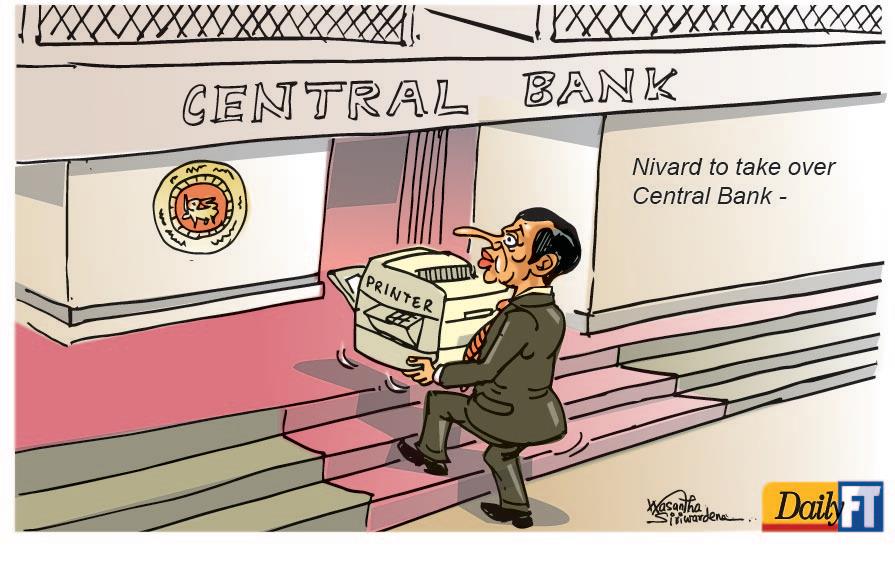
Central Bank Governor, Ajith Nivard Cabraal, who insists that a home-grown solution is the key to address Sri Lanka’s debt issues, says IMF involvement and debt restructuring are not required.

International investment banks have been told that Sri Lanka is willing to settle the debt maturing in January ahead of time, the Central Bank governor revealed.

He further stated that a road map outlining the work the Central Bank and the government will do is expected to be unveiled on October 01.

However, former Acting Chief Economist of the World Bank Group, Prof. Shantha Devarajan suggested that Sri Lanka should to the IMF with a programme consensually devised within the country.

Arguments for and against seeking help from the International Monetary Fund in dealing with Sri Lanka’s financial issues were put forth at a webinar on Friday.

“A programme with the IMF enables Sri Lanka to get budget support from the World Bank and the Asian Development Bank,” Prof. Devarajan said further.

The support of the IMF to this programme will be a signal of confidence to the international community, he pointed out adding that it is time for Sri Lanka to start debt restructuring.

Meanwhile, former Prime Minister and Leader of the United National Party, Ranil Wickremesinghe warned of an imminent crisis.

He insisted on addressing the gradual decline in foreign exchange reserves in the country.

Speaking further, the former prime minister said a lifting of the current lockdown could be put off to mid-October due to a possible delay in the arrival of diesel supplies purchased for the local market.

Sri Lanka reports 71 Covid-19 deaths on Sunday, toll rises to 12,680

Sri Lanka Sunday reported 71 deaths due to COVID-19 after the figures were confirmed by the Director General of Health Services on Saturday, September 25.

Among the deaths reported today, 32 are of males and 39 of females. The majority of deaths – 56- are of elderly people in the 60 years and above age group. One female below 30 years of age also succumbed to the disease.

According to the data reported by the Government Information Department, the total deaths due to Covid-19 since the pandemic began last year has now risen to 12,680.

Ahead of polls, big allocations for local-level projects

Members of Parliament presiding over District Development Committees and their deputies, former provincial council members and sitting local council members are to be allocated funds for development projects in their respective areas, Minister Gamini Lokuge told the Sunday Times.

He said that according to the proposal, an MP presiding over the District Development Committee would be allocated Rs 100 million for projects and a deputy Rs 50 million.

The move comes ahead of the local council elections scheduled for next year.

Under the proposal, former Provincial Council members representing both the ruling party and the opposition would be allocated Rs. 2 million each while Pradeshiya Sabha members from both the ruling party and opposition would be allocated Rs 4 million each, he said .

The funds would be allocated for projects which could be completed within a year.

Minister C.B. Ratnayake told the Sunday Times that former Provincial Council members were to be allocated funds on the grounds that development activities could not be carried out during their period due to lack of funds and therefore they would be given an opportunity to develop the respective area.

Meanwhile, some of the Ministers and MPs have already started discussions at Grama sevaka level to identify proposals for projects.

Under the proposal, livelihood, infrastructure development, sustainable development and social welfare projects are to be given priority.

The Sunday Times learns that al though the local elections are scheduled for early next year the polls may be delayed by few months.

Posted in Uncategorized

Sri Lanka’s apparel industry on tenterhooks over EU trade scrutiny

Reuters – Sri Lanka’s preferential trade access to the European Union, which is the biggest market for its $5 billion apparel industry, is in doubt with an investigation into the island country’s human rights and governance concerns set to start on Monday.

The European Parliament in mid-June adopted a resolution inviting the EU to consider withdrawing Sri Lanka’s access, citing “deep concern” over the country’s deteriorating human rights situation.

A five-member delegation is scheduled to meet government and company representatives, civil society, trade unions and United Nation officials during a week-long stay and submit a report that will be presented to the European Parliament in 2022.

“The monitoring will focus on Sri Lanka’s compliance with 27 international conventions related to GSP+ (Generalised Scheme of Preferences Plus) covering human rights, labour, environment and governance to which Sri Lanka has acceded,” Colombo EU Delegation Chargé d’affairs Thorsten Bargfrede told Reuters.

Sri Lanka exported 45%, or $2.7 billion, worth of garments to the EU in the first seven months of 2021, up from $2.2 billion last year.

As much as 60% of the nation’s apparel exports to the region benefit from the EU’s GSP+ concessions, a 9.5% cost benefit, and are the country’s second highest foreign exchange earner.

Hard hit by closures and reduced sales during the pandemic, the apparel industry sees GSP+ as crucial to attracting foreign investment and helping the sector to reach its target of $8 billion earnings by 2026, a 60% increase from current levels.

Industry sources say the government has pledged to engage with the EU to retain GSP+ but stakeholders estimate a loss of about $600 million if the facility is removed.

Sri Lanka, which gained GSP+ access for the first time in 2005, has previously had it withdrawn.

The EU withdrew the facility in 2010, highlighting insufficient efforts by Sri Lanka to address human rights and reconciliation issues in the aftermath of a 27-year civil war, but it was reinstated in 2017.

The Joint Apparel Association Forum (JAAF) is worried about the threat of factory closures – particularly among small and medium manufacturers that employ 350,000 direct and 700,000 related industry employees, of which 80% are rural women.

“To retain our access, be competitive and expand our market share we must have this trade agreement. We are still very optimistic that GSP+ will continue but if it is lost, investment to this sector will be questioned,” JAAF Chairman A. Sukumaran said.