Easter Sunday attacks: Gnanasara to reveal info only if summoned

In the wake of calls from religious and civil society organisations representatives for him to disclose any information he claims to have regarding the masterminds behind the 2019 Easter Sunday terror attacks, Bodu Bala Sena (BBS) General Secretary, Galagodaaththe Gnanasara Thera said that he would reveal such information only if summoned by the relevant authorities.

Representatives of several religious and civil society organisations recently called on him to disclose the information that he claims to have about masterminds behind the terror attacks.

When queried by The Daily Morning as to whether he would disclose the relevant information, Gnanasara Thera said that he would share it only with the relevant authorities, as doing otherwise could create unnecessary problems. “I have information, and I will divulge it only to the relevant authorities. There is no need to discuss this with civil society organisations, as they don’t know these matters in detail. If the relevant authorities summon me, I will provide them with the information that I have.”

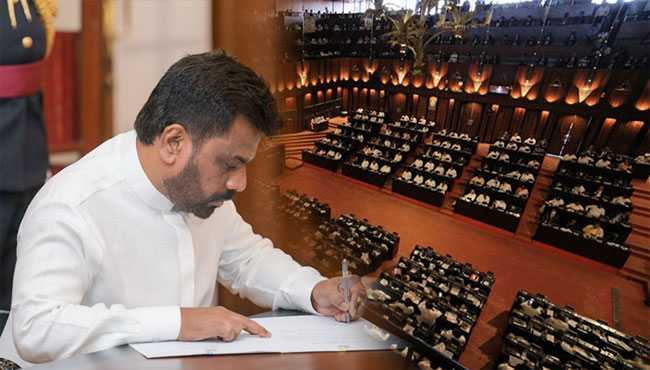
Gnanasara Thera, who had been serving a nine-month lenient prison sentence for making defamatory remarks about Islam and was granted bail by the Colombo High Court, recently claimed that he knows the mastermind behind the Easter Sunday terror attacks, and added that he would inform President and Defence Minister Anura Kumara Dissanayake, as well as other relevant officials. He claimed that he knew the mastermind’s identity, background, whereabouts, and how he (mastermind) trained National Thowheed Jama’ath leader Mohamed Cassim Mohamed Zahran, ultimately guiding him towards carrying out the suicide attack.

When The Daily Morning inquired as to whether the Police or the Criminal Investigation Department (CID) would record a statement from Gnanasara Thera, the Minister of Public Security Ananda Wijepala, on an earlier occasion, dismissed the need for serious attention to such statements. “There is no point in discussing the nonsense uttered by various individuals. A proper investigation into the Easter Sunday terror attacks is already being conducted by the CID. If necessary, they will record a statement from him (Gnanasara Thera),” Minister Wijepala added.

Why the dragging of the NPP’s feet over repeal of the PTA?

A significant ruling by the Sri Lankan Supreme Court on 18th March 2025 (Madurapperuma v Kelum Sangeeth, Sub-Inspector of Police and Others,) has cast a pale of doubt over a range of detention orders issued by former President Gotabaya Rajapaksa under Section 9 (1) of Sri Lanka’s highly critiqued Prevention of Terrorism Act (PTA).

Careless use of the ‘gonibilla’ PTA

This interpretation of relevant constitutional provisions by the Court, taken beyond the legal parameters of this case, points (once again) to the need to replace the PTA by a sensibly drafted and narrowly framed counter-terror law that does not permit routine and haphazard use of its provisions by the executive. Here, the Court was concerned with the legality of a particular detention order (DO) signed by former President Rajapaksa on 6th February 2020 against a Bandaragama resident.

She had been arrested, along with her brother on 30th January 2020 on allegations of being in possession of heroin. The initial arrest by the police, quite correctly, was under Section 82 (3) of the Poison, Opium and Dangerous Drugs Ordinance. It was thereafter, that the adventurous path of law enforcement catapulted the detention process into jeopardy by the detainee being ‘threatened with the PTA’ unless she admitted the involvement of another individual in the offence in question.

True to form, the police then proceeded to obtain a DO under Section 9(1) of the PTA on the spurious grounds that she is ‘suspected of having committed several offences under the PTA.’ I will return to the legality of that DO and the important reasoning of the Court later. At this point however, it begs repetition that this case well reflects the ludicrously ‘catch all’ interpretation that Sri Lanka’s law enforcement routinely gives to a counter-terrorism law that should be strictly confined to its meaning and purpose. That is so, from the North to the South of the land

Radical surgery needed, not bandages

Amendments brought to the PTA (by way of Amendment Act, No 12 of 2022) merely constitute ineffectual Rule of Law bandages plastered over the suppurating wound of an atrociously bad law. The Amending Act provided certain safeguards during the process of detention, for magisterial visits to places of detention, for detentions under Section 9 to be communicated to the Human Rights Commission etc. The magistrate must ensure that no suspect is abused.

The Convention Against Torture and Other Cruel, Inhumane or Degrading Treatment or Punishment Act, No 22 of 1994 must be strictly complied with. The visits must ensure personal monitoring of the suspect’s wellbeing and record any complaints. It will be interesting to ascertain as to whether these provisions are observed in practice. That is apart from the extraordinary fortitude that a detainee must possess to complain of torture while inside a detention system’ that treats these allegations harshly.

Many of these apparent safeguards are good on paper but do not stem brutal practices of abuse. For that to change, the PTA itself needs to be tossed out of the legal system as the National Peoples’ Power (NPP) Government promised as a pivotal point in its campaign manifesto. In its place, the nation needs a counter terror law that conforms to constitutional safeguards as contained in well -known cursus curiae by the apex court. Alas, there seems to be political foot dragging on that promise.

Legality of the DO struck down

The instant case of ‘Madurapperuma’ is an excellent example in point. The second DO issued on 6th February 2020 was in a much larger group of DOs signed by former President Rajapaksa during a crucial period following the start of his term as the 8th President of Sri Lanka (17th November 2019). At that time, it was the 19th Amendment to the Constitution that was prevalent. By virtue of the transitional provisions in Articles 50 and 51 of that Amendment, the (then) President was authorised to be in charge of the subject of Defence for a finite period.

That period ran from the date that the Amendment came into effect (ie; certified on 15th May 2015) ‘until the next general election.’ At the time of the 19th Amendment, former President Maithripala Sirisena was the 7th President of Sri Lanka. Taking these provisions into account, Justice S. Thurairaja (writing for the Court), noted that the applicability of Article 51 is limited, ‘…very clearly to the President holding office on the date of the commencement of the Act.’

As such, ‘only the 7th President, Maithripala Sirisena could assign to himself – as he did assign to himself – the subject of Defence by virtue of this Section.’ Subject to that exception, Articles 43 and 44 stipulated that, ‘only a Member of Parliament could be appointed a Minister under the Constitution.’ That was the case until the 20th Amendment to the Constitution (certified on 29th Oct 2020) amended Section 44 (3) to provide that the President shall be the Minister in charge of the subject of Defence.

Article 4(b) of the Constitution cannot be casually applied

As the Court observes, ‘the term of the 8th President, Gotabaya Rajapaksa did not begin till 7th November 2019…that is well after the period contemplated in Section 50 of the 19th Amendment.’ In other words, the actions of the former President in purporting to gather to himself the powers of the Minister of Defence during the intervening period, were cast in issue. That included the DOs signed by him during that period, before the 20th Amendment became the law of the land on 29th October 2020.

The Bench was unimpressed with the argument of lawyers appearing for the respondents that the President (ie’ Gotabaya Rajapaksa) had ‘residual power to assume any power under any legislation’ within the purview of the Ministry of Defence. That was an argument relying, inter alia, on Article 4 (b) of the Constitution which states that, the executive power of the people, including the defence of Sri Lanka, shall be exercised by the President of the Republic, elected by the People.’

But finding this position to be ‘unconvincing’ (quite cogently so), the Bench pointed out that, if the ‘general reference’ to the ‘defence of Sri Lanka’ cannot be reasonably read to mean ‘any and all functions of the Minister of Defence.’ Rather, that references the President’s role as the Head of State and Commander in Chief of the Armed Services.

Mechanical signing of DOs must cease

‘If such loose references to ‘defence’ can grant residual power to arbitrarily assume power and authority given by law to the Minister of Defence, what stops the President from assuming any governmental power as the Head of State, the Head of the Executive and of the Government?’ it was asked. The contention by the respondent police officers was found not only to be ‘unsupported by reason but also democratically precarious.’ The impugned DO was ruled to be ultra vires the Constitution and devoid of any legal validity.

The period of detention that followed was consequently visited by that same flaw resulting in a violation of Article 13 (1) and (2) (arbitrary arrest and detention/custody) as well as Article 12 (1) (equality before the law). Quite apart from the legal question in issue, the ‘Madurapperuma’ DO is just one of thousands of other DOs mechanically signed with general citations of ‘terrorism offences. It is these casual ‘PTA” practices of law enforcement that must be stopped in their tracks.

This does not contribute to the maintenance of general law and order but exercises a counter-productive impact on national security. That is a lesson that the Sri Lanka State has yet to learn.

Posted in Uncategorized

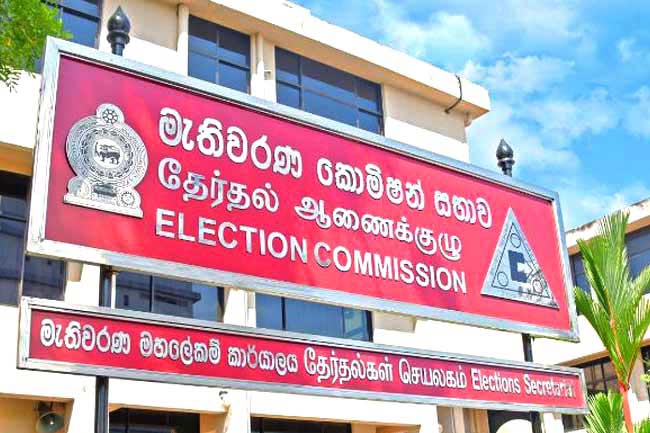
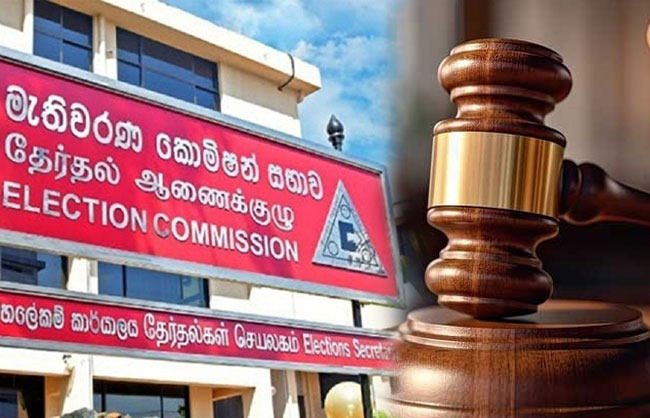
Ballot Paper Printing and Distribution Schedule for Postal Voting Announced for LG Elections

Government Printer Pradeep Pushpakumara says that the printing of postal voting ballot papers for the upcoming local government elections is expected to be completed by the 5th of April.

A total of 700,000 ballot papers are being printed for postal voting.

The National Election Commission has confirmed that these ballot papers will be delivered to post offices across the island, by the 7th of April.

Chairman of the National Election Commission R.M.A.L. Ratnayake said that the distribution process will take place at all district secretariats.

Postal voting is set to be take place on the 22nd, 23rd, 24th, 28th, and 29th of April.

The Government Printer also assured that the printing of all official ballot papers will be completed by the 28th of April.

The distribution of these official ballot papers for the local government elections will begin on 16th of April and continue through to 29th of April.

Posted in Uncategorized

UNP welcomes Indian PM Modi’s visit to Sri Lanka

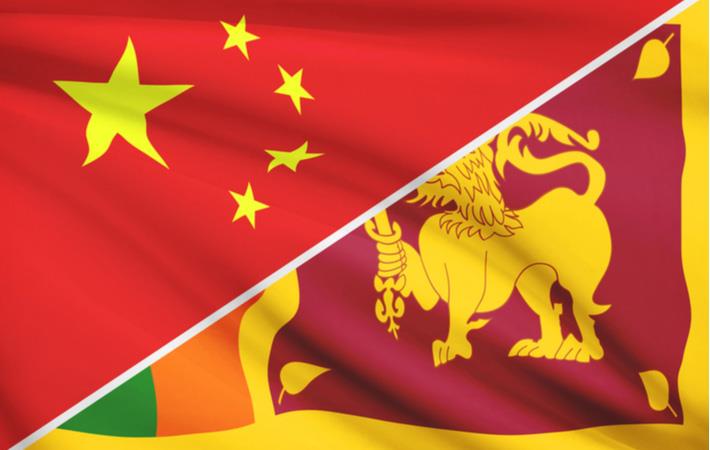
Former President Ranil Wickremesinghe’s United National Party (UNP) on Sunday welcomed Prime Minister Narendra Modi’s scheduled visit to Sri Lanka this week.

Modi will begin a two-day visit to Sri Lanka on April 4.

“This visit represents a cherished milestone in the timeless relationship between our two great nations,” a party statement said.

The UNP said the visit presents an opportunity to strengthen the “India-Sri Lanka Economic Partnership Vision” adopted in July 2023.

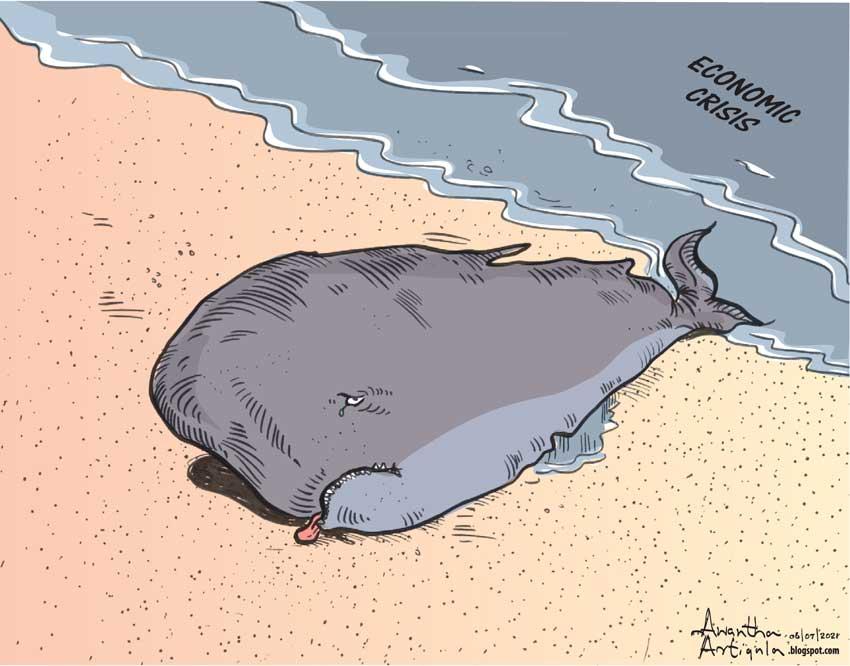
The UNP recalls that India’s provision of USD 4 billion in assistance during Sri Lanka’s economic crisis was “a testament to the depth of our friendship”.

The development of the eastern port district of Trincomalee jointly with India holds the potential to establish a dynamic centre for trade, energy and maritime activity and enforces regional connectivity.

The UNP attaches importance to the proposed power grid interconnection to deliver affordable and reliable energy, the statement said.

Foreign Minister Vijitha Herath said the memorandum of understanding on the power grid integration between Sri Lanka’s northeastern Mannar and India’s southern region through an undersea cable would be one of the bilateral agreements to be entered during the visit.

“This partnership is ultimately dedicated to the well-being of our people,” the UNP said.

“In hosting Prime Minister Narendra Modi, the UNP calls upon all stakeholders to reaffirm their dedication to this bilateral vision.”

This will be Modi’s fourth visit to Sri Lanka since assuming office in 2015.

He last visited Sri Lanka in June 2019.

UNP leader Ranil Wickremesinghe was Sri Lanka’s prime minister during his visits in the past.

Source: PTI

Several of those responsible for Easter Sunday attacks will be exposed before Easter this year – President

President Anura Kumara Dissanayake says that the investigations into the Easter Sunday terror attacks are being carried out speedily, and that several of those responsible will be exposed before Easter Sunday this year.

He made these comments while addressing the gathering at a public meeting in Deiyandara today (30).

Further commenting on this matter, the President added, “Investigations into the Easter attacks are being carried out systematically. April 21 once again marks the anniversary of the Easter attacks.”

The President also noted, “The Criminal Investigation Department (CID) is working to expose a significant group responsible for the attacks before April 21.”

Posted in Uncategorized

Indian PM’s Visit to Sri Lanka: Major Projects, MOUs, and State Banquet on the Agenda

The Prime Minister of India is set to arrive in Colombo on the evening of April 4th for a significant visit aimed at strengthening bilateral relations between India and Sri Lanka. The visit will commence with a ceremonial welcome, followed by a day of key engagements on April 5th, said Vikram Misri, the Foreign Secretary of India.

During his stay, the Prime Minister will hold official discussions with the President of Sri Lanka. Together, they will dedicate several projects that have been developed with Indian assistance.

The leaders will also witness the exchange of multiple Memorandums of Understanding (MOUs) covering areas such as energy connectivity, digitisation, defence, health, and multisectoral grant assistance.

A notable highlight of the visit will be the virtual groundbreaking ceremony of the Sampur solar energy project, marking a milestone in the bilateral partnership.

In addition to these engagements, the Prime Minister will meet with other political leaders in Sri Lanka. The President will host a state banquet in his honour.

On April 6th, the Prime Minister and President Dissanayake will travel to the historic city of Anuradhapura.

They will pay their respects at the Jaya Sri Mahabodhi temple, a site of great significance in the India-Sri Lanka Civilisational Partnership. The temple is home to a sapling from the Bodhi tree, brought by Theri Sangamiththa, the daughter of Emperor Ashoka from India.

During their visit to Anuradhapura, the leaders will also inaugurate two India-assisted projects. The Prime Minister is scheduled to return to India later that day.

Posted in Uncategorized

Two SC judges decline to hear appeal relating to Karannagoda

Two Supreme Court judges have recused themselves from hearing an appeal filed relating to former Navy Commander Admiral of the Fleet Wasantha Karannagoda.

When the matter came before a Supreme Court three-judge bench, Justice A.H.M.D. Nawaz and Justice Priyantha Fernando announced that they would refrain from hearing this matter. Justice Nawaz informed that he would refrain from hearing this matter since he was a member of the bench relating to the original writ application, while he was serving as a judge in the Court of Appeal.

This matter was called before the Supreme Court three-judge-bench comprising Justices A.H.M.D. Nawaz, Janak de Silva and Priyantha Fernando. The appeal was fixed for hearing on September 15.

The parents of the youths who went missing in 2008 filed this appeal challenging the decision of the Attorney General to withdraw the indictment filed against Admiral of the Fleet Wasantha Karannagoda.

On November 10, 2021, the Court of Appeal decided to dismiss the writ petition filed by several parents who sought an order quashing the decision of the Attorney General to withdraw the indictment filed against Admiral of the Fleet Wasantha Karannagoda.

The petitioners state that five persons including Rajiv Naganathan, Vishwanathan Pradeep, Mohammed Dilan and Mohammed Sajith went missing on or around 17th September 2008.

They state that the Court of Appeal has failed to give sufficient weightage to the arbitrary violations of right to life of the petitioners’ sons who were subjected to an extrajudicial execution, and the State’s duty to duly and adequately investigate into the disappearance and execution of their sons in a thorough and effective manner, to bring to justice those responsible for the disappearances.

Counsel Pulasthi Hewamanne with Achala Seneviratne appeared for the appellants.

Posted in Uncategorized

Gnanasara Thera urged to reveal masterminds behind Easter Sunday terror attacks

Religious and civil society leaders have called upon Ven. Galagodatte Gnanasara Thera to share whatever information he claims to possess with regard to the Easter Sunday terror attacks and their masterminds.

Addressing the media at the Centre for Society and Religion in Colombo, Lawyer Manoj Nanayakkara said Ven. Gnanasara Thera claimed to have information related to the terror attacks and the masterminds behind them.

“The question is why he does not go to the law enforcement agencies and share the information he claims to possess. There is no purpose in making such statements at press conferences. As a citizen, his duty is to share this information with the investigating authorities. Therefore, we believe that Gnanasara Thera is engaging in a political ploy at the behest of someone else. He should be aware that intentionally withholding information about a brutal massacre and failing to share it with the investigating authorities is an offense punishable under the Penal Code,” Nanayakkara said.

Nanayakkara mentioned that 71 months had passed since the Easter Sunday attacks, yet justice has not been served for the victims.

He called on President Anura Kumara Dissanayake to begin implementing the recommendations outlined in the Special Presidential Commission of Inquiry that investigated the Easter Sunday terror attacks, without further delay.

“We are approaching the sixth anniversary of this heinous crime, which claimed nearly 275 lives and injured twice as many others. President Dissanayake promised to conduct a fresh investigation into this crime. In the meantime, he could implement the recommendations of the Special Presidential Commission that probed the Easter Sunday terror attacks. This would demonstrate that the current government is keeping its word to deliver justice to the victims,” Nanayakkara said.

Rev. Fr. Julian Patric Perera, Rector of St. Joseph Vaz Deva Dharma Niketanaya, also addressed the press conference.

By Norman Palihawadane

Posted in Uncategorized

Infra, connectivity to be key focus during Modi’s Sri Lanka visit – report

During Prime Minister Narendra Modi’s upcoming Sri Lanka visit, key focus will be on infrastructure development, with railway projects expected to be inaugurated in Anuradhapura, including track upgradation, signalling and launch of NTPC Sampur Solar Project.

The solar power project in Sampur, located in the Trincomalee district of eastern Sri Lanka is a joint venture between India’s National Thermal Power Corporation (NTPC) and Sri Lanka’s Ceylon Electricity Board (CEB).

This initiative complements other renewable energy efforts in Sri Lanka, including India supporting a project to install rooftop solar systems across 5,000 religious institutions in Sri Lanka, spanning all nine provinces and 25 districts worth $17 million.

The handover of solar panels and equipment to sites like a Buddhist temple in Hokandara, Sri Aanjaneyar Temple, St. Anthony’s Church, and Mutwal Jumma Mosque occurred in October 2024, involving representatives from the Indian High Commission, Ceylon Electricity Board (CEB), and Sri Lanka Sustainable Energy Authority.

PM Modi is expected to be in Sri Lanka from 4th to 6th April, his 4th visit to the country since 2014. The Indian leader has been to Sri Lanka in 2015, 2017 and 2019. He is the first foreign head of the government to be hosted by Sri Lankan President Anura Kumara Dissanayake.

During the conversation, a key focus will be India’s support to Sri Lanka’s debt restructuring. In early 2023, India became the first country to officially back Sri Lanka’s debt restructuring plan, conveying its support to the International Monetary Fund (IMF) as Sri Lanka sought a $2.9 billion bailout.

Between January and July 2022, New Delhi provided approximately $4 billion in rapid assistance, including credit lines, currency swaps, and deferred import payments, to help Sri Lanka cope with severe foreign exchange shortages and import essential goods. In June 2024, India, alongside France and Japan as part of the Official Creditors Committee (OCC), agreed to a broader debt restructuring deal covering $5.8 billion of Sri Lanka’s bilateral debt.

Another key focus during the visit will be on connectivity, with expected conversation on India, Sri Lanka power grid connectivity. The plan involves establishing a high-voltage direct current (HVDC) transmission link between Madurai in southern India (Tamil Nadu) and Anuradhapura in central Sri Lanka.

The project is being developed by the Power Grid Corporation of India Limited (PGCIL) and the Ceylon Electricity Board (CEB) and can help Sri Lanka save a lot of money, reduce reliance on expensive thermal power.

Also on the anvil, plans to take forward the India Sri Lanka oil pipeline, in which UAE is playing an important role. The project is intended to transport various energy products, such as oil and possibly gas, to meet Sri Lanka’s energy needs, with special focus on connectivity.

PM Modi travels to Rameswaram in Tamil Nadu from Sri Lanka, on 6th April, in what is seen as a symbolic message on the closeness between the 2 countries.

On 6th April, which is Ram Navmi, PM Modi will pray at the Sri Arulmigu Ramanathaswamy Temple, which is one of the 12 Jyotirlinga temples. During Sri Lanka, the PM could travel to the Indian Peace Keeping Force (IPKF) Memorial in the country.

The memorial is a war monument dedicated to the Indian soldiers who lost their lives during the peacekeeping mission in Sri Lanka between 1987 and 1990. Another key announcement also expected on capacity building of Sri Lankan civil servants.

Source: WION

Govt has inherited this problem: Jaishankar on arrest of fishermen in Lanka

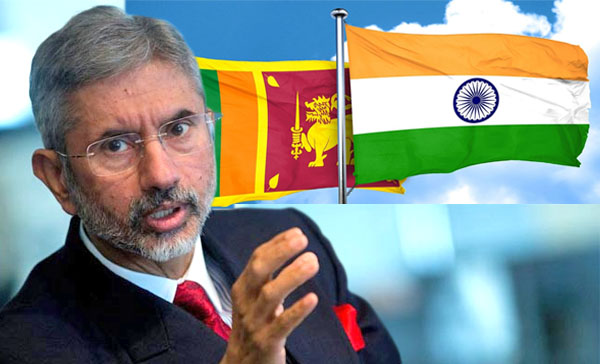
Responding to queries regarding the plight of Indian fishermen detained in Sri Lanka during the question hour in the Rajya Sabha, Indian External Affairs Minister S Jaishankar on Thursday said the government has inherited this problem due to events that can be traced back to 1974 and 1976.

“Sri Lanka has two laws — the Fisheries and Aquatic Resources Act of 1996 and the Fisheries Regulation of Foreign Fishing Boats of 1979. Both these acts were amended in 2018 and 2023, providing for much stiffer sentences, bigger fines, and greater detention,” he told the House.

He explained that many of those serving sentences are boat owners, skippers, or repeat offenders, complicating resolution efforts.

He stated that the “root cause” of the ongoing issue related to the detention of Indian fishermen in Sri Lanka began in 1974 when the international maritime boundary line was drawn, followed by an exchange of letters in 1976 with Sri Lanka delineating fishing jurisdiction.

“The House is aware that, in a way, our government has inherited the problem. This problem began in 1974 when the international maritime boundary line was drawn, followed by an exchange of letters in 1976 delineating fishing jurisdiction. These decisions are the root cause of the situation,” Mr Jaishankar said responding to the issue raised by DMK member Tiruchi Siva.

He further noted that most of the fishermen detained in Sri Lanka are from Tamil Nadu and Pondicherry due to geographical proximity. “Because it is Sri Lanka, it is natural that most of the fishermen will be from Tamil Nadu and Pondicherry,” he said.

Providing an update on the number of fishermen detained in the island nation, he said, “Till yesterday, there were 86 Indian fishermen in Sri Lankan custody. Today, one more trawler has been apprehended, adding 11 more fishermen. So, in total, 97 are in custody–83 are serving sentences, three are awaiting trial, and 11 have been apprehended today.”

(The Statesman)