A Monarchy of Family Power By Lucien Rajakarunanayake

The Basilaagamanaya or the New Rise of Basil Politics is having its immediate impact on the Rajapaksa Power Display.

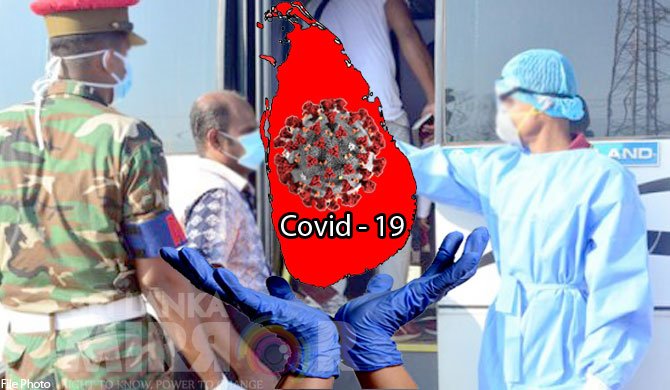
Here is a clear warning to protest politics. Covid-19 is the new tool of Rajapaksa Power, with quarantine being the system of dominance. Leading trade unionists and student protesters are the showpieces of the new Basil Power in Sri Lankan politics.

Those who protested against the crisis facing paddy production, and against the Bill for new military dominance in the Kotelawala Defence University, are the symbols of the new Covid-19 power dominance of the Raja Vasala. Putting protesters into quarantine camps, and taking them there with the most foul and repulsive behaviour of the Police, is the new showpiece of Rajapaksa Power.

The protesters in one place who were taken to a courthouse and charged with violation of the quarantine rules, were given bail by the Court, and not remanded, The Magistrate also said the Court did not have the legal authority to order quarantine of the accused. When the bailed-out persons walked out of the Court, a different legal power was functioning, with the Police being the manipulators of Power vs Justice. The persons bailed out by a court of law, were immediately seized by the Police, in the most brutal and hardly civilized manner, pushed into vehicles and forcibly taken for quarantine. Covid – 19 has scored over the law and the principles of Justice.

What we have moved to is the Quarantine-Remand or QR stage of social disorder, which will be remembered as the system of shameful Police dominance, with the entry of Basil into the Rajapaksa Posse of Power.

The students and trade unionists who carried out a protest near the Parliament also faced the same situation. While the Remand Prisons are being emptied due to the problems of Covid-19 spread, the Police are now displaying the Quarantine as the new Remand Strategy of Law and Order in the country.

This is the new message sent out to the paddy farmers protesting against the lack of fertiliser, the fisherman who protest against the increased hardships in fishing, and possibly students who may protest against the absence of signals for distant learning, and the many more sections of society who would want to come out in protests against increased hardships and necessities in life.

This Quarantine – Remand Strategy is a move far away from Democracy that has been accepted as the system of governance in Sri Lanka. With the addition of a fifth Rajapaksa member – Gotabaya, Mahinda, Chamal, Namal and Basil – to the Cabinet of Sri Lanka, we have moved away from the ‘family-ocracy’ that some writers have been commenting about in recent months.

We have in fact come to a familarchy – a monarchic system where the family is totally dominant in the government, economic management and social organisation of the country. It is time to begin remembering our 2,000 plus years of history, where such family dominance has prevailed, and also learn more about how much of enmity prevailed over the successions of power and monarchic dominance.

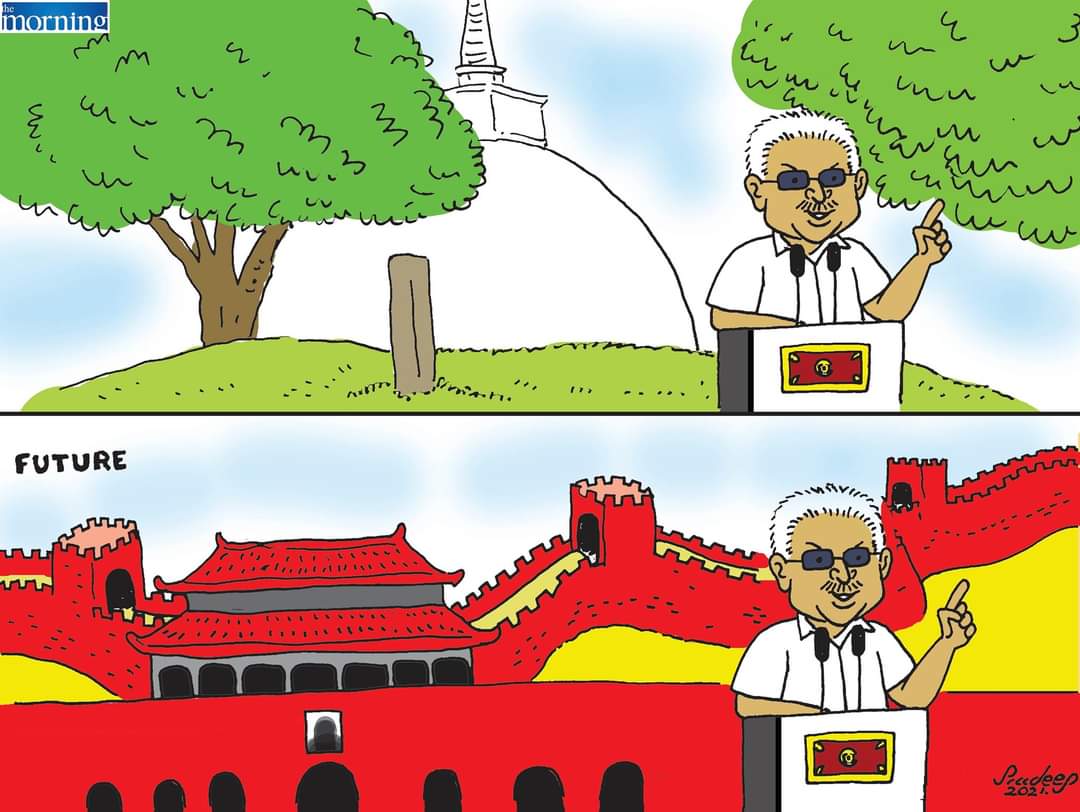
This Basil included familarchy, where nothing of power goes out of the family, is making huge milestones in all aspects of governance. We have become the first country in the world to issue a special coin in our currency – Rs. 1000 – to mark and celebrate the 100th year of the Chinese Communist Party. What other countries celebrate the success of political parties even in friendly countries?

This familarchy will soon give us a show of what it has done to give a Rajavasala reward to Jayantha Ketagoda, who made the road clear for Basil’s entry to Parliament, beating all the other SLPP MPs who said they were ready to resign from their parliamentary seats. Will he be a diplomat in an important country that has turned down other nominees? What about a big place in the Central Bank, having so much to do about printing more money? Or, could it be a big post in SriLankan, where he could help add to the mounting losses, with a really huge salary, many vehicles, friendly secretaries, entertainment costs, and free flying power, too?

The swearing in of Basil Rajapaksa, as Minister of Finance, was clearly a very warm family affair at the President’s Office. One brother was President and the other was Prime Minister. The worshipful greetings were clearly seen. Next came the swearing in of Mahinda, who had lost or given up Finance, to be Minister of Economic Policies and Plan Implementation. Can his Economic Thinking move away from Basil’s Financial Thinking?

What stressed the prevalence of Rajapaksa power was the additional swearing in of the Rajapaksa nephew, Shasheendra, as the State Minister of everything, from fertiliser to onions and potatoes, and Advanced Technology for Agriculture. Organic Fertiliser Production.

What is the situation of Minister Mahindananda Aluthgamage? Anything more of the Rajapaksa dominance that is sweeping away all other political players of today?

There is certainly another nephew, although without a Rajapaksa surname, who is entitled to more stuff and authority. There will be several nieces to follow, too. Let;s wait and see,

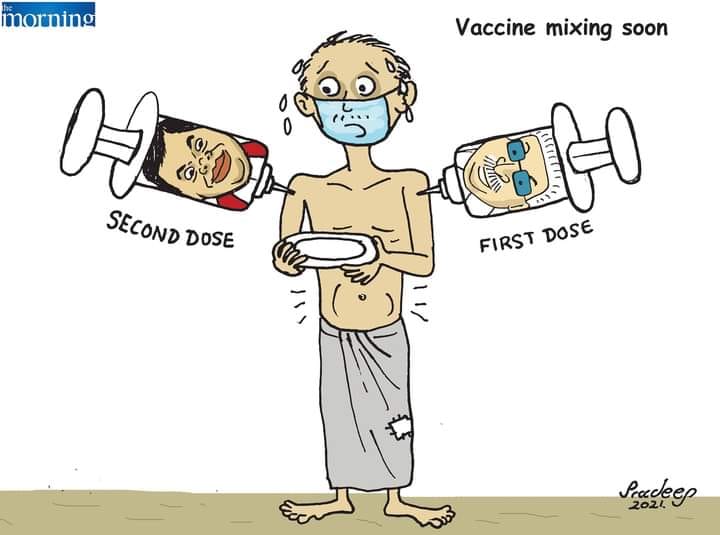
It is also important to wait and see how Basil Rajapaksa’s entry to the Rajapaksa Familarchy will show the importance of governance and economic thinking of the USA, of which too he is a citizen. Will we see a new China – America friendship via Sri Lanka, or will the dominance of China prevail in the policies of Sri Lanka?

The Rajapaksa Familarchy are certainly the rulers of this Monarchy of Power that Sri Lanka has been taken into.
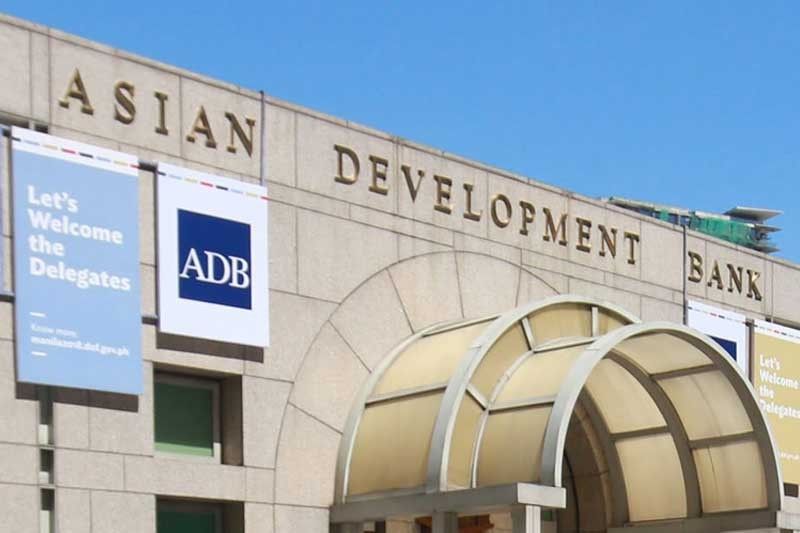
Sri Lankan signs papers for $150 Mn loan from ADB for vaccine purchasing & related expenses

Sri Lanka signed an agreement with the Asian Development Bank (ADB) for a loan of $150 million to purchase vaccines against the coronavirus disease (COVID-19) and improve vaccination information, delivery, and monitoring systems, said the country’s Finance Secretary on Saturday (10).

On the 08th of July, the ADB h approved a loan of $150 million for Sri Lanka.

The project is part of ADB’s $9 billion Asia Pacific Vaccine Access Facility (APVAX) launched in December 2020 to offer rapid and equitable vaccine-related support to ADB developing member countries.

The ADB loan will help finance the purchase of safe and effective COVID-19 vaccines to immunize about 4 million Sri Lankans, contributing to the government’s target to reach 80% vaccine coverage by 2023.

In addition, the project will support the upgrading and establishment of new systems to monitor vaccine deployment, supplies, and logistics, as well as track real-time beneficiary data for an efficient response to the pandemic.

Vaccines eligible for financing must meet at least one of the APVAX eligibility criteria: the vaccine has been selected for procurement through the COVAX mechanism; the vaccine has been prequalified by the World Health Organization (WHO) or WHO emergency use listing; or the vaccine has received regular or emergency licensure or authorization by a Stringent Regulatory Authority.

The project will support the establishment of sewerage systems in secondary care hospitals, and incinerators and waste segregation facilities in 12 satellite hospitals to safely dispose of vaccine-related medical waste.

Posted in Uncategorized

Chinese joint venture in Tissamaharama: No damages to artefacts, historical sites

The Archaeology Department says that no damage has been caused to any artefacts or historical sites surrounding the ancient Tissa Wewa tank in Tissamaharama by the recent dredging and cleaning up activity by a Chinese joint venture (JV).

Speaking to The Sunday Morning, the Archaeology Department Director General Prof. Anura Manatunga said that according to the preliminary report in relation to the probe conducted by the Archaeology Department into the dredging of the Tissa Wewa tank, it was observed that no damage had been caused to any artefacts and or historical sites in the area.

He noted: “The Chinese JV had not obtained permission to dredge and clean up the tank. Therefore, we temporarily suspended the operation until we completed the necessary protocols. Usually, before starting these kinds of projects, we have to mandatorily conduct an Archaeological Impact Assessment.”

Prof. Manatunga reiterated that the main mistake that was made was that the Chinese JV had not informed the relevant authority of this in order to conduct an Archaeological Impact Assessment before commencing the project.

He added that the Archaeology Department had since deployed a special team to conduct the assessment and that after following the necessary protocols, the Chinese JV could recommence the project.

Earlier, Cabinet Spokesman Keheliya Rambukwella said that the Criminal Investigation Department (CID) and the Army had conducted an investigation into whether the Antiquities Ordinance or any other law had been violated during the process of cleaning up the ancient tank.

No secret discussion between Ranil and MR: UNP

The UNP which commented on the pictures that are being circulated on social media said there was no secret political discussion between MP Ranil Wickremesinghe and Prime Minister Mahinda Rajapaksa on Thursday night.

The pictures that were circulated on social media showed Mr. Rajapaksa and Mr. Wickremesinghe dining together

“Both Mr Rajapaksa and Mr. Wickremesinghe attended the birthday party of Mr. Wickremesinghe’s neighbour down 5th lane Colombo 3. They never discussed politics particularly on the latest Cabinet reshuffle and changing of institutions coming under the Prime Minister,” a statement said.

Posted in Uncategorized

A perception shift in relations between Sri Lanka and China? – The Hindu

From the time the pandemic struck last year, China has topped the charts in providing crucial and timely support to Sri Lanka — by way of over $ 2 billion in loans and a currency swap, and Sinopharm vaccines totalling over a million in donation, and about six million for procurement so far. However, despite the past and pandemic-time assistance, China is under more public scrutiny in the island nation than ever before.

This is significant, because in Sri Lanka’s Sinhala nationalist political landscape, resistance to the “imperialist” West, and “interventionist” India is a popular political position, dominating rhetoric in the country’s Sinhala-majority south, since its Independence in 1948, through its civil war years, and the decade after. But the growing scepticism of China, in public discourse and the media – including cartoons alluding to the dragon or Chinese flag – is relatively new.

The sentiment came to the fore in May this year, when the government passed a controversial Bill governing the China-backed Colombo Port City, and during recent controversies over sign boards in public places and government offices that included mandarin while excluding Tamil, a national language in Sri Lanka. In resistance to the Port City Bill, Sri Lanka’s influential Buddhist monks said they would never allow a “Chinese colony” in their country.

What has changed in how Sri Lankans perceive their country’s relationship with the Asian giant?

Karunasena Kodituwakku, Sri Lanka’s former Ambassador to China during the previous government, blames the Rajapaksa administration. When the country takes pride in its “non-aligned” foreign policy legacy, to see Sri Lankans calling the Port City a “Chinese colony” brings a “very negative connotation” to the project, Mr. Kodituwakku said.

“The Port City is a good investment for Sri Lanka. The former government too wanted the project, to develop the country into a regional financial hub. The current administration should have handled it in a mature way and built national consensus on it. They failed to do that,” he told The Hindu. “They should have passed laws after discussions with all domestic stakeholders. If you look at Sri Lanka’s history, all important international accords and agreements were inked only after ensuring bipartisan consensus.”

Former Foreign Secretary Prasad Kariyawasam said given its geographic location, Sri Lanka has maintained friendly relations with maritime nations, including China, since ancient times. Such relations have always had “a sense of strategic content”. Post-independence Sri Lanka has been circumspect “to avoid a zero-sum approach” in relations with foreign partner nations, thus striving to maintain equally close relations with all countries in both word and deed, he pointed out. But the traditional friendship between Sri Lanka and China has now become “more nuanced”, he noted, with “unique, unprecedented characteristics in the bilateral relationship”, displaying a “special partnership”, especially at the level of two governments.

Pointing to a possible perception shift, from China being seen as a “partner and collaborator”, to a “competitor” now, Mr. Kariyawasam said: “The fact that the 21st century export-oriented China is not only a development assistance partner, but a competitor with trade, industrial and human resources interests of Sri Lanka and its several other foreign partners, appears to be making the relationship increasingly challenging, especially in the minds of the public, raising their concerns with respect to the fundamental framework of the democratic nature of the Sri Lankan State as well.”

The new dynamic could also have political costs domestically, according to Tamil Progressive Alliance (TPA) Leader and Opposition MP Mano Ganesan. Sinhalese people, he said, are feeling “let down” after supporting the Rajapaksas based on their promise that “they will not sell national assets” to other countries. “The term “selling” could be tricky, but for all practical purposes, we have a Chinese State-run company with substantial control in the Port City for a long time to come, and the government enacted a Bill endorsing that,” he said.

Further, reading Chinese engagement in relation to Sri Lanka’s plural context, in Mr. Ganesan noted that China “appears ignorant” of the ethnic and religious diversity in the island nation. “If they [Chinese] wish to win the Tamils’ confidence, they have to acknowledge that we are a diverse country with different ethnic and religious groups, not an entirely Sinhala-Buddhist country,” Mr. Ganesan said, reiterating his remarks in his statement, following TPA’s recent meeting with the Indian High Commissioner in Colombo. “China’s presence in Sri Lanka is not just India’s national security concern. Tamils view China with suspicion because we wonder if they accept us as Sri Lankans,” the statement issued on Tuesday said.

All the same, Tamils also “greatly appreciate” India’s geopolitical concerns. “We are in South Asia, and in that sense, India is immediate family and China is a distant relative. So, when I think of the Chinese having controlling stakes in the southern part of our island, I am reminded of the Cuban missile crisis and its consequences,” Mr. Ganesan told The Hindu.

Voicing a similar sentiment in Parliament this week, Tamil National Alliance Jaffna district legislator S. Shritharan spoke of alleged attempts by China and Pakistan to work in projects in the islands off Jaffna peninsula. “Do not instigate India in this manner,” he told the government. “No matter how many problems we face, Tamils will always stand with India, with whom we have an organic link,” he said.

Posted in Uncategorized

Sri Lanka’s Rajapaksa family tightens grip with ministerial picks -Aljazeera

Sri Lankan President Gotabaya Rajapaksa has appointed his younger brother Basil Rajapaksa as finance minister, in a move that further tightened the family’s grip over the island nation.

Basil on Thursday was sworn in as a member of parliament and took over as minister of finance from Prime Minister Mahinda Rajapaksa, also his older brother.

Basil, who holds dual US-Sri Lankan citizenship, according to DPA news agency, takes control of the country’s important institutions, including the Treasury and Central Bank under his purview.

Mahinda was also given an additional role as minister of economic policies and plan implementation, according to the presidential media division.

In addition to the latest changes, another of Gotabaya’s brothers, Chamal, is minister of irrigation and a junior minister for defence.

Mahinda’s son, Namal, is minister for youth and sports.

Gotabaya and his older brother Mahinda won an overwhelming majority in parliamentary elections last year, giving the family the power to enact sweeping changes to the island nation’s constitution.

Mahinda was the country’s president from 2005 to 2015, holding the position in two successive terms and again took over a premier post after winning the 2020 vote.

Some members of the governing Sri Lanka Podujana Peramuna (People’s Party) predict that Basil will stand in the next presidential election.

Tourism-dependent Sri Lanka is battling the coronavirus pandemic.

On Thursday, the total confirmed COVID-19 infections in the country increased to 268,676 and the death toll was 3,351, according to health ministry data.

Posted in Uncategorized

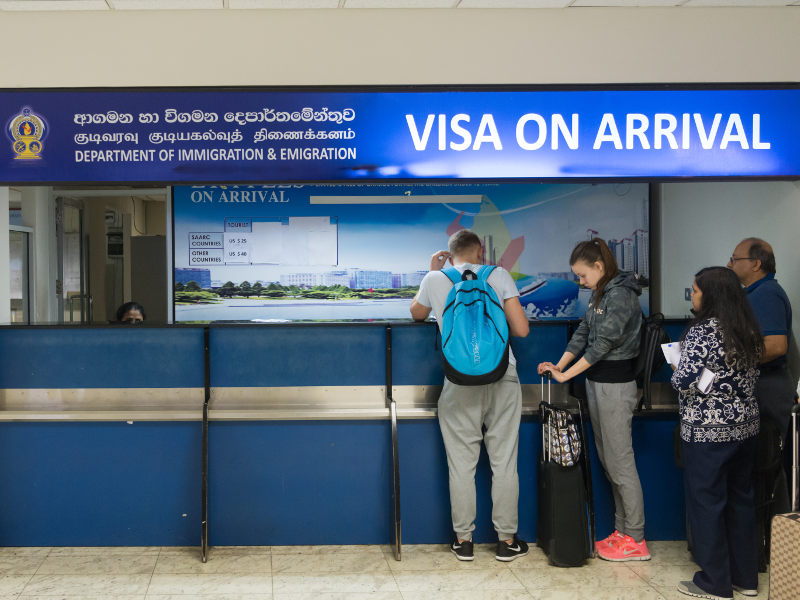
All types of visas for foreigners extended for another 30 days in Sri Lanka: Immigration Dept.

The validity period of all types of Visas currently obtained by foreigners in Sri Lanka has been extended up to August 8 from today, the Immigration Department said.

The Department requested the foreigners to proceed as advised below.

“All the applicants are hereby advised to pay the relevant visa fee and get their visas endorsed in the passport by securing an appointment via the link – https://eservices.immigration.gov.lk/vs-before August 8.

“If tourists intend to leave the country during the aforementioned period, their journey will be also facilitated by paying the relevant visa fee at the airport or by visiting the Head Office at Battaramulla on or before August 8 and getting endorsed the visas in their passport by making the necessary visa fees.

The department also issued instructions for Resident Visa holders.

Accordingly, the visa extension from July 9 to August 8 also applies to all resident visa holders.

To get their resident visas extended before that date, are requested to contact 070 710 1050 from 8.30 am to 3.00 pm on working days to make an appointment and visa endorsement shall be obtained by visiting the head office at Battaramulla on or before August 8 and making payment for the relevant visa fee, the Department said.

Posted in Uncategorized

Government MP expected to cross

A Government Member of Parliament is expected to cross and sit in the opposition as an independent MP over the next few weeks, sources said.

Colombo Gazette learns that the ruling party MP is likely to sit as an independent MP in Parliament.

The move comes as a rift in the ruling Sri Lanka Podujana Peramuna (SLPP) coalition continues to widen.

There has been some opposition to Basil Rajapaksa’s entry to Parliament and appointment as the Finance Minister.

Additionally, there has also been a rift in the SLPP over the fuel price hike and on other matters.

Well informed sources said that efforts are being taken to prevent a split in the SLPP.

COVID: 43 new victims take death toll to 3,434

Sri Lanka has registered 43 more COVID-19 related fatalities confirmed by the Director General of Health Services on Thursday (July 08).

The new development has pushed the official death toll due to the virus in Sri Lanka to 3,434.

According to the data released by the Department of Government Information, the latest victims confirmed today include 30 females and 13 males.

Fourteen of the victims are aged between 30-59 years and the remaining 29 are aged 60 and above.

Human rights situation in Sri Lanka further deteriorated in 2020: UK report

The overall human rights situation in Sri Lanka continued to deteriorate in 2020, the UK’s annual report on human rights and democracy said.

Titled ‘Human Rights and Democracy: 2020 Foreign, Commonwealth & Development Office report‘, the document noted an alleged increase in surveillance and intimidation of civil society, limited or no progress with regard to accountability, militarisation and other issues.

“The government of Sri Lanka delivered free and peaceful parliamentary elections despite the COVID-19 pandemic, and maintained low numbers of COVID-19 cases compared to global figures. However, there was increased surveillance and intimidation of civil society, constraints placed on communities practising religious burial rites, a number of lengthy detentions without charge, and several setbacks on post-conflict accountability and reconciliation,” it said.

Noting Sri Lanka’s withdrawal from the United Nations Human Rights Council (UNHRC) resolutions 30/1, 34/1, and 40/1 on post-conflict transitional justice, accountability and reconciliation, the UK report said there was no progress shown by Sri Lanka despite the government announcing its commitment to a domestic mechanism for reconciliation and accountability.

“The UK made clear its commitment to reconciliation and accountability in statements delivered on behalf of the Core Group on Sri Lanka at the HRC in February, June and September,” the report said.

In June 2021, the core group, comprising, Canada, Germany, North Macedonia, Malawi, Montenegro and the UK, expressed concern over what it called the lack of progress with regard to human rights, the rights of religious minorities and other issues highlighted in resolution 46/1.

Related: UNHRC core group concerned over Sri Lanka’s lack of progress on human rights

The UK report, dated July 08 2021, said Sri Lanka’s commitment to accountability was further called into question in March 2020 when President Gotabaya Rajapaksa pardoned and released former Army Staff Sergeant Sunil Ratnayake, who was convicted in 2015 for the murder of eight civilians (including children) in Jaffna in 2000.

Ratnayake, who was attached to the long range reconnaissance patrol of the army, was sentenced to death by the Colombo High Court in June 2015 for his alleged involvement in the Mirusuvil massacre in 2000. The former soldier, who was the first accused in the case, was found guilty of the murder of eight civilians including three children. He was pardoned by President Rajapaksa on March 26, days after an island-wide curfew was declared to contain the spread of the novel coronavirus.

Amnesty Intentional, too, said in May last year that in pardoning Ratnayake, the COVID-19 pandemic was exploited as an “opportunity to reverse justice”

The Foreign, Commonwealth & Development Office report further said the President continued to appoint controversial military figures accused of war crimes to government roles, while civilian functions such as the Secretariat for Non-Governmental Organisations were brought under the control of the Ministry of Defence. In October, the government passed the 20th amendment to the constitution, which the report said extended executive power over appointments to the judiciary and independent institutions, and reversed several important institutional checks and balances.

“In March, the President dissolved parliament ahead of elections, which were then twice postponed because of the COVID-19 outbreak. Although the government went on to deliver peaceful and democratic elections in August, the delay resulted in a lack of parliamentary oversight between March and August. The government instead formed several presidential ‘taskforces’ without parliamentary scrutiny, including to oversee the COVID-19 response,” the report said.

The report was also critical of the government’s widely condemned move in March 2020 to cremate Muslim victims of COVID-19 against the wishes of the community with little or no scientific basis to the decision. World Health Organisation guidelines had also permitted burials.

“This particularly affected Muslim and some Christian communities, for whom burial is an essential rite. In December, the Supreme Court dismissed several petitions that challenged this policy. The outbreak of COVID-19 also led to an increase in anti-Muslim sentiment, fuelled by hate speech and disinformation suggesting that Muslims were ‘carriers’ of COVID-19 and were violating prevention measures. In June, the UN High Commissioner for Human Rights, Michelle Bachelet, expressed concern over the clampdown on freedom of expression, noting an announcement made by the police in April to arrest those critical of the Government’s COVID-19 response,” the report said.

The report also made references to allegations that judicial medical officers and police had conducted invasive intimate examinations on LGBT+ persons without their consent, following which the Justice Minister Ali Sabry gave instructions to halt and investigate the practice.

The Prevention of Terrorism Act (PTA) has been a running theme in international pronouncements on Sri Lanka’s human rights record. The European parliament moved a resolution on June 10 calling for its release.

Related: EU parliament adopts resolution on Sri Lanka; wants PTA repealed, GSP+ withdrawn

The UK report on Sri Lanka’s human rights situation in 2020, too, noted that the government of Sri Lanka continued to use the PTA, despite a renewed pledge at the 43rd session of the UNHRC to review the legislation.

“In April, prominent human rights lawyer Hejaaz Hizbullah was arrested by Sri Lanka’s Criminal Investigation Department under the PTA. Hejaaz was detained without charge or presentation before a court. International rights groups noted an increase in intimidation, surveillance and online abuse, including threats to lawyers, journalists, families of disappeared persons and individuals working on human rights and anti-corruption.”

Riots in Sri Lanka’s prisons in late 2020 were also highlighted in the report.

“In November, unrest at Mahara prison over COVID-19 concerns resulted in the death of eleven inmates and injury of over 150. A committee appointed to investigate the unrest concluded that the inmates’ demands had been reasonable, and autopsies revealed that all inmates had died of gunshot wounds. In November, the Human Rights Commission of Sri Lanka wrote to the Inspector General of Police to highlight an increase in deaths in custody, and released a prison study which noted that the treatment of prisoners fell below international standards,” it said.

Related: Govt takes full responsibility for Mahara prison riot: Keheliya

The UK will continue to press for progress on human rights, gender equality and protections for minorities and vulnerable groups in 2021, the report further said.

“We shall continue to invest in ambitious programmes which support conflict-affected communities, promote the role of civil society, facilitate social cohesion, and underline the critical importance of post-conflict reconciliation and accountability,” it added.

Posted in Uncategorized