Biden sends out message for New Year

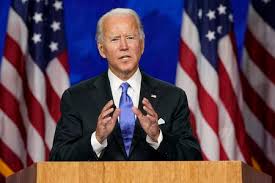
US President Joe Biden led his country in greeting Indian Americans, South Asians and Southeast Asians on the eve of their New Year.

In his message, Biden said both he and his wife send their warmest wishes to the South Asian and Southeast Asian communities who are celebrating the incoming New Year this week.

He Tweeted, “Happy Bengali, Cambodian, Lao, Myanmarese, Nepali, Sinhalese, Tamil, Thai, and Vishu New Year!”

US ready to support Sri Lanka is running out of reserves amid unprecedented money printing after cutting taxes: Ambassador Teplitz

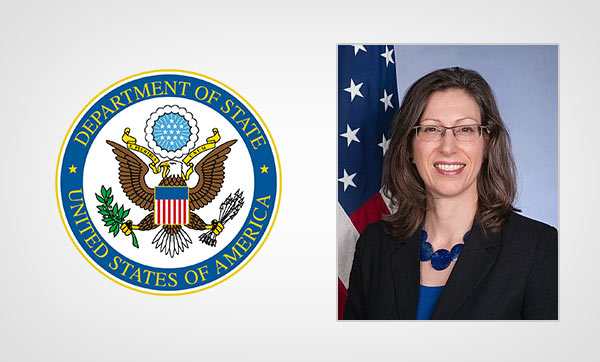
The United States was ready to support Sri Lanka it is efforts to manage debt and stabilize the economy, US Ambassador to Colombo, Alaina Teplitz said as the Indian Ocean island is running out of reserves amid unprecedented money printing after cutting taxes.

“Yes, the United States would support the government in managing its debt and finding a more sustainable path forward,” Ambassador Teplitz told reporters in Colombo in an online discussion.

“And we would be happy to have those conversations. We have already indicated that we would like to see more economic stability and in the country and that we would want t support that.”

The US is Sri Lanka’s top buyer of exports and the country’s export apparel industry was born due to the trade liberalization measures undertaken by then-President Ronald Reagan and continued and by President Bill Clinton.

Under his Fed chief Paul Volcker, US tightened monetary policy with no help from the IMF and lowered inflation worldwide ending monetary instability that dated back to the late 1960s sending gold and oil prices sky high.

“…[L]et me say at the outset that our trade policy rests firmly on the foundation of free and open markets — free trade,” President Ronald Reagan told a meeting of business leaders and trade officials in September 23, 1985.

“I, like you, recognize the inescapable conclusion that all of history has taught: The freer the flow of world trade, the stronger the tides for human progress and peace among nations.”

‘Reaganomics’ and the US leadership in trade liberalization not only made goods cheaper in the US but helped lift millions out of poverty in Asia, especially in countries which had good central banks or had reformed central bank to maintain strong exchange rates.

America also helped Sri Lanka develop its stock in a US Aid program. America also helped Sri Lanka develop a petroleum exploration law and market oil blocks in Texas.

US-built Latin America Style Central Bank


Sri Lanka however made limited gains as the country’s central bank printed money and became a frequent or recidivist client of the International Monetary Fund, destroying its currency.

Sri Lanka’s rupee had fallen from 4.70 to 202 since John Exter, a US Federal Reserve official set up a money printing central bank in 1950, abolishing a currency board that had kept macro-economic stability in the country from the previous century.


In marketing unstable soft-pegs and tempting former countries in the UK-linked Sterling Area to become linked to the US dollar indirectly via the Bretton Woods system, inaccurate claims were made against currency boards.

“For a developing economy it (currency board) has a number of serious disadvantages,” Exter said in a report in what turned to be a monstrously wrong claim as soft-peg crisis after soft-peg crisis hit the country after 1950, triggering draconian foreign exchange and trade controls.

“The role of the currency board must remain purely passive it cannot influence the money supply in any way and thus relive the pressure to which rapid swings in the balance of payments may at times subject the economy.”

“A 100 percent (reserve backed) system is thus a “fair weather” system,” he claimed despite the currency board keeping macro-economic stability in then-Ceylon through two World Wars and one Great Depression.

“Under normal balance of payments conditions it is not likely to break down but its excessive rigidity may impose undue hardships in periods of economic crisis,” the Fed official added in perhaps the most famous last words in Sri Lanka’s economic history.

The rupee which had been stable since 1885, had collapsed to below 202 under by 2021 as the US built soft-pegged central bank printed money repeatedly to keep rates down under its counter-cyclical powers worsening imbalances further and requiring eventual radical corrections.

East Asian nations like Singapore, Malaysia and Hong Kong which got independence later and kept the supposedly ‘fair weather system’ of hard pegs and forged ahead by allowing short term rates to float.

Sri Lanka’s central bank was styled after several set up by the Federal Reserve’s Latin America division chief Robert Triffin, inspired by Argentina’s central bank created by Raul Prebisch.

Ironically the Latin American central banks were set up under a ‘good neighbour’ policy of President F D Roosevelt, turned out to be a monumental foreign policy disaster as depreciating currencies destroyed economics making the destroyed countries fertile hunting grounds for socialists and nationalists.

After World War II many of the countries with Triffin-Prebisch central banks led by Cuba (whose Sri Lanka style central bank created by Fed official Henry Wallich) turned increasingly towards the Soviet Union.

Repeated trips to the IMF failed to fix the countries as the fundamental flaws in the US-built central bank were not fixed and its rate setting Monetary Board was not restrained from injecting liquidity to boost growth or finance the budget, tearing Sri Lanka’s balance of payments apart time and again.

Sri Lanka’s currency problems and higher-than-US-inflation come from trying to target interest rates by printing money and also maintain an unstable exchange foreign reserve collecting peg or ‘flexible exchange rate’.

Additional Reading: Sri Lanka: Slaying the Bogey of Inflation

Debt on Debt

Sri Lanka’s foreign reserves had deteriorated rapidly over the past year as record volumes of money is being printed, under a ideology of ‘flexible inflation targeting’ and ‘data driven policy’ encouraged by the IMF in recent years, despite running a soft-peg which has now morphed into Modern Monetary Theory.

Sri Lanka’s debt has risen rapidly as the rupee fell, and domestic real capital has evaporated and growth has slowed. A tax cut in 2019 has worsened money printing by the US-built central bank.

Ambassador Teplitz said Sri Lanka had taken new debt to repay old debt over several years.

“And this is where the debt management is going to be really important because Sri Lanka’s debt obligations have not decreased over time but increased over time,” she said.

“Successive governments have of course managed payments, but a part of that is because they have taken out new debt.”

Under an IMF backed program, also supported by the World Bank, Sri Lanka enacted an Asset Liability Management Law (ALM), where more dollar debt was taken to settle loans instead of sterilizing the balance of payments (mopping up inflows) to repay at least a part of maturing foreign debt.

Some analysts likens the ALM law to the failed ‘Young Plan’ of helping Germany’s Weimar Republic to borrow more through a JP Morgan backed loan, instead of encouraging prudent monetary policy and helping bring Hitler to power as the German economy collapsed from money printing.

The entire debacle is blamed by classical economists on Britain’s John Maynard Keynes who thought there was a non-existent ‘transfer problem’ linked to foreign payments, which may also have driven the thinking behind the ALM Law.


IMF Programs

As Sri Lanka’s foreign reserves continue to fall, the country has refused to go to the IMF.

“So the debt management is going to need some careful management,” Ambassador Teplitz said. “And it really requires international partners to manage.

“I am not sure what the reluctance is to work with the International Monetary Fund. Sri Lanka is a member of the IMF.

“They have a right to recourse to the IMF’s resources and their support and help. And I think while some of the economic reforms potentially suggested might be challenging – you know that is a negotiation that the government could obviously have with the IMF to work things out.

“But the critical need is to get the country on a smoother path going forward.”

However critics have pointed out that IMF program which encouraged the central bank to run monetary policy without a credible anchor in the form of ‘flexible inflation targeting’ (no credible domestic anchor) and ‘flexible exchange rate’ (no credible external anchor) contributed in to the current situation.

The framework critics pointed out worsened the existing dual anchor conflicts that were created in the 1950 soft-peg.

The IMF also taught the central bank to calculate an ‘output gap’ and print money to target growth when a gap supposedly emerged (data driven monetary policy) triggering a currency crisis in 2018 just as the economy was recovering and forcing import controls in the style of Nixon Shocks.

At the time the US Fed was also tightened policy.

The import controls in 2018 coming from IMF backed output gap targeting detailed a free trade agenda and discredited an administration that was friendly to the US, in another foreign policy disaster as the currency collapsed from 153 to 182 to the dollar.

Sri Lanka is now mired in worse import controls.

Former Central Bank Deputy Governor W A Wijewardene who designed a tight program in 2008 (where money and exchange policies did not conflict) had said that the discretionary ‘flexible’ inflation targeting was a ‘corrupted’ inflation targeting.


The IMF may also have helped violate Sri Lanka’s Monetary Law Act, which has no growth mandate but only has a stability mandate, by encouraging output gap targeting.

Similar output gap targeting by then Fed Chief Arthur Burns led to the collapse of the Fed’s peg with gold and the ‘Great Inflation’ that followed until President Reagan came.

US Policy

With ‘independent’ monetary policy Sri Lanka now had the tool to resist US rate increases and try to keep rates down as the Fed tightened.

Sri Lanka got into balance of payments troubles started tightening exchange controls in 1952 as the US Fed tightened in 1951, to end a bubble fired by the purchase of Liberty Bonds at fixed prices, in the same way as the Central Bank is now buying T-bills to maintain a 5.15 percent 12-month yield.

Iran, where the Fed also sent a mission collapsed in the period. Most Latin American pegs collapsed hard in the 1980s as Volcker tightened policy and countries like Mexico (Raul Prebisch worked at the Mexico central bank after being sacked by Argentina), collapsed when Alan Greenspan tightened in 1994.

There are now fears that US Fed had gone too far in printing money and correcting policies will have to come soon.

US Economist Steve Hanke has warned that that the Fed is likely to overshoot its target of 2.4 percent inflation given current developments in the US credit system.

The Fed had earlier triggered the Great Financial Crisis, firing a bubble by targeting a core inflation index while commodity and housing bubble raged.

On April 13, the US Bureau of Labour Statistics said its Consumer Price Index for All Urban Consumers (CPI-U) increased 0.6 percent in March on a seasonally adjusted basis after rising 0.4 percent in February.

“The March 1-month increase was the largest rise since a 0.6-percent increase in August 2012,” the BLS said.

“Over the last 12 months, the all items index increased 2.6 percent before seasonal adjustment.

“The all items index rose 2.6 percent for the 12 months ending March, a much larger increase than the 1.7-percent reported for the period ending in February.”


Posted in Uncategorized

US to continue to engage with diaspora groups from Sri Lanka

The United States (US) says it will continue to engage with diaspora groups from Sri Lanka.

The move comes after Sri Lanka banned a number of Tamil diaspora groups, including some influential organizations.

“Diaspora communities are our valued partners in helping us stay connected to the region. We continue to engage with various South Asian diaspora groups, including members from Sri Lanka, and welcome an ongoing conversation on issues of mutual interest,” the US State Department said.

The Global Tamil Forum (GTF), British Tamil Forum (BTF), Canadian Tamil Congress (CTC), Australian Tamil Congress (ATC), National Council of Canadian Tamil, Tamil Youth Organisation and the World Tamil Coordinating Committee were proscribed by the Ministry of Defence in March.

The were banned under Regulation 4(7) of the United Nations Regulations No. 1 of 2012.

A gazette notice signed by Defence Secretary Kamal Gunaratne was issued to ban the organizations.

The Government had also banned a number of individuals based in the UK, Germany, Italy, Malaysia and several other countries.

Among those banned are GTF spokesman Suren Surendiran, who had been engaged in talks with then Foreign Minister Mangala Samaraweera and the ITAK MP Sumanthiran(Federal Party) after the former Government lifted the ban on some of the diaspora groups.

The former Government had de-listed most groups considered as being moderate in their views, in an attempt to seek their support for the reconciliation process and development of the North.

However, the current administration considers these groups as still being linked to terrorism and a threat to national security.

The latest ban had been enforced just before the UN Human Rights Council began to meet in Geneva.

The Tamil diaspora have been critical of the current administration on the human rights issue and had been lobbying for support for the resolution against Sri Lanka in Geneva.

Extraordinary gazette issued banning 11 extremist Islamic groups in Sri Lanka

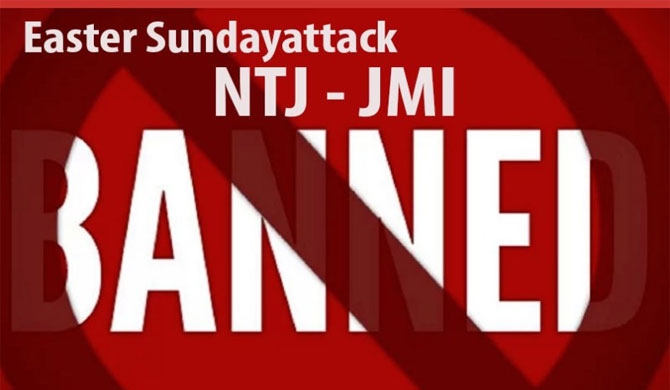
President Gotabaya Rajapaksa has issued an extraordinary gazette notification banning 11 extremist Islamic organizations in Sri Lanka.

The document was published on Tuesday (April 13), as per section 27 of the Prevention of Terrorism (Temporary Provisions) Act, No. 48 of 1979.

Accordingly, the Prevention of Terrorism (Proscription of Extremist Organizations) Regulations No. 2 of 2021 specified in the gazette notification have proscribed the following extremist groups in Sri Lanka:

1. United Thawheed (Thowheedh) Jamma’ath (UTJ)

2. Ceylon Thawheed (Thowheedh) Jamma’ath (CTJ)

3. Sri Lanka Thawheed (Thowheedh) Jamma’ath (SLTJ)

4. All Ceylon Thawheed (Thowheedh) Jamma’ath (ACTJ)

5. Jamiyathul Ansaari Sunnathul Mohomadiya (JASM) alias Jamma’ath Ansaaris Sunnathil Mohomadiya Organization alias All Ceylon Jam-E- Athu Ansaris Sunnathil Mohammadiya alias Ansaris Sunnathil Mohammadiya Association alias Jama’ath Ansaris Sunnathil Mohammadiya

6. Dharul Adhar alias Jamiul Athar Mosque alias Dharul Athar Quran Madrasa alias Dharul Aadhaar Ath’thabawiyya

7. Sri Lanka Islamic Student Movement (SLISM) alias Jamia

8. Islamic State of Iraq and Syria (ISIS) alias Al – Dawlah al – Islamiah Dawla Islamia

9. Al-Qaeda

10. Save the Pearls alias Save the Pearl Society

11. Super Muslim

These extremist Islamic organizations were proscribed with the purpose of ensuring the continuance of peace within the country and in the interest of national security, public order, and the rule of law, the gazette notification read.

Regulation 3 of the relevant gazette notification stresses that being a member or cadre of; providing leadership to; wearing, displaying, hoisting or possessing the uniform, dress, symbol, emblem, or flag of; summoning, convening, conducting or taking part in a meeting of; obtaining membership or joining; harbouring, concealing, assisting a member, cadre or any other associate of; promoting, encouraging, supporting, advising, assisting, acting on behalf of; organizing or taking part in any activity or event of; donating or contributing money or material to; procuring, storing, transporting, possessing or distributing material for or of; espousing the cause of or representing; engaging in any transaction with; or causing the dissemination of information on behalf of the aforementioned organizations or any other organization representing, acting on behalf of or linked to them are henceforth disallowed.

Any person who acts in contravention of the third regulation will be sentenced to a term of imprisonment not exceeding twenty years, on conviction by a high court, the gazette noted.

Further, any person who conspires to commit or attempts, abets or engages in any conduct in preparation to commit an offence in contravention of the third regulation, commits an offence will be sentenced to a term of imprisonment not exceeding ten years, on conviction by a high court.

Meanwhile, money, securities, credits or any other movable or immovable property belonging to such organization, will be forfeited to the State.

Posted in Uncategorized

COVID-19 death toll exceeds 600 with four more deaths

Four more Covid-19 deaths were reported today surpassing the toll of Covid-19 deaths in Sri Lanka 602 mark.

According to the Government Information Department, two females aged 71, 74, and two males aged 76, 45 are among the deceased.

The details of the victims are as follows,

1. The deceased is a 76-year-old male resident in Maharagama. He was diagnosed as infected with Covid 19 virus while undergoing treatments at Sri Jayawardhanapura Hospital and transferred to IDH Hospital where he died on 11.04.2021. The cause of death is mentioned as COVID Pneumonia, Hypertension and Myocardial Infarction.

2. The deceased is a 71-year-old female resident in Akuressa. She was diagnosed as infected with Covid 19 while undergoing treatments at a private hospital in Colombo and transferred to IDH Hospital where she died on 12.04.2021. The cause of death is mentioned as Septic shock, Acute Kidney Injury, COVID 19 Pneumonia, Chronic Diabetes Mellitus, Hyperthyroidism, Dyslipidaemia and Bronchial Asthma.

3. The deceased is a 74-year-old female resident in Narahenpita. She was diagnosed as infected with Covid 19 while undergoing treatments at National Hospital Colombo and transferred to Base Hospital Homagama where she died on 12.04.2021. The cause of death is mentioned as COVID 19 infection, septicaemia associated with chronic lung disease and right pleural effusion.

4. The deceased is a 45-year-old male resident in Galle. He was diagnosed as infected with Covid 19 while undergoing treatments at Cancer Hospital Maharagama and transferred to IDH Hospital where he died on 11.04.2021. The cause of death is mentioned as haemorrhage in COVID 19 infection and chronic myeloid leukaemia (CML).

Posted in Uncategorized

Ensure fair vaccine access to all -Amnesty

Amnesty International says governments in South Asia must ensure that vulnerable groups are not excluded from access to COVID-19 vaccines.

Amnesty International’s Asia-Pacific Director Yamini Mishra said in Sri Lanka, limited communication around dates, venues and eligibility for vaccines is a barrier for people to access vaccinations.

The report said there is no information available about the plan for COVID-19 vaccines and immunizing the broader population in some countries such as Sri Lanka, Afghanistan and Pakistan.

Amnesty International also called on the international community to enable the production of vaccines at the national-level to address the severe shortfall in supply across the region.

As vaccination programmes have commenced across South Asia, groups including slum dwellers, minorities, workers including labourers, daily wage earners, sanitation workers, garment workers and tea plantation workers, people in rural areas, prisoners, and internally displaced people have so far been denied access due to a lack of awareness and limited access to technology in most places.

Amnesty International added others including refugees and migrants have been excluded entirely from government vaccine campaigns in many countries up to now.

With vaccines in short supply, the report said most countries in South Asia have not inoculated more than six percent of their population with even a first dose.

A report says the world’s wealthy must radically change their lifestyles to tackle climate change.

Posted in Uncategorized

Indian missile destroyer ship to visit Sri Lanka

An Indian anti-submarine warfare capable, guided missile destroyer is scheduled to visit Sri Lanka this week.

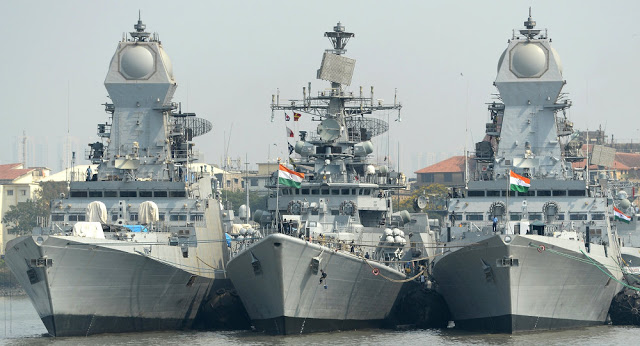
INS Ranvijay, the fifth of the Rajput Class Destroyers, is scheduled to visit Colombo from 14-16 April 2021 on a goodwill visit.

The anti-submarine warfare capable guided missile destroyer is equipped with the state-of-the-art indigenous Bramhos Super Sonic Missile.

The arrival of the Indian Naval Ship symbolises the message of solidarity and harmony for the people of Sri Lanka on the auspicious occasion of Avurudu’ with the warm wishes for their security, safety, good health and happiness, the Indian High Commission in Sri Lanka said.

The Ship is commanded by Captain Narayanan Hariharan, who would call on the area Commander Western Naval Area, Rear Admiral WDEM Sudarshana and pay his respects at the IPKF memorial on 15 April 2021.

India and Sri Lanka have traditionally shared close cooperation in defence and security. Their Navies have been actively engaged in mutually beneficial cooperation in training and capacity building.

The Indian High Commission in Sri Lanka said the visit of the Ship is another step in developing close maritime and security cooperation between the two friendly and close neighbours.

Posted in Uncategorized

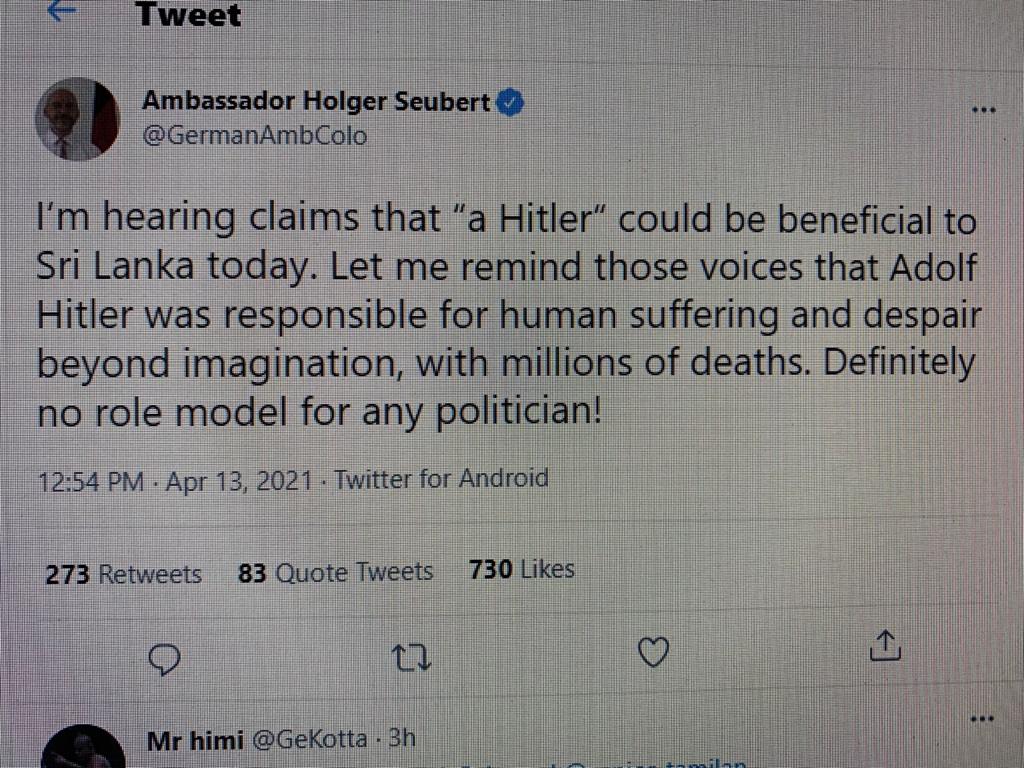
Sri Lanka warned against ‘Hitler’ wish by German Ambassador Holger Seubert

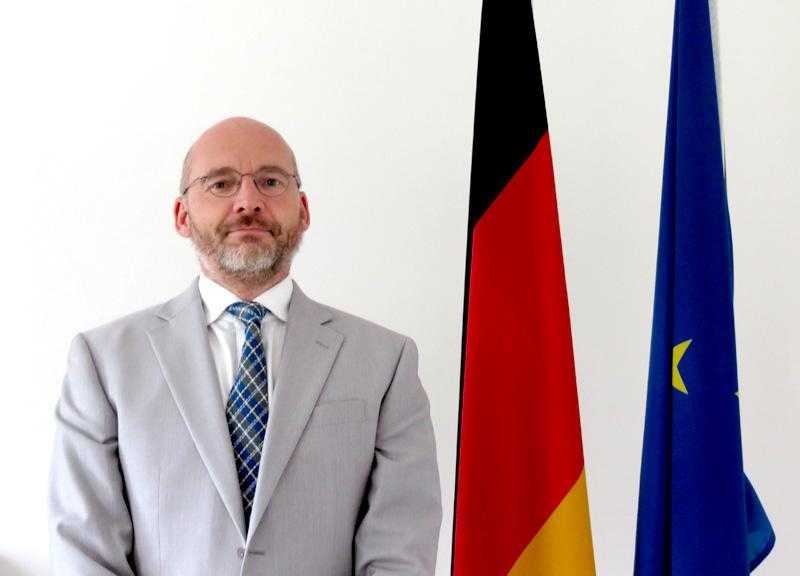
German Ambassador Holger Seubert has warned Sri Lanka against wishing for a ‘Hitler’ after a minister expressed a wish for President Gotabaya Rajapaksa to act more like Hitler, on top of a similar call by a Buddhist monk earlier.

“I‘m hearing claims that “a Hitler” could be beneficial to Sri Lanka today,” Seubert said in a twitter.com message.

“Let me remind those voices that Adolf Hitler was responsible for human suffering and despair beyond imagination, with millions of deaths. Definitely no role model for any politician!”

Strong Man

Hitler came to power in the wake of money printing, hyperinflation and socialist policy confusion of the post-World War I World War I Germany’s Weimar Republic and later stabilization efforts by the Heinrich Brüning administration which increased unemployment on top of a depression triggered by the US Federal Reserve.

The illiberal socialist policy confusion of the Weimar Republic led to the call of a ‘strong man’ to come to power.

State Minister Dilum Amunugama claimed that people expected President Rajapaksa to run a dictatorship to some extent (yum tharamakerter).


“The Buddhist clergy also said it is ok to be a Hitler, that is good,” Minister Amunugama said. “Now criticism of the government is due to not being a Hitler. I also accept that.

“I do not think the President has a liking to become a Hitler immediately. If he is pushed to towards that, he will become a Hitler and the people will stop blaming him. Things will then happen well.”

Hitler rode to power on the strongly nationalist, anti-minority platform of the National Socialist (Nazi) party which killed and incarcerated millions of Jews, gypsies, homosexuals and later took land from Slavs in East Asia and Russia.

He had support from sections of the Lutheran church and banned all NGOs except some churches.

However Hitler also printed money, primarily through Mefo bills, a mechanism to circumvent a ban on money printing by Reichsbank, Germany’s then central bank cooked up by economy minister Hjalmar Schacht by discounting contractor bills through a third party agency.

Schacht had been at the Reichsbank during the Weimar Republic.

Sri Lanka’s central bank in addition to printing money indirectly by discounting contractor bills has engaged in the biggest outright money printing exercise in the history of modern Sri Lanka.

The Mefo bills discounting led to forex shortages in Germany as early as 1934 and Hitler promoted a Nazi autarky (autarchy) or what is now known as ‘self-sufficiency’ amid widespread import controls under his Wehrwirtschaft economic policy.

Self-sufficiency was also driven by the Allied naval blockade during World War I.

Hitler engaged in ‘import substitution’ long before the term became popular among Latin American nations which printed money through Argentina-style central banks and ran out of forex.

The Germany industrial complex went so far as to produce synthetic fuel, cellulose fibres and synthetic rubber, as forex shortages intensified.

Hitler also made a famous ‘Export or Die’ speech, a slogan used by Sri Lanka’s leaders during the 1980s money printing and currency depreciation.

After Hitler was defeated by the Allies and which include the Soviet Union at the time, liberals came back to power.

Germany became a global economic power under the Ordoliberals who started their economic program by setting up a new central bank, the Deutsche Bundesbank, which laid the foundation for the German Economic Miracle (Wirtschaftswunder) defying the Keynesian ideology of depreciation and state spending.

Germany rapidly outpaced Britain, which won World War II but continued to print money under Keynesian ‘stimulus’ and only ended foreign exchange controls 40 years later after Margarat Thatcher came to power applying Austrian economic principles.

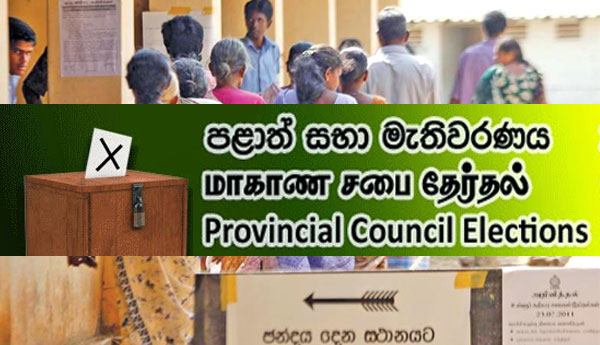
PC polls unlikely this year

The long-delayed provincial council (PC) elections are unlikely to be held within this year, with the passage of an essential legal amendment still pending, The Morning learnt.

Speaking to The Morning yesterday (12), Co-Cabinet Spokesman Udaya Gammanpila said that since the amendment to the Provincial Councils Elections Act No. 2 of 1988 is yet to be passed, the elections would most likely be held in 2022.

“We hope to reach a final decision soon. The next party leaders’ meeting will be held on 19 April where this would be discussed,” added Gammanpila.

Similarly, Sri Lanka Freedom Party (SLFP) General Secretary State Minister Dayasiri Jayasekara told The Morning that PC elections are most likely to be held at the end of this year or early next year.

The amendment proposed by the Ministry of Public Services, PCs, and Local Government is to hold PC elections either under the old system as per the Provincial Councils Elections Act No. 2 of 1988, which is the proportional representation (PR) system, or under the mixed system, i.e. to elect 70% of the members under the PR system and 30% under the first-past-the-post (FPTP) system.

The Sunday Morning reported last week that the Cabinet of Ministers, excluding a few senior members, has agreed to hold PC polls under the mixed system.

Currently, the terms of all nine PCs have expired and are presently functioning under the administration of the provincial governors.

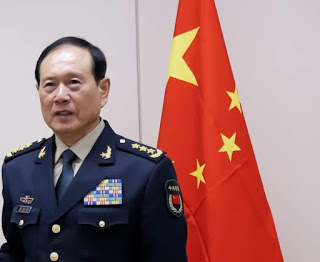
China’s Defense Minister to arrive in Sri Lanka after New Year

China’s Defense Minister General Wei Fenghe will arrive in Sri Lanka later this month to hold bilateral discussions with Government leaders and officials, making it one of the highest level visits undertaken by a Chinese government official since the Rajapaksa government was sworn into power, the Daily Mirror learns.

According to sources at the Foreign Ministry, the final dates of General Wei’s arrival are yet to be received but the visit is confirmed to take place after the Sinhala and Tamil New Year.

During his visit, Wei will hold discussions with President Gotabaya Rajapaksa, Prime Minister Mahinda Rajapaksa and other leading government officials. This is the second-highest visit to be undertaken by a Chinese official to Sri Lanka following senior Chinese diplomat, Yang Jiechi’s visit in October.

Meanwhile, dates are being finalised for President Gotabaya Rajapaksa’s visit to Beijing following a fresh invitation extended by President Xi Jinping during the recent discussion held between the two leaders earlier this month, sources said.

President Rajapaksa had assured his Chinese counterpart he would undertake a formal visit as soon as the travel restrictions ease due to the COVID-19 pandemic, but the Daily Mirror learns the visit is likely to take place sometime next month.

Posted in Uncategorized