Sri Lanka reports two COVID-19 deaths Sunday, toll rises to 598

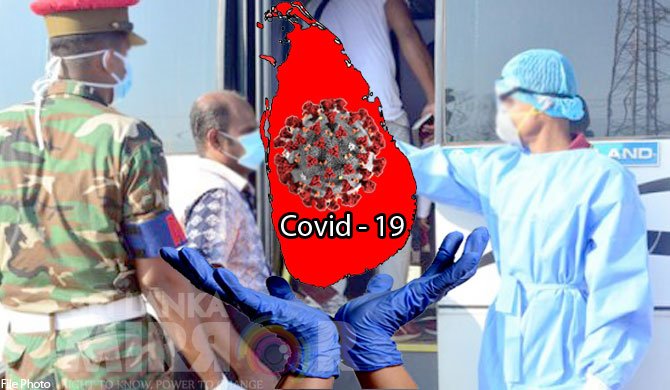
Sri Lanka confirmed two deaths on Sunday due to COVID -19 raising the death toll from the viral disease to 598, according to health authorities.

The Director General of Health Services confirmed the following deaths caused by COVID -19 virus infection and accordingly the total number of deaths due to COVID -19 infection in Sri Lanka is 598 by now.

01. The deceased is a 60 year old male resident in Puttalam. He was diagnosed as infected with Covid 19 virus while undergoing treatments at Puttalam District Hospital and transferred to Maharagama Apeksha Hospital and then to Homagama Base Hospital where he died on April 11. The cause of death is mentioned as blood poisoning, COVID Pneumonia and cancer.

02. The deceased is a 72 year old male resident in Baddegama. He was diagnosed as infected with Covid 19 virus while undergoing treatments at Karapitiya Teaching Hospital and transferred to Pimbura Base Hospital where he died on April 11. The cause of death is mentioned as COVID Pneumonia and COVID Encephalitis.

Posted in Uncategorized

Was Bail Granted To Jaffna Mayor By The Government Or By Courts?

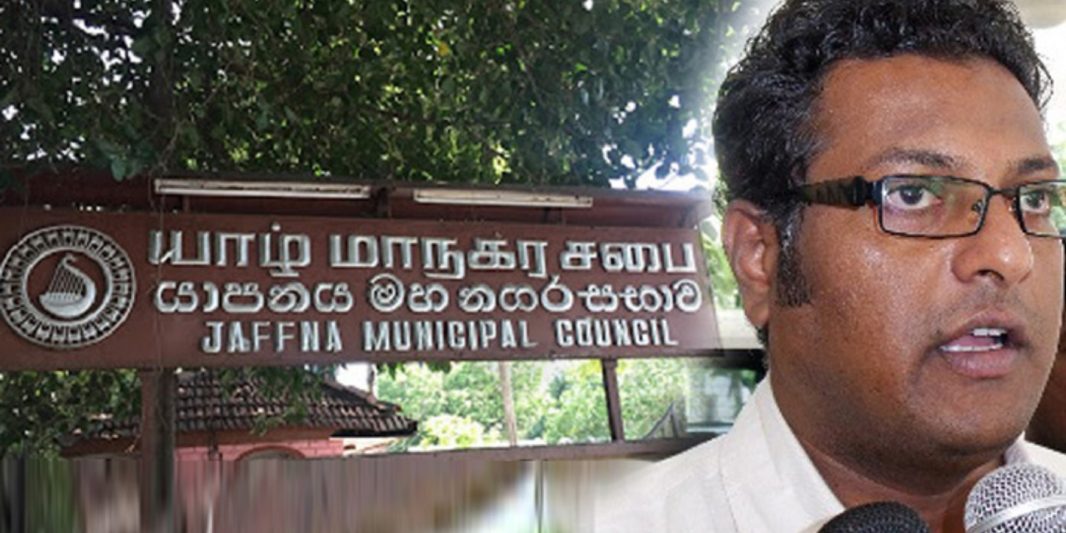
Before Jaffna Mayor Viswalingam Manivannan was granted bail on Friday night by the Jaffna Magistrate’s Court, Hon’ Minister Douglas Devananda had issued a statement to the media that the President was going to pardon Manivannan. The Hon’ Minister had stated (i) that Manivannan would be released on bail (ii) that he would not be charged under the PTA (iii) that he would be charged under the normal law.

This statement of the Hon’ Minister raises the question whether Courts and the Police in this country are only existing nominally functioning in consonance with the whims and preferences of the President and his Government. The statement of the Hon’ Minister also brings out the fact, that Manivannan had been arrested for political reasons. If the President had consented to pardon Manivannan it would mean that Manivannan had committed some offence. But the Police had not proved in Court that Manivannan had committed any offence. Therefore on what basis did the President consent to “pardon” Manivannan?

Just as the Hon’ Minister said Manivannan was indeed released on bail and he was not charged under the PTA. But I am told that the submissions of the Police and that of Manivannan’s lawyers were heard before the Jaffna Court and thereafter only the Court decided to grant bail.

The fact that Hon’ Minister Devananda had stated even before Manivannan was taken to Courts that the President had consented to pardon and that Manivannan would be granted bail and that the Police would be acting in consonance with what he has stated, brings out the fact as to what extent the Police Department and the Courts had lost their independence. We could take these incidents as amounting to contempt of the Courts and the Police Department.

It is necessary that the President and the Hon’ Minister Devananda do issue a statement in this regard. If ordinary citizens are going to be harassed in accordance with the whims and fancies of those in authority, of what use are the Courts? Are the Police People’s Police or hand-maids of the President? We need an explanation.

*Justice C.V. Wigneswaran – Member of Parliament, Jaffna District

EC gives ultimatum to four parties

The National Election Commission has issued an ultimatum to four recognised political parties to submit their audited accounts for the year 2019. An official said these four recognised political parties have not submitted their audited accounts, as per the law, to the Election Commission so far and they have been asked to do so before April 22.

The party representatives have been summoned to the Election Secretariat on April 22 where they will be required to hand in the records of their audited accounts. “If they fail to comply with the law, the Commission will suspend the status of ‘recognition’, so that they will be barred from contesting any future election,” the official said.

The names of the political parties have not been made public so far.

Posted in Uncategorized

Sri Lanka paid US$ 6.5 million to CIA mole to buy influence in the United States

The Sri Lankan Government in 2014 paid US$ 6.5mn through its Central Bank to an American businessman, who was a CIA mole, to buy influence and fix its image in the US, an investigative report in the Wall Street Journal (WSJ) now reveals, following his sentencing for 12 years in prison after pleading guilty to tax evasion, foreign-influence peddling and campaign finance violations.

The businessman, Imaad Zuberi, had been a mole for the US spy network, Central Intelligence Agency (CIA), for more than a decade. A US court held that of the money given to him on behalf of the Sri Lankan taxpayers, US$ 5.6m or 87 percent of it had been spent on himself and his wife.

A key aspect of the case played out in secret court filings and hearings. Mr. Zuberi was a longtime US intelligence source for the US Government. Byron Tau, the WSJ journalist, cites legal documents and people familiar with the businessman’s defence.

The Sunday Times first exclusively exposed in July 2014 that the Government had engaged Mr Zuberi, who purported to be a lobbyist. The payments were so covertly done that neither the Cabinet nor Parliament knew. And they were made through the Central Bank of Sri Lanka (CBSL)–headed at the time by Ajith Nivard Cabraal–to evade oversight from either.

Mr Zuberi’s lawyers have argued that some of the conduct he was charged with was linked to CIA officials who worked with him, Mr Tau reports. “In one instance, according to the documents they prepared, a former CIA handler of Mr. Zuberi sought and got a job on the project involving Sri Lanka that was later the basis for criminal charges against Mr. Zuberi,” the article states.

“After securing a role in the project, the former handler tried to persuade the Sri Lankans to buy a maritime-surveillance system that could keep watch on a swath of the Indian Ocean, according to two people familiar with the effort,” it says. “At the time the US Government was concerned about Chinese submarine forays. The former handler told consultants on the project that he had worked for the State Department, the people said, but a spokesperson for the department said it has no record of his employment there.”

The Justice Department has moved aggressively in recent years to crack down on foreign influence in the US, Mr Tau writes. The CIA, meanwhile, relies on well-connected Americans to serve as conduits for information, occasionally tapping them for information, introductions, assistance in recruiting foreigners and even for tasks such as acting as international couriers or acquiring secrets.

“After his guilty plea but before his sentencing, Mr Zuberi’s legal team compiled a history of their client’s cooperation with the government, according to the legal documents and people familiar with the defence, which was sealed under a law called the Classified Information Procedures Act, or CIPA, designed to protect intelligence sources and methods during trials,” the article reveals. “CIPA can only be invoked when national-security issues are at stake and a judge signs the sealing order.”

Mr. Zuberi’s history of secret help to the CIA on and off for more than a decade is detailed in the documents—depicting a relationship that started with debriefings about his interactions with foreign officials but grew to involve more formal tasks and missions, Mr Tau reports.

“The foreign-influence-peddling charge to which Mr. Zuberi pleaded guilty stemmed from his efforts in 2014 to help Sri Lanka with a campaign to burnish its image in the US,” he says. “After his plea on that count, prosecutors detailed interactions with other countries beyond Sri Lanka as justification for a longer sentence.”

The Sunday Times repeatedly questioned the manner in which billions of rupees were being funnelled into public relations firms and lobby groups, particularly in 2014. At any given time between 2008 and the end of 2014—more than six years—Sri Lanka’s mission in Washington, the Office of the Monitoring Member of Parliament (MMP) for the Ministry of External Affairs or the Central Bank of Sri Lanka (CBSL) had on their payroll numerous lobbyists and public relations companies.

Documents we traced at the time showed that the US$ 6.5mn Mr Zuberi received via the Central Bank went to a personal account and to WR Group, a company he hurriedly set up. We also reported that the Auditor General’s Department queried the CBSL for three consecutive years about the towering sumps paid in fees to foreign lobbyists, consultants and public relations agencies.

The CBSL became the preferred channel for such payments because its accounts do not go before Parliament. The Treasury or any other Ministry would have needed Parliament’s permission to make such large outlays. The Cabinet was circumvented, and, in the case of most payments, the External Affairs Ministry was also bypassed.


Sri Lanka briefs EU on implementation of reconciliation mechanisms

Sri Lanka has briefed the European Union (EU) on progress related to the implementation of reconciliation mechanisms.

Foreign Minister Dinesh Gunawardena met the Colombo-based senior diplomatic representation of the European Union (EU) at the Foreign Ministry, and apprised them on political and economic developments in Sri Lanka.

The Minister updated the envoys of ongoing processes, including the constitutional reform process, the strengthening of democratic institutions, and on progress related to the implementation of reconciliation mechanisms, among other issues, the Foreign Ministry said.

The meeting was interactive and also entailed a discussion on EU-Sri Lanka cooperation, including trade, investment and development cooperation, and plans underway to convene the scheduled Sri Lanka-EU Joint Commission Sub-committees following the convening of the 23rd Meeting of the Sri Lanka-EU Joint Commission in January 2021.

Measures in place for the revival of tourism in Sri Lanka in the COVID -19 /post-COVID -19 context, and the Government of Sri Lanka health protocols related to quarantine were also discussed.

The Ambassador of France Eric Lavertu; the Ambassador Italy Rita Mannella, the Chargé d’Affaires of Romania Ambassador Victor Chiujdea; as well as the Deputy Heads of Mission of Germany, the Netherlands and the EU participated in the meeting.

Posted in Uncategorized

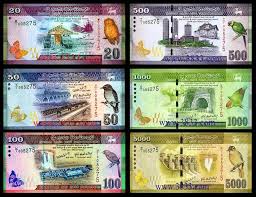
Sri Lankan currency faces heat following currency swap with China

A significant depreciation on the Sri Lankan rupee has been noticed after entering into a currency swap agreement with China as it cannot be used for the strengthening of the country’s foreign reserves, reported leading Lankan media outlet The Leader.

In the wake of depleting foreign exchange reserves, Sri Lanka rupee is putting pressure on the balance of payments, The Leader reported quoting an eminent economic expert.

The demand for dollars remains high in the open market and there is less demand for Yuan as no country is dealing with such currency, the expert said, adding that the $400 million currency swap with India has helped to maintain the rupee stable for even a small period.

The Lankan rupee has been maintained at Rs.187.86 per dollar on July 31 from Rs.188.02 on July 24, 2020, in six days since signing the currency swap with India, the country’s Central Bank data showed, according to The Leader.

“Since the swap is in Yuan, the government can only use that money to pay import bills. This is useful since China is one of the biggest import destinations with Sri Lanka regularly importing about USD 3.5-4 billion in goods,” another expert told The Lankan.

“But it will not top up reserves and that is what Sri Lanka really needs,” he added.

On March 10, Lankan State Minister of Finance Ajith Nivard Cabraal announced that the People’s Bank of China had approved a 10 billion Yuan currency swap with Sri Lanka.

The Lankan rupee has depreciated to Rs. 203.50 against the US dollar on April 8 from Rs. 198.66 on March 10 in ten days after entering into a Chinese currency swap agreement, Central Bank data showed.

Lankan Opposition lawmaker Dr. Harsha de Silva has said that Sri Lanka’s external problem is linked to medium and long term solvency requiring debt restructuring and is not a short term liquidity problem that can be solved by swaps, according to The Leader.

Posted in Uncategorized

India adds Sri Lanka in air bubble pact, passengers can now fly in 28 countries

An air bubble is a bilateral arrangement with a set of regulations and restrictions in which the carriers of the two countries can operate international flights

The Civil Aviation Ministry today said that India has established individual bilateral air bubble arrangement with Sri Lanka for operation of special international passenger flights between the two countries.

An air bubble is a bilateral arrangement with a set of regulations and restrictions in which the carriers of the two countries can operate international flights.

“India has finalized an air bubble agreement with Sri Lanka, making it the 6th such arrangement in SAARC region and the 28th in total,” the Civil Aviation Ministry said on Twitter.

“All the eligible passengers will be able to travel between the 2 countries in the near future,” it noted.

Scheduled international flights have been suspended in India since March 23, 2020 due to the coronavirus pandemic.

India now has such pacts with 28 countries, including Afghanistan, Bahrain, Canada, France, Germany, Iraq, Japan, the Maldives, Nigeria, Qatar, the UAE, the UK and the USA.

India has already established individual bilateral bubbles with France, Germany and the US that will allow airlines of each country in the pact to operate international flights.

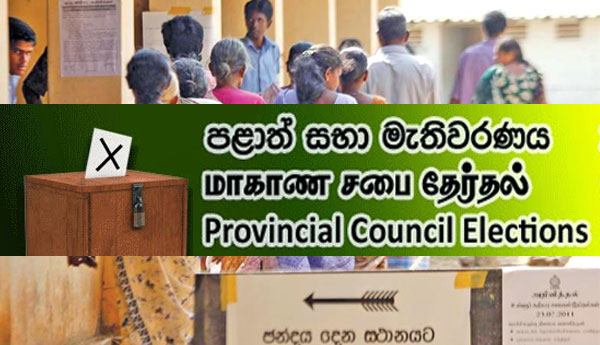
Final decision on PC Election on April 19th

Minister Mahindananda Aluthgamage says a final decision will be reached regarding the electoral system for the Provincial Council Election at the party leaders meeting due to be held under the patronage of Prime Minister Mahinda Rajapaksa on the 19th of April.

The Minister said the Sri Lanka Nidahas Podujana alliance will face the Provincial Council Election in vigour.

He stressed the parties will contest under the alliance and not separately.

Minister Aluthgamage claimed there are two varying opinions regarding the new Provincial Council Act adding that the issue will be resolved at the party leaders meeting.

Protest against Basil intensifies; 11 parties to hold separate May Day rally

Amid the growing dissent against Basil Rajapaksa, eleven political parties have decided to hold a separate May Day rally.The decision has been made at a meeting attended by the leaders of 11 political parties on Thursday.

The meeting was attended by Vadudeva Nanayakkara, Wimal Weerawansa, Udaya Gammanpila, Dayasiri Jayasekara, Athuraliye Rathana, Gevindu Kumaratunga, A.L.M.A. Athaullah, D.E.W. Gunasekara, Asana Nawaratna, Prof. Tissa Witharana and Tiran Alles.

Their decision comes amid the move by the Sri Lanka Nidahas Podujana Sandanaya led by the SLPP to hold a May day rally.However, it has not been revealed so far as to why 11 parties have decided to hold a separate rally.

It is reported that a huge conflict has erupted in the SLPP as Prime Minister Mahinda Rajapaks has not been involved in political matters due to this health condition.

SLPP National Organiser Basil Rajapaksa, is reportedly facing severe criticism from other parties in the coalition.

As a result, some of the proposals submitted by Basil Rajapaksa on the Provincial Council electoral system too have been defeated.

Basil proposed to submit three members per electorate and to elect 50 per cent of the members from the vote and the balance to be nominated. His proposal has been rejected by other parties.At the same time, SLFP proposed to elect 70 percent from the voting and 30 per cent to be nominated.

The SLFP proposal has been endorsed by others.A member of the SLPP said if Basil continues his behaviour, he would become a burden to the SLPP.

Posted in Uncategorized

Low-income families to receive Rs. 5,000 allowance for festive season

Steps have been taken to provide a cash allowance of Rs. 5,000 to Samurdhi recipients and low-income families, says State Minister of Samurdhi, Household Economy, Micro Finance, Self-Employment and Business Development Shehan Semasinghe.

The decision has been taken in view of the upcoming Sinhala and Tamil New Year.

Samurdhi officers have been instructed to take necessary measures to hand over the cash allowance to relevant families prior to the Sinhala and Tamil New Year.

This is jointly initiated by the Presidential Task Force for Economic Revival and Poverty Eradication and the Department of Samurdhi Development.

UPDATE: Reports revealed that the aforementioned allowance for low-income families is expected to be handed over on the 12th and 13th of April through Samurdhi banks.