Motion presented to appoint PSC to identify changes to election laws and electoral system

Leader of the House Dinesh Gunawardene presented a motion to appoint a select committee to identify appropriate changes to the election laws and electoral system and to recommend necessary amendments.

As per the motion the chair and the members of the committee will be appointed by the Speaker while the committee shall report to the House within six months of its first stings or such extended period as Parliament may grant.

The committee could decide on its quorum, summon any person before it , to require any person to produce any document or record, to procure and receive all such evidence , written or oral as it may think necessary for the fullest consideration, obtain services of specialists and experts in the relevant fields and make interim reports from time to time and sit notwithstanding any adjournment of Parliament.

Mr. Gunawardene said proposals from the opposition will also be welcomed.

Posted in Uncategorized

Are you wearing clothes, Cardinal asks Maithripala

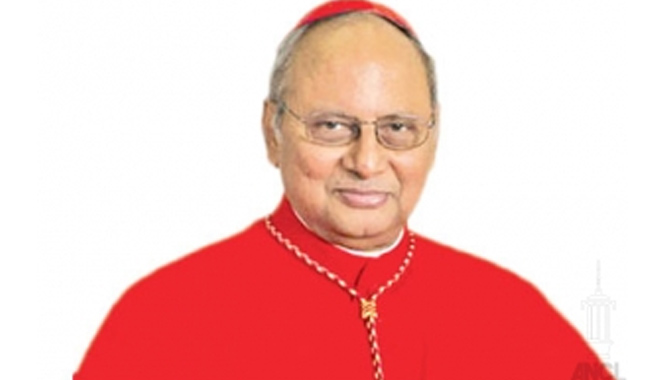
In a stunning verbal assault, Archbishop of Colombo His Eminence Malcolm Cardinal Ranjith yesterday (4) called for action to be initiated against former President Maithripala Sirisena without further delay and asked whether the former President has no shame.

“The question arises whether some politicians who have been named as being responsible for the attacks are shameless enough to go before the people once again. I heard that the former President is seeking re-election? How can somebody who knew about the deaths and went abroad contest an election? How can he be the leader of a party? I would like to ask him if he is wearing clothes when he says these things?”

Cardinal Ranjith made these comments speaking to the media after Easter Sunday services held at St. Lucia’s Cathedral in Kotahena yesterday.

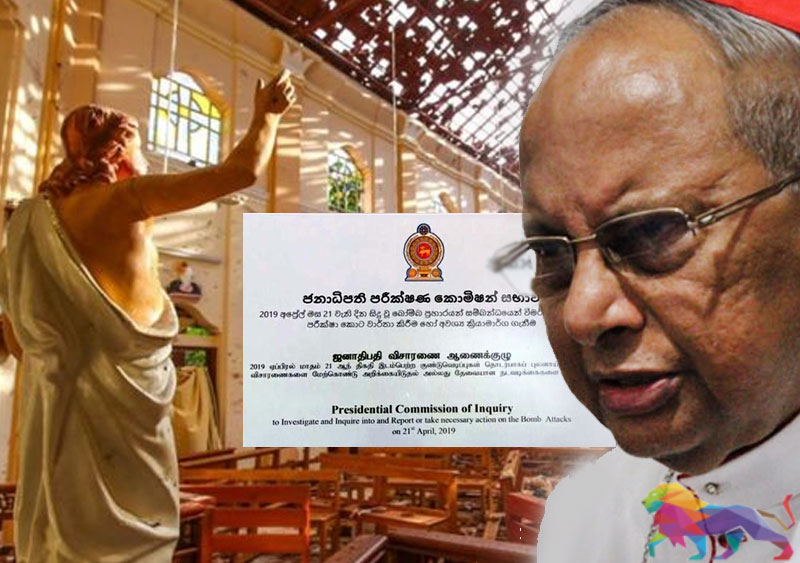
“The final report of the PCoI (Presidential Commission of Inquiry) on Easter Sunday attacks clearly indicates the people who were involved in the Easter attack. So why aren’t they punished. The ministers who were involved in this attack are still in Parliament, and this is a shame to the country,” he added.

Participating in the “Black Sunday” silent protest on 7 March and speaking to the media, he said: “We wanted the commission to find out who was behind this attack. We do not know to what extent it has been achieved. I’m reading that (PCoI) report these days. Many of the things recommended in this report can be implemented. It is especially important to enforce the law against those who have committed crimes.”

The Head of the Catholic Church in Sri Lanka said earlier that the Government should be more committed to bringing the perpetrators of the tragedy to justice.

“My feeling is that the Government needs to be more committed to conducting an honest investigation. I wondered if it was necessary to appoint another committee of six members,” he questioned.

“What is needed here is for the President to directly direct himself to what he has to do on a practical level. It would be wrong to choose only a certain part of them and punish them only. This protest movement will continue with the involvement of other religious organisations until we get a definite sign,” Cardinal Ranjith said, adding that this was an issue that affected the people of the whole country.

The six-member committee is also ready to present the report recommendations soon to President Gotabaya Rajapaksa, according to Co-Cabinet Spokesman and Minister of Energy Udaya Gammanpila.

Speaking to The Morning, he said the committee is waiting for an appointment from President Rajapaksa to handover the report.

“Minister of Irrigation Chamal Rajapaksa, who is the chairman of the committee, is still waiting for the appointment,” he said.

Former President Sirisena appointed the PCoI in September 2019 to probe the co-ordinated suicide bomb attacks by terrorists on 21 April 2019, targeting hotels and churches, which cost 270 lives, injured over 500, and destroyed property. Accordingly, the Commission recorded evidence from 457 persons over 214 days to compile the six-volume report.

The report was handed over to President Rajapaksa by PCoI Chairman Supreme Court Judge Justice Janak de Silva at the Presidential Secretariat on 1 February. It comprises 472 pages, 215 annexures, and six volumes. The first and second interim reports were handed over to the President on 20 December 2019 and on 2 March 2020, respectively.

The Commission comprises Chairman Justice de Silva, Court of Appeal Judge Justice Nishshanka Bandula Karunaratne, retired High Court Judges Nihal Sunil Rajapaksha and A.L. Bandula Kumara Atapattu, former Secretary to the Ministry of Justice R. Adhikari, and Secretary to the Commission Buwaneka Herath.

Govt has printed Rs 40 billion in March alone – Sajith

Leader of the Opposition Sajith Premadasa says that the government has printed money worth Rs 40 billion in the month of March alone.

He mentioned speaking at a program held in Hambantota yesterday (April 03).

Premadasa said, “Rs 40 billion was printed in March alone. Where does this money go? Are they used for public service? Have houses been built for the public? Do youth get jobs? Are the prices of goods going down? Are reliefs given? Nothing is received. The leaders are enjoying luxuries after printing money worth Rs 40 billion.

Back then they promised [the country] will be taken towards prosperity. However, the way money is printed [the country] will not be taken towards prosperity, but towards Zimbabwe.”

The leader of Samagi Jana Balawegaya (SJB) also commented on the depreciation of the Rupee.

He said that when the Rupee depreciated – ‘not as much as now’ – during the previous regime Minister Bandula Gunawardena held press conferences every day and claimed it was the incompetence of the government.

However, now that the Rupee has depreciated to Rs 202 against the US Dollar, Premadasa says he would like to question whether it is the skill or the incompetence of the current government.

“It is now clear that the government can neither manage the Rupee nor the country. That is the current situation.“

Posted in Uncategorized

Cardinal questions Maithripala’s talks of re-contesting for elections

Speaking to the media following the Easter Sunday Mass at St. Lucia’s Church in Kotahena this morning (04), Archbishop of Colombo Cardinal Malcolm Ranjith urged the government to take legal action against former President Maithripala Sirisena over the 2019 Easter Sunday attacks.

He went on to ask the question of how a President who left the country while knowing that the lives of innocent people were in danger can contest for elections once again.

“No need to delay taking action against him. We ask him to stay at home. How can these leaders ask for more responsibilities now without fulfilling the responsibilities that they already had. Do they have no shame?” the Cardinal asked.

The Cardinal also mentioned that the former president has been named as an offender in the report of the Presidential Commission of Inquiry (PCoI) on the 2019 Easter Sunday attacks.

He said there is no need to appoint new committees to look into the PCoI recommendations again. “We urge the government to simply implement the report without any drama. Ministers who were involved with perpetrators are now in parliament today, this is a disgrace to us. If justice was not delivered before April 21, we will take to the streets,” he said.

Health Minister sacks NMRA expert who opposed Chinese Sinopharm vaccine approval without data

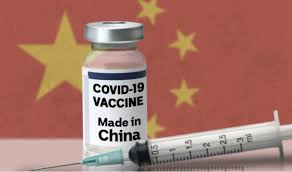
A national drug regulatory authority member who stood strongly against approving COVID-19 vaccines, especially the Chinese Sinopharm vial, without data, was sacked by Health Minister Pavithra Wanniarachchi on Friday.

Consultant Paediatrician Dr. LakKumar Fernando, a Board Member of the National Medicines Regulatory Authority (NMRA), was the nominee of the Sri Lanka College of Paediatricians.

Not only as an NMRA board member but also as part of the independent eight-member Panel of Experts on COVID-19 vaccines, Dr. Fernando’s stance has been that Sri Lanka should not approve for emergency-use listing any vaccine without proper data, as then the guinea pigs would be the people of this country.

“We as gatekeepers must ensure the protection of the people for whom we are doing this as a service,” Dr. Fernando, who is also a well-known dengue expert, told the Sunday Times. A very bad precedent is being set, he added.

“What the NMRA has been requesting over and again is for Phase 3 efficacy and safety data, as we need to follow the right protocols,” said Dr. Fernando, adding that this was also what the World Health Organisation (WHO) was asking for.

The NMRA has been embroiled in controversy over the Chinese Sinopharm vaccine, with the first four sackings of NMRA Board Members taking place on March 8, followed soon after by the resignation of the NMRA Chairperson, Prof. Asita de Silva.

Posted in Uncategorized

As rupee plunges, Govt. takes urgent measures to protect foreign reserves and stabilise rupee

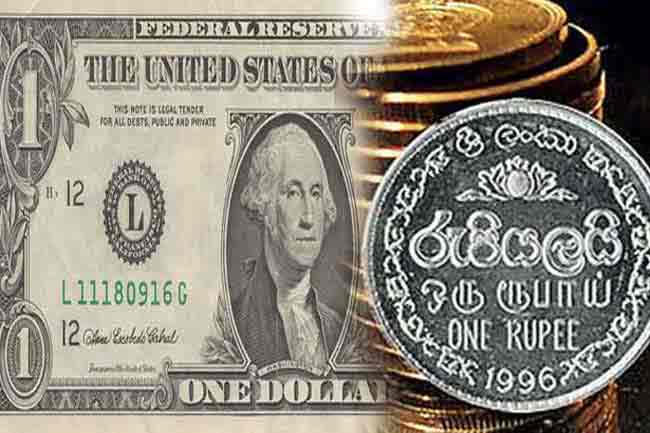
As the Sri Lanka rupee hit the 200-mark in relation to the US Dollar this week for the first time, urgent measures to protect foreign reserves and stabilise the rupee will include delays in payments due on Sri Lanka Development Bonds (SLDBs) – a debt denominated in US dollars by the government, until next year and to differ the repayment of foreign currency loans taken by local private banks, the Treasury and the Central Bank have decided.

A senior Treasury official said the moves would help the government to repay foreign loans and meet commitments for International Sovereign Bonds — debt securities issued by the government to raise capital for spending needs. For this year, the total repayments due account for about US$ 4.1 billion.

He said the government was planning to arrange for long-term flexible loans which would serve as another measure.

Among the repayments due is a government commitment to make US$ one billion as a Sovereign Bond payment.

Sri Lanka Development Bond Returns are totally tax free in Sri Lanka, enjoy higher returns than that of a standard deposit and do not involve exchange rate risk.

Those eligible to invest are citizens of foreign states whether resident in Sri Lanka or outside Sri Lanka, Sri Lanka citizens who have made their permanent abode outside Sri Lanka, Sri Lanka citizens who have gone overseas for employment or to set up business or in a profession and Sri Lanka citizens who have dual citizenship provided that those citizens substantiate that their permanent place of abode is outside Sri Lanka.

For Board of Investment companies, SLDB investment should be from their export income while companies registered under the Regulation of Insurance Industry Ac, investment should be from funds from their Special Foreign Currency Accounts.

The moves come in the wake of the country’s Foreign Reserves dropping to US$ 4.5 billion.

The SLDB auction raised USD 24.82 million. At the auction, maturities offered varied from 1 year 2 months to 4 years 2 months at a fixed rate of 6.69 percent to 6.82 percent.

Finance Ministry sources said the next few months were “crucial” in maintaining the foreign reserves and protecting the rupee deprecating even further against the US dollar.

The Sri Lankan rupee was last quoted at 199 against the US dollar on Friday.

In view of the depleting foreign reserves the Central Bank has refrained from intervening to stabilise the rupee. Instead, it will be looking at further improving exports and increasing remittance while awaiting investments through the Port City project. The Government gazetted the Colombo Port City as a Single Window Investment Facilitator last week and declared it as a Special Economic Zone.

Posted in Uncategorized

Sri Lanka denies plan to delay domestic dollar loan repayments, SLDBs

Sri Lanka’s central bank has denied that repayment of forex loans taken from local banks and dollar denominated domestic bonds falling due will be delayed as the country faced foreign exchange shortages and a foreign reserve drain amid money printing.

“The Central Bank wishes to inform investors and the general public that debt service payments, interest and capital, are being met in a timely manner on account of SLDBs (Sri Lanka Development Bonds) and Foreign Currency Loans from Domestic Banks, as well as all other debt obligations of the Government,” the central bank, which manages debt for the Finance Ministry as its agent said in a statement.

“The Government has no intention to tarnish its unblemished debt service record by delaying the settlement of maturing debt obligations.

“So far, during 2021, on account of SLDBs and Foreign Currency Loans from Domestic Banks, debt service payments of close to United States Dollars 1,200 million have been met, and all due obligations will also be serviced in a timely manner.’

The central bank said the “general public are advised not to get unduly concerned about” such reports.

Sri Lanka’s The Sunday Times newspaper reported that authorities had discussed delaying repayment of dollar loans from domestic banks and Sri Lanka Development Bonds, a dollar security mostly sold to domestic investors, for a year, to meet commitments for International Sovereign Bonds.

Sri Lanka has to repay a billion US dollar International Sovereign Bond in July 2021, as well as meet coupons of about 14 billion outstanding ISBs.

Of the billion dollar bond, about 300 million dollars is owned by domestic holders, the central bank has said. Sri Lankan banks have bought into sovereign bonds at steep discounts.

In May a 693 million SLDB is due and in June a 158 million SLDB is due.

Sri Lanka’s sovereign rating was downgraded to ‘CCC’ in 2020 amid money printing and a weakening of the exchange rate. Delays of debt could push the rating in a country to restricted default category or RD analysts say.

Sri Lanka’s gross official reserves fell to 4,583 million US dollars in February 2021 from around 8.5 billion US dollars in August 2019, when liquidity injections began to target an output gap.

Sri Lanka is expecting save money from inflows in 2021 to repay debt falling due.

Analysts have warned that Sri Lanka will have to maintain solvency in domestic debt markets (sell Treasury bills to banks and the public at a market interest rate and get already existing money instead of printing money and expanding the monetary base) to maintain solvency in dollar debt repayments.

Expanding the reserve money through liquidity injections to keep interest rates down creates forex shortages and forces a peg with the US dollar to break.

The rupee has fallen to around 200 to the US dollar so far this year amid liquidity injections despite the worst import controls since the 1970s.

PM Modi ensured safety of Tamil minorities in Sri Lanka: J P Nadda

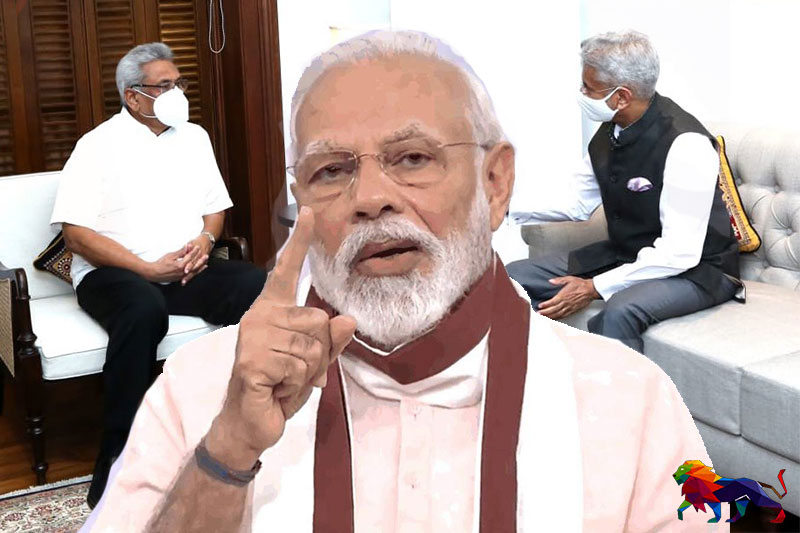
Ahead of upcoming Assembly elections in Tamil Nadu, Bharatiya Janata Party (BJP) National President J P Nadda attended a public meeting at Modakurichi, Erode on April 3 and said Prime Minister Narendra Modi is the first PM who visited Jaffna and ensured safety of Tamil Nadu minorities. “Modi Ji is the first PM to visit Jaffna in Sri Lanka. He visited bombarded houses, got them reconstructed. He also sent EAM S Jaishankar to Sri Lanka and ensured that Tamil minorities were safe. While Stalin never condemned Karuppar Koottam,” said Nadda. “PM Modi has brought Tamil Nadu in the mainstream. In the 13th Finance Commission, Tamil Nadu got only Rs 94,000 crores. While in the 14th Finance Commission under PM Modi, the state got Rs 5.42 lakh crores, which was 4.5 times more,” he said. “11 medical colleges have been given to Tamil Nadu, the highest number in the nation is given to Tamil Nadu,” he added.

A timeline of investigation into 2019 Sri Lankan bombings

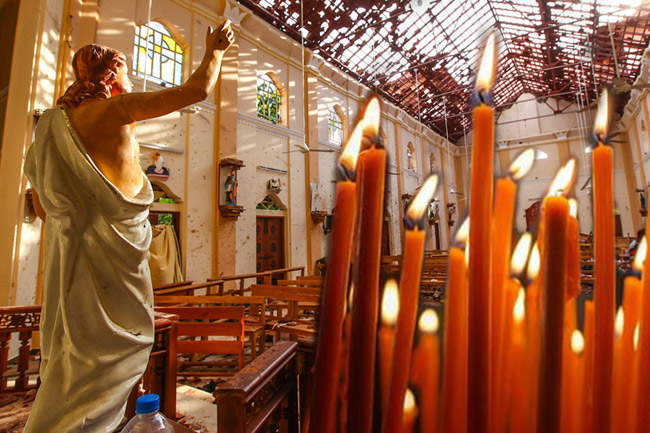
As Easter Sunday approaches this year, it is time to take stock of the developments following the series of bomb blasts on April 21, 2019 that ripped through churches and luxury hotels in Sri Lanka, killing over 250 people and injuring hundreds.

The explosions targeted Christians at Easter Sunday church services in Colombo, Negombo and Batticaloa, and tourists staying in luxury hotels in the capital. The toll puts the attacks on par with the deadliest atrocities since the 9/11 attacks in the United States  Throughout the morning and afternoon, in and around the capital, Colombo, Negombo, and in the eastern city of Batticaloa, the bombs went off at churches and upscale hotels.

The world watched the mayhem unfolding in the Indian Ocean island, which was still recuperating from the 26 years of bloodshed and violence during the civil war. The attack was claimed by the Islamic State of Iraq and Levant (ISIL).
The Easter Sunday attacks exposed multiple gaps in Sri Lanka’s security architecture.

Shortly after the attacks, the Sri Lankan government admitted that it failed to act on multiple warnings from intelligence agencies, including from India and the United States.

In February, an investigation into the 2019 Easter Sunday bombings in Sri Lanka called for the country’s former President Maithripala Sirisena as well as senior police and intelligence officials to be prosecuted.

The commission of inquiry said that “criminal proceedings” should be brought against former President Maithripala Sirisena, who left office in November 2019, for “criminal liability on his part” over the attacks.

In March, the Sri Lankan parliament held a three-day debate on the inquiry.

Here is a timeline of the investigation into the gruesome attacks that shook the nation and the world.

April 21, 2019: A wave of deadly blasts hit Sri Lanka on Easter Sunday. Nine suicide bombers launched a coordinated series of attacks on three Catholic churches and three luxury hotels across Sri Lanka. Over 250 people died and many suffered injuries.

April 22, 2019: Then-President Maithripala Sirisena of Sri Lanka appointed a three-member committee headed by a retired Supreme Court judge to investigate the Easter Sunday bombings.

April 22, 2019: Sirisena declared a nationwide emergency, giving the military a wider berth to detain and arrest suspects – powers that were used during the civil war, but withdrawn when it ended.

April 23, 2019: Sri Lankan then-Defence Minister Ruwan Wijewardene said in parliament that the government believed the attack was in retaliation for the Christchurch mosque shootings on March 15, 2019.

He accused National Thowheed Jamath (NTJ), an extremist group, for the bombings. Wijewardene said that along with NTJ, another local group, Jammiyathul Millathu Ibrahim (JMI) was also believed to be involved in the attacks. “It was done by National Thowheed Jamath along with JMI,” he said.

April 24, 2019: Sirisena asked security officials—the defence secretary and the national police chief–to step down.
Sirisena moved to replace then-defence secretary Hemasiri Fernando and then-national police chief Pujith Jayasundara after security forces failed to act on warnings before the Easter suicide bombings.

April 25, 2019: Hemasiri Fernando, then Sri Lanka’s defence secretary, resigned following the security forces’ failure to stop the deadly church and hotel attacks on Easter Sunday.

April 25, 2019: The Criminal Investigation Department (CID) released names and photos of six suspects wanted in connection over the Easter Sunday bombings, seeking public assistance.

On April 26, 2019: the Sri Lanka Army and the Special Task Force (STF) carried out a search operation in Sainthamaruthu town where three explosions and a shootout occurred when they attempted to raid a suspected hideout following a tip-off.

Three suicide bombers blew themselves up, killing nine of their family members, including three women and six children, while three other terrorists were shot dead by the soldiers. One civilian was caught in the crossfire and died, according to police, while a wounded woman and child were taken to hospital.

April 26, 2019: Sirisena said Pujith Jayasundara has resigned over failures that led to the deadly bomb attacks.
April 26, 2019: Sirisena admitted “a serious lapse” on the part of the country’s defence secretary and top police official, who failed to inform him about an April 4 letter from a “friendly foreign country” warning about a possible attack.

April 27, 2019: Jayasundara refused a request by Sirisena to step down over the failure to thwart the Easter Sunday attacks. Sirisena earlier claimed that Jayasundara has resigned.

April 27, 2019: Sirisena banned two groups linked to the Easter bombings – NTJ and Jammiyathul Millathu Ibrahim (JMI) – under emergency powers.


Posted in Uncategorized

Perfecting the failure BY Victor Ivan

Sri Lanka is now in an unfortunate plight in which the failure of the state has entered the phase of its completion both internally and externally. The rule of the country is eclipsed by dark shadows of disintegration and anarchy. The state and the political system are also in a state of disarray and virtual collapse. The economy is on the brinks of virtual bankruptcy. In the sense of geo-politics, the country is largely under siege.

Anarchy

The anarchic situation and bankruptcy the country is facing have become an oppressive and tangible reality which the people could feel. Gotabaya Rajapaksa can be considered as a President elected solely by the Sinhala Buddhist votes. His Government was able to secure a two-thirds majority in the Parliament. However, it is clear that the recognition maintained so far, by both the President and the Government has now eroded.

Another significant characteristic of this trend is that no opposition party movement has been able to enhance their public acceptance in proportion to the extent of decline in the governing party. This clearly explains that the crisis of Sri Lanka is more a crisis of the system itself which has rendered all traditional leaders and traditional political parties failures than a crisis of the leader, the head of state or the government.

Despite the fact that the President has adopted a policy with more weight being placed on a military approach which undermines the civilian rule, obviously he has not been able to achieve any of the intended objectives. A significant number of not only civilians, but also army officers who have been appointed to key positions have abandoned them. It can also be considered as an important trend.

In this crisis, the functioning of the judiciary also can be said to have shrunk and degenerated to a greater extent. It can be said that the Sri Lankan judiciary has reached a level where it finds itself incapable of meting out justice fairly, and providing protection not only to the general public but also to the socio-political system. The pathetic plight faced by Shani Abeysekara is a good example revealing this situation. All investigations carried out by him were pursued with necessary guidance from the Attorney General’s Department and the judiciary. Yet, both these institutions have failed in providing him with necessary protection.

Almost everything in the country is being conducted in an informal and absurd manner. It is only in three areas where active and effective performance could be seen viz in acquitting the leaders of the present Government who were prosecuted during the previous regime, prosecuting the opponents of the Government and looting public property in various fields.

Bankruptcy

The bankruptcy of the economy which is visible and tangible has become a major factor that oppresses the people. It is unavoidable that this situation will soon develop into an unbearable scale. The exchange rate of the US dollar has already crossed the limit of Rs. 200 and according to the Minister Finance himself, it might reach Rs. 350. Under the circumstances, a bag full of money will be required to buy a bag of goods in the future. The imported goods could be purchased only as long as they are available in the market. Already there are signs of a shortage of tires in the market, and a situation might arise where the motor transportation might collapse at any moment.

A large number of people have already lost their jobs and the number of those whose income has declined though they have been able to preserve their jobs is even greater. There are already signs of mass protests and demonstrations, and probably a situation might arise that such protests will develop drastically in the future.

The lack of having a practical vision needed to overcome the crisis Sri Lanka is facing can be considered as a common feature inherent not only in the Government but also in the Opposition as well. The failure to build the nation and the plundering of public property associated with the ruling power can be considered as the two main factors that have contributed to the current deplorable state of Sri Lanka. The nation must be rebuilt and the State and the political system which have crumbled must be restructured.

In doing so, it is imperative that there must be a large-scale inquiry into human rights abuses while the opportunity gained by the rulers to exploit public property which has become a permanent feature of state administration, is completely abolished. Neither the ruling party nor the opposition parties have apparently felt any disenchantment about the great catastrophe that has befallen the country due to their misdeeds. Both parties have not shunned their greediness for plundering of public property. Both parties are in a state of extreme bankruptcy, devoid of honesty and creative thinking. All opposition parties seem to be thinking that the solution to the crisis in Sri Lanka lies in their seizing the ruling power in the next general election.

Ignoring the geopolitical reality

The extreme pro-China policy followed by Sri Lanka in the field of geopolitics is likely to push the crisis in Sri Lanka to an explosive level. The country is already trapped in a crushing debt burden with China which is not easy to escape from. Sri Lanka is an island located in a strategically important location from which the Indian Ocean could be controlled. India can be considered as the closest neighbour of Sri Lanka. It can also be considered as the major power of the region as well as the one that aspires to become the dominant or the super power in the region.

The location of Sri Lanka cannot be changed. Geographically it lies at the mouth of India and not that of China. Under the circumstances, a pro-Chinese policy that ignores expectations of India can cause great anger in India. If India pushes itself for a policy that interferes with Sri Lanka, certainly the latter will not have a real chance of resisting it.

The recent resolution passed by the UN Human Rights Council on Sri Lanka will inevitably act as a significant element having a major impact on Sri Lanka which is already merged in a deep crisis. If Sri Lanka continues to act arbitrarily, it might lead to a situation in which sanctions could be imposed on Sri Lanka. A major outcome of this resolution would be the establishment of a 12-member UN human rights office on Ceylon in the High Commissioner’s Office to streamline the investigations into alleged human rights abuses in Sri Lanka which are said to have occurred in the past and occurring at present. A sum of $ 2.8 million has been set aside for the office for a period of 22 months.

UN human rights office on Ceylon

This office will undoubtedly be a crucial turning point on alleged human rights violations and have a greater impact on the internal affairs of Sri Lanka in many ways, not just one. It will act as an important institution for the protection of Tamil and Muslim people who have been significantly deprived of their human rights and also the rights of the Sinhalese people who have been and continued to be deprived of human rights. It will also act as an important centre for those who have been affected in various ways during the two insurrections of Sinhala people who have not been able to receive justice for their grievances, and the victims of human rights violations during the Tamil uprising in the north and the Muslims who have been subjected to human rights abuses subsequently. All affected parties would be able to present their grievances to this office and seek redress.

All the victims involved in the cases such as the disappearance of 11 youths arrested for extorting ransom, murder of MP Ravi Raj, abduction and disappearance of Prageeth Ekneligoda, abduction of journalists to undermine investigations into horrific incidents of assault can also seek assistance of this office and urge for justice. In particular, people like Hijaz Hezbollah, Attorney-at-law and Shani Abeysekera can seek assistance from this office for their defence and protection.

Also, all political leaders who are threatened with deprivation of civic rights by a system of Commissions which are contrary to the law could also seek assistance from this office to resolve their issues. Similarly, people like me, Tony Emmanuel Fernando and Palitha Bandaranaike who had sought redress for serious human rights violations from Geneva Human Rights Commission under the International Covenant on Civil and Political Rights, and being adjudged that their rights have been violated and the respective government ordered to pay compensation for the victims, but so far the orders issued by the Commission have not been honoured by the Government, can also appeal to the Bureau to do justice on them.

Apart from that, those who are interested in overcoming the degenerated state of Sri Lanka and keen in having structural reforms adopted for that, and also those who are interested in making a participatory People’s Constitution to effect a real transformation of the system, could also seek necessary guidance and technical assistance from this office.

The challenge on the judiciary

The biggest challenge of this resolution will be in the judiciary. Internationally the judiciary of Sri Lanka does not entertain a good reputation. The new changes that may arise in the judiciary of Sri Lanka in the wake of this resolution is likely to create an alternative mechanism for victims to go before a court of a foreign country and seek justice in the event they fail to get justice administered by the highest court in Sri Lanka. It will inevitably become an uncontrollable stream if the doors of the courts of India are opened for this purpose in addition to the courts in European countries. How will the judiciary in Sri Lanka take up this signal?