Sri Lanka reaffirms its commitment to the one-China principle

Sri Lanka has reaffirmed its commitment to the one-China principle.

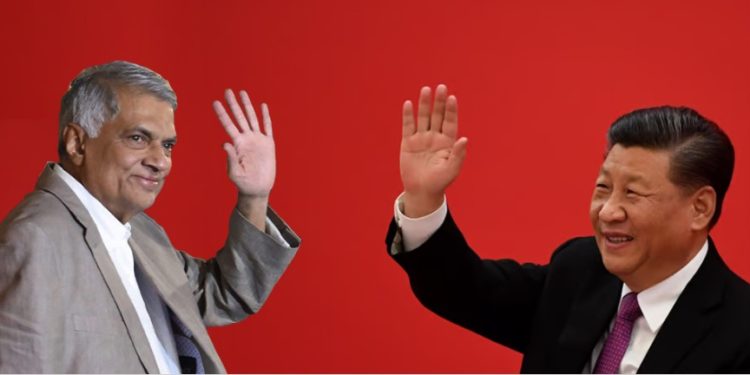
According to a joint statement issued by Sri Lanka and China following the completion of President Ranil Wickremesinghe’s four-day visit, Sri Lanka has once again recognized that the government of the China is the sole legal government representing the whole of China and Taiwan is an inalienable part of China’s territory, and reiterated that it supports the efforts by the Chinese Government to safeguard its sovereignty and territorial integrity, and opposes any form of “Taiwan independence.”

The statement added that Sri Lanka reiterated that it will never allow any separatist activity against China on Sri Lanka’s soil.

Meanwhile, the joint statement noted that the Chinese side reaffirmed its commitment to the principle of amity, sincerity, mutual benefit and inclusiveness and the foreign policy of forging friendship and partnership in the neighbourhood.

It added, China firmly supports Sri Lanka in upholding its independence, sovereignty and territorial integrity, respects and supports Sri Lanka’s independent choice of development path that suits its national conditions.

Posted in Uncategorized

Sri Lanka’s leading Women’s Rights groups and activists demand withdrawal of laws that will “End Democracy”

Women’s Rights Groups and Activists across Sri Lanka on Friday demanded the withdrawal of a range of repressive laws and bills, especially focusing on the draconian Online Safety Bill and the Anti Terrorism Bill which they would result in the “end of democracy and fundamental rights”.

“Both Bills have sweeping provisions to seriously curtail and even violate the freedoms of expression, free speech, right to information, assembly and association. Both present fatal threats to democracy and fundamental rights in this country,” the groups and activists said in a strongly worded statement.

“The government’s intention in passing laws that violate the basic values of democratic governance in our Constitution, shows that they want to change course, and establish a political dictatorship,” the statement said.
The Supreme Court is currently hearing 45 petitions against the Online Safety Bill. The Anti-Terrorism Bill has been gazetted twice, but has not yet been placed before Parliament.

“We call upon the govt to WITHDRAW ALL these bills, and engage in a public conversation with qualified persons and citizens on public policy in these important areas. We call upon ALL Members of Parliament to fulfill the above stated Constitutional mandate and VOTE AGAINST these repressive laws,” the statement said.

Posted in Uncategorized

Sri Lanka assured by advisors that China Exim debt plan is ‘comparable’: Minister

Sri Lanka’s financial advisor for its debt restructuring has assured the island nation’s authorities that China’s debt restructuring plan “is comparable” on the treatment, State Finance Minister Shehan Semasinghe said.

Exim Bank of China has agreed on “key principles and indicative terms” to restructure $4.2 billion in bilateral debt, Sri Lanka said after China’s foreign ministry spokesman said a “tentative” agreement had been reached.

The international Monetary Fund and other creditors are still waiting to see full details.

“We will need some time to handle it,” Semasinghe told EconomyNext when asked if China has given the detailed debt restructuring plan to Sri Lankan authorities.

“But the only thing is Lazard has assured that it is comparable in treatment. That is what the IMF also wants. The treatment to be shared with the other creditors.”

Lazard is the financial advisor for Sri Lanka’s external debt restructuring plan.

When asked if comparability means the equal treatment with the other creditors, Semasinghe said: “The equal treatment and comparability. That is what Lazard has informed us. It is our financial advisors. I cannot speak anything beyond that.”

In addition to Exim Bank loans classified as bilateral debt China Development Bank has also given a 2.0 billion dollar term loan to Sri Lanka and there is another 535 million dollars in loans from the same lender which have been classified as ‘commercial’.

Commercial creditors are usually expected to take haircuts in return for faster payback, while bilateral creditors take long grace periods, extend repayment terms and take coupon cuts to give a net present value to help distressed creditors.

NO HAIRCUT?
Two sources who have the knowledge of the discussions between China and Sri Lanka on restructuring commercial loans have told EconomyNext that Beijing authorities have rejected haircuts. Chinese officials have not commented on a haircut.

“I can’t say anything on that. But the only thing what we can say is that the principle of comparability will be assured by us,” Semasinghe told when asked if China has refused haircuts similar to other commercial creditors including sovereign bondholders.

China has become the key factor in deciding the timing of the completion of Sri Lanka’s external debt restructuring.

The IMF concluded its Staff Level Agreement with Sri Lankan authorities on Thursday, a key step in completing a review and keeping the program on track.

“Sri Lanka and the Export-Import Bank of China and look forward to analyzing the details when we receive them,” an IMF statement said.

“We urge all official creditors to move forward and agree on an appropriate debt treatment in line with the financing assurances they provided.”

“Delays risk worsening the economic outlook for Sri Lanka, widening its financing gaps, hindering its return to sustainable growth, and thereby reducing its capacity to repay.”

The Chinese Finance Minister Liu Kun on Thursday has assured a commitment to “a medium-term and long-term program that is mutually beneficial to both parties and aimed at optimizing Sri Lanka’s debt,” during a meeting with President Ranil Wickremesinghe in Beijing, a statement from his media office said.

Diana Gamage gets hospitalized over alleged assault by SJB MP

State Minister Diana Gamage has been admitted to the Sri Jayewardenepura Hospital following her claims about being assaulted by a male parliamentarian representing the main opposition.

She also filed a complaint with Welikada Police prior to getting hospitalized.

Earlier today, during the parliamentary session, Damage accused Samagi Jana Balawegaya (SJB) MP Sujith Sanjaya Perera of assaulting her outside the Chamber and called for a comprehensive investigation into the matter.

This prompted the temporary adjournment of the session by Deputy Speaker Ajith Rajapakse, at the request of PM Dinesh Gunawardena.

After the session resumed, Chief Opposition Whip SJB MP Lakshman Kiriella said the opposition MPs had met up with Speaker Mahinda Yapa Abeywardena and showed him video footage of Diana Gamage using foul language at an opposition MP and behaving in an unruly manner.

Defending his actions, MP Sujith Perera said he had witnessed Diana Gamage becoming embroiled in a heated argument with his fellow MP Rohana Bandara, and when asked to give it a rest, the state minister had attacked him. The SJB parliamentarian said he only acted in self-defense. “You will be able to see what really happened and how MP Gamage behaved if you check the CCTV footage,” he added.

MP Perera also urged the Deputy Speaker to conduct an impartial investigation into the matter.

Meanwhile, MP Rohana Bandara accused State Minister Gamage of following him and verbally attacking him near the elevator. “We, men, also need to defend ourselves when we are insulted and attacked.”

Following the conclusion of the parliamentary session, the three parliamentarians were involved in an intense war of words, which was videoed by MP Perera on his mobile phone.

David Cameron criticised for role in Chinese-backed project in Sri Lanka

David Cameron is facing criticism for promoting a Chinese-funded port city in Sri lanka amid concerns that it will give Beijing a significant foothold in the Indo-Pacific, The Times reported.

It was revealed that the former prime minister flew to the Middle East in late September to speak at two investment events for Port City Colombo, having visited the site in person this year.

The city is a major part of President Xi’s Belt and Road initiative, China’s global infrastructure strategy, and has been billed as the Chinese-funded rival to Singapore.

Posted in Uncategorized

IMF: Reached Staff-Level agreement on First Review of Sri Lanka’s EFF

The International Monetary Fund (IMF) has reached Staff Level Agreement with the Sri Lankan authorities on economic policies to conclude the first review of the 48-month Extended Fund Facility-supported program, the global lender said.

The conclusion of the review would allow Sri Lanka to access to about US$330 million worth second tranche of the $3 billion deal in financing once the review is approved by IMF Management and IMF Executive Board.

The IMF did not give any detail on the schedule date for the IMF Executive Board meeting to consider the approval.

“Macroeconomic policy reforms are starting to bear fruit and the economy is showing tentative signs of stabilization,” the IMF said in its statement after reaching the Staff Level Agreement.

“Sustaining the reform momentum and addressing governance weaknesses and corruption vulnerabilities are critical to put the economy on a path towards lasting recovery and stable and inclusive growth,” it said.

The global lender also said the completion of the review by the IMF’s Executive Board requires the implementation by the authorities of all prior actions and the completion of financing assurances reviews.

Here is the IMF press release on reaching the staff level agreement:

Washington DC: After constructive discussions with the authorities in Colombo and during the Annual Meetings in Marrakech, IMF Senior Mission Chief for Sri Lanka Mr. Peter Breuer and Deputy Mission Chief Ms. Katsiaryna Svirydzenka issued the following statement:

“The IMF team reached a staff-level agreement with the Sri Lankan authorities on the first review under an economic reform program supported by a 48-month Extended Fund Facility (EFF) arrangement . The arrangement was approved by the IMF Executive Board for a total amount of SDR 2.3 billion (about US$3 billion) on March 20, 2023.

“The staff-level agreement is subject to the approval by IMF management and the IMF Executive Board in the period ahead, contingent on: (i) the implementation by the authorities of all prior actions; (ii) the completion of financing assurances reviews, which will include confirming whether adequate progress has been made with debt restructuring to give confidence that the restructuring will be concluded in a timely manner and in line with the program’s debt targets.

“Upon approval by the IMF Executive Board, Sri Lanka would have access to SDR 254 million (about US$330 million), bringing the total IMF financial support disbursed under the arrangement to SDR 508 million (about US$660 million).

“The authorities remain committed to the ambitious reform agenda under the EFF and their reform efforts have been commendable, including rapid disinflation and a significant fiscal adjustment expected by the end of this year. Program performance at end-June was satisfactory, with all quantitative performance criteria for end-June met, except the one on expenditure arrears. All indicative targets were also met except the one on tax revenues. Most structural benchmarks were either met or implemented with delay by end-September 2023. Notably, the authorities published on time the Governance Diagnostic Report . Sri Lanka is the first country in Asia that has undergone the IMF Governance Diagnostic exercise. Progress is still ongoing on the revenue measures to support the fiscal consolidation during 2024 in line with program parameters.

“The economy is showing tentative signs of stabilization. Inflation is down from a peak of 70 percent in September 2022 to 1.3 percent in September 2023, gross international reserves increased by $1.5 billion during March-June this year, and shortages of essentials have eased. Despite these early signs of stabilization, full economic recovery is not yet assured. Growth momentum remains subdued, with real GDP in the second quarter contracting by 3.1 percent on a year-on-year basis and high-frequency economic indicators continuing to provide mixed signals. Sri Lanka’s external position has weakened as a result of prolonged debt restructuring discussions, and reserve accumulation has slowed in recent months. Agreeing on debt treatments consistent with restoring debt sustainability quickly will be key to resolving uncertainty that is constraining Sri Lankan businesses and external financing.

“Sustaining the reform momentum is of paramount importance in steering the economy towards a sustained recovery and fostering stable, inclusive economic growth. We welcome the authorities’ commitment to increase revenues and signal better governance by adopting needed tax measures, strengthening tax administration, and actively eliminating tax evasion. Maintaining cost recovery in fuel and electricity pricing helps mitigate fiscal risks arising from state-owned enterprises. Further strengthening the social safety net remains critical to protect the poor and the vulnerable. While inflation has decelerated faster than expected, continued monitoring is warranted to help anchor inflationary expectations and support macroeconomic stability. Against continued external uncertainty, it remains important to rebuild external buffers through strong reserves accumulation.

“Following the authorities’ domestic debt operation, the critical next step is to secure an agreement with official creditors on a debt treatment consistent with the IMF Executive Board-approved program parameters and debt targets. We have taken note of a tentative agreement between Sri Lanka and the Export-Import Bank of China and look forward to analyzing the details when we receive them. We urge all official creditors to move forward and agree on an appropriate debt treatment in line with the financing assurances they provided. We understand negotiations between commercial creditors and Sri Lanka are ongoing and emphasize the need to restore debt sustainability in a robust manner. Delays risk worsening the economic outlook for Sri Lanka, widening its financing gaps, hindering its return to sustainable growth, and thereby reducing its capacity to repay.

“The authorities’ commitment to implement key recommendations of the recently published Governance Diagnostic Report is a welcome step. Concrete steps towards addressing corruption risks and strengthening accountability will be essential for rebuilding economic confidence and making growth more robust and inclusive.

“The IMF team held meetings with President and Finance Minister Ranil Wickremesinghe, Central Bank of Sri Lanka Governor Dr. P. Nandalal Weerasinghe, State Minister Shehan Semasinghe, Secretary to the Treasury K M Mahinda Siriwardana, and other senior government and CBSL officials. The IMF team also met with Parliamentarians, representatives from the private sector, civil society organizations, and development partners.

“The team would like to thank the authorities for the excellent collaboration and constructive discussions.”

Posted in Uncategorized

US envoy holds talks with Anura Kumara Dissanayake

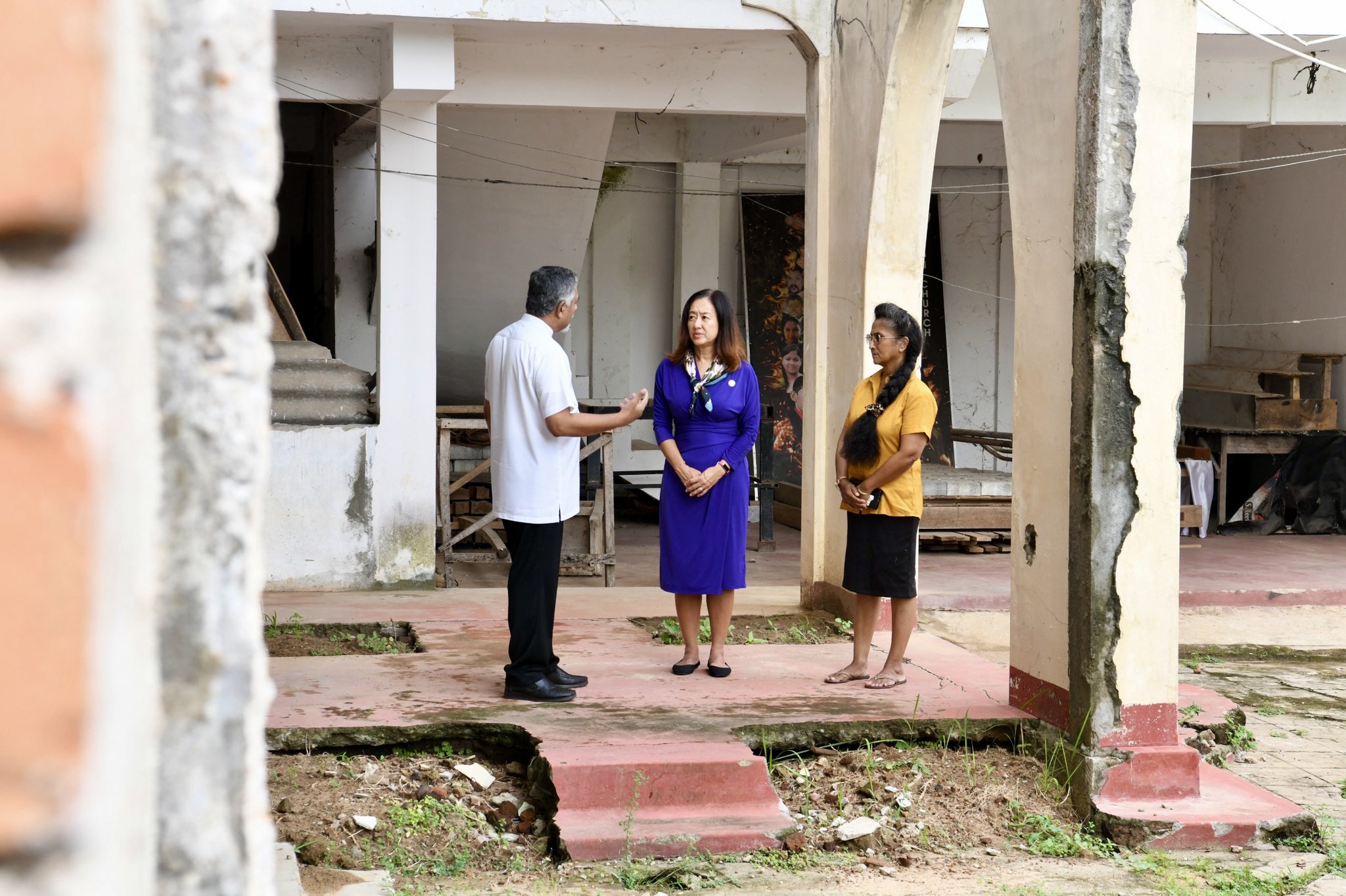
The US Ambassador to Sri Lanka Julie Chung had talks with National People’s Power (NPP) leader Anura Kumara Dissanayake in Colombo today.

The US Ambassador said that they discussed current political and economic issues.

“Important to listen to diverse perspectives and engage with various political parties in a democracy,” the US Ambassador added.

Vijayakala Maheswaran released from case over LTTE comments

The Colombo Magistrate’s Court has ordered the release of former State Minister Vijayakala Maheswaran from the case filed over her alleged statement that the LTTE should be revived, Ada Derana reporter said.

The relevant complaint was taken up for hearing before the Colombo Chief Magistrate Prasanna Alwis this morning (19).

Earlier, the police had informed the court that the Attorney General advised that there were insufficient facts to proceed with the case against the former State Minister.

Maheswaran had also appeared before the courts today, when the Chief Magistrate ordered for her to be released from the case since the Attorney General has decided not to pursue the case against Maheswaran.

Addressing a state event held at Veerasingam Hall in Jaffna on the 2nd of July 2018, the then State Minister of Child Affairs Vijayakala Maheswaran had allegedly stated that the LTTE should be resurrected for the freedom of the Tamil people.

The Organized Crime Prevention Division (OCPD) subsequently commenced investigations into the controversial statement made by the State Minister and she was arrested on October 8th 2018.

However, she was granted bail on a personal bond worth Rs 500,000 on the same day.

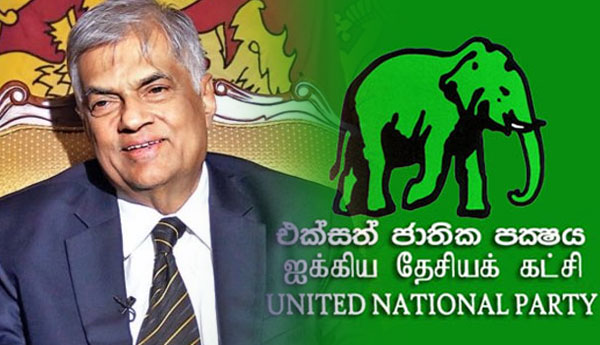
Maheswaran, who is a member of the United National Party (UNP), was also forced to step down as State minister for Child Affairs after her controversial remarks led to an uproar in Parliament.

Tamil parties deny writing to ’Thalapathy Vijay’

Tamil parties in Sri Lanka denied a fake letter purportedly sent by them to Tamil Nadu actor Vijay Chandrasekhar alias ‘Vijay’ asking him to stop the screening of one of his films as otherwise they would not be able to bring people for a mass agitation planned for the same day.

EPRLF chairman and former MP Suresh Premachandran told the Daily Mirror that the signatures of the political leaders of various Tamil parties had been placed fraudulently on this fake letter and circulated on social media, thus misleading the public.

“We have not sent such a letter,” he said.

Posted in Uncategorized

UN experts say Sri Lanka’s counter-terrorism bill fails to heed their recommendations

Sri Lanka’s new proposed counter-terrorism legislation does not go far enough to remedy the defects of the country’s draconian Prevention of Terrorism Act (PTA), UN experts said today, urging the Government to ensure the new law meets international human rights standards.

“For many years, UN experts and multilateral organisations have consistently said that the current Prevention of Terrorism legislation in Sri Lanka is in violation of international law with its vague terminology, its lack of protection for fundamental human rights, and a lack of independent oversight,” the experts said. “It is deeply regrettable that the proposed legislation does not remedy any of these defects,” they said.

The proposed counter-terrorism bill is currently under consideration in the Sri Lankan Parliament. It is intended to replace the country’s existing Prevention of Terrorism Act, which has long been plagued by structural elements that enable the perpetration of torture, arbitrary detention, enforced disappearance, and other human rights violations.

The experts noted long-standing concerns about the misuse of anti-terrorism legislation and sweeping emergency powers, often used to crackdown on political critics, dissidents and human rights defenders in Sri Lanka. Under the PTA, detainees have been held for decades without trial in the country.

The UN experts said they had previously laid out a series of “benchmarks” for counter-terrorism legislation in Sri Lanka to be human rights compliant. These include employing definitions of terrorism that comply with international norms; ensuring precision and legal certainty, especially when this legislation may impact the rights of freedom of expression, opinion, peaceful assembly, association and religion or belief; instituting robust measures to prevent and halt arbitrary deprivation of liberty; ensuring preventive measures are in place to prevent torture and enforced disappearance and adhere to their absolute prohibition; and enabling overarching due process and fair trial guarantees, including judicial oversight and access to legal counsel.

“Regrettably, only limited changes have been made to the expansive definition of terrorism contained in the legislation,” the experts said. “It is worrying to observe new categories of terrorism including acts related to a “place of public use” rather than the much needed pruning of counter-terrorism powers,” they said.

They also expressed concerns about the considerable expansion of police powers in the new legislation, with less judicial oversight of intercepting telecommunications.

They were dismayed by provisions that weaken the legal basis to arrest individuals suspected of or “possibly” engaged in, any offence under the legislation. The experts said the legislation fails to provide sufficient powers to magistrates to prevent torture by ensuring all detainees are moved from places of detention as soon as allegations of torture, inhuman or degrading treatment emerge.

The counter-terrorism bill also limits the right of access to lawyers for persons charged under the law.

“This is a highly regressive step and it disregards the long-documented violations of human rights occurring in Sri Lanka for persons arrested, detained or convicted of terrorism related offences,” the experts said. “These provisions run contrary to a rule of law-based approach to countering terrorism in society and is not an improvement on the status quo,” they said.

They expressed regret that previous proposals for an independent review panel to adjudicate human rights violations while countering terrorism were rejected in the current draft of the legislation.

The experts welcomed Sri Lanka’s recognition that new legislation is necessary and referred to some positive inclusions in the proposed bill, including the express exclusion of opinion, legitimate criticism, satire, parody made in good faith in the definition of “encouragement of terrorism.” They also welcomed the decision to refrain from making offences under this legalisation punishable by death.

“Root and branch reform of Sri Lanka’s counter-terrorism legislation is long overdue. UN human rights experts have provided a roadmap to that end, and we urge the Government to meet the minimum requirements of due process and human rights compliant counter-terrorism legislation they previously identified,” the UN experts said.

They pledged to strongly support the adoption of legislation that is fully compliant with international human rights standards, as set out by the UN experts, and aligns the EU GSP+ scheme.

The group of UN experts include: Fionnuala Ní Aoláin, Special Rapporteur on the promotion and protection of human rights while countering terrorism, Clément Nyaletsossi Voule, Special Rapporteur on the rights to freedom of peaceful assembly and of association, Mary Lawlor, Special Rapporteur on the situation of human rights defenders, Aua Baldé (Chair-Rapporteur), Gabriella Citroni (Vice-Chair), Angkhana Neelapaijit, Grażyna Baranowska, Ana Lorena Delgadillo Pérez, Working Group on enforced or involuntary disappearances; Margaret Satterthwaite, Special Rapporteur on the Independence of Judges and Lawyers; Morris Tidball-Binz Special Rapporteur on extrajudicial, summary or arbitrary executions; Nazila Ghanea,Special Rapporteur on freedom of religion or belief and Irene Khan, Special Rapporteur on the promotion and protection of the right to freedom of opinion and expression