SJB ally welcomes Indo Lanka land link

An Indo Sri Lanka land link will be economically beneficial to Sri Lanka to have cheaper and quicker access to the world’s fifth largest economy, leader of the Tamil Progressive Alliance (TPA), which is an ally of the Samagi Jana Balawegaya (SJB), said yesterday.

“We must agree to it but with a condition that Sri Lanka shall obtain “most favored nation” treatment while by-passing all current trade agreements with India, said TPA leader and Member of Parliament Mano Ganesan. “Sri Lankan products for the Indian market shall obtain “tax free status” similar to the GSP Plus,” he added. “India is booming. We must use our geographical location, the very close proximity to India, to get the best out of it.

Our manufacturers should be able to reach the most sought after powered middle class consumer market, especially of southern India. I have discussed such proposals with President Wickremesinghe when he was our Prime Minister in the previous government.

Later and now with Leader of Opposition Sajith Premadasa and Indian High Commisisoner Bagley. Only those “frog in the well’ phobia jokers will oppose this while creating stories of bogus “dangers”. We are an island but there are hundreds of countries with common borders and some are even land locked, like Afghanistan and Nepal,” he also said.

“The use of the Indian Rupee is a secondary matter. We already use foreign currencies unofficially and officially too,” Ganesan further stressed.

New outlook needed on 13A – Victor Ivan

Senior journalist Victor Ivan has called for all to set aside racial, religious and other differences and implement the 13th amendment to the constitution if the country is to go forward.

Speaking to the media on 26 July, he said that in doing so, India could be a help and a case in point, where its states have had uneven devolution of powers.

That means devolving powers need not be even, he said, adding that as an experiment, the northern province could be given powers and the developments monitored for a few years.

If successful, other provinces too, could get powers, he noted.

“We need to have a new outlook on this. If that happens in a positive manner for the benefit of the minorities, India and other countries will not interfere in our affairs,” he said.

All parties should be involved in the talks on the devolution of powers, while raising public awareness is crucial and a study made how other countries have done it with success.

Ivan said devolving powers does not mean a division of the country, adding that at least now, this should be resolved intelligently.

Posted in Uncategorized

China’s next overseas military base likely a Sri Lankan port – Report

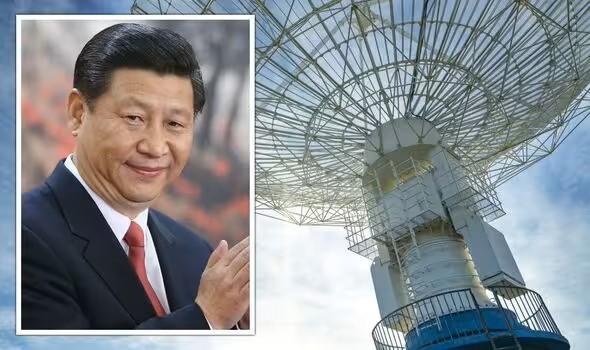
China’s military is most likely to build its second overseas naval base in Sri Lanka, according to a new report that studied where Chinese commercial firms have invested most heavily in establishing harbor and port infrastructure to protect international trade in such things as consumer goods exports and imports of oil, grain, and rare earth metals.

The People’s Liberation Army Navy built its first overseas outpost in Djibouti, East Africa, in 2016, at a cost of $590 million, where up to 2,000 personnel have used the base to stifle piracy of Chinese cargo vessels sailing the waters around the Horn of Africa and the approach to the Suez Canal leading to the Mediterranean and Europe.

Sri Lanka tops this list of eight international ports where China is most likely to land its next overseas military base in a July 2023 report, titled “Harboring Global Ambitions: China’s Ports Footprint and Implications for Future Overseas Naval Bases,” written by researchers at the AidData lab at the College of William & Mary in Virginia.

To come up with the short list, researchers assessed 78 international harbors in 46 countries that are most likely to harbor ships from the PLA Navy’s fleet of approximately 500 vessels, the largest navy in the world.

AidData’s inaugural report of this kind found that Chinese firms spent about $30 billion from 2000 to 2021 to build out the 78 ports assessed.

The report assumes that China will locate its next PLA Navy base by leveraging influence built up by previous investments, as it did when the base in Djibouti was built next to the commercial port of Doraleh, which, until 2018, was part owned and operated by China Merchants Holdings, and was a major hub for livestock transshipment.

Ports assessed in the report were ranked based on their strategic location, harbor depth for naval vessels, political stability in the host country, and the host government’s tendency to vote with China in the UN General Assembly.

Hambantota, Sri Lanka:

Topping the short list in the AidData report is the port of Hambantota in Sri Lanka in the Indian Ocean. China has invested $2.19 billion in Hambantota, more than in any other port, and the government in Colombo agreed to lease majority ownership of the port to a Chinese firm in 2017.

In 2018, China gifted the Sri Lankan navy a frigate and the report notes that Sri Lankan elites and the general public have a favorable opinion of China and the Chinese people.

Western analysts speculate that in addition to Hambantota, the ports at Ream, Cambodia, Gwadar, Pakistan, and Equatorial Guinea’s Bata or Cameroon’s Kribi could host the PLA Navy.

The report’s authors said that they hoped to widen the discussion to include a broader range of possible locations better reflecting China’s ambitions for a global navy. The Pacific island Vanuatu, the port of Nacala in Mozambique, in East Africa, and Nouakchott in Mauritania, in West Africa, round out the short list.

“China has this very ambitious foreign policy, and it has this massive navy, which for sure was not built to hang around in Chinese waters,” Alexander Wooley, one of the report’s authors, told The China Project. “There’s a certain logic that these bases have to come, but China has been very restrained so far. The sheer range of options that China has hasn’t been appreciated as much previously.”

AidData’s report departs from past scholarship on China’s ambitions for overseas naval bases. In 2022, the think tank the RAND Corporation published “China’s Global Basing Ambitions: Defense Implications for the United States,” a report whose authors noted that Hambantota and Gwadar, at the mouth of the Gulf of Oman and called, by some, the crown jewel of Xi Jinping’s Belt and Road Initiative, were likely ports for PLA Navy bases. But, RAND argued, China might opt to build bases where Chinese have yet to invest heavily.

The RAND report concluded that Bangladesh and Myanmar also would make prime candidates for a Chinese naval base, despite the fact that ports in those countries have not seen the same levels of investment from China. Instead of using past investment in ports as a criteria in the analysis, RAND looked instead at Chinese investment in host countries as a whole.

While the AidData report’s data-driven approach was useful in highlighting possibilities that may have been overlooked, Harrison Prétat, the associate director at the Center for Strategic and International Studies’ (CSIS) Asia Maritime Transparency Initiative, told The China Project that political and strategic factors would be the primary drivers of Beijing’s efforts to establish overseas bases.

“I think it’s clear that the scale of Chinese investment is not a direct determinant of whether a given port is likely to be considered for military development or use by China, and that political and strategic factors remain primary,” Prétat said. “The study itself acknowledges that Ream Naval Base in Cambodia, which seems very likely to offer some level of access for China’s navy upon completion of its upgrades, had very little invested in terms of dollar amount.”

For now, China may refrain from building out bases for explicit military use, concluded a 2022 article titled “Pier Competitor: China’s Power Position in Global Ports,” in the journal International Security. The authors noted the challenges and vulnerabilities of building overseas military bases and emphasized China’s capacity to use commercial ports for military logistics and intelligence-gathering.

Getting foreign governments on board with a permanent Chinese military base abroad is also simply a tough sell, said Prétat.

“At the moment, almost no one wants a Chinese naval base on their soil, whether for domestic political concerns or their own strategic hesitations about inviting that level of Chinese presence,” Prétat said. “A deal providing for regular Chinese military access to a commercial port or a country’s own naval facilities is theoretically an easier sell that could accomplish the same goal of allowing more Chinese ships to operate further from China for longer periods.”

Wendy Leutert, one of the authors of the article in International Security and a professor at Indiana University, agreed that China will face challenges in building bases abroad.

“Any moves to develop a large, global base network would invariably face intense international pushback,” Leutert told The China Project. “This makes leveraging commercial port assets for military purposes an attractive alternative in the near term, despite this strategy’s clear limitations in wartime or crisis scenarios.”

A new dataset:

To assess the top eight international ports likely to land a new PLA Navy base, AidData drew on the third edition of its Global Chinese Development Finance Dataset, set to be released in full this fall.

The first-of-its-kind dataset compiles more than 20,000 projects financed by more than 300 Chinese state-owned enterprises from 2000 to 2023, making it the largest dataset of its kind in the world, the AidData report authors said.

“The dataset provides a holistic picture of where these Chinese-funded ports are located,” Wooley said. “The data has lots of detailed information about the actual financial agreements, the geospatial information, the project narrative, etc.

“We were personally and professionally interested in the topic of potential [PLA Navy] bases, as each new rumor in the media seems to galvanize national security types,” he added. “So we decided to see if our data could help us answer the question, or point us in the right direction.”

Source: The China Project

Sri Lanka must either implement 13A or abolish provincial councils: president

Sri Lanka must either retain its provincial councils (PCs) with powers adequately devolved as provided for by the 13th amendment to the constitution or abolish the PC system entirely, President Ranil Wickremesinghe said.

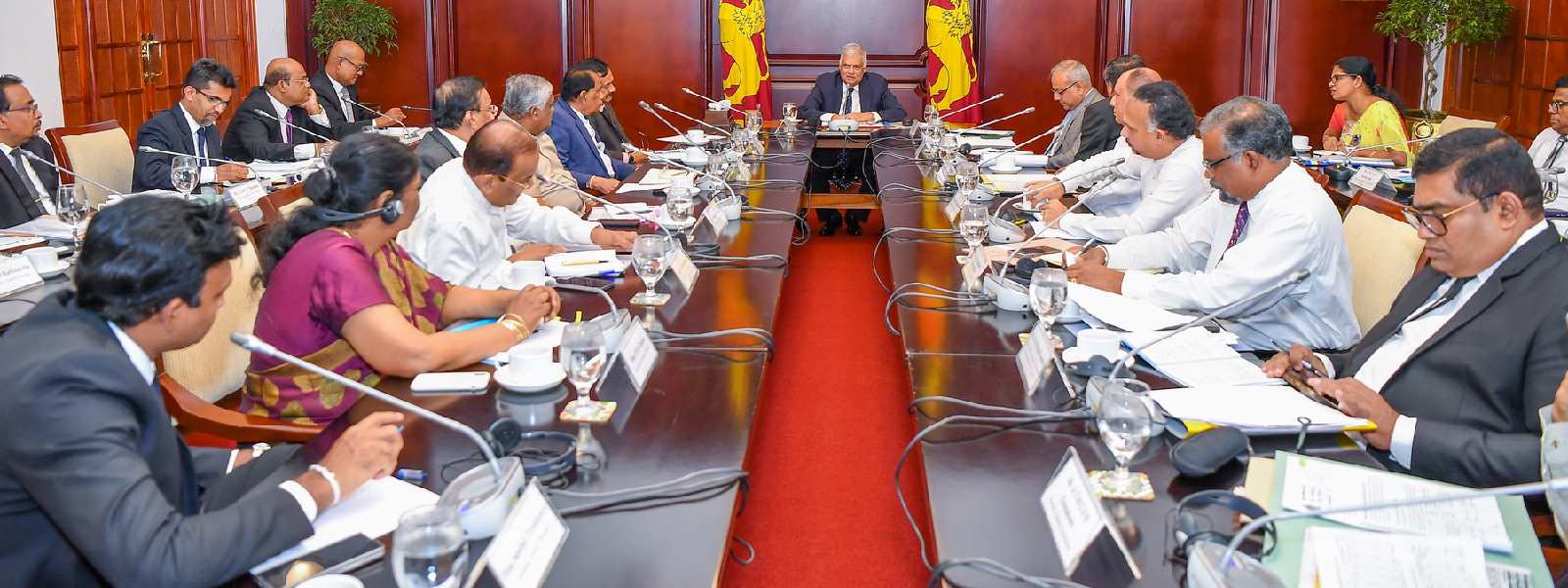
At an all-party conference (APC) called by Wickremesinghe on Wednesday July 26 to discuss the full implementation of the 13th amendment as a solution to Sri Lanka’s decades-long ethnic issue, he said as president he has no authority to pass laws and it is up to parliament to do so.

Citing common criticisms of the PC system, Wickremesinghe said provincial councils drain a lot of state funds as the central government, the PCs and even local government bodies are allocated vast amounts of money for essentially the same.

“It would be great if we can reduce this amount by 25 percent. There is a mix up here. We allocate funds to the government, to the PCs and to the local government bodies to dig ditches when it can be given to just one of them,” said Wickremesinghe.

“It has to be one of the two. We have to either keep the PCs or remove them. All political parties went into elections saying the system must be retained. So I can’t come here and say abolish it,” he said.
The president said when he proposed the full implementation of the 13th amendment, the matter of sharing police powers was raised. The fact of the matter, however, is new police legislation would need to be introduced before police powers are dissolved to the provinces, he said.

“The minister is now formulating that,” he said, presumably referring to either Public Security Minister Tiran Alles or Minister of Justice Wijeyadasa Rajapakshe.

If Sri Lanka is to continue the PC system, said Wickremesinghe, provincial councils must be maintained properly. Given the friction between the councils and the central government, he said, no adequate development activity has been carried out even in the Sinhalese-majority seven provinces either in 10 to 15 years.

“There was more work done when there were district development councils,” he said.

However, noting that provincial councils cannot be abolished just like that as the system is now well entrenched, President Wickremesinghe said he called the all party conference to discuss the full implementation of the India-backed 13th amendment, which resulted in the birth of the PC system in 1987.

“People say this is a white elephant. We must focus and give an answer. Everyone is trying to avoid this issue,” he said.

Chief ministers and opposition leaders in the seven PCs not including the northern and eastern provincial councils, said the president, has submitted a report indicating support for increased power sharing.

“If that’s not good, then they’re all traitors too who want to divide the country,” he said.

“Let’s not play this game, which we have been playing all this time,” he added.

“I have no mandate to bring these laws. It is the parliament that has the mandate to pass laws. All I can do is present them. Let’s speak the truth. Let’s decide whether we want to give this or not.

“If you don’t want this to be implemented, then remove the 13th amendment entirely. You can’t be in two minds about this saying you want this but not that,” he said, adding that the PC system is a “heavy burden” financially.

Another APC will likely be called in one month’s time, prior to which a decision must be reached, said Wickremesinghe.

“Or we’ll make draft bills and present them to parliament,” he said.

Another proposal made, according to the president, is to allow members of parliament to contest for PCs while retaining their parliamentary seat and vice versa.

“If the people want, opposition MPs can become CMs of PCs. They can come to parliament and sit in the opposition as CM. We can go for that too.”

“Like other countries, let’s devolve power to all nine provinces. The work is already done in the other seven. I can’t do this on my own. I have only one vote. You have the ultimate power,” he said.

A statement from the president’s office said on Thursday July 27 that Wickremesinghe had stressed the significance of discussing the 13th amendment with all parties, as it is a matter that affects the entire country, noting that a decision on this matter should involve input from all relevant parties.

The APC was organised to update parliament’s party leaders on the National Reconciliation Program and the North-East Development Plan, the statement said.

Shortcomings in PCs must be addressed, the president was quoted as saying, suggesting that the PCs be granted powers over subjects currently under the central government, including grassroots activities like agriculture and tourism.

The central government should formulate policies for the country, while provincial councils should provide the necessary facilities for the successful implementation of development activities in all fields. Collaboration between all parties and levels of government was crucial for progress and development, he said.

Sri Lanka’s main opposition party and a number of other parties joined the APC while a few smaller parties boycotted the event.

Posted in Uncategorized

Opposition divided on 13A?

Opposition parties expressed different ideas on devolving power to Provincial Councils in the aftermath of the All Party Conference which was held on Wednesday.

Main Opposition Samagi Jana Balawegaya (SJB), TNA and United Republican Front led by Patali Champika Ranawaka called for the holding of Provincial Council elections while MP Venerable Athuraliye Rathana Thera came up with a totally different idea.

SJB General Secretary Ranjith Madduma Bandara said the President should hold the Provincial Council election even under the proportional representation system. “We are ready to support the government on an amendment to the Provincial Council Act so that the election can be held immediately,” he told a media briefing.

MP Ranawaka said the government can hold the Provincial Council election even under a mixed system, if the delimitation issue is resolved within a month. “Also devolving power to Provincial Councils could be done according to the current situation. The need today is to have tamil speaking policemen and not devolving police powers to Provincial Councils. Even Wellawatta police needs tamil speaking policemen,” he said.

Venerable Rathana Thera highlighted that the President has called for the all party conference to fulfill his political ambition. “President seemed to be worried on the next election. All he should do is to present a manifesto which comprises his idea on devolving power,” he said.

Posted in Uncategorized

China’s top option for next naval base is Sri Lanka -bangkokpost.com

BEIJING: Sri Lanka tops the list of nations that may host a Chinese naval base in the coming years as Beijing seeks to expand its maritime capabilities, according to a new report.

The South Asian nation’s Hambantota port is the most likely spot for a base given the US$2.19 billion China has already invested there, according to an assessment by the AidData research project at William & Mary university in Virginia.

Sites in Equatorial Guinea, Pakistan and Cameroon were listed as the next possibilities over the next two to five years.

“China’s single largest port investment anywhere is at Hambantota, and Beijing exercises direct control over the facility,” said AidData, which released the report on Thursday. “Coupled with its strategic location, the popularity of China among elites and the population, and Sri Lanka’s alignment with China in UNGA voting, Hambantota is our top candidate for a future base.”

For years, observers have tried to parse the extent that China uses its economic clout to advance its military ambitions. The Asian nation has the world’s largest navy by number of warships, and its construction and engineering companies are busy building port facilities around the world. It provided loans and grants worth nearly $30 billion from 2000-2021 to build or expand 78 ports in 46 countries, the AidData report said.

Despite frequent speculation about Chinese bases in the works, Beijing has established just one overseas military facility, in the East African nation of Djibouti. AidData said China invested $466 million in the Djibouti facility from 2000-2021, placing it No. 12 on its list.

Still, the Pentagon has raised concern that it was considering more overseas military logistics facilities in locations including Thailand, Indonesia and Pakistan. The United States also identified a military facility in Cambodia that it says will be China’s first overseas base in the Indo-Pacific region, something the government in Phnom Penh has repeatedly denied.

The Defense Ministry in Beijing did not immediately respond to a request for comment about the AidData report.

Commercial imagery company BlackSky said this week that recent photos showed a China-funded naval base in Cambodia has neared completion. The facility includes new piers able to support aircraft carriers.

Leaders in Colombo have said they will not allow the Hambantota port to host any foreign armed forces. A Chinese entity took over the facility in 2017 when Sri Lanka could not repay the loans that helped build it.

AidData also said that China could pursue a base in Gwadar, Pakistan, citing the two nations’ close ties. The report also found a high concentration of Chinese port investments in Africa, ranking Bata, Equatorial Guinea, as the second most likely spot for a naval base after Beijing committed $659 million to a port there.

Posted in Uncategorized

13A should be discussed with all, not just Tamil MPs – President

Sri Lankan President Ranil Wickremesinghe noted that the need for inclusive discussions on the 13th Constitutional Amendment during the All-Party Conference.

President Ranil Wickremesinghe had emphasized that this matter affects the entire country & should be addressed with the participation of all political parties, not just limited to Tamil Party MPs.

The All-Party Conference got underway at the President’s Office in Colombo on Wednesday (26) evening.

The primary aim of the conference is to apprise party leaders representing Parliament about both the National Reconciliation Program & the North & East Development Plan.

The President’s Media Division said that the President emphasized the need to address the existing shortcomings if the Provincial Council system is to be sustained in the future .

Sri Lanka’s political sphere is once again debating the 13th Constitutional Amendment, while people continue to protest citing various issues that have gone unresolved.

Cabinet Spokesperson and Minister Bandula Gunawardena noted that the President had stressed that a decision on the 13th Amendment to the Constitution would be reached only after discussing the matter with the parliament and the party leaders.

The 13th Amendment to the Constitution of Sri Lanka was an outcome of the India-Sri Lanka Peace Accord of July 1987, signed by then Indian Prime Minister Rajiv Gandhi and then Sri Lankan President J.R. Jayawardene.

It was an attempt to resolve Sri Lanka’s ethnic conflict and led to the creation of Provincial Councils.

It assured a power sharing arrangements, and there continues to be a discord over the non provisions of certain powers to the Provincial Councils.

None of the provincial councils in Sri Lanka are in operation, and the powers of these Provincial Councils are exercised by the governors appointed by the President.

The 13th Amendment to the Constitution was a matter discussed during President Ranil Wickremesinghe’s visit to India last week.

President Wickremesinghe said a decision can be reached on the powers if all parties are in agreement.

Following his return to Sri Lanka, President Ranil Wickremesighe called for an all party meeting in Colombo to discuss national reconciliation.

Opposition Leader Sajith Premadasa said he would attend the meeting on behalf of the people, but would not fall prey to political schemes.

Tamil political parties in Sri Lanka are sharing different views over the all-party conference.

Leader of the Tamil National Alliance R. Sampanthan told News 1st that he would attend the meeting on Wednesday (26), however, leader of the Tamil National People’s Front, Gajendrakumar Ponnambalam said he would boycott the meeting.

The Jathika Jana Balavegaya decided to boycott the all-party conference, noting that the President has failed to fulfill the promises made so far with regard to the national issue.

Posted in Uncategorized

Sri Lanka and India in ‘meeting of minds’ over security

Leaders of India and Sri Lanka were on the same page over regional security following President Ranil Wickremesinghe’s latest visit to New Delhi, an official source said amid fears of China’s growing influence in the Indian Ocean region.

Wickremesinghe addressed India’s security concerns over China’s increasing footprint in Sri Lanka and vowed to fast track connectivity between the two Indian Ocean neighbours, the source said.

“The president reiterated his broad assurance that Sri Lankan territory will not be used against India,” the source said. “There is a meeting of the minds on security.”

Wickremesinghe had a one-on-one luncheon meeting Prime Minister Narendra Modi on the last day of his visit, but official sources indicated that they had taken head on the question of Chinese presence.

According to a transcript of Indian Foreign Secretary Vinay Kwatra’s press conference soon after the visit, the top Indian diplomat fielded questions about China’s submarine visits to Colombo in 2014 and another port call by a vessel they consider a spy ship in August last year.

“Sri Lankan side did convey to us their sensitivity and respect for our security and strategic sensitive concerns relating to what happens in our maritime domain,” Kawtra said.

“Our challenges that we face in maritime domain are in many ways shared challenges and both sides will continue to monitor developments, naturally closely consult on issues that have a bearing on the security of both countries and particularly India’s security and concerns of India’s security and sensitivity.”

New Delhi raised concerns when the Chinese vessel, Yuan Wang 5, sought permission to dock at Hambantota in August. The port call by what China calls a “scientific research” vessel went ahead. Sri Lanka responded by asking China not to carry out any “scientific research” while in Sri Lankan waters.

In a clear move to reassure New Delhi, the Sri Lankan government announced on July 18, two days before Wickremesinghe’s visit, a new “standard operating procedure” for future port calls by foreign research vessels and military craft. The government did not give details.

Wickremesinghe had addressed India’s fears about Beijing’s intentions in June too during a visit to France, dismissing speculation about Chinese military bases in Sri Lanka.

“No, we have no military agreements with China,” he told the France24 TV network. “There won’t be any military agreements. I don’t think China enters into one.

“We are a neutral country, but we also emphasise on the fact that we cannot allow Sri Lanka to be used as a base for any threats against India.”

During his talks in Delhi, Wickremesinghe pledged to speed up the ferry service between Nagapattinam in India and Kankesanthurai, in northern Sri Lanka and hopefully start a regular service by November.

The two sides also want to increase the frequencies and airports between the two countries while there is also increased cooperation in the energy sector. An electricity grid connection and a petroleum pipe are being studied.

Tamil aspirations

On Sri Lanka’s ethnic conflict, New Delhi reiterated its call for a political solution that meets the aspirations of the minority community, the official said.

“…India continues to look forward to a political solution that addresses the aspirations of the Tamil community, of course aspirations for equality, justice and self-respect within the framework of united and prosperous Sri Lanka,” Kwatra said.

Prime Minister also clearly expressed India’s belief that a “meaningful devolution of powers and the full implementation of the 13th amendment (to the Sri Lankan constitution) are essential components of addressing and facilitating the reconciliation process in Sri Lanka.”

“This has been our consistent position, and this was put forward during the meeting between the two Leaders,” he added.

Daughter of Sri Lankan immigrants wins Australia’s biggest literary prize

A daughter of Sri Lankan immigrants has won Australia’s biggest literary prize, the Miles Franklin Literary Award.

Australian-Tamil lawyer Shankari Chandran won the $60, 000 prestigious Miles Franklin Literary Award for her novel, “Chai Time at Cinnamon Gardens”.

The award was announced at a ceremony at The Ovolo Hotel in Sydney on Tuesday.

“It’s such an honour to win the Miles Franklin Literary Award, honestly, I’m still in shock. To be recognised among my Australian writing peers in this way is extraordinary. It means so much to me that ‘Chai Time at Cinnamon Gardens’, a novel that explores what it means to ‘be Australian’, has been recognised in this way, ” Chandran said in a statement.

Set in a Western Sydney suburb, the novel follows the lives of residents at an aged care facility run by a Sri Lankan native who fled the country in the eighties to escape civil war.

In the process, it explores themes of war, genocide, racism, family, love, as well as friendship.

Praising Chandran’s novel, the judges said in a joint statement: “It treads carefully on contested historical claims, reminding us that horrors forgotten are horrors bound to be repeated, and that the reclamation and retelling of history cannot be undertaken without listening to the story-tellers amongst us.

“With enormous skill Chandran recounts a solemn history, largely through a cast of squabbling, endearing elders, and invites us to open our hearts and minds: ‘If you read the literature of a country…you will understand it; you will fall in love with it’.”

The 2023 judging panel comprised of author and literary critic, Bernadette Brennan; literary scholar and translator, Mridula Nath Chakraborty; book critic, James Ley; NSW Mitchell Librarian and Chair, Richard Neville; and author and editor, Elfie Shiosaki.

Chandran’s parents, both doctors, fled Sri Lanka as the country stood on the precipice of civil war, first to the UK where the author was born, then to Australia three years later, The Guardian reported.

She grew up in suburban Canberra, in constant dialogue with herself about where she fitted in and the terms under which acceptance was granted, the report said.

Chandran has spent two decades working as a lawyer in the social justice field, on national and international program design and delivery, according to her website bio.

She continues her work in social impact for an Australian national retailer, and is based in Sydney.

Her unpublished political thriller, “Unfinished Business”, will be published as an Audible Original in 2024. (IANS / Colombo Gazette)

Sri Lankan born Tamil Gary Anandasangaree appointed Canadian Minister

Sri Lankan born Tamil MP Gary Anandasangaree has been appointed as a Cabinet Minister in the Canadian Government.

The MP has been appointed as the Minister of Crown-Indigenous Relations.

He was first elected as the Member of Parliament for Scarborough—Rouge Park in 2015. He has previously served as Parliamentary Secretary to the Minister of Justice and Attorney General of Canada, as Parliamentary Secretary to the Minister of Crown-Indigenous Relations, and as Parliamentary Secretary to the Minister of Canadian Heritage and Multiculturalism (Multiculturalism).

Minister Anandasangaree is an internationally recognized human rights lawyer and community activist who has advocated tirelessly for education and justice.

He has served as Chair of the Canadian Tamil Youth Development Centre, President of the Canadian Tamils’ Chamber of Commerce, and counsel to the Canadian Tamil Congress. He was also a board member of the Youth Challenge Fund, a member of the Toronto Police Chief’s Advisory Board, and a member of the United Way Newcomers Grant Program.

Minister Anandasangaree managed his own law firm in Scarborough, Ontario, specializing in business, real estate, and international human rights law. As a passionate advocate for human rights, he regularly represented Lawyers’ Rights Watch Canada at the United Nations. He also served as a strong advocate for local youth, intervening in cases of wrongful student expulsion and suspension.

In honour of his devotion to community service and local advocacy, Minister Anandasangaree has received both the Queen Elizabeth II Golden Jubilee Medal and the Queen Elizabeth II Diamond Jubilee Medal. He also received the Osgoode Hall Law School “One to Watch” Gold Key Award and the South Asian Bar Association’s Young Practitioner Award.

Minister Anandasangaree holds degrees from Carleton University and Osgoode Hall Law School. He is married and has two children, Bairvai and Sahanah.

Posted in Uncategorized