40th Anniversary of Black July: Never Again! -Ceylon Today Editorial

As we mark the solemn 40th anniversary of Black July today (23), we are compelled to reflect on one of the darkest chapters in Sri Lanka’s history.

It all began when Tamil separatists, seeking autonomy in the northern regions of Sri Lanka, escalated their militant attacks. On one fateful day, 13 soldiers who had recently reported for duty were killed by the separatists.

In the aftermath of this brutal attack, Sinhalese mobs targeted Tamils across the country, resulting in a horrifying death toll. These attacks were marked by unspeakable cruelty, with innocent people being burned alive in their cars, and others subjected to heinous acts of violence. One of the most chilling incidents occurred in the country’s largest prison, where Sinhalese inmates targeted their Tamil counterparts, leading to the senseless killing of 53 Tamil prisoners.

The fallout from Black July went far beyond the immediate casualties, as it proved to be a pivotal moment that altered the course of Sri Lanka’s history. Black July served as a powerful recruiting tool for Tamil militant groups, forcing the nation into a full-blown civil war that would last for a staggering three decades.

In 2004, former President Chandrika Kumaratunga publicly apologised to Tamils for Black July. She appointed a commission which concluded that nearly 1,000 people died, and 700,000 were exiled. She acknowledged there might be many more unreported incidents.

This 40th Anniversary of Black July should be a collective call to action, with a commitment to never allow such atrocities. To truly move forward, we must embrace the principles of accountability, acceptance, and reconciliation. For that, we must acknowledge that past mistakes were made, and some acted with impunity. To heal the wounds of the past, we need a genuine commitment. By holding those responsible to account, we send a powerful message that such acts of violence will never be tolerated again. Additionally, we must ensure that reparations are made to those who suffered the most, giving them the opportunity to rebuild their lives and communities.

Further, acceptance is an essential step in the process of reconciliation. We must acknowledge the pain and suffering of the Tamil community during Black July.

Unfortunately, what we can see is whenever injustices faced by minorities are pointed out, many try to suppress it by bringing up the crimes committed by the LTTE against the military and majority Sinhalese and vice versa. This is what the leaders of Sinhala, Tamil, and Muslim communities have been doing for decades. This is not for the benefits of the common people who suffered but for securing the power of so-called leaders.

Now, the Government shows keen interest in introducing the same model of the Truth and Reconciliation Commission (TRC) in South Africa that was established in 1995, following the end of apartheid and the transition to democracy.

The South African TRC had a unique approach, combining elements of both judicial and restorative justice. It provided a forum for victims to share their stories and experiences of human rights abuses and for perpetrators to confess and seek amnesty for their crimes. The commission heard testimonies from victims of gross human rights violations, such as torture, killings, and forced disappearances.

However, if we truly want to establish reconciliation, we must accept the truth of our history, the pains and shames along with the glory.

Moving forward does not mean forgetting; it means learning from the past to build a better future. Our journey towards national reconciliation requires collective efforts from all sections of society. We need to promote dialogue, tolerance, and understanding among diverse communities.

This includes incorporating comprehensive history lessons in schools that acknowledge our nation’s diverse cultural heritage and the importance of coexistence. By teaching the younger generation about the mistakes of the past, we equip them to become champions of peace and harmony.

Let us embrace accountability and acceptance as essential components of a society that values human dignity and unity. By acknowledging the pain of the past and working together towards genuine reconciliation, we can build a nation that is resilient, inclusive, and truly prosperous for every ethnicity in the country. Otherwise, even if we establish hundreds of TRCs in Sri Lanka, they will be mere shows that waste people’s money.

China, SL can cooperate in space science: PM tells China’s top rocket scientist

China and Sri Lanka can cooperate in space science as Southern Sri Lanka has been identified as an area with the lowest gravity in the world and the Southern Ocean is most suitable for the landing of spacecraft, Prime Minister Dinesh Gunawardane said during a meeting with a Chinese high-level delegation at Temple Trees today.

The delegation led by the Chongqing CPC Municipal Committee Secretary Dr. Yuan Jiajun, who is also a member of the Communist Party of China’s (CPC) Central Committee Politbureau called on the Prime Minister at Temple Trees today.

The Prime Minister thanked China for the support in agriculture, industry, education and other fields.

Noting that Dr. Yuan Jiajung is a top rocket scientist, the Prime Minister said the two countries could cooperate in space science as Southern Sri Lanka has been identified as an area with the lowest gravity in the world and the Southern Ocean is most suitable for the landing of spacecraft.

The Prime Minister said Sri Lanka looks forward to China’s support in restructuring its debt at the moment and further strengthening its economy in the near future.

The Prime Minister requested the delegation to share Chongqing’s experience of successfully alleviating poverty and ensuring food security by using hybrid rice and other food crops to increase production by several folds.

Dr. Yuan Jiajun assured that China would extend its fullest cooperation by encouraging large scale investments in the industrial and agricultural spheres. He also agreed to provide experts on hybrid rice varieties and other food crops to Sri Lanka.

“You have vast flat lands all over the country which is suitable for rice and other crops and we will extend assistance to increase the harvests by several folds,” Jiajun said.

Posted in Uncategorized

SL-India land connectivity: Update from India FS

India and Sri Lanka are looking at the possibility of land connectivity between the two nations, Foreign Secretary of India Vinay Mohan Kwatra said on Friday (July 21).

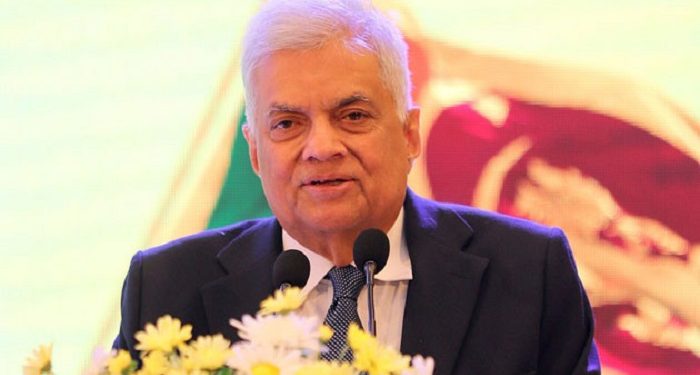
Speaking during a media briefing, Kwatra said the idea of land connectivity was proposed by Sri Lankan President Ranil Wickremesinghe.

“The leaders of both India and Sri Lanka agreed to take this forward and in taking this forward you would have heard Prime Minister Narendra Modi in his Press Remarks say that both sides would carry it forward through an initial feasibility study to look at this land connectivity between the two countries.

This move will help to bring about economic prosperity to both our societies, also help in regional cohesion between the two countries, and can be a source of tremendous bilateral and regional economic prosperity in our region,” Kawatra added.

The Indian Foreign Secretary made the remarks during a media briefing held on the ongoing visit of President Ranil Wickremesinghe to India.

Modi hopes Wickremesinghe will fulfill the aspirations of the Tamils

The Indian Prime Minister has expressed the hope that Sri Lankan President Ranil Wickremesinghe will fulfil the aspirations of the Tamils, implement the 13th. Amendment of the Sri Lankan constitution devolving power to the Provincial Councils and hold Provincial Council elections.

In his address at the talks with the Sri Lankan President, Modi said: “We hope the Government of Sri Lanka will fulfil the aspirations of the Tamils, will drive the process of rebuilding for equality, justice and peace, will fulfil its commitment to implement the Thirteenth Amendment, conduct the Provincial Council Elections and ensure a life of respect and dignity for the Tamil community of Sri Lanka.”

Here is the full text of the Indian Prime Minister’s speech:

Your Excellency, President Ranil Wickremesinghe,

Delegates from both countries,

All media friends,

Hello!

Ayubowan!

Vanakkam!

I warmly welcome President Wickremesinghe and his delegation to India. Today, President Wickremesinghe is completing one year in office. On this occasion, on behalf of all of us, I convey my heartiest greetings to him. The past one year has been full of challenges for the people of Sri Lanka. As a close friend, like always, we stand shoulder to shoulder with the people of Sri Lanka in this hour of crisis. And I heartily congratulate the people of Sri Lanka for the courage with which they faced these challenging circumstances.

Friends,

Our ties are as ancient and extensive as our civilisations. Sri Lanka has an important place in both, India’s “Neighbourhood First” policy and “SAGAR” vision. Today we shared our views on bilateral, regional and international issues. We believe that the security interests and development of India and Sri Lanka are intertwined. And therefore, it is essential that we work together keeping in mind each other’s safety and sensitivities.

Friends,

Today we have adopted a vision document for our Economic Partnership. This vision is to strengthen the Maritime, Air, Energy and people-to-people connectivity between the people of both the countries. The vision is to accelerate mutual cooperation in tourism, power, trade, higher education and skill development. This is the vision – of India’s long-term commitment towards Sri Lanka.

Friends,

We have decided that talks on the Economic and Technological Cooperation Agreement will be started soon. This will open new possibilities of trade and economic cooperation for both the countries.

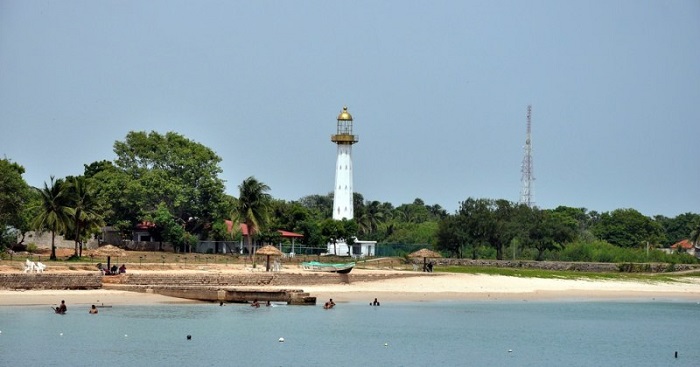
We agreed to enhance air connectivity between India and Sri Lanka. To increase business and the movement of people, it has also been decided to start Passenger Ferry Services between Nagapattinam in Tamil Nadu and Kankesanthurai in Sri Lanka.

We have decided that the work of connecting the electricity grids between the two countries will be expedited. Feasibility study will be done for petroleum pipeline between India and Sri Lanka. Apart from this, it was also decided to check the feasibility of a land bridge. Fintech connectivity will also increase with the agreement signed today to launch UPI in Sri Lanka.

Friends,

Today we also discussed the issues related to the livelihood of fishermen. We agree that we should proceed with a humane approach in this matter. We also talked about reconstruction and reconciliation in Sri Lanka. President Wickremesinghe told me about his inclusive approach.

We hope that the Government of Sri Lanka will fulfil the aspirations of the Tamils. Will drive the process of rebuilding for equality, justice and peace. Will fulfill its commitment to implement the Thirteenth Amendment and conduct the Provincial Council Elections. And will ensure a life of respect and dignity for the Tamil community of Sri Lanka.

Friends,

This year holds special significance for our bilateral relations. We are celebrating the 75th anniversary of our diplomatic relations. Also, the Tamil community of Indian origin is completing 200 years of their arrival in Sri Lanka. I am happy to say, that on this occasion, various projects worth Rs 75 crore will be implemented for Indian origin Tamil citizens of Sri Lanka. In addition, India will also contribute to the development programs in the northern and eastern regions of Sri Lanka.

Excellency,

A stable, secure and prosperous Sri Lanka is not only in India’s interest, but in the interest of the entire Indian Ocean region. I assure once again, that the people of India are with the people of Sri Lanka in this hour of struggle.

Thank you very much.

Posted in Uncategorized

India inks Trinco agreement with President Wickremesinghe

Sri Lanka and India on Friday (21) agreed to further develop Trincomalee as a national and regional hub of industry, energy and economic activity on the basis of mutual understanding

The relevant documents were exchanged in New Delhi in the presence of Sri Lankan President Ranil Wickremesinghe and Indian Prime Minister Narendra Modi at the Hyderabad House.

“The development of Trincomalee as an energy hub with the support of India is a crucial step towards Sri Lanka’s goal to elevate Trincomalee as a hub for industry and other economic activities,” said President Ranil Wickremesinghe on Friday (21) afternoon during a joint press conference with Indian prime Minister Narendra Modi.

Trincomalee was mentioned in several areas in the India-Sri Lanka Economic Partnership Vision that was made public later on Friday (21) evening by the office of the Sri Lankan President.

It related to Maritime connectivity, Air connectivity, Energy and Power connectivity, and People-to-people Connectivity.

Maritime connectivity: To cooperate in development of ports and logistics infrastructure at Colombo, Trincomalee and Kankesanthurai with an aim to consolidate regional logistics and shipping, as per mutual understanding.

Air connectivity: That resumption of flights between Jaffna and Chennai have enhanced people-to-people ties and agreed to further expand it to Colombo as well as explore connectivity between Chennai and Trincomalee, Batticaloa and other destinations in Sri Lanka.

Energy and Power connectivity: Ongoing cooperation in development of Trincomalee Tank Farms is a reflection of to develop mutually beneficial cooperation projects in Trincomalee area, and agreed to further develop Trincomalee as a national and regional hub of industry, energy and economic activity on the basis of mutual understanding.

People-to-people Connectivity: To establish land connectivity between Sri Lanka and India for developing land access to the ports of Trincomalee and Colombo, propelling economic growth and prosperity in both Sri Lanka and India, and further consolidating millennia old relationship between the two countries. A feasibility study for such connectivity will be conducted at an early date.

In addition, Sri Lanka and India have agreed to cooperate for construction of a multi-product petroleum pipeline from Southern part of India to Sri Lanka, and mutually agreed to undertake a joint exploration and production of hydrocarbons in Sri Lanka’s offshore basins.

Posted in Uncategorized

Multi-product petroleum pipeline to be built between India and Sri Lanka

India and Sri Lanka have decided to cooperate towards the establishment of a multi-product petroleum pipeline from the southern part of India to Sri Lanka, in a bid to ensure an affordable and reliable supply of energy resources to Sri Lanka.

President Ranil Wickremesinghe, on Friday (21 July), held bilateral talks with Indian Prime Minister Narendra Modi at the Hyderabad House in New Delhi, during which a wide range of issues was discussed.

Sri Lanka and India also signed five key Memorandums of Understanding (MoUs) on (1) animal husbandry and dairying, (2) cooperation in the field of renewable energy, (3) cooperation for economic development projects in Trincomalee District, (4) Unified Payments Interface (UPI) acceptance in Sri Lanka, and (5) energy permit for Sampur Solar Power Project.

The signed agreements were exchanged in the presence of the Indian PM and the Sri Lankan President.

Accordingly, it was also decided to undertake mutually agreed joint exploration and production of hydrocarbons in Sri Lanka’s offshore basins with an aim to develop Sri Lanka’s upstream petroleum sector.

Meanwhile, in a bid to not only bring down the costs of electricity in Sri Lanka, but also to help create a valuable and dependable source of foreign exchange for the island, the establishment of a high-capacity power grid interconnection between India and Sri Lanka to enable bidirectional electricity trade between Sri Lanka and other regional countries, including the BBIN countries, was discussed.

Speaking with regards to maritime and air relations between the two nations, cooperation towards the development of ports and logistics infrastructure at Colombo, Trincomalee and Kankesanthurai was discussed, with an aim to consolidate regional logistics and shipping, as per mutual understanding.

The resumption of passenger ferry services between Nagapattinam in India and Kankesanthurai in Sri Lanka and Rameshwaram and Talaimannar, and other mutually agreed places, was alos discussed.

When considering the matter of trade and financial connectivity between the two nations, it was agreed to facilitate investments from India in the divestment of Sri Lankan State-owned Enterprises (SOEs), and also in manufacturing and economic zones in various sectors.

The two leaders also discussed people-to-people connectivity between the two nations, and agreed to establish land connectivity between Sri Lanka and India for developing land access to the ports of Trincomalee and Colombo, which would thereby propel economic growth and prosperity in both countries.

Thus both, Prime Minister Modi and President Wickremesinghe directed the respective officials concerned to expedite the realisation of this shared vision.

Posted in Uncategorized

‘Ranil has no moral right to implement 13A’

Claiming that President Ranil Wickremesinghe is enjoying power based on the mandate given by the people to former President Gotabaya Rajapaksa, the ruling Sri Lanka Podujana Peramuna (SLPP) stated that the former has no moral right to implement the 13th Amendment to the Constitution, which was not implemented by all his predecessors from J.R. Jayewardene to Rajapaksa.

During a meeting with Parliamentarians representing the Tamil community on Tuesday (18), Wickremesinghe had said that the 13th Amendment would be implemented with full powers, except for those related to the Police, subject to agreement among political parties in the Parliament.

Speaking to The Daily Morning on the matter, SLPP General Secretary MP and attorney Sagara Kariyawasam said: “Former Presidents Jayewardene, who forcibly introduced the 13th Amendment, Ranasinghe Premadasa and D.B. Wijetunga, both of whom supported it in the Parliament, Chandrika Bandaranaike Kumaratunga who came to power with a strong opinion that power should be decentralised, Mahinda Rajapaksa, and Maithripala Sirisena who came to power with the support of Tamil and Muslim political parties did not implement the 13th Amendment, and Gotabaya Rajapaksa did not do it either. There must have been a serious reason such as via intelligence reports for them to not have implemented it. Therefore, Wickremesinghe should first reveal that reason to the people, and get the intelligence agencies or other relevant authorities to see if that reason is still there.”

He also said that Wickremesinghe is enjoying power that was given by the people to Gotabaya Rajapaksa to strengthen national security, and not to decentralise power. “It is not for the devolution of power that the people gave power to us (the SLPP). When the country was in an unstable situation due to bombings (Easter Sunday terror attacks of 21 April 2019), Gotabaya Rajapaksa pledged to ensure national security and 6.9 million people voted for him, and gave us a two thirds power in the Parliament. So, no one can go against the people’s expectation. That is why we say that Wickremesinghe has no moral right to do this. If he needs, he can call an election and tell the people that he would implement the 13th Amendment. If the people like it, they will bring him to power, and then he can do it. We have informed Wickremesinghe of this.” Speaking further, Kariyawasam said that the SLPP is not a Party that is of the view that power should remain centralised, but that it would however not endorse a move to decentralise power based on nationalities, religions or languages. “We are not against the devolution of power. However, we are against the devolution of power based on nationalities, religions and languages. That is very adverse for a country. Power devolution should be done in a way that is beneficial for all communities and the country. It should be aimed at the progress of the country, and not that of a particular community.”

Wickremesinghe on Tuesday assured the Tamil MPs that the 13th Amendment would be fully implemented, without Police powers, in the Provincial Councils (PCs). However, the Tamil National Alliance (TNA) on the same day “categorically rejected” the President’s offer to implement the 13th Amendment without Police powers, terming the proposal for power devolution, “another hollow promise”.

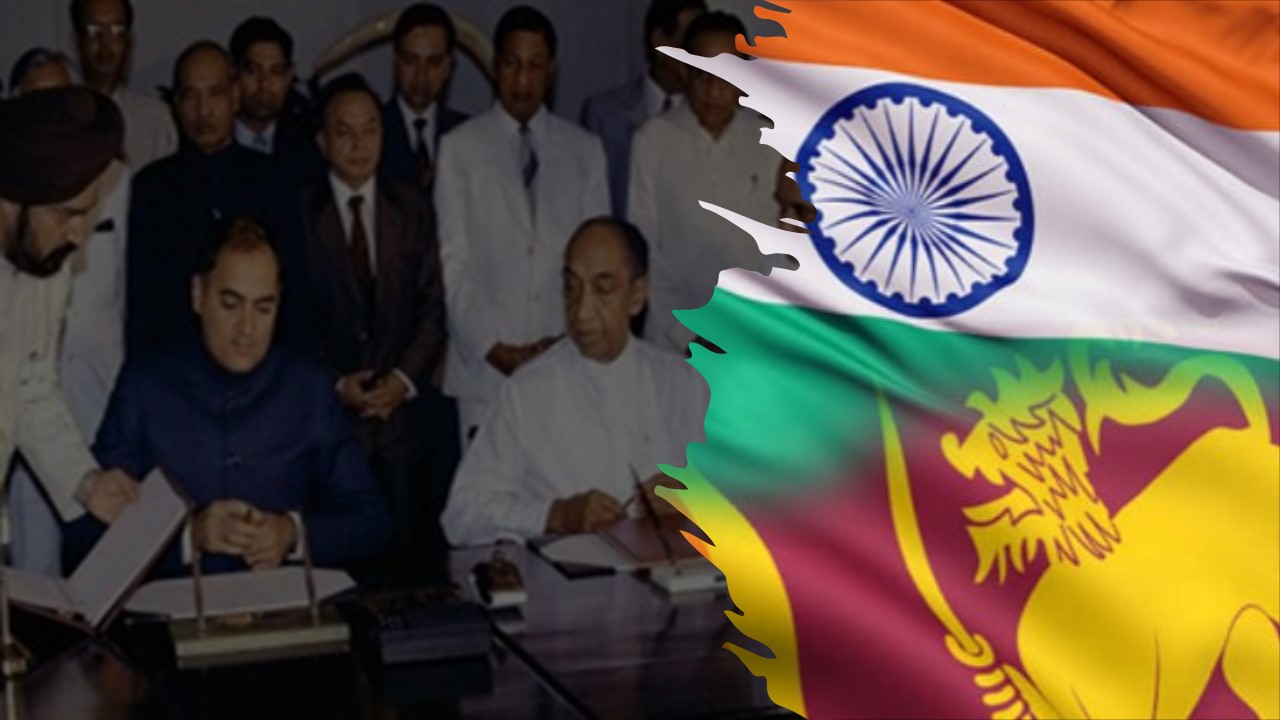
On 29 July 1987, the Indo-Sri Lanka Accord was signed between the then Indian Prime Minister Rajiv Gandhi and Jayewardene which provided for the devolution of powers to the provinces. On 14 November 1987, the Parliament passed the 13th Amendment and the PCs Act, No. 42 of 1987 to establish PCs. The Amendment aims at creating PCs and enabling Sinhalese and Tamil as the national languages while preserving English as the link language.

Indian Foreign Minister hosts President Wickremesinghe

President Ranil Wickremesinghe was hosted by Indian Minister of External Affairs Dr. Subrahmanyam Jaishankar a short while ago.

The Head of State was hosted by Dr. S Jaishankar for a one-on-one meeting, the President’s Media Division (PMD) reported.

President Wickremesinghe departed on an official two-day visit to India this afternoon (20 July), on an invitation from Prime Minister Narendra Modi.

This is his first visit to the neighbouring nation since taking office in 2022.

Sri Lankan President Ranil Wickremesinghe has arrived in New Delhi on a two-day visit to India at the invitation of Prime Minister Narendra Modi.

Minister of State for External Affairs V Muraleedharan received him at the airport this evening.

This is his first visit since assuming the office of President. The visit takes place as both countries celebrate the 75th anniversary of the establishment of diplomatic relations this year.

During the visit, President Wickremesinghe is scheduled to meet President Droupadi Murmu and hold bilateral talks with Prime Minister Narendra Modi on a range of issues of mutual interest.

Import restrictions on over 300 products including vehicle spares to be lifted at midnight

Restrictions imposed on imported goods will be further relaxed later today (July 20), State Minister of Finance Ranjith Siyambalapitiya says.

Thereby, import restrictions on 328 more items will be eased.

The lawmaker said the gazette notification announcing the import restriction relaxation would be published tonight.

The announcement comes a month after the government relaxed import restrictions on 300 other items including electronic equipment, sanitaryware and food items with effect from June 09.

However, import restrictions on vehicles are unlikely to be lifted anytime soon. Speaking on the matter last month, Siyambalapitiya had said vehicle imports could not be allowed yet under the existing economic conditions.

Meanwhile, Sri Lanka Customs recently raised concerns with the Sectoral Oversight Committee (SOC) on National Economic & Physical Plans about reaching its target revenue as the task would prove difficult as long as the import restrictions on vehicles are in place.

Indo-Lankan ties see upswing as Wickremesinghe visits India

Earlier this month, the visiting Indian Foreign Secretary, Vinay Kwatra, proclaimed that India-Sri Lanka ties are poised for a “positive transformation” and that President Ranil Wickremesinghe’s official visit to India from July 20 to 21 will be a “huge success”. Kwatra was not off the mark. Indeed, India-Sri Lanka relations rest on stronger grounds now than ever before.

The pillars of the relationship are both economic and geopolitical.

China, India’s challenger in Sri Lanka, is currently in the backseat having failed to rush to Sri Lanka’s aid when the latter’s economy was down in the dumps with a severe forex shortage leading to a complete inability to repay loans.

India, on the other hand, had promptly extended a credit line of US$ 4.5 billion and rushed food, fuel and medicines to enable the common man to survive the bankruptcy.

While the political and social elite of Sri Lanka looked at the gift horse in the mouth, as they have always done in the case of Indian aid, the man-in-the street did not hesitate to express gratefulness in the true Buddhist spirit. For the first time, India had won over the Lankan hoi polloi, a huge gain in political terms.

India had also taken the initiative to fetch an IMF bailout for Sri Lanka while China was dragging its feet. Beijing was peeved at Colombo’s bid to reach out to the IMF without first seeking Chinese help.

India followed up its initiative by becoming the first bilateral lender to give a financial guarantee as per the IMF’s requirements.

Feeling left out, China came in later to say it will also help. But precious little has come from China thus far.

This, however, does not mean that China is out of the game. Beijing still has a fund of support among the Sri Lankan political and bureaucratic elite because China has a better capacity to fund projects and that on favourable “political” terms compared to India or any other country.

India has some political demands vis-à-vis the Tamil minority, and the US has human rights demands, which Sri Lanka cannot meet easily. But China makes no such demands.

Given these advantages, China is waiting in the wings to enter the Sri Lankan arena at an opportune time, which is when Sri Lanka begins to develop its woefully inadequate infrastructure and Indian and Japanese aid needs to be supplemented.

This casts a heavy responsibility on India, because in the absence of any meaningful economic support from the US, it has to shoulder the burden of funding Sri Lanka’s development. However, India is keen on being the principal benefactor of Sri Lanka as it will give it an advantage over China.

It is in this context that the agreements signed during Wickremesinghe’s visit this week will be of importance.

India is keen on establishing an energy link with Sri Lanka and the development of power generation in the island using renewable energy sources. It is also keen on the development of the Trincomalee port and its hinterland including the further development of the oil tanks there.

India is also keen on improving connectivity with Sri Lanka exploiting its geographical and social proximity. Indians have always been the single largest tourist group in Sri Lanka. Flights connecting the island with India abound and are full.

Unlike in the 1980s, India’s efforts in Sri Lanka now have the full backing of the United States, its new-found strategic partner. Their joint geopolitical aim is to push China to the margins in Sri Lanka.

The US is not a significant player in Sri Lanka’s economy, but its blessings are needed to get the support of the IMF and other international development agencies. Sri Lanka definitely needs Western support to retaining the GSP Plus trade concessions from the European Union. Thanks to the Wickremesinghe government’s good relations with the US and the West, the EU Commission has recommended the continuation of the GSP Plus concessions for another four years. This is a great relief because garment exports, a principal forex earner and employer, heavily depend on the trade concessions.

There is however a pitfall lurking in the path head – the security demands from India and the US.

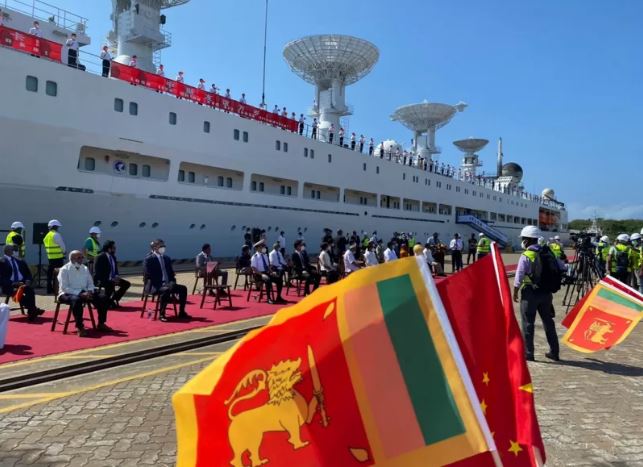
India has clearly indicated that it will be the “security provider” in the region and has portrayed itself and demonstrated that it is also the “first responder” in any emergency. New Delhi is wary about any moves by Beijing that smacks of military ambitions. India has been suspicious about the visits of Chinese submarines and research vessels that could gather dual use data.

India is also wary about Chinese moves to get a foothold in the Tamil-speaking Northern and Eastern provinces in Sri Lanka, areas that have strategic importance for it.

China’s efforts to set up power plants in the islands off the Northern peninsula were thwarted by India. To secure its hold over the Eastern provinces, where Trincomalee is located, it got the pro-Chinese Governor Anuradha Yahampath replaced by Senthil Thondaman, a pro-India Tamil politician of Indian origin. Thondaman is actively seeking investments from Tamil Nadu.

While Sri Lanka may view the strategic demands from India as unavoidable and legitimate (it is frequently and publicly acknowledged by Sri Lankan leaders) it is wary about US demands.

Sri Lanka fears that if the US’s strategic demands are met, they would amount to showing the red rag to the Chinese bull. Sri Lanka dreads the prospect of becoming a theatre of an US-China armed conflict, like Ukraine.

It is believed that the US is aiming at signing the Status of Forces Agreement (SOFA) with Sri Lanka. SOFA envisages the following concessions to the US by Sri Lanka.

According to Sunday Times, a draft presented in August 2019 contained the following:

American security forces and civilian personnel of the US Department of Defence (DoD), as well as US contractors and their non-Sri Lankan employees “who may be temporarily present in Sri Lanka in connection with ship visits, training, exercises, humanitarian activities, and other activities” will have “privileges, exemptions, and immunities” equivalent to those accorded to administrative and technical staff of a diplomatic mission.

They would be “authorized to wear uniforms while performing official duties and to carry arms while on duty.” US identification would be sufficient for their entry into and exit from Sri Lanka; that is, they would not need a Sri Lankan visa to enter the country.

US vessels, vehicles, and aircraft would be allowed to “exit and move freely within the territory of Sri Lanka” and be “free from boarding and inspection” by Sri Lankan security personnel. The United States also wanted exemption from licenses, customs duties, taxes, and other charges within Sri Lanka.

This proposal was rejected because it was a political hot potato. If the US tries to push it now as part of its Indo-Pacific strategy it will be rejected again for the same reason. Wickremesinghe plans to stand for the Presidency in the elections due next year and may not want to alienate the nationalistic Sinhala majority.

Though India may not oppose the American bid for SOFA openly, it will not pressurize Colombo to accept it being cognizant of its political compulsions. Thus, India will be able to maintain its strategic pre-eminence in Sri Lanka.

Source:By P.K.Balachandran Counterpoint

Posted in Uncategorized