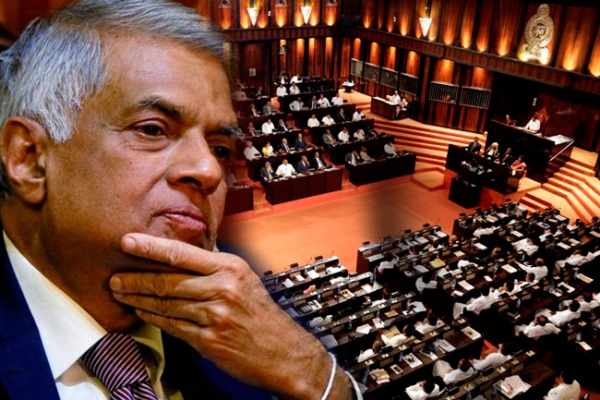
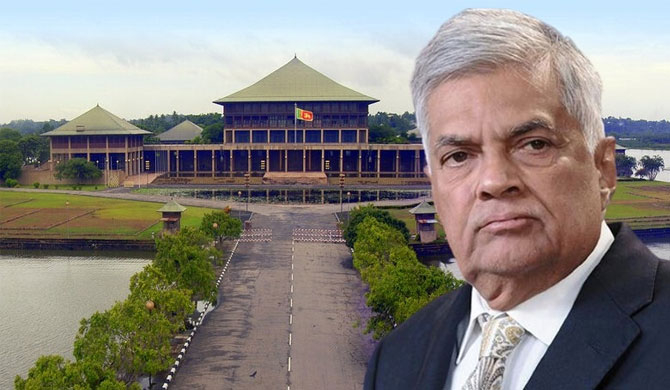
(PMD) Following the revision of laws pertaining to Provincial Councils and the implementation of new legislation, should the Parliament endorse the amending the Provincial Council Voting Act, which includes voting based on the District Proportional System and allows Members of Parliament the right to contest in Provincial Councils, with a minimum of 25% female representation, President Ranil Wickremesinghe noted that once discussions have been held and consensus reached regarding the proposed increase in the number of female representation, measures will be undertaken to conduct provincial council elections.
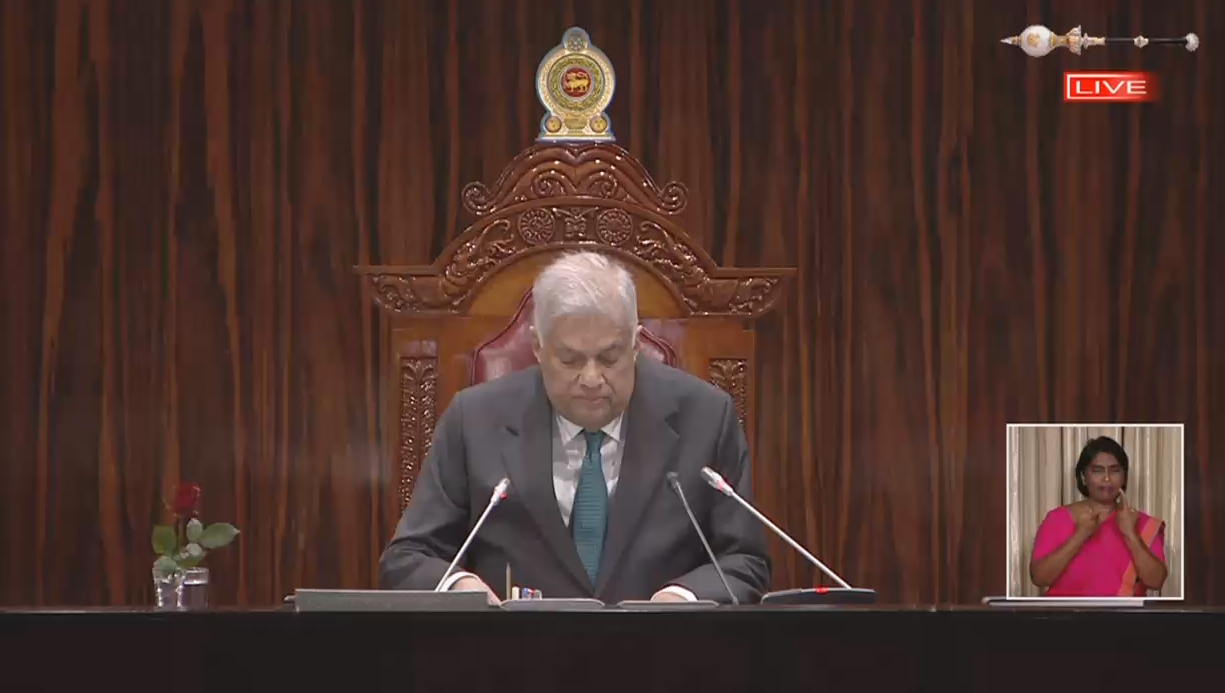
The President made this declaration today (09) during a special statement in the Parliament, wherein he presented his suggestions and forthcoming actions concerning the 13th amendment of the Constitution and the delineation of powers. He confirmed that the establishment of a committee, headed by the Prime Minister, will be pursued to re-evaluate the powers assigned to the central government, the functions assigned to provincial councils, and the shared responsibilities stipulated in the constitution. The resulting amendments will be proposed, garnering the support of all parliamentary factions.
Furthermore, President Ranil Wickremesinghe highlighted the intent to establish an advisory council to offer guidance to provincial governors until the operationalization of the provincial councils. Noting the entrenched role of Provincial Councils within the governance structure and political landscape of the country, the President emphasized the opportunity to effect a substantial transformation in constructing an effective, transparent, and corruption-free Provincial Council system that commands public trust and addresses citizen concerns.
President Ranil Wickremesinghe acknowledged the challenges in reaching consensus, particularly with sensitive matters like police powers during the devolution of authority to Provincial Councils under the 13th Amendment. He underscored the importance of unity in executing these initiatives.
Following is the full speech delivered by President Ranil Wickremesinghe;
The provincial council system was introduced in 1987 through the 13th Amendment to the constitution. This system has been operational in our country for 36 years. Nevertheless, numerous issues surround the implementation of the 13th Amendment, as well as the functioning of provincial councils.
If our nation is to progress, these problems must be addressed. The 13th Amendment needs to be implemented in a manner that aligns with our country’s development and future. This can only be achieved if all parliament members come to a consensus after thorough and open-minded discussions. To facilitate this, we recently organized an all-party conference, which saw participation from representatives of various political parties, for which I am appreciative.
However, during the conference, we couldn’t arrive at a comprehensive agreement on power devolution. Divergent perspectives on a specific national decentralization program were evident. It became apparent that certain political parties were hesitant to share their ideas, possibly due to past negative experiences from prior all-party conferences.
It’s time to change this situation. We should shift away from the convention of viewing the opposition’s role solely as criticizing the government’s actions. Let’s also abstain from making decisions without considering opposition viewpoints. We must act with assurance and accountability. Our country’s progress hinges on collective advancement along a new path. Let’s work towards establishing this new approach.
I want to reiterate a point I consistently emphasize: instead of dwelling on the past, let’s focus on the future. Yes, we’ve encountered challenges in the past, but let’s refrain from debating them and instead concentrate on envisioning the country’s future. With genuine intentions, let’s unite and make joint decisions that consider the nation’s future.
Have we achieved success in implementing the provincial councils through the 13th Amendment over the past 36 years? Or has it been a failure? What factors have contributed to either outcome? Let’s engage in a discussion on this matter. Let’s delve deeper, examine new global trends, and explore cases worldwide.
In our region, notable examples from countries such as India and China, as well as in the Western world including the United States of America and Canada, reveal instances of successful power devolution. Even smaller countries like the United Kingdom, Netherlands, and Japan have adopted devolution.
For instance, let’s consider China, where ethnic minorities account for less than 9 percent of the population. Despite this, China has granted autonomous powers to these minorities through various administrative entities such as zones, county (korale), and cities.
We must explore cases from different nations where national policies have effectively decentralized power. By learning from these experiences, we can identify a suitable system for our own country.
Our annual expenditure on provincial councils amounts to around Rs. 550 billion. Have these councils justified this investment? Has this substantial funding truly benefited the populace? This is a crucial aspect that deserves attention. We spend LKR 22,000 for each person every year. We are spending LKR 22,000 that could be spent on our students for provincial councils. That is LKR 88,000 that could be spent on a family of four. Are we getting benefits from it?
The division of power and authority between provincial councils, central government, and local governing bodies lacks clarity. Consequently, subjects overlap between provincial councils and the central government, resulting in duplication of efforts and delayed actions. Instead of resolving people’s issues, problems are escalating due to these inefficiencies.
Some individuals in our nation label provincial councils as “white elephants” due to these challenges. Yet, amid these limitations, provincial councils have significantly influenced Sri Lanka’s political trajectory. They have nurtured skilled political leaders and served as stepping stones to executive and parliamentary roles. Throughout history, numerous individuals who embarked on their political journey as provincial council members ascended to positions of power like the executive presidency, premiership, cabinet membership, and other significant roles. Many of the Ministers currently seated in this House have traversed a path from provincial council members to Chief Ministers and beyond.
During the inception of provincial councils, certain political parties expressed opposition. Some parties chose democratic protests, while others resorted to undemocratic means to voice their dissent. Tragically, this period witnessed loss of lives and destruction of national assets. Nonetheless, those days belong to the past. Notably, none of the parliamentary political parties advocate for the abolition of provincial councils. Representatives from all these parties have engaged with and been part of provincial councils.
An additional aspect demands our attention here. The devolution of power within provincial councils is governed by the 13th Constitutional Amendment, which holds the status of the highest law of our nation. We cannot afford to disregard it. Both the executive and the legislature are obligated to execute its provisions.
Today, I present my proposals and forthcoming actions concerning the 13th Amendment and the devolution of powers to this esteemed House. I urge a thorough examination of these suggestions. I invite you to contribute your ideas as well. Taking all these viewpoints into careful consideration, the responsibility of arriving at the final decision regarding the role and future of provincial councils rests solely with this honourable council.
What characterizes modern democracies? The establishment of decentralized governance as opposed to devolution. Devolution of power serves to bring political, economic, social, and cultural matters closer to the people. This goal is pursued using diverse methods in different nations across the globe. Decentralization is recognized as a pathway to achieving a form of direct democracy.
While no governmental system can fully transition to a direct democracy where all citizens gather to make decisions, it’s feasible to construct an institutional framework that facilitates people’s participation and their expression of will in political, economic, and social processes. The provincial council system serves as one such framework that brings power to the people.
Furthermore, we’ve recently initiated several other strategies to empower the populace. We’ve bolstered sectoral committees and fostered youth involvement for this purpose. Concurrently, efforts are underway to establish public assemblies, aiming to involve citizens in grassroots governance. The Janasabha Secretariat has been launched, and once model assemblies are established, we’ll advance the Assembly Act.
In light of these advancements, I believe our focus should be on devising methods and strategies to further empower the people through provincial councils. By doing so, we can transform provincial councils into institutions that safeguard national unity.
In recent years, numerous committees associated with the Parliament have produced several documents that thoroughly examine the subject of provincial councils and their prospective trajectory. Among these documents is the interim report released on September 21, 2017, by the Steering Committee of the Constitutional Council of Sri Lanka, under my leadership. Importantly, all parties represented within the Parliament endorsed the recommendations outlined in this interim report.
The interim report offers recommendations concerning amendments to Articles 3, 4, and 5 of the Constitution. We now bring forward these proposed constitutional amendments for consideration by the Parliament.
The report also outlines the following points for implementation:
1. Ensuring the participation of provincial councils in the formulation of national policies concerning matters within the provincial list.
In formulating National Policy on matters contained in the Provincial List the Central Government shall adopt a participatory process with the Provincial Council;
2. No transfer of decentralized powers to the Central Government through the creation of national policies related to topics within the Provincial List, nor any impact on the executive and administrative powers under the jurisdiction of the Provincial Council.
Formulation of National Policy on a Provincial List matter would not have the effect of the Centre taking over executive or administrative powers with regard to the implementation of the said devolved power;
3. The executive and administrative powers required to enact the decentralized subject will remain under the jurisdiction of the Provincial Councils.
The Province will retain the executive or administrative powers (implementation powers) with regard to the said devolved power;
I will present the above proposals to parliament as constitutional amendments so the House could take it forward for necessary action.
In response to the interim report, several parties including Sri Lanka Freedom Party, Janatha Vimukti Peramuna, Tamil United Liberation Front, Jathika Hela Urumaya, United Opposition, All Ceylon Muslim Congress, All Ceylon People’s Congress, Eelam People’s Democratic Party, Sri Lanka Muslim Congress, Tamil Progressive Party of Mr. Douglas Devananda, and President’s Counsel Mr. Jayampathi Wickramaratne presented documents. This aspect should also be duly noted.
Furthermore, attention should be directed towards the report from the committee established to examine the relationship between the Parliament and the Provincial Councils, as well as the report from the Sub-Committee on Centre Periphery Relations.
Through these documents, the provincial council system is affirmed as an institutional framework that cannot be excluded from our governance system. Even parties like the Janatha Vimukthi Peramuna and Jathika Hela Urumaya, which do not view provincial councils as a solution to ethnic conflicts or as units of decentralization, have acknowledged the need for specific amendments within the provincial council system and its unchanged aspects.
This reinforces the notion that the provincial council has become an enduring component that cannot be excised from Sri Lanka’s governmental structure or political landscape.
If we can achieve a consensus that garners everyone’s approval, we’ll have the opportunity to safeguard our national identity, unite as a single nation, and decentralize the country’s power, making it more accessible to the people. It’s important to note that provincial councils were established not exclusively in the Northern and Eastern provinces but across all nine provinces.
National unity is upheld by steering provincial councils in the right direction. Simultaneously, it can be confirmed as a more efficient and service-oriented organizational system. It presents a chance to decentralize power, bringing governance closer to the general populace. Therefore, our primary aim should be to develop the provincial council system as an institution that aligns with public needs, caters to public requirements, and contributes to national development.
To pave the way for this, I propose introducing several bills to the Parliament and implementing a series of new measures:
Appointment of Divisional Secretaries
Granting Authority to Provincial Councils for Education-related Services This involves exercising all powers related to school education listed in Schedule 3 of the Provincial Council List.
Establishment of Provincial Boards for Vocational and Technical Training Services
Empowerment of Provincial Councils to Establish Universities
Authorization for Provincial Councils to Provide Grassroots Agricultural Innovation and Services
Creation of Provincial Tourism Promotion Boards
Amendment to the Industries Act to Increase the Limit For industries of national importance, the limit will be raised from Rs. 4 million to Rs. 250 million. If this Parliament agrees, we’re ready to elevate it to Rs. 500 million.
Correction of Errors in Delegated Functions to Provincial Councils
Establishment of District Development Councils in Accordance with the 13th Constitutional Amendment Develop a three-year development plan for each provincial council in alignment with central government national policies. Integrate central government development programs into this plan, customized to each jurisdiction. Execute this three-year plan via District Development Councils and entrust its implementation to Provincial Councils.
Additionally, formulate a legal framework wherein Members of Parliament, Members of Provincial Councils, and Members of Local Government Bodies representing each district can collaborate effectively in this endeavour.
We are currently in the process of establishing a committee, led by the Prime Minister, tasked with re-evaluating the list of powers held by the central government, the provincial council powers, and the concurrent list outlined in the constitution. The objective is to propose necessary amendments. We are actively seeking the support of all parties represented in the Parliament for this initiative.
The Provincial Council Act No. 42 of 1987 lacks precise definitions regarding the responsibilities of provincial council ministers, their secretaries, and other officials. As a result, misunderstandings, issues, and confusion can arise. To address this, amendments should be made to the Provincial Council Act, specifying their powers.
Following the revision of these laws concerning Provincial Councils and the enactment of new laws, subject to the Parliament’s agreement, we are prepared to amend the Provincial Council Elections Act.
Presently, three proposals have been submitted in this context:
Adoption of the District Proportional System for Voting
Allowing Members of Parliament to contest in provincial council elections
Raising the representation of women to 25% or higher
Efforts will be made to facilitate discussions, reach consensus, and proceed with the provincial council vote based on these proposals.
Our primary focus centers on establishing an advisory council to guide provincial governors until the provincial councils are fully operational. As members of this Advisory Council, we recommend appointing the Chairman or Chief of the Provincial Supervisory Committee, District Development Committee Chairman, and Members of Parliament representing political parties within the province.
Furthermore, we propose the establishment of a separate committee for legislative purposes. This committee would ensure that draft laws receive endorsement from the advisory committee before being enacted into law.
This Advisory Council would be co-chaired by the Governor and a nominated Member of Parliament from the respective province. The governor would oversee executive matters, while the Member of Parliament would preside over legislative affairs.
Currently, there are 45 functioning Provincial Council Ministries. Oversight committees can be established for these ministries, with parliamentarians who have no other responsibilities being appointed as their heads.
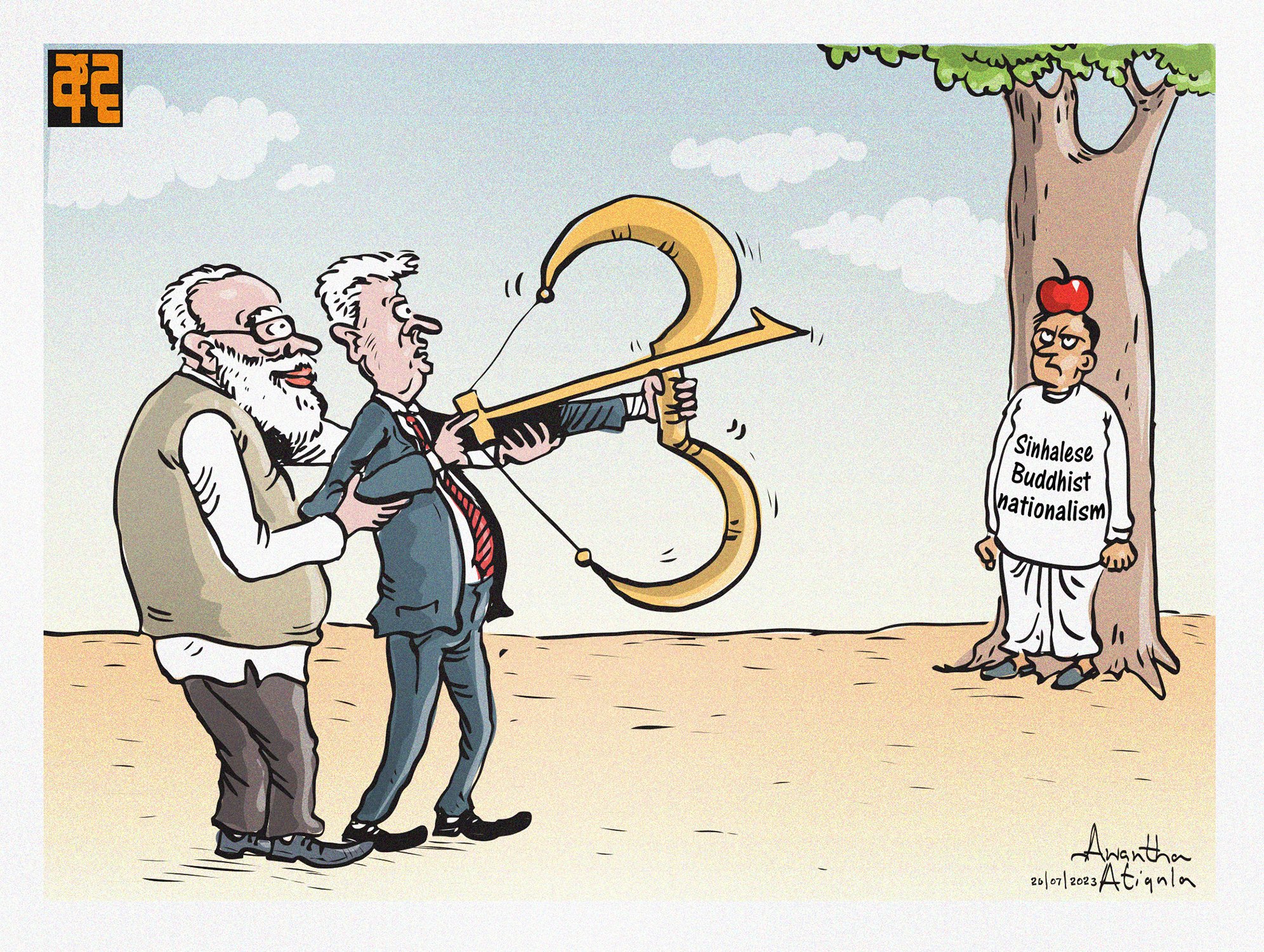
Under the 13th Amendment, police powers have emerged as the most delicate issue in the transfer of authority to the Provincial Councils. As a result, I propose that it might be more practical for us to initially focus on reaching consensus concerning other powers. It’s advisable to progress step by step. Prioritizing sensitive matters could potentially hinder the attainment of any mutual agreement. Instead of commencing with the end in mind, let’s initiate from the beginning.
Hence, let’s initiate discussions about the decentralization of other powers and work towards a shared understanding. Additionally, we can draw insights from the Chief Ministers of the South’s report on power decentralization there.
Our approach should be guided by mutual agreement. Let’s emphasize that this Parliament possesses the strength and wisdom required to collaboratively make decisions that will shape the nation’s future.
Hon Speaker,
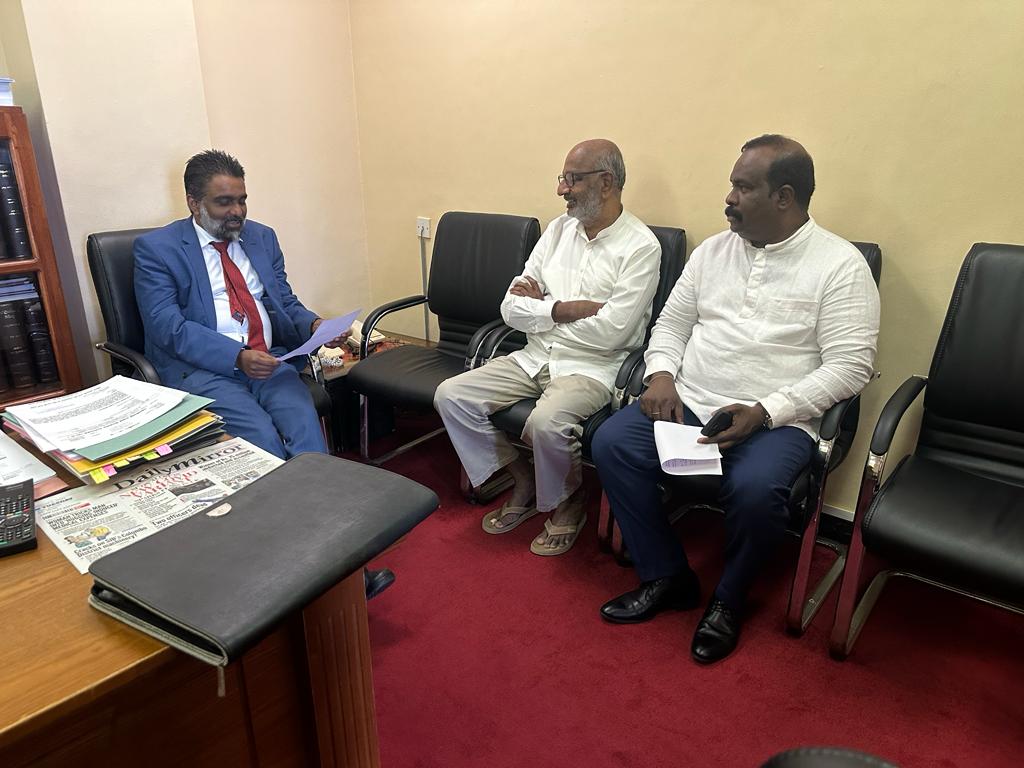
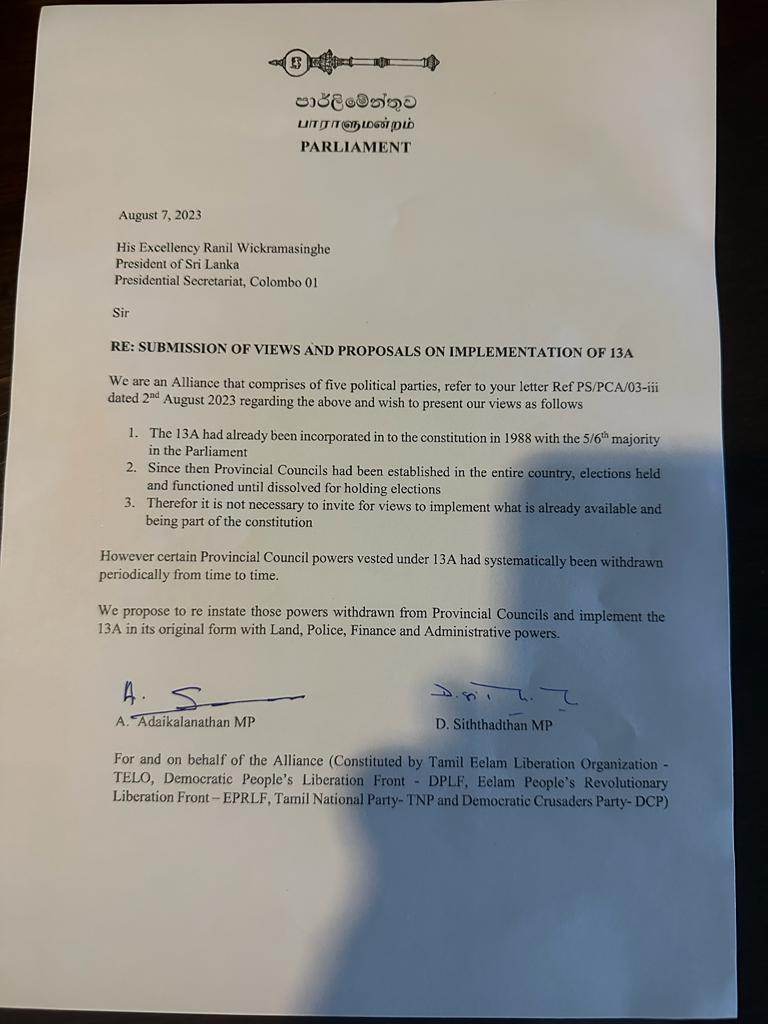
It is my sincere intention to progress without any political motivation, addressing the issues faced by the Tamil people in the North and East, in order to secure a much needed sustainable national reconciliation in the country. Reconciliation undoubtedly is an indispensable factor for Sri Lanka’s own development. My recent meeting with the Tamil Parliamentarians representing the Northern and Eastern provinces, was premised on this aspect. Subsequent to this meeting, I believe it is important to keep the Members of this august House informed of the matters discussed, as it forms the basis of the proposed trajectory, the Government would seek to pursue in this regard.
In this context, continued action on the relevant issues are envisioned to contribute towards national reconciliation, which I will now seek to outline:
a. Anti-Terrorism Bill
Following the discussions of the suggested amendments to the Bill, it would be presented to the Cabinet for approval. Subsequent to appropriate action the Bill will be re-gazetted And any person can then petition the Supreme Court and the SC will have the last say with regards to the provisions of the bill.
b. Anti- Corruption Bill
I am pleased that the Anti- Corruption Bill was passed in Parliament last month with amendments proposed by the Supreme Court in its determination and other stakeholders, but without a vote. It has already been gazetted.
c. Truth Seeking Mechanism and the Bill
The Interim Secretariat for the Truth Seeking Mechanism has been established and a Director General been appointed. In addition three Divisions have been established covering Legal and Policy, Public Relations and Information Technology.
Applications have been sought for key staff positions for the operationalization of the Secretariat, particularly for stakeholder consultations, preparations of drafting guidelines and policies, until the formal mechanisms could commence following relevant laws being enacted. Civil Society Stakeholder consultations including the UN agencies are continuing, and when exhausted, Cabinet approval will be sought and processed, to become a legal framework.
d. Office for the National Unity and Reconciliation (ONUR) Bill
ONUR draft law has been submitted to the Attorney-General for the certification of constitutionality, which will subsequently be presented to Parliament. Additionally, the National Action Plan on Reconciliation drafted by ONUR will be presented to the Cabinet in the near future.
e. Office for Reparations
At present payments of monetary relief have been granted for 203 cases of missing persons from the North East Conflict amounting to Rs. 40.6 million as at July 2023. The process is continuing.
f. Office of Missing Persons (OMP)
I reiterate the need to uphold justice for the people of the North and East. Of the 21,374 complaints received by the OMP, investigations into 3,462 cases have been completed at present. Investigations are progressing for the remaining complaints, and this process could get accelerated following the Truth Seeking Mechanism being fully operationalized. It would now be appropriate for those seeking particulars of missing persons to submit detailed information to the Interim Secretariat. I table the document containing the relevant information (Annex
1)
OMP has commenced tracking missing persons. Further, action is being taken to expedite the data entering process in order for its completion within three months. The issuance of the Certificate of Absence (COA) is being expedited. OMP and the AG’s Department are working on a Case Handling Policy, and have drafted guidelines focusing on effective management of complaints to the previous Commissions and the OMP. Endorsement for the guidelines will be sought from the Cabinet. Further OMP with 10 new panels totaling 24, are expected to be in operation from August, and has planned to have a resource team per district for referral services.
Members of Parliament are free to take up relevant issues with the Offices of Reparations and Missing Persons. The OMP has already outlined its time frames in relation to their scope of work.
g. Granting Presidential Pardon to Prisoners involved in LTTE Activities
Prisoners are under the three categories of remand prisoners numbering 21, prisoners imposed with death sentence 3 and those imposed with other sentences 22. It has been decided to consider only the last two categories of prisoners for being granted Presidential Pardon in terms of Article 34(1) of the Constitution. In this context, considering the recommendations of the Hon. Minister of Justice, Prison Affairs and Constitutional Reforms, Presidential approval has been granted to remit the balance sentences and release 11 of the prisoners under the last category.
h. Establishment of National Land Commission
Steps are being taken to expedite the establishment of the National Land Commission (NLC) and a National Land Policy. A draft NLC law has been prepared and is being further studied for formulating a policy pertaining to the alienation of State land. A Land Commission Policy Act is also expected to be in place by September for the NLC to be guided in their functions. The composition of the NLC would be amended to include 9 representatives from the Provinces and 12 government officials.
i. Resolution on Land Matters
It may be recalled that an injunction order had been obtained from the Supreme Court in 2020 on the release of residual forest lands by a Special Committee. Subsequently following discussions in May this year the possibility of demarcating forests and wild life conservation areas based on the 1985 land used maps were requested to be examined. Consequently, a Cabinet memorandum on this issue was submitted and approval was obtained to enforce the release of such forest lands by an Inter-Ministerial Committee. The withdrawal of the original interim order is being processed.
In the meantime a data base has been evolved focusing on the said land used maps, current land used patterns and proposals of the Divisional Secretaries related to the lands managed by the Forest Department in all districts of the North and East.
Maps containing information related to the districts have been made available for viewing by the Members of Parliament in the relevant District Secretariats for a period of two months. I table the list of contact details of the relevant official for this purpose (Annex II).
The proposals presented at the Divisional Secretariat level are to be considered by the Inter-Ministerial Committee following the legal proceedings on the withdrawal of the original interim order. A Committee chaired by the Secretary to the President will examine and facilitate matters relating to land.
j. National Plan for Archaeology
The Department of Archaeology and the Central Cultural Fund have been informed that land demarcation and excavation across the country should be done according to a National Plan. The Director General of Archaeology has been instructed to prioritize and plan excavation work, identification of sites and the manner in which they should be executed. An Action Plan will be presented by the Archaeological Department for the activities related to the identification of the areas to be conserved and/or proper acquisition to take place.
k. Road Map for the Issuance of All Country Passports for Sri Lankans living in Rehabilitation Camps in South India
The Department of Immigration and Emigration has received a list of 2,678 Sri Lankans living in South Indian Rehabilitation Camps. Of the aforementioned number, those with both Sri Lankan Birth Certificates and National Identity Cards can be issued All Country Passports. The timelines for the issuance of the said documentation span two to four weeks. A considered decision would need to be taken with regard to the issuance of All Country Passports to those Sri Lankans living in Rehabilitation Camps in South India.
l. Resettlement of Internally Displaced Persons (IDPs) in the North and East Provinces
The Presidential Secretariat Northern Province Coordination Office has been established to assist the IDPs who have been affected due to the North and East conflict. As you are aware, people who were internally displaced in the North and East were accommodated in welfare centres or been living with their friends and relatives. After the restoration of normalcy, they have largely returned to their places of origin. Following the resettlement of a majority of the people with housing and livelihood support, its current status in the Northern and Eastern provinces is hereby tabled. (Annex III)
Action continues to resettle IDP families in the Northern and Eastern Provinces. Of the five districts in the Northern Province resettlement of IDPs remains only in Jaffna and Kilinochchi districts. In Jaffna there are 15 Welfare Centres with a total of 136 families and 2,175 families with friends and relatives. There are no IDP families living in Welfare Centres in Kilinochchi. However, 182 families remain with their friends and relatives in the Peninsula, and 177 in Pachchilaippalli Division.
In the Eastern Province IDPs are present only in Trincomalee and Ampara districts and they live with friends and relatives, and there are no Welfare Camps in this Province.
Particular attention has to be given to resolving problems associated with displaced persons resettlement, which also requires releasing privately held lands for public use. I have tasked the officials to take immediate action to settle these issues, by devising effective mechanisms for their resolution.
m. Lands to be released by the Armed Forces- Northern Province
Of the total land area in Jaffna amounting to approximately 253,283 acres, the occupation by the Security Forces and Police in 2009 was 26,812 acres.
Presently 90 to 92% of the land occupied by the Security Forces and Police in 2009 have been released from time to time. Accordingly, 22,919 acres comprising 817 acres of state and 22,101 acres of private land have been released.
The current extent of occupied land by the Security Forces and the Police is 3754 acres, of which 862 and 2892 acres are respectively state and privately owned.
The further release of land is envisaged under the categories of:
(i) Land for immediate release comprises 1.4 acres in Jaffna, 13 acres in Kilinochchi and 20 acres in Mullaithivu, as identified by the Army and Navy.
(ii) The Army has earmarked 53 acres in the Jaffna district to be released in 3 to 6 months time.
(iii) A land strip of approximately 290 acres from the Security Forces Army Cantonment, Palaly has been identified to be released temporarily for specific purposes, including agriculture and seasonal crops.
(iv) Regarding lands that cannot be presently released, a study is being carried out in this regard on the instructions of the Army Commander, to ascertain the possibility of further freeing up of land in the Northern Province.
I am aware that this is an area of contention for the Northern populace, and therefore we will continue to seek ways and means to release as far as possible the military occupied land in that Province.
There will be certain mattes that MPs in those areas may want to raise. They may suggest different timelines and amendments so I’ve asked the Foreign Minister and the Justice Minister to deal with all such requests.
n. Development Plans for North and East
It is imperative to create extensive and practicable Plans to develop the Northern and Eastern Provinces. Anticipating that renewable energy could meet 70% of the country’s national electricity need by 2030, one of the key objectives of the both Northern and Eastern Development Plans is to harness the region’s renewable energy potential through the production of green hydrogen and green ammonia using innovative technologies. This strategy aims to attract investments and could transform the Port of Colombo Pooneryn and even Trincomalee as hubs for export of green hydrogen.
We have already taken steps on creating a conducive environment for the investment and export of solar and wind power, culminating in a Memorandum of Understanding with India to facilitate collaborative efforts in this area. Adani Group has come forward to invest in the renewable energy sector of Sri Lanka. I believe that this collaborative approach would lead to substantial growth in this area.
Additionally the “ Water to the North” programme, comprises the development of various water ways. In this context the Government has already approved the projects for the Poonekeri Tank and Malwathu Oya irrigation which is being prioritized. Talks are presently continuing on the River for Jaffna, which would bring fresh water to the Jaffna Lagoon and increase the capacity of the Iranamadu Tank. The Small Tanks Renewal Project, is important to be accomplished. In fact this project will give rise to developing the agricultural and solar energy sectors in the Northern Province.
In addition to this, the Economic sub-committee of Cabinet is today considering two Cabinet Papers. One by the Minister of Irrigation and the other by the Minister of Water Supply to look at the development of water supply of the Jaffna peninsula and other Projects. Ther will be a committee chaired by my senior advisor Dr. R. Samaratunga to look at them and make a combined plan.
It is also essential to upgrade air and sea connectivity in the North. The development of the KKS Harbour, Vavuniya and Palali Airports and the ferry service connecting the Northern Province to the South of India are facilities which have been earmarked. The establishment of Investment Promotion Zones in KKS, Paranthan and Mankulam are being worked towards. I will get the Board of Investment (BOI) to take these over. We also have plans for the development of tourists’ attractions in Jaffna and Mannar, through a tourist boating project around Mannar Fort, Kankesanthurai Port, the Islands and Vadamarachchi. Under an Agriculture Modernization programme we will seek to promote coconut cultivation in the Vanni. Jaffna being home to a seat of excellence in higher education with its University, would lend to developing it as an University City. Additionally, land has been identified in KKS for the establishment of a Campus under the aegis of SLIIT.
Similarly plans for developing the Eastern Province are progressing with Trincomalee being the core. India’s assistance as our closest neighbour in implementing the Trincomalee District Development Project is of immense value to Sri Lanka. The ongoing cooperation in the development of the Trincomalee Tank Farms and India’s agreement to further enhance Trincomalee as a national and regional hub of industry, energy and economic activity is a fillip for developing further mutually beneficial cooperation. The Eastern Province plays an important role in naval affairs and Trincomalee should be made into a leading strategic Port. It is important that we work together with India when developing the Eastern Province Port, by having discussions on several programmes in that region.
Further we cannot limit the economic activities of this Port solely to the Trincomalee District. This should be connected with the cities of Anuradhapura, Vavuniya and Dambulla, especially when the districts of Vanni, Eastern and North Central Provinces are responsible for the bulk of agricultural production. Since India has a lead to develop industries in this Province, an Industrial Zone should be created. The Port therefore will also be connected and we are planning to establish a Joint Task Force for this purpose.
From an economic point of view the Eastern Province has much to offer the tourism industry. In particular, there is the cultural triangle of Anuradhapura, Polonnaruwa and Dambulla, which is in close proximity to the Eastern Province and could be a natural route for enhanced visits by tourists to the beach fronted cities of Batticaloa, Arugam Bay and Trincomalee. Cabinet also approved Subana Jurong to cover planning from Werugalaaru to Arugam Bay for tourism purposes.
Cruise tourism initiatives could also be a part of this development plan. The fisheries, agriculture and animal husbandry sectors are well poised for modernization in the Eastern Province. In this context, the opening of Land Systems A and B of the Mahaweli right bank will provide the much needed impetus for enhancing agricultural pursuits.
I hope that the some of the Hon. Members of the Parliament who continue a misplaced refrain of the Government purportedly selling out the country to a third party, will now constructively understand that no country can progress alone, that too especially in the instance of a nation emerging from an unprecedented economic crisis, as has been the experience of Sri Lanka. It must be understood that engaging in a robust relationship with our closest neighbour India would undoubtedly strengthen our ability towards ensuring mutually beneficial cooperation.
You have my assurance that I will not engage in initiatives inimical to the sovereignty and integrity of this country. In the same manner I urge all of you, for constructive engagement, in our quest for national reconciliation, considering that the interests of the people is the bedrock for our country’s development.
Today, we find ourselves navigating the challenging process of rebuilding a collapsed economy. This is a crucial juncture where we must strive for swift economic growth. However, achieving such rapid development seems unlikely within the existing provincial council system.
In 1977, during President JR Jayawardene’s tenure, our nation experienced remarkable economic progress. Unfortunately, due to the war, that progress was impeded, affecting every citizen profoundly.
Under the presidency of Mahinda Rajapaksa, the war was successfully concluded. It has now been 14 years since the conflict ended. Regrettably, we have not yet managed to address the issues concerning power devolution and provincial councils.
Hence, let’s collectively endeavour as a united nation to tackle this challenge. We must find solutions to our dilemmas within our own capabilities. External parties or foreign nations cannot solve our issues for us. Instead, let’s unite to resolve our problems independently and guide our country back towards a path of swift economic and social growth.
Over the course of the past year since assuming the role of President, we’ve introduced a range of systemic reforms, highlighting transparency, accountability, responsibility, and good governance. In a time devoid of significant external influence for a constitutional amendment, I presented the 21st constitutional amendment to this House, which was adopted and led to a reduction in presidential powers.
The Election Expenses Control Act was brought before Parliament and ratified to curb various misuses of finances and irregularities during elections. Notably, a robust anti-corruption bill, aligned with international standards, was presented and approved to confront the corruption and fraud that have marred our nation’s reputation.
To prevent reckless financial management driven by political agendas, the Central Bank Independence Act was presented and passed.
Amidst previous youth movements and a widespread demand for systemic change, the need for an altered approach was vigorously underscored. A substantial portion of our population is echoing this call for change. Just as in the steps mentioned earlier, we embarked on transformative measures, now we must steer this transformation towards the provincial councils.
An opportunity presents itself to bring about a substantial shift, forging an efficient, transparent, and corruption-free provincial council system that the public can trust, one that effectively addresses their concerns. Moreover, provincial councils can be harnessed to foster greater unity among citizens and consolidate national cohesion.
I’ve laid out my proposals and strategies before this esteemed assembly. The floor is now yours. I encourage you to delve deeply into these propositions and express your viewpoints.
Within this Honourable House, you possess the authority to chart the course forward from here. I implore each of you to take that step together through a mutual consensus. I beseech this honourable assembly to join hands and affirm that our parliament possesses the strength and comprehensive knowledge to usher in the betterment of our nation.
Thank you