Court orders police to record statement from Gotabaya on money found in President’s House

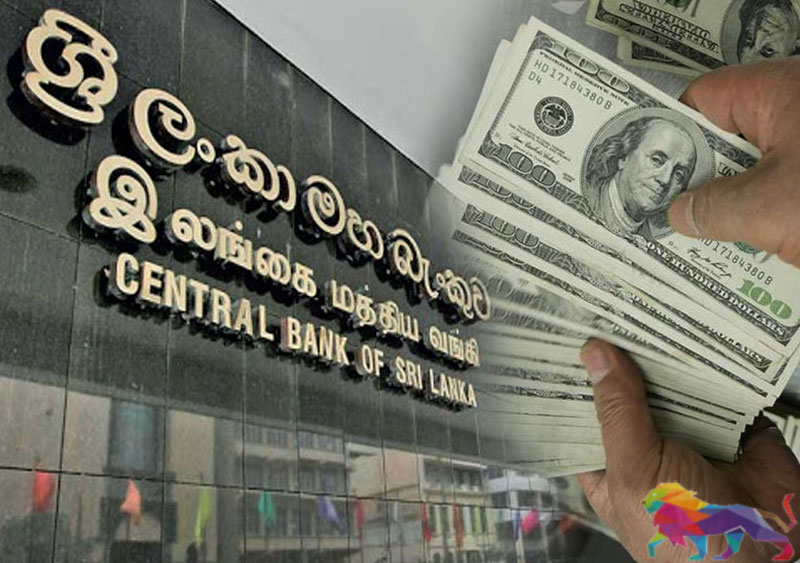
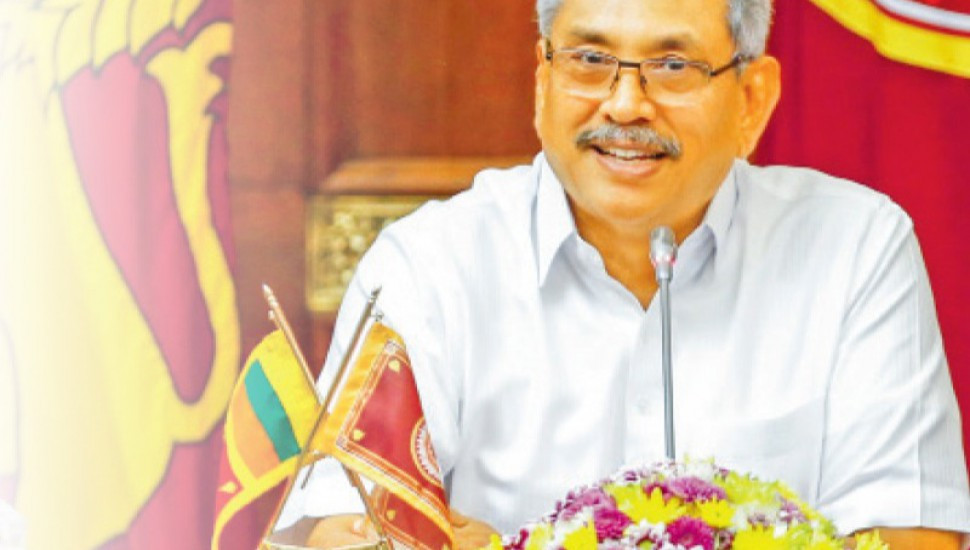
Colombo Fort Magistrate Thilina Gamage ordered the Fort Police today (11) to obtain a statement from former President Gotabaya Rajapaksa in connection with the investigations into the sum of Rs. 17.8 million found in the President’s House.

The cash sum was found by the protesters who entered the President’s House during the struggle on July 09 in the office of the former President.

Magistrate Thilina Gamage ordered the Fort Police to obtain a statement from the former Head of the State considering a request made by President’s Counsel Rienzi Arsekularatne to issue an order to the Fort Police to record a statement from the former President to investigate whether it was received as a bribe or for any other matter.

Posted in Uncategorized

Sri Lanka under international pressure to act on ethnic reconciliation

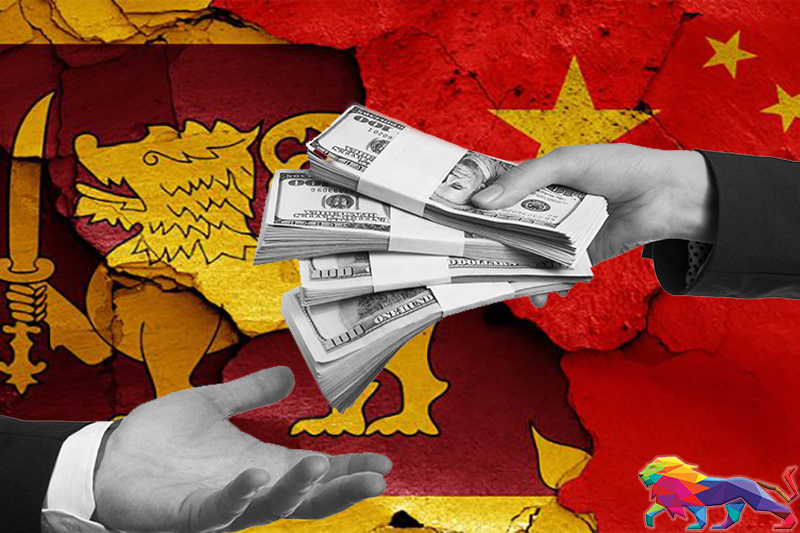
Sri Lanka is gradually coming under the influence of the West, with the non-Western powers clearing the ground for that. China is dragging its feet on helping Lanka to get out of the debt trap. India has already done its utmost in terms of emergency assistance and is waiting to see what the rest of the international community has up its sleeve on the issue of debt restructuring. That leaves Sri Lanka with no option but to bank on the West and its institutions to help it emerge from the economic rut.

But the West’s demands have wide-ranging domestic political implications. Colombo has to meet not just the IMF’s demands for drastic adjustments in the economic structure, but also the expectations of the UN Human Rights Council (UNHRC) and the human rights stipulations attached to the European Union’s trade concessions under its GSP + scheme.

The latest (September 6) UNHRC resolution on Sri Lanka urged the government to “re-launch a comprehensive and victim-centered strategy on transitional justice and accountability, with a time-bound plan to implement outstanding commitments, including taking steps in relation to the establishment of a credible truth-seeking mechanism and an ad hoc special court.” Victims should be given a role in determining the shape of the mechanisms, it added.

The resolution urged States to cooperate in accountability efforts, “including by using available avenues of extraterritorial and universal jurisdiction, to investigate and prosecute crimes under international law committed in Sri Lanka.”

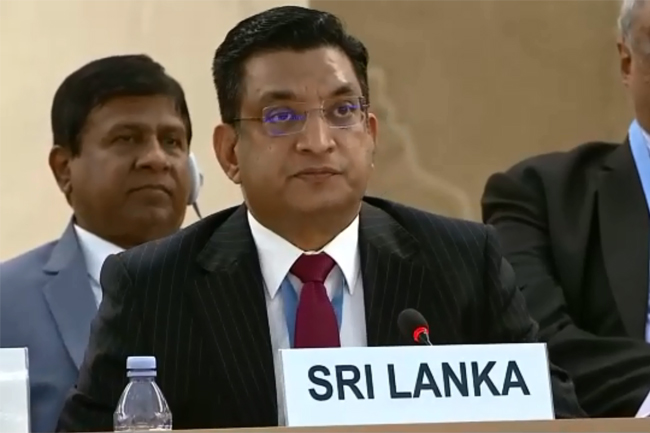
Sri Lanka rejected the resolution on the grounds that these stipulations violated the country’s constitution. But it admitted the need to promote human rights and ethnic reconciliation as per international standards and kept the door open for cooperation with the Office of the High Commissioner of Human Rights (OHCHR). Sri Lanka could not totally shun the UNHRC as the latter is dominated by the Western powers on whom Sri Lanka is heavily dependent economically. Most of its trade is with the West.

GSP+

That brings one to the EU’s GSP+ scheme. GSP+ gives Sri Lanka preferential access to the EU, the single biggest market for the island’s US$ 5 billion garment industry. Reuters reported in September 2021 that Sri Lanka exported 45%, (worth US$ 2.7 billion) of its garments to the EU in the first seven months of 2021. And 60% of the island’s apparel exports to EU had benefitted from the EU’s GSP+ concessions, at 9.5% cost benefit.

But the concessions are linked to the ratification of 27 international protocols on labor, environment and human rights. And here is where Lanka has been wanting. The EU has been regularly complaining about the indifferent application of these protocols. In June 2021, the EU parliament had adopted a resolution suggesting that the EU consider withdrawing the GSP+ facility citing “deep concern” over rights violations.

In October 2022, the EU’s Sixth Working Group on Governance, Rule of Law and Human Rights, visited Sri Lanka. It expressed concern over the continued existence of the draconian Prevention of Terrorism Act (PTA) and the continued detention of suspects without trial.

Sources close to the government said that they are confident that the EU will not withdraw GSP+ in view of the severe economic crisis in the island. But withdrawal is a theoretical possibility. And the stakes for Sri Lanka are high. The apparel sector employs 350,000 Lankans directly, and 700,000 indirectly, 80% of whom are rural women. These will be badly affected if GSP+ is terminated.

Truth and Reconciliation Commission

Aware of this, President Ranil Wickremesinghe has launched a fresh ethnic reconciliation program. A Sunday newspaper said that the President has appointed a ministerial team to put together the broad outlines of the program that could be discussed with all stakeholders. The team, led by Prime Minister Dinesh Gunawardena, has Foreign Minister Ali Sabry, Fisheries Minister Douglas Devananda and Justice and Constitutional Reforms Minister Wijeyadasa Rajapaksha. The team will meet every Monday so it could finish its task early.

One of the mechanisms the government wants to set up is a modified form of South Africa’s Truth and Reconciliation Commission (TRC), in which people can unburden themselves and either accept or reject the charges. They could get death certificates and reparations. Errant security forces personnel could get amnesty but at least they would have owned their guilt. It is a way to bring about “closure” said a legal expert.

When Wickremesinghe was Prime Minister in 2018, he had done a concept paper on a TRC for Sri Lanka (TRCSL). It was to be established by an Act of Parliament. Its mandate was to be to investigate and make recommendations about complaints “relating to damage and/or harm caused to persons as a result of loss of life, or damage and/or harm to persons or property, (i) in the course of, or reasonably connected to, or consequent to the armed conflict, or its aftermath; or ii) in connection with political unrest or civil disturbances in Sri Lanka; or (iii) where such violations are in the nature of prolonged and grave damage and/or harm suffered by individuals, groups or communities of people of Sri Lanka.”

The Act of Parliament was to incorporate statutory provisions to appoint a Monitoring Committee to “enable all Sri Lankan citizens, irrespective of race or religion, including families of police and security forces personnel, civilians in villages that came under attack by terrorists, security forces personnel and police personnel, and all affected persons in all parts of the country, to submit their grievances suffered during any phase of civil disturbances, political unrest or armed conflict that has occurred in the past.”

“The proposed TRCSL should have sufficient administrative and investigative powers, including those granted to Commissions of Inquiry. This includes powers to compel the cooperation of persons, State institutions, and public officers in the course of its work.”

“While the TRCSL will not engage in prosecutions, it should be vested with sufficient investigative powers. But the TRCSL’s recommendations shall not be deemed to be a determination of civil or criminal liability of any person,” the paper clarified.

Feasibility

The feasibility of the scheme has been questioned. While the perpetrators of State terror can be traced and punished, the perpetrators of terrorism cannot be tracked. The latter could well be among the killed or missing. Also, will anyone in the Security Forces admit to war crimes and rights violations even when there is a provision for amnesty? Will civilian victims of violations by the State accept amnesty as a fair solution? Would nationalistic feelings allow the personnel of the forces to be exposed?

No wonder the 2018 proposal fell by the wayside.

South African TRC

The model, the South African TRC (TRCSA), itself did not deliver its objectives fully, studies have pointed out. On the positive side, the TRCSA held public hearings, received more than 22,000 statements from victims, and the victims of the State as well the liberation movements gave vent to their feelings freely. While the top brass of the Security Forces did not cooperate, the lower ranks did, with the violators applying for amnesty. Members of the liberation forces argued that they had done no wrong as they were fighting a just war but eventually they too testified. 7000 applied for amnesty and 1500 got it. Public exposure went a long way toward reducing the trauma of the victims.

But the post-Mandela South African governments were slow to implement the TRCSA’s recommendations. It was reported that by the end of the first decade of the 21st century, few of the recommendations were implemented. Nobody of consequence was punished.

Monitors ready to battle with Election Commission over LG polls

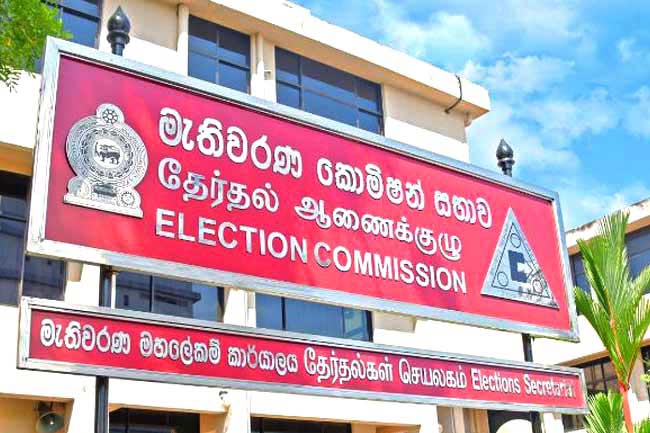
Election watchdog, People’s Action for Free & Fair Elections says it will take legal action against the National Election Commission if it fails to declare the Local Authorities Election promptly.

Executive Director of PAFFREL Rohana Hettiarachchi said they are hoping seek court intervention in the next few days.

The Local Authorities Election is scheduled to be conducted before the 20th of March.

President Ranil Wickremesinghe has called for electoral reforms in order to reduce the number of local government councilors.

Posted in Uncategorized

HRC resolution on Sri Lanka presented to UNGA

A resolution on Sri Lanka which was adopted by the UN Human Rights Council in September, has been presented to the UN General Assembly (UNGA).

Ambassador Federico Villegas, President of the Human Rights Council, presented the resolution on Sri Lanka at the 77th session of the General Assembly in New York.

The resolution on Sri Lanka was among resolutions adopted by the Human Rights Council at its fifty-first session, held from 12 September to 7 October 2022, presented to the UNGA.

The resolution ‘Promoting reconciliation, accountability and human rights in Sri Lanka’ was adopted by a recorded vote of 20 to 7, with 20 abstentions.

The United Nations will be forced to bust over USD 6 million to implement the resolution on Sri Lanka.

Villegas told the UNGA that over recent years, the Human Rights Council has been facing organizational challenges resulting from the growing gap between its ever increasing volume of work and the resources allocated to the departments and offices that support it.

He said that in its fifty-first session, the Council adopted decision 51/101 entitled “Appropriate support for the Human Rights Council”, which requests the Secretary-General to provide the Human Rights Council with the support necessary to be able to meet no less than 14 weeks to fulfill its annual programme of work.

Posted in Uncategorized

JVP Leader likens govt. to Somalian pirates

JVP leader Anura Kumara Dissanayake told Parliament on Tuesday (08) that there was no difference between the incumbent government and the Somalian pirates.

Moving a motion for the debate at the time of the adjournment of the House, Dissanayake said the government should hold elections to the local government bodies by March 20, 2023. “The government does not have a popular mandate. If the government has any respect for the popular will, the government should hold elections. We hope the Election Commission will hold the elections on time without falling for various ruses. We also tell former Election Commissioner Mahinda Deshapriya the government is trying to delay the elections by making an issue of delimitation process and ask him not to be complicit in this crime of depriving people of their franchise,” Dissanayake said.

“Statistics made available to the public by government agencies, international organisations as well as the media pointed to a very dangerous situation. As per a latest UNICEF report, 5.7 million people including 2.3 million children need immediate humanitarian assistance.”

Dissanayake said that the history had shown that the governments that resorted to oppression to consolidate their hold on power ended up in the political dustbin. “We urge the government to tell the world why and for what purpose they are detaining Inter University Students Federation Convenor Wasantha Mudalige and Inter University Bhikkhu Federation Convenor Ven. Siridhamma thera.

“This suppression by the government of the people will further isolate us internationally. Social unrest is on the rise owing to poverty and the government’s inability to solve burning issues such as unemployement. In the face of rising anger and protests by the people, the government continues to appoint ministers and make use of suppression to hold on to power and keep on stealing. The country with a bunch of crooks at the helm is like a ship held by the Somalian pirates.”

Posted in Uncategorized

CWC indicates willingness to join Govt

The Ceylon Workers Congress (CWC) has indicated its willingness to join the Government.

CWC Secretary General Jeevan Thondaman told Daily Mirror that his party has informed President Ranil Wickremesinghe its willingness to accept a Cabinet portfolio.

However, he said that joining the Government will depend on the portfolio offered to the CWC.

The CWC mainly represents the upcountry Tamils of Indian origin.

Thondaman said that his party feels President Wickremesinghe can help address the issues faced by the upcountry Tamils.

Asked if the CWC will work with former Prime Minister Mahinda Rajapaksa in a Sri Lanka Podujana Peramuna (SLPP)-led Government, Thondaman said that such a possibility is unlikely.

He said that while he has respect for Rajapaksa, the political link between the SLPP and the CWC is now over.

US slaps sanctions on Sri Lanka based businessman

The United States has imposed sanctions on a Sri Lanka-based businessman identified as Mohamad Irshad Mohamad Haris Nizar, over his alleged links to a financial facilitator and external operations plotter of al-Qa’ida.

The U.S. Department of the Treasury’s Office of Foreign Assets Control (OFAC) said that Nizar has been the business partner of Ahmed Luqman Talib (Talib), who was previously designated by OFAC for facilitating the international movement of individuals and finances in furtherance of al-Qa’ida’s objectives.

The U.S. Department of the Treasury said that Nizar has been Tali’s business partner in Sri Lanka since at least late 2018. Their business dealings in Sri Lanka have generated nearly $200,000 per year in profit.

Nizar is being designated pursuant to E.O. 13224, as amended, for having materially assisted, sponsored, or provided financial, material, or technological support for, or goods or services to or in support of, Talib.

“Treasury is taking this action to further disrupt a transnational al-Qa’ida financial facilitation and operational plotting network,” said Under Secretary of the Treasury for Terrorism and Financial Intelligence Brian E. Nelson. “The United States continues to work with our foreign partners to counter the operational and financial activities of al-Qa’ida and its associates, wherever they may be.”

OFAC designated Talib pursuant to E.O. 13224, as amended, on October 19, 2020, for having materially assisted, sponsored, or provided financial, material, or technological support for, or goods or services to or in support of, al-Qa’ida. Talib conducted business around the world, including in Brazil, Colombia, Sri Lanka, Tanzania, Türkiye, and the Gulf.

Posted in Uncategorized

Tamil MP assassinated in ‘terror’ strike on Colombo road

The election of Mahinda Rajapaksa as Sri Lanka’s fifth executive president in November 2005 saw the war against the Liberation Tigers of Tamil Eelam (LTTE) intensifying. The new president appointed his US citizen younger brother Gotabaya Rajapaksa as the all-powerful Secretary of Defence. Gotabaya appointed retired colonel of the Sri Lankan army, his erstwhile comrade at arms and fellow Anandian, General Sarath Fonseka as the Army Commander. Thereafter the war effort progressed under the political, administrative and military leadership of the President, Defence Secretary and Army Chief respectively. Ultimately the LTTE was militarily defeated on the banks of the Nandhikkadal lagoon in May 2009.

The Rajapaksa Government believed in the credo of the end justifying the means. Therefore the Rajapaksa regime resorted to several “unorthodox” measures during the war. One of these was what is described in human rights parlance as “officially sanctioned unofficial executions”. Assassination became a weapon of the dirty war. Two of the earliest victims were two members of Parliament belonging to the Tamil National Alliance (TNA).

TNA national list MP Joseph Pararajasingham was killed in Batticaloa on 24 December 2005. He was shot dead by assassins in church after partaking of Holy Communion during service on Christmas Eve. TNA Jaffna district MP Nadarajah Raviraj was murdered in Colombo on 10 November 2006. He along with his Police bodyguard was gunned down in broad daylight by unknown killers on a public road.

President Ranil Wickremesinghe who was the Leader of the Opposition and the head of United National Party (UNP) at the time of Raviraj’s killing condemned the assassination strongly. Wickremesinghe then said, “Within a year of parliamentarian Joseph Pararajasingham’s assassination, Raviraj has been killed. This is a threat to democracy. We strongly condemn this cowardly act and urge the Government to take legal action to bring the killers to justice besides providing adequate security measures to Tamil parliamentarians.”

Pararajasingham and Raviraj

Years later, the UN High Commissioner for Human Rights (OHCHR) investigation report on Sri Lanka (OISL) presented at the 30th session of the UN Human Rights Council (UNHRC) in September 2015 made specific references to the assassination of Pararajasingham and Raviraj.

The 16th death anniversary of Nadarajah Raviraj falls tomorrow on 10 November. Nadarajah Raviraj was personally known to me. He was one of the many political leaders known to me on either side of the ethnic divide who were killed during the course of Sri Lanka’s protracted war. This column therefore re-visits the life and death of Nadarajah Raviraj this week – with the aid of some earlier writings – in a bid to revive memories of the man who was gunned down most cruelly at the age of 44, sixteen years ago.

Manningtown, Narahenpita

D-day or the day of death as 10 November 2006. The TNA parliamentarian from Jaffna district and his bodyguard Police Sgt. Lokuwellamurage Shantha Laxman Lokuwella from Gampaha were shot dead in broad daylight at 8:39/40 a.m. in Colombo. The shooting occurred close to Raviraj’s residence in Manningtown, Narahenpita.

The spot where the shooting occurred was in close proximity to the Telecommunications Regulatory Authority and the Registrar of Motor Vehicles Department. The Jaffna MP had returned home after a discussion – interview on “Derana” TV from 7 a.m. to 7:30 a.m. He had quickly changed clothes, had breakfast and started out again to his law office.

Raviraj, a lawyer by profession, had his own law firm: “Raviraj and Associates”. Though the MP had his own driver, the man was on leave. The driver had requested a further extension of leave a few days before the killing. According to Raviraj’s brother in law the MP had then told the driver good – humouredly, “Even if I die you can have your leave.” The TNA Parliamentarian had first tried to use his wife’s car but finding the battery had run down chose to use his own vehicle.

Motorcycle JE 3507

Raviraj had asked his bodyguard Sgt. Lakshman, a native of Gampaha, to get in and climbed onto the driver’s seat. The Toyota Land Cruiser Prado bearing the No. WP KE 1279 was then slowly driven along Martha Road by Raviraj. The vehicle was turning into Elvitigala Mawatte when a motorcycle numbered JE 3507 came near from the opposite side. Two men with helmets were on it. One got down from the pillion, removed his helmet, went across and stood on the pavement. He had a shoulder bag.

Raviraj’s vehicle was cruising along very slowly when the man tore apart the bag he was carrying and started firing. The weapon was a T-56. The assassin did not pull the gun out but fired while it was yet inside the bag. The assassin fired away at point blank range on Raviraj’s vehicle from the front, side and rear. An entire magazine was exhausted in the firing. He then ran quickly and climbed on to the motorcycle pillion again.

The assassins had then turned into Martha Road and sped away. The bag containing the T-56 as well as the helmet of one rider were found on the side of the road. Police also stated that a three-wheeler parked close to the spot had also driven away after the shooting. It is suspected that the three-wheeler driver was a “look-out” for the assassins and had tipped them off by mobile telephone about Raviraj’s vehicle approaching.

Colombo National Hospital

Raviraj was hit five times and Lokuwella eight times. Both victims were taken to Colombo National Hospital speedily. Lokuwella was pronounced dead upon admission. Raviraj was in critical condition and urgent surgery was done but Raviraj was dead at 9:20 a.m. Hospital sources said the MP was “clinically dead” even when admitted. Thus ended the life of Nadarajah Raviraj.

National Peace Council Executive-Director Jehan Perera described Raviraj’s political role in the following manner when the MP was killed: “Raviraj was a Tamil leader who helped to educate the non-Tamil population about the perspectives of the Tamils and their sufferings. On Tuesday November 14 he had agreed to be a speaker at a Religious-Political Dialogue organised by several civic organisations. He was friendly with all, and always prepared to engage with others, even with those of a very different political mind set. Although the Sinhala language skills at his disposal were limited, he courageously made use of them to debate the representatives of the nationalist Sinhalese political parties and provide another perspective on current and national issues. With his killing this important avenue of information is likely to close for both the general public and the international community to whom he spoke with a measure of credibility.”

Native of Chavakachcheri

Nadarajah Raviraj, born on 25 June 1962, was a native of Chavakachcheri in the Thenmaratchy sector of Jaffna. His father was a schoolmaster at Chavakachcheri Hindu College in Sangathanai. His mother taught at Hindu Ladies College, Chavakachcheri. Raviraj was an old boy of Driebergs College, Chavakachcheri and St. Johns College, Jaffna. Friends recall with affectionate nostalgia that Raviraj generally known as Ravi was also nicknamed “kilangu” (potato) in his student days.

Raviraj passed out as a lawyer and took his oaths in 1987. He joined the Attorney-General’s Dept. in 1990 and worked there till 1993. He quit the AG’s Dept. in 1993 and became a human rights lawyer attached to the Home for Human Rights. He worked there till 1996. Thereafter he began private practice and soon set up his own law office, Raviraj and Associates. Raviraj was involved in human rights work from 1984 onwards even during his law college days.

Tamil United Liberation Front

Raviraj became enamoured of democratic politics at a time when most Tamils of a younger generation were aligning with militant groups. He joined the Tamil United Liberation Front (TULF) and worked actively for the party along with other young Tamil lawyers like former Jaffna mayor Pon. Sivapalan and ex-Batticaloa MP and former Eastern Provincial Minister K. Thurairajasingham.

Raviraj owed his rise in politics to TULF leader Veerasingham Anandasangaree who regarded his younger colleague as a protégé. Sangaree promoted Raviraj within the party. Raviraj became TULF central committee member in 1990. In 1998 he was appointed legal adviser to the party. Raviraj was made TULF Politbureau Member in 2000 and in 2001 became Administrative Secretary of the party.

The TULF of an earlier era faced great danger at the hands of the Liberation Tigers of Tamil Eelam (LTTE). Other militant Tamil groups supposedly functioning as “half-democratic” parties were also not well-disposed towards the grand old democratic party of Sri Lankan Tamils. It was amidst great physical danger that the TULF contested the Jaffna Municipality in 1998. Raviraj too was on the list. The TULF with its slogan of “unarmed democracy” (Aayuthamatra Jananayagam) topped the polls in Jaffna despite not having resources like other Tamil parties. Raviraj became a municipal councillor.

Jaffna Mayor

Sarojini Yogeswaran became Jaffna mayor and was shot dead by the LTTE. Pon. Sivapalan then succeeded her. Sivapalan along with Jaffna military commander Brigadier Mendis and several others were killed when the LTTE exploded a claymore mine concealed in the ceiling. The mayoral aspirant Pon. Mathimugarajah was assassinated by the LTTE in front of the Nallur Kandaswamy temple.

In spite of the danger involved Raviraj backed up by Anandasangaree came forward to don the mayoral mantle. Raviraj was appointed deputy mayor in 1998. Instead of becoming Mayor immediately Raviraj functioned as acting mayor. He was the de-facto and not de-jure mayor for a while. Raviraj adopted this razor’s edge stance and managed to survive politically and physically. In October 2000 Raviraj contested the Parliamentary elections on the TULF ticket but failed to win a seat. In 2001 Raviraj was formally appointed as Jaffna Mayor. But within months Raviraj was elected to Parliament and resigned Mayoral office.

Tamil National Alliance

By 2001 there was a sea change in Tamil “moderate” politics. The TULF, Tamil Congress, EPRLF and TELO joined hands and formed a loose alliance known as the Tamil National Alliance. They started moving close to the LTTE and began toeing the tiger line.

Member of Parliament

The newly formed TNA did well at the polls. Raviraj too won and became a Member of Parliament for the first time in 2001 December. There was however a split in the TULF when the old warhorse Anandasangaree fell foul of the LTTE which wanted him ousted. The TNA was now fast becoming a puppet of the LTTE. Sangaree resisted LTTE domination and paid the price as most of his colleagues and followers deserted him and paid pooja to the tigers.

The unkindest cut for Sangaree was the “transformation” of Raviraj. The young MP had initially backed his political mentor but gradually parted ways with his senior colleague.

In 2004 April Raviraj was re-elected as Jaffna district MP but Anandasangaree was defeated in an “undemocratic” poll conducted through dubious means. Raviraj soon became a rising star in the TNA which contested under the house symbol of the Ilankai Thamil Arasu Katchi (ITAK).

One of Raviraj’s strong points was his fluency in Tamil, English and Sinhala. This enabled him to participate fully in Parliament debates, media discussions and interviews and public meetings. He was a forceful speaker and conveyed his views precisely and clearly. He was capable of quick repartees and often made pithy and pungent comments. He also participated in demonstrations particularly those concerning freedom of expression. Raviraj had many friends among the Colombo media. He participated in many TV shows in all three languages. He was perhaps the best known face among TNA Parliamentarians to the “Sinhala” South.

In Canada

Raviraj was in Canada many years ago and I heard him speak at a public seminar on the plight of Tamils in Sri Lanka. Raviraj was the last speaker. There were a couple of Canadian mainstream MPs at the meeting. As is usual among Western politicians, who “grace” minority community occasions just to keep up “appearances”, the two gentlemen began moving out as Raviraj was on the rostrum. The young Tamil MP was not fazed and made a public appeal that both MPs should not leave but sit and listen to his speech. Taken aback both men promptly returned to their seats, tuned in and afterwards engaged in long discussions with the Sri Lankan Parliamentarian.

I also remember that Raviraj could not have dinner with me as arranged earlier because his departure from Toronto had to be expedited due to an urgent matter. I was not at home when he called to inform me of the sudden change of plan. After returning to Colombo Raviraj was courteous enough to telephone me and apologise profusely.

The conflict in Sri Lanka began escalating after Mahinda Rajapaksa became President in November 2005. The war conducted against the Liberation Tigers of Tamil Eelam (LTTE) resulted in great hardship for the Tamil people. The basic human rights of the Tamil people were violated with impunity during those days of war. “Terror” was on the rise.

Civil Monitoring Committee

Raviraj was in the forefront of those resisting this creeping state of terror. He joined hands with those of different political beliefs and ethnicities to fight for common causes. A case in point was his active involvement in the Civil Monitoring Committee (CMC) set up to monitor extra-judicial executions, disappearances and abductions. Raviraj worked with people like Mano Ganesan, Siritunga Jayasuriya, Vasudeva Nanayakara, Dr. Vickramabahu Karunaratne, and Appapillai Vinayagamoorthy in this regard.

I also know for a fact that Raviraj was one of the few Tamil MPs in those days who interacted closely with diplomats, human rights activists and media persons about issues affecting the Tamil people. Without hogging the limelight, Raviraj worked quietly behind the scenes to keep the “world” informed about what was happening in the island. Raviraj also participated in conflict resolution workshops hosted by Institute of Federalism in Switzerland, Konrad Adenauer Foundation in Germany and Peace Institute in Austria.

UNHCR office demonstration

Raviraj along with a few other MPs was the livewire of the TNA then. The TNA then adopted a more militant yet non-violent stance in espousing the Tamil cause. After many non-violent demonstrations in Parliament the TNA began taking to the streets to articulate Tamil grievances. A demonstration opposite the UNHCR office in Bullers Road was to be the first of a new series of envisaged protests.

Once again Raviraj played a crucial role in organising and conducting the demonstration. 19 of the 22 TNA Parliamentarians participated. Apart from handling logistics Raviraj’s voice could be heard shouting slogans and demands loudly in all three languages. He also interacted with the media and obtained much publicity for the event. Given the prevailing political culture of that time where all Tamil dissent was ruthlessly suppressed a voice such as that of Raviraj’s too had to be silenced from the viewpoint of those wielding power in the Democratic Socialist Republic of Sri Lanka. And so the life of Raviraj was extinguished on 10 November.

Final media interview

Pronouncements and views expressed on one’s deathbed or prior to death are treated as sacrosanct. Raviraj did not know that he was going to be shot at 8:40 a.m. and that he would die at 9:20 a.m. on 10 November. His final media interview was between 7:30 to 8 a.m. that same morning. Some of the views he expressed then could be regarded as his last testament and will (in political terms).

What does Raviraj tell “Derana”?

“The people in the north-east aspire to live together. They aspire for the merger of the two provinces; it is a basic human right of those people. In the ancient times, there were Sinhala and Tamil kingdoms in Sri Lanka. It is not new to our people. That is mainly an area of Tamils from ancient times. It does not mean that we want to divide the country. We believe that north and east be considered as one unit. That should be the base if to find a solution to the ethnic crisis.”

“In 1947 when India achieved independence, Mohamed Ali Jinnah demanded Pakistan to be separated. We asked for 50-50 and then a Federal system and now the LTTE is fighting for separate state. However, as politicians we still believe in a united country.”

Those who knew Raviraj intimately would realise that these last words of Raviraj came from his heart. The real Raviraj was the man who boldly distanced himself from the LTTE on TV and said, “It does not mean that we want to divide the country” and also observed “now the LTTE is fighting for separate state. However, as politicians we still believe in a united country.” This then was the real Raviraj.

Connector and not divider

Nadarajah Raviraj worked with all sections of the people, involved himself in many issues and helped build bridges between the Tamils and other communities. He was a connector of people and not a divider of communities. The fact that a large gathering of people from diverse, multi- ethnic backgrounds paid their respects at his funeral, demonstrated that ordinary people understood that difference. Ravi’s death 16 years ago diminished humanity in general and Sri Lankan society in particular.

(The writer can be reached at dbsjeyaraj@yahoo.com.)

13 opposition MPs to cross over to the govt?

Preparations are underway for the parliamentarians of several political parties to join the United National Party (UNP) and to support the government in the upcoming budget, according to political sources.

Accordingly, the sources further claim that nearly 13 MPs of Sri Lanka Podujana Peramuna (SLPP) and the Samagi Jana Balawegaya (SJB) will join the UNP on the date of the Budget Speech.

It is also reported that initial discussions have been held in this regard and that further discussions are being carried out regarding the ministerial positions to be given to the MPs who will join the UNP.

The Appropriation Bill for the fiscal year 2023 will be tabled in the parliament for the second reading on November 14. President Ranil Wickremesinghe, in his capacity as the Minister of Finance, Economic Stabilization & National Policies, will deliver the opening speech of the second reading of the Appropriation Bill to Parliament at 1.30 p.m.

North-East activists end 100-day protest demanding federalism

At the end of the 100-day protest staged by the North-East Co-ordinating Committee (NECC), a people’s declaration urging for a federal solution within a merged Northern and Eastern Province was delivered yesterday (8) in all eight districts of both provinces.

Speaking to The Morning, North-East District Co-ordinating Committee President Lavakusarasa Kandumani said that more than 1,000 people participated on the 100th day of protest held by his organisation, and that those from both the Tamil and Muslim communities participated in the protest that was held in both the North and the East. He further noted that many civil society organisations, relatives of missing persons, and women’s organisations collaborated in this struggle led by the NECC.

“We have been urging for an honourable political right until the 99th day of our protest, but only today, the 100th day, we declared that a federal solution within a merged North and East would be suitable,” he added.

The declaration read: “We, the Tamil-speaking people of the Northern and Eastern Provinces, today (8), the 100th day of our continuous 100 days of activism for power sharing, present the people’s declaration for a sustainable political solution for Tamil speaking people in the North and East. We have taken into consideration all the past power-sharing proposals that were presented by the rulers as a solution to the ethnic issue; analysed the content of the 13th Amendment to the Constitution; particularly explored the ‘federal model of power sharing within a united Sri Lanka’ that was agreed to by the Sri Lankan delegation headed by the then-Minister Prof. G.L. Peiris under the guidance of then-Prime Minister Ranil Wickremesinghe in the Oslo Declaration 2002, with the mediation of Norway; and we present our declaration as the voice of the people.

“The Tamil people have been living in the Northern and Eastern Provinces since the prehistoric period with their distinct identity. Along with the numerical majority Tamil people, numerical minority Muslim people are also living in these areas. The successive majoritarian Sinhala rulers who came to power based on racism, systematically oppressed the Tamil people politically, linguistically, economically, and socially, and perpetrated violence against the Tamil people. Because of these reasons, it was assured by the 13th Amendment to the Constitution that the people of the North and East must be given a provincial-level solution within a merged North-East Province and also to Constitutionally ensure that Tamil is an official language. However, in 2006, the merged North-East Provincial unit was demerged, and the North and East were created as two separate provinces.”

Accordingly, the declaration included 16 points and the important points among them are that the Northern and Eastern Provinces must be remerged, and that the North and East must become a single provincial unit; that the Central Government must ensure a federal model of power sharing for a merged North-East Province that cannot be withdrawn; for the merged North-East Province to be governed by a people’s representative council that would be democratically elected by the people; to ensure that women’s representation in this council would be 50%; that the Chief Minister shall be the head of the people’s representative council; that the Governor shall not control the people’s representative council of the Province and that he/she shall represent the Central Government as an honorary representative; and that the lands situated within the North-East Province must come under the control of the governance of the said Province.

The NECC, through the declaration, urged India, the United Nations ( Human Rights Council (UNHRC) core group of countries on Sri Lanka including the UK, the US, Germany, Canada, Malawi, North Macedonia and Montenegro, the EU, and the UN to provide the necessary assistance to the Sri Lankan Government to confirm a federal model of power sharing to the North and East areas that cannot be withdrawn.

Meanwhile, President Wickremesinghe has assured recently that a final settlement with the Tamils and the Northern population of the country would be reached within the next few months, which was then welcomed by the Tamil National Alliance representatives.